Spon, [Jacob]Biblio.com
47 473 résultats
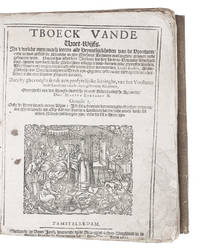
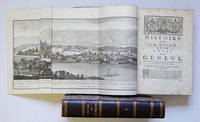
53501Genève Fabri & Barrillot 1730. 4° Bd. 1: Titelkupfer XVI 2 Falt.-Taf 25 x 70 cm Panoramen 1 Karte des antiken Genf. 556 S.; Bd. 2: Titelkupfer 6 Bl. 518 S. 11 Falttaf. Abb von Siegeln; 1 Falt-Landkarte - insgesamt 16 Kupferstiche; ebenso einige Vignetten und etliche Holzstich-Abb. Titelblatt in roten u. schwarzen Lettern. HLdr. d. Zeit goldgeprägt. Namen a. Schmutztitel etwas berieben Papier etwas gebräunt wenig stockfleckig. 1 Panorama an der Schmalseite 5 mm etwas gebräunt und m. kleinen Rissen wegen falscher Faltung. Schönes Exemplar. Lonchamp 2770. Erste zweibändige Quart-Ausgabe die gleichzeitig mit einer 4 -bändigen Oktav-Ausgabe erschien. Kommentare von Jean-Antoine Gautier und Firmin d'Abauzit.2 sehr schöne Panorama-Ansichten von Genf: «Veue de la ville de Genève du coté du Midy» und «Veue de la ville de Genève du coté du Septentrion». Diese gemalt von Robert Gardelle und gestochen von J. G. Seiler.Jacob Spon 1647 -1685 franz. Arzt und Archäologe großer Kenner der griechischen Altertümer. Führte zur Zeit der osmanischen Besetzung Griechenlands diverse Forschungsreisen durch. 010 Genève, Fabri & Barrillot, 1730 unknown
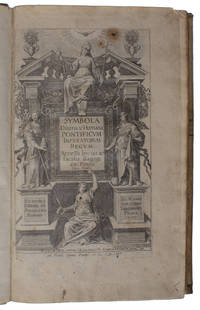
165260208Frankfurt G. Schönwetter 1652. Folio 335 x 203 mm. Three volumes bound in one contemporary full vellum bindings with title in contemporary hand to spine. Binding with some miscolouring and a bit of wear. Title-page with a few dots and light soiling otherwise a fine and clean copy. 141 7 4 183 7 176 3 pp. 151 engraved plates included in the pagination. Pp. 171-172 in vol. 2 copied in contemporary hand. <br/><br/><em>Later edition of Typot’s famous and beautifully illustrated work on emblems. The designs of the emblems were compiled by Ottavio Strada antiquarian to Emperor Rudolf III and were reproduced by the engraver Aegidius Sadeler - Typot wrote the Latin commentaries. The extensive work covers a broad array of subjects such as popes emperors kings and The Santa Eucharista. </em> hardcover
2007BRG-42_7_506Mariner Books 2020-07-07. hardcover. Very Good. 5x1x8. Very Good condition.Crisp pages. Clean cover and pages. Book shows minimal shelf wear. No highlighting/marking. Not Satisfied Contact us to get a refund. Mariner Books hardcover
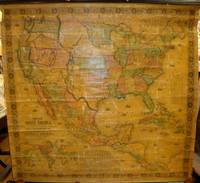
1854M7535Baltimore: Jacob Monk 1854. Some minor discolourations and some marginal chipping and staining not affecting the map altogether a very good copy laid down on original canvas as a scroll on two wooden rods. . Notes: Inset map of the world sits beneath the title in the lower left corner. It is centred on the Americas and charts the course of Wilkes' circumnavigation of the globe in the 1840s. To its right sits an index of counties and towns. Above the title on the left side are a legend and scale. On the right by the mid margin is a table of distances. The oceans are decorated with tall ships and the whole map sits within a decorative floral border.<br><br>This map marks the dawn of the Manifest Destiny era of American history. Soon after the American victory of Mexico large new states and territories were carved out from the newly acquired land. Here we see the newly formed California and Texas along with the Oregon and Washington territories securing the country's claim to the Pacific coast. With California's gold rush getting into full swing the map accentuates many details of that state's gold region. North-South tensions are revealed in the ambiguity of the central states and territories: Northern interests sought to create a massive Nebraska territory which would have included present-day Kansas; however Southern lawmakers pressed Congress to make two separate territories. Size : 1405x1500 mm 55.31x59.06 Inches Coloring: Original Hand Coloring Reference: Wheat 794 earlier edition; Rumsey 603. Category: Maps Central America; Maps North America; Maps West Indies Whole; Maps Wall Maps; Jacob Monk unknown
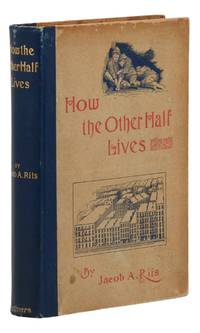
1890140947069New York: Charles Scribner's Sons 1890. First Edition. Very Good. First edition first printing. Bound in publisher's decorated paper-covered boards over blue spine cloth lettered in gilt. Very Good with toning and wear to the binding contents tanned and with occasional soiling. A pioneering work of photojournalism documenting New York City's poor lower class living in squalid conditions at the turn of the century. Charles Scribner's Sons unknown
1979C30251Allanheld & Schram. As New. 1979. Hardcover. 0839002408 . FREE UPGRADE to Courier/Priority Shipping Upon Request - IN STOCK AND IMMEDIATELY AVAILABLE FOR SHIPMENT - AS NEW THE TEXT BLOCK IS PRISTINE CLEAN UNMARKED AND IN EXCELLENT CONDITION - appears unread - 243 pages. Catalogue Raisonne Catalog Raisonné Complete Works Life and Work Raisonnee -- with a bonus offer-- - May be EITHER: out of print OOP and extremely rare in this pristine condition; signed by author or contributor; or a first or special edition; inquire for details . Allanheld & Schram hardcover
16364833Amsterdam 1636. 4to. Joan Blaeu Contemporary vellum with the manuscript author and title on the spine sewn on 4 supports laced through the joints. With a woodcut printer's device on the title page of each work an engraved portrait of Pieter Dirkszoon Hasselaer in the text and 30 engraved emblems by Christoffel le Blon in ad 1 a full-page engraved portrait of Hendrik de Grote in ad 2 and several decorated woodcut initials head- and tailpieces in both works. 2 works in 1 volume. 2 blank 6 "464" = 460; 8 203 5 pp. First edition of the collected poems plays sonnets and songs of the most famous Dutch poet of the 17th century Pieter Corneliszoon Hooft 1581-1647. It was also the only edition of his collected poems published during his lifetime. The work was intended to show his literary abilities and to serve as an example for later authors. It opens with a dramatic play followed by emblemata songs love and wedding poetry and ends with psalms highlighting Hooft's complete skillset in the literary realm. The second work in the present binding is the third enlarged edition of Hooft's first historical biography on the life of the king of France Henry IV a work that would later grant him the title of knight.The collection was edited by Hooft's close friend the scholar statesman and poet Jacob van der Burgh 1600-1659 who dedicated this edition to Constantijn Huygens. The collection contains the plays Granida Geeraert van Velzen Baeto and Paris oordeel. His Emblemata here with the title Minnezinne-beelden are illustrated with 30 charming half-page emblems engraved by Christoffel le Blon or Pieter Serwouters printed from the same plates as used in the original edition of the Emblemata in 1611 each with a Dutch Latin and French motto repeated below the engraving followed by distichs in the same three languages. The Latin verses are by C.G. Plemp the French by R.J. de Nérée.The portrait of Pieter Dirkszoon Hasselaer who was a lay judge and member of the Amsterdam counsel has here been reduced in size; it was first published in Hooft's Lijkklaght over Pieter Dircxz. Hasselaer 1617. Also included are Hooft's sonnets songs miscellaneous poems and wedding poems on the two weddings of P.C. Hooft: with Christina van Erp in 1610 and Heleonora Hellemans in 1627 by C.G. Plemp Laurens Reael W. de Groot Constantijn Huygens and Caspar Barlaeus. The work closes with psalms.With the label of Henri Dircx mounted on the front pastedown. The vellum is slightly soiled. The leaves are somewhat browned and foxed especially in ad 2 a water stain in the outer margin of the first 100 pages of ad 1 and another in the lower margin nearly throughout the lower corner of page 37 of ad 1 has torn off. Otherwise in good condition.l Ad 1: Landwehr Emblem and Fable Books 322; Leendertz 117; Scheurleer Liedboeken p. 140; STCN 852658524; USTC 1032392; ad 2: STCN 851961835; USTC 1031841. hardcover
1633E4IGP2PR2ETVAmsterdam 1633. 4to. Broer Jansz. Contemporary vellum. With woodcut illustration on title-page and 35 woodcut illustrations in text several full-page. 8 pp. 9-"74" =70 4 ll. Rare sixth edition of the Dutch translation of Jacob Rüff's classic and well-illustrated book on the conception generation and birth of the child the duties of the midwife the attendant diseases of child-bearing etc. Translated into Dutch by Marten Everart. Rüff's work is an improved version of Rosslin's Der Swangern frawen and contained the first true anatomical pictures in an obstetrics book.It was originally published in 1554 as Ein schön lustig Trostbüchli von den empfengknussen und geburten der Menschen translated into Latin in the same year as De conceptu et generatione hominis. insuper. The first of the many Dutch editions appeared in 1591 all early editions are very rare. The present edition contains the preface by Sigmund Feyerabend who published the Latin edition of 1580.Bookblock nearly detached first few leaves with restored corners title-page worn a few pages lightly browned and some occasional minor stains. Reasonable copy.l Bibl. Belg. IV p. 928; Krivatsy 10016; STCN 2 copies. hardcover
19811584HEYNE WILHELM 1981-84. 1. softcover. Cluster 3784382838984115 HEYNE, WILHELM paperback
193535042Recato Copenhagen. 1935. 1st. Ed. Complete set. Five volumes bound as three with 200 fine colour chromolithographed plates. Large 4to. Hardbacks. English text with Latin names. Contents in fine condition. Typed copies of the Indexes loosely inserted in Volume 3. Handsomely bound in period blue cloth; red title labels with gilt lettering to spines all in fine condition. A very pleasing set indeed. ‘Flora Agaricina Danica is as thorough as it is beautiful. Lange illustrated nearly all the Danish Agaricales pictured within from life often receiving more exotic species through the post from Colleagues’ Chronophobia. G.C. Ainsworth wrote of the work ‘the illustrations are both scientifically invaluable and superb examples of modern printing’. Recato, Copenhagen. hardcover
165832984-176Lutetia i.e. Ulm n.pr. 1658. Engr. title printed title. 2 unn. leaves 297 =295 pp. 1 blank p. 2 leaves "Clavis" name keys. 8vo. Contemporary half calf. sm. library stamp on title. Lutetia i.e. Ulm n.pr. 1658. Bound with: GRIMM Hans Rudolf. Kleine Schweitzer Cronica Oder Geschicht=Buch.Erstlich woher der Nahmen Schweitzer komme.Benebst auch ein Beschreibung der Natur=Wunder dess Schweitzer=lands. 4 unn. leaves 204 pp. 12 unn. pp. index. Burgdorf 1723. Ad I: First edition of this interesting work of baroque literature. "In the year 1658 a script was published with the purported place of publication Lutetia Paris that caused a most disagreeable sensation: Heutelia Anagram for Helvetia . It contains the following fiction: A Palatine nobleman and a jurist from Wurttemberg both Protestants flee from the Thirty Years War to Switzerland and making ironical comments as they travel from place to place . The tone is unrestrained satirical and sometimes cynical especially when the status of women is concerned. A lot of brutianism is involved. Behind that facade however there is a scientific seriousness that gets to the bottom of things . The intention was always to uncover the oddities of Switzerland." transl. from Feller/Bonjour. Politically the travellers represent the aristocracy and take a firm stand against democracy. Zurich comes away relatively lightly whereas Bale does not. Of Bern however an unsparing social picture is outlined that led to a storm of protest and the "Gnadigen Herren" tried to surpress the book by all means. "Heutelia" was already identified in the 18th c. as a "liber satyricus rarissimus". Haller talks of a rare work and names as authors Jakob Graviseth or Gravisset Herr zu Liebenegg and Landvogt von Oron. More recent research especially by Walter Weigum declares the "Heutelia" to have been written by Hans Franz Veiras 1577-1672 the secretary of the Palatine Elector and Bohemian King Friedrich V who had fled to Zurich. Graviseth maybe translated and reworked the "Heutelia" from Latin giving it a Swissgerman interpretation. At the end the key to the names is found for example: Guretum=Zurich Sebilacopolis=Bale Rusinopolis=Bern Bonzus Corvinus=Jesuit Druida=Pastor Muftus=Messpriest etc. Ad II: First edition of the historic work by the Burgdorf councilman H.R. Grimm 1665-1749 who participated in the 2nd Villmerger War in 1712. Although this popular writing has many misrepresentations and mistakes it is characterized by its lively descriptions. The work also contains popular descriptions of the mountains rivers and natural wonders of Switzerland. Nice copy of two rare works. _ - Ad I: Paisey H 1019; VD17 23:299560W; Weller Druckorte I p. 30; Hayn/Gotendorf VII 257; Haller V 1195; Barth 2193; Faber du Faur 448; Jantz 2571; Kosch II 969; Feller/Bonjour 405f.; cf. Baechtold 473f.; not in Bircher/Bürger. Ad II: Haller IV 470; HBLS III 747; not in Barth; cf. Simmen René. Vom grossen Misch-Masch 1965. LITERATURE: GERMAN ; HELVETICA: ALLGEMEIN ; yes ; Lutetia (i.e. Ulm), n.pr. unknown
165832984-310Lutetia i.e. Ulm n. pr. 1658. With engr. title. Printed title 2 unn. leaves 297 pp. =295 pp. 1 blank p. 4 unn. pp. last blank "Clavis Heutelia" keys for the numerous anagrams and acyrogolia. 8vo. 18th century half calf. Sm. monastic libr. stamp on title. Lutetia i.e. Ulm n. pr. 1658. Bound with: GRIMM Hans Rudolf. Kleine Schweitzer Cronica Oder Geschicht=Buch.Erstlich woher der Nahmen Schweitzer komme.Benebst auch ein Beschreibung der Natur=Wunder dess Schweitzer=lands. 4 unn. 204 12 unn. pp. index Burgdorf 1723. Ad I: First edition of a notable work of baroque literature Heutelia is one of the few literary products of Switzerland in this time and one of the wittiest. This is a journey description based on satire and utopia. Written by Veiras former advisor of the Winter King i.e. Frederick V Elector of the Palatine and King of Bohemia and by Gravisseth who was Bailiff of Oron it is a critical account on the social conditions in 17th century Switzerland. The title "Heutelia" is an anagram of "Helvetia" the Latin name of Switzerland. "Die Absicht war durchaus die Schäden und Verkehrtheiten der Schweiz aufzudecken" Feller/Bonjour. Politically the travelers represent the aristocracy and take a sharp stand against democratic Switzerland. Ad II: First edition. Although this popular writing contains numerous disortions and errors it is also characterized by lively and interesting descriptions of the mountains rivers and natural wonders of Switzerland.- Nice copy with two rare works bound together. _ - Ad I: Paisey H 1019; VD17 23:299560W; Weller Druckorte I p. 30; Hayn/Gotendorf VII 257; Haller V 1195 under Gravisset;; Barth 2193; Faber du Faur 448; Jantz 2571; Kosch II 969; Feller/Bonjour 405ff.; cf. Baechtold 473f.; not in Bircher/Bürger. Ad II: Haller IV 470; not in VD18 nor in Barth; HBLS III 747; cf. Simmen René. Vom grossen Misch-Masch 1965. LITERATURE: GERMAN ; HELVETICA: ALLGEMEIN ; yes ; Lutetia (i.e. Ulm), n. pr. unknown
19357607Copenhagen 1935-40. Bound in 2 solid hcalf brown morocco. XXIV9010596119105 pp. and all 200 fine colourplates. Extremities with traces of use. - The illustrations to Flora Agaricina Danica are both scientifically invaluable and superb examples of modern printing. unknown
H854Weimar Landes-Industrie-Comptoirs 1815. 8vo. VI 210 S. mit 1 gefalteten Karte: "Charte der zwischen Schiraz und Constantinopel gelegenen L‰nder.im Jahr 1801 verzeichnet sind." Leinenband der Zeit leicht stockfleckig in gutem Zustand. James Morier 1782-1849 britischer Orient-Reisender. Er war Sekret‰r der britischen Gesandtschaft in Persien. Im Mai 1809 verliefl er Teheran um seinen R¸ckweg nach Europa ¸ber Armenien und Klein-Asien zu nehmen. "Dieser Teil der Reise wurde geographisch der wichtigste da M. das so k¸mmerlich bekannte Gebiet zwischen T‰bris und Erzerum mit einigem Licht versah." Henze. Auch hat er als Erster die Architektur der Kˆnigsgr‰ber von Amasia Beachtung geschenkt. - Henze III 538; Howgego II M57. unknown
173565511London W. Lewis 1735. First Edition. Hardback. Full contemporary aniline calf professionally and sympathetically re-backed. Raised bands with a dark morocco gilt-blocked label. Board edges only very slightly rubbed. An exceptional copy - scans and additional bibliographic detail on request. ; 461 pages; Description: 8 p. L. 461 p. 1 l. 21 cm. Notes: Signatures: A-Z8; Aa-Gg8. Form/Genre: Tragedies. Subjects; Literature--English--18th Century. Literature--Early Works to 1800. London, W. Lewis hardcover
3508606Short description: In Russian. Tschudi Johann Jacob. Travels to South America. St. Petersburg: M. O. Wolf 1867. The image is provided for reference only. It may reflect condition of one of the available copies or only help in identifying the edition. Please feel free to contact us for a detailed description of the copies available. SKU3508606 unknown
19360001914EUSKIRCHEN GERMANY. Good. 1936. On offer is a superb 1936 manuscript relic titled 'Fahrt: Lieder und Bilder' being one German soldier's patriotic paean to forgotten German wars and heroic songs. Handwritten by Jacob Winkel in Euskirchen Germany the soldier presents a very historical German perception of war and the songs of conquerors. This soldier had a passion for the very historical Lion of Brabant which has a history dating back to the 11th century. This may also be a clue to his background as in WWII the Brabant Lion was associated moreso with the Flemish Lion which is understandable as many Belgium produced many troops and even SS soldiers for Germany. They were incredibly anti-communist so most went to serve at the Russian Front. There are more contemporary and lost songs all in the context of the upcoming World War II. The notebook has 26 well filled pages and is illustrated by hand with historical notes which include the drawing of the sword and the harp with the words Platoff refers to Count Platoff general in chief; Hetman of the Don Cossacks refers to Matvei Platov who was the leader of the Don Cossacks and a feared commander of cavalry. Platov's tactics became famous in the 1812 French invasion of Russia when his men lived off the land and constantly harried the much stronger French forces. Using the harsh Russian winter to its best advantage Platov continually punished the beleaguered French infantry on its retreat from Moscow. There is a real photo postcard tucked in the notebook which we can assume was the author himself. A note on the back which we cannot translate may confirm. Overall the 7½ x 5 inch book is G.; Manuscript; 12mo - over 6¾" - 7¾" tall; KEYWORDS: HISTORY OF JACOB WINKEL EUSKIRCHEN GERMAN GERMANY GERMANIC PATRIOTIC SONGS HEROIC SONGS BRABANT LION PRE WORLD WAR II WWII WW1 FAHRT: LIEDER UND BILDER HANDWRITTEN MANUSCRIPT AUTOGRAPHED AUTHORS MANUSCRIPT DOCUMENT LETTER AUTOGRAPH KEEPSAKE WRITER HAND WRITTEN DOCUMENTS SIGNED LETTERS MANUSCRIPTS HISTORICAL HOLOGRAPH WRITERS AUTOGRAPHS PERSONAL MEMOIR MEMORIAL PERSONAL HISTORY ARCHIVE DIARY DIARIES antiquité contrat vélin document manuscrit papier Antike Brief Pergament Dokument Manuskript Papier oggetto d'antiquariato atto velina documento manoscritto carta antigüedad hecho vitela documento manuscrito Papel . unknown
1996620541996. Arch. Europ. Lexikographie Abt. 3: Geschichte der Medizin; 20. - Erlangen Harlad Fischer Verlag 1996. 17903 pp. und 40 Tafeln auf 179 Mikrofisches. Silber negativ. Die Gesamtedition enthält die folgenden auch einzeln lieferbaren Ausgaben: Bibliotheca medico-practica. 4 Bde. Genf 1695 - 1698. 4.397 Seiten auf 46 Mikrofiches Bibliotheca anatomica. 2. Auflage 2 Bde. Genf 1699. 2.418 Seiten auf 26 Mikrofiches Bibliotheca chemica curiosa. 2 Bde. Genf 1702. 1.852 Seiten und 40 Tafeln auf 20 Bibliotheca pharmaceutico-medica. 2 Bde. Köln 1703. 2.215 Seiten auf 24 Mikrofiches Bibliotheca chirurgica. 4 Bde. Genf 1721. 2.483 Seiten auf 28 Mikrofiches Bibliotheca scriptorum medicorum veterum et recentiorum. 4 Teile in 2 Bde. Genf 1731. 2.686 Seiten auf 29 Mikrofiches. "Il compilait compilait compilait!" "Unter diesen fiktiven aber durchaus treffenden Leitsatz stellte ein Kritiker des 19. Jahrhunderts rückblickend das Lebenswerk des Genfer Arztes Jean-Jacques Manget. Tatsächlich eröffnen die "Bibliothecae" Mangets bereits von ihrem Umfang her eine ganz neue Dimension in der Geschichte der medizinischen Lexikographie. In 18 großformatigen und teilweise mehr als tausend Seiten umfassenden Bänden wurde hier dem Leser ein umfassender Überblick über das medizinische Wissen der Zeit vermittelt unter Einschluß der "Hilfswissenschaften" Anatomie Al- Chemie Pharmazie und medizinische Bücherkunde. Neu und auch für die Geschichte der medizinischen Lexikographie in der Folgezeit einzigartig ist zugleich die kompilatorische Anlage des Werks. Manget bemühte sich nicht wie dies später bei Enzyklopädien dieses Umfangs üblich und notwendig war um die Mitarbeit von Kollegen sondern bezeichnete seine "Bibliothecae" stolz als sein eigenes Werk; lediglich für die "Bibliotheca anatomica" von 1685 firmiert Daniel Le Clerc als Mitverfasser. Um sein umfangreiches lexikographisches Unternehmen bewältigen zu können entschloß sich Manget zu einem anderen Verfahren: seine Mitautoren waren fast alle bereits tot und die Beiträge die er in seine "Bibliothecae" aufnahm waren weitestgehend für andere Zwecke verfaßt worden selbst wenn sie von lebenden Zeitgenossen stammten die diese bloß zum Abdruck zur Verfügung stellten. Nur sehr begrenzt gelangte auch bisher unveröffentlichtes Material zum Abdruck vereinzelt Manuskripte von Kollegen und aus der Feder Mangets einleitende oder Textauszüge überbrückende Passagen sowie Beiträge die er selbst zu manchen Gegenständen verfaßte. Die große Masse des Textes aber bilden oft recht ausgedehnte Ausschnitte und zuweilen sogar vollständige Abhandlungen anderer insbesondere früherer Autoren die Manget in geeigneter Weise zusammenstellte. Entscheidende logistische Grundlage für diese Kompilationen war die recht ausgedehnte Sammlung medizinischer Werke an deren Aufbau sich Manget als erfolgreicher und entsprechend wohlhabender praktischer Arzt in Genf recht intensiv bemühte; allein der "Bibliotheca anatomica" lagen rund 80 verschiedene anatomische Traktate zu Grunde. In der heutigen Situation müßte Mangets Vorgehen selbstverständlich als ziemlich absurd erscheinen und Ähnliches hätte schon für das ausgehende 18. Jahrhundert gegolten: angesichts des immer stärker beschleunigten Zuwachses an medizinischen Erkenntnissen und Erfahrungen wäre eine derart verfaßte medizinische Enzyklopädie bereits bei ihrem Erscheinen hoffnungslos veraltet und unbrauchbar. In der Zeit um 1700 aber hatte ein solches Werk durchaus auch seine wissenschaftliche Berechtigung. Medizinisches Wissen war damals noch weit überwiegend Buchwissen und stützte sich auf das Gewicht einer jahrhundertealten Tradition. Wenn auch allmählich an einzelnen Orten eine praktische klinische Ausbildung das Medizinstudium zu ergänzen begann so gründete ärztliches Handeln und der wissenschaftliche Anspruch der Medizin doch weiterhin vor allem in der eingehenden Kenntnis der medizinischen Literatur - daher auch die Bedeutung der medizinischen Bücherkunde. Mangets eigener Lebensweg veranschaulicht dies sogar in besonders plastischer Weise hatte er doch zunächst auf Wunsch seiner Eltern Theologie studiert sich anschließend sein medizinisches Wissen ausschließlich im Selbststudium aus Büchern erworben und ohne ordentliches Studium auf der Grundlage dieses Selbststudiums 1678 in Valence die medizinische Doktorwürde erlangt. Lediglich Anatomie und Physiologie bildeten in Hinsicht auf diese geringe Innovationsgeschwindigkeit eine gewisse Ausnahme denn hier hatte gerade das 17. Jahrhundert zahlreiche neue Entdeckungen gebracht. Folgerichtig führt Mangets und Le Clercs "Bibliotheca anatomica" hier fast aus- schließlich Werke der jüngeren und jüngsten Zeit an. Auf die anerkannte Brauchbarkeit und Nützlichkeit von Mangets "Bibliothecae" für den gelehrten Arzt des ausgehenden 17. und frühen 18. Jahrhunderts verweist im übrigen nicht zuletzt der offenbar beachtliche Verkaufserfolg den die einzelnen Teile des Werkes trotz des großen Umfangs und des damit zwangsläufig einhergehenden hohen Preises erzielten. Die "Bibliotheca anatomica" die "Bibliotheca medico-practica" und die "Bibliotheca pharmaceutico-medica" erschienen jeweils in zwei Auflagen oder Ausgaben. Von der "Bibliotheca anatomica" ist zudem eine englischsprachige gekürzte Fassung in drei Bänden aus dem Jahr 1711 überliefert und von der "Bibliotheca chemica curiosa" ein deutschsprachiger Auszug von C. Horlacher aus dem Jahr 1707. Nur bei den beiden letzten Werken der "Bibliotheca chirurgica" und der "Bibliotheca scriptorum medicorum" blieb es also bei einer einzigen Auflage. Inwieweit Manget von vornherein plante die gesamte Medizin im Rahmen einer - wie er später wörtlich formulierte - "Encyclopaedia medica integra" zu behandeln ist rückblickend nicht mehr mit Sicherheit zu klären. Es fällt auf daß die "Bibliotheca anatomica" von 1685 noch nicht der lexikatypischen alphabetischen Anordnung folgt sondern vielmehr eher im Sinne eines anatomischen Lehrbuchs nach dem Vorbild der älteren anatomischen Literatur den menschlichen Körper von Kopf bis Fuß behandelt; und auch die "Bibliotheca chemica curiosa" von 1702 verzichtet auf eine Angleichung an die in den anderen Werken benutzte "forma Dictionarium" wofür allerdings ein alphabetischer Index entschädigt. Beide Werke bilden also insofern einen gewissen Fremdkörper im Gesamtkonzept dieses Archivs wurden aber aus Gründen der Vollständigkeit und weil auch Manget sie als Teil seiner Gesamtenzyklopädie begriff und auf sie zurückverwies mitreproduziert. Für den historisch interessierten heutigen Leser und Benutzer erweisen sich Mangets Bibliothecae in mehrerlei Hinsicht als nützliches Hilfsmittel. Obschon viele Schriften die hier von Manget zusammengestellt wurden zumindest schon etwas älteren Datums waren spiegeln sie doch in der Regel das autoritative medizinische Wissen um 1700 wenn auch mit gewissen Widersprüchen im Detail als Ausdruck eines wachsenden medizinischen Pluralismus. So bieten die Bände in ihrer Gesamtheit ein einmalig umfassendes und getreues Abbild der zeitgenössischen Medizin und zwar dank zahlreicher Fallgeschichten und konkreter Handlungsanweisungen durchaus auch in praktischer Hinsicht. Gleichzeitig findet der Leser in oft sehr ausführlichen Auszügen wenn nicht gar vollständig abgedruckt in einer verhältnismäßig handlichen Zusammenstellung und in klarer thematischer Anordnung zahlreiche Traktate der abendländischen medizinischen Literatur aus der Zeit vor 1700. Manche davon zählen heute wie W. Harveys "Exercitatio de motu sanguinis" zu den Klassikern der medizinischen Literatur und sind in diversen Ausgaben leicht erhältlich. Andere von Manget herangezogene Werke aber von bekannten und weniger bekannten Autoren verfaßt sind heute vielerorts wenn überhaupt nur unter großen Schwierigkeiten zugänglich. Gewiß wird zumindest der professionelle Historiker nach Möglichkeit stets das Original vorziehen oder Mangets Extrakte zumindest anhand des Originals kontrollieren wollen. Doch selbst ihm erleichtern Mangets Kompilationen auf jeden Fall den thematischen Zugriff auch auf seltenere Werke erlauben eine erste und durchaus ins Detail gehende Orientierung über deren Inhalte und werden im Falle vieler weniger verbreiteter Werke die Suche nach geeigneten Quellen erheblich erleichtern. Die vier Bände der "Bibliotheca seriptorum medicorum vetorum et recentiorum" schließlich erscheinen wenn auch damals durchaus als praktisches Hilfsmittel für den wissenschaftlich gebildeten tätigen Arzt konzipiert nach heutigem Verständnis ohnehin von vornherein als historiographisches Instrument. Mit gut 4.000 Einträgen handelt es sich um die erste umfassende Bio-Bibliographie der führenden insbesondere literarisch hervorgetretenen Ärzte der abendländischen Medizingeschichte. Auch zahlreiche heute kaum mehr vertraute Namen finden sich hier verzeichnet und das Werk kann heute noch als wichtiger Fundbehelf bei der Identifizierung unbekannter Autoren Werke und Auflagen dienen. Daß in diesem Pionierwerk wie spätere Kritiker wiederholt anmahnten so manche Eintragung noch lücken- oder fehlerhaft war muß dabei freilich - darauf sei hier noch warnend hingewiesen - in Kauf genommen werden." Michael Stollberg unknown
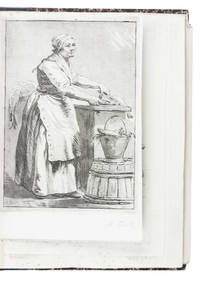
18181418Rotterdam 1818. 4to or cut down folio. J. Immerzeel Mid-19th-century half maroon sheepskin chemical-marbled sides shell-marbled endpapers manuscript spine label. A series of 32 of 33 numbered full-page aquatint and stipple-engraved costume and profession prints engraved by Matthias de Sallieth after drawings made ca. 1790 by Perkois and Prins including folk musicians with their instruments. Lacking plate 5 which has been replaced by an aquatint of a woman cleaning fish by Hermanus Fock with his name in pencil at the foot. With 2 extra prints loosely inserted: colour-printed versions inked a la poupée of plates 20 and 25. 33 engr. ll. An aquatint and stipple-engraved print series of costumes and professions. They were drawn by Perkois 1756-1804 and Prins 1757-1806 ca. 1790 and engraved by Sallieth 1749-1791 as models for young artists to follow. The 1818 publication indicates that they had previously been issued individually but never before collected for publication in book form. The two loosely inserted prints have the exposed skin of the faces necks arms and hands printed in a soft shade of red with the rest in black inked a la poupée. With a tear in one plate not affecting the image repaired with tape 3 plates foxed and a few others with minor foxing but still in very good condition.l Cat. Kunsthist. Bibl. Rijksmuseum Amsterdam II p. 777; Colas 2311; Landwehr Colour plates 389; Lipperheide Gb 46 note. ABE CAT Art History ABE CAT Costumes & Uniforms unknown
1917113288London: Constable & Co Ltd 1917. Signed by the illustrator Signed limited edition number 506 of 525 copies signed by Rackham. "Here is an ideal conjunction of author and artist - the fairy and folk tales of the Brothers Grimm could not have a more fitting illustrator than Arthur Rackham nor he more suitable authors to illustrate" The Bookman. Large quarto. Mounted colour frontispiece and 12 other plates 43 black and white illustrations within the text. Original light grey cloth spine lettered in gilt pictorial gilt titles on a white ground to front board pictorial endpapers white silk bookmark top edge gilt others untrimmed. Extremities slightly rubbed a few marks to cloth front joint tender rear joint cracked but holding endpapers lightly tanned and with a couple of light dampstains light offsetting from plates. A very good copy. Latimore & Haskell p. 46. hardcover
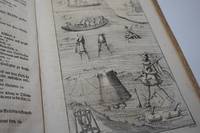
172645427Leipzig: Christoph Zunkel for the author 1726. Hardcover. Very Good. Theatrum Pontificiale Oder Schau-Platz der Brucken und Brucken-Baues : das ist: Eine deutliche Anweisung Wie man nicht nur auf mancherley Arth uber Graeben Baeche und Fluesse gelangen auch so gar in Wassers-Noth mit gewissen Machinen und besondern Habit sein Leben retten kan ferner nach aller Begebenheit und Zufaellen bequeme und bestaendige Bruecken so wohl hoeltzerne auf Jochen oder steinern Pfeilen als ohne dieselben mit Heng- und Spreng-Wercken ingleichen gantz steinerne nach der Kunst mit Vortheil und Bestand zu erbauen : dan nauch wie vielerlen Urthen von Fahren Fliegenden Sturm-Feld und vergleichen Bruden anqugeben; Alles mit vielen Srempeln und denen vornehmsten Bruchten in und ausser Deutschlandes absonderlich aber Mit einer vollkommenen Beschreibung derer Pontons vorgestellet und in 60. Kupffer-Platten erlautert. First edition of the 6th book in his Theatrum Machinarum Series. Folio 10" x 15.25". Published as an independent work however after his death became Vol. VI of his works 10 vols total. Paper backed boards unlettered spine. Speckled edges. Rubricated title. 16 153 pp. 5 60 numbered copper plates I-LVII with IIA XVIA XLA. Woodcut initials head- and tailpieces. Plate XXII depicts the London Bridge. First three plates are picturesque images of equipment needed for working in and on the river. Wear to extremities rubbing and foxing to boards. Small chip to fore edge of p. 76. Small perforations and some staining to gutter of plates LVI and LVII illustration not affected. Ink smudges to top margin of pp. 100-101 text not affected. Some offsetting from text throughout otherwise remarkably clean with little foxing. Bookplate of Mark Edward Andrews loosely inserted. Jacob Leupold 1674-1727 was a German physicist mathematician instrument maker and engineer who was credited as an early inventor of the air pump. Leupold started his work on the Theatrum Machinarum in 1720 which was the first systematic analysis of mechanical engineering. This volume deals with bridge construction and was the first book on bridge building published in Germany. The first major treatise on bridge building was by French engineer Hubert Gautier Traité des Ponts 1716 which was the standard book for bridge building for 70 years Britannica. Leupold builds on this work with a more comprehensive treatment including increased explanation of long-span timber bridges. Christoph Zunkel, for the author hardcover
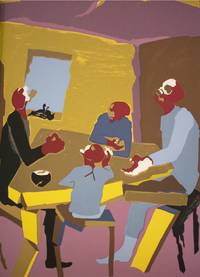
323989New York: The Limited Editions Club 1983. Edition limited to 1500 numbered copies signed by Hersey Warren and Lawrence. With 8 color silk-screens by Jacob Lawrence. 1 vols. Folio. Full black aniline calf lettered in blind. Fine in black silk over boards slipcase. Lawrence Jacob. Edition limited to 1500 numbered copies signed by Hersey Warren and Lawrence. With 8 color silk-screens by Jacob Lawrence. 1 vols. Folio. Printed at the Wild Carrot Letterpress with the silkscreens printed at Studio Heinrici Ltd. The Limited Editions Club unknown
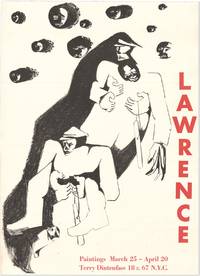
196382862New York: Terry Dintenfass 1963. First Edition. Original lithographed poster with text and illustrations printed in dark red and black on thick cream laid paper measuring 48cm x 66.25cm 18 7/8" x 26 1/8". Mild handling a few faint creases from being rolled with a half-dozen foxed spots; unbacked; Near Fine.<br /> <br /> A striking poster by Lawrence designed to promote his first solo exhibition at Terry Dintenfass Inc. in New York. The illustration was derived from Lawrence's 1963 tempera painting "Two Rebels" "showing four white policemen carrying two black men. The heads of some fifteen witnesses crowd in. In the poster that number was reduced to ten heads that float like moons of light above a protester and his police handlers with their billy clubs dangling from their wrists" Over the Line: The Art and Life of Jacob Lawrence pp.174-175. Paintings like "Two Rebels" "Soldiers and Students" and "Four Students" were almost certainly triggered by news photos and television images of the immediate events of 1960-62 in the South. The poster is not separately listed in OCLC though a signed and numbered lithograph of the image edition of 50 is held at the LC. 82862. Terry Dintenfass unknown
1847M12984Philadelphia:: American Medical Association 1847/8. 1847. Offprint. Series: Transactions of the American Medical Association. Sm. 8vo. 18 pp. Contemporary plain brown wrappers probably as issued; extracted from a bound volume thus a remnant residue affecting spine. Front cover library withdrawal rubber stamp possibly: "Concord Free Public Library". Very good. First SEPARATE OF BIGELOW ON ANESTHESIA the journal form has an entirely different pagination being pages 197-214 in the 1847 issue. We believe this is the original offprint form of this paper by Bigelow. There are several clear differences between this offprint form and the journal issue is 1 the pagination for the offprint is 1-18 for the journal it is 197-214 and 2 the journal issue has "C.-1. at the head of the paper and foot of the page has no page number – whereas the offprint form adds the line "Extracted. . . raises the title text higher on the page and includes a page number "1" at the bottom left margin. There is no known textual difference. <br /><br /> "The committee considered in detail the various anesthetic agents. According to the report some surgeons were afraid to use anesthesia in their surgical operations feeling that the advantages afforded by the relief of pain might be offset by the risks involved. However even at this early date authors of this report felt that a large group of surgeons were wholly in favor of anesthesia. The authors did however admit that some surgeons would restrict the use of these agents to severe operations after the introduction of ether anesthesia in Boston it was not until several months later that the method became generally popular in other communities in the United States. The favorable reports of its use in Boston and in Europe made for the more extensive use in American communities in 1847 and 1848. The dangers of etherization were also considered. In some cases it was thought that convulsions prolonged stupor intense cerebral excitement alarming depression of the vital powers and asphyxia apparently were caused by the inhalation of ether and chloroform. Secondary effects attributed to inhalation in a few cases were bronchitis pneumonia and inflammation of the brain. Interestingly enough according to this report p. 190 ether was considered to be a safer drug than chloroform" Keys pp. 36-47. <br /><br /> "Dr. Bigelow was the unflinching advocate of sulphuric ether as the only safe anesthetic: and his unshaken opinion had a very wide and lasting influence. Bigelow instituted important and productive experiments in anesthesia. He inhaled new and untried anesthetic agents. He made practical and original studies of asphyxia and thoroughly established the fact that insensibility from the inhalation of nitrous oxide gas is largely due to asphyxia. He was also the first to show that anesthesia by nitrous oxide could be accomplished with certainty only by the use of a large volume of gas; and thus made the way plain to Colton and others for its successful adoption in tooth-pulling and in brief surgical operations" Mayo p. 603. <br /><br /> Bigelow 1818–1890 born in Boston studied at Harvard from 1833 and became a prominent surgeon and Professor of Surgery at Harvard University. "His 1846 article 'Insensibility during Surgical Operations Produced by Inhalation' detailed the discovery of ether anesthesia and was selected by readers of the New England Journal of Medicine as the 'most important article in NEJM history' in commemoration of the journal's 200th anniversary." "He was a vocal opponent of vivisection and was best known for his description of the hip joint and for a technique for treating patients with kidney stones." – Wikip. REFERENCES: Keys Thomas The History of Surgical Anesthesia Park Ridge IL: Wood Library Museum of Anesthesiology 1996; Fulton & Stanton Anesthesia VII p. 191; Mayo William J. "In the Time of Henry Jacob Bigelow." JAMA Vol. 77 No. 8. 1921. 597-603 pp. American Medical Association, [1847/8]. unknown
1768WB18898New York: Hugh Gaine 1768. First American Edition. Hardcover. Near Fine. With the printed designation of "seventh edition" the first six editions appeared in London. A stunning copy in its original binding. A number of early ownership signatures. <br/><br/> Hugh Gaine hardcover