47 473 résultats
175232978-1197Zurich Heidegger and Comp. 1752. With engr. frontispiece in part 1 woodcut title-vignette repeated and 32 engravings of which 25 are foldings 1 with a over-slip including views town plans and maps by Joh. Meyer Joh. Melchior Füssli and J. G. Seiller. 4 268 pp. 4 leaves; 16 480 6 pp.; 16 336 pp. 4to. Contemp. half calf gilt lettering on spine. Engraved bookplate Joh. Kaspar Weyss owner's entry Hermann Werdmüller Elgg on inner from cover. Title-pages printed in red and black. Zurich Heidegger and Comp. 1752. The first edition was published in 1716-18. This present second edition of J. J. Scheuchzer's 1672-1733 scientific description of Switzerland is greatly enlarged and much rarer. The plates are mainly views and maps although there are also plates of geological profiles and samples scientific equipment and regional flora and fauna. From 1702 until 1711 Scheuchzer undertook yearly expeditions accompanied by friends and pupils. He was the first to systematically explore the Alps and became a pioneer in the fields of geology palaeontology and glaziology. The work offers historical details and together with Tschudi's chronicle it became one of the main sources for Schiller's "Wilhelm Tell". - A few tears in the folds of some maps and plates repaired. Otherwise a fine and clean copy. - Nissen ZBI 3655; Haller I 1047; Barth 17218. SCIENCE: GEOLOGY / MINERALOGY ; HELVETICA ; Zurich, Heidegger and Comp. unknown
28110Saint-Benoît-sur-Loire vers 1936-1937. Manuscrit autographe à l'encre noire de 70 feuillets in-4 numérotés 23-92 avec un f. 74 bis f. 70 manquant montés sur onglets. Maroquin bordeaux dos lisse double encadrement de filets à froid sur les plats encadrement intérieur de même maroquin orné de filets à froid tranches dorées Semet et Plumelle. . Important manuscrit autographe de travail avec corrections ratures ainsi que variantes et passages inédits et ayant appartenu à Louis Broder premier éditeur du texte. Monté en tête : portrait photographique de Max Jacob le montrant dans sa chambre de la rue Gabrielle en 1917 selon la légende manuscrite au dos tirage argentique 239 x 180 mm. Il a servi à l’établissement du texte pour la version publiée en 1956. . Ce témoignage capital et de première main sur le cubisme devait initialement introduire les mémoires du marchand d'art Paul Guillaume disparu en 1934. Max Jacob y travailla plusieurs années mais n'en publia qu'un fragment en janvier 1937 dans la revue Les Feux de Paris sous le titre « Le Tiers transporté ». Pour le quatre-vingtième anniversaire de la naissance de l'auteur en 1956 Louis Broder en publia la version intégrale avec des illustrations de Picasso l'ami historique de Max Jacob. Les pages 36-38 offrent plusieurs passages raturés restés inédits. Par ailleurs le manuscrit diffère légèrement de l'édition dans l'emplacement des titres et sous-titres. C'est à partir de ce jeu que Broder publia ces Chronique des temps héroïques en y ajoutant la partie publiée dans Les Feux de Paris en 1937 dont le manuscrit lui manquait à l'époque p. 1-33 feuillets 1-22. Propriété du libraire Bernard Loliée il fut vendu lors de la vente de la bibliothèque 22 mai 2019 n° 27. À l'issue de la publication du volume Broder fit relier l'ensemble de ses manuscrits à l'identique de l'exemplaire unique sur papier japon qu'il s'était dessiné : un décor de filets à froid composé par Plumelle sur une reliure de maroquin bordeaux établie par Semet. Dans l'idée d'y adjoindre un jour les 22 feuillets du début du texte Broder demanda à son relieur de réserver la place nécessaire en tête de volume ou figurent autant de feuillets vierges prêts à les recevoir. Le manuscrit Broder commence donc à la page 33 du texte publié et offre toute la suite des Temps héroïques - à l'exception du chapitre VI qui est ici remplacé par trois pages inédites intitulées « Voyage en Suisse » p. 71-73 acquises chez un libraire parisien en 1966 : « Ils sont inédits et doivent prendre place avant la page 99 de la Chronique des temps héroïques en début de chapitre » et du folio 70 « page de titre de la seconde partie ». Le catalogue de la vente Loliée mentionne deux chapitres des Temps héroïques conservés dans des collections publiques : « Mouvement moderne » à la bibliothèque d'Orléans et « Art nègre » au fonds Gompel-Netter de la BnF. Après consultation c'est inexact : ces manuscrits ne constituent pas des parties originales du manuscrit mais sont de simples notes et des articles préparatoires à leur rédaction. Le manuscrit Broder est donc le seul document autographe existant et le seul qui ait servi à l'établissement [Saint-Benoît-sur-Loire, vers 1936-1937]. Manuscrit autographe à l'encre noire de 70 feuillets in-4, numérotés 23-92 [avec u unknown
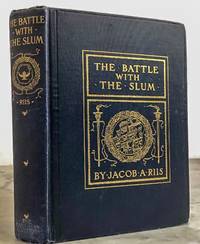
1902021995New York: The Macmillan Company 1902. First Edition. Hardcover. Minor wear to covers. Near Fine. Second Printing in publisher's original decorated blue cloth. Illustrated. This copy is SIGNED "with the best wishes of/Theodore Roosevelt/Dec 1906." Jacob Riis a significant contributor to the cause of urban reform in the United States of America at the turn of the twentieth century was among the most dedicated advocates for America's oppressed and downtrodden. He arrived in New York from his native Denmark at the age of 21 in 1870. A pioneer in photojournalism Riis photographed and wrote about the slums and tenements of a New York in the dawn of a new century. Riis came to Roosevelt's attention through his 1890 book HOW THE OTHER HALF LIVES. As Commissioner of the New York City Police Department Roosevelt accompanied Riis on his evening travels through the slums and witnessed firsthand the inhumane conditions endured by many of New York's inhabitants. In his 1901 book MAKING OF AN AMERICAN Riis wrote of Roosevelt: "It could not have been long after I wrote HOW THE OTHER HALF LIVES that he came to the Evening Sun office one day looking for me. I was out and he left his card merely writing on the back of it that he had read my book and had 'come to help.' That was all and it tells the whole story of the man. I loved him from the day I first saw him; nor ever in all the years that have passed has he failed of the promise made then. No one ever helped as he did. For two years we were brothers on Mulberry Street." Roosevelt in turn wrote of Riis after his death: "It is difficult for me to write of Jacob Riis only from the public standpoint. He was one of my truest and closest friends. I have ever prized the fact that once in speaking of me he said 'since I met him he has been my brother.' I have not only admired and respected him beyond measure but I have loved him dearly . and I mourn him as if he were one of my own family." <br/><br/> The Macmillan Company hardcover
1773822371773. BAEGERT JACOB. Nachrichten von der Amerikanischen Halbinsel Californien. Mannheim: Churfurstl Hof-und Academie-Buchdruckerey 1773. 2nd issue. 12mo. 16 358pp. 2 engraved folding plates and 1 engraved folding map. Three-quarter tan morocco over contemporary paper-covered boards rebacked and recornered in period-style leather morocco spine label stamped in gilt. One leather tab in margin marking the folding map; stain marking where a tab once was at the folding plates. Very good or better. Howes B-29; Hill p. 12; Cowan p. 27; Sabin 4363; Bell B5; Streeter Sale 2442; Barrett 129; Wagner Spanish Southwest 157; Meadows Baja California 1; Graff 137; Pilling Proof Sheets 203. Second printing with some corrections after the first printing of the previous year of an early account of Lower California by the Jesuit Jacob Baegert. Baegert lived in Baja California from 1751 to 1768 and spent most of his time at the Mission of San Luis Gonzaga leaving after the expulsion of the Jesuits in 1767. He provides important details on the culture of the Native Americans of the region including the Pericues Guiacuras and Cochiemes. Wagner states that the German Jesuits were especially dissatisfied toward the end of the Jesuit regime in California and Baegert's bitterness is evident in his book: ".it was a land full of ferocious beasts and even more ferocious Indians the soil was poor the water undrinkable and there was no fuel to be had." The fine and important map was made by a fellow Jesuit Ferdinand Consak and is described by Streeter as "most helpful in giving the location of the many Jesuit missions in Lower California. It also shows the route along the west coast of Mexico followed by Baegert in going to California in 1751 and his route out in 1768 after the expulsion of the Jesuits." The two plates apparently not issued with all copies depict male and female Californian Native Americans. Rare. The National Union Catalogue locates only three copies of the second issue. unknown
18601726401860. CHEVREUL Michel-Eugène and M. JACOB editors. Le teinturier universel: echo des applications des Matières colorantes. 96 fascicles in four volumes. 192; 192; 192; 192 pp. together with 192 specimens of various dyes on paper cotton silk rope and leather. Folio 310 x 228 mm. bound in original printed wrappers together in a new red cloth box. Paris: Teinturier Universel 1860-1864. Complete set containing every issue from 1 année no. 1 1 avril 1860 through 4 année no. 24 15 mars 1864. The periodical was issued semi-monthly; each issue includes lecture notes from M.E. Chevreul's "Cours de teintures des Gobelins" here in its first printing. Chevreul's colour studies made him one of the most influential scientists in France during the nineteenth century. From 1824 he was director of dyeing at the Manufactures Royales des Gobelins where he taught chemistry for nearly sixty years. "Chevreul's immediate task at Gobelins was to work on the improvement of colour intensity and fastness in wools. He had been selected for this position because he was an outstanding chemist; and his initial studies were on the chemical aspects of dyes and dyeing attempting to place the art of dyeing on a more rational basis than the complicated and empirical procedures then employed.Chevreul rendered an important service to the dye industry during the years prior to the advent of synthetic dyestuff" DSB. With nearly two hundred specimens of various colour dyes on paper cotton silk rope and a few illustrating the tanning and colouring of leather. The final volume investigates a large number of contrasting colours on the same type of sample Échantillon de Papier. Fragile spines somewhat worn but an excellent copy in original condition with many gatherings unopened. A desirable copy of a rare and important work. Bibliotheca Tinctoria 1218. hardcover
211191New York: Limited Editions Club 1989. First edition. Large folio hardcover. Number 184 of only 400 copies printed on handmade paper by Cartiere Enrio Magnani. Features eight stunning color silkscreen illustrations by Jacob Lawrence. A clean and tight very near fine copy in blue cloth boards and in a near fine black linen covered clamshell box lined with suede but that has some slight sunning and other very minor wear and with laid in newsletter for the Limited Editions Club. Signed by Lawrence on the colophon page. A very nice copy of one of the most sought after books from this long running Please note that this is a very heavy and oversized book and will require extra shipping. Limited Editions Club unknown
156550854Frankfurt a. M. 1565. auff den Linien und Ziffern sampt der Welschen Practic und allerley vortheilen neben der extraction Radicum und von den Proportionen mit vilen lustigen Fragen und Auffgaben.Drei Teile Erste vollständige Ausgabe aller drei Teile Teil 1 war bereits 1557 erschienen Vorsatz u. Titelbl. M.Wasserr ansonsten sehr guter Zustand im Originaleinband mit Renaissance-Bildprägung.Besitzereintrag a.Vors.von Lorentz Wietzell von Zutz Lurainz Wietzel Zuoz anno 1577 Feyerabend & Hüter 8°. Ldr.m.Prg. Naturwissenschaften unknown
29341Paris Louis Broder coll. « Écrits et Gravures » n° 2 24 octobre 1956. 1 vol. 185 x 250 mm de 126 p. 8 f. En feuilles sous couverture illustrée chemise illustrée et étui de l'éditeur. . Édition originale posthume du texte de Max Jacob considéré comme ses « Mémoires ». Elle est illustrée par Pablo Picasso de 3 lithographies originales en couleurs et en noir étui couverture et portrait-frontispice 3 pointes-sèches originales et 24 dessins inédits gravés sur bois par Georges Aubert qui rappellent les illustrations du Chef-d’œuvre inconnu. Tirage unique à 170 exemplaires sur vergé de Montval celui-ci un des 30 numérotés en chiffres romains auxquels sont joints 2 états de la lithographie pour l’étui exemplaire n° II signé par Picasso. . Max Jacob livre ici un témoignage de premier ordre celui de ses souvenirs littéraires et artistiques de Montmartre. Il rencontre Pablo Picasso en 1901 à Paris et s'en suit une fraternelle amitié qui fait de lui le témoin quasi quotidien du travail de Picasso désigné comme son héros aux côtés d'Apollinaire lorsqu'il doit écrire sur l'époque de la rue Ravignan. À la mort du marchand Paul Guillaume sa veuve lui demande une préface à un volume des mémoires de son mari. C'est ce projet qui est l'acte fondateur du texte et deviendra ce récit fondamental sur le cubisme : La Chronique des temps héroïques. On y croise outre Picasso et Apollinaire les futuristes et les avant-gardes du XXe siècle. Arrêté et déporté à Drancy où il périra le 5 mars 1944 Jacob ne verra jamais la publication de ces lignes rédigées en 1936-37. Louis Broder se chargera de l'édition d'après un manuscrit complet des huit chapitres et Pablo Picasso se fera un honneur de l'illustrer : il composera une lithographie sur papier report 3 pointes sèches et 2 lithographies en couleurs pour la couverture et l'étui ; 24 gravures sur bois dans le texte de Georges Aubert d'après les dessins de Picasso. Signalons qu'il existe un exemplaire unique sur japon réalisé pour Louis Broder. Il n'existe pas de témoignage aussi vivant et direct que celui-ci sur l'aventure de l'art moderne depuis la bohème montmartroise jusqu'aux frasques des années folles. Complet du bulletin de souscription. Habiles restaurations à la chemise-étui. Paris, Louis Broder, coll. « Écrits et Gravures », n° 2, (24 octobre) 1956. 1 vol. (185 x 250 mm) de 126 p., [8] f. En feuil unknown
103909Amsterdam Robert de Baudous 1608. Folio. Three parts in one volume. Engraved title-page 12 pp. 114 of 117 engraved plates. Contemporary vellum. Text and first 13 plates in part one water-stained in lower margin not affecting plates. 16 plates in part two water-stained in upper margin not affecting plates. . hardcover
1789247021Paris: Chez Barrois 1789. First edition in French. Avec trente-quatre planches. 34 finely etched plates by Copia EXQUISITELY COLORED by a contemporary hand. 4 324; 4 295 pp. 2 vols. 8vo. Contemporary tan polished calf triple gilt-filet borders smooth spines richly gilt with 2 black leather spine label by Bozerien jeune. First edition in French. Avec trente-quatre planches. 34 finely etched plates by Copia EXQUISITELY COLORED by a contemporary hand. 4 324; 4 295 pp. 2 vols. 8vo. An extremely rare if not unique copy of Engel's classic treatise on acting with the plates colored by hand. This is the very scarce first French edition of Engel's famous Ideen Zu Einer Mimik first printed in German in 1785-86 and one of the most important works on the theory and psycho-physiology of acting. Engel 1741-1802 was a German philosopher who was professor of moral philosophy in the Joachimstal Gymnasium in Berlin and following that tutor to the crown prince of Prussia the future Frederik William III. In 1787 he became director of the Royal Theater in Berlin where he wrote many plays which enjoyed considerable success as well as many essays on aesthetic subjects<br /> <br /> ONE OF A VERY FEW COPIES WITH HAND-COLORED PLATES. Cohen-De Ricci 346-347; Brunet III 982; Magriel p. 179 Chez Barrois unknown
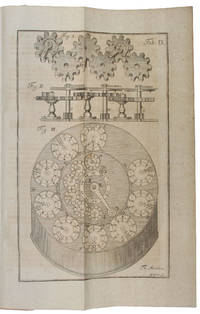
172735955Leipzig: Christoph Zunkel and Bernhard Christoph Breitkopf 1727-1739. Folio. 372x239mm. Two parts in one volume. Contemporary vellum two cuts in spine modern slip case. Provenance: Book plates of Arnaud de Vitry and Andras Gedeon. Stamps to half-title and title-page from Stadtbibliothek Augsburg - sold as duplicate. First part: 14 200 4 pp. and 45 plates numbered I-XLIII plate III with volvelle. Second part: 12 100 94 pp. and 40 plates on 36 sheets numbered I-XL. All plates intact. An exceptionally fine copy. <br/><br/><em>The scarce first edition of the of the eighth and tenth volumes each volume being a complete work in itself of Leupold's magnificent ten-volume "Theatrum Machinarum" - one of the first encyclopedias of technology being the most complete and the most extensively illustrated work on mechanical engineering published hitherto. Complete sets of Leupold's Theatrum are virtually never found and Ferguson stated in his bibliography of technology that he had never seen a complete set. Each volume is complete in itself. The eighth volume is of particular interest in the history of computers as it deals mainly with calculating machines. This volume contains detailed descriptions of the calculating machines of Schott 1668 Grillet 1673 Leibniz 1674 Poleni 1709 and Leupold himself. The tenth volume is a supplement to the series published after Leupold's death by Ernst Scheffler. It deals with odometers gyrometers step counters and other devices for the measurement of distances. This volume is furthermore of importance because it contains the 90 page general index to the entire series. Hook & Norman: Origins of Cyberspace no. 6 volume 8 only.Honeyman Sale lot 1997 volume 7 and 8.Macclesfield Sale lot 1242 volume 8 only.Ferguson: Bibliography of the History of Technology pp.45-46.Wolf: A History of Science Technology & Philosophy in the 18th Century pp.657-8. </em> hardcover
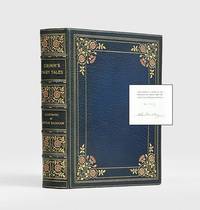
1909187099London: Constable and Company 1909. Bound with an onlay design in homage to Briar Rose Signed limited edition number 327 of 750 signed by Rackham this copy in a fine Bayntun-Rivière binding. Rackham's first version of Grimm's Fairy Tales published in 1900 had no signed limited edition. This is a revised and enlarged edition with some new illustrations as well as others redrawn and coloured. As noted by Rodney Engen "Rackham greatly loved fairy tales and had collected his many favourites over the years. The Brothers Grimm held a special place in his collections since they represented his love of all things German and contained the elements of the grotesque which fascinated him throughout his career". Quarto 274 x 219 mm. Colour frontispiece and 39 plates all tipped in and with tissue guard captioned in red black and white illustrations to text illustrated title page printed in red and black. Finely bound by Bayntun-Rivière in later 20th-century dark blue crushed morocco spine lettered in gilt compartments decorated and boards framed with gilt briar and red morocco onlay roses gilt rose and briar detail to turn-ins marbled endpapers edges gilt. Gift inscription contemporaneous to binding to first blank. Binder's blanks foxed else fine. Riall p. 97. Engen Arthur Rackham 2002. hardcover
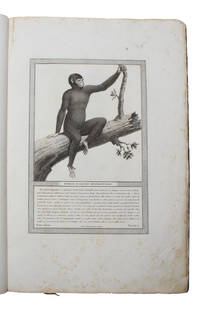
182232794Milano P. Hugues 1822. Folio. 48x325 cm. Bound in one cont. hcalf richly gilt back and title-label with gilt lettering. Title-label a little torn. Lightly rubbed along edges and spine ends but good. Engraved ornamental title-page printed in brown. 6 engraved leaves with text and 4 plates with descendt-line skeletons etc. 17 printed leaves of text 25 engraved leaves with text Indices and text. And in all 89 fine stipple-engraved plates 4 separately numb. I-LXX I-XV. Plates with engraved frame and at bottom engraved text in Italian.A large uncut copy with broad margins. Scattered marginal brownspots a few tears to margins images clean and bright. <br/><br/><em>Scarce title-issue of this important and perhaps the largest monograph on primates apes and monkeys from the 19th century by the French painter Nicholas Henri Jacob. The original issue was published in 2 parts 1812-14. This title-issue has a reset title-page a new dedication and the text beneath the image is in Italian. The illustrations in these splendid stipple-engravings are the same.The plates depict apes monkeys and lemurs from the Old World and The New World in 5 Classes: 1. Genere; Orang; Pithecus. 2. Genere. Babbuino. 3. genere. Guenone; Cercopithecus. 4. Genere. Sapajù; Cebus. 5. genere. Sapajù-Sagoino; Callithrix.- Part II: Famiglia. I Maki; Lemures.Wood p. 402. - BMC NH II:916 but with the year 1823 "This is the same as the original from 1812 except in the setting of the title-page of the dedication and of the translations of the introduction." - Nissen. 2080. </em> unknown
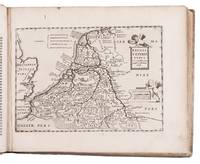
1660KBQE72K0ZFOJAmsterdam 1660. Oblong 4to ca. 23 x 28 cm. Jacob Aertsz. Colom Contemporary vellum sewn on 4 supports laced through the joints with shelf mark labels of the Oudheidkamer Twente mounted on the spine and back board. With an engraved allegorical title page by Experiens Sillemans and 50 full-page numbered engraved plates 47 maps and 3 plates containing 117 portraits of the Counts of Brabant Flanders and Holland. 2 4 14 223 2 1 blank pp. Enlarged Dutch edition of an attractive atlas of the Seventeen Provinces roughly corresponding to present-day the Netherlands and Belgium containing all 50 maps and plates. The work was compiled and published by the ambitious Amsterdam map- and globe maker printer and publisher Jacob Aertsz. Colom 1600-1673. Like Willem Jansz. Blaeu Colom began his career by publishing pilot guides and maritime atlases a field in which few dared to compete with Blaeu before branching out into terrestrial atlases. The maps and portraits in this second Dutch edition were printed from the plates of the first Dutch edition 1635 but the accompanying text has been revised and expanded.The descriptions were derived from the text written by Reinier Telle for Abraham Gooss Nieuw Nederlandtsch Caertboeck 1616 which itself was largely based on Lodovico Guicciardinis classic Beschryvinghe van alle de Nederlanden 1612. In addition to general maps of the Netherlands depicting both the Roman period and the 17th century and of the Seventeen Provinces the work contains numerous detailed maps of individual regions and cities together with their surrounding areas. These include among others the Meierij of s-Hertogenbosch Bergen op Zoom Breda Valkenburg and Dalhem Mechelen the diocese of Liège Namur the Veluwe Zutphen the island of Dordrecht Delfland six maps of newly reclaimed polders Bijlmermeer Purmer Wormer Heerhugowaard Diemermeer and Zijpe the three historic regions of Frisia Eastergoa Westergoa and Zevenwouden and Walcheren.The engraved portrait plates comprise two sheets containing respectively 40 and 38 portraits of the Dukes of Brabant and the Forestiers of Flanders and a third with 39 portraits of the Counts of Holland.With the library stamp of the Oudheidkamer Twente on the front flyleaf. The work has been recased with the endpapers restored the vellum is slightly soiled and stained. Restored tears in the head and foot margins of the title page the maps have not been bound in order the margins of map 31 have been trimmed without affecting the image map 45 with a water stain in the lower outer corner. Otherwise in good condition.l Koeman Col 5; V.d. Krogt Koeman's Atlantes Neerlandici IIIB 365:02 pp. 635-637; Shirley British Library T.COLM-1a; STCN 853365954; Tiele Bibl. 262; USTC 1845771. hardcover
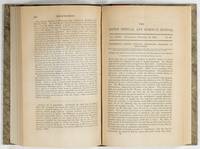
1846229581846-1847. Boston Med. Surg. J. 35/ 1-26. - Boston David Clapp August 1846 to February 1847 8° 2 8 544 IV pp. 1/4-leather and marbled boards; Small brown stains on 5 pages and some browning of text leves; fine copy. First Edition! Read Before the Boston Society of Medical Imporvement Nov. 9th. 1846 an abstract having been previously rea before the American Academy of Arts and Sciences Nov. 3rd. 1846. Communicated for the Boston Medical and Surgical Journal. VERY RARE - Sir William Osler him only on his deathbed on Dec. 1919 was able to incorporate into his collection. "When this long-looked-for volume arrived in Dec. 1919 towards the end of his last illness Sir Wm. Osler asked that the following note be inscribed in it: "All things come to him who waits - but it was a pretty close shave this time! . a blastoderm from which the enormus literature has developed." Content relating to Anaesthesiology: 1 Smilie E.R.: Insensibility produced by the inhalation of the vapor of the ethereal solution of opium. Letter p.263 28.Okt. 1846. 2 Bigelow H.J.: Insensibility during Surgical Operations produced by Inhalation. Read before the Boston Society of Medical Improvement Nov. 9th. 1846 an abstract having been previously read before the American Academy of Art and Sciences Nov. 3rd. 1846. p.309; with editorial note "Operations without pain" on p. 324. - Garrison & Morton No.5651: "The first published description of ether anesthesia. John Collins Warrren performed the operation and William Morton delivered the anesthetic. 'Bigelow a surgeon witnessed the operation and left an excellent account in the above paper'." 3 Flagg J.F.: The inhalation of an ethereal vapor to prevent sensibility to pain during surgical operations p.356. 4 Peirson A.L.: Surgical operations with the aid of the "new gas" p.362. 5 Warren J.C.: Inhalation of Ethereal Vapor for the Prevention of Pain in surgical Operations p.375. - ".stands out in literature of surgical anesthesia as fundamental and truly epoch making". Osler 6 Bigelow H.J.: Insensibility during surgical operations produced by inhalation p. 379. - Letter in reply to Flagg p. 356. 7 Ellsworth P.W.: The discoverer of the effects of sulphuric ether p. 397. 8 Flagg J.F.: Inhalation of sulphuric ether p. 407. - Reply to Bigelow p.379. 9 Parkman S.: Inhalation of ehtereal vapor. Painless reduction of a dislocated shoulder joint p.409. 10 Peirson A.L.: Sequel to Dr. Peirson's operations p.410. 11 Editorial: Insensibility during surgical operations produced by inhalation p.413. 12 Mansfield J.D.: The inhalation of ethereal vapor &c. p.424. 13 Wallace W.C.: Remarks on the the inhalation of ether previous to surgical operations p.435. 14 "A Correspondent who has no Property in Patent Rights": Are inventions in surgery and in chemistry legitimate subjects for patents p.436. 15 Editorial: Apparatus for inhaling the new gas p. 440. 16 "N.Y. Correspondence": Letheon in New York p. 442. 17 B. T.E.: Insensibility produced by ethereal inhalation p. 445. 18 Cox A.L.: Experiments with the letheon in New York p. 445. 19 "N.Y. Correspondence": Insensibility during surgical operations p.464. 20 "A Physician": Ethereal vapor p.472. 21 Kimball H.: Use of the letheon; seventeen teeth extracted p.489. 22 "Claudian": The patent "Letheon" p. 514. 23 "N.Y. Journal of Med. and Collat. Sciences": Insensibility during surgical operations by inhalation p. 518. 24 "N.Y. Correspondence": Letheon in New York p. 520. 25 Editorial: Insensibility by inhalation of the letheon p. 542. Osler 1357; Cushing B 380; Fulton & Stanton Anesthesia IV1; Keys p. 29; Cole Anesthesia pp.32-42; Duncum pp.99-120. Garrison & Morton No.5651 hardcover
19311717561931. CHERNIKHOV Yakov. Osnovy sovremennoj architektury: eksperimental'no-issledovatel'skie raboty / J.G. Tchernikhov - Les bases de l'architecture contemporaine: essai de recherches expérimentales / J.G.Tschérnikhow - Die Grundlagen der modernen Architektur: erfahrungsmässige - experimentelle Forschungen / J.G. Tschernichow. 96 pp. illustrated with 46 photographically reproduced colour plates and numerous black and white designs. Folio 304 x 206 mm. bound in original boards. Leningrad: Izdanie Leningradskogo Obscestva Architektorov 1931. Second enlarged edition the first edition had only 5 plates. A fine copy of this rare treatise by the legendary Soviet architect Yakov Chernikhov whose books are among the most visually striking of all Russian avant-garde books. One of the few copies we have seen that has not needed to be rebacked. Incredibly rare with OCLC listing no copies in the U.S. Getty Research Institute Russian Modernism 129. hardcover
1817D12811Milano: P. Hugues 1817. Hardcover. Very Good. Contemporary half black and green morocco gilt-stamped lettering and ornament direct in spine compartments 5 raised bands; folio 455x300mm; leaves printed on the recto only with wide margins; consisting of engraved illustrated title-p. I-VI engraved text and illustrations 3 scimie dell' antico continente prima classe orang I-IX 2 seconda classe babbuino X-XVII 2 terza classe guenone XVIII-L 3 scimie del nuovo continente quarta classe sapaju LI-LX 2 quinta classe sapaju-sagoino LXI-LXX LXXI-LXXXVIII text 2 indice 6 dei lemuriani ossia maki propriamente detti genere maki I-VIII 2 genere indri IX-X 2 genere loris XI-XIII 2 genere galago XIV 2 genere tarsiere XV XVI indice. Collates complete with printed and engraved text and a grand total of 85 very fine -- and very charming -- engraved plates of monkeys most of whom will remind you of someone you know. Spine tips and edges of boards discreetly renewed; some light scuffing along spine and joints. Marginal browning; a few tiny worm holes to last few leaves; otherwise nice and bright. Bookplates of Cecilia Barbosa de Moura. <br/><br/>An important early monograph on primates including orangutans baboons guenons sapajous lemurs indris loris galagos tarsiers. P. Hugues hardcover
5252Fine engraved frontis. port. of Klein & 28 engraved plates. 3 p.l. incl. frontis 233 1 pp. one leaf of ads. 8vo fine cont. polished calf spine nicely gilt red morocco lettering piece on spine. Paris: C.J.B. Bauche 1754. <br/> <br/> bound with:<br/> <br/> —. Doutes ou Observations de Mr. Klein…sur la Revûe des Animaux faite par le premier Homme sur quelques Animaux des Classes des Quadrupedes & Amphibies du systême de la Nature de M. Linnaeus. Et des Remarques sur les Crustacés sur les Animaux qui ruminent & sur la Vie de l’Homme comparée avec celle des Animaux. One folding engraved plate. 2 p.l. 108 pp. 8vo. Paris: J.B. Bauche 1754.<br/> <br/> I. First edition in French 1st ed. in Latin: Danzig 1734 and enlarged. This is “one of the earliest monographic treatments of the sea urchins. It includes descriptions illustrations and a classification of both recent and fossil sea urchins.Although altered and enlarged this work was a major source of information on the Echinoidermata for zoologists and paleontologists throughout the eighteenth century and remained a point of departure in discussions by such early nineteenth century authors as James Parkinson.â€â€“D.S.B. VII p. 401. <br/> <br/> II. First edition in French 1st ed. in Latin: Leipzig 1743. This work summarizes Klein’s feelings about taxonomic methods. His method was based entirely on external characteristics such as the number and position of limbs and the mouth. He vigorously opposed any method including the Linnaean system based on characters not visible externally. <br/> <br/> Klein 1685-1759 a leading marine zoologist “had many and diverse interests in natural history besides sea urchins. He developed a botanical garden in Danzig founded and directed a naturalist’s society there made extensive collections and published about two dozen monographs including studies of birds fishes reptiles and invertebrates other than the sea urchins particularly the mollusks.â€â€“D.S.B. <br/> <br/> The attractive frontispiece depicts Klein standing in front of his natural history cabinet. <br/> <br/> A very fine and pretty copy. unknown
51-5969Nuremberg: Peter Conrad Monath 1719. Folio. 21.5 x 34.3cm. Contemporary catspaw calf rebacked preserving original gilt-tooled spine with red morocco label marbled edges; Dutch patterned endpapers front free endpaper replaced with handmade marbled paper. Half-title engraved portrait of the author engraved frontispiece title printed in red and black 23 engraved plates one double-page engraved map small hole with loss of a few letters to final 4 leaves of index Mendelssohn I p.842 folio 345 x 210mm. .FootnotesSCARCE FIRST EDITION of "one of the first works in German devoted entirely to the Cape region of South Africa. Aware of the conflicting information promulgated by many Europeans Kolb recorded his voyages in part 'to oblige the learned and curious part of the world with a useful and entertaining history of a country and people of whom we have had hitherto such various and uncertain accounts'" Howgego. Kolbe 1675-1726 lived at the Cape from 1705 till 1713 and based his account on first hand experience.FIRST EDITION. Kolbe lived and worked at the Cape from 1705 till 1713 and decribes in his Caput bonae spei hodiernum South Africa and the Cape of Good Hope including its geography climate flora and fauna followed by an interesting and accurate account of the Hottentots based on the author's first hand experience recording their language religion education and customs. This edition was followed by the French edition Description du Cap de Bonne-Esperance. Amsterdam 1742.OCLC Number / Unique Identifier:51407544: Physical Description:18 846 82 pages 17 unnumbered leaves of plates 1 folded : illustrations map portrait ; 34 cmProvenance: Lavington bookplate. Nuremberg: Peter Conrad Monath, 1719. unknown
3022New York and San Francisco: Associated American Artists and Tamarind Lithography Workshop 1965. LANDAU'S RAREST AND MOST IMPORTANT GRAPHIC SERIES. This is a suite of 10 haunting and enigmatic original lithographs by Jacob Landau each one justified and signed in pencil by the artist. From an edition of 20 sets printed on fine BFK Rives wove paper this is set 20/20. Additionally signed by Landau in the colophon. Furthermore this is an outstanding association copy with Landau's signed presentation inscription to Sylvan and Lilyan Cole. Sylvan Cole 1918-2005 was the most important dealer in American prints of his or any generation and as director of Associated American Artists he published and sold many of Landau's prints. Lilyan was his second wife. "I did a suite of lithographs called Charades I associated the name Charades with what Goya had called Caprichos riddles puzzles. He also did a series called Proverbs where he picked up on sayings that were common in the land but dealt with them in mysterious puzzling ways. And I dealt with what came out of my obsessions things that I did not fully understand. Fear of death for instance and a sort of frustrated feeling of love. These are obsessions that manifest themselves in various ways and images. The reason they seem to appeal to others is because apparently other people share some of the same obsessions. Thats where the archetypal aspect comes in." --Jacob Landau. Folio. FINE AND BRIGHT WITH NO DEFECTS. Housed in the original cloth folding case by Schuberth Bookbindery of San Francisco. An outstanding item. Since all of the lithographs are signed most sets have been broken up. This set however was in Sylvan Cole's private collection from the day it was presented to him by the artist until his death in June 2005. IMPORTANT NOTE: During March 2006 hundreds of prints represented as being from "the Sylvan Cole collection" were sold at public auction. In fact ALL of these items were from his leftover gallery inventory not his private collection. As far as I know the few items I offer from Sylvan's collection are the ONLY items anywhere on the market which are actually from his private collection which he kept in his apartment not his gallery. I acquired them all directly from Sylvan my uncle mainly in spring 2005. <br/><br/> New York and San Francisco: Associated American Artists and Tamarind Lithography Workshop, 1965 hardcover
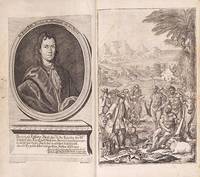
171752850Frankfurt and Leipzig: Samuel Tobias Hocker 1717. Hardcover. Good to very good condition. Bound in full vellum with handwritten lettering on spines. Octavo. Vol. I.: 24 incl. frontispiece 580pp. 8 432 383 1pp. Franckfurter Juden Ehverlöbniß und Hochzeit. Vol. II.: 8 358 1pp. 30 320pp. 447 1 192pp. plus two registers and a supplement 1717 38 48 1 60pp. Frontispiece and ten copper plate engravings some folding. Part two and three published in 1714 part four in three parts published in 1717 with two chapters published in 1716 see below. Speckled edges. Decorative initials head- and endpiece woodcuts.<br /> <br /> Jewish oddities introducing curiosities and memorable events of Jews in "all four parts" of the world in the last few centuries particularly of Jews scattered in Germany. Contains a complete Frankfurt Jewish Chronicle with memorable events relating to Jews living in Frankfurt for centuries including several elucidating engravings. Part two includes the chapter XXV "about Jews in Frankfurt regarding marriage vows and wedding" on six pages. Part four in three chapters of which the last includes the apparel regiment for Frankfurt Jews and a chapter on the celebration on the occasion of the birth of the Crown Prince of Jews in Frankfurt and Prague both 1716 both with separate title pages and frontispieces but continuous pagination.<br /> <br /> Though not addressed to a particular Jewish community most of the information was gathered in Frankfurt with several texts copied by Schudt in Hebrew and Yiddish that are not recorded in elsewhere e.g. a Selicha authored by Rabbi Shmuel Schotten Katz after the great fire in the Jewish Quarter of Frankfurt in 1711 the Purim play "Ahasuerus-Spiel" most copies of the play were burnt following a rabbinical decree; thanks to Schudt the text was preserved two versions of women's incantations for childbirth regulations of the Jewish community forbidden luxuries among others. <br /> <br /> Schudt's writings are considered a landmark in the history of modern anti-Semitism mainly due to a chapter dedicated entirely to describing the Jewish body its shape colors and smells promulgating racist anti-Semitism in Europe. <br /> <br /> Schudt's book features several copperplate engravings. The most prominent of these is an image of the Judensau Jews' Sow which first appeared in medieval sculptures found in churches throughout Germany starting in the 14th century and then was subsequently depicted in woodblock and copperplate engravings. Schudt's version of this notorious anti-Semitic image is an elaborate construction taking motifs from three or more predecessors presenting a panoply of negative anti-Semitic tropes including: the blood libel ritual murder the devil's association with the Jewish people Jews "sucking and eating the wealth" from the allegorical pig and their belief in the absolution of sin through the sacrifice of the Azazel during the holiday of Yom Kippur. He includes descriptive text to elucidate the images.<br /> <br /> The main part of this folk art image shows three Jewish figures one sitting backwards atop the sow holding its tail facing the devil while another Jew kneels behind the pig eating its excrement encouraged by the devil. A third Jew is lying on his back suckling the sow's milk. On the other side of the sow a high priest stands with the Azazel goat.<br /> <br /> Additional engravings depict Jacob blessing Joseph's sons another two festive processions held in Jewish communities in Germany in 1716 for the birth of Leopold Johann son of the Holy Roman Emperor Carl VI and a portrait of Johann Jacob Schudt among others. Some of the engravings are placed into the text.<br /> <br /> With elaborate inscription inked to verso of front free endpaper. Text in German Gothic script. Some wear with light staining of lower edge of back cover of Vol. I more extensive on back cover of Vol. II here with some light staining of spine and rubbing of bindings. Some water staining in lower edges of last 200 pages of volume one not affecting text. Volume one with light erosion at bottom foredge corner of some 200 pages not affecting text. Volume two with some light fraying of lower foredge corner of Vol. II. Johann Jacob Schudt studied theology Wittenberg and then orientalism Hamburg under Ezra Edzardi. Devoted to Jewish history he published several works but is best known for his "Jüdische Merckwürdigkeiten" in three parts first published in 1714 with part IV a supplement volume published in 1717 containg the fourth part in three chapters.<br /> <br /> Schudt's standing in the Jewish community of Frankfurt he taught here at the gymnasium he had been educated at deteriorated with the publication of the "Oddities." Though he had published "Judaeus Christicida" on his own in 1703 suggesting corporal as well as spiritual punishment for the crucifixion the writings in "Jewish Oddities" repeats many of the anti-Semitic tropes found in Johann Andreas Eisenmenger two volumes under the title "Entdecktes Judentum" Judaism Unmasked first published in 1711. Eisenmenger's then was banned after several complaints by the Jewish bankers Oppenheimer and Wertheim only to be republished three years later.<br /> <br /> Schudt's "Jewish Oddities" however is still considered a fundamental source for Jewish history especially in Frankfurt documenting details of Jewish life their language prayers holidays dress and customs not found in other sources. Samuel Tobias Hocker hardcover
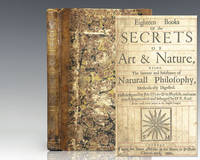
1270831660: Printed for Simon Miller at the Starre in St. Pauls Church-yard London. First edition in English of Reade's 17th century adaptation of Johann Jacob Wecker's De secreti libri xvii Book of Secrets of 1582. Folio bound in three quarter polished calf over marbled boards with gilt titles and ruling to the spine woodcut printer's device to the title woodcut head and tailpieces and initials numerous woodcut diagrams in the text. In near fine condition. Lacking the engraved frontispiece title page supplied. Exceptionally rare. Based on Swiss physician and philosopher Johannes Jacob Wecker’s De secreti libri xvi Book of Secrets first published in 1582 Eighteen Book of the Secrets of Art & Nature was conceived as ‘an Encyclopaedia of Arts and Sciences interwoven with facetious Conceits to recreate the fancy’. The compiler Dr R. Read or Reade gives a long list of ‘Authors made use of in this Treatise’ which adds Culpeper Digby Galileo Harvey Hobbs Lady Howard and Platt to those used by Wecker. He has also inserted his own name between Rondolet and Rhasis. Wecker's original list remains one of the most unusual assortments of authors ever assembled. As is seen in other 16th and 17th century Books of Secrets every imaginable topic of natural science natural magic arts trades sports and pastimes is included with a substantial compilation of recipes experiments and observations extracted from classical medieval and contemporary authors. Books of Secrets constituted one of the most popular genres in early modern scientific publishing and supplied a great deal of practical information to an emerging new middle-class readership leading some historians to link them with the emerging secularistic values of the early modern period and to see them as contributing to the making of an age of how-to. Wing W1236; ESTC R12839; Eamon 134. Printed for Simon Miller at the Starre in St. Pauls Church-yard hardcover
178625988Ephrata: The Cloister 1786. First edition 4to pp. 6 250 2; printed in black letter throughout; engraved vignette pasted on title page; prelims and terminals waterstained small tear in the lower margin of title not touching letterpress old ownership signature at the top of the title page of Christian Stauffer 1736-1808 and a 30-line poem also presumably by him on the final blank leaf as well as a few marginal annotations; contemporary full calf front cover detached but present; the whole in a new cloth clamshell box. An abstract of the diary of the Brotherhood which had been kept by Brother Lamech and continued and edited by Brother Jaebez Agrippa i.e. Johan Peter Miller. Brother Lamech has been identified as Jacob Gass by Seidensticker First Century of German Printing in America p. 117. Evans 19558: "This biography of Johann Conrad Beissel the founder of the Ephrata Community is the principal source of information regarding that remarkable institution. Brother Agrippa is Johann Peter Miller; and Brother Lamech's secular name is said to be Jacob Gass. An English translation was printed in Lancaster Pennsylvania in 1890." Howes G76 identifying this as the second issue of three with the title page seal pasted on. [The Cloister] unknown
198385437Limited Editions Club. As New. 1983. Hardcover. FREE UPGRADE to Courier/Priority Shipping Upon Request - IN STOCK AND IMMEDIATELY AVAILABLE FOR SHIPMENT - AS NEW THE TEXT BLOCK IS PRISTINE CLEAN UNMARKED AND IN EXCELLENT CONDITION - - Corresponds to ASIN: B002FKB6RE. SIGNED BY AUTHOR ILLUSTRATOR AND BY ROBERT PENN WARREN WHOSE POEM IS INCLUDED. LIMITED EDITION; NUMBERED COPY. -- with a bonus offer-- . Limited Editions Club hardcover
1699ABC_46554Leiden 1699. Folio. Peter van der Aa Contemporary sprinkled quarter calf sewn on 8 supports with the corresponding raised bands on the spine a red morocco title label on the spine lettered in gold sprinkled paper sides red and blue sprinkled edges. With an engraved frontispiece to part 1 2 engraved title vignettes 2 full-page engraved dedicatory plates 1 engraved headpiece vol. 1 with 211 engravings 4 folding maps 1 folding plan 14 folding plates and 192 views in the text; vol. 2 with 1 folding map and 7 engraved illustrations in the text. 2 parts in 1 volume. 6 143 4 108 ll. Enlarged edition of a famous and extensively illustrated work on the duchy of Brabant including Louvain Brussels Antwerp and 's-Hertogenbosch and their surroundings by the historiographer Jacob le Roy 1633-1719. This rare work contains maps plans and fine views of the castles and county seats of the nobility of Brabant including their parks and gardens as well as the main monasteries and abbeys.The engravings are excecuted by several artists such as Jacob Harrewijn 1660-1727 a student of Romeyn de Hooghe Lucas Vorsterman II 1595-1675 who worked with Peter Paul Rubens and Robert Whitehand. Amongst the castles and houses depicted are views of Bonlez Beersel Bois-Seigneur-Isaac Corroy-le-Château Vilvoorde Cleydael Berchem and many others as well as views of monasteries and cloisters such as St Michael's Abbey Corsendonck and the Groenendael Priory. Other than castles and monasteries the work also contains a large view of the city of Turnhout and a folding plate of the St. Rumbold's Tower at Mechelen.It is bound as usual with Le Roy's L'erection de toutes les terres giving extracts of letters of Charles V Phillippe II Charles II and other emperors and kings on conference about titles of barons viscounts and counts and the setting up of lands in baronies marquisates and principalities. It contains a large double-page map of Brabant and 7 engraved illustrations of Héverlé Hoogstraten Walhain Grobbendonck Trazegnies Grimberghen and Westerloo identical to the map and engravings of these country houses in the first work.With the bookplate of Ivan Plissart late 19th-early to mid-20th century mounted on the front pastedown and a round shelfmark label mounted on the back board. The boards and spine are somewhat rubbed the edges and corners of the boards are scuffed the spine ends are slightly worn. The map of Tongerlo is somewhat browned but otherwise internally very clean. Overall in good condition.l Bibl. Belg. III pp. 852-854; Hollstein VII pp. 221; Hollstein LII pp. 56-63; Ad 1: STCN 832271780 6 copies; USTC 1841122 4 copies; ad 2: STCN 832271861 4 copies; USTC 1841121 4 copies. hardcover