5 048 résultats
191422309New York: Privately printed 1914. 1914. Fine. - Octavo gray boards titled in gilt on the front board with a gilt-lettered leather label on the spine. The binding is very slightly bumped. xvii & 136 pages. Illustrated with a black-and-white portrait frontispiece with a tissue guard. Near fine. <p>Limited edition of 50 copies printed by the De Vinne Press on Van Gelder paper. New York: Privately printed, 1914. hardcover
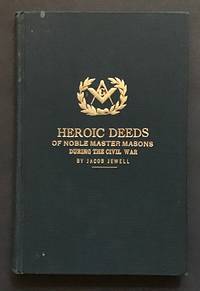
191634332Pueblo CO: The Franklin Press. 1916. First Edition; First Printing. Hardcover. This volume written by Jewella Civil War soldier had started the process of becoming a Mason but was interrupted two weeks later by joining the Union army in 1862. After serving in the winter of 1865/66 he became Master Mason. The book contains the stories of soldiers who when captured by the Confederates or the Federal Army once they were known to be a Mason were treated as brothers and well cared for. Cleary Jewell had solicited these stories as they are mostly signed by the former soldier/Mason who experienced these considerations. The book also contains a brief autobiography of Jewell as well as some thoughts on Masonry war and related subjects. The Masonry scholar Michael A Halleran wrote in the journal "Heredom" suggesting the Masonry affiliation aided prisoners on both sides of the conflict. Jewell's book is considered one of the earliest works addressing the Freemasonry's role in the Civil War though Halleran does criticize it for being "anecdotal." See volume 15 2007 of "Heredom." The book is near fine with a few small spots on the front board. Extremely scarce.; Small 8vo 7½" - 8" tall; 127 pp . The Franklin Press hardcover
19467897Paris: Pierre Fanlac 1946. Fine. Pierre Fanlac Paris 1946 14 x 19 cm broché First edition one of 600 numbered copies the only issue with 100 other deluxe copies. Iconography. Pierre Fanlac unknown
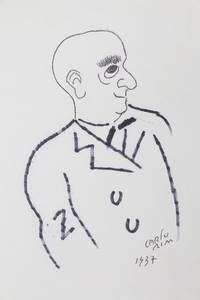
193085074s. l. 1930. Fine. s. l. s. d. circa 1930 21 x 24.50 cm une feuille Original drawing in black ballpoint pen and heightened with black felt-tip pen on tracing paper by Carlo Rim depicting his great friend Max Jacob slightly in profile and sketching a discreet smile. Carlo Rim was a Provençal writer author of ""Ma belle Marseille"" a caricaturist a filmmaker and was notably the friend of Fernandel Raimu and Marcel Pagnol but also of Max Jacob and André Salmon whom he met in Sanary. Small tears and creases to the margins of the sheet. The drawing is signed and dated ""Carlo Rim 1937"" in ballpoint pen in the lower right corner of the drawing. unknown
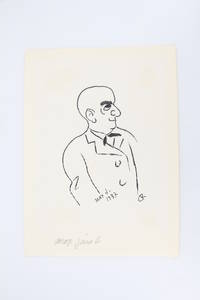
193780505s. l. 1937. Fine. s. l. 1937 17.50 x 24 cm une feuille Original drawing signed in black felt-tip pen on tracing paper by Carlo Rim depicting his great friend Max Jacob slightly in profile and sketching a discreet smile. The drawing on tracing paper is mounted on a sheet of paper and is monogrammed and inscribed in black felt-tip pen ""Max J. 1937"" Carlo Rim has inscribed in pencil ""Max Jacob"" at the foot of the second sheet. Carlo Rim was a Provençal writer ""Ma belle Marseille"" a caricaturist a filmmaker and was notably the friend of Fernandel Raimu and Marcel Pagnol but also of Max Jacob and André Salmon whom he met in Sanary. unknown
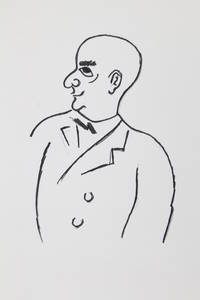
193082350s. l. 1930. Fine. s. l. s. d. circa 1930 21 x 24.50 cm une feuille Original drawing in pencil heightened with black felt-tip pen on watermarked paper by Carlo Rim depicting his great friend Max Jacob slightly in profile and sketching a discreet smile. Carlo Rim was a Provençal writer author of ""Ma belle Marseille"" a caricaturist a filmmaker and was notably the friend of Fernandel Raimu and Marcel Pagnol but also of Max Jacob and André Salmon whom he met in Sanary. unknown
192232303Paris: J. Ferenczi & fils 1922. Fine. J. Ferenczi & fils Paris 1922 12 x 19 cm broché First edition on ordinary paper false statement of edition. Spine slightly warped with two small tears reattached at head and foot light marginal foxing on some pages. Precious autograph inscription signed by the author to Max Jacob: "".au plus ingénieux des poètes / au délicieux Max Jacob / ce livre qu'il eut la bonté de désirer lire."" "".to the most ingenious of poets / to delightful Max Jacob / this book which he was kind enough to wish to read."" J. Ferenczi & fils unknown
199463136Paris: Les amis de la reliure originale 1994. Fine. Les amis de la reliure originale Paris 1994 17.50 x 25 cm en feuilles sous chemise toilée noire First edition one of 26 copies in sheets and hors commerce hand-lettered on white conqueror only leading copies after 4 Chapel. Pleasant copy of his complete black cloth shirt. Autographs signed by Claude Bourdois and Claudine Boulouque. Les amis de la reliure originale hardcover
192575648Columbia PA: N.p. ca. 1925. These records were kept by Jacob Bowers 1888-1972 of Columbia PA. Contents include 11 pigeon pedigree sheets; 3 letters to Bowers dated 1924-45; an American Pigeon Racing Union diploma from 1926; a small book entitled "Diseases of Pigeons; and other clippings and notes. Some fold rears and a few hips but a nice assemblage.Though it has all but disappeared pigeon racing used to be an immensely popular in the early 20th century. Pigeon racing has been described as the "sport with a single starting gate and a thousand finish lines." Competing birds are taken from their lofts and must race home. The time taken and distance covered are recorded and the fastest bird is declared the winner. Races are generally between 100 kilometers 62 mi and 1000 kilometers 620 mi in distance. In the United States flights of up to 1800 kilometers 1100 mi have been recordedProvided it survives the many hazards associated with racing a single pigeon could compete from about six months of age and still be in competition at over ten years of age. Such feats are uncommon however and the average racing career rarely exceeds three years.citation needed Hazards can also come from weather conditions on the day of the race. N.p. unknown
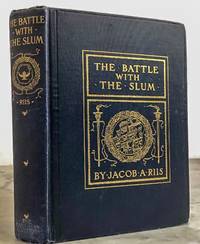
1902021995New York: The Macmillan Company 1902. First Edition. Hardcover. Minor wear to covers. Near Fine. Second Printing in publisher's original decorated blue cloth. Illustrated. This copy is SIGNED "with the best wishes of/Theodore Roosevelt/Dec 1906." Jacob Riis a significant contributor to the cause of urban reform in the United States of America at the turn of the twentieth century was among the most dedicated advocates for America's oppressed and downtrodden. He arrived in New York from his native Denmark at the age of 21 in 1870. A pioneer in photojournalism Riis photographed and wrote about the slums and tenements of a New York in the dawn of a new century. Riis came to Roosevelt's attention through his 1890 book HOW THE OTHER HALF LIVES. As Commissioner of the New York City Police Department Roosevelt accompanied Riis on his evening travels through the slums and witnessed firsthand the inhumane conditions endured by many of New York's inhabitants. In his 1901 book MAKING OF AN AMERICAN Riis wrote of Roosevelt: "It could not have been long after I wrote HOW THE OTHER HALF LIVES that he came to the Evening Sun office one day looking for me. I was out and he left his card merely writing on the back of it that he had read my book and had 'come to help.' That was all and it tells the whole story of the man. I loved him from the day I first saw him; nor ever in all the years that have passed has he failed of the promise made then. No one ever helped as he did. For two years we were brothers on Mulberry Street." Roosevelt in turn wrote of Riis after his death: "It is difficult for me to write of Jacob Riis only from the public standpoint. He was one of my truest and closest friends. I have ever prized the fact that once in speaking of me he said 'since I met him he has been my brother.' I have not only admired and respected him beyond measure but I have loved him dearly . and I mourn him as if he were one of my own family." <br/><br/> The Macmillan Company hardcover
1904014375New York: The Outlook Company 1904. First Edition. Hardcover. Hinges cracked and neatly repaired. Still Near Fine. Second Printing in publisher's original decorated cloth. Illustrated with plates. This copy virtually unique as it is INSCRIBED and SIGNED by both the author and the subject as President. Riis's inscription is dated 5 August 1908. Roosevelt writes: "with the best wishes of/Theodore Roosevelt/The White House/Jan. 18th 1909." The addition of "The White House" by Roosevelt is notable as prior to his administration the residence was known as the "President's Palace" the "President's House" and the "Executive Mansion." It was Roosevelt who officially named it "The White House" in 1901. Of the many books signed by Roosevelt we have both handled and seen we have never before encountered one in which he has noted his official residence along with his signature. <br/><br/>Jacob Riis among the most dedicated advocates for America's oppressed and downtrodden arrived in New York from his native Denmark at the age of 21 in 1870. A pioneer in photojournalism Riis photographed and wrote about the slums and tenements of a New York in the dawn of a new century. Riis came to Roosevelt's attention through his 1890 book HOW THE OTHER HALF LIVES. As Commissioner of the New York City Police Department Roosevelt accompanied Riis on his evening travels through the slums and witnessed firsthand the inhumane conditions endured by many of New York's inhabitants. In his 1901 book MAKING OF AN AMERICAN Riis wrote of Roosevelt: "It could not have been long after I wrote HOW THE OTHER HALF LIVES that he came to the Evening Sun office one day looking for me. I was out and he left his card merely writing on the back of it that he had read my book and had 'come to help.' That was all and it tells the whole story of the man. I loved him from the day I first saw him; nor ever in all the years that have passed has he failed of the promise made then. No one ever helped as he did. For two years we were brothers on Mulberry Street." Roosevelt in turn wrote of Riis after his death: "It is difficult for me to write of Jacob Riis only from the public standpoint. He was one of my truest and closest friends. I have ever prized the fact that once in speaking of me he said 'since I met him he has been my brother.' I have not only admired and respected him beyond measure but I have loved him dearly . and I mourn him as if he were one of my own family." The Outlook Company hardcover
1951112603Philadelphia: Jefferson Medical College 1951. Softcover. Very Good. Small quarto. vi 119pp. Comb-bound wrappers. Owner's name penned on title front cover detached from a few prongs very good. Containing Course I: The Upper Extremity Course II: The Head and Neck Course III: The Thorax Course IV: The Abdomen and Pelvis Course V: The Lower Extremity Course VI: The Articulations. Scarce OCLC locates only 2 copies. Jefferson Medical College unknown
1972119001Kottayam Kerala : Kurisumala Ashram Vagamon no year about 1972. 180x125mm. XV - paperback. 312 Kurisumala Ashram Vagamon paperback
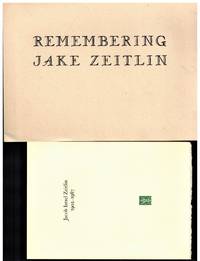
1987009206Los Angeles: The Rounce & Coffin Club/ Patrick Reagh and Bonnie Thompson Norman 1987. Book. Near Fine. One Sheet Illustrated. First Printings. Remembering Jake Zeitlin Dinner Invitation Rounce & Coffin Club invitation for dinner Nov. 12 1987 one sheet oblong fold 6' x 8 1/2" printed by The Tiger Press. Together with Jacob Israel Zeitlin 1902-1987 Memorial Service Program Sunday September 131987 Leo Baeck Temple Los Angeles. "Printed with deep regard and affection by Patrick Reagh and Bonnie Thompson Norman." One sheet folded 7" x 5". Both items are Fine. The Rounce & Coffin Club/ Patrick Reagh and Bonnie Thompson Norman unknown
19542110502150415378Asahishinbunsha 1954. Soft Cover. Fine. Volume: 1 Asahishinbunsha paperback
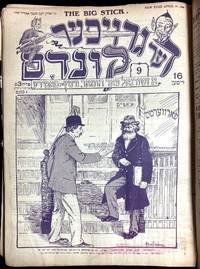
190942930New York: Ferlag "Kibets 1909. 1st Edition. Original publisher’s binding Folio newspaper. Complete first volume Starting with Vol I Nr 1 of “Der Kibitser†Dec. 15 1908 renamed and renumbered first as Vol I Nr 1 Jan 22 1909 of “Der Groyser Kibetser The big kibetzer†with the following issue of Feb 5 numbered as "3" to correctly follow from the first issue and then with Vol I Nr 6 March 19 1909 onward as “Der Groyser Kundes The Big Stick†or “The Big Prankster.†Incidentally the other set of this volume we examined also did not have a Nr 2 so we are confident this is complete as issued. <br> One centerfold cartoon by Zuni Maud see image features "Der Kaptialistisher Tayfel"--the Capitalist Devil–holding back a "mother" by the hair to stop her from interfering as "baby's milk-bottle" is drained off by the "milk-trust" cat. <br> The caption reads "The Capitalist Devil: - to the mother: Never mind madam all in English in Hebrew letters you go to the factory the milk-trust will take good care of your baby."<br> This cartoon-laden periodical was a New York City Yiddish language satirical bi- weekly which ran from 1908 until 1927.<br> The humor paper was issued biweekly this volume for its first 20 months and then weekly after that. OCLC also references another Vol I Nr 1 from April 15 1908 a special S´imhes` Toyreh Simchas Torah issue but this may have been a one-off. <br> Founded by the humorist Yosef Tunkel or Der Tunkeler his pen name meaning 'The Dark One' the paper was taken on by Jacob Marinoff when Tunkel left to work for an established paper in Warsaw. The paper consciously set itself up in opposition to the serious Yiddish-language press of the time such as the socialist Forverts.Naturally more traditional religious Judaism did not escape its satire: The later 1915 "Christmas" edition included a parodic conversation between Jesus and the prophet Elijah. <br> Despite its irreverent attitude to everything it also published poetry by Di Yunge "The Young Ones" poets such as Moyshe-Leyb Halpern and Zuni Maud. At its height it had a circulation of 35000 but folded in 1927 due to flagging sales. Der Groyer Kunds is highlighted in this recent talk by Yiddish comics scholar Eddie Portnoy on the reactions in the Yiddish press to restrictions on Jewish immigration to the US: https://www.yiddishbookcenter.org/collections/archival-recordings/recorded- programs/ybcr-nybc-ybcr-1048/door-slams-shut-reactions-yiddish-press-immigr ation .<br> SUBJECTS: Yiddish wit and humor -- Periodicals. OCLC: 28297536. Most holdings appear to be fragmentary and do not include these issues. Issue 18 with torn cover. In final issue the bottom margin suffers some loss to the final leaves none to the dramatic front cover though. Damaged boards are loose and most issues are coming loose though the quality paper used has remaind strong and bright much better than standard newsprint would have. Important graphic Yiddish humor from the great migration period. Dramatic and displayable! BK5 YID-43-9A-LEX. [New York]: Ferlag "Kibets unknown
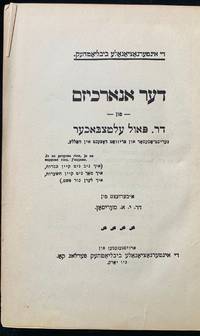
190943139New York: Internatsyonale bibliothek Verlag ko 1909. First edition. Original boards 8vo 347 pages 21 cm. In Yiddish. Title translates as “Anarchism.â€<br> Translation of Paul Eltzbacher’s “Anarchism†into Yiddish. In it he covers seven anarchist figures: Godwin Proudhon Stirner Bakunin Kropotkin Tucker and Tolstoy. Includes bibliographical references.<br> “Jacob Abraham Maryson was a Jewish–American anarchist doctor essayist and Yiddish translator. Maryson was among the few Pioneers of Liberty who could write in English. He was among the Pioneers who launched the Varhayt in 1889 the first American anarchist periodical in Yiddish….Maryson contributed to a variety of other Yiddish publications and became known as ‘the Kropotkin of the Jewish anarchist movement’. During Fraye Arbeter Shtime's hiatus in the late 1890s Maryson assisted in the cultural and literary journal Di Fraye Gezelshaft. Beginning in 1911 he edited the anarchist periodical Dos Fraye Vort. Maryson organized the Kropotkin Literary Society to print Yiddish translations of European thinkers. Maryson handled some of the group's most challenging translations including Marx's Das Kapital Stirner's The Ego and His Own and Thoreau's Civil Disobedience. He also translated John Stuart Mill's On Liberty. Maryson later wrote The Principles of Anarchism in 1935.†Wikipedia.<br> SUBJECTS: Anarchism. OCLC: 19304220<br> Very Good Condition. YID-48-3-. New York: Internatsyonale bibliothek Verlag ko unknown
193334478New Haven Yale University Press; Paris P. Geuthner 1933. Hardcover. Original Cloth. 4to. LIX CLIV 183 pages. 29 cm. First edition. In English and Judeo-Arabic. The manuscript of the Book of comfort. Edited from the unique manuscript by Julian Obermann. <br> <br> Facsimile edition of a Judeo-Arabic manuscript. With transcription into Arabic; introduction and notes in English. Part of the Yale oriental series Researches XVII. <br> Nissim ben Jacob ben Nissim ibn Shahin c. 990-1062 "together with Hananel b. Hushi'el was the outstanding leader and talmudist of North Africa. . Hibbur me-haYeshu'ah Ferrara 1557 Nissim's best-known work is a collection of Hebrew stories and folktales taken from early sources. It is designed to strengthen belief faith and morality among the people and to raise their spirit. This work possibly the first prose storybook in medieval Hebrew literature paved the way for Hebrew belletristic literature as a literary genre. <br> Tradition has it that Nissim dedicated the book to his father-in-law Dunash who is otherwise unknown to console him in his mourning. <br> The first printed edition was published from an early Hebrew translation and the Arabic text was published by J. Obermann. The Hebrew version has been frequently republished not always according to the same translation. <br> The work circulated widely even before its first printing and had a great influence on similar story collections. Ma'asiyyot she-ba-Talmud Constantinople 1519 was based upon it and the Hibbur ha-Ma'asiyyot ibid. 1519 is an anthology of its stories. Many of the stories included by Gaster in his The Exempla of the Rabbis 1924; 19682 were taken from it" EJ 2007. <br> <br> Subjects: Talmud - Legends. Jewish legends. Aggada - Translations into English. Folk literature Judeo-Arabic - Translations into English. <br> <br> Dampstains to margins of pastedowns front blank endpapers final 2 leaves and outer margins of a few other leaves as well. Stains and occlusions to rear board. Good Condition thus. RAB-58-39-XX. New Haven, Yale University Press; Paris, P. Geuthner hardcover
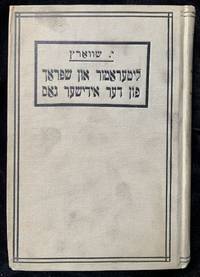
192543188New York: Jewish neighborhood Pub. Co 1925. First edition. Original hardcover binding 8vo 222 pages. 21 cm. In Yiddish. Title translates as “Literature and Language from the Jewish Neighborhood.†<br> Interestingly OCLC lists only 2 titles published by “Jewish neighborhood Pub. Coâ€: this title by Jacob Schwartz which has “Jewish Neighborhood†in the title; and another title also by Jacob Schwartz which also has “Jewish Neighborhood†in the title “The Black Spot of the Jewish neighborhood†= “Der shvartser flek fun der Idisher gas: dos is a mishpet iber a Idishen kritiker un a zay gezund tsum beseren lezer†also published 1925. <br> So clearly this is self published under an imprint name related to the author’s interests. <br> SUBJECTS: Yiddish language. OCLC: 41894060<br> Clean solid copy. Good Condition. YID-48-16-LX-CC-’gge. [New York]: Jewish neighborhood Pub. Co unknown
1924BIBLIO-45924N.p. n.d. but Clarendon Press Oxford 1924. . Blindstamped cloth small 4to. 57 leaves of plates on stiff card. This is a volume of plates produced we believe by W.R.L. Lowe and E.F. Jacob to accompany the work "Illustrations to the Life of St. Alban in Trin.Coll.Dublin Ms.E.I.40" - the text booklet with descriptions by M R James is not present here. In addition to the three groups of plates listed in the title three further plates are present: The second flyleaf; and John Dunstable's Music to the hymn to St. Alban. From ms. VI. H. 15 in the Bibliotheca Estense Modena - 2 plates. Minor wear to spine extremities otherwise Good. N.p., n.d., [ but Clarendon Press, Oxford, 1924. ] hardcover
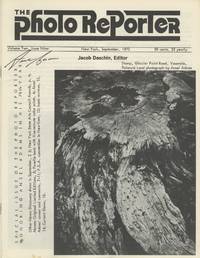
197254471NeW York: Modern Age 1972. First edition. 4to. 16 pp. illustrated from b&w photographs. A few tiny stains on the front wrapper; otherwise fine. Signed on the cover in ink by Ansel Adams. "The purpose of this newsletter a monthly is implicit in its name to report activity in the field of photography primarily in New York City of course and as much as practicable in other parts of the country as well." Jacob Deschin. Modern Age unknown
193552335London: Frederick Muller Ltd. 1935. 12mo. 303 1 pp. Orange cloth gilt lettering on spine map endpapers slight dustsoiling very slight lean to spine w/ d.j. cover art of river crocodiles in purple turquoise & orange slight chipping head & foot of spine minor edgewear still VG/VG copy. First edition stated of this insightful travel memoir of the people and conditions through Liberia Ashanti Ghana Dahomey Benin Nigeria Togo and Cameroon before and through World War I. Scarce in original dustjacket. Frederick Muller Ltd., hardcover
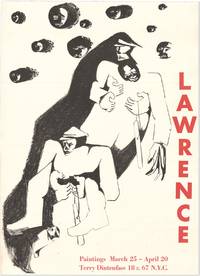
196382862New York: Terry Dintenfass 1963. First Edition. Original lithographed poster with text and illustrations printed in dark red and black on thick cream laid paper measuring 48cm x 66.25cm 18 7/8" x 26 1/8". Mild handling a few faint creases from being rolled with a half-dozen foxed spots; unbacked; Near Fine.<br /> <br /> A striking poster by Lawrence designed to promote his first solo exhibition at Terry Dintenfass Inc. in New York. The illustration was derived from Lawrence's 1963 tempera painting "Two Rebels" "showing four white policemen carrying two black men. The heads of some fifteen witnesses crowd in. In the poster that number was reduced to ten heads that float like moons of light above a protester and his police handlers with their billy clubs dangling from their wrists" Over the Line: The Art and Life of Jacob Lawrence pp.174-175. Paintings like "Two Rebels" "Soldiers and Students" and "Four Students" were almost certainly triggered by news photos and television images of the immediate events of 1960-62 in the South. The poster is not separately listed in OCLC though a signed and numbered lithograph of the image edition of 50 is held at the LC. 82862. Terry Dintenfass unknown
191060857Warren OR: Lovewell-Foto 1910. Two silver gelatin photos sized 8 x 6 in. mounted on 12 x 10 in. gray studio board embossed borders and photographer’s imprint caption location & dating in neat white manuscript ink at lower border below the images minor rubbing to corners some very minor edgewear still two VG photos with bright contrast. These two original images capture the prosperous dairy farming operation of Jacob Hammer 1858-1951 who along with his wife Barbara and eight children ages 7 to 23 were renting a substantial farm and just 5 years later purchased a much larger spread on Deer Island in Columbia County Oregon. The photographs appear to have been shot by John & Sarah Lovewell who worked as a husband & wife traveling photographers from about 1910-1915 along the Columbia & Willamette Rivers. Lovewell-Foto, unknown
191861380Portland OR: Shope Brick Co. Columbia Commercial Studio 167 Fourth Ave. ca. 1918. Oblong 4to. 11.5 x 8.25 in. With 41 original linen-backed silver gelatin photographs sized 9.5 x 8 in. nearly all w/ neat type-written captions on versos all w/ photographer’s stamped imprint on verso. Contemporary flexible calf post-binder three nickel-plated screwposts at gutter margin rounded corners yapp edges gilt title stamped on front cover some fraying to the linen-backing at fore-edges minor edgewear some scuffing a few images w/ nearly indistinguishable perforated slices not penetrating linen still an exceptional exemplar w/ former ownership markings of Koch Schmidt on first image margin. An outstanding salesman sample photo album recording the use of Shope’s patented brick facades for homebuilding apartment buildings commercial buildings and interiors in the Pacific Northwest during World War I. The album opens with a 1914 award certificate from the Manufacturers & Land Products Show which remained on permanent exhibit at the Pacific International Exposition Building for over 10 years. This is followed by photographs shot of such buildings as the newly completed Aetna Apartments Printing Office at 21st & Sandy; the Utah-Idaho Motor Co. Maxwell dealership in Pocatello ID; the Golden Rule store in the Morris Block in Lewiston ID; the Miller Wood Fuel Co. in Portland OR with Chief Gasoline pump in front; the King Albert Apartments in Portland OR finished in 1918; together with many splendid examples of PNW Arts & Crafts homes. The featured homes include a stately residence on 49th & Belmont the Dr. Tamiesie House porch piers and tile floor in Laurelhurst now the Sisters of Social Services Home; the Nash home on Sunnyside; Armstrong residence on Council Crest; striking residences in Rose City Park Irvington and Alameda. Also featured are Craftsmen homes in Walla Walla Pocatello Corvallis Spokane and in other areas of Portland. Fourteen of the photographs depict the ornamental Arts & Crafts brick facades for fireplaces with interior shots. The main fireplace in the furnished Dr. Tamiesie home the DeKeater residence the fireplace finished in 1916 for the East Side Business Men’s Club in Portland and others. Founded originally in 1910 in the City of Portland by David Shope 1862-1948 having developed his specialized brick-making machinery for clay & concrete bricks as featured in the final photograph the company’s products quickly proved popular with Arts & Crafts architects in the Pacific Northwest. Shope used a patented process to achieve what he termed the “Red Wire Cut†and “Old Gold Rough Texture†for commercial facades and also used concrete cast stone to achieve special effects and sold his licensed machinery to contractors as well. By 1922 he heavily marketed the fact that the Shope facades were the only ones to mostly survive the 1922 Astoria fire. He also aggressively protected his patents suing competitors on a regular basis. After 1923 he sold out to the Eugene Concrete Pipe Company and returned to Lake City MN where he lived with his daughter Birdie. Gensler 1873-1968 was a German-American photographer in San Francisco CA who operated Columbia Commercial Studio from about 1915 through World War II before moving back to Alameda CA and in two of the photos he has proudly displayed his 1915 Harley-Davidson V-Twin motorcycle in the foreground. We could find no similar album or collection of photographs in any holdings for the Shope Brick Co. Shope Brick Co., [Columbia Commercial Studio, 167 Fourth Ave.], unknown