Shipherd, Jacob RBiblio.com

1 818 résultats
185900502200John P. Jewett and Company / Sheldon and Company 1859. First Edition. Hardcover. Good/No Jacket. 8vo - over 7¾" - 9¾" Original brown cloth stamped in gilt ex-library with light markings; some shelfwear and wear to hinges; slight staining to margins. Account of the rescue of a detained fugitive slave from jail. John P. Jewett and Company / Sheldon and Company hardcover
1876AB1001New York:: Harper & Brothers 1876. 1876. Small 8vo. 347 1 4 pp. Original red blind-stamped cloth with gilt spine; spine ends worn. Very good. Abbott was born in Maine and went to Bowdoin College. He was prolific as a writer making numerous books of juvenile fiction brief histories biographies and religious books for the general reader. King Richard II 1367-1400 was also deposed from the throne in 1399. His demise was at the whim of Henry IV who offered him a chance to live at first but earlier supporters of Richard tried to place him back on the throne and thus to remove that threat Henry saw that he died in prison. Harper & Brothers, 1876. hardcover books
18592310187Boston: John P. Jewett and Company 1859. First Edition. First Edition. Good/No Jacket. First edition Sabin 80503. Corners rubbed with a few tape repairs to spine library bookplate and stamp on front endpapers a few pages lightly foxed. 1859 Hard Cover. vii 1 280 pp. 8vo. Two-column format. Engraved illustration of Cleveland Ohio jail where the prisoners were confined on title page. An account of escape recapture and rescue of a 'fugitive slave' and subsequent indictment of the rescuers. From Sabin: John P. Jewett and Company unknown books
1881184539New York: T. Kelly 1881. Hardcover. VG Cover and spine have general wear fading staining and peeling. front end page missing. Bookblock has age toning. Interior pages have some age toning. Some pages loose from binding. Brown leather boards. Black title blocks on 4 raised band spine. Decorative inside covers and end pages xv 1090 xxii pages : illustrations Decorative bookblock. "Illustrated with one thousand engravings by distinguished artists. T. Kelly hardcover books
18699475B. G. Teubner. 1869. First Edition. Hardcover. Good in No Dust Jacket dust jacket. Book has been rebound in quarter leather binding with dark brown decorative boards. Leather rubbed at spine ends. Some wear to corners. Top corners bumped. Gilt lettering to spine. Ex-library copy with 1 stamp to titlepage and small call numbers to spine. No other markings. Light browning to inner covers. Very light foxing in places.; 310 pages . B. G. Teubner hardcover
1872121743New York: Boericke & Tafel 1872. Hardcover. Fair. iv 1080 1083-86 p. last 4 p. bound in upside down. 22 cm. Quarter leather with pebbled cloth. Spine poor and coming loose both hinges cracked corners worn. Small label Dr. E. A. Lodge Homoeopathic Chemist Detroit and ink signature on front endpapers. Pages 651-70 coming loose. Pages 1069 onwards have rough edges. P. 1081-82 of index missing. <br/><br/>Sections on hygiene general diagnosis special therapeutics surgical diseases. List of medicines at rear followed by index. Boericke & Tafel hardcover
18266455Nijmegen: the widow of J.C. Vieweg and son 1826. Modern quarter sheepskin with a morocco title and author label on the spine lettered in gold the year of publication lettered in gold below marbled paper sides blue sprinkled edges. 8vo. With 4 letterpress folding tables and numerous illustrations and figures on 16 folding plates lithographed by Guillaume Philidor van den Burggraaf Brussels. First edition of a rare Dutch technical handbook on clockmaking which was considered an important manual for the technical training of clockmakers at the time. It aimed to foster a more intuitive understanding of the concepts instead of explaining rules that students would learn at school. The work is divided into four parts: the first part treating basic mechanics the second the calculation and design of clockworks the third clock music and the fourth sundials. The whole is preceded by an introduction on the history of the profession. The work is illustrated with several technical plates and figures offering a visual explanation of the concepts described.Jacob Levi Smit ca. 1766-1826 was a master clock- and watchmaker from Groningen with more than forty years of experience. He was born in Friesland and likely learnt the profession in Leeuwarden where he worked for several years. A number of his clocks have survived. The present work is his only written publication and was intended for the students of the clockmakers school. The publishers preface tell us that Smit passed away on 1 November just as the main part of the text was being printed. A second edition appeared in 1836 and a third in 2011.With the owners stamp of M. Passenier Domburg on the half title. The spine is slightly rubbed. Several faint water stains in the margins of the plates occasional very minor foxing. Otherwise in very good condition.l NCC 63936431 8 copies; Saalmink p. 1788; Tardy Bibliogr. mesure du temps p. 233; not in Bibl. Horlogère de Monsieur R.P.; WorldCat. the widow of J.C. Vieweg and son, unknown
1900182837New York: Harper & Brothers 1900. First Edition Thus; Early Printing. Hardcover. Very Good in boards. Previous owner imprint on FEP. Harper & Brothers hardcover
18825422<p>Macmillan 1882. Hardcover. Very Good. An about very good condition copy of a scarce edition. A re-cased exlibrary copy with associated stamps and stickers. Which is both square and tight. Small dampstain first few pages at top edge. In excellent reading condition. Overall a very nice edition. <br /><br /></p> Macmillan hardcover
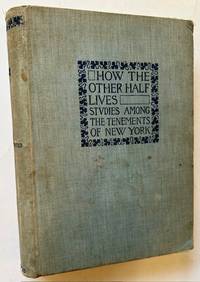
189024769New York: Charles Scribners Sons 1890. Cloth. Very Good. A solid copy of the 1890 1st edition in its variant gray cloth binding with blue titling and decorative blue bordering. Tight and VG with bumping to the tips and light spotting along the panels. One signature loose pgs. 195-208 but still holding. Thick octavo dozens of evocative illustrations complementing Riis's timeless text "chiefly from photographs taken by the author". Beyond dispute one of the great records of late 19th century poverty in New York and a landmark document of economic inequality. Charles Scribners Sons unknown
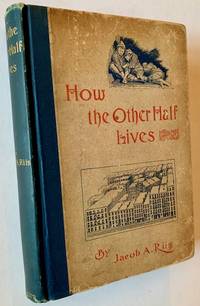
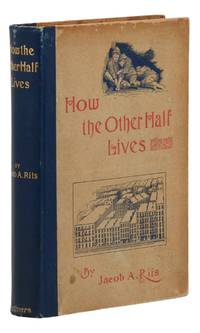
189021441New York: Charles Scribners Sons 1890. Pictorial boards. Very Good. A solid very presentable copy of the 1890 true 1st edition of this seminal study of poverty on New York's Lower East Side with its pictorial boards over navy-blue cloth and with the matching "1890" dates at the title and copyright pages. Tight and VG with light spotting and offseting along the top-edges and a touch of light wear to the spine ends and the fore-edges. Thick 12mo bright gilt-titling at the spine. 43 illustrations -- many of them pictorials-- complementing Jacob Riis's timeless text. Charles Scribners Sons unknown
1890298254Scribner's 1890. Hardcover . Good. 304 pp.slight fraying to the crown and base of spine covers soiledfirst free end paper slight tear Muck raking work exposing the despair and harsh conditions of life among the poor in NYC. Includes chapters on Jew Town The Color Line the Italians and other groups. Led to major reforms includes floor plans for tenements to improve the lot of the immigrants. Monumental work in the reform movement. back First Edition with matching dates of 1890 on the title and copyright pages. Also with "Trow's Printing and Bookbinding Company New York" printed at the bottom of the copyright page.OCLC Number: 457949205 Scribner's hardcover
1890288516Scribner's 1890. Hardcover . Good. 304 pp.slight fraying to the crown and base of spine covers soiledfirst free end paper slight tear Muck raking work exposing the despair and harsh conditions of life among the poor in NYC. Includes chapters on Jew Town The Color Line the Italians and other groups. Led to major reforms includes floor plans for tenements to improve the lot of the immigrants. Monumental work in the reform movement. First Edition with matching dates of 1890 on the title and copyright pages. Also with "Trow's Printing and Bookbinding Company New York" printed at the bottom of the copyright page.OCLC Number: 457949205 Scribner's hardcover
1890131131555New York: Charles Scribner's Sons 1890. First Edition. Good. FIRST EDITION. 1st printing with date of 1890 on title page and "Trow's Printing & Bookbinding Company" on copyright page. In publisher's navy cloth and illustrated boards. Good condition. Some sort of silver paint flecks or haze to front board wear along edges hinges cracked but holding personal ex libris on paste down. Rare. Charles Scribner's Sons hardcover
1890140947069New York: Charles Scribner's Sons 1890. First Edition. Very Good. First edition first printing. Bound in publisher's decorated paper-covered boards over blue spine cloth lettered in gilt. Very Good with toning and wear to the binding contents tanned and with occasional soiling. A pioneering work of photojournalism documenting New York City's poor lower class living in squalid conditions at the turn of the century. Charles Scribner's Sons unknown
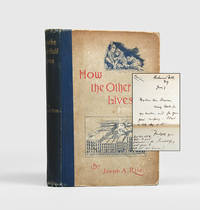
1890191014New York: Charles Scribner's Sons 1890. One of the most important photobooks ever published First edition with an autograph letter signed from the author tipped-in to the front free endpaper thanking the recipient "for your kindness and for your good company - I had a bully day of it". He adds in a postscript: "Good luck with the trout. A good fisherman is a good fellow I will bet. Ask Grover!". The letter is dated 7 June and noted as received 8 June 1902. The reference is presumably to the keen fisherman and former president Grover Cleveland. The front free endpaper has the ownership signature of the recipient Elizabeth M. Brown of Belvidere New Jersey dated 25 April 1891. A lifelong campaigner for child welfare Riis exposed overcrowded tenements raised funds to send children into the countryside advocated city parks and pressed for better-funded public schools. His exposés of New York poverty and decades of campaigning helped drive Progressive Era reforms and forced the city's slum conditions into public view. How the Other Half Lives is his the most important work. "His book is about the tenements of New York: the overcrowded slums of the Lower East Side that were home to boatloads of immigrants who had come to the United States to seek a better life. it is one of the most important photobooks ever published. It represents the first extensive use of halftone photographic reproductions in a book. These reproductions are rough to say the least but it is the beginning not of a photographic genre but a photographic attitude an ethos - humanist documentary photography - in which the photographic social document is employed to bear critical witness to what is going on in the world" Parr & Badger p. 53. Octavo. With 43 illustrations including 18 halftones from photographs by the author. Original blue quarter cloth spine lettered in gilt front cover lettered and decorated in red and blue. Tipped-in at rear is the pamphlet Jacob A. Riis: A Sketch of his Life and Work circa 1903. Rubbed and a little shaken and toned still a very good copy. Martin Parr & Gerry Badger The Photobook: A History Vol. I 2004. hardcover
1891D17845London: Sampson Low Marston Searle & Rivington 1891. First UK Edition. Hardcover. Good. Original pictorial olive cloth quite worn. Spine cracked and split repaired unprofessionally. With illustrations from photographs chielf from the offer. The extremely scarce UK edition of Riis' famous study published in New York the year prior. <br/><br/> Sampson, Low, Marston, Searle, & Rivington hardcover
189048301New York Charles Scribner's Sons 1890. Lex 8vo. Original blue full clothWith title in blue to front board and blue and gilt lettering to spine. Spine and parts of boards lightly brownspotted. A bit of wear to capitaks and corners. But overall a very nice copy of this fairly fragile and delicate cloth binding there is an original variant binding with cloth spine and illustrated boards but no precidency between the bindings has been established. Internally very nice and clean. XV 1 304 pp. Wih numerous illustrations most of them photographic. <br/><br/><em>First edition of this landmark work on the miserable living conditions of the poor immigrants in New York constituting one of the very earliest - and certainly the most popular and influential - attempts at making "the other half" i.e. the middle and upper classes aware of how the poor in New York actually lived. Riis's work created attention to the neglected and overseen community that was the underprivileged in New York. In the long run the great success of the work created attention to the status living conditions and general health of the poor and it initiated social reform movements in all major North American cities. Furthermore the work is regarded the very first example of "muckraking" journalism and was the first to extensively use halftone photographic reproductions in a book.Riis used a convincing combination of facts from Dr. Roger S. Tracy Registrar of Vital Statistics and his own talents as a photo journalist to make a hitherto unseen powerful description of the correlation between the high crime rate drunkenness and reckless behavior of the poor and their lack of proper homes. The statistical facts made it a relevant and sober work and lent it enough authority to the book's claims for it to be taken serious by city official. His groundbreaking photographs confirmed the dry numbers and "spoke directly to people's hearts". Pascal "Jacob Riis: Reporter and Reformer" p. 87. Unlike all previously works on the living conditions of the poor "How the Other Half Lives" offered concrete solutions on how to improve living condition how to make the tenants improve their buildings and finally how the politicians and city officials could make the appropriate and necessary juridical changes.The effect of the work was immediately seen and included: the tearing down of New York's worst tenements sweatshops and the reformation of the city's schools. The book led to a decade of improvements in Lower East Side conditions with garbage collection sewers and indoor plumbing all following soon after. Because of the present work Riis quickly rose to fame and in 1895 he became close friends with Theodore Roosevelt then a New York City official who wrote of Riis: "Jacob Riis whom I am tempted to call the best American I ever knew although he was already a young man when he came hither from Denmark". After Roosevelt became President he wrote a tribute to Riis that started: "Recently a man well qualified to pass judgment alluded to Mr. Jacob A. Riis as "the most useful citizen of New York". Those fellow citizens of Mr. Riis who best know his work will be most apt to agree with this statement. The countless evils which lurk in the dark corners of our civic institutions which stalk abroad in the slums and have their permanent abode in the crowded tenement houses have met in Mr. Riis the most formidable opponent ever encountered by them in New York City."The title refers to the French writer François Rabelais who famously wrote in Pantagruel: "one half of the world does not know how the other half lives". As a work of journalism and of social criticism Riis's book still stands as a truly seminal testimony to how the lower classes lived at the turn of the century. Due to this work attention was eventually paid to them and their conditions bettered. </em> hardcover
18901326106New York: Charles Scribner's Sons 1890. Hardcover. Octavo; Poor/no DJ; Ex-library; Hardcover w/out DJ; Spine blue with gold print library call number in white ink at bottom; Boards quarter bound with blue cloth to spine and illustrated grey paper to boards tattering to spine caps and corners spine head torn away peripheral tanning to paper shelfwear; Text block is detached from cover see photo pastedowns torn away string binding of book signatures loose so that signatures are separating library stamp on front flyleaf and title page light age-toning to paper; xv 304 pages frontispiece illustrated b&w "with illustrations chiefly from photographs taken by the author".<br /> <br /> <p>NOTE: Shelved in Netdesk office in bookcases next to Ephemera section. 1326106. FP New Rockville Stock. Charles Scribner's Sons hardcover books
189048301New York, Charles Scribner's Sons, 1890. Lex 8vo. Original blue full clothWith title in blue to front board and blue and gilt lettering to spine. Spine and parts of boards lightly brownspotted. A bit of wear to capitaks and corners. But overall a very nice copy of this fairly fragile and delicate cloth binding (there is an original variant binding with cloth spine and illustrated boards, but no precidency between the bindings has been established). Internally very nice and clean. XV, (1), 304 pp. Wih numerous illustrations, most of them photographic.
1891D17845London: Sampson Low Marston Searle & Rivington 1891. First UK Edition. Hardcover. Good. Original pictorial olive cloth quite worn. Spine cracked and split repaired unprofessionally. With illustrations from photographs chielf from the offer. The extremely scarce UK edition of Riis' famous study published in New York the year prior. <br/><br/> Sampson, Low, Marston, Searle, & Rivington hardcover books
1872422910Nice : J. Gay et Fils 1872. 1st edition. Hardcover. Finely bound in gilt-blocked aniline calf over marble boards and in a marbled slip-case. Raised bands. Spine compartments uniformly tooled in gilt. Marbled end-papers. Particularly well-preserved; tight bright clean and strong. LIMITED EDITION; no. 2 of only 100 copies. Further scans images etc. and additional bibliographical material available on request. Physical description: 37 pages 16 cm. Subjects: Molière's portraits; vignettes; French Literature; Molière 1622-1673. Nice : J. Gay et Fils hardcover
18761020221876. Seconde édition revue corrigée et considérablement augmentée. Paris Auguste Fontaine 1876. 392pp. Frontispiece portrait of Molière. Nineteenth century half morocco marbled boards original wrappers bound-in. No. 262 of only 500 copies and printed on papier d'Hollande. hardcover
1872975951872 Nice, chez J. Gay et Fils Editeurs, 1872, 37 p., demi-toile, environ 22x14cm, édition originale numérotée 32/100, 2 frontispices, un ex-libris sur le premier contreplat, dos sali et insolé, des frottements sur la reliure, quelques annotations au crayon à papier dans les marges, bon état pour le reste.
187343384Eydtkuhnen now Chernyshevskoye Russia: Bi-defus A. Ts. Katsineleboigen ve-Sh. Rabinovits 1873. First edition. Attractive modern binding. 8vo 27 pages 18 cm. Text in Hebrew. Title translates as “Sayings of Jacob: Disputations Concerning Morals to be Conformed and Amended.†<br> “Ya‘akov Reifmann was born in Lagow Poland. He spent his childhood in nearby Opatów where he acquired a basic religious education but subsequently spent most of his life—including the days of his extensive and highly diversified scholastic achievements—in Szczebrzeszyn near Zamosc where he relocated after marrying. There he was introduced to classic Jewish philosophical literature and was profoundly influenced by Maimonides.<br> Reifmann’s projects and studies published in various pamphlets and in contemporary newspapers and periodicals Ha-Melits Ha-Magid Ha-Tsefirah Keneset Yisra’el Ha-Sha'ar Isaac Marcus Jost’s Tsiyon and others dealt with an extensive range of subjects including ancient Jewish literature Talmud and Midrash biblical criticism the Apocrypha Jewish philosophy and history. He wrote all of his studies in Hebrew and some were subsequently translated into German and published in German periodicals which also issued reviews of his work gaining him recognition in the West.<br> Reifmann regarded the rabbis of Late Antiquity as the first biblical critics. He also studied Aramaic translations of the Bible offering different textual revisions based on comparisons of the Targums. Relying on ancient Jewish literature as well as—in all probability—the writings of contemporary German critics whom he never mentioned he suggested different times of writing for some of the books of the Bible and raised somewhat new ideas regarding their composition. However as was the case with most of his contemporary hokhmat Yisra’el scholars who practiced biblical criticism he usually avoided dealing with the composition of the Pentateuch except in the context of his dealings with the teachings of Avraham ibn Ezra one of the most prominent figures of Jewish philosophy particularly for maskilim. Although he sought to avoid disputes and controversy Reifmann was nevertheless committed to scientific truth and his conclusions about sacred Jewish writings were often conceived within Jewish traditional society as well as among moderate maskilim as radical views that undermined the foundations of Jewish faith.<br> In addition to his research Reifmann played an important social role by maintaining ties to fellow maskilim including Shelomoh Yehudah Rapoport Abraham Geiger Jost Yitsak Shemu’el Reggio Shemu’el David Luzzatto and Salomon Buber with whom he corresponded on subjects relating to his research. He also led a circle of young maskilim from Zamosc who met regularly at his home in Szczebrzeszyn. Through these meetings Reifmann became one of the most prominent figures in Zamosc maskilic circles. A pamphlet containing various conversations of this circle titled Mo‘ade ‘erev was published in Vilna in 1863.†YIVO Encyclopedia <br> SUBJECTS: Jewish ethics. OCLC: 49017026.<br> Some toning and occasional pencil markings to margins nice wide margins attractive modern binding Very Good Condition. YID-48-86-XBL-’eggvcc. Eydtkuhnen [now Chernyshevskoye, Russia]: Bi-defus A. Ts. Katsineleboigen ve-Sh. Rabinovits unknown