285 résultats
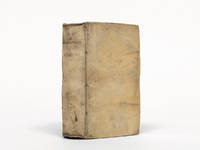
167736147Sur la Copie a Paris: Chez Frederic Leonard 1677. Second French edition. Engraved title two parts continuous pagination. 24 550 38 pp. 1 vols. Sm. 12mo. Vellum. Title in pen on spine upper joint torn some soiling of binding light browning of text mostly marginal else a very good copy. Second French edition. Engraved title two parts continuous pagination. 24 550 38 pp. 1 vols. Sm. 12mo. Amelot de la Houssaye was secretary to the French embassy at Venice and his account of the Republic for the first time revealed the policy of the Venetian governement. When the book appeared the Venetian state complained to the French court and Amelot was sent to the Bastille for six weeks. Chez Frederic Leonard unknown
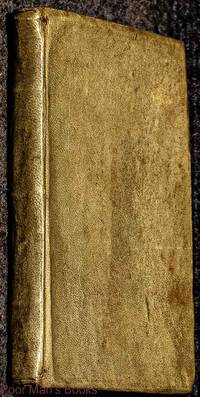
1677000208<p><strong>Probably a pirated copy of the original edition published by Léonard. Printed without the frontispiece showing St Mark's Square. </strong></p><p><strong>Description:</strong> Contemp. vellum spine lettered in ink. Vigesimo-quarto: 14 × 8 cm; pag.: 211 2.</p><p><strong>Provenance:</strong> Bookplate "Libro Liber. G H".</p><p><strong>Ref.:</strong> BSB: 10882446 10882435</p><p><strong>Condition:</strong> Covers slightly dusty and with some spotting spine title faded. Joints and endpapers in very good condition. Ink notations in a later hand on the history of this edition to front flyleaf. Pages slightly browned due to age occasional small stains. Top edge a little dusty small stain to fore edge and lower edge.</p><p><strong>Notes:</strong> Around 1669 Amelot de La Houssaye 1634–1706 was appointed legation secretary to the French ambassador in Venice. From this period he drew the information for his "Histoire du gouvernement de Venise" an unsparing description of the political constitution of the city-state published in Paris in 1676. After the publication the outraged protests of the Venetian ambassador led to La Houssaye being imprisoned in the Bastille. The scandal surrounding La Houssaye helped the work to become very popular so that he published a second edition with additions in 1677. The 'Supplément à l'histoire du gouvernement de Venise' provoked further protests from Venice so that the edition was finally banned in France. But even this ban only led to a greater demand for the book so that it was subsequently reprinted in secret. The note "Sur la Copie" on the title page but also the comparison of the types of printing used suggests that the present edition was not printed by Léonard in Paris.</p> Frédéric Léonard hardcover
1684elala472Amsterdam & Paris: Frédéric Léonard 1684. 1684. 4to. pp. 24 p.l. 432 18index 2errata. woodcut printers device on title. woodcut ornaments & initials. contemporary mottled calf gilt back gilt arms on covers of Lepinette Le Mairat Baron de Lustrac Olivier 379 spine ends worn some moderate browning & foxing. Second Edition of this political discourse on Tacitus in which the French historian and publicist Amelot de la Houssaye gives an analysis the character of the Roman Emperor Tiberius. The work was originally published in 1683 under the pseudonym La Mothe-Josanvel. cfCioranescu 7110. Hardcover. Amsterdam & Paris: Frédéric Léonard, 1684. Hardcover
167719726Paris: Frederic Leonard 1677. 16mo. Engr. t.-p. 6 1 pp. 7 6 ff. 211 3 pp. 1 f. 550 pp. 19 ff. 237 3 pp. <br><br>The main title-page is engraved with the title printed above the illustration.<br>Â Â Â Â There are special title-pages and paginations for "Examen de la liberté originaire de Venise. Traduit de l'Italien. Avec une Harangue de Louïs Hïlian . Traduite du Latin. Et des Remarques Historiques. Sur la copie a Ratisbonne Chez J. Aubri . 1677"; "Histoire du gouvernement de Venise avec le supplement; par le sieur Amelot de la Houssaie. Et l'examen de la Liberté originaire de Venise. Sur la copie a Paris; Chez Frederic Leonard . 1677"; and "Suplement a l'Histoire du gouvernement de Venise. Par le sieur Amelot de La Houssaie. Sur la copie a Paris chez Frederic Leonard . 1677."<br>Â Â Â Â "Examen de la liberté originaire de Venise" is a translation by Amelot de La "Houssaye of Squitinio della liberta veneta" which is attributed to Marcus Welser Alfonso de la Cueva and others. Contemporary calf modest gilt tooling on covers spine tooled in blind and with raised bands. Leather cracking and with thumbnail-sized chip on spine; some loss of leather on front cover and at head and foot of spine; and front joint starting. Bookplate on front pastedown and a couple of ink notations by an early owner at bottom of engraved title-page. Endpapers with heavy brown stains along edges but pages overall clean. Frederic Leonard hardcover books
169718401697 Réunion de plusieurs ouvrages ou chez Frédéric Léonard, Paris, 1697 ou Adrian Moetjens, La Haye, 1697. In-12, plein vélin époque.9 ff, 223 pp, 1 ff, 68 pp, 88 pp, 103 pp, 36 pp, 94 pp, 24 pp, 68 pp, 24 pp, 5 pp .2 planches dépliantes
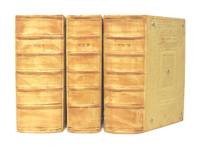
168110510Wittenberg Christian Schrödtern 1681-1682. 3 volumes 52 1189 2378 columns 28 601 1202 columns 1 32 524 1048 columns 28 688 1376 columns 1 48 602 1204 columns 26 751 1502 columns 96 1 p. Blind-stamped Leather with 5 raised bands each board equipped with 5 brass studs Folio Facsimile Edition of the famous Bach Bible in 3 volumes all kept in a perfectly fitting wooden case decorated with gilt. The set contains a true and complete reprint of Bach's Bible being a German Bible with extensive commentaries by Abraham Calovius founded on the writings of Martin Luther. This is the first complete facsimile-edition of Bach's Bible published by the Dutch publisher Uitgeverij Van Wijnen after the original being preserved in Concordia Seminary Library St. Louis. Each volume contains Bach's handwritten monogram on the title page and the set contains a total of 348 additions by Bach. Among which many underlined passages -both in red and black ink- various corrections of typographical and grammatical errors but most importantly his comments in the margins. A unique glimpse into Bach's personal beliefs and how he understood his vocation. Wittenberg, Christian Schrödtern hardcover
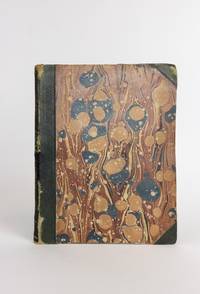
16671375442London: Francis Kirkman 1667. First Edition. Hardcover. Quarto 4 64 pages. In Good condition. Bound in 19th century half green leather with marbled paper boards spine with gilt lettering. With morderate rubbing and shelfwear middle of spine with a spot where spine is peeling away. Gutter opening at title page with lower section of text block detaching from spine. Ink math to title page I2 verso. E4 with large tear to upper fore corner some loss to text on verso.<br /> <br> <br /> <br> <br /> All leaves trimmed close with some minor occasional loss. With nine instances of single word ink marginalia some with matching underlining some partially trimmed away.<br /> <br> <br /> <br> <br /> With the bookplate of Richard Brinsley Sheridan to the front pastedown. His signature on the title page.<br /> <br> <br /> <br> <br /> Shelved case 0. ESTC R9308. Wing B445. Woodward & McManaway 8. Scarce with OCLC listing only 8 institutional copies of this state and no copies at auction since 1931. Another state of the edition with Thomas Dring named as publisher in imprint and with advertisement at bottom of A2v; this state lacks advertisement.<br /> <br> <br /> <br> <br /> Richard Brinsley Butler Sheridan 1751-1816 was an Anglo-Irish playwright writer and politician. He was the owner of the famed Theatre Royal Drury Lane in London and wrote several prominent plays including 'The Rivals' 'The Duenna' 'The School for Scandal' and 'A Trip to Scarborough.'. 1375442. Shelved Dupont Bookstore. Francis Kirkman hardcover
163483993Paris Chez la Veuve-Martin & Jean Boudot, rue Saint Jaques , au Soleil d'or, 1634, in-4 (19x25cm), pleine basane du temps, dos à 5 nerfs, roulette sur les coupes, toutes tranches jaspées gras, caissons ornés de fleurons,, 64p., 326p.,18p. Edition originale de la traduction française. Page de titre ornée d'une vignette, bandeau de Pierre le Pautre et lettrine pour la dédicace au Roi. Ne figure pas le portrait en frontispice de Louis XIV. Restauration par un professionnel en coiffes et coins.
162451428Köln Ioannis Gymnici Antonius Boetzer 1624 a. 1621-1640. Folio. 40 x 26 cm. Bound in 8 thick uniform contemporary full pigskin bindings over wooden boards. Raised bands and richly blind-tooled boards. Title labels with gilt lettering. Clasps missing. Spines a bit rubbed. Wear to some spine-ends. Some upper compartments with nicks one volume having a tear in leather at upper compartment. One volume with a small loss of leather to upper compartement. With engraved title-page engraved portrait of Baronius engraved portrait of pope Urban VII. More than 10.000 pp. Printed in double-columns. In general internally fine. <br/><br/><em>Baronius's monumental work with its continuation by Bzovius up to the year 1565 hailed by Roman Catholic writers as the greatest history of the church ever written and Baronius hailed as the "father of ecclestical history" 1-12 dealt with Anno 1-1198 and volume13 -20 Anno 1198-1565."The Annales were first published between 1588 and 1607. This work functioned as an official response to the Lutheran Historia Ecclesiae Christi History of the Church of Christ. In that work the Magdeburg theologians surveyed the history of the Christian church in order to demonstrate how the Catholic Church represented the Antichrist and had deviated from the beliefs and practices of the early church. In turn the Annales fully supported the claims of the papacy to lead the unique true church."Before Baronius was appointed Librarian of the Vatican in 1597 he had access to material and sources in its archives that were previously unpublished or unused. He used these in the development of his work. Accordingly the documentation in Annales Ecclesiastici is considered by most as extremely useful and complete. Lord Acton called it "the greatest history of the Church ever written"."Graesse I 296. - Brunet I 662-631. </em> hardcover
169555736Amsterdam: Be-veit ha-meshutafim Asher Anshil ben Eliezer ve-Yisakhar Ber ben Avraham Eliezer/ Moses Wiesel 1695. First edition. Hardcover. g to near fine. Small folio 30 by 18.8 cm. Collation: aleph-vav4 zayin2 = 26 numbered leaves. Full period brown paper boards re-backed with a brown leather spine with raised bands.<br /> <br /> Letterpress title-page with ornate floral woodcut device; additional engraved title-page mounted depicting Moses and Aaron along with six small biblical scenes within round borders all against an architectural background. Engraved folding map at rear mounted; main title with woodcut vignette; 14 half-page engraved illustrations in the text.<br /> <br /> This gorgeously illustrated work is the first edition of the famous and highly influential Passover Haggadah printed in Amsterdam in 1695. Simply known as the Amsterdam Haggadah this edition stands as among the most imitated and copied haggadahs in history and was the first to be illustrated with copperplate engravings. Previous illustrated haggadahs had used woodcuts. The popularity of these illustrations can be attested by the huge numbers of reprint editions over the centuries. There are 14 finely printed large in-text engravings plus the full page engraved title page showing Moses Aaron and Adam in the Garden of Eden. Some of these images illustrate the traditional content of the Passover seder and/or the exodus story while some are other biblical stories less directly related. Images include: the Rabbis of Bene Brak discussing the Passover story the four sons Abraham smashing the idols of his father Abraham welcoming the three angels Moses slaying the Egyptian overseer the rescuing Moses from the river Moses and Aaron coming to Pharaoh w/ staves turning to snakes the ten plagues the Egyptian army drowning in the Red Sea the Exodus the receiving of the Ten Commandments at Mt. Sinai the eating of the Pascal Lamb King David composing his psalms and finally an exterior view of the Holy Temple with the cityscape of Jerusalem in the background. All images are captioned underneath with relevant passages in Hebrew. The engravings were all created by Abraham ben Jacob a German convert to Judaism who had moved to Amsterdam although some sources over the years misattributed them to financier Moses Wiesel 6 of which were adaptations and/or modifications of previous images by Swiss artist Matthäus Merian 1593-1650 from his original work "Icones Biblicae" 1625-30.<br /> <br /> In addition to the in text engravings there is famously a phenomenal fold-out engraved biblical map of the holy land. Measuring a total of 19.5x11.5" the map shows the land of Israel the Sinai desert and Egypt in landscape orientation looking eastward towards the top of the map. It traces the journey of the Israelites starting with the Exodus from Egypt through the desert and into the Land of Israel. The map is detailed showing the areas of the twelve tribes important locations and cities as well as geographic features including the Red Sea Mount Sinai the Dead Sea the Sea of Galilee and many others. The map is decorated with additional illustrations near the bottom and includes a key. This beautiful work also by Abraham ben Jacob is considered among the earliest if not the first map of its kind to be printed within a Hebrew publication. It is now known to have been heavily based on the previously printed 1620 map in Hebrew by Jacob ben Abraham Zaddiq and Abraham Goos 1590 - ca. 1643 which itself was based on the map of 1590 by Christian Kruik van Adrichom Adrichem printed in Latin.<br /> <br /> Text throughout is printed in Hebrew with smaller text in Rashi script underneath containing famous commentary on the Passover Haggadah by acclaimed Portuguese Rabbi and scholar Isaac ben Judah Abarbanel 1437-1508. The verso of the title page contains the order of the Passover seder with brief instructions in both Ladino Judeo-Spanish and Yiddish Judeo-German a nod to the subtitle of Haggadah which references the both Ashkenazi and Sephardic traditions.<br /> <br /> This copy with binding in beautiful condition with being professionally restored includining spine re-backed to style. Book block tight. Interior with some staining to pages throughout from use. Binding in very good to near fine inteiror in good condition overall. Hebrew title: סדר הגדה של פסח ×›×ž× ×”×’ ××©×›× ×– וספרד <br /> Alternate transliterations: Seder Hagadah shel Pesah Seder Hagadah sel Pesah<br /> <br /> References: Friedberg 278 Fuks HTN II 521; Yudlov Haggadah 93; Vinograd Amsterdam 627; Ya'ari no. 59; Laor 876 Map; Nebenzahl pp.138-1389 Map; Yerushalmi plate 59-62; Rosenau "Vision of the Temple" p.135 146-7. Be-veit ha-meshutafim [Asher Anshil ben Eliezer ve-Yisakhar Ber ben Avraham Eliezer]/ Moses Wiesel hardcover
169555262Amsterdam: Be-veit ha-meshutafim Asher Anshil ben Eliezer ve-Yisakhar Ber ben Avraham Eliezer/ Moses Wiesel 1695. First edition. Hardcover. fair. Small folio 29 by 18.5 cm. Collation: aleph-vav4 zayin2 = 26 numbered leaves. Additional engraved title page engraved folding map at rear; main title with woodcut vignette; 14 half-page engraved illustrations in the text. Contemporary quarter calf over dark brown pastepaper boards skilfully rebacked. Images of Moses and Aaron at engraved title excised the seven small engraved vignettes along with letterpress text of engraved title and imprint mounted on old paper. Old marginal repairs at main title resulting in slight loss of initial letters along right margin and several leaves; slight strictly marginal worming and occasional tears. Stained throughout sometimes heavily though not impairing legibility. Map mounted to reinforce tears with virtually no loss of text or engraved imagery apart from printed border at right side. A fair copy at best; despite all defects the half-page engraved illustrations have survived intact with minimal staining. Housed in new maroon buckram slipcase.<br /> <br /> First edition of this gorgeously illustrated work now referred to simply as the Amsterdam Haggadah. The first such work to be illustrated with copperplate engravings it ranks among the most imitated of the Jewish manuals for the Passover seder. The popularity of these illustrations can be attested by the huge number of reprint editions over the centuries. Fourteen finely printed half-page engravings appear throughout the text. Some of these images illustrate the traditional content of the Passover seder or the Exodus story while others reference other biblical tales. Images include: the Rabbis of Bene Brak discussing the Passover story the four sons Abraham smashing the idols of his father Abraham welcoming the three angels Moses slaying the Egyptian overseer the rescuing Moses from the river Moses and Aaron coming to Pharaoh w/ staves turning to snakes the ten plagues the Egyptian army drowning in the Red Sea the Exodus the receiving of the Ten Commandments at Mt. Sinai the eating of the Pascal Lamb King David composing his psalms and finally an exterior view of the Jewish Temple with the cityscape of Jerusalem in the background. All images are captioned with relevant passages in Hebrew. The engravings were all created by Abraham ben Jacob a German convert to Judaism who had moved to Amsterdam although some sources over the years misattributed them to financier Moses Wiesel 6 of which were adaptations and/or modifications of previous images by Swiss artist Matthäus Merian 1593-1650 from his original work "Icones Biblicae" 1625-30.<br /> <br /> In addition to the in text engravings there is famously fold-out engraved biblical map of the Holy Land in a notable format. Measuring a total of 19.5 by 11.5" the map shows the land of Israel the Wilderness of Sinai and Egypt in landscape orientation looking eastward towards the top of the map. It traces the journey of the Israelites starting with the Exodus from Egypt through the Sinai and into the Land of Israel. The map is detailed showing the areas of the twelve tribes important locations and cities as well as geographic features including the Red Sea Mount Sinai the Dead Sea the Sea of Galilee and many others. Additional illustrations appear near the bottom along with a legend. This beautiful work also by Abraham ben Jacob is considered among the earliest if not the first map of its kind to be printed within a Hebrew publication. It is now known to have been heavily based on the previously printed 1620 map in Hebrew by Jacob ben Abraham Zaddiq and Abraham Goos 1590 - ca. 1643 which itself was based on the map of 1590 by Christian Kruik van Adrichom Adrichem printed in Latin.<br /> <br /> Text throughout is printed in Hebrew with smaller text in Rashi script underneath containing famous commentary on the Passover Haggadah by acclaimed Portuguese Rabbi and scholar Isaac ben Judah Abarbanel 1437-1508. The verso of the title page contains the order of the Passover seder with brief instructions in both Ladino Judeo-Spanish and Yiddish Judeo-German a nod to the subtitle which references both the Ashkenazi and Sephardi traditions.<br /> <br /> Provenance and annotations: Full page of text appx. 1500 words in neat Hebrew cursive at front endleaf which discusses aspects of the Haggadah text; inscription in German at front endleaf by Isidor Adler who mentions his friend Hermann Mechlenburg dated March 1906; old annotations throughout in at least two hands. In one notable instance the Hebrew phrase l'shana ha-ba'ah be-hamburg next year in Hamburg! has been added in fine block characters above the traditional phrase l'shana ha-ba'ah bi-yerushalayim next year in Jerusalem. Hebrew title: סדר הגדה של פסח ×›×ž× ×”×’ ××©×›× ×– וספרד <br /> Alternate transliterations: Seder Hagadah shel Pesah Seder Hagadah sel Pesah<br /> <br /> References: Friedberg 278 Fuks HTN II 521; Yudlov Haggadah 93; Vinograd Amsterdam 627; Ya'ari no. 59; Laor 876 Map; Nebenzahl pp.138-1389 Map; Yerushalmi plate 59-62; Rosenau "Vision of the Temple" p.135 146-7. Be-veit ha-meshutafim [Asher Anshil ben Eliezer ve-Yisakhar Ber ben Avraham Eliezer]/ Moses Wiesel hardcover
16791669291679. BLOEMAERT Abraham and Frederik. Artis Apellae Liber Tekenboek van Abraham Bloemaart / The Drawing Book of Abraham Bloemaert. Complete set of 160 engravings in eight parts including the chiaroscuro woodcut title-page. Folio 326 x 238 mm bound in contemporary Dutch brown calf blind-tooled spine. Amsterdam: Nicholaes Visscher 1679-1702. First Edition of Abraham Bloemaert's Drawing Book Tekenboek illustrated with engravings by Frederik Bloemaert ca. 1610-1669 after his father's designs. Abraham Bloemaert's original life drawings which were executed mainly between 1625-1635 and 1645-1650 include multiple studies of hands feet arms legs male and female profiles nudes putti and costumed figures seen in various poses from varied angles and under various lighting conditions plus a number of domestic animals. Abraham Bloemaert intended his drawings later converted by his son into engravings to serve as a teaching collection of visual models for practicing artists. The publishing history is as follows: a variant edition containing between 100 and 120 engraved plates was issued by Bloemaert's son Frederik between 1650 and 1656 under the title: Artis Apellae Liber. The 1650-56 edition is so rare it is unobtainable today. It is recorded in only three copies: British Museum 120 plates Bibliothèque Nationale de France 100 plates and Los Angeles County Museum of Art 120 plates. The extreme rarity of all early editions of Bloemaert's Tekenboek reflects the fact that a very limited number were originally printed and that the early printings did not survive the heavy use received by artists and the assistants in the artist's studio. The present copy belongs to the true First Edition Roethlisberger 1a 393 Visscher edition complete with 160 engraved plates plus the chiaroscuro woodcut title all in very good impressions. It is significant that Roethlisberger in his massive catalogue raisonné of the work of Abraham Bloemaert and His Sons Doornspijk 1993 reproduces the entire set of engravings from the 1740 edition. Abraham Bloemaert 1564-1651 was successful as a teacher not only of his four sons but also of the leading Dutch Caravaggisti e.g. Terbrugghen and Honthorst and virtually every Utrecht master painter/artist. Besides Hendrik Goltzius Abraham Bloemaert and his son Frederik were among the earliest to combine the chiaroscuro woodblock technique with the engraved and etched line Hind. Unlike most drawing books "Bloemaert's drawing examples are not derived from other authors" Bolten. Very occasional browning or spotting overall a fine clean copy. PROVENANCE: Illegible signature Nuremberg on front flyleaf. Arthur & Charlotte Vershbow with ex-libris their sale Christie's NY #2800 Lot 402. Roethlisberger 1a 393 reproductions of every plate Roethlisberger II T1-T166. Bolten Method and Practice: Dutch and Flemish Drawing Books 1600-1750 pp. 48-67 and passim 24 reproductions. Hollstein Dutch and Flemish F. Bloemaert 36-155. Strauss Chiaroscuro 346. See: Caroline Fowler Between the Heart and the Mind: Ways of Drawing in the Seventeenth Century Internet Resource Princeton University for long discussion of Bloemaert's Tekenboek. unknown books
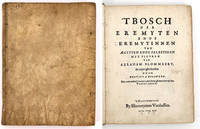
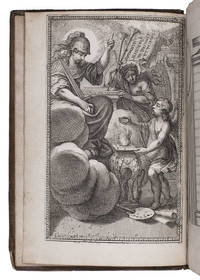
16191516Hantvverpen Antwerp: Hieronymus Verdussen 1619. First Edition in book form. Near Fine. Bloemart Abraham. 4to 8 7/8 x 6 3/4 inches 251 x 171 mm. ix pp 51 sheets on cream laid paper text in Dutch gothic letters. 50 numbered full page copperplate engravings of Christian hermit saints 25 male 25 female printed recto with text pages on verso. Full-page frontispiece for the work and with an additional full-page frontispiece for each of the two sections. Full contemporary vellum untitled with some handling discoloration but the vellum remains supple and the binding is tight. Pages clean and bright with a couple of foxing spots and a small brown stain on the 2nd frontis titled "Sacra Eremus ascetarum"; toned page edges. Previous owner's name and date in ink on front flyleaf and small pencil and ink notations inside back cover; bookplate of Buijnsters Smets pasted inside front cover.<br /> De Backer/ Sommervogel VII 194-5; Hollstein 355-403; Roethlisberger 163 ill. 262-317<br /> <br /> Full title: 't Bosch der Eremyten ende eremilinnen van Aegypten ende Palestinen met figuren van Abraham Blommaert door Ghristophorus a Sichem. Met kort verhael van een yders leven getrocken uyt het Vadersboeck door H. Jan van Gorcum Priesler ende H. R. Societatus sic Jesu. The Forest of the Hermits of Egypt and Palestine with illustrations by Abraham Blommaert engraved by Ghristophorus a Sichem. With brief stories of their lives taken from the book of the Fathers by H. Jan van Gorcum priest of the Society of Jesus. A fine series of engravings of the early Christian male and female hermits living in the Egyptian and Palestinian desert engraved in copper by Boetius A Balswert on drawings by Abraham Bloemart 1566 - 1651 the Dutch painter and engraver know mostly for his historical subjects and for being a central figure and teacher among the Utrecht Caravaggisti. <br /> Provenance: the library of the book- and art-historians Piet Buijnsters and Leontine Smets. Hieronymus Verdussen unknown
1648001623Paris: Pierre Des-Hayes 1648. Book. Very good- condition. Hardcover. First Edition. 16mo - over 5¾" - 6¾" tall. xviii 342 pages of text. Defective copy lacking five plates the frontis and a final engraved table. Attractive early-to-mid-18th century leather binding with moderate wear to the hinges spine extremities and corners. Raised bands gilt tooling and lettering on spine. Decorative marbled endpapers and blank endsheets supplied at time of binding. Present is the full-page engraved portrait of Michel Larcher engraved armorial dedication to Larcher and the engraved title page following page 58. A complete copy has the plate numbers 151 and 156 used twice totalling 158 plates showing plans and designs of perspective of which 153 only are present in this copy. Lacks plate numbers 110 151 both 154 and 155. However early hand-drawn facsimiles of plates 151 one of two and 155 are supplied and bound-in leaving three images unrepresented. The majority of the plates are double-sided. Plate 156 is in less than good condition with heavy staining and soiling. Engraved title page is repaired with early conservator's tape with no loss. Pages 168 through 193 are bound out of order. Several leaves are affected by damp staining and minor rippling; approximately 15 front and 30 rear. The title page and several adjacent leaves as well as a few at the rear of the text are heavily stained. Some of the staining appears to originate from washed-out markings -- notations to which an attempt at removal were made -- that are in blank areas mainly in the front and rear pages but also in the blank areas in the introduction. Includes Desargues New Theory at the end with demonstrations. Protected in a modern circa 1950 slipcase decorated with marbled endpaper the seams of which are detached at the top edge. Desargues 1593-1661 was a French mathemetician and a founder of modern Geometry. With Pascal he introduced the method of perspective; treated conic sections as projections of circles formulated the so-called Arguesian transformation; developed the theory of involution and of transversals; defined parallels as lines that intersect at infinity. Measures 6-5/8" tall by 4-1/2" wide; printed on thick paper with ample margins. 20th century bookplate of Paul and Verner Mac Alister on front pastedown and a neatly handwritten identification on the 2nd front endpaper. On the same leaf is a contemporary name or marking. French France Fortifications Conics Cartography Projective and Descriptive Geometry. Early editions of Desargues works are quite uncommon. Pierre Des-Hayes Hardcover books
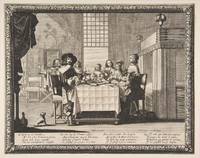
16421661642. Etching and engraving. Duplessis 1386; Blum 204 only state. Image: 10 x 12 with small margins. Foxing traces of old fold in the legend. books
166472500Amsterdam: Dancker Danckertsz. 1664. 163 cm. vellum. 2 white frontispiece840 frontispiece 41-172title175-288 pp. 1 unnumbered textplate opposite page 153 157 numbered plates with plate 156 present twice probably because the accompanying text for this plate needs 2 pages. Bound with: frontispiecetitle3-32frontispiece25-6433-72 2 white pp. Pagenumbers 25-32 used twice so after the second frontispiece or page 32 pagenumbers are incorrect. 32 plates 1 folding. A good and complete copy though with some signs of use page edges and some browning of most plates. See pictures Dancker Danckertsz. hardcover
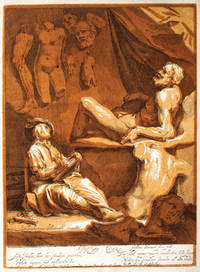
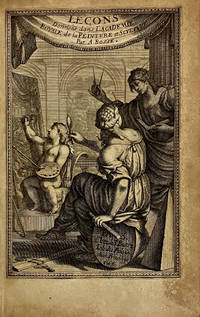
16679027Paris 1667. 8vo 17.5 x 12 cm. Abraham Bosse Sprinkled calf ca. 1700 sewn on 5 cords 3 attached to the boards the other 2 cut flush with the bookblock richly gold-tooled spine with black morocco spine label gold-tooled board edges brown sprinkled edges. With engraved allegorical title-print 45 full-page plate size mostly ca. 13.5 x 8.5 cm and 1 double-page ca. 16.5 x 15 cm engraved plates of faces hands feet ears and other parts of the human body a camera obscura battles landscapes perspective drawings human bodies and skeletons all intended as models for artists to follow. 47; 30; 4; 4; 11 2 added engraved prints. Highly interesting collection of five 17th-century print series one a set of plates for an illustrated book all in the field of art drawing and ornamentation. They seem likely to have been printed together sometime around or soon after 1688.Ad 1: A beautiful print series intended as plates for a manual to learn the art of drawing and painting ranging from images of the human body to battle fields by the famous French artist Abraham Bosse 1602-1676. In the event the plates were published on their own and the makeup varies from set to set. Ad 2: A numbered series of 30 engravings of ornamentation that could be used in sculptural architectural art and book illustration including putti grotesque masks garlands etc. Paolo Farinati 1524-1606 worked mostly in his native city of Verona. Ad 3: A series of 4 prints showing artists at work intended to illustrate art technique. Two are devoted to drawing and the other two are devoted to painting. These prints are often considered part of the larger series described here separately as ad 1.Ad 4: A beautiful series of 4 prints representing the four elements in the form of two male and two female figures elegantly dressed with various items related to the relevant element. Blum tentatively dates the series to 1630 making it one of Bosse's earliest mature works.Ad 5: A complete set of the plates made to illustrate the first and only edition of Pierre Bullet's work on surveying Paris 1688. With a few plates primarily in ad 2 spotted but otherwise a good copy. The binding is somewhat worn and the front hinge cracked.l BAL 494 ad 5; Berlin Kat. 4355 ad 2 1736 ed.; A. Blum L'oeurve gravé d'Abraham Bosse 358-387 ad 2 940-943 ad 4 1101-1152 ads 1 3; for Bosse: Thieme & Becker IV pp. 402-403. ABE CAT Architecture ABE CAT Art History hardcover
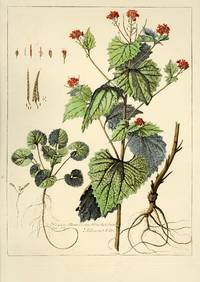
169219621692. Each a lithograph with hand coloring on watermarked Arches wove paper with a deckle edge. Each 16 1/4 x 12 1/4 412 x 312 mm; sheet 26 x 19 3/4 inches 661 x 502 mm each with full margins. Specimens include Alliarai; Ellebore; Lunaria; Sisymbrium. There are two impressions of each Alliaria Ellebore Lunaria and one impression of Sisymbrium. WITH: one reproduction of a floral composition by Joseph Redouté. Each printed later likely 20th century. Each in generally good condition with minor age tone. unknown
164340393Paris: Pierre De-Hayes. Very Good with no dust jacket. 1643. First Edition. Full stiff vellum. Diagrams; 12mo ; BOSSE Abraham 1604-1676 artist and engraver. Girard DESARGUES 1591-1661. La Maniere Universelle de Mr. Desargues Lyonnois Pour Poser L'essieu & placer les heures & autres choses aux Cadrans au Soleil. Paris: Pierre Des-Hayes 1643.8vo 175 x 125 mm. Two frontis'. Engraved allegorical title-page engraved dedication engraved title-page 66 engraved plates. Some staining some annotations. Contemporary stiff vellum some soiling some light wear book sellers description pasted to front flyleaf. FIRST EDITION of this important manual for setting up sundials including many engraved diagrams of sundials by artist and engraver Abraham Bosse. Berlin Kat. 4716; Brunet I 1127; Cicognara 817; Fowler 56. Property from the Thomas Sills Trust Chicago. Illinois. The entire book is bound in full entire stiff vellum. It is preserved in a neat library Thomas Sills Trust folder. No library markings on the book or in the text. . Pierre De-Hayes hardcover
16362226<p>Le Blond 1636. Etching. A good impression on paper without a watermark. Trimmed just showing the platemark all around. 259mm x 324mm. G.D. 1080 Blum 154 only state Paris/Tours 2004 No. 128</p> Le Blond,
16671000441667. Paris Abraham Bosse 1667. Engraved frontispiece 87220pp. With an engraved dedication page. 8vo. Contemporary full mottled calf spine and corners expertly restored. Some browning. Bound in at the end the last 20 pages are: 1 - A. Bosse au lecteur sur les causes qu'il croit avoir euës de discontinuer le cours de ses leçons geometrales et perspectives dedans l'Academie Royale de la Peinture et de la Sculpture & mesme de s'en retirer. Paris A. Bosse 1667. 15pp. And: 2 - Discours tendant a desabuser ceux qui ont creu que l'Auteur d'un Traité qui a pour Titre Entretiens sur les vies et sur les ouvrages des plus excellens peintres anciens et modernes; avoit pretendu m'attaquer dans sa Préface. Paris A. Bosse 1667. 4pp. This scarce book is written in the form of a dialogue between Ariste an amateur who would like to build an architect a painter a "disciple" and the author himself. All the representatives of these different arts are asking for Bosse's advice. This allows Bosse to express once again his ideas regarding perspective in painting and architecture. Abraham Bosse who was born in Tours in 1602 is best known as an engraver but he was also the first professor of perspective at the newly founded Académie Royale from 1648 to 1661 when he was forced to leave due to disagreements with other Académicians. The two addresses that follow the book explain why in Bosse's own opinion he had been forced to leave his lob at the Académie and they also respond to comments made about Bosse by Félibien in the preface to the first part of the latter's Entretiens published a year earlier. c.f. Cicognara 91; Berlin cat. 2381; Abraham Bosse Savant Graveur # 310 311 & 312. unknown
1648001623Paris: Pierre Des-Hayes 1648. Book. Very good- condition. Hardcover. First Edition. 16mo - over 5¾" - 6¾" tall. xviii 342 pages of text. Defective copy lacking five plates the frontis and a final engraved table. Attractive early-to-mid-18th century leather binding with moderate wear to the hinges spine extremities and corners. Raised bands gilt tooling and lettering on spine. Decorative marbled endpapers and blank endsheets supplied at time of binding. Present is the full-page engraved portrait of Michel Larcher engraved armorial dedication to Larcher and the engraved title page following page 58. A complete copy has the plate numbers 151 and 156 used twice totalling 158 plates showing plans and designs of perspective of which 153 only are present in this copy. Lacks plate numbers 110 151 both 154 and 155. However early hand-drawn facsimiles of plates 151 one of two and 155 are supplied and bound-in leaving three images unrepresented. The majority of the plates are double-sided. Plate 156 is in less than good condition with heavy staining and soiling. Engraved title page is repaired with early conservator's tape with no loss. Pages 168 through 193 are bound out of order. Several leaves are affected by damp staining and minor rippling; approximately 15 front and 30 rear. The title page and several adjacent leaves as well as a few at the rear of the text are heavily stained. Some of the staining appears to originate from washed-out markings -- notations to which an attempt at removal were made -- that are in blank areas mainly in the front and rear pages but also in the blank areas in the introduction. Includes Desargues New Theory at the end with demonstrations. Protected in a modern circa 1950 slipcase decorated with marbled endpaper the seams of which are detached at the top edge. Desargues 1593-1661 was a French mathemetician and a founder of modern Geometry. With Pascal he introduced the method of perspective; treated conic sections as projections of circles formulated the so-called Arguesian transformation; developed the theory of involution and of transversals; defined parallels as lines that intersect at infinity. Measures 6-5/8" tall by 4-1/2" wide; printed on thick paper with ample margins. 20th century bookplate of Paul and Verner Mac Alister on front pastedown and a neatly handwritten identification on the 2nd front endpaper. On the same leaf is a contemporary name or marking. French France Fortifications Conics Cartography Projective and Descriptive Geometry. Early editions of Desargues works are quite uncommon. Pierre Des-Hayes Hardcover
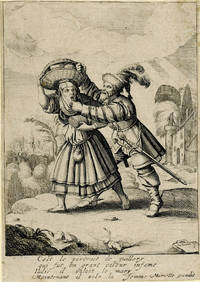
1670989Paris 1670. Etching and engraving on cream laid paper 6 3/4 x 4 15/16 inches 170 x 123 mm narrow margins. In very good condition with extremely minor areas of light discoloration in the areas of the sheet corners. Adhered to archival board. The inscription below the image roughly translates to This is the portrait of Guillery who was a great thief stealing from a woman. unknown
1665102684<p>Paris chez l'auteur 1665. 8vo. Engraved frontispiece titlepage xiv 140 pp engraved title plus 69 plates numbered 1 - 67 plates 6 & 7 present twice; plate 67 is double-page. Modern full calf pastiche binding spine with five raised bands and red titleshield.<em> Some copies have overlays on plate 50 some don't ours has no overlays.</em> paper slightly browned.</p><p>Abraham Bosse 1604-1676 famous for his etchings was also the first teacher of perspective at the Academy Royale de Peinture et de Sculpture that was founded in 1648. Bosse a mathematician and geometrician was extremely interested in the work of Girard Desargues and published several works on perspective. The present work was published in 1665. He wanted it to be the definite text on the subject that he taught but he was expelled from the Academy for lack of flexibility before its publication. Most of the 47 pages of the introduction deal with the principal errors that painters can make if they are not aware of the rules of perspective. The 67 plates and their explications deal with the necessary knowledge to apply perspective correctly. And these echo the lessons Bosse gave to his students at the Academy. He also deals with perspective in architecture.</p> chez l'auteur
16421661642. Etching and engraving. Duplessis 1386; Blum 204 only state. Image: 10 x 12 with small margins. Foxing traces of old fold in the legend.