774 résultats
186358199Camp near Brooks Station Saturday April 11 1863. Fine original condition. 15-1/2 x 9-3/4 inches. ".Yesterday I witnessed one of the grandest sights that I ever beheld. Our whole corps was reviewed by the President Generals Hooker McLain Howard Steinway Secretary Seward and an innumerable host of Brigadier Generals and it was a sight that has paid me for coming to war." The spectacle is described in great detail. Private Penfield was soon to be captured at Chancellorsville spending 12 days as a prisoner of war before being exchanged. He survived the war to carry on his father's carriage making business in Monroe Connecticut and later founded a small private academy. unknown
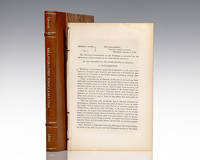
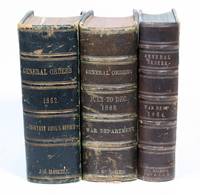
18622923Washington D.C.: War Department 1862. Calf marbled boards. Very Good. FIRST OBTAINABLE PRINTING OF THE PRELIMINARY EMANCIPATION PROCLAMATION setting a date for the freedom of more than three million enslaved in the United States and reframing the Civil War as a fight against slavery. Issued by the War Department to regimental commanders in the field during the Civil War in the week after the completion of President Lincoln’s official manuscript version. Contained is a set of three volumes of General Orders covering the full year 1862 July-Dec 1863 and the full year 1864. History of the Emancipation Proclamation:<br /> <br /> “The proclamation has been called by responsible persons one of the three great<br /> documents of world history ranking with Magna Carta and the Declaration of<br /> Independence†– Eberstadt<br /> <br /> “From the first days of the Civil War slaves had acted to secure their own liberty. The Emancipation Proclamation confirmed their insistence that the war for the Union must become a war for freedom. It added moral force to the Union cause and strengthened the Union both militarily and politically. As a milestone along the road to slavery’s final destruction the Emancipation Proclamation has assumed a place among the great documents of human freedom†– National Archives<br /> <br /> Following the Seven Days Battle and General McClellan’s retreat from the Peninsula at the end of June 1862 President Lincoln realized that there would be no early end to the war and found himself “as inconsolable as it was possible for a human to be and yet live.†Anxious for news from the army and needing to escape the constant interruptions at the White House he frequently visited the telegraph office in the War Department building to await dispatches. It was during one such visit early in July that he asked the chief of the telegraph staff Major Thomas Thompson Eckert for some paper to “write something special†and began the first draft of the Emancipation Proclamation completing it in a few weeks. Lincoln had long hoped to resolve the slavery issue through a congressional act of emancipation compensating slave owners for their loss of “property†but that approach was roundly rejected by representatives from the border states leaving the President who had decided upon the necessity of emancipation with a presidential proclamation as the only option. The extraordinary document he conceived would announce the liberation on January 1 1863 of all slaves in those states still in rebellion against the Union and promised compensation to slave owners in those states that returned to the fold before that time if they adopted “immediate or gradual abolishment of slavery.†This proclamation would be followed by a final proclamation issued on the 1st of January identifying those states still in rebellion and confirming the liberation of all slaves therein.<br /> <br /> On Tuesday July 22 Lincoln presented his draft to the Cabinet telling them that he had resolved firmly upon the course of action it specified and asking them not for advice but suggestions. The only observation he had not anticipated came from Secretary of State Seward who proposed that it might be best to wait for a military victory before issuing the Proclamation as it could otherwise seem like “the last measure of an exhausted government.†Immediately recognizing the wisdom of the suggestion Lincoln held back. On September 17 after an anxious wait of nearly two months he received the victory he needed at the bloody Battle of Antietam. Completing his final draft Lincoln presented it to his cabinet for refinement on September 22. Following the meeting Seward took the amended draft with him to the State Department where a formal manuscript copy was made then signed by Lincoln and Seward. The formal official “Emancipation Proclamation†was of course issued on January 1 1863 the day it became the law of the land.<br /> <br /> Printing History:<br /> <br /> This printing in the War Department’s official “General Orders†is the fourth printing overall but realistically the first obtainable printing. It is preceded by:<br /> <br /> -The first printing Eberstadt #1 a small three-page circular intended for distribution within the government and to the local press likely printed on September 22. At the time that Charles Eberstadt published his study of the Proclamation 1950 he was able to locate only one copy which he himself owned and as nearly as we have been able to determine no other copies have come to light since then.<br /> <br /> -The second printing Eberstadt #2 may be a phantom printing. Charles Eberstadt was not able to locate a copy but he inferred its existence from the standard State Department practice of printing a folio edition consisting solely of the text of the proclamation followed by another printing consisting of the text of a letter of transmittal from the Secretary of State as well as the text of the proclamation. While there may be a copy of Eberstadt #2 in the National Archives as he speculated it is not recorded in their online catalogue nor have we been able to find a copy in any other online catalogue including OCLC the Library of Congress and the Abraham Lincoln Library.<br /> <br /> -Eberstadt’s third printing is of legendary rarity. It consists of Secretary of State Seward’s one-page letter of transmittal addressed “To the Diplomatic and Consular Officers of the United States in foreign countries†and the text of the proclamation. Eberstadt located a total of only five copies in institutions at the Library of Congress the National Archives Yale the Clements Library and Brown. OCLC does not record any additional copies nor is it recorded in Monaghan. There has been one copy at auction $400000 in 2021 and that was described as the only copy in private hands. <br /> <br /> -The present copy General Orders No. 139 is Eberstadt’s fourth printing of the Preliminary Emancipation Proclamation dated in print on September 24. Eberstadt surmises that this field order printing could have been accomplished as late as September 29 or 30. Although it may have been printed in as many as 15000 copies it is very rare in commerce likely due to the ephemeral nature of the printing and distribution.<br /> <br /> Additional General Orders and Provenance:
<br /> <br /> The three volumes once belonged to John G. Haskell A.Q.M. Chief Quartermaster and contain the General Orders for the year 1862 July-December only for the year 1863 and for the full year 1864. John Gideon Haskell 1832-1907 was a resident of Kansas and joined the Union Army when the war broke out. He enlisted with the 14th Kansas Volunteer Cavalry Regiment and later served as Assistant Quartermaster General of Kansas as quartermaster of the Third Kansas and the Tenth Kansas Volunteers as Captain and Assistant Quartermaster on the staff of General James G. Blunt and as Chief Quartermaster of the Army of the Frontier. After the war Haskell was named official state architect and worked on the state house the capitol the State University and more.<br /> <br /> In addition to the preliminary Emancipation Proclamation the three volumes also contain the Acts of Congress on many other subjects including pay discharge recruitment handling of troops etc.<br /> <br /> Washington D.C.: War Department Adjutant General’s Office 1862-64. Three volumes. Small octavo contemporary three-quarter brown morocco two volumes with cloth boards one with marbled boards. Some rubbing and wear to bindings pencil notations on endpapers with collation and highlighting certain orders and some internal pages. Dampstaining to general title of 1862 volume; internal text and Emancipation Proclamation generally fine. RARE AND IMPORTANT.<br /> <br /> References:<br /> <br /> Charles Eberstadt. “Lincoln’s Emancipation Proclamation.†New York: 1950. War Department unknown
182045432London:: Reprinted for T. and H. Rodd 1820. First separate edition reprinted from the original in the British Museum; noted in Stow in his additions to Holinshed for the year 1577. original drab unprinted wrappers. Tiny chips to wrappers; light soiling; but very nice. 8vo. Reprinted for T. and H. Rodd, unknown
1879774951879 Lyon, Brun, 1879, plaquette grand in 8° brochée, 23 pages ; couverture imprimée.
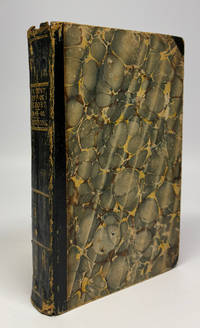
1808AQ26487Philadelphia: Printed by William Duane 1808. 123pp 1. Recent gilt-tooled half-half marbled paper boards contrasting dark green morocco lettering-piece to spine. Lightly rubbed and marked. Slight browning to title otherwise internally clean and crisp. The second edition of a report on America's roads and canals by Abraham Albert Gallatin 1761-1849 Genevan-American politician often termed 'America's Swiss Founding Father'. Gallatin's tremendous proposals included plans for a $20 million federal infrastructure program which would involve the construction of a canal through Cape Cod the connection of the Hudson River with the Great Lakes and a road linking Maine and Georgia. Ultimately Democratic-Republican pushback prevented his vision from being realised but he was granted the funds to construct the National Road America's first improved highway built by the federal government. . Second edition. 8vo. Printed by William Duane hardcover
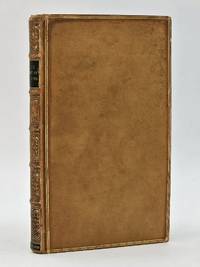
1853293169London.: John Murray. 1853. 2nd Edition. Small 8vo. Finely bound by Hayday in tan calf raised bands gilt spine decorations in six compartments black spine label gilt ruled borders gilt dentelles on turn-ins marbled edges marbled endpapers. Very good spine head chipped otherwise near fine. 16.8x10.3x1.3 cm. A history of gastronomy by the sharp-witted essayist. This finely bound copy will make a nice addition to any gastronomy collection. weight: 0.5 lb. John Murray. hardcover
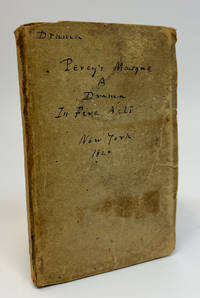
182013545New York: C. S. Van Winkle 1820. First American Edition 1st Printing. Softcover. Good. 12mo 150pp. "From the London edition with alterations." A good copy bound in later 19th century plain card wrappers with yapped edges and inked title and the edges marbled. Some marginal staining. C. S. Van Winkle unknown
1821D19279New York: James Eastburn Literary Rooms 1821. First Edition. Hardcover. Good. 8vo Original plain boards stained printed paper spine label. Bookplate removed. Uncommon. <br /> <br/><br/> James Eastburn, Literary Rooms hardcover
180360643Leominster Massachusetts:: by Adams & Wilder for Isaiah Thomas Jun. 1803. old full leather overlaid with an old sheep covering. . Free endpapers lacking front and rear; horizontal tear across the title page repaired with clear tape which has discolored; some moderate staining; binding very worn. 12mo. by Adams & Wilder for Isaiah Thomas, Jun., hardcover
1880771641880 Paris, Hachette, 1875, in 12 broché, 256 pages ; portrait en frontispicecouverture fanée.
185013208Washington DC: Office of Printers to the House of Reps 1850. First Edition. Hardcover. Good . Octavo 626pp. illustrated plus six plates. A good or better copy in contemporary 3/4 black leather and marbled boards. Contemporary ownership signature to front free endpaper and small private library label to front paste-down else unmarked. Mild foxing to first and last few leaves. Extremities rubbed and scuffed and the joints tender but sound. An important volume in the pantheon of presidential books which chronicles on pp. 57 and 262 the award of a patent to then-Illinois Congressman Abraham Lincoln. Having twice been aboard a riverboat which got stuck on shallow shoals he developed a concept for a bellows fixed under the hull of a riverboat which could be inflated to lift the boat over the obstruction and then retract. Lincoln had been a patent lawyer in the mid-1840s and was closely familiar with the laborious patent application process. <br /> <br /> To this day Lincoln is the only president to have been awarded a patent a fact which contributes to his enduring legacy as an uncommon genius and polymath. As such this tract while unrelated to politics is an essential volume in any substantial Lincoln collection. Uncommon in the trade. Not listed in Monaghan. Office of Printers to the House of Reps hardcover
189912434n.p.: n.p. 1899. FIRST EDITION. Bound in half morocco and marbled boards; light creasing and soiling. Judd Stewart's copy with his bookplate. Very good. First edition of this inspirational address. Monaghan 1254. [n.p.] unknown
189244848Concord N.H. October 1892. First edition. contemporary half morocco. Minor rubbing at extremities; a few light spots to cloth; a very nice copy. 8vo. Illustrated from engraved portraits. Inscribed to an old friend "With the compliments of The Author 1893." hardcover
1865102324<p>Newspaper 16" x 22" six columns of text small Lincoln engraving 4 pp. Folded at center a few tears and chips at folds and extremities some loss of text at the center fold some aging and browning and a little uneven darkening; despite these faults the paper is in decent condition overall for a newspaper from this period. Dated April 26 1865 this paper provides considerable detail on Lincoln's funeral. The coverage includes an OBIT on Lincoln and a small engraving of the slain president. Most of the coverage is on the second page of the newspaper. The articles include stories on events at the capital to honor Lincoln and the impact of the event on a grieving nation.</p>
1864D16155Baltimore: Cushings & Bailey 1864. First Edition. First and only edition extra-illustrated with approximately 65 inserted portraits. Full red pebbled morocco gilt dated 1882 on the spine rebacked with the original spine laid down the covers panelled in gilt the spine tooled and lettered in gilt with the initials "W.H.W." at the foot. 10 x 8 inches 25.5 x 21 cm; with lithographed title and approximately 65 mostly engraved or lithographed portraits inserted three are original drawings including one of Julia Ward Howe xi lithographed contents 200 pp. lithographed fascsimiles of the handwriting of the authors. Intermittent foxing the inserted portraits have offset to the text leaves opposite rebacked as noted and lightly rubbed. <br/><br/>This volume produced at the time of the 1864 Baltimore Sanitary Fair contains what is considered the first reproduction of the Gettysburg Address in Lincoln's hand. The facsimile was made from what is now known as the "Bliss Copy" of the address the fifth and final manuscript copy of the address that Lincoln executed at the request of the editors of this volume. Other authors represented here include Emerson Poe Melville Hawthorne and many other notables of the period. Cushings & Bailey unknown
1865106234<p>Newspaper folio 21" x 28" eight columns 4 pp. Chips and folds in margins center page crease folded a couple of holes at folds with some loss some soiling aging and darkening; otherwise fair to good. Dated May 31 1865 this local Boston paper carries two stories about the Lincoln assassination. Both articles start on front page. The first discusses the trial of the conspirators and the second deals with the trial also but presents information about the individuals involved. Back page has the usual ads. </p>
186017676Columbus Ohio: Follett Foster And Company 1860. First Edition. Cloth. Very good. First edition of Caucasus of 1860: A History of the National Political Conventions of the Current Presidential Campaign by Murat Halstead published in 1860. Octavo 6 232pp 2. Pebbled brown cloth title in gilt on the spine. Previous ownership stamp on the title page and preface blindstamp on the front free endpaper. Includes an ownership inscription on the front free endpaper dated 1860. A few marginalia notes in pencil. Solid text block text generally clean. Rubbing to cloth wear at head of the spine. Sabin 29924 Howes H-102. Murat Halstead's The Caucuses of 1860 published in Columbus by Follett Foster and Company in 1860 provides a detailed eyewitness narrative of the major party conventions that shaped the outcome of the pivotal presidential election. As a reporter and editor for the Cincinnati Commercial Halstead attended the Democratic conventions in Charleston April and Baltimore June where the party split over the issue of slavery-ultimately nominating two different candidates Stephen A. Douglas for the Northern Democrats and John C. Breckinridge for the Southern faction. He also covered the Republican convention in Chicago May describing the nomination of Abraham Lincoln over front-runner William H. Seward in day-by-day reports. The book includes transcriptions of key speeches roll-call votes delegate maneuverings and even floor plans of the convention halls. Follett, Foster And Company unknown
186512437New York: Athenaeum Club 1865. FIRST EDITION. Original printed purple wrappers lightly chipped with sun fading to the front wrapper. Unopened. First edition. One of five hundred copies printed. It contains addresses by T. Bailey Myers Parke Godwin George P. Putnam and others and a poem by Henry T. Tuckerman. Monaghan 379 variant. [Athenaeum Club] unknown
186511541New York: Athenaeum Club 1865. FIRST EDITION. With engraved frontispiece portrait. Original printed purple wrappers housed in a quarter-calf portfolio rear joint splitting; chipping and soiling to wrappers with some splitting at the folds still a very good copy of this large fragile item. First edition number 46 of 50 large paper copies. Monaghan 379. [Athenaeum Club] unknown
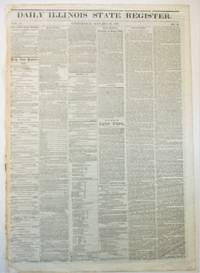
186139392Springfield: Charles H. Lanphier 1861. 4 pp. Folio. 16-1/4" x 23-1/2.". Lightly chipped blank inner edge. Each page printed in six columns each separated by a rule. Very Good.<br /> <br /> The Register no friend of Abraham Lincoln was a Democratic Paper supporting the Crittenden Compromise. Reporting on State and National issues the Register notes "The Crittenden Resolutions have strong friends but the ultra republicans will not take them." Lincoln had insisted that his allies hold firm against Crittenden's Compromise. The Register rebukes Lincoln for his famous declaration that "the Union could not endure permanently part slave and part free." Developments in the fracturing Union are reported. <br /> Lincoln had been elected President nearly three months before the appearance of this issue. His inauguration would occur five weeks later. Paid advertisers include John McClernand and John Stuart who advertise their legal services in the first column of page 1. The large number and variety of advertisements for an array of medical complaints about four columns are surprising- - and a little disturbing. <br /> This issue also reports an incident involving the John Brownites at Boston who were snubbed by British Lord Brougham after inviting him to attend a convention discussing the abolition of slavery. Charles H. Lanphier unknown
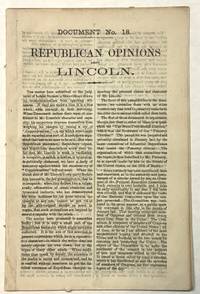
186442090np. 1864. Caption title as issued. 16pp printed in two columns per page. Stitched Very Good. <br /> <br /> This unusual item a Democratic Party campaign pamphlet is a compendium of "Derogatory Republican statements concerning Lincoln's capacity compiled for the campaign of 1864. The Pomeroy circular Fremont's letter of acceptance the Wade-Davis manifesto" Monaghan. It is a forceful reminder of the low esteem in which Lincoln was held during 1864 until Atlanta fell to the Union in September. <br /> FIRST EDITION. Monaghan 349. Sabin 70036. unknown
1863149486Washington: Government Printing Office January 2 1863. Rare first War Department and fifth overall printing of the Emancipation Proclamation. Twelvemo General Orders No. 1 extracted from the larger volume of orders for 1863 4 pages disbound. President Lincoln had intended to issue the order earlier in 1862 but deliberately delayed its release until after the Union's strategic victory at Antietam at which point he announced the Preliminary Emancipation Proclamation. General Order No. 139 September 22 1862 which declared that all slaves held in rebelling states would be forever free from the first day of January 1863. The text of the final Emancipation Proclamation present in this order is noted for its direct and decisive language: "By the President of the United States of America . That on the first day of January in the year of our Lord one thousand eight hundred and sixty-three all persons held as slaves within any State or designated part of a State the people whereof shall then be in rebellion against the United States shall be then thenceforward and forever free; and the Executive Government of the United States including the military and naval authority thereof will recognize and maintain the freedom of such persons and will do no act or acts to repress such persons or any of them in any efforts they may make for their actual freedom." The first printing for the War Department of General Orders No. 1 was distributed to various military outposts and bureaus throughout the United States. Based on the extensive research of Charles Eberstadt the copy for the War Department was the fifth time the final version of the Emancipation Proclamation appeared in print on January of 1863 following three hastily prepared issues for the State Department and another for Lincoln's hometown Illinois States Journal newspaper in Springfield Illinois. A copy of the War Department Printing was included in the Grolier Club's One Hundred Influential American Books Printed before 1900. Eberstadt 12; Grolier Club One Hundred Influential American Books 71; Streeter 1751. In near fine condition. Housed in a custom half morocco case. A scarce work. The Emancipation Proclamation issued by President Abraham Lincoln on January 1 1863 represented a pivotal moment in the trajectory of the American Civil War and the broader struggle over the institution of slavery. Although it did not immediately free all enslaved individuals the proclamation declared that all persons held as slaves in states or parts of states still in rebellion against the United States were to be henceforth free. This executive order grounded in Lincoln's war powers as commander-in-chief was intended primarily as a military measure to weaken the Confederacy by undermining its labor force and discouraging foreign powers from recognizing or supporting the secessionist cause. The proclamation also signaled a significant shift in Union war aims reframing the conflict from a struggle solely to preserve the Union to one explicitly linked to the abolition of slavery. While its immediate legal impact was limited to areas outside Union control the Emancipation Proclamation laid the groundwork for the eventual passage of the Thirteenth Amendment which formally abolished slavery throughout the United States. Government Printing Office unknown
1862100336Newspaper folio unbound 8pp. Dampstained browned at edges with some foxing early owner's ink stamp on top margin some small tears and chips along edges and a little creasing. Still in decent shape overall. This is one of the earliest printings of the Emancipation Proclamation which was issued on September 22 1862. The Emancipation Proclamation declared freedom for all slaves in any Confederate state that didn't return to the Union by January 1 1863. Although this executive order did not actually free a large number of slaves it set the stage for the freedom of all slaves. Coverage of the Emancipation in this newspaper begins in the middle of the first page. This newspaper article represents important coverage of a very significant event in American History. archives government exhibits emancipation website
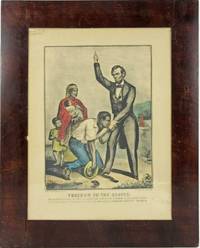
186538499New York: Currier & Ives 1865. Color print 11-3/4" x 15-1/2" by sight. A black man newly freed from slavery kneels at Lincoln's feet his shackles broken. He kisses Lincoln's hand. His wife and babies stand behind him. Lincoln's right arm is raised and pointing heavenward. Light uniform toning but brightly colored. Two blank margin tears at lower right corner one blank margin tear at upper left corner. Framed in wood a few small dings to overall size 16" x 20." Very Good.<br /> <br /> "This commemorative print was issued soon after the assassination of President Lincoln to comfort his supporters. The semi-allegorized representation portrayed the former president as the emancipator of enslaved African Americans guided by divine principles" Description online at The Met. <br /> Entering Richmond in 1865 Lincoln was met by many former slaves who kneeled before him. Lincoln told them to stand and thank God not Lincoln for their freedom. A decade later the Colored People's Educational Monument Association headed by the African-American abolitionist Henry Highland Garnet. created a memorial to Lincoln. The result was a sculpture erected in 1876 in Lincoln Park near Capitol Hill depicting a supplicant slave and a towering Lincoln. Known as the Emancipation Memorial or the Freedmen's Memorial it generated some contemporary criticism for its depiction of the inferior position of the black man. <br /> Gale 2311. Not in LCP Reilly or Weitenkampf. OCLC 1292616124 1- OH Hist. Connection 870219805 1- IN Hist. Soc. as of May 2024. AAS also owns a copy. Currier & Ives unknown
18661009808vo one sheet printed on both sides. Even toning and aging small closed tear to the upper margin; otherwise very good. This is a rather scarce government document that informs the military that the "Thirteenth Amendment" has passed and slavery is officially abolished. Article XIII states "Neither slavery nor involuntary servitude except as a punishment for a crime whereby the party shall have been duly convicted shall exist within the United States or any place subject to their jurisdiction." This document is signed in type by William H. Seward 1801-1872 as the Secretary of State. Congress would follow with a Civil Rights Act of 1866 to give African Americans the same rights as all citizens but this small printed document presenting the essence of the "Thirteenth Amendment" is an important piece of history. ANB.