774 résultats
18690010756First Limited Edition: D. Appleton & Co. 1869. New Edition. Hardcover. Very Good. 8vo; iv 830 pages contemporary half calf marbled boards scuffed <br/><br/> Also Lincoln's Message to the third session of the 37th Congress December 1 1862. Also the Inaugural Address of Jefferson Davis on entering upon his duties as President of the Confederate States. With a large fold-out "Railway Map of the Southern States" to accompany the report of the Military Operations during 1862. With much more. D. Appleton & Co. hardcover
1864M13597New York: Derby & Miller 1864. 1864. Volume II. 8vo. xxxi 1 711 1 pp. Subtle waterstain at top margin viewable from pages 500-712. Original full dark blue-green pebbled cloth gilt spine titles; light wear to extremities. Bookplate of the Essex Institute; small rubber stamp on title C.W. Post College Documents Library. The Emancipation Proclamation declared freedom for all slaves by January 1 1863. This proclamation is dated January 2 1863. Lincoln in writing this one of the most important documents in all US history declared "And by virtue of the power and fpr the purpose aforesaid I do order and declare that all persons held as slaves within said designated States and parts of the States are and henceforward shall be free; and that the Executive government of the United States including the military and naval authorities thereof will recognize and maintain the freedom of said persons." / The War Orders of 1863 are among the most historical during the Civil War. The volume includes: General Orders No.1: Emancipation Proclamation Liberty for Slaves. / General Orders No.100: The Lieber Code How soldiers should conduct ethically themselves in wartime. / General Orders No. 143: Order for the creation of the United States Colored Troops. / General Orders No.1. President Abraham Lincoln issued the Emancipation Proclamation on January 1 1863. With this Executive Order. He took a decisive stand on the most contentious issue in American history redefined the Union's goals and strategy and sounded the death knell for slavery. / Lincoln had always believed slavery to be immoral and fought its expansion. The President took the action "sincerely believed to be an act of justice" knowing that it might cost him the election. / With the Emancipation Proclamation Lincoln dramatically tied the Union's war aims to ending slavery. Whether they approved or not after January 1 1863 Americans could no longer deny that emancipation was central to the Union war effort. / Though ready to lay the groundwork for emancipation Lincoln feared that delivering the Proclamation at the wrong time would doom its chances for public acceptance and harm the Union cause. / On September 22 1862 Lincoln issued his preliminary Emancipation Proclamation giving the South 100 days to end the rebellion or face losing their slaves. / His final Proclamation on January 1 1863 further demonstrated his own evolving views by eliminating earlier references to colonizing freed blacks and compensating slave-owners for voluntary emancipation. Lincoln also added provisions for black military enlistment. Pausing before he signed the final Proclamation Lincoln reportedly said: "I NEVER IN MY LIFE FELT MORE CERTAIN THAT I WAS DOING RIGHT THAN I DO IN SIGNING THIS PAPER." Despite the political risks by 1864 he insisted on both reunion and emancipation as preconditions to any peace negotiation. Though the battle for civil rights would have to follow Lincoln rightly regarded the Proclamation as: "THE CENTRAL ACT OF MY ADMINISTRATION AND THE GREAT EVENT OF THE 19TH CENTURY" Derby & Miller, 1864. hardcover books
1864WB163441864. Hardcover. Very Good. Rare broadside tipped into a copy of The Early Life of Abraham Lincoln: Containing many unpublished documents and unpublished reminiscences of Lincoln's early friends. TARBELL Ida M. Assisted by James McCann Davis. Published by McClure New York 1896. The broadside printed in two columns presents the platforms of the Republicans who in June in Baltimore nominated Lincoln and the Democrats who in August in Chicago nominated McClellan. <br/><br/> hardcover books
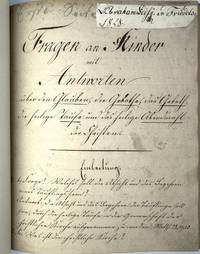
1828512100Self-Published 1828. Hardcover. VERY GOOD. 89 32pp. Two autograph manuscripts in fine longhand by Abraham Leisy. The first is a transcription of the Gerrit Roosen's Mennonite Catechism; the second text is a 32-page collection of pious tales. The books were bound together with a signature inlaid from a letter by Abraham Leisy and pasted to the title page of the first volume. Bound in black finished cloth with 'Biblische Fragen' stamped to the front cover. The FFEP bears a note by Leisy's sister Babette reading 'Babette Leisy. / Cleveland. / Dieses Buch brachte meinen topfchen Diana im Jahr 1895. von Deutschland Friedelsheim das hat alles Bruders Abraham Leisy geschrieben.' 'The Abraham and Katarina Leisy family emi grated to America in 1855 from Friedelsheim Germany. They settled on a farm outside of Donnellson Iowa. The Leisys were members of the West Zion Mennonite Church of Donnellson.' Mennonite Life April 1976. Abraham's sons notably founded the Leisy Brothers' 'Union Brewery' in 1862 in Keokuk Iowa. When the state of Iowa banned manufacture of alcoholic beverages in 1884 the brewery was moved to Peoria Illinois and renamed 'Leisy Brewing Company' a major regional beer producer and known as the last Mennonite-operated brewery in the U.S. Self-Published hardcover
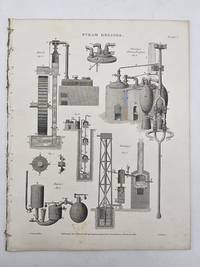
1820357259London.: Longman Hurst Rees and Lorme. circa 1820. No covers sewn at spine. Very good light marginal toning and scattered foxing. 27x21.5x0.3 cm. The Rees Cyclopedia was issued serially from 1802-1820 in 39 volumes plus 7 atlas volumes. The Cyclopedia was not well received and the plates from the atlas are rather scarce. These are illustrations from the era of early steam power. weight: 0.2 lb. Longman, Hurst, Rees and Lorme. unknown
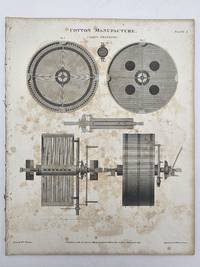
1820357260London.: Longman Hurst Rees and Lorme. circa 1820. No covers sewn at spine. Good light marginal toning and scattered foxing. 27x21.5x0.3 cm. The Rees Cyclopedia was issued serially from 1802-1820 in 39 volumes plus 7 atlas volumes. The Cyclopedia was not well received and the plates from the atlas are rather scarce. These are illustrations from the early era of mass manufacture of cotton goods. weight: 0.3 lb. Longman, Hurst, Rees and Lorme. unknown
18130001594BURLINGTON NEW JERSEY NJ. Good. 1813. On offer is a super relic of 200 year old legal precedents and legal opinion being a hardcover book: The Scrivener's Guide Third Edition written by William Griffith Counsellor at Law published by David Allinson. Of particular interest to historians of the law and legal precedents are the nine 9 additional pages of handwritten notes on all the blank pages defining and explaining various aspects of law not included or in addition to the published material. The handwritten notes appear to be transcriptions from other works and we believe the notes are provided by Abraham Westerfelt whose ownership signature appears in a similar hand on the title page and a fep. The 6.5 x 4.25 inch book is rubbed and generally showing signs of wear but overall G.; Manuscript; 24mo - over 5" - 5¾" tall; KEYWORDS: HISTORY OF SCRIVENER'S GUIDE WILLIAM GRIFFITH ABRAHAM WESTERFELT CONTRACT LAW LAWYERS LEGAL DAVID ALLINSON LEGAL PRECEDENTS THE LEGAL PROFESSION JURISPRUDENCE HANDWRITTEN MANUSCRIPT DOCUMENT LETTER AUTOGRAPH KEEPSAKE WRITER HAND WRITTEN DOCUMENTS SIGNED LETTERS MANUSCRIPTS HISTORICAL HOLOGRAPH WRITERS AUTOGRAPHS PERSONAL MEMOIR MEMORIAL PERSONAL HISTORY ARCHIVE DIARY DIARIES ANTIQUITÉ CONTRAT VÉLIN MANUSCRIT PAPIER ANTIKE BRIEF PERGAMENT DOKUMENT antiquité contrat vélin document manuscrit papier Antike Brief Pergament Dokument Manuskript Papier oggetto d'antiquariato atto velina documento manoscritto carta antigüedad hecho vitela documento manuscrito papel. . hardcover
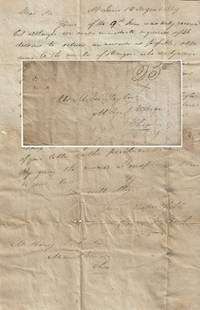
1819010456St. Louis Missouri 1819. Envelope or Cover. Very good. This stampless folded letter measures 7.5†x 12â€. It is datelined “St. Louis 14 August 1819†and was sent to Moses Taylor at Mount Vernon Ohio in care of the towns postmaster Henry B. Curtis by Aaron T. Crane and Abraham Beck early St. Louis land agents whose business the Western Land Agency was located in the rear of the Bank of St. Louis at 58 South Main Street where Crane also served as the St. Louis Postmaster only the third since the position was established in 1808. The letter’s two-line typeset postmark was the earliest used in St. Louis and the Spink Shreve Auction #121 reports that only four examples are known to have survived. </p> <br /> <br /> <p>Taylor or Curtis for him apparently had asked Crane and Beck if they knew the whereabouts of a relative probably a son. It reads in part:</p> <br /> <br /> <p style="margin-left:5%; margin-right:10%;">“Yours . . . was duly received and we made immediate enquiries . . . to return an answer as soon aspossible still owing to the number of strangers who daily arrive & pass through this place we were unable to discover Mr. Taylor matching the name you provided. However a person answering your description by the name Moses Taylor a carpenter by trade is in this place. He is doing well & has been making some money & has good employment. We said nothing to Mr. Taylor yet. Yours Respectfully / Crane & A. Beckâ€</p> . No online information is available about the Ohio Turners and little is known about Crane and Beck other than that Beck was the son of a New York physician and Crane had served as an army or militia captain during the War of 1812.</p> <br /> <br /> <p>For more information see Billon’s Annals of St. Louis in its Territorial Days Heritage Auctions Sale #3547 of 1 November 2017 and Horstman’s “William T. O’Hara Missouri Territorial Banker†in the “Missouri Paper Money Clip File†at Washington University Volume 1 of the American Stampless Cover Catalog and on-line genealogical records for Crane Beck and Curtis.</p> <br /> <br /> <p>An exceptionally scarce and important letter regarding life in early American St. Louis as the city was growing rapidly. The physical records for the Western Land Agency which have been microfilmed and digitized are held by the Library of Congress. At the time of listing only one other letter from Beck held by the St. Louis Mercantile Library at the University of Missouri in St. Louis and one document signed by Crane a 6-cent Post Office scrip note are known to have survived. </p> . unknown
186424901.02<p>"<i>with the same determination to divide the country unless they can secure universal abolition we are exposed to the same dangers every day and God only knows in what unlucky hour our ruin may be consummated. Compare his policy with McClellan's expression of readiness to receive any State when its people offer to submit to the Union.</i>"</p><p>This Democratic Party campaign pamphlet quotes an April 1864 letter to argue that Lincoln gave Lieutenant General Ulysses S. Grant free rein to conduct the war after having interfered with and micromanaged McClellan's Peninsula Campaign in 1862. The publication also declared that Republicans were stained with "<i>The Taint of Disunion</i>" and quoted from Republican speeches and editorials to insist that the Democrats were the party of "<i>UNION AND PEACE</i>."</p> <b>ABRAHAM LINCOLN.</b>Printed Document. Democrat Campaign "<i>Document No. 12</i>" with headings "<i>Lincoln's Treatment of Gen. Grant</i>" "<i>Mr. Lincoln's Treatment of Gen. McClellan</i>" and "<i>The Taint of Disunion</i>." New York 1864. 8 pp. 5¾ x 8â… in.<p><b><br /></b></p><p><b>Excerpts:</b></p><p>Lincoln to Grant April 30 1864</p><p>"<i>I wish to express in this way my entire satisfaction with what you have done up to this time so far as I understand it. The particulars of your plans I neither know nor seek to know. You are vigilant and self-reliant; and pleased with this I wish not to obtrude any restrains or constraints upon you while I am very anxious that any real disaster or capture of our men in great numbers be avoided.</i>" p1/c1</p><p>"<i>Such in brief are some of the most notable instances in which Mr. Lincoln interfered with General McClellan when he occupied a position similar to that held by General Grant. They reflect so severely upon the President that no attempt to gloss them over by his apparent subsequent repentance can disabuse the patriotic portion of the nation of the matured conviction that he is to be held responsible for the lack of decisive victories in Eastern Virginia. The blame must and will rest upon him to whom it belongs.</i>" p5/c2</p><p>"<i>Having shown by copious extracts from the speeches of Abraham Lincoln W. H. Seward Wendell Phillips Wm. Lloyd Garrison and from the editorial writings of the Chicago Tribune and the N. Y. Tribune… that they were all <b>original secessionists and disunion men</b> we propose now to give the evidence that Mr. Lincoln himself has within the last three months been concerned in a movement to make peace with Jeff. Davis on terms involving the direct proposal to divide the Union and let the South go.</i>" p7/c2-p8/c1</p><p>"<i>with the same determination to divide the country unless they can secure universal abolition we are exposed to the same dangers every day and God only knows in what unlucky hour our ruin may be consummated. Mark how Mr. Lincoln constantly keeps up the idea of negotiating only with Jefferson Davis. Why does he never address himself to the people or the States of the South. Compare his policy with McClellan's expression of readiness to receive any State when its people offer to submit to the Union.</i>" p8/c2</p><p><b>Historical Background</b></p><p>The 1864 presidential election pitted President Lincoln against his Democratic challenger General George B. McClellan. Although McClellan had been the commander of the Army of the Potomac and general-in-chief of the Union Army the Peace platform adopted by the Democratic National Convention in Chicago declared the war a failure. The party was bitterly divided between War Democrats who favored continuing the war to restore the Union while leaving slavery alone; moderate Peace Democrats who favored an armistice and a negotiated peace that would likely protect slavery in a reconstructed union and radical Peace Democrats who favored an immediate end to the war without securing Union victory. McClellan was a War Democrat but the platform was written by radical Peace Democrat Clement Vallandigham and Peace Democrat George H. Pendleton was nominated for vice president.</p><p>In 1864 Republicans created the National Union Party to attract War Democrats Unconditional Unionists and Unionist Party members who would not vote for the Republican Party though most state Republican parties did not change their name. President Abraham Lincoln won the nomination of the "National Union Party" at its Baltimore convention and won re-election with new running mate War Democrat Andrew Johnson.</p><p>Although Lincoln was convinced by August 1864 that he would not be reelected General William T. Sherman's capture of Atlanta in early September and General Philip Sheridan's successes in the Shenandoah Valley of Virginia from August to October ensured his victory. Without the participation of the seceded states Lincoln and Johnson won 55 percent of the popular vote and an overwhelming 212-to-21 victory in the Electoral College. McClellan and Pendleton carried only Kentucky Delaware and McClellan's home state of New Jersey.</p>
186424901.02<p>"<i>with the same determination to divide the country unless they can secure universal abolition we are exposed to the same dangers every day and God only knows in what unlucky hour our ruin may be consummated. Compare his policy with McClellan's expression of readiness to receive any State when its people offer to submit to the Union.</i>"</p><p>This Democratic Party campaign pamphlet quotes an April 1864 letter to argue that Lincoln gave Lieutenant General Ulysses S. Grant free rein to conduct the war after having interfered with and micromanaged McClellan's Peninsula Campaign in 1862. The publication also declared that Republicans were stained with "<i>The Taint of Disunion</i>" and quoted from Republican speeches and editorials to insist that the Democrats were the party of "<i>UNION AND PEACE</i>."</p> <b>ABRAHAM LINCOLN.</b>Printed Document. Democrat Campaign "<i>Document No. 12</i>" with headings "<i>Lincoln's Treatment of Gen. Grant</i>" "<i>Mr. Lincoln's Treatment of Gen. McClellan</i>" and "<i>The Taint of Disunion</i>." New York 1864. 8 pp. 5¾ x 8â… in.<p><b><br /></b></p><p><b>Excerpts:</b></p><p>Lincoln to Grant April 30 1864</p><p>"<i>I wish to express in this way my entire satisfaction with what you have done up to this time so far as I understand it. The particulars of your plans I neither know nor seek to know. You are vigilant and self-reliant; and pleased with this I wish not to obtrude any restrains or constraints upon you while I am very anxious that any real disaster or capture of our men in great numbers be avoided.</i>" p1/c1</p><p>"<i>Such in brief are some of the most notable instances in which Mr. Lincoln interfered with General McClellan when he occupied a position similar to that held by General Grant. They reflect so severely upon the President that no attempt to gloss them over by his apparent subsequent repentance can disabuse the patriotic portion of the nation of the matured conviction that he is to be held responsible for the lack of decisive victories in Eastern Virginia. The blame must and will rest upon him to whom it belongs.</i>" p5/c2</p><p>"<i>Having shown by copious extracts from the speeches of Abraham Lincoln W. H. Seward Wendell Phillips Wm. Lloyd Garrison and from the editorial writings of the Chicago Tribune and the N. Y. Tribune… that they were all <b>original secessionists and disunion men</b> we propose now to give the evidence that Mr. Lincoln himself has within the last three months been concerned in a movement to make peace with Jeff. Davis on terms involving the direct proposal to divide the Union and let the South go.</i>" p7/c2-p8/c1</p><p>"<i>with the same determination to divide the country unless they can secure universal abolition we are exposed to the same dangers every day and God only knows in what unlucky hour our ruin may be consummated. Mark how Mr. Lincoln constantly keeps up the idea of negotiating only with Jefferson Davis. Why does he never address himself to the people or the States of the South. Compare his policy with McClellan's expression of readiness to receive any State when its people offer to submit to the Union.</i>" p8/c2</p><p><b>Historical Background</b></p><p>The 1864 presidential election pitted President Lincoln against his Democratic challenger General George B. McClellan. Although McClellan had been the commander of the Army of the Potomac and general-in-chief of the Union Army the Peace platform adopted by the Democratic National Convention in Chicago declared the war a failure. The party was bitterly divided between War Democrats who favored continuing the war to restore the Union while leaving slavery alone; moderate Peace Democrats who favored an armistice and a negotiated peace that would likely protect slavery in a reconstructed union and radical Peace Democrats who favored an immediate end to the war without securing Union victory. McClellan was a War Democrat but the platform was written by radical Peace Democrat Clement Vallandigham and Peace Democrat George H. Pendleton was nominated for vice president.</p><p>In 1864 Republicans created the National Union Party to attract War Democrats Unconditional Unionists and Unionist Party members who would not vote for the Republican Party though most state Republican parties did not change their name. President Abraham Lincoln won the nomination of the "National Union Party" at its Baltimore convention and won re-election with new running mate War Democrat Andrew Johnson.</p><p>Although Lincoln was convinced by August 1864 that he would not be reelected General William T. Sherman's capture of Atlanta in early September and General Philip Sheridan's successes in the Shenandoah Valley of Virginia from August to October ensured his victory. Without the participation of the seceded states Lincoln and Johnson won 55 percent of the popular vote and an overwhelming 212-to-21 victory in the Electoral College. McClellan and Pendleton carried only Kentucky Delaware and McClellan's home state of New Jersey.</p> books
1867000793IPSWICH MASSACHUSETTS MA. Good. 1867. On offer are five handwritten manuscript journals all having belonged to the Caldwell family who lived in Massachusetts one of the diaries 1870 has the name Ezra S. Vieyes written in it. A casual reading does not determine where Ezra fits in with the Caldwell family but a more detailed reading will hopefully flesh out the relationship. Two of the diaries have the name of the family scion being Abraham Caldwell of Ipswich Massachusetts. Other towns mentioned include Westminster Fitchburg Northborough and Worcester. The diaries represent the years 1867 full of entries 1870 a quarter full 1875 a half filled 1887 fully written and the 1890's. Though not all fully written and the entries suggest illiterate writers these diaries represent a true piece of Americana with a treasure trove of local historical detail and genealogical information. For the medical collector there is an interesting thread running throughout - Mr. Caldwell is quite aged and he catalogues his daily ailments certainly a medical professional may assess his health from his writings. Here are some snippets: 1867 - "February 26th Went to examination. Lizzie Rawson teach good." "March 4th Went to town meeting. Another trial of Shemp decided as it should be." "May 10th Surveyed road to town distance of about 2 ¾ miles 15 ft." "June 17th Golden wedding 75-100 people persons present." "September 13th Took Templers Degrees. Went to town to lecture. Carried B.M. Balch." "October 13th On euqaduct to town meeting for roads. Was chosen on committee." 1887 "January 9th 7 Below. Very cold. Snow flakes flying all day. Ben out very little today. Louitah Lord little more comfortable but very sick." "February 9th Sick all day. From Salem paper I see Mr. Joseph Pusfer died in Salem Oct. 19th 1886. Born July 18th 1798." "March 14th Today I hav made a grait mistak in being two positive when in fact I was rong. My mind is faking me." "June 22nd and 23rd Stage coach below belonged to Appleton farm . Boiled out sink cess pool very hard job. Had nummness in my arm and shoulder. Stage coach passed to day for Salem." "July 25th Hot and sultry. A young lady came to Mrs. Batysons. Sang for House Benefit." "August 9th Went marsh with North Harris and Negro. Went to Beverly. Stayed at Edwards over night." "August 21st Fine and pleasant. John Billy's mother and sister here. Conrad G to made round Cape Ann." "October 6th Tryed to make some wine. Caried my grapes to Capt. Wilcomb and he pressed them for me." "October 19th Finished pounding the beans then went to Georgetown. Went in to Noisas Shoe factory. Was kindly received and shown from basement up. Felt interest and enjoyed it muh." "December 14th Very warm and Pleasant. Went over to south side river to Mrs. Dolls with Edy B. Escamined his stock." "December 16th Cooler. Gave notice to Mrs. Campbell that I should want the tenement she now ocupies for my own use the first of April next." "December 19th Mrs. Smith at the Invenational House left and fell and broke both arms. Slippery this morn. Bought turkey of Perkins." The 1893-1900 journal in the lot is a handwritten financial journal which has about 100 pages of expense type entries. I believe most of the entries have to do with rentals and money collected for the rentals. This journal has the name John Caldwell written on the inside. The front cover has fallen off of this journal and some of the pages are torn. The first 20 pages have also been torn out and are not accounted for. Overall G.; Manuscript; 24mo - over 5" - 5¾" tall; HANDWRITTEN MANUSCRIPT DOCUMENT LETTER AUTOGRAPH DIARY JOURNAL LOG KEEPSAKE WRITER HAND WRITTEN DOCUMENTS SIGNED LETTERS MANUSCRIPTS HISTORICAL HOLOGRAPH WRITERS DIARIES JOURNALS LOGS AUTOGRAPHS PERSONAL MEMOIR MEMORIAL PERSONAL HISTORY AMERICANA antiquité contrat vélin document manuscrit papier Antike Brief Pergament Dokument Manuskript Papier oggetto d'antiquariato atto velina documento manoscritto carta antigüedad hecho vitela documento manuscrito Papel HISTORY MASSACHUSETTS MA FARMING ECONOMICS GENEALOGICAL . unknown
18860002014NORTH OXFORD COUNTY ON EAST NISSOURI WOODSTOCK. Fair. 1886. On offer is an interesting original later 19th Century Municipal Record book from North Oxford Ontario dated 1886-87. Titled: Township of North Oxford Debenture Accounts Henderson Creek Drain under By Law No. 176. 1886 & 1887. The treasurer is an Abraham John Hillsdon and the accounts are written in his hand ~ lists of income received and expenditures for this Henderson Creek Drain project in 1887. There are 29 written pages starting in 1887 with the last entry in 1895. They are sporadic in the book some at the front some in the middle and some right at the end of the book with blank pages in between. There is a small glued in handwritten receipt: 'Received from Mr. Hillsdon Treasurer of North Oxford the Sum of Five dollars and Seventy three cents ~ East Nissouri Township's share of the refund on the Henderson Creek Drain" signed David Lawrence Treasurer East Nissori'. Many names in this book a very interesting piece of south western Ontario history. The back of the book has several pages on the Gravel Account for 1894; Reports from Each Pathmaster of the Gravel Used in their Division; lists of names numbers of loads and pit locations. There is also a copy of By-Law # 176 for the year 1886 inserted ~ By-Law to provide for draining of parts of the first second and third concessions of the Township of North Oxford and for borrowing on the credit of the Municipality the sum of one thousand nine hundred and fifteen dollars for completing the same. Provisionally adopted the twentieth day of October A.D. 1886. Also there is a worn copy of the Seventh Annual Report for the Agricultural Mutual Assurance Association of Canada tucked in. The book itself is in fair shape having a cracked hinge some loose pages and some chipping but overall Fair.; 8vo - over 7¾" - 9¾" tall; KEYWORDS: HISTORY OF NORTH OXFORD COUNTY ABRAHAM JOHN HILLSDON KITCHENER ONTARIO UPPER CANADA GALT WATERLOO HENDERSON CREEK DRAIN DAVID LAWRENCE EAST NISSORI LAKESIDE THAMESFORD ECONOMY FINANCE WOODSTOCK INGERSOLL TILLSONBURG BLANDFORD-BLENHEIM EAST ZORRA-TAVISTOCK NORWICH SOUTH-WEST OXFORD TOWNSHIP OF ZORRA HESSE DISTRICT MENNONITES AMISH CANADIANA CANADIAN HANDWRITTEN MANUSCRIPT DOCUMENT LETTER AUTOGRAPH DIARY JOURNAL LOG KEEPSAKE WRITER HAND WRITTEN DOCUMENTS SIGNED LETTERS MANUSCRIPTS PHOTO ALBUM PHOTOGRAPHIC ALBUM HISTORICAL HOLOGRAPH WRITERS HANDSCHRIFT HANDGESCHRIEBEN MANUSKRIPT DIARIES JOURNALS LOGS AUTOGRAPHS PERSONAL MEMOIR MEMORIAL PERSONAL HISTORY antiquité contrat vélin document manuscrit papier Antike Brief Pergament Dokument Manuskript Papier oggetto d'antiquariato atto velina documento manoscritto carta antigüedad hecho vitela documento manuscrito Papel . unknown
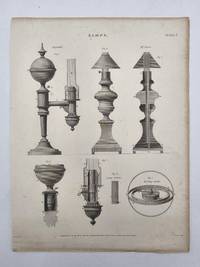
1820357262London.: Longman Hurst Rees and Lorme. circa 1820. No covers sewn at spine. Very good light marginal toning. 27x21.5x0.1 cm. The Rees Cyclopedia was issued serially from 1802-1820 in 39 volumes plus 7 atlas volumes. The Cyclopedia was not well received and the plates from the atlas are rather scarce. These are illustrations showing several types of oil lamps. weight: 0.1b. Longman, Hurst, Rees and Lorme. unknown
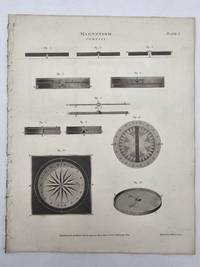
1820357261London.: Longman Hurst Rees and Lorme. circa 1820. No covers sewn at spine. Very good light marginal toning. 27x21.5x0.2 cm. The Rees Cyclopedia was issued serially from 1802-1820 in 39 volumes plus 7 atlas volumes. The Cyclopedia was not well received and the plates from the atlas are rather scarce. These are illustrations showing compasses and other devices used in magnetism research. weight: 0.2 lb. Longman, Hurst, Rees and Lorme. unknown
18521905080529xbvkPhiladelphia, Schäfer & Konradi, 1852. Stahlstich-Frontispizportrait '[George] Washington', XVIII, 400 Seiten mit der Chronologie zu Beginn und den Tabellen am Ende, 12 Präsidentenportraits in Holzstich (Xylographie: John Adams; Thomas Jefferson; James Madison; James Monroe; John Quincy Adams; Andrew Jackson; Martin van Buren; William Henry Harrison; John Tyler; James K. Polk; Zacharias Taylor und Millard Fillmore) auf Tafeln; 1 mehrfach gefaltete grenzkolorierte gestochene geographische Karte 'Vereinigte Staaten von Nord-Amerika und Mexico, 1850 (Entw. u. gez. v. Major Radefeld)' am Ende des Buches. - Brauner ornamental blindgeprägter Original-Leineneinband mit dekorativer Rückenvergoldung und goldgeprägtem Rückentitel; 8vo.(ca. 18,5 x 11 x 3 cm).
1809WRCAM35310New York: Printed by Frank White & Co. 1809. xxiii105pp. Printed self-wrappers stitched. Portion of outer margin of rear wrapper a blank leaf torn away else very good untrimmed and partially unopened. A lengthy and detailed defense of the Jefferson and Madison administrations' international policies. Includes numerous pieces of correspondence and a table of commercial figures. SABIN 5982. SHAW & SHOEMAKER 17376. Printed by Frank, White & Co. unknown books
186230007.01<p>On the front page under <i>"News from the North" </i>is the text of Abraham Lincoln's reply to <i>New York Tribune</i>editor Horace Greeley. Greeley's letter urging Lincoln to emancipate all slaves in Union-held territory was known as "The Prayer of Twenty Millions." It was first published on August 20 1862. Lincoln responded on August 22 declaring that his paramount goal is to save the Union regardless of its effect on slavery as well as his personal views that all men should be free.</p> <b>ABRAHAM LINCOLN.</b>Newspaper. <i>Richmond Whig</i> Richmond Va. August 30 1862. 2 pp. 17 x 24 in.<p><b><br /></b></p><p><b>Excerpt:</b></p><p><i>"…As to the policy I 'seem to be pursuing' as you say I have not meant to leave any one in doubt. </i></p><p><i> I would save the Union. I would save it the shortest way under the Constitution. The sooner the national authority can be restored the nearer the Union will be 'the Union as it was.' If there be those who would not save the Union unless they could at the same time </i>save<i> slavery I do not agree with them. If there be those who would not save the Union unless they could at the same time </i>destroy<i> slavery I do not agree with them—My paramount object in this struggle </i>is <i>to save the Union and is </i>not<i> either to save or to destroy slavery. If I could save the Union without freeing </i>any<i> slave I would do it and if I could save it by freeing </i>all<i>the slaves I would do it; and if I could save it by freeing some and leaving others alone I would also do that.—What I do about slavery and the colored race I do because I believe it helps to save this Union and what I forbear I forbear because I do not believe it would help to save the Union. I shall do </i>less<i> whenever I shall believe what I am doing hurts the cause and I shall do </i>more<i>whenever I shall believe doing more will help the cause. I shall try to correct errors when shown to be errors; and I shall adopt new views so fast as they shall appear to be true views. </i></p><p><i> I have here stated my purpose according to my view of </i>official<i> duty; and I intend no modification of my oft-expressed </i>personal<i> wish that all men every where could be free." </i></p><p><b>Historical Background</b></p><p>Though this letter is often as proof that Lincoln did not intend to abolish slavery unknown to Greeley and most Americans Lincoln had already drafted the preliminary Emancipation Proclamation and was only waiting for a Union military victory to deliver it. Moreover Lincoln makes a "divide and conquer" rhetorical move: he splits the issue by stating that his constitutional duty as president is to keep the Union together while simultaneously expressing his personal view of universal freedom at the end.</p><p>Additional content in this issue includes a front page editorial <i>"European Recognition" "The Indian Atrocities in Minnesota" "Yankee Finances" "An Order From Gen. Burnside" "The Peninsular Campaign—Gen. </i><b><i>J. Bankhead </i></b><i>Magruder's Official Report"</i> which takes over two columns with considerable detail.<br /><br />The back page has additional content with: <i>"A Brilliant Cavalry Exploit" "The Impressment of Slaves In Georgia" "Outrages in Arkansas" "From Kentucky"</i> and more. Additionally there are various reports from the <i>"Confederate Congress"</i> and numerous advertisements including a <i>"$100 Reward"</i> for a runaway slave.</p><p>The <i>Richmond Whig</i> is one of the less common—but still important—newspapers from the capital of the Confederacy.</p><p>In <i>Four Years in Rebel Capitals: An Inside View of Life in the Southern Confederacy from Birth to Death</i> journalist T. C. DeLeon wrote that the <i>Richmond</i> <i>Whig</i>was among the South's best wartime newspapers. Their pages "recorded the real and true history of public opinion during the war. In their columns is to be found the only really correct and indicative 'map of busy life its fluctuations and its vast concerns' in the South during her days of darkness and of trial."</p><p>One of the more interesting episodes in the history of the <i>Whig</i> is its alleged involvement in a terror plot against New York City during the Civil War. The <i>Whig</i>was reputed to have worked with the Confederate government to use advertisements and editorials to convey secret messages to Southern sympathizers in the North. In October 1864 the <i>Whig</i> was alleged to have run an editorial that signaled Southern supporters to embark on a terror campaign that called for widespread fires to be set in New York city and federal offices to be taken over and the capture of the city's military commander Maj. Gen. John Adams Dix.</p><p><b>Condition</b></p><p>Good. Never bound several folds with minor wear at the folds.</p> books
186322448.01New York N.Y. 1863. No binding. Fine. New York Journal of Commerce. Newspaper. New York Journal of Commerce. New York N.Y. January 3 1863. 4 pp. 24 x 32 1/2 in. An early report of the Emancipation Proclamation where the editors describe Lincoln's bold move as ""a farce coming in after a long tragedy.Most of the people regard it as a very foolish piece of business."" Historical BackgroundThe Emancipation Proclamation was the single most important act of Lincoln's presidency. Its text reveals the major themes of the Civil War: the importance of slavery to the war effort on both sides; the courting of border states; Lincoln's hopes that the rebellious states could somehow be convinced to reenter the Union; the role of black soldiers; Constitutional and popular constraints on emancipation; the place of African Americans in the United States and America's place in a worldwide movement toward the abolition of slavery. In sounding the death knell for slavery and the ""Slave power"" the President took a decisive stand on the most contentious issue in American history and the United States joined other western nations in embracing a future of free labor.In addition to the moral impact of this ""sincerely believed.act of justice"" the Proclamation aided the Union cause tangibly and decisively. Because it focused on territory still held by the Confederacy only small numbers of slaves compared to the total slave population were immediately freed. However the Proclamation deprived the South of essential labor by giving all slaves a reason to escape to Union lines. Failing that it freed slaves immediately upon the Union Army's occupation of Confederate territory. The Proclamation also encouraged the enlistment of black soldiers who made a crucial contribution to the Union war effort. Moreover England and France who had already abolished slavery were restrained from supporting the Confederacy which would have been in their own economic interests. Lincoln summed up the Proclamation's importance in 1864: ""no human power can subdue this rebellion without using the Emancipation lever as I have done.""Nonetheless the editors of the Journal of Commerce disagreed and their opinion reflects the truly controversial nature of the act for many contemporary Americans.
186322448.01New York N.Y. 1863. No binding. Fine. New York Journal of Commerce. Newspaper. New York Journal of Commerce. New York N.Y. January 3 1863. 4 pp. 24 x 32 1/2 in. An early report of the Emancipation Proclamation where the editors describe Lincoln's bold move as ""a farce coming in after a long tragedy.Most of the people regard it as a very foolish piece of business."" Historical BackgroundThe Emancipation Proclamation was the single most important act of Lincoln's presidency. Its text reveals the major themes of the Civil War: the importance of slavery to the war effort on both sides; the courting of border states; Lincoln's hopes that the rebellious states could somehow be convinced to reenter the Union; the role of black soldiers; Constitutional and popular constraints on emancipation; the place of African Americans in the United States and America's place in a worldwide movement toward the abolition of slavery. In sounding the death knell for slavery and the ""Slave power"" the President took a decisive stand on the most contentious issue in American history and the United States joined other western nations in embracing a future of free labor.In addition to the moral impact of this ""sincerely believed.act of justice"" the Proclamation aided the Union cause tangibly and decisively. Because it focused on territory still held by the Confederacy only small numbers of slaves compared to the total slave population were immediately freed. However the Proclamation deprived the South of essential labor by giving all slaves a reason to escape to Union lines. Failing that it freed slaves immediately upon the Union Army's occupation of Confederate territory. The Proclamation also encouraged the enlistment of black soldiers who made a crucial contribution to the Union war effort. Moreover England and France who had already abolished slavery were restrained from supporting the Confederacy which would have been in their own economic interests. Lincoln summed up the Proclamation's importance in 1864: ""no human power can subdue this rebellion without using the Emancipation lever as I have done.""Nonetheless the editors of the Journal of Commerce disagreed and their opinion reflects the truly controversial nature of the act for many contemporary Americans. books
1883290160Philadelphia: J. B. Lippincott & Co 1883. First Edition. Hard Cover. Good binding. Previous owner's name on the front board and front flyleaf. Slight dusty odor. Binding is cocked with red stain on the front board some rubbing and shefwear to the edges joints and corners. Brown cloth with black decorations and gilt lettering. Good binding. J. B. Lippincott & Co unknown books
1865236784Boston: Printed by Order of the City Council 1865. 1 vols. 8vo. Original pebbled bevelled cloth. Fine. 1 vols. 8vo. Includes speeches by Mayor of Boston Lincoln Senator Charles Sumner the eulogy Charles G. Loring A.H. Rice and Richard Henry Dana Jr pp. 56-61. BAL 4465 Printed by Order of the City Council unknown
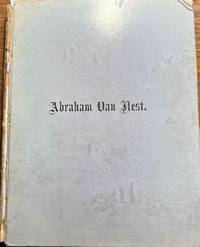
186436698New York: Printed by Sanford Harroun & Co 1864. First Edition. Hardcover. Good. Octavo. 7 76 pages. Illustrated with 3 albumen photographs. Glossy paper covered boards with name of Abraham Van Nest on the front cover. Spine is chipped in several places. Corners bumped. Shelf wear to the covers. Interior contents clean and unmarked. Some ephemera relating to Van Nest laid inside the front cover. Printed by Sanford, Harroun & Co hardcover
1865236784Boston: Printed by Order of the City Council 1865. 1 vols. 8vo. Original pebbled bevelled cloth. Fine. 1 vols. 8vo. Includes speeches by Mayor of Boston Lincoln Senator Charles Sumner the eulogy Charles G. Loring A.H. Rice and Richard Henry Dana Jr pp. 56-61. BAL 4465 Printed by Order of the City Council unknown books
185415726New York NY: Harper& Brothers 1854. Hardcover. Acceptable. Later brown cloth binding missing the label. Else good. Some minor light foxing. First published in 1757 treatise this influential text on aesthetics was the first complete philosophical exposition for separating the beautiful and the sublime into their own respective rational categories. It attracted the attention of prominent thinkers such as Denis Diderot and Immanuel Kant Harper& Brothers hardcover
1858BG8220New York: Harper & Brothers 1858. .with an Introductory Discourse concerning Taste.; Greenish nubbly cloth gilt spine title elaborate blind covers borders & pale yellow endpapers / pastedown; An almost very good copy with moderate foxing especially fore & aft; 219 pages 4 leaves of publisher advertisements. . 4.5"x7.5". Harper & Brothers hardcover