Markland AbrahamABAA

285 résultats
1667016836London: Printed by James Cotterel 1667. Book. Good condition. Hardcover. First Edition. Quarto 4to. Two works bound in one volume. "Poems" iii 68 pages of text. Heavily browned and irregularly discolored with some minor early marginalia with several corners or small chips repaired. "A Sermon." v 30 pages; Printed for Brabazon Aylmer London 1683. Title continues ".Chappel Octob. 29. 1682." Wing 2nd ed.; M685. There are a few small stains but the text reamains clean and in excellent condition. Bound in circa 1840 three quarter leather with marbled paper-covered boards; minor to moderate ubbing and shelfwear to the binding. Both of these are highly uncommon rarely offered on the market. Both are first editions. While these measure only 8 inches in height they are indeed quartos. Printed by James Cotterel Hardcover books
1667016836London: Printed by James Cotterel 1667. Book. Good condition. Hardcover. First Edition. Quarto 4to. Two works bound in one volume. "Poems" iii 68 pages of text. Heavily browned and irregularly discolored with some minor early marginalia with several corners or small chips repaired. "A Sermon." v 30 pages; Printed for Brabazon Aylmer London 1683. Title continues ".Chappel Octob. 29. 1682." Wing 2nd ed.; M685. There are a few small stains but the text reamains clean and in excellent condition. Bound in circa 1840 three quarter leather with marbled paper-covered boards; minor to moderate ubbing and shelfwear to the binding. Both of these are highly uncommon rarely offered on the market. Both are first editions. While these measure only 8 inches in height they are indeed quartos. Printed by James Cotterel Hardcover
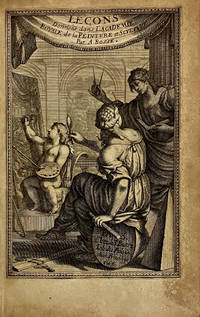
16671000441667. Paris Abraham Bosse 1667. Engraved frontispiece 87220pp. With an engraved dedication page. 8vo. Contemporary full mottled calf spine and corners expertly restored. Some browning. Bound in at the end the last 20 pages are: 1 - A. Bosse au lecteur sur les causes qu'il croit avoir euës de discontinuer le cours de ses leçons geometrales et perspectives dedans l'Academie Royale de la Peinture et de la Sculpture & mesme de s'en retirer. Paris A. Bosse 1667. 15pp. And: 2 - Discours tendant a desabuser ceux qui ont creu que l'Auteur d'un Traité qui a pour Titre Entretiens sur les vies et sur les ouvrages des plus excellens peintres anciens et modernes; avoit pretendu m'attaquer dans sa Préface. Paris A. Bosse 1667. 4pp. This scarce book is written in the form of a dialogue between Ariste an amateur who would like to build an architect a painter a "disciple" and the author himself. All the representatives of these different arts are asking for Bosse's advice. This allows Bosse to express once again his ideas regarding perspective in painting and architecture. Abraham Bosse who was born in Tours in 1602 is best known as an engraver but he was also the first professor of perspective at the newly founded Académie Royale from 1648 to 1661 when he was forced to leave due to disagreements with other Académicians. The two addresses that follow the book explain why in Bosse's own opinion he had been forced to leave his lob at the Académie and they also respond to comments made about Bosse by Félibien in the preface to the first part of the latter's Entretiens published a year earlier. c.f. Cicognara 91; Berlin cat. 2381; Abraham Bosse Savant Graveur # 310 311 & 312. unknown
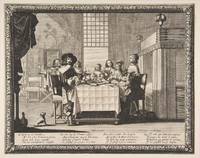
16362226<p>Le Blond 1636. Etching. A good impression on paper without a watermark. Trimmed just showing the platemark all around. 259mm x 324mm. G.D. 1080 Blum 154 only state Paris/Tours 2004 No. 128</p> Le Blond,
166341874Nuremburg: Heirs of J. & W. Endter 1663. 8vo. 6 3/16 x 3 3/4 inches. xiv 998 xl pp. Title in red and black engraved frontispiece and 42 plates 7 folding. Early ownership signature on front pastedown. Early 18th-century lengthy manuscript commentary referencing passages on Brahmins from a work by Johann Albrecht von Mandelslo 1616-1644. Contemporary vellum<br/> <br/> First German Edition of one of the earliest European accounts of Hinduism in Southern India by a missionary who worked in Palicatta Coromandel for ten years from 1630 enlarged by supplementary accounts of Asian African and American religions not included in the Dutch and French editions.<br/> <br/> Abraham Roger was a Dutch missionary and linguist who spent a significant portion of his career working in India under the Dutch East India Company VOC. He was stationed in Pulicat a trading hub on the Coromandel Coast of South India where he worked among the Tamil speaking population. His experiences as a missionary coupled with his interest in local culture prompted him to document Hindu religious practices and beliefs culminating in this notable work. First published in Dutch in 1651 and translated into German in 1663 it is one of the earliest and most significant works by a European exploring Hinduism in South India. Roger's approach was distinct in its attempt to understand and accurately portray Hinduism a religion he sought to comprehend despite his missionary objectives. His work stands out for its translations of Hindu hymns and descriptions of temple rituals and he drew much of his knowledge from his close collaboration with local Brahmins reflecting a relatively objective tone compared to other European writings of the period. Despite his Eurocentric and missionary perspective Roger was unique in that he did not entirely dismiss Hinduism but rather engaged with it to create one of the earliest detailed European accounts of the religion.<br/> <br/> Sabin 72603; JCB III p. 92; Ackermann V 1273; Landwehr VOC 65. Heirs of J. & W. Endter unknown
1688ST13039cLondon: J. M. for Henry Herringman; Mary Clark for Charles Harper 1688; 1689. FIRST EDITION of Part III. 304 x 202 mm. 12 x 8". 58 41 1 blank 80 4 70 i.e. 68 154 23 1 blank 148; 16 161 21 166 pp. 148-9 misnumbered 140-1 2 pp. Two works bound together in one volume. <br/> Very attractive contemporary black morocco handsomely gilt. Frontispiece portrait of the author. Separate title pages for each section those in the first work dated 1687. Front pastedown with armorial bookplate of Archibald Philip Earl of Rosebery and the book label of Lawrence Strangman front free endpaper with bookplate of Robert S. Pirie see below for these three. Perkin B1; Wing C-6658 C-6664B and C-6665. One open tear just touching printed marginal notation small hole affecting two words light and very sparse foxing a touch heavier on a few signatures and some negligible spotting here and there otherwise A VERY CLEAN AND ATTRACTIVE COPY with only the most trivial wear.<br/> <br/> From a distinguished collection in pleasing condition and in a contemporaneous binding this volume contains the works of Abraham Cowley one of the most precocious poets in the annals of English literature. Cowley 1616-67 was producing poetic works of inexplicable sophistication before he had settled into puberty; he published his first volume of verse at 15; and he went on to become one of the most popular poets of his day. Cowley was a staunch royalist who served in the exiled court of Charles I's queen Henrietta Maria where he helped to encode and decipher messages sent between the monarchy's supporters including the royal couple themselves. Despite having been arrested and imprisoned as a royalist agent at one point Cowley escaped the Cromwell years largely unscathed and retired to the countryside in 1663. Upon his death Cowley was not only given the extraordinary honor of burial in Westminster Abbey noted by the DNB as "the most lavish funeral which had ever been given to a mere man of letters in England" but was also afforded a privileged spot next to the graves of Spenser and Chaucer. Cowley's influence on contemporary poetry was demonstrably deep; his funerary monument refers to him as "the English Virgil" and Perkin asserts that his "fame as a poet exceeded even that of Milton" during the waning years of the Restoration. The first part here contains the poet's best-known mature works while the second is composed of his early efforts and the third his writings on plants. Our volume is from the collection of Robert S. Pirie 1934-2015 an extremely successful lawyer and investment banker who amassed the finest library of 16th and 17th century English literature in private hands during his lifetime. In 1984 he was elected one of the 40 members of the Roxburghe Club the world's oldest society of bibliophiles. Our volume has a thrice-distinguished provenance. The first recorded owner is Archibald Philip Primrose 5th Earl of Rosebery 1847-1929 Prime Minister of the United Kingdom during 1894-95. Earlier he had been Foreign Secretary twice as well as Leader of the Opposition. As stated in the British Armorial Bindings database Rosebery was an "ardent and discriminating book collector." Afterwards the present volume became the property of Bombay-born and Cambridge-educated Lawrence Strangman 1907-80 son of Sir Thomas Strangman Q.C. and Lady Winifred Strangman. Much of his celebrated collection went to his alma mater Trinity Hall in the University of Cambridge where it is maintained as the Strangman Collection in Jerwood Library while other portions were handled by Sotheby’s. A captain in WWII Strangman served as a distinguished Intelligence Officer. Our third recorded owner is Robert S. Pirie 1934-2015 an extremely successful lawyer and investment banker who amassed the finest library of 16th and 17th century English literature in private hands during his lifetime. In 1984 he was elected one of the 40 members of the Roxburghe Club the world’s oldest society of bibliophiles. J. M. for Henry Herringman; Mary Clark for Charles Harper unknown
168133091681. 28 231 1 blank; 33 19 pp. Rare first edition of a scholarly work on British herbs including those used to prevent or treat scurvy along with a treatise on various species of the American aloë. Although the Aloidarium title-page is dated 1680 Sweerts must have planned from the beginning to include it in the more extensive Herba and completed it after most of the Herba was finished since its imprint gives nothing but the year and the index to both works begins on the verso of the last page of text in the Aloidarium. Abraham Munting 1626-1683 was born in Groningen in the northeastern part of the Netherlands. He was a physician and an internationally renowned botanist an academic professor and director of the Hortus Botanicus at Groningen. The work is beautifully illustrated with flowering plants sometimes in pots. Also interesting as a botanical Americanum.Foot margin of frontispiece repaired minor water stains plates slightly browned but still in good condition.l Bibl. Med. Neerl. 364 & 506; Biodiversity Heritage Library 97404; Hunt Library 360; Pritzel 6557-6558; STCN 097841048; not in Nissen; Sabin. unknown
167734844Chez Frédéric Léonard | à Paris 1677 | 7.50 x 13.80 cm | relié
1629001352Rome: Typis Vaticanis / Ex Typographia Reu. Camerae Apost. 1629. Book. Good. Hardcover. 1st Edition. Silvester Caesius of Aquitaine Son of the Supreme Pontiff; by Abraham Bzowski a Pole Master of Sacred Theology of the Order of Preachers. Appended is the Life of Saint Adalbert the Martyr Published by the Same Silvester Defended by the Same Abraham Bzovius on Behalf of Its Author and Illustrated with Notes. Rome Printed at the Vatican Press 1629. --- together with --- The Life and Passion of Saint Adalbert Count Ursinus of Rosenberg Bishop of Prague Archbishop of Gniezno and Martyr; Apostle of the Bohemians Hungarians Poles and Prussians. Written by His Contemporary and Close Companion Pope Silvester II. Now for the First Time Vindicated on Behalf of Its Author by Abraham Bzowski a Pole Master of Sacred Theology of the Order of Preachers Divided into Chapters and Illustrated with Clearer Notes. Rome From the Press of the Apostolic Chamber 1629. The first and principal work in this volume is an exceedingly rare early modern biography of Pope Sylvester II Gerbert of Aurillac renowned as a mathematician philosopher and the first French pope. Writing in defence of Sylvester's legacy Bzowski refutes longstanding legends of sorcery and presents the pontiff as a model of intellectual virtue and ecclesiastical reform. The work exemplifies Dominican historical scholarship and forms part of Bzowski larger project to continue and expand Cesare Baronio's Annales Ecclesiastici. This book also contains his important Latin biography and scholarly vindication of Saint Adalbert also known as Wojciech a Bohemian nobleman from the Ursini-Rosenberg family bishop of Prague and missionary archbishop of Gniezno. He is one of the earliest and most important Christian evangelists in Central and Eastern Europe revered as the "Apostle of the Bohemians Hungarians Poles and Prussians." The book is an important celebration of Polish history as well as that of Eastern Europe more broadly. Born in Proszowice in 1567 Abraham Bzowski was a precocious scholar mastering Latin and music by the age of ten and studying under French humanists in Secemin. He joined the Dominican Order in Krakow later teaching philosophy and theology in Ferrara and Milan. After serving as prior in Krakow and Wroclaw he was summoned to Rome in 1610 by Pope Paul V and commissioned to continue Cesare Baronio's monumental Annales Ecclesiastici. Bzowski authored nine folio volumes covering 1198-1571 noted for their fidelity to Dominican perspectives though not without criticism. Among his other works are the Quadraginta Sermones super Canticum Salve Regina 1598 the Sacrum Pancarpium 1611 and updated papal biographies including those of Paul V and Gregory XV. His Silvester II Caesius 1629 offered here reflects both his historical scholarship and his interest in Polish and papal history. Bzowski died in Rome on 31 January 1637 having spent his final years in monastic seclusion after a personal tragedy. Size: 191 x 268 mm approx. Condition: 1 4 a6 A-O4 P6 Q2; 4 A-D4 E6 1 Contemporary full limp vellum title in contemporary MS to head of spine with 20th century tape affixed across the foot of the spine and going on to the boards. Binding secure with boards securely attached. Foxing throughout toned 20th century ownership marks including blindstamps of the Rare Book Collection of The New York General Theological Seminary Library. Collates as complete including the finely engraved portrait of Sylvester II. Both parts are present. Provenance: Formerly in the collection of the Rare Book Library at the New York Theological Seminary USA. Typis Vaticanis / Ex Typographia Reu. Camerae Apost. Hardcover
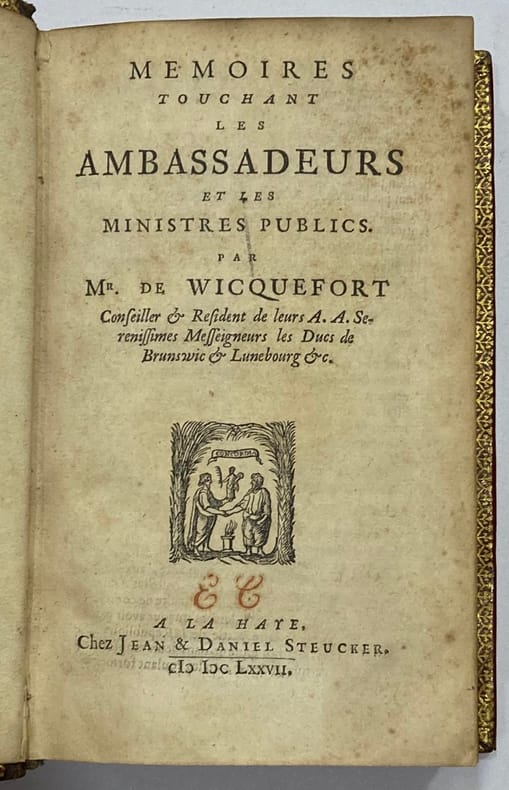
1677418631677 La Haye. Steucker. 1677. 1 volume petit in-8, plein maroquin rouge, triple filet doré en encadrement sur les plats, dos à nerfs orné, tranches dorées, roulette intérieure dorée.(6) ff. ; 624 pp. ; (44) ff.
1649518331649. Luguni Joannis Antoni Huguetan 1649 Folio Portrait 2 2 68 984 311 pp.; 50 655 1 46 2 pp.; 14 148 6 1 pp. zwei Pergamenteinbände d.Zt.; von einigen kleineren Mängel abgesehen ein feines Expl. Editio postrema à mendis purgatissima - Second Edition of this Opera Omnia first published 1642. ABRAHAM ZACUTUS LUSITANUS 1575-1642 - or Abraham ben Samuel Zacutus "was born in Lisbon. He studied medicine at Coimbra and Salamanca and took his degree of doctor in 1596 when he was twenty-one years of age after having attended the Universities of Salamanca Coimbra and Siguenza . He then returned to Lisbon where according to L. Lemos "In the thirty years he practiced there . He stood out preeminent among his colleagues of many lands . . . whether in discussion or in consultation in medical practice or in literary matters he easily won the palm. . . . But when there seemed that nothing could be added to the happiness of Zacutus- behold a sudden whirlwind of fate . he was plunged headlong from the high peak of the good fortune to which his merit had raised him. A most cruel edict of the king of Lusitania banished all of the Hebrew stock from the kingdom." Zacutus departed from the city of his birth when he was 50 years of age and settled in Amsterdam. " . He journeyed to Amsterdam in the hope of obtaining a peaceful abode ." Zacutus joined the Amsterdam Jewish Community and was one of that remarkable body of physicians who as Portuguese emigres won fame for themselves and added luster to Portuguese medicine; many proudly added "Lusitanus" to their names. In his "Peroration" to the first volume of his Opera Omnia Zacutus writes: " For I am a Jew and a stranger who fled from Portugal and my beloved and most lovely birthplace Lisbon tossed about hither and thither by severe misfortune and the storms of a long life. . I have allowed no day to pass-as Seneca says-without writing a line in which I showed my love for the Republic of Medicine. . I was determined to spend my life in devotion to study." He regarded " physicians as the tutelaries of Divinity sons of the gods." M. Lemos has studied Zacutus' works and presents us with an interesting summary. From this we can see that as an anatomist and pathologist Zacutus deserves special praise for the frequency with which he made autopsies at a time when they were rare. He embraced every opportunity and as a result he published post-mortem findings in the plague in affections of the heart malignant tumors renal and vesical calculi etc. He was much interested in drugs . But it is chiefly as clinician that he showed his greatness; he examined carefully with all the means then known and he relied upon his observations. As a result M. Lemos claims that the name of Zacutus is inseparable from the history of such diseases as plague diphtheria the eruptive fevers and malignant growths. He was one of the first to describe black water fever. He is praised for his studies of and contributions to the knowledge of syphilis. In estimating Zacutus' place in medicine we must bear in mind with M. Lemos that he was one of the most illustrious representatives of moribund Galenism which he defended with great loyalty. In his devotion he combated with all his force those whom he regarded as perverting the text and showing disregard to the masters. But as Carvalho points out "it is true that we had at that time some doctors who without despising traditional science by their devotion to progressive tendencies made great advance in the field of pathology and therapeutics. Of this number Zacutus and Duarte Madeira Arrais take front rank." The universality of Zacutus' interest in human diseases is everywhere apparent. His writings are arranged very systematically and no part of the body fails of attention. An interesting account could be made of the diseases of the eye which he describes and discusses. The same may be said of other organs. It is to be regretted that Zacutus did not live to publish his promised work on surgical diseases for the purpose itself furnishes proof there was nothing in medicine that was foreign to his concern. The collected works the Opera Omnia published in Lyon 1st.Ed. 1642/44 in two large volumes shortly after Zacutus' death January 22 1642 "hauptsächlich betrauert von den Armen" Hirsch but bearing the note of the author's revision present vast scholarship. They were dedicated to King Louis XIII of France. Volume I is described in its title as: The History of the Great Physicians being all the medical histories of internal diseases which are found scattered in the works of the foremost physicians most carefully arranged in proper order and supplied with explanatory notes and commentaries; together with a review of questions and matters of doubt." This is a medical history written not in chronological order of the general development of medicine nor in the sequence of eminent medical personages and their discoveries and their writings but from the point of view of single diseases their course and their treatment as recorded in the works of medical writers throughout the centuries. At the end of the volume Zacutus writes that he has presented " the histories of medical cases gathered from the foremost physicians in bountiful measure-to the number of 433 " and that he has illustrated clarified arranged and confirmed them on the authority of the most learned scholars to the number of 1711 "whom he has cited. It represents work of astounding volume. Volume II is entitled " The Practice of Cases-in which the treatment of all internal diseases is explained according to the views of leading physicians; serious doubts are discussed and resolved; and finally many practical observations are interspersed in their proper places. With an introduction of the physician into practice together with a most elegant pharmacopoeia. To which are added extraordinary medical cases by the very same author fully and newly enriched in which rare wonderful monstrous cases are presented together with their hidden causes signs courses and treatments." Each disease is considered under the following heads: Definition sometimes followed by "differentia" species causes signs prognosis treatment together with illustrative cases. The volume ends with a deeply pious and moving prayer of gratitude for Divine help-just as the book of precepts mentioned above opens with Precept I: "The physician should be a faithful worshipper of Divine Majesty "; yet in discussing objectively a medical problem he adds: "for we are physicians and not theologians! " It is also worthy of mention that the editions of 1649 and 1657 both volumes were from the same printer and are identical in form and paging with the first. What estimate have medical historians placed upon Zacutus Lusitanus Sprengel summarizes his life and work with the words that he distinguished himself as a practitioner as well in Holland as in Portugal. He commends the well ordered and carefully explained collections of cases of older writers as well as his own observations and experiences in rare cases. Daremberg describes the books as "precious works . . . still very useful." Neuburger and Pagel cite Zacutus frequently and praise his works. Neuburger regards him as the first to deal with the history of medicine." Harry Friedenwald The Jews and Medicine I pp.307-321 Cat. p.154 unknown
16808291Amsterdam: Adriaen Moetjens La Haye 1680 4 volumes. Second edition revised corrected and augmented. 24mo. Pp. 28 781 16 18 771 20 12 588 12 16 750 16. Illustrated with 2 folding copper-engraved plates. Contemporary full polished calf blind-stamped dentelle on covers spines extra gilt marbled ends. Circular library stamp on each title page. A superior complete set in handsome matched bindings clean and crisp throughout. A very fine set perhaps the finest extant. A rare collection of 17th century diplomatic texts treatises extracts dispatches negotiation and correspondence. This work provides important original sources and contemporary accounts of the Treaties of Peace of Nijmegen. These series of treaties signed in the Dutch city of Nijmegen between August 1678 and December 1679 ended various interconnected wars among France the Dutch Republic Spain Brandenburg Sweden Denmark the Prince-Bishopric of Munster and the Holy Roman Empire. Text in French. Excessively scarce. Only two sets located in France by OCLC; no copies at auction in fifty years. Adriaen Moetjens, La Haye unknown books
1690ABC_454621690. 20 140; 169-538 14 pp. Ad 1: First and only edition of three very rare medical and pharmacological treatises published together by the German physician Jansz Abraham Gehema 1647-1715. Gehema studied in Leiden where he settled as a physician before returning to Berlin in 1695. All three treatises translated into Dutch by G.D.C. from the original German were originally published in Bremen in 1688 as Grausame medicinische Mord-Mittel containing serious warnings against the evil practices of charlatans and quacks such as blood-letting purgation and suspicious prescriptions noting that they have killed many people Der Reformirte Apotheker a proposal to reform pharmacies to modern standards and Diaetetica rationalis instructions for a healthy lifestyle. Although the Dutch edition gives each work its own title-page and each begins on the first page of a quire so that they could have been sold separately they share a single series of page numbers and quire signatures.Ad 2: An incomplete copy of another very rare book with a curious combination of texts edited by Ulrik Huber professor of law at Franeker University. Texts present are René Descartes Passiones. sive affectus animae pp. 169-299 Huber's Institutionis reipublicae liber singularis pp. 301-494 and exerpts from Ovids Metamorphosis under the title Argumenta Metaµfse excerpta ex Ovidio pp. 495-538.Ad 2 lacking the title-page preliminaries and pp. 1-168 which contain excerpts from Aristotles Ethica. Spine somewhat wrinkled but still in good condition.l Ads 1-3: STCN 1 compl. & 1 incompl. Copy; Wellcome III p. 99; cf. Krivatsy 45999 1688 German ed. unknown
1689ST13039gLondon: Printed for Charles Harper 1689. FIRST EDITION. 297 x 192 mm. 11 5/8 x 7 1/2". 20 166 148-9 misnumbered 140-1 2 pp. <br/> Very pleasing contemporary red morocco elaborately panelled in gilt covers with mitered frames composed of gilt rules decorative rolls pointillé tooling and floral sprays raised bands spine intricately gilt in compartments with central star-like design and scrolling cornerpieces marbled endpapers all edges gilt possible very expert repair to top spine compartment. Frontispiece engraving of Cowley's tomb. Front pastedown with the bookplate of Robert S. Pirie. Wing C-6665; ESTC R21164. ◆Spine and head of rear board sunned a bit of wear to joints and extremities boards tending to splay slightly faint scattered dark flecks to leather text with isolated spots and browning but an excellent copy the binding solid and only minimally worn and internally very fresh and clean.<br/> <br/> From a distinguished collection in extremely attractive condition and in a fine contemporaneous binding this is the first appearance of the botanical writings of one of the most precocious poets in the annals of English literature. Cowley 1616-67 was producing poetic works of inexplicable sophistication before he had settled into puberty; he published his first volume of verse at 15 and went on to become one of the most popular poets of his day. A staunch royalist who served in the exiled court of Charles I's queen Henrietta Maria he helped encode and decipher messages sent between the monarchy's supporters including the royal couple themselves. Despite having been arrested and imprisoned as a royalist agent at one point Cowley escaped the Cromwell years largely unscathed and retired to the countryside in 1663. Upon his death Cowley was not only given the extraordinary honor of burial in Westminster Abbey noted by the DNB as "the most lavish funeral which had ever been given to a mere man of letters in England" but was also afforded a privileged spot next to the graves of Spenser and Chaucer. Cowley's influence on contemporary poetry was demonstrably deep; his funerary monument pictured in our frontispiece refers to him as "the English Virgil" and Perkin asserts that his "fame as a poet exceeded even that of Milton" during the waning years of the Restoration. The present copy comes from the collection of Robert S. Pirie 1934-2015 an extremely successful lawyer and investment banker who amassed the finest library of 16th and 17th century English literature in private hands during his lifetime. In 1984 he was elected one of the 40 members of the Roxburghe Club the world's oldest society of bibliophiles. Printed for Charles Harper unknown
1665102684<p>Paris chez l'auteur 1665. 8vo. Engraved frontispiece titlepage xiv 140 pp engraved title plus 69 plates numbered 1 - 67 plates 6 & 7 present twice; plate 67 is double-page. Modern full calf pastiche binding spine with five raised bands and red titleshield.<em> Some copies have overlays on plate 50 some don't ours has no overlays.</em> paper slightly browned.</p><p>Abraham Bosse 1604-1676 famous for his etchings was also the first teacher of perspective at the Academy Royale de Peinture et de Sculpture that was founded in 1648. Bosse a mathematician and geometrician was extremely interested in the work of Girard Desargues and published several works on perspective. The present work was published in 1665. He wanted it to be the definite text on the subject that he taught but he was expelled from the Academy for lack of flexibility before its publication. Most of the 47 pages of the introduction deal with the principal errors that painters can make if they are not aware of the rules of perspective. The 67 plates and their explications deal with the necessary knowledge to apply perspective correctly. And these echo the lessons Bosse gave to his students at the Academy. He also deals with perspective in architecture.</p> chez l'auteur
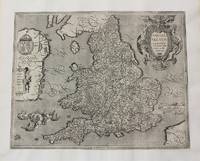
1603M10773Antwerp Belgium c.1603. Very Good margins extended. Notes: Important map of United Kingdom by Ortelius based on an earlier map by Christopher Saxton in 1579. Size : 384x483 mm 15.12x19.02 Inches Coloring: Hand Colored Category: Maps Europe United Kingdom England; Maps Europe Ireland; Maps Europe United Kingdom Wales; unknown
167734844à Paris: Chez Frédéric Léonard 1677. Fine. Chez Frédéric Léonard à Paris 1677 7.50 x 13.80 cm relié Edition with some parts in first edition rare much preferable to the 1676 original which contains only the first part; this one is therefore considerably expanded with major pieces. A frontispiece representing Saint Mark's Square in Venice. The 1677 edition contains 3 titles for each part plus an added title summarizing the whole; one will easily notice that these three parts are very rarely found together in libraries see Oxford Leeds. and that they most often appear separately. There were undoubtedly several editions at this date of 1677 of which only this one contains the three parts. Moreover this edition with the sphere would suggest that it was printed elsewhere; the third part bears Ratisbon as place of edition and Jean Aubry as publisher. This part contains the Harangue of Louis Helian Ambassador of France under Louis XII. Contemporary full glazed brown calf binding. Spine with raised bands unlettered decorated with blind roulettes on the headcaps and raised bands. Blind fillets on the boards. Good copy. More than a history of Venice this is a critical study of its institutions and laws. The book was very poorly received in Venice where it was burned diplomatic relations with France became embittered Amelot de la Houssaye was embassy secretary in Venice and the king of France was more or less forced to deliver the author to the Bastille for six days to satisfy Venice. The supplement studies and recounts the disputes that the Republic had with Pope Paul V. The third part of the book is a translation of a book by Fra Paolo. The Harangue of Louis Hélian was pronounced in 1510 before Emperor Maximilian it very sharply accuses the republic of Venice of numerous evils. Chez Frédéric Léonard hardcover
1700D5997Nurnberg: J. Chr. Weigel c. 1700. First and only Edition. Hardcover. Very Good. Speckled calf gilt-stamped ornament on spine; 4to; with copper-engraved title-page and 67 copper-engraved plates 1 of them lightly colored. Very rare work illustrating various human follies and obsessions according to Bertsche not by Santa Clara although that's the general assumption. Title-page and 1 plate professionally restored; some plates neatly repaired with tape or reinforced with paper on the verso; occasional marginal chip or tear infringing upon the image itself in just 2 instances; 2 plates with marginal ink doodles. <br/><br/> J. Chr. Weigel hardcover
1700D5997Nurnberg: J. Chr. Weigel c. 1700. First and only Edition. Hardcover. Very Good. Speckled calf gilt-stamped ornament on spine; 4to; with copper-engraved title-page and 67 copper-engraved plates 1 of them lightly colored. Very rare work illustrating various human follies and obsessions according to Bertsche not by Santa Clara although that's the general assumption. Title-page and 1 plate professionally restored; some plates neatly repaired with tape or reinforced with paper on the verso; occasional marginal chip or tear infringing upon the image itself in just 2 instances; 2 plates with marginal ink doodles. <br/><br/> J. Chr. Weigel hardcover books
16891512050020Amsterdam: Ex typographia P. & J. Blaeu protant apud A. Wolfgang Janssonio-Waesbergios Boom Somer & Goethals 1689-01-01. Hardcover. Very Good. Blind stamped contemporary vellum binding. Hand written title. Folio 40 cm. Title in red and black with printer's device. Engraved portrait of Louis Cappel. Collated: 24 979 11 pp. Printed in 2 columns. A few stray spots generally clean and unmarked internally. <br>"Cappel gained imperishable fame by his two books 'Arcanum Punctationis Revelatum' published anonymously by Thomas Erpenius at Leyden in 1624 and 'Critica Sacra' printed at Paris in 1650. In the 'Arcanum' he proved conclusively that the Hebrew text was first pointed after the Christian era until which time it had been composed merely of consonants; in the 'Critica' he proved that not even the consonantal text had been transmitted without errors but needed emendation with the help of the versions and of conjecture. It is to the lasting credit of Cappel that he was the first who dared to undertake with exemplary clearness penetration and method a purely philologic and scientific treatment of the text of the Bible." Crawford Howell Toy Karl Heinrich Cornill; Jewish Encyclopedia 1906. <br><br> Signature of Thomas J. Conant 1824. Conant was a noted American Biblical scholar. Gift inscription from Conant to the Newton Theological Seminary from 1827. This is an oversized or heavy book that requires additional postage for international delivery outside the US. Amsterdam: Ex typographia P. & J. Blaeu, protant apud A. Wolfgang, Janssonio-Waesbergios, Boom, Somer, & Goethals hardcover
16421661642. Etching and engraving. Duplessis 1386; Blum 204 only state. Image: 10 x 12 with small margins. Foxing traces of old fold in the legend. books
16421661642. Etching and engraving. Duplessis 1386; Blum 204 only state. Image: 10 x 12 with small margins. Foxing traces of old fold in the legend.
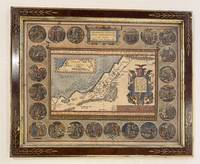
1603328971Antwerp: Ortelius Abraham 1603. unbound. Map. Engraving with hand coloring. 17 3/8 x 21 1/2" Framed in Eli Wilner carved frame.<br/> <br/> Beautiful map of the Holy Land bordered by 22 medallions depicting Abraham's wanderings. An inset map shows the path Abraham took. Ortelius used both Ptolemy and the Bible as sources for the map and based the medallion scenes on drawings by Maarten de Vos also of Antwerp. Latin text on verso. Expert repair to lower margin minor scattered stains in margins. Abraham Ortelius 1527 - 1598 a Flemish cartographer and geographer is widely regarded as one of the important and influential cartographers in history. He is known for his "Theatrum Orbis Terrarum" which was the first modern atlas. Van den Broecke 183.2 1603Lv; Laor 547C. Antwerp 1603<br/> <br/> Ortelius, Abraham unknown
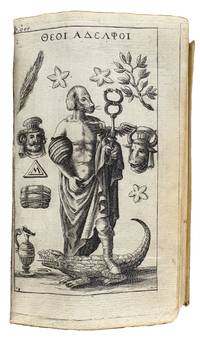
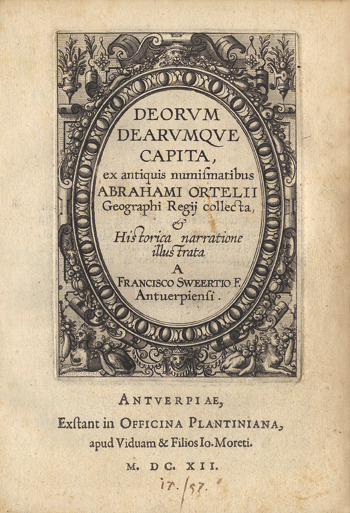
161216230Anvers, Plantin, les fils de Joannes Moretus (Typis Roberti Bruneau), 1612 ; petit in-4 ; vélin, titre manuscrit, plats décorés, à froid, à la Duseuil, avec un double fleuron en coins (reliure de l’époque) ; (136) pp. non chiffrées, titre et 59 planches gravés sur cuivre : portraits ou profils des dieux et déesses chacun dans un riche décor à l’ancienne (*, A-Q 4).
1648001623Paris: Pierre Des-Hayes 1648. Book. Very good- condition. Hardcover. First Edition. 16mo - over 5¾" - 6¾" tall. xviii 342 pages of text. Defective copy lacking five plates the frontis and a final engraved table. Attractive early-to-mid-18th century leather binding with moderate wear to the hinges spine extremities and corners. Raised bands gilt tooling and lettering on spine. Decorative marbled endpapers and blank endsheets supplied at time of binding. Present is the full-page engraved portrait of Michel Larcher engraved armorial dedication to Larcher and the engraved title page following page 58. A complete copy has the plate numbers 151 and 156 used twice totalling 158 plates showing plans and designs of perspective of which 153 only are present in this copy. Lacks plate numbers 110 151 both 154 and 155. However early hand-drawn facsimiles of plates 151 one of two and 155 are supplied and bound-in leaving three images unrepresented. The majority of the plates are double-sided. Plate 156 is in less than good condition with heavy staining and soiling. Engraved title page is repaired with early conservator's tape with no loss. Pages 168 through 193 are bound out of order. Several leaves are affected by damp staining and minor rippling; approximately 15 front and 30 rear. The title page and several adjacent leaves as well as a few at the rear of the text are heavily stained. Some of the staining appears to originate from washed-out markings -- notations to which an attempt at removal were made -- that are in blank areas mainly in the front and rear pages but also in the blank areas in the introduction. Includes Desargues New Theory at the end with demonstrations. Protected in a modern circa 1950 slipcase decorated with marbled endpaper the seams of which are detached at the top edge. Desargues 1593-1661 was a French mathemetician and a founder of modern Geometry. With Pascal he introduced the method of perspective; treated conic sections as projections of circles formulated the so-called Arguesian transformation; developed the theory of involution and of transversals; defined parallels as lines that intersect at infinity. Measures 6-5/8" tall by 4-1/2" wide; printed on thick paper with ample margins. 20th century bookplate of Paul and Verner Mac Alister on front pastedown and a neatly handwritten identification on the 2nd front endpaper. On the same leaf is a contemporary name or marking. French France Fortifications Conics Cartography Projective and Descriptive Geometry. Early editions of Desargues works are quite uncommon. Pierre Des-Hayes Hardcover books