RAMEL Abraham Louis:Livre Rare Book
774 résultats
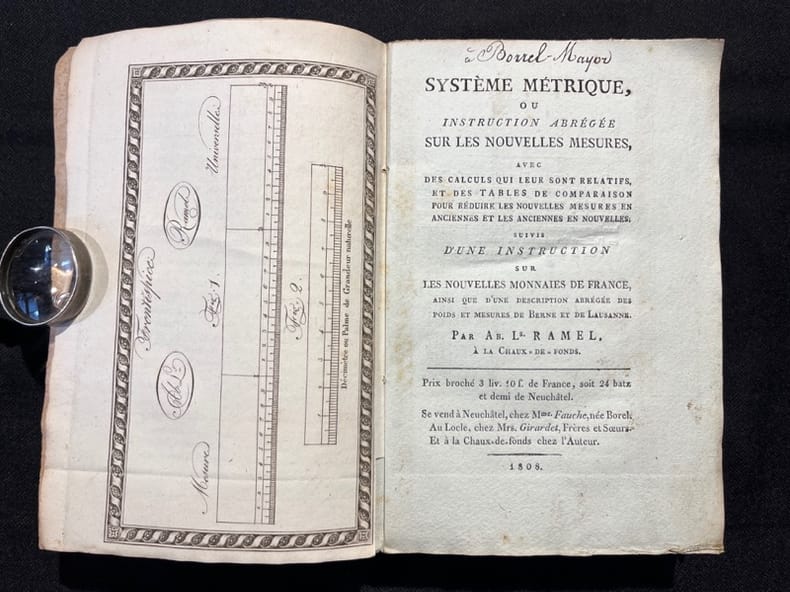
180820928A Neuchâtel, chez Mme Fauche, née Borel, Au Locle, chez Mrs. Girardet, frères et soeurs et à la Chaux-de-fonds chez l'auteur, 1808. In-8 broché de XV-[1]-335 pages, couverture de papier gris-bleu, titre manuscrit au dos.
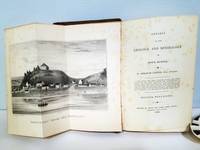
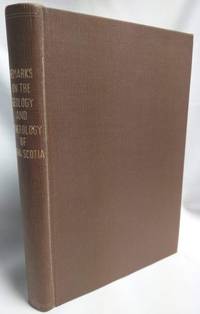
1836020572Halifax NS: Gossip and Coade Times Office 1836. First Edition. Hardcover. Light scattered foxing owner name on front endpaper some looseness of front cover with internal tape reinforcement. Overall Very Good. Small quarto 5-3/4" x 8-3/4" in original brown cloth rebacked with heavy brown binder's tape with most of the original spine label pasted on; xxxix 272 1 pages. Illustrated with a folding lithographic frontispiece "Parrsboro' From the Water 1836" a full-page lithograph "Cape Split 1836" and a hand-colored folding map "A New Map of Nova Scotia Cape Breton Prince Edward Island and part of New Brunswick" by C.H. Belcher with "Explanation of the Maps" bound in. <br/><br/> Gossip and Coade, Times Office hardcover
18130001594BURLINGTON NEW JERSEY NJ. Good. 1813. On offer is a super relic of 200 year old legal precedents and legal opinion being a hardcover book: The Scrivener's Guide Third Edition written by William Griffith Counsellor at Law published by David Allinson. Of particular interest to historians of the law and legal precedents are the nine 9 additional pages of handwritten notes on all the blank pages defining and explaining various aspects of law not included or in addition to the published material. The handwritten notes appear to be transcriptions from other works and we believe the notes are provided by Abraham Westerfelt whose ownership signature appears in a similar hand on the title page and a fep. The 6.5 x 4.25 inch book is rubbed and generally showing signs of wear but overall G.; Manuscript; 24mo - over 5" - 5¾" tall; KEYWORDS: HISTORY OF SCRIVENER'S GUIDE WILLIAM GRIFFITH ABRAHAM WESTERFELT CONTRACT LAW LAWYERS LEGAL DAVID ALLINSON LEGAL PRECEDENTS THE LEGAL PROFESSION JURISPRUDENCE HANDWRITTEN MANUSCRIPT DOCUMENT LETTER AUTOGRAPH KEEPSAKE WRITER HAND WRITTEN DOCUMENTS SIGNED LETTERS MANUSCRIPTS HISTORICAL HOLOGRAPH WRITERS AUTOGRAPHS PERSONAL MEMOIR MEMORIAL PERSONAL HISTORY ARCHIVE DIARY DIARIES ANTIQUITÉ CONTRAT VÉLIN MANUSCRIT PAPIER ANTIKE BRIEF PERGAMENT DOKUMENT antiquité contrat vélin document manuscrit papier Antike Brief Pergament Dokument Manuskript Papier oggetto d'antiquariato atto velina documento manoscritto carta antigüedad hecho vitela documento manuscrito papel. . hardcover
1900mon0000188131Funk & Wagnalls company 1900-01-01. Hardcover. Good. in x in x in. Ex-library book usual markings. Hardback/Hardcover. Clean copy in good condition. Damaged dust cover. Funk & Wagnalls company hardcover
1836013671Halifax: Gossip and Coade 1836 Book. Illus. by Two Lithographs. Very Good Minus. Hardcover. 1st Edition. 8vo - over 7¾ - 9¾" tall. Rebound in brown cloth over boards with gilt lettering on the spine "Mineralogy" misspelled. Foldout frontispiece lithograph of "Parrsboro from the Water 1836" and lithographic plate of "Cape Split 1836". Hinges are strong and tight. Very little foxing. Several pages uncut. Previous owner's name torn out of top corner of title page. "Explanation of the Maps" laid in but map is NOT present. Several neat pencil notes in the margins. Abraham Gesner is best-known for inventing kerosene. He was a Nova Scotian doctor who spent many years living in Saint John New Brunswick. In this book he describes the geology of various regions of Nova Scotia. This book is on consignment so no discounts apply. It will be sent tracked with insurance so expect a request for "extra shipping." . Gossip and Coade hardcover
187212463Springfield IL: Privately Printed 1872. FIRST EDITION. Frontispiece portrait of Lincoln and 11 text illustrations. Complete with the fold-out map. Blue cloth with blind-ruled boards very lightly rubbed. Generally a fresh and bright copy inscribed in the year of publication to Newton Bateman a well known Illinois educator. First edition. This work describes the life and then the public mourning of the assassinated President. The author details the funeral funeral train and the monument built for Lincoln in Springfield. [Privately Printed] unknown
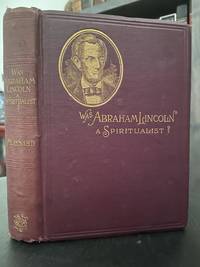
1891428<p><strong>12mo 7" - 7½" tall; 264 pages . Very Good with No dust jacket as issued. 1891. First Edition. Hardcover. Brown cloth with gilt title and decoration Lincoln image on cover. Light fading to spine and a faint line of dulllness loss of sizing on back cover. Internally clean -- no names or other markings. Book discusses how Abraham Lincoln and his wife Mary Todd Lincoln held seances at the White House. Also discusses Spiritualist mediums that were in contact with the President as well as seances he attended throughout Washington DC. Book includes several engravings and images of Lincoln the seances and more.</strong></p> Rufus C. Hartranft hardcover
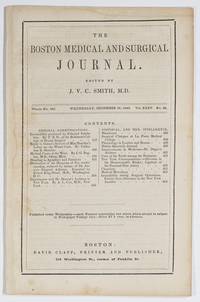
1846229711846. Boston Med. Surg. J. 35/22. - Boston David Clapp December 30 1846 8° pp.445-464 orig. wrapper. First Edition! First use of sulphuric ether as a surgical anesthetic in New York! Abraham Lidden Cox 1800-1864 "graduated from the medical department of the University of Pennsylvania and spent most of his career in New York. His article published on December 30 describes the first use of sulphuric ether as a surgical anesthetic in New York. Cox discussed several operations including one in which Valentine Mott 1785-1865 removed 'a cluster of tumefied glands from the right axilla.' Cox noted that he had himself had 'repeatedly inhaled the vapor of sulphuric ether as long ao as the year 1822 and as I had seen it inhaled repeatedly by others I was desirous of trying on myself the effects of this agent . and I recognized precisely the sensations which I had formerly experienced from the effects of ether." Rutkow Rutkow ANp14 unknown
1848008085btWashington D.C.: Wendell and Van Benthuysen. Very Good. 1848. Hardcover. 30th Congress Executive Doc No. 41 ordered for printing in February 1848. Reports from the 1846-1847 topographical expedition across the southwest known for its maps and descriptions of the landscapes flora and fauna and people of the region. The text and maps were to become important resources in the development and exploration of the region. Handsomely rebound in tan leather which is scuffed in places. Lithography by C. B. Graham. Interior is foxed throughout pages are free of markings. Missing plates 25 and 25 and 9 in the Abert report. Both fold-out maps are present. Wagner-Camp 148:5 Howes E-145.; Book; 8vo - over 7¾ - 9¾" tall . Wendell and Van Benthuysen hardcover books
18811331695á¹¾ilna Vilnius: Defus Sh. Y. Fin A. Ts. Rosenḳrants M.M. Shrifá¹zeá¹tser 1881. Hardcover. Quarto 292 pages; VG-; newly rebound in quarter blue leather blue cloth covered boards paneled spine with burgundy label and gilt titling; page edges brittle pages age-toned; upper fore corner of first 96 pages clipped; text in Yiddish; scarce; shelved case 4. Isaac Aboab was an early 14th century Spanish Talmudic scholar and Kabbalist. "The Menorah of Light" is a collection of midrashic sermons. Per the Jewish Encyclopedia: "It has won considerable fame for the author though in his humility he assures his readers that he composed it chiefly for his own use as a public speaker. But besides this it has contributed probably more than any other medieval book to the popularization of rabbinical lore and to the religious edification and elevation of the masses. It belongs to that class of ethical works which sprang up in the thirteenth century in a time of reaction against the one-sided manner in which the Talmudic studies had been previously pursued.'. It was published with a Spanish translation Leghorn 1657 with a Hebrew commentary and a Judæo-German translation by Moses Frankfurter Amsterdam 1701 with a modern German translation by Fürstenthal and Behrend Krotoschin 1844-46. It was translated also into Yiddish Wilna 1880.";. 1331695. Shelved Dupont Bookstore. Defus Sh. Y. Fin, A. Ts. Rosenḳrants, M.M. Shrifá¹zeá¹tser hardcover books
186230007.01<p>On the front page under <i>"News from the North" </i>is the text of Abraham Lincoln's reply to <i>New York Tribune</i>editor Horace Greeley. Greeley's letter urging Lincoln to emancipate all slaves in Union-held territory was known as "The Prayer of Twenty Millions." It was first published on August 20 1862. Lincoln responded on August 22 declaring that his paramount goal is to save the Union regardless of its effect on slavery as well as his personal views that all men should be free.</p> <b>ABRAHAM LINCOLN.</b>Newspaper. <i>Richmond Whig</i> Richmond Va. August 30 1862. 2 pp. 17 x 24 in.<p><b><br /></b></p><p><b>Excerpt:</b></p><p><i>"…As to the policy I 'seem to be pursuing' as you say I have not meant to leave any one in doubt. </i></p><p><i> I would save the Union. I would save it the shortest way under the Constitution. The sooner the national authority can be restored the nearer the Union will be 'the Union as it was.' If there be those who would not save the Union unless they could at the same time </i>save<i> slavery I do not agree with them. If there be those who would not save the Union unless they could at the same time </i>destroy<i> slavery I do not agree with them—My paramount object in this struggle </i>is <i>to save the Union and is </i>not<i> either to save or to destroy slavery. If I could save the Union without freeing </i>any<i> slave I would do it and if I could save it by freeing </i>all<i>the slaves I would do it; and if I could save it by freeing some and leaving others alone I would also do that.—What I do about slavery and the colored race I do because I believe it helps to save this Union and what I forbear I forbear because I do not believe it would help to save the Union. I shall do </i>less<i> whenever I shall believe what I am doing hurts the cause and I shall do </i>more<i>whenever I shall believe doing more will help the cause. I shall try to correct errors when shown to be errors; and I shall adopt new views so fast as they shall appear to be true views. </i></p><p><i> I have here stated my purpose according to my view of </i>official<i> duty; and I intend no modification of my oft-expressed </i>personal<i> wish that all men every where could be free." </i></p><p><b>Historical Background</b></p><p>Though this letter is often as proof that Lincoln did not intend to abolish slavery unknown to Greeley and most Americans Lincoln had already drafted the preliminary Emancipation Proclamation and was only waiting for a Union military victory to deliver it. Moreover Lincoln makes a "divide and conquer" rhetorical move: he splits the issue by stating that his constitutional duty as president is to keep the Union together while simultaneously expressing his personal view of universal freedom at the end.</p><p>Additional content in this issue includes a front page editorial <i>"European Recognition" "The Indian Atrocities in Minnesota" "Yankee Finances" "An Order From Gen. Burnside" "The Peninsular Campaign—Gen. </i><b><i>J. Bankhead </i></b><i>Magruder's Official Report"</i> which takes over two columns with considerable detail.<br /><br />The back page has additional content with: <i>"A Brilliant Cavalry Exploit" "The Impressment of Slaves In Georgia" "Outrages in Arkansas" "From Kentucky"</i> and more. Additionally there are various reports from the <i>"Confederate Congress"</i> and numerous advertisements including a <i>"$100 Reward"</i> for a runaway slave.</p><p>The <i>Richmond Whig</i> is one of the less common—but still important—newspapers from the capital of the Confederacy.</p><p>In <i>Four Years in Rebel Capitals: An Inside View of Life in the Southern Confederacy from Birth to Death</i> journalist T. C. DeLeon wrote that the <i>Richmond</i> <i>Whig</i>was among the South's best wartime newspapers. Their pages "recorded the real and true history of public opinion during the war. In their columns is to be found the only really correct and indicative 'map of busy life its fluctuations and its vast concerns' in the South during her days of darkness and of trial."</p><p>One of the more interesting episodes in the history of the <i>Whig</i> is its alleged involvement in a terror plot against New York City during the Civil War. The <i>Whig</i>was reputed to have worked with the Confederate government to use advertisements and editorials to convey secret messages to Southern sympathizers in the North. In October 1864 the <i>Whig</i> was alleged to have run an editorial that signaled Southern supporters to embark on a terror campaign that called for widespread fires to be set in New York city and federal offices to be taken over and the capture of the city's military commander Maj. Gen. John Adams Dix.</p><p><b>Condition</b></p><p>Good. Never bound several folds with minor wear at the folds.</p> books
1876174921876 un volume, reliure d'époque demi-chagrin rouge in-folio Editeur à coins (binding half shagreen in-folio with corners Editor)(27,5 x 37,5cm), RELIURE D'EPOQUE, dos 5 nerfs (spine with raised bands), cernés de filets à froid (blind stamping décoration), décoré or (gilt decoration) et à froid (blind-stamping decoration), titres et auteurs frappés or (gilt title), pièce de titre et pièce Auteur sur fond noir (label of title and label of Author) avec filet or (label of title with gilt line and label of volume numbering), filets à froid en tête et en pied (stamping line on top and at the foot of spine), mors et coins décorés or d'un filet et une roulette "chainette" or (joints and corners with gilt decoration), papier percale rouge aux plats (cover with red paper "percale"), toutes tranches non rognée (all edges no smooth), TIRAGE LIMITE à 350 EXEMPLAIRES.......ALBUM orné au titre d'une eau-forte des Ponts-de-Cé + 36 eaux-fortes d'Abraham protégées par des serpentes légendées, sans pagination, [112 pages] + [2 pages de Tables] , 1876 Château-Gontier, J.-B. Bezier.Editeur,
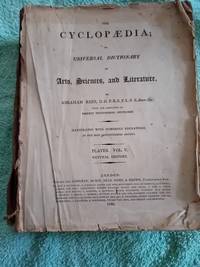
182028698London: Longman Hurst Rees Orme & Brown 1820. Single odd volume from this extraordiary production containing hundreds of pages of illustrations under the heading natural history disbound no covers outer leaves dog-eared a little foxing at edges but not extending into the actual illustrations. The illustrations are all in monochrome beautifully done arresting images on almost every page. Includes mammals birds sea creatures insects some botany and fossils and crystallography towards the end. Includes the famous Sukotyro indicus a non-existend pseudo elephant. Some photos available on request. Many of these though not all would in my opinion be of interest as antique mounted prints. First Edition. Disbound. Fair/No Jacket. 4to - over 9¾" - 12" tall. Longman, Hurst, Rees, Orme, & Brown Paperback
181137495Dublin: Printed By N. Kelly for Gilbert and Hodges. Very Good with no dust jacket. 1811. First Edition. Hardcover. 5 219 pages; Colles was professor of anatomy and surgeon at the Royal College of Surgery of Ireland. First in Europe to treat the problems of artery and aneurysm. Rebound in modern black cloth. Contents firm and bright clean. Provenance- gifted in pencil from John Fitzworth to Jonathan Havery . Printed By N. Kelly, for Gilbert and Hodges, hardcover
18901034LLondon: Kegan Paul Trench Trubner & Co 1890. Vol. I stated second edition others 1st. editions. Hardcover full leather. very good. Kegan Paul Trench Trubner & Co. 1880 vol. II 1885 vol. 3 1890 Vol 1 second edition. - <br /> 3 volumes. xvi 247; vii 1 399; xii 292 pp. Folding table of comparative genealogy in Vol. I. 8vo 19.8x13 cm 7¾x5¼" 19th century calf ruled in gilt raised spine bands morocco lettering pieces marbled endpapers & edges. Vol. I stated second edition the others apparently first editions.<br /> Forbes 3209.<br /> <br /> We add the separately published "INDEX to the Polynesian Race" with a brief Memoir of Judge Fornander published by Bishop Museum Press Honolulu 1909 hardcover 9.75 x 6.5" 86 pages in very good condition. Comes with the Ex-Libris of Aubrey Penderel Janion a photographer born in London in 1894 died on Maui in 1986.<br /> <br /> Abraham Fornander was a Swedish-born emigrant who became a citizen of the Kingdom of Hawaii swearing an oath of allegiance to Kamehameha III the Hawaiian king after having come to Hawaii by deserting the whaleship Ann Alexander. He became an important Hawaiian journalist judge and ethnologist. With ownership signature in Vol. I on half title "Honolulu in November 1891 H.A. Widemann." Rubbing to spines and extremities; foxing primarily to earlier and later leaves; very good. Kegan Paul, Trench, Trubner & Co hardcover
1861269911861. Leiden und Leipzig Harzenberg und F.A.Brockhaus 1861 Folio VI pp. 1 Bl. 68 pp. 1 gef. Tab. 7 getönte lith. Tafeln Halbleinenband mit Rückentitel und Buntpapierbezug; minimal fleckig. Erste Ausgabe! "Im Jahre 1849 traf ich zum ersten Male ein schräg verengtes Becken in meiner Praxis an und konnte die Diagnose mit hinlänglicher Sicherheit feststellen und mein therapeutisches Verfahren darnach einrichten. Bei vier schnell auf einander folgenden Schwangerschaften war ich so glücklich die Frau durch das Einleiten der künstlichen Frühgeburt am Leben zu erhalten und nachdem sie im Jahre 1853 diese Operation beharrlich abgelehnt hatte und bei der Geburt eines ausgetragenen Kindes an Zerreissung der Gebärmutter gestorben war kam ich in den Besitz des Beckens. Wenige Jahre später 1857 begegnete mir ein zweiter Fall dieser Art und zwar bei einer unverheirateten Erstgebährenden in meiner Klinischen Anstalt. Auch in diesem Fall konnte ich nur mit Sicherheit die Gestalt des Beckens diagnosticiren sondern es gelang mir auch ein richtiges Urtheil zu Fällen über die relative Weite des Beckens welches eines der kleinsten war die bis jetzt beschrieben worden sind. Das Kind wurde durch den Kaiserschnitt lebendig zur Welt gebracht die Mutter aber erlag der Operation bereits am zweiten Tage. Diese beiden Fälle erweckten in mir ein sehr lebhaftes Interesse für diese Art fehlerhaft gebildeter weiblicher Becken und bereits im Jahre 1857 fasste ich den Entschluss das schräg verengte Becken zum Gegenstand einer wissenschaftlichen Arbeit zu wählen welche geeignet wäre sich an die klassische Monographie Naegele's anzuschliessen eine Uebersicht dessen zu liefern was in den letzten 20 Jahren von verschiedenen Geburtshelfern und Pathologen darüber geschrieben worden ist und die Lehre des schräg verengten Beckens bis auf unsere Zeit fortzusetzen." Vorrede Abraham Everhard Simon Thomas 1820-1886 studierte in Leyden wo er 1845 promovierte. Er liess sich in Rotterdam nieder wurde jedoch nach Leyden als Professor der Geburtshilfe und Gynäkologie berufen. Hier fing er da die durch Du Pin früher für den geburtshilflichen Unterricht gestiftete Poliklinik ganz vernachlässigt war bald an eine geburtshilfliche Poliklinik zu eröffnen und hat dadurch das Material für den Unterricht speziell für den praktischen Teil so vergrössert dass es fast nie an Wöchnerinnen mangelt welche in ihrem eigenen Hause die nöthige Hilfe von den Studierenden empfangen eine Methode welche für die selbständige Entwicklung der Jüngeren selbstverständlich von grossem Einfluss war. Auch sein theoretischer Unterricht wurde von jedem seiner Schüler als vortrefflich gerühmt. Seine Monographie "Das schräg verengte Becken" gilt bei Sachverständigen für eine echt klassische Arbeit; sein Vorschlag beim verengten Becken nicht auf die Füße sondern auf die Knie zu wenden ist seit dem fast überall angenommen. -cf. Hirsch V p.407f. VI p.1007; Fasbender p.356 unknown
1872174931872 un volume, reliure bradel crème cartonnée in-folio Editeur (binding half shagreen in-folio Editor)(28 x 37cm), RELIURE TARDIVE, dos long (spine without raised bands), décoré "or" (gilt decoration), Titre et Auteur frappés "or" (gilt title), pièce de titre sur fond bordeaux avec 2 filets "or" de part et d'autre, toutes tranches non-rognées (all edges no-smooth), couverture grise Editeur conservée (légèrement tachée avec traces de moillures claires anciennes), TIRAGE LIMITE à 350 EXEMPLAIRES (les planches ont été détruites).....essentiellement sur SOUSCRIPTION.... ALBUM orné au titre d'une eau-forte : "Etang de Chemazé" + 29 eaux-fortes hors-texte en noir d'Abraham protégées par des serpentes légendées, sans pagination, [174] pages dont Tables + liste des souscripteurs] , 1876 Château-Gontier, J.-B. Bezier.Editeur,
1866238120Washington D.C.: John H. Littlefield; Wm. Terry Printer 1866. Photograph by John Goldin of Littlefield's painting on printed mount. 1 vols. Image 11 1/2 x 18 3/4 in.; mounted to 19 x 24 in. Soiling to image vertical crease large chips to bottom of mount not affecting image or legend; good. Photograph by John Goldin of Littlefield's painting on printed mount. 1 vols. Image 11 1/2 x 18 3/4 in.; mounted to 19 x 24 in. A published photograph of Littlefield's hyper-realistic Lincoln death-bed painting each figure meticulously rendered from photographs. Littlefield studied law under Lincoln in 1858 stumped for him in his Presidential bid and was rewarded with a position in the Treasury Department. After Lincoln's death Littlefield invented this tableau of twenty-five people ranged around the death-bed including Vice-President Johnson Surgeon Chalres Leale and Mrs. Lincoln. "The artist used photographs as models for the twenty-five people gathered in the death room but his profile of the dying Lincoln shows a first-hand acquaintance" Ostendorf LINCOLN'S PHOTOGRAPHS p. 279. Provenance: Harper Family John H. Littlefield; Wm. Terry, Printer unknown
1866238011Washington D.C.: John H. Littlefield; Wm. Terry Printer 1866. Photograph by John Goldin of Littlefield's painting on printed mount. Image 8 1/2 x 13 3/4 in.; mounted to 13 x 17 in. Faint toning to mount; fine. Photograph by John Goldin of Littlefield's painting on printed mount. Image 8 1/2 x 13 3/4 in.; mounted to 13 x 17 in. A published photograph of Littlefield's hyper-realistic Lincoln death-bed painting each figure meticulously rendered from photographs. <br /> Littlefield studied law under Lincoln in 1858 stumped for him in his Presidential bid and was rewarded with a position in the Treasury Department. After Lincoln's death Littlefield invented this tableau of twenty-five people ranged around the death-bed including Vice-President Johnson Surgeon Charles Leale and Mrs. Lincoln.<br /> "The artist used photographs as models for the twenty-five people gathered in the death room but his profile of the dying Lincoln shows a first-hand acquaintance" Ostendorf LINCOLN'S PHOTOGRAPHS p. 279. John H. Littlefield; Wm. Terry, Printer unknown
182045432London:: Reprinted for T. and H. Rodd 1820. First separate edition reprinted from the original in the British Museum; noted in Stow in his additions to Holinshed for the year 1577. original drab unprinted wrappers. Tiny chips to wrappers; light soiling; but very nice. 8vo. Reprinted for T. and H. Rodd, unknown
186511541New York: Athenaeum Club 1865. FIRST EDITION. With engraved frontispiece portrait. Original printed purple wrappers housed in a quarter-calf portfolio rear joint splitting; chipping and soiling to wrappers with some splitting at the folds still a very good copy of this large fragile item. First edition number 46 of 50 large paper copies. Monaghan 379. [Athenaeum Club] unknown
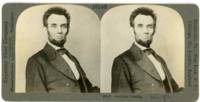
1865136231865. Lincoln Abraham. Late Civil War portrait of Abraham Lincoln derived from a February 1865 photograph taken during the final months of the American Civil War. The image records Lincoln near the conclusion of the conflict that preserved the Union and ended legal slavery in the United States. Created shortly before his assassination in April 1865 the portrait captures a visibly worn president whose appearance reflected the physical and political strain of leading the nation through four years of war. The photograph was long attributed to Mathew Brady but was actually taken by government photographer Lewis Emory Walker and issued commercially through the New York photographic publishers E. & H. T. Anthony. The portrait belongs to a group of late images that document Lincoln's appearance in the closing weeks of the war.<br /> <br /> Stereoview photograph published by Keystone View Company reproducing the 1865 Walker portrait of Abraham Lincoln. Keystone stereograph number 92. The mount bears the Keystone biographical text about Lincoln on the verso together with the company's copyright notice. A handwritten pencil notation on the reverse references the earlier attribution of the photograph to Mathew Brady. The portrait shows Lincoln with closely cut hair a style that contemporary accounts suggested was recommended by his barber in preparation for the creation of a life mask by sculptor Clark Mills.<br /> <br /> Photographic portraits of Lincoln produced during the final months of the Civil War became some of the most widely circulated visual representations of the president after his assassination in April 1865. Images such as this stereographic reproduction contributed to the creation of Lincoln's public memory in the late nineteenth century when photographic publishers issued stereographs and other prints that allowed Americans to view notable figures through emerging visual media. Stereographs played an important role in popular visual culture during this period offering audiences three dimensional photographic views through stereoscopic viewers and distributing portraits of political leaders to a wide national audience. Light wear consistent with age and handling. Overall condition good to very good. unknown
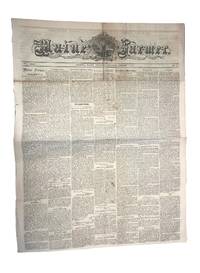
1863182911863. Maine Farmer. January 8 1863 prints the full text of Abraham Lincoln's Emancipation Proclamation within one week of its issuance providing contemporaneous evidence of how federal emancipation policy was circulated to the Northern public during the Civil War. Published just days after January 1 1863 the issue situates emancipation alongside ongoing war reporting integrating the declaration of freedom for enslaved people in Confederate states into the broader military and political narrative of the Union war effort. Introduced under the subheading "The following is the text of the President emancipating the slaves in the rebellious states" the proclamation asserts federal authority through wartime powers declaring that "all persons held as slaves within said designated States and parts of States are and henceforward shall be free" and further authorizes the enlistment of Black men into the armed forces. The proximity of this text to battlefield reports and personal correspondence underscores the immediacy with which emancipation entered public discourse as both military strategy and social transformation.<br /> <br /> Maine Farmer. Vol. not stated. Maine January 8 1863. 4 pages. Newspaper format. The Emancipation Proclamation appears in full on the second page accompanied by additional Civil War coverage including reports of troop movements battle outcomes and casualties. On the same page a letter from a Union soldier of the 16th Maine Regiment written at the Battle of Fredericksburg reads in part: "Dear Father I write you while lying on the battlefield wounded perhaps fatally. Tell mother I think of her while lying here and wish I had her to be with me in my last parting moments." An editorial note explains that the letter was written in pencil on the battlefield the paper "tinged with blood" and that the soldier died the following day linking the proclamation directly to the lived experience of wartime sacrifice.<br /> <br /> Issued at a turning point in the Civil War the publication captures the intersection of emancipation policy military necessity and public communication in the Union states. The inclusion of both the proclamation and firsthand testimony from the battlefield demonstrates how questions of slavery citizenship and national survival were experienced simultaneously at the level of policy and individual life. Newspapers such as this served as primary vehicles through which federal decisions reached civilian audiences shaping understanding of the war's aims and consequences. Small edge tears and light foxing present not affecting text. Overall very good. unknown
186424898<p>"<i>As a MAN OF THE PEOPLE understanding them and trusted by them he has proved himself the man for the time.</i>"</p> <b>ABRAHAM LINCOLN. HENRY CHARLES LEA.</b>Printed Pamphlet. <i>No. 17: Abraham Lincoln</i> March 1864. 12 pp. 5¾ x 8¾ in.<p><b><br /></b></p><p><b>Excerpts:</b></p><p>"<i>What will be the place assigned by history to Abraham Lincoln</i>" p3</p><p>"<i>Few of us can forget the feelings of doubt and distrust with which we regarded his advent to the Presidential chair. That his native energy had elevated him from a youth of poverty and labor was reassuring and yet the narrow sphere in which his life had mostly been passed seemed to deprive him of the opportunities of familiarity with the great principles and details of statesmanship requisite for the perilous contingencies of the future.</i>" p3-4</p><p>"<i>Thus with doubt confusion and demoralization around him with no landmarks in the past to serve as a guide for the present or as a precedent for the future did Mr. Lincoln undertake the awful responsibilities of his high position. Thus relying on himself and on the people he boldly set to work to restore the Republic.</i>" p5</p><p>"<i>The country was saved so soon as the people recognized in their President a man who believed that he could save it and who honestly intended to do so. Had Abraham Lincoln done no more than this he would have merited a place between Washington and Jackson. It is a great thing to lift a nation to the highest level of its duties and responsibilities and few men to whom in the world's history the opportunity has been vouchsafed have accomplished the task so thoroughly.</i>" p6</p><p>"<i>And now the momentous question arises before the American people—to whose hands shall be confided the delicate trust of restoring the Union of our fathers</i>" p7</p><p>"<i>The great duty to which Mr. Lincoln has dedicated himself with rare singleness of purpose is the one thought which engrosses every true American heart—the re-establishment of the Union on a permanent basis.</i>" p7</p><p>"<i>The results of the war during the last twelve-month have not shown that the Proclamation was a mistake in military policy.</i>" p9</p><p>"<i>When Mr. Lincoln recommended the plan of compensated emancipation which was adopted by Congress he showed that he recognized fully how great an element of future strife lay in the institution of slavery and how beneficial to the whole country its abolition would be. Moderate in all his opinions he wanted a gradual not a violent change and long after his Emancipation Proclamation was issued he provoked the wrath of the radical emancipationists in Missouri by lending what aid he constitutionally could to the 'conservatives' in that State who desired that the extinction of slavery should be brought about gradually. Possibly in this Mr. Lincoln was mistaken yet if so the error arose from the desire which he has constantly manifested to harmonize the conflicting interests of the country even at the expense of temporary popularity.</i>" p9-10</p><p>"<i>The wisest statesman does not disdain to profit by experience nor can the head of a popular government adopt measures of fundamental change before the people are ripe for them. It is probable that Mr. Lincoln learned much as the war wore on; at all events the people did.</i>" p10</p><p>"<i>There are many who have richly earned the gratitude of the people for eminent services rendered to the Republic in the hour of her trials. There is no one who has so signally centered upon himself the confidence of all. There have been mistakes of detail in military naval and financial matters—mistakes inseparable from the sudden transition from profound and prolonged peace to civil war upon the largest scale. Yet in the general policy of the administration in its principles of statesmanship there have been few errors save those arising from a too generous disbelief in the sincerity of Southern madness.</i>" p11</p><p>"<i>Had Mr. Lincoln moved faster than he has done he would have left the people behind him and lost the support without which no popular government can conduct an exhausting war.</i>" p11</p><p>"<i>As a MAN OF THE PEOPLE understanding them and trusted by them he has proved himself the man for the time.</i>" p12</p><p>"<i>no one can be named who unites like Abraham Lincoln the kindliness and firmness the skill and experience the native sagacity and honesty to bring about an harmonious settlement and to extort from repentant rebels the implicit confidence which those high qualities have won from all loyal men.</i>" p12</p><p><b>Historical Background</b></p><p>The Union League Club of Philadelphia formed in 1862 as a patriotic society to support the Union and the policies of the Lincoln administration. The members of this private club represented the Philadelphia region's elite in business education and religion.</p><p>On April 15 1864 Lea met with Lincoln in Washington and three days later he wrote to Lincoln including two pamphlets he had recently written for the Union League Club including this one. He informed Lincoln "To prevent misconstruction perhaps I should add that I am a man of independent position with nothing to ask at your hands except the preservation of our institutions."<br /></p><p><b>Henry Charles Lea</b> 1825-1909 was born in Philadelphia and received a classical education from a private tutor. He showed particular promise in natural history. He joined his father in the publishing business in 1843 but had a nervous breakdown in 1847. While recuperating he read medieval French history and decided to become a historian rather than a scientist. Over the next fifty years Lea produced ten books and numerous articles on medieval institutional legal and ecclesiastical history. During the Civil War Lea was a member of the Union League of Philadelphia and led its Board of Publication. In that role he wrote many of the League's published pamphlets including this one. From 1863 to 1865 he served as a Bounty Commissioner and aided the provost marshal in recruiting soldiers including African Americans.</p> books
1828009569This ciphering book measures 8" x 12.5". It contains 92 pages of ciphering work. There is also an additional 36 pages of text in a different hand perhaps by a sister copied from Timothy Shay Arthur's <i>Advice to Young Ladies</i> and the American Tract Society's <i>Helps for Every Hour</i>. Quarter-bound with marbled boards. The owner's label reads "Abraham Rex / Philadelphia / 1828." An 8.5" x 4" pencil drawing copied from <i>The Tours of Dr. Syntax</i> is laid in. <br /><br />Ciphering books were prepared as part of the basic mathematical training of relatively well-off American students usually boys. Most like this one contain examples of the Numeration Addition Subtraction Compound Multiplication Reduction Compound Reduction Rule of Three Indirect Proportion Vulgar Fractions Compound Proportions The Double Rule of Three Avoirdupois Weight Troy Weight Long and Land Measure etc. <br /><br />In addition to providing mathematical basics boys venturing into trades or businesses needed advanced or specialized training in mathematics. In this case Abraham's book includes some work that would prepare him for mercantile positions including Tare and Tret calculating weight adjustments for packing and shipping materials Insurance Commissions and Brokerage Compound Interest Rebate or Discount Equation calculating combined payments Barter Loss and Gain Fellowship calculating complicated partnership percentages etc. <br /><br />Abraham was a member of a prominent and prosperous Pennsylvania Dutch family. Online genealogical records show that the Rüx anglicized to Rex family immigrated to the United States sometime prior to 1720 and settled in Germantown north of Philadelphia. The family soon moved westward to Schaefferston in Lancaster County where it proliferated and prospered with members becoming merchants innkeepers informal bankers brokers pharmacists and physicians. <br /><br />For more information about the Rexes of Schaefferstown see Wenger's <i>Delivering the Goods: The Country Storekeeper and Inland Commerce in the Md-Atlantic</i>. An archive of Rex family business papers is held by the Winterthur Library. <br /><br />For more information about ciphering books see Kilpatrick's <i>Rewriting the History of School Mathematics in North America . . . The Central Role of the Cyphering Books</i> Doer's master's thesis: <i>Cipher Books in the Southern Historical Collection of the University of North Carolina</i> and Andries's "Learning Mathematics in North America" at the University of Pennsylvania's Kaplan Collection of Early American Judaica. <br /><br />18th-century American ciphering books are scarce as the overwhelming majority of extant examples date from the early 1800s into the mid-1850s. hardcover books