ABRAHAM LINCOLNABAA

987 résultats
183624346.991836. No binding. Fine. Autograph Letter Signed to Mary S. Owens December 13 1836 2 pp. 9 3/4 x 7 3/4 in. ""Write back as soon as you get this and if possible say something that will please me for really I have not been pleased since I left you.""Here Lincoln perfectly demonstrates what Owens later described as deficiencies ""in those little links which make up the chain of a woman's happiness."" Rather than expressing his feelings for Owens Lincoln complains about his health and discusses political issues swirling in the Illinois General Assembly. Although inept at love the letter offers rare insight into the young representative's thoughts on a variety of political issues. In this highly important letter to Mary Owens a self-absorbed Lincoln complains to his potential spouse of his health both physical and mental and discusses political issues to the point that he describes his own letter as ""dry and stupid."" Perhaps more revealing than he realized it illustrates the tension in Lincoln's early life between matters of the head with which he was comfortable and matters of the heart with which he clearly was not. Complete Transcript Vandalia Decr 13. 1836Mary I have been sick ever since my arrival here or I should have written sooner. It is but little difference however as I have verry little even yet to write. And more the longer I can avoid the mortification of looking in the Post Office for your letter and not finding it the better. You see I am mad about that old letter yet. I dont like verry well to risk you again. I'll try you once more anyhow. The new State House is not yet finished and consequently the legislature is doing little or nothing. The Governor delivered an inflamitory political message and it is expected there will be some sparring between the parties about it as soon as the two Houses get to business. Taylor delivered up his petitions for the New County to one of our members this morning. I am told that he despairs of its success on account of all the members from Morgan County opposing it. There are names enough on the petitions I think to justify the members from our county in going for it; but if the members from Morgan oppose it which they say they will the chance will be bad. Our chance to take the seat of Government to Springfield is better than I expected. An Internal Improvement Convention was held here since we met which recommended a loan of several millions of dollars on the faith of the state to construct Rail Roads. Some of the legislature are for it and some against it; which has the majority I can <2> not tell. There is great strife and struggling for the office of U.S. Senator here at this time. It is probable we shall ease their pains in a few days. The opposition men have no candidate of their own and consequently they smile as complacently at the angry snarls of the contending Van Buren candidates and their respective friends as the Christian does at Satan's rage. You recollect I mentioned in the outset of this letter that I had been unwell. That is the fact though I belive I am about well now; but that with other things I can not account for have conspired and have gotten my spirits so low that I feel that I would rather be any place in the world than here. I really can not endure the thought of staying here ten weeks. Write back as soon as you get this and if possible say something that will please me for really I have not been pleased since I left you. This letter is so dry and stupid that I am ashamed to send it but with my present feelings I can not do any better. Give my respects to Mr & Mrs Abell and family. Your friend LincolnMiss Mary S. OwensHistoric BackgroundThis is one of the ten oldest Lincoln letters known to have survived. Although 11 leaves 9 of which are in institutions from Lincoln's educational sum book a few documents written or signed by Abraham Lincoln in 1832 relating to his service in the Black Hawk War again mos. See website for full description books
184721117.99<p>A list of stockholders entirely in Lincoln's hand filed as evidence in his first significant railroad case. Lincoln's own appearance in the shareholder list represents only the second known instance of a stock purchase by the future president. The Illinois Supreme Court's ultimate ruling in favor of Lincoln and the railroad set an important legal precedent upholding the binding nature of a stockholder's contractual and financial obligations. "The decision subsequently cited in twenty-five other cases throughout the United States helped establish the principle that corporation charters could be altered in the public interest and it established Lincoln as one of the most prominent and successful Illinois practitioners of railroad law" Donald p.155.</p> <b>ABRAHAM LINCOLN.</b>Autograph Manuscript Signed by Lincoln in text constituting his official transcript of the "<i>Subscription Book of the Capital Stock of the Alton and Sangamon Rail Road Company</i>" incorporated February 27 1847 transcribed in early 1851. Comprising a cover sheet titled in Lincoln's hand the joint stock subscription statement and list of 91 shareholders with the number of shares subscribed and leaf with Lincoln's legal docket: "<i>Alton and Sangamon Railroad Company vs. James A. Barret. Copy of contents of subscription book</i>." 8 pp. 6â… x 8¼ x ¼ in.<p><b><br /></b></p><p><b>Historical Background</b></p><p>The Alton and Sangamon Rail Road Company was chartered in 1847 to construct a line from Alton via New Berlin to Springfield. In 1850 however the Illinois General Assembly approved a more direct route bypassing the landholdings of some investors. Claiming breach of contract James A. Barret refused to make further installment payments for his 30 shares of stock as did several others who no longer stood to benefit from the new line. In 1851 Lincoln was hired to compel the defaulting shareholders to pay the balance of their promised investment.</p><p>The tactical details are spelled out in a February 19 1851 letter from Lincoln to William Martin a commissioner for the sale of the company's stock. Four suits were to be brought against stockholders who had subscribed to the initial offering but had then failed to make the additional installment payments. In preparation Lincoln listed the essential documents he would need in order to win a judgment. "We must prove" he advised Martin "that the defendant is a Stockholder" "that the calls have been made" and "that due notice of the calls has been given." To show that the defendants were in fact stockholders Lincoln explained he needed to produce "the subscription book with the defendant's name and proof of the genuineness of the signature together with any competent parole or evidence that he made the advance payment" Basler 2:99.</p><p>Lincoln's meticulous transcript of the subscription book was a key piece of the evidence filed in Sangamon Circuit Court on February 22 1851. The book includes Barret's name and the subscription statement transcribed by Lincoln on page two is explicit about the shareholders' obligations.</p><p><i>We the subscribers to the Capital Stock of the Alton and Sangamon Rail Road Company.do hereby agree.to pay the balance of the installments due on said stock by us subscribed when the same may be called for by the board of Directors of said Company when duly organized in conformity with the Charter approved February 27th 1847.</i></p><p>"<i>A. Lincoln</i>" with six shares for $600 is prominent among the 91 subscriber names. The only other known record of a Lincoln stock purchase dates from 1836 when he bought one share in the Beardstown and Sangamon Canal.</p><p>In June of 1847 as head of a committee to promote subscriptions for the projected railroad Lincoln wrote an open letter to the "People of Sangamon County" appealing for their support. Railroad construction was booming and Lincoln anticipated that a line between Springfield and Alton would prove a lucrative investment for himself and his state. "The whole is a matter of pecuniary interest" he argued. "The proper question for us is whether with reference to the present and the future and to direct and indirect results it is our interest to subscribe. If it can be shown that it is we hope few will refuse" Basler 1:396-398.</p><p>The list of subscribers is itself of considerable interest. It includes John Hay 1775-1865 the grandfather of Lincoln's later secretary John Hay 2 shares Ninian W. Edwards 1809-1889 husband of Mary Todd Lincoln's sister 20 shares John T. Stuart 1807-1885 Lincoln's law partner 5 shares Henry Yates 1786-1865 father of Illinois governor Richard Yates 10 shares Noah W. Matheny 1815-1877 clerk of Sangamon County and others. In the subscription book Henry Yates hedging his bets has added a condition beneath his name: "<i>if the Road intersects the M. & S R R at New Berlin.</i>"</p><p>Lincoln was mindful of the critical issues raised by the Alton and Sangamon lawsuits and "took extraordinary pains to construct an airtight case for his client" Donald p.155. To Martin he pointed out the legal issues adding "I have labored hard to find the law" in preparation for the trials. In the end two of the defaulting stockholders paid their delinquent calls. The suits against James A. Barret and Joseph Klein came to trial in the Sangamon Circuit Court in August of 1851 with Lincoln handling both the trials and the appeals for the railroad.</p><p>Lincoln's preparation proved its worth – the rulings were in favor of the railroad. "Illinois Supreme Court Justice Samuel H. Treat ruled that public utility superseded private profit. If Barret had won the case other stockholders would balk at fulfilling their obligations. The rule of caveat emptor protected corporate management from stockholder's personal interests and encouraged subsequent investment" <i>Lincoln Legal Briefs</i> Oct-Dec 1990 no. 16 online.</p><p>At the time he transcribed this document Lincoln was an attorney on the 8th Judicial Circuit and also managed a thriving appellate and federal court practice. He handled a number of railroad-related cases representing both private individuals as well as the railroads themselves. He was not as some have argued a hired gun for corporate interests. Rather as his law partner William Herndon described him Lincoln was "purely and entirely a case lawyer."</p><p>The fact that Lincoln despite his commitment to railroading often handled suits against the carriers casts light on his understanding of the lawyer's role in society…He simply could not afford to take only one side in legal disputes. Nor did Lincoln pursue some political or philosophical agenda through litigation. He was not concerned with developing a consistent legal ideology. His business as Donald reminds us "was law not morality." James W. Ely "Lincoln as Railroad Attorney" Indiana Historical Society Symposium April 15-16 2005</p><p>Though a prominent lawyer Lincoln was still smarting over recent political defeats. Elected to the U.S. Congress in 1846 he had served out his term but his outspoken opposition to the Mexican-American War had cost him any chance at a second term. He subsequently failed in his attempt to become commissioner of the General Land Office. Lincoln declined an appointment as governor of the Oregon Territory instead returning to his law practice with William H. Herndon in Springfield Illinois. He would not attempt a political comeback until 1854.</p><p>The rail line was ultimately highly profitable. Lincoln's overriding belief in the broader benefits of internal improvements is best expressed in a speech he delivered before Congress in 1848.</p><p>Let the nation take hold of the larger works and the states the smaller ones; and thus working in a meeting direction discreetly but steadily and firmly what is made unequal in one place may be equalized in another extravagance avoided and the whole country put on that career of prosperity which shall correspond with it's extent of territory it's natural resources and the intelligence and enterprize of it's people.</p> books
124196Rare original Anthony Berger carte-de-visite signed by Abraham Lincoln as President; the most recognizable portrait of Lincoln which was later used as the model for the Lincoln cent. Original mounted albumen photograph double ruled in gilt with "Brady's National Photographic Portrait Galleries" stamp to the verso. Boldly signed by Abraham Lincoln "A Lincoln." With an additional inscription on the verso which reads "Contributed for the benefit of the S.A.S. of Westford Mass. at their Levee Dec. 14th 1864 by Mr. Lincoln." Through the use of many paid assistants renowned 19th century portraitist Mathew B. Brady produced thousands of photographs documenting the American Civil War including portraits of Lincoln Grant and both Union and Confederate soldiers in camps and battlefields. The body of work created by Brady's photographers including Anthony Berger Alexander Gardner and Timothy O'Sullivan has become the most important visual documentation of the Civil War. Taken on February 9 1864 by the manager of Brady's Washington studio Anthony Berger this the most recognizable portrait of the 16th president of the United States was later used by Victor David Brenner to create the Lincoln cent. During this same sitting Berger also took the photograph of Lincoln that would later appear on the five dollar bill. The present example was signed by Lincoln to help the Sanitary Association of Westford Massachusetts raise funds for Unions soldiers toward the end Civil War. An example at Heritage Auction brought 175000 in 2006. In near fine condition. An exceptional piece. Abraham Lincoln served as the 16th President of the United States from March 1861 until his assassination in April 1865. He led the United States through the American Civil War the country's greatest moral cultural constitutional and political crisis and in doing so preserved the Union of the United States of America abolished slavery and strengthened the federal government. Lincoln ran for President in 1860 sweeping the North in victory. The South was outraged by Lincoln's election and in response secessionists implemented plans to leave the Union before he took office in March 1861. War began in April 1861 when secessionist forces attacked Fort Sumter in South Carolina just over a month after Lincoln's inauguration and after years of deadly military conflict officially ended on April 9 1865 when Confederate General Robert E. Lee surrendered to Union General Ulysses S. Grant at the Battle of Appomattox Court House. On April 14 1865 just days after the war's end at Appomattox Lincoln was attending a play at Ford's Theatre with his wife Mary when he was assassinated by Confederate sympathizer John Wilkes Booth. Lincoln is remembered as the martyr hero of the United States and is consistently ranked as one of the greatest presidents in American history. unknown books
186332764New York: Baker & Godwin 1863. 8vo. 9 x 5 5/8 inches. 48pp. Publisher's lettered wrappers publisher's ad on rear wrapper. Housed in a blue morocco box.<br/> <br/>"Four score and seven years ago.": the earliest publication of the Gettysburg Address in book form preceded only by the exceptionally rare sixteen-page pamphlet The Gettysburg Solemnities known in only three copies.<br/> <br/>Lincoln made his speech at the dedication of a cemetery on the Gettysburg battlefield some four months after the bloody and pivotal battle that turned the tide of the Civil War in favor of the Union. Lincoln's speech was preceded by an address from Edward Everett the most famous orator of his day. Everett's speech took some ninety minutes to deliver and is largely forgotten. Lincoln's speech delivered in only a few minutes is immortal. It is a supreme distillation of American values and of the sacrifices necessary for the survival of liberty and freedom. "The Washington Chronicle of 18-21 November reported extensively on this ceremony and included a verbatim text of 'Edward Everett's Great Oration.' On the fourth day it noted in passing that the President had also made a speech but gave no details. When it came to the separate publication on 22 November Everett's 'Oration' was reprinted from the standing type but Lincoln's speech had to be set up. It was tucked away as a final paragraph on page 16 of the pamphlet The Gettysburg Solemnities. It was similarly treated when the meanly produced leaflet was replaced by a 48-page booklet published by Baker and Godwin of New York in the same year" PMM. Lincoln's address appears on page 40 and parenthetical notes are added indicating "applause" and "long-continued applause." A diagram on page 32 gives the details of the Soldiers' National Cemetery at Gettysburg. A lovely example in original wrappers.<br/> <br/>Howes E232 "b"; Monaghan 193; Grolier American 100 72 note; Streeter Sale 1747; Sabin 23263; cf. Printing and the Mind of Man 351; Garry Wills Lincoln at Gettysburg pp.191-204. Baker & Godwin unknown books
1863WRCAM49250DNew York: Baker & Godwin 1863. 48pp. Publisher's printed wrappers publisher's advertisement on rear wrapper. Spine perished. Very good. In a blue morocco box. The earliest publication of the Gettysburg Address in book form. This edition was preceded only by the exceptionally rare sixteen-page pamphlet THE GETTYSBURG SOLEMNITIES known in only three copies. <br> <br> Lincoln made his speech at the dedication of a cemetery on the Gettysburg battlefield some four months after the bloody and pivotal battle that turned the tide of the Civil War in favor of the Union. Lincoln's speech was preceded by an address from Edward Everett the most famous orator of his day. Everett's speech took some ninety minutes to deliver and is largely forgotten. Lincoln's speech delivered in only a few minutes is immortal. It is a supreme distillation of American values and of the sacrifices necessary for the survival of liberty and freedom. "The WASHINGTON CHRONICLE of 18-21 November reported extensively on this ceremony and included a verbatim text of 'Edward Everett's Great Oration.' On the fourth day it noted in passing that the President had also made a speech but gave no details. When it came to the separate publication on 22 November Everett's 'Oration' was reprinted from the standing type but Lincoln's speech had to be set up. It was tucked away as a final paragraph on page 16 of the pamphlet THE GETTYSBURG SOLEMNITIES. It was similarly treated when the meanly produced leaflet was replaced by a 48-page booklet published by Baker and Godwin of New York in the same year" - PMM. <br> <br> Lincoln's address appears on page 40 and parenthetical notes are added indicating "applause" and "long-continued applause." A diagram on page 32 gives the details of the Soldiers' National Cemetery at Gettysburg. HOWES E232 "b." MONAGHAN 193. GROLIER AMERICAN 100 72 note. STREETER SALE 1747. SABIN 23263. PRINTING AND THE MIND OF MAN 351 ref. Garry Wills LINCOLN AT GETTYSBURG pp.191-204. Baker & Godwin unknown books
186325464<p>"<i>I esteem Gov. Francis Thomas as an able and very true man. I do not know that he agrees with me in everything—perhaps he does not; but he has given me evidence of sincere friendship & as I think of patriotism.</i>"</p> <b>ABRAHAM LINCOLN.</b>Autograph Letter Signed to Robert C. Schenck May 31 1863 Washington D.C. 1 p.<p><b><br /></b></p><p><b>Complete Transcript</b></p><p><i>Private</i></p><p><i>Executive Mansion</i></p><p> <i>Washington May 31 1863.</i></p><p><i>Major Gen. Schenck</i></p><p><i>Baltimore Md.</i></p><p> <i>I have been requested to say what I very truly can that I esteem Gov. Francis Thomas as an able and very true man. I do not know that he agrees with me in everything—perhaps he does not; but he has given me evidence of sincere friendship & as I think of patriotism.</i></p><p><i>Yours truly</i></p><p><i>A. Lincoln.</i></p><p><b>Historical Background</b></p><p>Lincoln had served in Congress together with fellow Whig Robert C. Schenck in the 1840s and made Schenck a Major General at the beginning of the war. Severely wounded at the Second Battle of Bull Run in August 1862 Schenck was given command of the Middle Department. He firmly supported the Unconditional Unionists from his headquarters in Baltimore and despite the necessity of tact in the politically sensitive border state of Maryland had little tolerance for middle ground.</p><p>In July 1861 Secretary of War Simon Cameron with the president's encouragement had authorized Thomas to raise four regiments of loyal citizens from western Maryland for the protection of the Chesapeake and Ohio Canal. A month later Thomas recommended and Lincoln endorsed three officers for the 1st Maryland Regiment Potomac Home Guard.</p><p>In early September 1862 Thomas sent Lincoln a lengthy private letter: "Our acquaintance is very limited…and it may be presumptuous in me to write this letter." Nevertheless he continued "In my humble judgment <u>all</u> the evils now threatening seriously the utter ruin of the country are to be traced to the error consumatted in the organization of your Cabinet. There is not so far as my knowledge extends at the head of any one of the Departments a single individual who has come into your Administration under the right influences…" "Now I have watched with the deepest anxiety" Thomas informed Lincoln "all or nearly all of your difficulties have their origin in the fact that you have Presidential aspirants in your cabinet and Presidential aspirants in your own party outside of your cabinet all of whom have their partisans in the Senate and House of Representatives." The "vast interests at stake" demanded that Lincoln reorganize his cabinet and announce his own candidacy for reelection.</p><p>Two months later Lincoln's cabinet crisis reached a boiling point when Radical Republican senators demanded Secretary of State William H. Seward's resignation. Lincoln called the senators to a meeting with every member of the cabinet except Seward who had offered his resignation. Lincoln asked if the cabinet had freely debated issues and offered input before important decisions were made. The cabinet agreed that they had. Chase who had painted a picture to the senators of Seward and Lincoln running roughshod over the cabinet was cleverly chastened and offered his resignation. Lincoln refused the resignations of Seward and Chase thus maintaining intact his now famous "team of rivals" and keeping the senate at bay.</p><p>Despite his criticism Thomas was also supportive. On April 23 1863 he was one of the speakers at a mass meeting of Unconditional Union men of Allegany County Maryland. Thomas "accorded to President Lincoln the purest motives and a patriotic determination to crush the rebellion and restore peace and prosperity to the country. He said that power and responsibility must rest somewhere and that he was willing to confide in the President and sustain him to the fullest extent in carrying out the measures adopted by Congress for prosecuting the war. He spoke of the emancipation proclamation of the President as a retaliatory measure for the confiscation acts of the southern conspirators and said it was a war measure calculated to subdue the rebels who had raised the standard of rebellion without any justifiable cause."</p><p>Despite the unsolicited advice and criticism Lincoln offered this honest testimonial. It isn't clear if this answered a request of Thomas or a mutual contact or if Lincoln wrote it to send Thomas with his own purpose in mind. In mid-April Schenck who had a reputation for ham-handed harshness ordered at least eight persons charged with "using treasonable language" or "disloyal practices" in Baltimore to be exiled to the South. Less than a week later he had two newspaper editors from smaller towns in Maryland sent South for "having published treasonable articles." On May 28 three days before Lincoln penned this letter Schenck and Maryland Governor Augustus W. Bradford visited Pennsylvania Governor Andrew G. Curtin in Harrisburg to discuss "the more effectual protection of the southern borders of Pennsylvania and Maryland against any further incursions of rebel cavalry." Schenck and the two governors then left for Washington. Within a month the entire Confederate Army of Northern Virginia was in Pennsylvania heading for a conflict at Gettysburg.</p><p>In mid-July 1863 a few weeks after writing this private letter Lincoln told his secretary John Hay that General Henry W. Halleck "thinks Schenck never had a military idea & never will learn one. however you may doubt or disagree with Halleck he is very apt to be right in the end."</p><p>Schenck resigned from the army in December 1863 after again winning election to Congress. On the other hand Lincoln maintained his trust of Thomas.</p><p>On July 5 1864 Confederate General Jubal Early crossed the Potomac River at Harper's Ferry with a corps of the Army of Northern Virginia aiming at Washington. General Lew Wallace's determined resistance near Frederick Maryland delayed the advance by a day providing defenders in Washington critical time to prepare. After the Confederate army withdrew into Virginia on July 14 Major General David Hunter ordered the provost marshal in Frederick to arrest "all male secessionists with their families" and force those who had given "undue sympathy" to the Confederates to sell their furniture for the benefit of Union families who had lost possessions during the incursion and to seize the sympathizers' houses for government use. By August 1 Major John I. Yellott had placed twenty-three southern sympathizers and their families under house arrest.</p><p>On August 3 Lincoln ordered the Secretary of War to suspend Hunter's order and have Hunter send a report of the charges against each individual. Hunter requested to be relieved of command a wish that was soon granted.On August 13 Thomas protested to fellow Marylander and Postmaster General Montgomery Blair writing that the arrests of "quiet inoffensive citizens who have not publicly given by words or acts encouragement to the enemy cannot but be mischievous." The President asked Thomas to investigate.</p><p>In September Thomas reported back. With the exception of two already discharged and two others charged with "a grave offence" who "ought to have an opportunity to establish their innocence" Thomas recommended that the President order the release of all the others on the list. Thomas followed up later that year reporting that specific charges had been made against only John W. Baughman an editor of the <i>Republican Citizen</i>newspaper in Frederick who had been sent South and against John Ruck and Isaack Ruck who were like the others on the list still under arrest at their homes in Frederick. On January 21 1865 Lincoln ordered all but Baughman discharged.</p><p>Lincoln's unmatched ability to take advice from all sides and to work with capable men whose own ambitions sometimes conflicted with Lincoln's views is reflected in our letter.</p><p><b>Robert C. Schenck</b> 1809-1890 was born in Ohio and graduated from Miami University in 1827. He received a master's degree in 1830 studied law under Thomas Corwin and gained admission to the bar in 1831. He moved to Dayton Ohio and opened a successful law practice. After serving in the state legislature he represented his district in Congress from 1841 to 1851 when President Millard Fillmore appointed him as U.S. Minister to Brazil. Schenck served there until 1853. In 1859 he gave perhaps the first public endorsement of Lincoln for the Presidency in a speech in Dayton. At the beginning of the Civil War Lincoln commissioned Schenck as a brigadier general and he served in both Battles of Bull Run and in the 1862 Valley Campaign. He was wounded at the Second Battle of Bull Run and held an administrative post in Maryland while recovering. He resigned his commission in December 1863 after election to Congress where he served again until 1871. President Ulysses S. Grant appointed him as U.S. Minister to Great Britain a position he held until 1876 though his involvement in an American mining scandal left him thoroughly discredited.</p><p><b>Francis Thomas</b> 1799-1876 was born in Frederick County Maryland attended college in Annapolis and was admitted to the bar in 1820. He began a practice in Frankville in western Maryland and served in the state legislature in 1822 1827 and 1829. From 1831 to 1833 he served in the U.S. House of Representatives. Thomas served as governor of Maryland from 1842 to 1845 but his term and political future was marred by his public and contentious divorce from his much younger wife Sally Campbell Preston McDowell the daughter of the governor of Virginia.Thomas was a strong opponent of slavery which was unusual in a border state like Maryland. Defeated for reelection in 1844 he served in the state constitutional convention of 1850. He was again elected to Congress in 1860 serving until 1869 as a Unionist an Unconditional Unionist and then a Republican. From 1870 to 1872 he was collector of internal revenue for Maryland and then U.S. Minister to Peru from 1872 to 1875. He was killed when struck by a locomotive near his estate in Frankville.</p> books
18636046021863. "A. Lincoln" in black ink on Executive Mansion Washington letterhead March 18 1863. 5" x 8" 1 page with integral leaf. Very good. Integral blank with an autograph endorsement signed by Holt and clerical endorsement from the Adjutant General's office. To Judge Advocate General Joseph Holt: Lincoln requests his Judge Advocate General to investigate the "Strong Mitigating Circumstances" surrounding the court-martial of a member of the West Point Class of 1861. "It is said Lieut. John Benson Williams of the 3rd regular infantry as been sentenced by a Military Commission to be dismissed the service. I have some reason to believe there are strong mitigating circumstances in his case which the Commission perhaps did not deem competent for them to consider I will thank you to procure the record examine it and report it to me. . ." Holt forwarded Lincoln's letter to the Adjutant General noting that "No record or report in regard to the Williams case has been received at this office." The letter was returned to Holt accompanied by the record of William's court-martial and docketed "Please see papers within." After studying the record Holt made a lengthy report to Secretary of War Stanton March 30 1863 which survives in the Abraham Lincoln Presidential Library. Holt dismissed the "mitigating circumstances" referenced by Lincoln - Williams's supposedly "severe sickness" - and concluded that "It is evident that Lieut. Williams left his command on the battlefield and returned to Washington without leave and in known violation of orders and of his duty. . . .He has shown himself disqualified for the profession of arms." On April 8th Stanton in turn forwarded Holt's deposition to the President "as requested by his note on the 18th Ulto" that is the present letter. Lincoln ended the matter with his own terse endorsement on April 11th: "I decline to interfere in Behalf of Lieut. Williams" Basler 4:169. Although referred to in Basler's note regarding Lincoln's endorsement the present letter does not appear in "The Collected Works of Abraham Lincoln". Signed by Authors. No Binding. Very Good/No Jacket. unknown books
186331428New York: Baker & Godwin 1863. 8vo. 9 x 5 5/8 inches. 48pp. Publisher's lettered wrappers publisher's ad on rear wrapper. Repair to paper spine. Within a modern box.<br/> <br/>"Four score and seven years ago.": the earliest publication of the Gettysburg Address in book form preceded only by the exceptionally rare sixteen-page pamphlet The Gettysburg Solemnities known in only three copies.<br/> <br/>Lincoln made his speech at the dedication of a cemetery on the Gettysburg battlefield some four months after the bloody and pivotal battle that turned the tide of the Civil War in favor of the Union. Lincoln's speech was preceded by an address from Edward Everett the most famous orator of his day. Everett's speech took some ninety minutes to deliver and is largely forgotten. Lincoln's speech delivered in only a few minutes is immortal. It is a supreme distillation of American values and of the sacrifices necessary for the survival of liberty and freedom. "The Washington Chronicle of 18-21 November reported extensively on this ceremony and included a verbatim text of 'Edward Everett's Great Oration.' On the fourth day it noted in passing that the President had also made a speech but gave no details. When it came to the separate publication on 22 November Everett's 'Oration' was reprinted from the standing type but Lincoln's speech had to be set up. It was tucked away as a final paragraph on page 16 of the pamphlet The Gettysburg Solemnities. It was similarly treated when the meanly produced leaflet was replaced by a 48-page booklet published by Baker and Godwin of New York in the same year" PMM. Lincoln's address appears on page 40 and parenthetical notes are added indicating "applause" and "long-continued applause." A diagram on page 32 gives the details of the Soldiers' National Cemetery at Gettysburg.<br/> <br/>Howes E232 "b"; Monaghan 193; Grolier American 100 72 note; Streeter Sale 1747; Sabin 23263; cf. Printing and the Mind of Man 351; Garry Wills Lincoln at Gettysburg pp.191-204. Baker & Godwin unknown books
1862WRCAM55729Boston: J.M. Forbes 1862. 7pp. Miniature 3 1/4 x 2 1/8 inches. Original printed salmon wrappers. Slight soiling to wrappers light tanning. Very good. In a cloth chemise and half morocco and cloth slipcase spine gilt. The first and only contemporary printing of Lincoln's historic act in separate pamphlet form the seventh edition overall. The preliminary proclamation of the Emancipation Proclamation was issued on September 22 1862 shortly following the Battle of Antietam and declared the freedom of all slaves in any Confederate state that did not return to Union control by January 1 1863. A quotation by Alexander Stephens "Vice President of the so-called Confederate States" entitled "Slavery the Chief Corner- Stone" is printed on the rear wrapper. This small pamphlet was printed by John Murray Forbes in Boston for distribution by Union soldiers to blacks at the front lines and legend has it that he printed a million copies. Its scarcity in institutions and in the market however would seem to belie that notion; it is among the rarest of editions of the Proclamation no doubt because of its small size. EBERSTADT LINCOLN'S EMANCIPATION PROCLAMATION 7. MONAGHAN 147. J.M. Forbes hardcover books
14952US President who guided the nation through Civil War and was famously assassinated. 2 page recto verso Manuscript Document Signed by Lincoln on June 19 1862 the same date on which he signed the historic bill abolishing slavery in the U.S. territories. In this document Lincoln extends mercy to an inmate by providing a pardon. Measures 10.75x16.5".Lincoln issued this pardon after several petitions arrived on Lambert's behalf emphasizing his family's financial need as well as the support of two convicting juror at his trial five years prior. <br/><br/>This pardon states in part: "Whereas at the December Term A.D. 1857.Isaac Lambert was convicted on two indictments for Larceny and was sentenced to imprisonment in the Penitentiary for the term of three years under each conviction;-And whereas the said Isaac Lambert has served over three-fourths of his double term of six years in a patient penitent and exemplary manner;-And whereas it appears that the family.are in a destitute condition and that his labor is necessary for their support.I Abraham Lincoln President of the United States of America.grant unto him the said Isaac Lambert a full and unconditional pardon." Boldly signed at the conclusion "Abraham Lincoln" with a white paper seal affixed to the upper left that remains fully intact. <br/><br/>In addition to granting this individual mercy to Lambert on June 19 Lincoln also initiated the process of abolition in the U.S. by signing a historic bill that banned slavery in all current and future U.S. territories. Overturning the controversial Dred Scott decision in which the Supreme Court had denied the federal government regulatory power over the territories' slave trades and policies Lincoln took a public action that helped the nation move closer to emancipation within the states. In cooperation with Lincoln Congress enacted legislation on June 19 emancipating slaves in the territories and banning slavery there hereafter. The law read simply: "Be it enacted by the Senate and House of Representatives of the United States of America in Congress assembled That from and after the passage of this act there shall be neither slavery nor involuntary servitude in any of the Territories of the United States now existing or which may at any time hereafter be formed or acquired by the United States otherwise than in punishment of crimes whereof the party shall have been duly convicted." This straightforward legislation paved the way for the Emancipation Proclamation which Lincoln announced in September 1862 and signed into effect on January 1 1863.<br/><br/>A highly desirable example signed at an important moment in the abolition of slavery.To obtain a signed document or letter directly relating to Emancipation would likely cost over $1 million today. At the height of the financial crisis in 2008 a document by Lincoln affixing the seal of the President "on my Proclamation" without mentioning the word "emancipation" sold for $800000. Repaired separations to intersecting folds one vertical fold passing through a single letter of the signature and scattered toning otherwise fine condition. unknown books
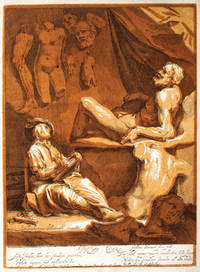
16791669291679. BLOEMAERT Abraham and Frederik. Artis Apellae Liber Tekenboek van Abraham Bloemaart / The Drawing Book of Abraham Bloemaert. Complete set of 160 engravings in eight parts including the chiaroscuro woodcut title-page. Folio 326 x 238 mm bound in contemporary Dutch brown calf blind-tooled spine. Amsterdam: Nicholaes Visscher 1679-1702. First Edition of Abraham Bloemaert's Drawing Book Tekenboek illustrated with engravings by Frederik Bloemaert ca. 1610-1669 after his father's designs. Abraham Bloemaert's original life drawings which were executed mainly between 1625-1635 and 1645-1650 include multiple studies of hands feet arms legs male and female profiles nudes putti and costumed figures seen in various poses from varied angles and under various lighting conditions plus a number of domestic animals. Abraham Bloemaert intended his drawings later converted by his son into engravings to serve as a teaching collection of visual models for practicing artists. The publishing history is as follows: a variant edition containing between 100 and 120 engraved plates was issued by Bloemaert's son Frederik between 1650 and 1656 under the title: Artis Apellae Liber. The 1650-56 edition is so rare it is unobtainable today. It is recorded in only three copies: British Museum 120 plates Bibliothèque Nationale de France 100 plates and Los Angeles County Museum of Art 120 plates. The extreme rarity of all early editions of Bloemaert's Tekenboek reflects the fact that a very limited number were originally printed and that the early printings did not survive the heavy use received by artists and the assistants in the artist's studio. The present copy belongs to the true First Edition Roethlisberger 1a 393 Visscher edition complete with 160 engraved plates plus the chiaroscuro woodcut title all in very good impressions. It is significant that Roethlisberger in his massive catalogue raisonné of the work of Abraham Bloemaert and His Sons Doornspijk 1993 reproduces the entire set of engravings from the 1740 edition. Abraham Bloemaert 1564-1651 was successful as a teacher not only of his four sons but also of the leading Dutch Caravaggisti e.g. Terbrugghen and Honthorst and virtually every Utrecht master painter/artist. Besides Hendrik Goltzius Abraham Bloemaert and his son Frederik were among the earliest to combine the chiaroscuro woodblock technique with the engraved and etched line Hind. Unlike most drawing books "Bloemaert's drawing examples are not derived from other authors" Bolten. Very occasional browning or spotting overall a fine clean copy. PROVENANCE: Illegible signature Nuremberg on front flyleaf. Arthur & Charlotte Vershbow with ex-libris their sale Christie's NY #2800 Lot 402. Roethlisberger 1a 393 reproductions of every plate Roethlisberger II T1-T166. Bolten Method and Practice: Dutch and Flemish Drawing Books 1600-1750 pp. 48-67 and passim 24 reproductions. Hollstein Dutch and Flemish F. Bloemaert 36-155. Strauss Chiaroscuro 346. See: Caroline Fowler Between the Heart and the Mind: Ways of Drawing in the Seventeenth Century Internet Resource Princeton University for long discussion of Bloemaert's Tekenboek. unknown books
600008"Abraham Lincoln" in black ink Washington February 10 1862. Folio. Partially printed document on vellum accomplished in a secretarial hand. Blue wafer seal intact. Lincoln's signature is dark. Appointment of Ethan Allen Hitchcock to the rank of Major General of Volunteers. Boldly co-signed by Edwin Stanton Secretary of War and Adjutant General L. Thomas a few small holes at the folds else fine fresh and dark. Lincoln 1809-65 16th President of the United States 1861-65 and one of the most important figures in American history. Hitchcock 1798-1870 Graduated West Point in 1817; served in Florida war; later with Winfield Scott in Mexico. He was commissioned Major-General of Volunteers as per this document in 1862 and rendered many valuable services to Lincoln's administration and the Union Army see Basler's Lincoln for numerous references to him. Signed by Authors. F. Soft cover. hardcover books
1865WRCAM55213N.p. but almost certainly Springfield Il 1865. Broadside 12 x 9 inches. Printed in three columns edged with a printed black border. Old folds center vertical fold with some separation. Moderate staining. Still very good. Framed. Likely a proof copy of the exceedingly rare broadside announcing the funeral procession for President Abraham Lincoln in Springfield in early May 1865. Struck down by assassin John Wilkes Booth on April 15 1865 Lincoln's body lay in state in the White House on April 18 and a ceremonial funeral service took place in Washington D.C. around noon on April 19. Two days later President Lincoln's casket was loaded on a funeral train headed for Springfield Illinois stopping at Baltimore Harrisburg Philadelphia New York City Albany Buffalo Cleveland Columbus Indianapolis Michigan City and Chicago before arriving in Lincoln's adopted hometown early on the morning of May 3. At this time Springfield's population numbered around 15000 but Lincoln's funeral train pulled into a town swollen with over 100000 visiting mourners. Immediately upon arrival Lincoln's coffin was transferred by hearse to Representatives' Hall inside the Illinois Old State Capitol. For the next twenty-four hours from about ten o'clock in the morning on May 3 to the same time the next day about 75000 mourners were allowed to pass by the open coffin of the slain president to pay last respects. <br> <br> According to the present broadside President Lincoln's funeral procession left the Old State Capitol "on Thursday the 4th Inst. at 10 o'clock a.m. precisely." The funeral party of over 10000 people then turned right on 7th Street to pass by the Lincoln family home and then right up Cook Street to proceed past the Governor's Mansion before heading north to Oak Ridge Cemetery. <br> <br> This broadside printing of the order of the procession for Lincoln's Springfield funeral was probably printed the afternoon of May 3 or possibly even the morning of May 4 the day of the funeral. Surrounded by a heavy black band the broadside lists all the persons and units involved in the procession along with their places and the rules for the day. The entire procession was divided into eight divisions with Gen. Joseph Hooker acting as Marshal in Chief. The first three divisions of the military escort represented all the elements of the Army and Navy. After them came the attending clergy and Lincoln's attending physicians. Next was the casket itself the only wheeled vehicle in the procession with the pall bearers to each side followed by Lincoln's horse and then the immediate family. Three more military divisions followed interspersed with government officials ambassadors and state officials followed by delegations from Springfield and other Illinois towns. Next were representatives of various organizations delegations from colleges lawyers doctors and the press Masons Odd Fellows and firemen all interspersed with two more military divisions. The final segment of the funeral procession was designated for "Citizens at large" and "Colored Persons." <br> <br> The broadside gives directions for locations for the forming up of each group. Only marshals were allowed to be on horseback; all others walked. Bands were under the direction of the Committee on Music. Other particular directions follow including regulations for the colors of the various scarves worn by the marshals. The text of the document ends with directions to keep the streets through which the procession passes "clear from sidewalk to sidewalk." <br> <br> This broadside must have been widely distributed to assist the mourners in Springfield but like all such ephemeral pieces few copies have survived. OCLC locates only six at Indiana University the Abraham Lincoln Memorial Library the Boston Athenaeum the Chapin Library at Williams College the John Hay Library at Brown University and the Library Company of Philadelphia. The latter location also attributes the place of printing to Springfield. There is also a copy at the Library of Congress and a copy formerly owned by noted collector James Copley and previously sold by this firm. <br> <br> The present copy is likely an early printer's proof of the broadside as it lacks the first three letters of the word "FUNERAL" in the title. The Library of Congress copy is also likely a proof with its variant title omitting the words "ORDER OF." Both copies also lack the letter "e" in "Order" in the first sentence of text. These errors speak to the haste and stress under which this broadside was surely produced perhaps the day before or the very morning of the day when America's greatest president the Savior of the Union and Illinois' favorite son was laid to rest in a city teeming with seven times its own population in attendance. <br> <br> A remarkable and moving document reflecting a moment of national grief perhaps only approached by the John F. Kennedy funeral and memorializing the day when America's first assassinated president was solemnly committed to the earth. OCLC 5023077 79462381. unknown books
1863WRCAM55251Washington 1863. 20pp. Original printed wrappers. Light toning. A near fine copy in wonderful condition. In a cloth chemise and green half morocco and cloth slipcase spine gilt. The rare pamphlet printing of Lincoln's December 8 1863 proclamation read before Congress the next day offering amnesty to citizens of the Confederacy providing they take an oath that they "will abide by and faithfully support all proclamations of the President made during the existing rebellion having reference to slaves" i.e. the Emancipation Proclamation. When the number of persons in any state taking the oath reached ten percent of the number of voters in 1860 this group of loyal voters could form a state government that could be recognized by the President. The Amnesty Proclamation was issued with President Lincoln's third Annual Message to Congress i.e. State of the Union Address on December 8 1863; the State of the Union Address follows the Amnesty Proclamation here. <br> <br> Toward the close of 1863 with the Confederate Army in full retreat discussions in Congress centered on how to restore the southern states to the Union. "The crisis which threatened to divide the friends of the Union is past" announced Lincoln. Now it was the duty of Congress to ensure that all citizens in the South regardless of race were guaranteed the equal protection of the law. A number of competing proposals emerged from deliberations but in the end during his message to Congress on December 8 1863 Lincoln declared reconstruction of the South a wholly executive responsibility and "offered 'full pardon.with restoration of all rights of property except as to slaves' to all rebels who would take an oath of future loyalty to the Constitution and pledge to obey acts of Congress and presidential proclamations relating to slavery" Donald p.471. <br> <br> Those excluded from taking the oath were the highest ranking members of the Confederacy - government officials judges military and naval officers above the rank of army colonel or navy lieutenant former congressmen and "all who have engaged in treating colored persons or white persons otherwise than lawfully as prisoners of war." Lincoln further encouraged the southern states to make provisions "in relation to the freed people of such State which shall recognize and declare their permanent freedom provide for their education and which may yet be consistent as a temporary arrangement with their present condition as a laboring landless and homeless class." <br> <br> "Lincoln indicated that this was only one plan for reconstructing the rebel South and while it was the best he could think of for now he would gladly consider others and possibly adopt them. He might even modify his own classes of pardons if that seemed warrantable.Afterward almost everybody but die-hard Democrats seemed happy with the plan" Oates p.371. <br> <br> A lovely copy of Lincoln's hugely important Amnesty Proclamation. MONAGHAN 191. SABIN 41162 note. David Herbert Donald LINCOLN New York 1995 p.471. Stephen B. Oates WITH MALICE TOWARD NONE: A LIFE OF ABRAHAM LINCOLN New York 1977 p.371. hardcover books
1861690201861. Military commission signed by Abraham Lincoln Washington August 1861. Folio on vellum with vignettes. Light wear along the folds. Countersigned by Simon Cameron. Matted and framed. Abraham Lincoln served as the 16th President of the United States from March 1861 until his assassination in April 1865. He led the United States through its Civil War and in doing so preserved the Union of the United States of America abolished slavery and strengthened the federal government. hardcover books
1863601017in black ink as President Washington D.C. December 23 1863. Six lines plus signature and date on verso of the integral blank of an Autograph Letter Signed from General John M. Schofield Washington D.C. December 23 1863. Octavo. 2 pages. Fine fresh example dark and clean. In his letter Schofield addresses his commander in chief deferentially: "Mr. President I desire simply to ask you if I may be absent from Washington a few days pending the settlement of my affairs I wish to spend Christmas day with my relatives at West Point. If there is any reason for my remaining here of course I do not wish to go." On verso Lincoln writes: "Not the slightest objection to Gen. Schofield's visiting West Point so that he be in call by Telegraph." This letter serves as an interesting footnote to the long-simmering problem in Missouri where Schofield had been in command. A slave state Missouri had seethed with pro and anti-slavery conflicts and was terrorized by armed bands of southern sympathizers. Schofield and the provisional governor had engaged in bitter jurisdictional quarrels until all factions finally united to criticize Schofield for his "high-handed" administration and demand his removal. In early December 1863 a congressman who had visited Missouri told Lincoln first hand of Schofield's increasing difficulties prompting the President on December 11 to telegraph a simple order to Schofield: "Please come see me at once." After his White House interview Lincoln recommended that Schofield be promoted to major general transferred and Rosecrans appointed to take his place. Lincoln's recommendation was quickly approved by the Senate. Schofield 1831-1906 Graduated West Point 1853. In Missouri at the outbreak of the Civil War he became chief of staff to Gen. Nathaniel Lyon and served until Lyon’s death at the battle of Wilson's Creek August 1861. Promoted brigadier-general of volunteers in November he was engaged in field operations in Missouri and later commanded the Department of the Missouri as major-general. Assuming command of XXIII Corps in February 1864 he took part in Sherman's Atlanta campaign as one of the three army commanders and badly shattered Hool's confederate force at the fierce battle of Franlklin Tenn. Moving the XXIII Corps to the mouth of the Cape Fear river He occupied Wilmington N.C. and effected a junction with Sherman at Goldsboro March 23 1865 for the final moves against Gen. J.E. Johnston. In the spring of 1868 served briefly as U.S. secretary of war. Promoted major-general regular army 1869 he commanded several departments successively and made the recommendations that led to the acquisition of Pearl Harbor Hawaii as a naval base. Superintendent at West Point 1876-81. Lincoln 1809-65 16th President of the United States 1861-65 and one of the most important figures in American history. Signed by Authors. F. Soft cover. unknown books
3499Several woodcut diagrams in the text. 6 p.l. 250 pp. one leaf of errata. Large 4to cont. calf two corners a bit worn double gilt fillet round sides spine gilt morocco lettering piece on spine. London: J. Tonson & J. Watts 1730. bound with: -. Drop-title: Miscellaneis Analyticis Supplementum. 22 pp. one leaf of errata. N.p.: n.d. First edition of the de Moivre's "most important book" D.N.B. here bound with the rare Supplementum which is very often missing. The Miscellanea Analytica is the successor to The Doctrine of Chances and contains the first formulation of "De Moivre's Theorem" the formula for determining a normal approximation to a binomial distribution. This became "the most fruitful single instrument of discovery used in probability theory and statistics for the next two centuries."-D.S.B. IX pp. 452-53. The Supplementum was published by de Moivre to answer criticisms made by James Stirling after the appearance of the Miscellanea. A very nice copy from the library of Haskell F. Norman with his bookplate. ❧ Stigler The History of Statistics pp. 70-77. unknown books
2989Engraved vignette on title and engraved head- & tailpieces. 2 p.l. xiv 175 pp. Large 4to cont. mottled calf expertly rebacked & recornered by Aquarius spine richly gilt red morocco lettering piece on spine. London: W. Pearson for the Author 1718. First edition and a fine copy of this classic on the theory of probability; it is dedicated to Isaac Newton who was a personal friend of the author. "His work on the theory of probability surpasses anything done by any other mathematician except P.S. Laplace. His principal contributions are his investigations respecting the Duration of Play his Theory of Recurring Series and his extension of the value of Daniel Bernoulli's theorem by the aid of Stirling's theorem."-Cajori A History of Mathematics p. 230. Nice copy. ❧ Babson 181-"He was among the intimate friends of Newton to whom this book is dedicated. It is the second book devoted entirely to the theory of probability and a classic on the subject." Stigler The History of Statistics pp. 70-85. Tomash M 114. unknown books
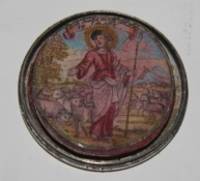
1732004823Amsterdam 1732 or 1733. The panorama or concertina was made we believe in 1732 or 1733 or close to that date. The silver "shraubthaler" or outer casing we assume was made separately at a later date but not long afterward. <br /><br /> books
186421191.99<p>President Lincoln endorses a manuscript petition from border-state Unionists seeking the establishment of a permanent military post at Hickman Kentucky. "<i>Submitted to the Sec. of War who is requested to see the bearer. A Lincoln.</i>"</p> <b>ABRAHAM LINCOLN.</b>Autograph Endorsement Signed as President ca. December 1864 on a manuscript petition with two endorsements from Brigadier General Solomon Meredith. 2 pp. 7 x 9â…› in.<p><b><br /></b></p><p><b>Complete Transcript</b></p><p> <i>Hickman Ky Decr. 6th 1864</i></p><p><i>To the Honr. Abraham Lincoln.</i></p><p><i>President of the United States</i></p><p> <i>Sir</i></p><p> <i>We after an interview with our mutual Friend Brig Genl Meredith commanding the Western district of Kentucky have concluded to commission and empower our friend and fellow citizen Parson N.N. Cowgill to represent our interest before your august presence!</i></p><p> <i>We are suffering from the invatian of the Enemy upon us every day and have no power to repell them we ask of you to instruct our commander Brig Genl Meredith to make a permanant military post at this place</i></p><p> <i>We don't ask it for our protection exclusively but for the great benefit it will be to the Federal Army; We have a district of Country composing some 6 or 8 counties in area about two hundred miles! It being varied in its products offers every inducement to the Federal government to have it protected and let all of its resources be brought forward to</i> 2 <i>sustain our army. Our worthey and truly Union friend Parson N.N. Cowgill can give you a correct topography of our place and country. We would ask of you to extend our most appreciable Commander's district to the Hatchie River as this point is the natural outlet for all the cotton and tobacco raised in that section of the Country!</i></p><p> <i>We trust in Divine Providence you may be awakened to our great necessities and grant us the humble request we have made of you!</i></p><p> <i>Very Respectfully yours.</i></p><p> <i>Many Citizens of Loyalty</i></p><p>on verso in hand of Solomon Meredith: <i>I strongly recomend that a military post may be established at Hickman Ky. by the Secy of War. S Meredith Brig. Genl.</i></p><p><i>Head Qrs Dist of Westn Ky Paducah Ky. Dec 9th 1864</i></p><p><i>I am personally acquainted with Parson NN Cowgill and know him to be an honest patriotic and loyal man. The petition of which he is the bearer asking that Hickman be made a permanent military post I would most earnestly recommend to be granted knowing as I do that it will be of great benefit to the Union cause in this state. The Citizens of Hickman and Fulton Co gave a decided majority for the Union ticker at the late election which gives them a very powerful argument if not a claim for the protection of the government they serve. The government will be benefitted equally with the citizens by adopting the course proposed and the benefit both receive will be so much taken from the enemy who now occupy in little squads of guerrillas the whole country in that vicinity and run off every thing of value to their army which the can lay hands on. S Meridith Brig Genl.</i></p><p>on verso in hand of President Lincoln: <i>Submitted to the / Sec. of War who is / requested to see the / bearer. / A Lincoln</i></p><p><b>Historical Background</b></p><p>Border-state loyalists implore President Lincoln to establish a permanent military post at Hickman. Because of daily raids by rebel forces which the Unionists have no power to repel the citizens of Hickman file their request with the endorsement of General Solomon Meredith commander of the District of Western Kentucky based in Paducah. Meredith who had led the "Iron Brigade" was transferred to a desk command because of a bad shrapnel wound suffered at Gettysburg.</p><p>The town of Hickman is located in extreme southwestern Kentucky near the Mississippi River. Though Unionist in orientation it was a center of cotton cultivation. Even after the Confederate Army of Tennessee commanded by Braxton Bragg retreated from Kentucky in October 1862 the state was beset by guerrilla warfare for the remainder of the conflict. There were famous raids conducted by Confederate cavalrymen John Hunt Morgan and Nathan Bedford Forrest. President Lincoln declared martial law in August 1864 suspending the writ of habeas corpus to empower Union commanders such as Meredith unilaterally to arrest Confederate spies sympathizers and bandits.</p> books
18636046011863. "A. Lincoln" in black ink Washington DC May 12 1863 being 7 lines on the verso of the second leaf of an autograph letter to Lincoln from Robert Chester Buffalo May 9 1863 2 pages; 7 7/8" x 12 3/4" on a bifolium of blue-ruled paper neatly reinforced at folds. Lincoln deals with an officer seeking "An Honorable Discharge & to Avoid a Dishonorable One." Robert Chester who identifies himself as "late Capt. 17th Infantry US Army" petitions the President: "I would most respectfully request a suspension of Special Orders No. 201 Extract 4 by which I am dismissed the service of the United States. The reasons for such request are that my case has not been properly submitted to Your Excellency. I would respectfully ask that the order my be suspended until a Court of Inquiry or Court Martial; can be convened when I may have the opportunity to defend myself." Chester's appeal is joined by ten other prominent citizens of Buffalo including her postmaster one the justices of the city's Superior Court and three Union officers hailing from the Bison City. Lincoln forwarded Chester's petition to Judge Advocate General Joseph Holt directing him to "please examine & report on this case. The officer only seeks an honorable discharge & to avoid a dishonorable one." Nothing further on the case is recorded and Holt - influenced perhaps by the President's none-too-subtle insinuation - evidently found no merit to Chester's claim. See "The Collected Works of Abraham Lincoln" ed. Basler Supplement: 187. Signed by Authors. No Binding. Very Good/No Jacket. unknown books
109638Rare Civil War era endorsement signed by Abraham Lincoln as President. Dated March 14 1864 the endorsement reads "Submitted to the Sec. of War & Gen. Meade. A. <span class="match">Lincoln</span> March 14 1864." In fine condition. On March 14 1864 Lincoln issued an order for the draft of 200000 men to support the Union effort. Only two days prior General Ulysses S. Grant assumed command of the Union armies. Matted and framed with and engraved portrait of Lincoln and gold biographical plaque. The endorsement measures 3.25 inches by 2.75 inches. The entire piece measures 22.75 inches by 19 inches. Abraham Lincoln served as the 16th President of the United States from March 1861 until his assassination in April 1865. He led the United States through its Civil War and in doing so preserved the Union of the United States of America abolished slavery and strengthened the federal government. In his Address at the Sanitary Fair in Baltimore Maryland in April of 1861 Lincoln stated: "The world has never had a good definition of the word liberty and the American people just now are much in want of one. We all declare for liberty; but in using the same word we do not all mean the same thing. With some the word liberty may mean for each man to do as he pleases with himself and the product of his labor; while with others the same word may mean for some men to do as they please with other men and the product of other men's labor. Here are two not only different but incompatible things called by the same name liberty. And it follows that each of the things is by the respective parties called by two different and incompatible names.liberty and tyranny. unknown books
17183173London: W. Pearson 1718. First edition. Very Good. Small folio 240 x 200 mm. Collates 4 xiv 175 1 blank: complete with an engraved vignette on title-page numerous engraved head and tail pieces and initials and an engraved vignette headpiece on page 1. With a dedication to Sir Isaac Newton. Contemporary speckled calf rebacked to style. Boards double-ruled in gilt. Spine with a red morocco label lettered and ruled in gilt. All edges speckled brown. Some minor soiling to final two pages. Some light toning from glue on endpaper edges. Previous owner's armorial bookplate on front pastedown. Overall a very good copy. <br/><br/>Abraham De Moivre was a mathematician and a close friend of Sir Isaac Newton to whom he dedicated the first edition of this work. "His work on the theory of probability surpasses anything done by any other mathematician except Laplace" Cajori. "De Moivre's representation of the solutions of the then current problems of games of chance tended to be more general than those of Montmort. In addition he developed a series of algebraic and analytic tools for the theory of probability like a 'new algebra' for the solution of the problem of coincidences which foreshadowed Boolean algebra the method of generating functions or the theory of recurrent series for the solution of differential equations. In the Doctrine de Moivre offered an introduction which contains the main concepts such as probability condition probability expectation dependent and independent events the multiplication rule and the binomial distribution" DNB. Very Good. W. Pearson unknown books
1864WRCAM55254N.p. perhaps Virginia 1864. 3pp. on a single folded sheet. with: OATH OF ALLEGIANCE. N.p. perhaps Harper's Ferry Va. 1864. Single sheet 3 x 7 3/4 inches. The OATH affixed to a partial manuscript ledger report recording lost military stores for an unidentified unit in 1863 which is itself glued to the verso of the last blank page of the Amnesty Proclamation. Minor toning light foxing some wrinkling. Overall very good. In a cloth chemise and green half morocco and cloth slipcase spine gilt. An exceedingly rare separate printing - perhaps by a military field press - of President Abraham Lincoln's December 1863 presidential proclamation offering amnesty to citizens of the Confederacy providing they take an oath that they "will abide by and faithfully support all proclamations of the President made during the existing rebellion having reference to slaves" i.e. the Emancipation Proclamation. When the number of persons in any state taking the oath reached ten percent of the number of voters in 1860 this group of loyal voters could form a state government that could be recognized by the President. The Amnesty Proclamation was issued with President Lincoln's third Annual Message to Congress i.e. State of the Union Address on December 8 1863. It was appended per the language in the title here to the official printing of that address but also printed separately. <br> <br> The present printing almost certainly executed in the weeks after Lincoln's State of the Union was likely hastily composed from the text of the official printing of the proclamation. The work carries no imprint information of any kind and bears the hallmarks of a military field press printing. <br> <br> Toward the close of 1863 with the Confederate Army in full retreat discussions in Congress centered on how to restore the Southern states to the Union. "The crisis which threatened to divide the friends of the Union is past" announced Lincoln. Now it was the duty of Congress to ensure that all citizens in the South regardless of race were guaranteed the equal protection of the law. A number of competing proposals emerged from deliberations but in the end during his message to Congress on Dec. 8 1863 Lincoln declared reconstruction of the South a wholly executive responsibility and "offered 'full pardon.with restoration of all rights of property except as to slaves' to all rebels who would take an oath of future loyalty to the Constitution and pledge to obey acts of Congress and presidential proclamations relating to slavery" Donald p.471. <br> <br> Those excluded from taking the oath were the highest ranking members of the Confederacy - government officials judges military and naval officers above the rank of army colonel or navy lieutenant former congressmen and "all who have engaged in treating colored persons or white persons otherwise than lawfully as prisoners of war." Lincoln further encouraged the southern states to make provisions "in relation to the freed people of such State which shall recognize and declare their permanent freedom provide for their education and which may yet be consistent as a temporary arrangement with their present condition as a laboring landless and homeless class." <br> <br> "Lincoln indicated that this was only one plan for reconstructing the rebel South and while it was the best he could think of for now he would gladly consider others and possibly adopt them. He might even modify his own classes of pardons if that seemed warrantable. Afterward almost everybody but die-hard Democrats seemed happy with the plan" Oates p.371. <br> <br> The proclamation is accompanied by a partially-printed OATH OF ALLEGIANCE dated 1864 and datelined Harper's Ferry Virginia. The oath requires the taker to "solemnly swear that I will support protect and defend the Constitution and Government of the United States against all enemies." It is signed in type by Henry A. Urban Lieutenant and A.D.C. Aide-de-Camp. The oath is printed with a blank space for the name of the person taking the oath and the date. There is also a space for people who know the oath-taker and "certify on honor that we know Mr. blank to be a true and loyal man to the Federal Government." The OATH is affixed to a partial manuscript ledger report recording lost military stores for an unidentified unit in 1863 <br> <br> This printing of the Amnesty Proclamation is just as interesting as the government broadside printing or the first pamphlet printing as this edition would have also been used in the field by Union troops encountering Confederate rebels. The composition of the beginning of the seventh paragraph is consistent with the first pamphlet printing of the Amnesty Proclamation Monaghan 191 and not the broadside printing. The text here begins "Therefore I Abraham Lincoln."; in the broadside printing the "Therefore" is present at the end of the preceding paragraph. The simple and somewhat loose execution of the composition seen here is consistent with field press printings as is the lack of an imprint of any kind. Perhaps this simple production was intended for Union troops to literally hand to Confederate soldiers to read. The presence of the portion of the ledger and the Oath of Allegiance lends credence to the notion that this edition of the Amnesty Proclamation was produced for use by the military. <br> <br> This printing of the Amnesty Proclamation is not in Monaghan OCLC nor in any reference work we could find. In fact we could find no other three-page editions of the Amnesty Proclamation at all. Surely printed in small numbers to begin with it is perhaps a unique surviving example. MONAGHAN 191 ref. SABIN 41162 note. David Herbert Donald: LINCOLN New York. 1995 p.471. Stephen B. Oates: WITH MALICE TOWARD NONE: A LIFE OF ABRAHAM LINCOLN New York. 1977 p.371. hardcover books
1865WRCAM53482Washington D.C. 1865. Broadside 13 x 8 1/4 inches. Faint dust-soiling minor edge wear with a few short marginal tears repaired on verso. Very good. A rare first broadside printing announcing two of President Lincoln's three final proclamations "Closing Certain Ports" and "Port of Key West to Remain Open" both issued on April 11 1865. President Lincoln issued these proclamations just three days before he was cut down by assassin John Wilkes Booth. Both proclamations are signed in type by Lincoln and Secretary of State William H. Seward. <br> <br> The first proclamation "Closing Certain Ports" shut down a large number of Confederate ports all listed on the proclamation and indicates that "all rights of importation warehousing and other privileges shall in respect to the ports aforesaid cease until they have again been opened by order of the President; and if while said ports are closed any ship or vessel from beyond the United States or having on board any articles subject to duties shall attempt to enter any such port the same together with its tackle apparel furniture and cargo shall be forfeited to the United States." It was President Lincoln's 126th proclamation. <br> <br> The second proclamation "Port of Key West to Remain Open" was issued to amend the previous proclamation. It states that "the port of Key West in the state of Florida was inadvertently included among those which are not open to commerce" and declares that "said port of Key West is and shall remain open to foreign and domestic commerce." It was President Lincoln's 127th proclamation. <br> <br> These two documents constitute the antepenultimate and penultimate proclamations issued by President Lincoln; his last entitled "Claiming Equality of Rights with All Maritime Nations" was promulgated the same day. An important pair of proclamations among the last acts of the Great Emancipator before his untimely demise. unknown books