987 résultats
1866238011Washington D.C.: John H. Littlefield; Wm. Terry Printer 1866. Photograph by John Goldin of Littlefield's painting on printed mount. Image 8 1/2 x 13 3/4 in.; mounted to 13 x 17 in. Faint toning to mount; fine. Photograph by John Goldin of Littlefield's painting on printed mount. Image 8 1/2 x 13 3/4 in.; mounted to 13 x 17 in. A published photograph of Littlefield's hyper-realistic Lincoln death-bed painting each figure meticulously rendered from photographs. <br/>Littlefield studied law under Lincoln in 1858 stumped for him in his Presidential bid and was rewarded with a position in the Treasury Department. After Lincoln's death Littlefield invented this tableau of twenty-five people ranged around the death-bed including Vice-President Johnson Surgeon Charles Leale and Mrs. Lincoln.<br/>"The artist used photographs as models for the twenty-five people gathered in the death room but his profile of the dying Lincoln shows a first-hand acquaintance" Ostendorf LINCOLN'S PHOTOGRAPHS p. 279. John H. Littlefield; Wm. Terry, Printer unknown books
1866238120Washington D.C.: John H. Littlefield; Wm. Terry Printer 1866. Photograph by John Goldin of Littlefield's painting on printed mount. 1 vols. Image 11 1/2 x 18 3/4 in.; mounted to 19 x 24 in. Soiling to image vertical crease large chips to bottom of mount not affecting image or legend; good. Photograph by John Goldin of Littlefield's painting on printed mount. 1 vols. Image 11 1/2 x 18 3/4 in.; mounted to 19 x 24 in. A published photograph of Littlefield's hyper-realistic Lincoln death-bed painting each figure meticulously rendered from photographs. Littlefield studied law under Lincoln in 1858 stumped for him in his Presidential bid and was rewarded with a position in the Treasury Department. After Lincoln's death Littlefield invented this tableau of twenty-five people ranged around the death-bed including Vice-President Johnson Surgeon Chalres Leale and Mrs. Lincoln. "The artist used photographs as models for the twenty-five people gathered in the death room but his profile of the dying Lincoln shows a first-hand acquaintance" Ostendorf LINCOLN'S PHOTOGRAPHS p. 279. Provenance: Harper Family John H. Littlefield; Wm. Terry, Printer unknown books
194312572LA LFSC 1943 1943. SIGNED BY LINDSTROM & RISDON FWD FIRST EDITION FINE. Signed by Authors. F. LA, LFSC, 1943 unknown books
1865235590Boston: Oliver Ditson & Co 1865. First edition front wrapper without portrait of Lincoln appearing in later issues. Engraved title and piano score; 5 pp. 1 vols. Folio. Loose as issued; split along spine with some chipping to extremities. First edition front wrapper without portrait of Lincoln appearing in later issues. Engraved title and piano score; 5 pp. 1 vols. Folio. Donizetti died 17 years before Lincoln having gone mad from syphilis. His Funeral March gained a measure of recognition in America after it was performed during Lincoln's funeral ceremonies. It is a heavy solemn piece in a minor with droning octaves in the bass a haunting chromatic figure in the middle register and a lyrical upper voice. see Barret Sale Lot 693; Stern Collection of Lincolniana Oliver Ditson & Co unknown books
1864D16155Baltimore: Cushings & Bailey 1864. First Edition. First and only edition extra-illustrated with approximately 65 inserted portraits. Full red pebbled morocco gilt dated 1882 on the spine rebacked with the original spine laid down the covers panelled in gilt the spine tooled and lettered in gilt with the initials "W.H.W." at the foot. 10 x 8 inches 25.5 x 21 cm; with lithographed title and approximately 65 mostly engraved or lithographed portraits inserted three are original drawings including one of Julia Ward Howe xi lithographed contents 200 pp. lithographed fascsimiles of the handwriting of the authors. Intermittent foxing the inserted portraits have offset to the text leaves opposite rebacked as noted and lightly rubbed. <br/><br/>This volume produced at the time of the 1864 Baltimore Sanitary Fair contains what is considered the first reproduction of the Gettysburg Address in Lincoln's hand. The facsimile was made from what is now known as the "Bliss Copy" of the address the fifth and final manuscript copy of the address that Lincoln executed at the request of the editors of this volume. Other authors represented here include Emerson Poe Melville Hawthorne and many other notables of the period. Cushings & Bailey unknown books
1862289963Washington. : Government Printing Office. 1862 . Publisher’s brown blindstamped cloth gilt spine title. . Good plus damp spotting to front cover spine title faded ink name to pastedown light toning to some pages. 23x15 cm. . A collection of correspondence regarding Mexican foreign relations. Mexico was of concern to the United States due to the French intervention and installation Maximilian and the prospect of a Confederate alliance with Mexico. weight: 1.5 lb. (Government Printing Office). hardcover books
1918182829New York: Brentano's 1918. Leather bound. VG- bumping and wear to leather boards a few pages are loose but present pages are otherwise clear. Red leather boards with gilt tooling gilt spine lettering with one raised band; all edge gilt; marble illustrated end papers; xvii 117 pp. A reprint of the 1908 edition. Selected and edited with introduction by Temple Scott. Brentano's unknown books
1860RLINPOL00LRFollett Foster and Company 1860. Good. Lincoln Abraham and Stephen Douglas. Political Debates between Hon. Abraham Lincoln and Hon. Stephen A. Douglas in the Celebrated Campaign of 1858 in Illinois. Columbus Ohio: Follett Foster and Company 1860. Early printing: 2nd 3rd or 4th. 268pp. 8vo. Book condition: Good with moisture damage to covers and endsheets and light soiling to covers. Edges are rubbed slightly exposing boards at corners. Uniform foxing to text block with old library stamps on edges of text block and rear pastedown. Follett, Foster, and Company hardcover books
18602741Columbus: Follett Foster and Company 1860. First edition. Original publisher's cloth binding with some rubbing to spine and extremities. First issue with all points as called for by Monaghan no line over the publisher's slug on title verso and the number 2 at the foot of page 17. Collates viii 268 pages: lacking front endpaper else complete. Some light scattered foxing as is common in American imprints of this era but in all a tight pleasing copy of this book documenting an important moment in American politics.<br/><br/>Documenting Lincoln and Douglas' rivalry for the 1858 U.S. Senate race this title captures an important moment of flux for American politics. Just beginning his political career the young Lincoln earned the Republican nomination right as the party was forming; and he already had proven himself "a leading figure because of his adroit and earnest dealing with the problem of slavery" Oxford Companion. One of his great strenghts was his eloquence -- something Lincoln put on full display in these debates against Douglas including the utterance of one of his most memorable lines that "A house divided against itself cannot stand." Though Lincoln lost the Senate in 1858 he had managed to develop a national reputation and in 1860 the year of this book's release would win the Presidency.<br/><br/>Monaghan 69. Follett, Foster and Company unknown books
1979161727Franklin Center Pennsylvania: The Franklin Library 1979. Leather bound. Fine. Clean crisp tight unread copy. Grey leather/boards; gilt decoration all around. Three raised bands to spine with gilt lettering on crimson title block. AEG. Silk moire end papers with matching satin place-holder ribbon. xxxiv 636 pp. with bw frontis by George H. Jones. From the series The 100 Greatest Masterpieces of American Literature a limited edition collection published under the auspices of The American Revolution Bicentennial Administration by The Franklin Library. With a preface by Carl Sandburg. The Franklin Library hardcover books
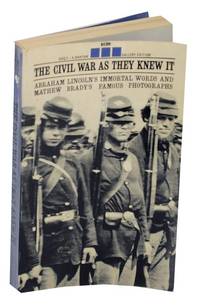
1961156311New York: Bantam Books 1961. First edition. Softcover. Pairs text by Abraham Lincoln with numerous black and white images by Mathew Brady. A very good plus copy in wrappers with some minor wear and some light curling to the edges. Bantam Books unknown books
1896262839Chicago: Scott Foresman 1896. hardcover. good. Plates. viii 555pp. 2pp. of publisher's ads. 8vo maroon cloth lacks front flyleaf inner hinges strengthened spine sunned top margins lightly creased on pages 51-56 page 101 lightly soiled. Chicago: Scott Foresman 1896.<br/><br/> "Historically the most important series of American political debates." Howes L-338. Later edition of Monaghan I 69.<br/><br/> Scott, Foresman unknown books
186332764New York: Baker & Godwin 1863. 8vo. 9 x 5 5/8 inches. 48pp. Publisher's lettered wrappers publisher's ad on rear wrapper. Housed in a blue morocco box.<br/> <br/>"Four score and seven years ago.": the earliest publication of the Gettysburg Address in book form preceded only by the exceptionally rare sixteen-page pamphlet The Gettysburg Solemnities known in only three copies.<br/> <br/>Lincoln made his speech at the dedication of a cemetery on the Gettysburg battlefield some four months after the bloody and pivotal battle that turned the tide of the Civil War in favor of the Union. Lincoln's speech was preceded by an address from Edward Everett the most famous orator of his day. Everett's speech took some ninety minutes to deliver and is largely forgotten. Lincoln's speech delivered in only a few minutes is immortal. It is a supreme distillation of American values and of the sacrifices necessary for the survival of liberty and freedom. "The Washington Chronicle of 18-21 November reported extensively on this ceremony and included a verbatim text of 'Edward Everett's Great Oration.' On the fourth day it noted in passing that the President had also made a speech but gave no details. When it came to the separate publication on 22 November Everett's 'Oration' was reprinted from the standing type but Lincoln's speech had to be set up. It was tucked away as a final paragraph on page 16 of the pamphlet The Gettysburg Solemnities. It was similarly treated when the meanly produced leaflet was replaced by a 48-page booklet published by Baker and Godwin of New York in the same year" PMM. Lincoln's address appears on page 40 and parenthetical notes are added indicating "applause" and "long-continued applause." A diagram on page 32 gives the details of the Soldiers' National Cemetery at Gettysburg. A lovely example in original wrappers.<br/> <br/>Howes E232 "b"; Monaghan 193; Grolier American 100 72 note; Streeter Sale 1747; Sabin 23263; cf. Printing and the Mind of Man 351; Garry Wills Lincoln at Gettysburg pp.191-204. Baker & Godwin unknown books
186331428New York: Baker & Godwin 1863. 8vo. 9 x 5 5/8 inches. 48pp. Publisher's lettered wrappers publisher's ad on rear wrapper. Repair to paper spine. Within a modern box.<br/> <br/>"Four score and seven years ago.": the earliest publication of the Gettysburg Address in book form preceded only by the exceptionally rare sixteen-page pamphlet The Gettysburg Solemnities known in only three copies.<br/> <br/>Lincoln made his speech at the dedication of a cemetery on the Gettysburg battlefield some four months after the bloody and pivotal battle that turned the tide of the Civil War in favor of the Union. Lincoln's speech was preceded by an address from Edward Everett the most famous orator of his day. Everett's speech took some ninety minutes to deliver and is largely forgotten. Lincoln's speech delivered in only a few minutes is immortal. It is a supreme distillation of American values and of the sacrifices necessary for the survival of liberty and freedom. "The Washington Chronicle of 18-21 November reported extensively on this ceremony and included a verbatim text of 'Edward Everett's Great Oration.' On the fourth day it noted in passing that the President had also made a speech but gave no details. When it came to the separate publication on 22 November Everett's 'Oration' was reprinted from the standing type but Lincoln's speech had to be set up. It was tucked away as a final paragraph on page 16 of the pamphlet The Gettysburg Solemnities. It was similarly treated when the meanly produced leaflet was replaced by a 48-page booklet published by Baker and Godwin of New York in the same year" PMM. Lincoln's address appears on page 40 and parenthetical notes are added indicating "applause" and "long-continued applause." A diagram on page 32 gives the details of the Soldiers' National Cemetery at Gettysburg.<br/> <br/>Howes E232 "b"; Monaghan 193; Grolier American 100 72 note; Streeter Sale 1747; Sabin 23263; cf. Printing and the Mind of Man 351; Garry Wills Lincoln at Gettysburg pp.191-204. Baker & Godwin unknown books
1864M13597New York: Derby & Miller 1864. 1864. Volume II. 8vo. xxxi 1 711 1 pp. Subtle waterstain at top margin viewable from pages 500-712. Original full dark blue-green pebbled cloth gilt spine titles; light wear to extremities. Bookplate of the Essex Institute; small rubber stamp on title C.W. Post College Documents Library. The Emancipation Proclamation declared freedom for all slaves by January 1 1863. This proclamation is dated January 2 1863. Lincoln in writing this one of the most important documents in all US history declared "And by virtue of the power and fpr the purpose aforesaid I do order and declare that all persons held as slaves within said designated States and parts of the States are and henceforward shall be free; and that the Executive government of the United States including the military and naval authorities thereof will recognize and maintain the freedom of said persons." / The War Orders of 1863 are among the most historical during the Civil War. The volume includes: General Orders No.1: Emancipation Proclamation Liberty for Slaves. / General Orders No.100: The Lieber Code How soldiers should conduct ethically themselves in wartime. / General Orders No. 143: Order for the creation of the United States Colored Troops. / General Orders No.1. President Abraham Lincoln issued the Emancipation Proclamation on January 1 1863. With this Executive Order. He took a decisive stand on the most contentious issue in American history redefined the Union's goals and strategy and sounded the death knell for slavery. / Lincoln had always believed slavery to be immoral and fought its expansion. The President took the action "sincerely believed to be an act of justice" knowing that it might cost him the election. / With the Emancipation Proclamation Lincoln dramatically tied the Union's war aims to ending slavery. Whether they approved or not after January 1 1863 Americans could no longer deny that emancipation was central to the Union war effort. / Though ready to lay the groundwork for emancipation Lincoln feared that delivering the Proclamation at the wrong time would doom its chances for public acceptance and harm the Union cause. / On September 22 1862 Lincoln issued his preliminary Emancipation Proclamation giving the South 100 days to end the rebellion or face losing their slaves. / His final Proclamation on January 1 1863 further demonstrated his own evolving views by eliminating earlier references to colonizing freed blacks and compensating slave-owners for voluntary emancipation. Lincoln also added provisions for black military enlistment. Pausing before he signed the final Proclamation Lincoln reportedly said: "I NEVER IN MY LIFE FELT MORE CERTAIN THAT I WAS DOING RIGHT THAN I DO IN SIGNING THIS PAPER." Despite the political risks by 1864 he insisted on both reunion and emancipation as preconditions to any peace negotiation. Though the battle for civil rights would have to follow Lincoln rightly regarded the Proclamation as: "THE CENTRAL ACT OF MY ADMINISTRATION AND THE GREAT EVENT OF THE 19TH CENTURY" Derby & Miller, 1864. hardcover books
190341285Washington: Government Printing Office 1903. 1st collected edition Monaghan 1402. Original publisher's pebbled brown cloth binding with gilt stamped title lettering to front board. TEG. Cloth somewhat dull. Some extremity wear. A VG copy. 246 pp. Each section prefaced with an engraved image of the slain president. Tissue guards. Small folio: 12-5/8" x 9-5/8" <br/><br/> Government Printing Office hardcover books
193633264Chicago: The Black Cat Press 1936. 1st edition Monaghan 3515. Limited to 1000 cc. Grey cloth binding. Yellow dust jacket. VG/VG spine a bit darkened/slight chipping at spine ends/pc. 258 2 pp including Index. Frontis of Lincoln after a portrait by John Doctoroff. 8vo. <br/><br/> The Black Cat Press hardcover books
186549673Troy N. Y.: A. W. Scribner Book and Job Printer Cannon Place 1865. 1st Printing Monaghan 802. Original printed self-wrappers stiched. Now housed in an archival mylar sleeve. Bit of age-toning & soiling to outer leaves overall VG. 47 1 blank pp. 8vo. 9" x 5-3/4" <br/><br/>"If it be that the South is avenged in his death she will find it to be a vengance that will recoil upon her own head; for in him she has lost her best friend and however little we could afford to spare him she could afford it less still." <br /> <br />One of the many such sermons that were published shortly after the tragic event of April 15th 1865; this particular one uncommon in the trade with RBH showing a 1945 Goodspeed catalogue as their most recent appearance. A. W. Scribner, Book and Job Printer, Cannon Place unknown books
1959Embry 186136Falcon's Wing Press 1959. Fine in near fine dust jacket in mylar cover. Falcon's Wing Press, 1959. unknown books
1942Embry 196105Heritage Press 1942. Bookplate near fine to fine in near fine slipcase with some sunning to edges. Black blindstamped cloth. Lacking Sunglass Heritage Press, 1942. hardcover books
3360<p>No publisher no place probably circa 1950. A bifolum of the Gettysburg address on faux aged paper with the text printed in blue and initials in red. Bound nicely in red white and blue crushed morocco with inlaid stars and stripes. The binding is unsigned. Attractive and quite unusual. A copy was located bound in exactly the same manner in the Lincoln Institute in Wayne Indiana. It has a bookplate indicating it was done for the English bookseller John Harkness. Binding done circa 1950. </p> books
19271327049Boston: Houghton Mifflin Company 1927. Limited edition. Hardcover. Octavo; Limited edition 369/440; G/no DJ; Hardcover w/out DJ; Spine yellow with black print on white label; Black slipcase has edgewear lacks rear panel tears to corners shelfwear; Boards quarter bound with yellow cloth to spine and blue paper to boards slight wear to spine caps soiling to spine and light smudging to boards; Text block has spotting to deckled edges names in ink on front flyleaf slight spotting to endpapers foxing to page 3 and facing plate else clean interior; 70 pages frontispiece illustrated b&w plates Laid in is an offprint from Century Magazine Feb. 1894 pp. 589-608 containing essay by John Coleman Adams and text of Lincoln's Gettysburg Address. 1327049. FP New Rockville Stock. Houghton Mifflin Company hardcover books
19594641baDetroit MI: Friends of the Detroit Public Library 1959. Book. Very good condition. Paperback. Civil War; slavery; p. 5-8; 22.8cm; light green paper wrapper; facsimile of portion of original manuscript of President's second annual address preserved in Burton Historical Collection Detroit Public Library; comments by James M. Babcock; reproduction of Mathew Brady portrait of U. S. pres. 1861-65; supplement in 1959 spring issue of Among Friends quarterly publication of the Friends. Friends of the Detroit Public Library Paperback books
19598816baDetroit MI: Friends of the Detroit Public Library 1959. Book. Very good condition. Paperback. Civil War; p. 5-8; 22.8cm; light green paper wrapper; facsimile of portion of original manuscript of President's second annual address preserved in the Burton Historical Collection Detroit Public Library; comments by James M. Babcock; reproduction of Mathew Brady portrait of U. S. pres. 1861-65; supplement in 1959 spring issue of Among Friends quarterly publication of the Friends. Friends of the Detroit Public Library Paperback books
19251342baIChicago IL: University of Chicago Press 1925. Book. Hardcover. Americana; politics; 22p; 29.7cm; 1/2 tan cloth paper covered boards soiled; frontis portrait of Lincoln U. S. president 1861-65; 2 illus.; facsimile of speech; introduction by Oliver R. Barrett b. 1873; p. 17-19 "Mr. Lincoln at home" column from Springfield Journal Nov. 1 1858; p. 21-22 printed letter from John H. Morgan. University of Chicago Press Hardcover books