987 résultats
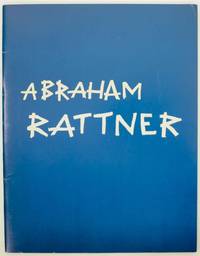
196965439NY: Kennedy Gallieries 1969. First edition. Small 4to. 47 pp. Very good plus in printed wrappers. Introduction by Frank Getlein. Twelve full-color reproductions. NY: Kennedy Gallieries unknown books
1972139626New York: Kennedy Galleries 1972. First edition. Softcover. Exhibition catalog for a show that ran October 19 through November 4 1972. Includes 23 color and black and white illustrations. A near fine copy in stapled wrappers. Kennedy Galleries unknown books
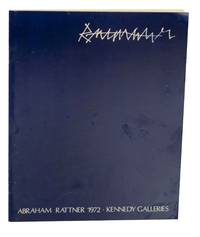
1970147145New York: Kennedy Galleries 1970. First edition. Softcover. Exhibition catalog for a show that ran February 14 through March 8 1970. Essay by Allen Leepa. Includes 31 illustrtations with 16 in color. A very good copy in stapled wrappers with some minor wear. Kennedy Galleries unknown books
199382155NY:: Princeton Architectural Press. Near Fine in Very Good dust jacket. 1993. Hardcover. 1878271989 . Color photographs throughout. First printing. Near fine in a very good short closed edge tear - tape repaired on verso creasing to front flap dust jacket.; 300 pages . Princeton Architectural Press, hardcover books
17237654Vienna and Nuremberg: Georg Lehmann 1723. First printing. Vellum. Very Good. 4to. 1841953pp. Index. Title printed in red & black. Copper engraved frontispiece. Cont. vellum a bit soiled hand lettered paper spine label. Paper repairs to small wormholes on recto of frontispiece and verso of title. Cont. ownership signature at top of title. Volume 3 of 3 only. Georg Lehmann hardcover books
19681319638Amsterdam: North-Holland Publishing Company 1968. Hardcover. Reprint of 1953 edition; Octavo; VGVG-; Hardcover with clear protective mylar covering; Yellow spine with black text; Dust jacket has residue of price sticker to the front and slight marks and smudges; Boards are clean and sturdy; Text block is clean; 297p. 1319638. FP New Rockville Stock. North-Holland Publishing Company hardcover books
1950006012New York NY: Bloch Publishing Company 1950. Book. Near fine condition. Hardcover. First Edition. Octavo 8vo. xviii 128 pages of text. Blue hardcover cloth binding; protected in stiff archival mylar. No dustjacket. Illustrated with six black & white plates including maps drawings and portraits. With a Preface by Dr. Solomon Grayzel. With an introduction biographical sketch of the author and explanatory notes by the translator. Translated from the Hebrew by Mesch. Inscribed and signed by the wife of the translator Vellie Mesch to friends in Chicago in 1965. First edition. Bloch Publishing Company Hardcover books
1680LV2130Amsterdam: Abraham Wolfganck; La Haye:: Adriaen Moetjens 1680 1679. 1680. Six parts in four volumes. 12mo. xxviii 363 2 364-781 15; xx 771 21; xii 588 12; xvi 379 2 blank 2 379-750 16 pp. Includes letters and documents in French and in Latin German Spanish Dutch and Italian with French translations. Printer’s device on title armillary sphere 2 engraved folding plates showing scene of negotiation at a table surrounded by fine tapestries vol. I facing p.1 III facing p. 438 indexes; gutter stains in vol. 1. Original mottled calf with gilt-stamped spine and four raised bands red speckled edges; worn joints broken on second and third vols. while the first and last vols. are crudely re-backed in cloth and have new endpapers. Ownership blind embossed stamp on first and last few leaves including titles. As is. Second edition vols. 1-3-4; vol. 2 is a first edition of 1679 vastly expanded as the first two volumes were not a part of the 1679 issue. A rare compilation of 17th century diplomatic texts treatises negotiations and correspondence. This work is about the Treaties of Peace of Nijmegen. These series of treaties signed in the Dutch city of Nijmegen between August 1678 and December 1679 ended various interconnected wars among France the Dutch Republic Spain Brandenburg Sweden Denmark the Prince-Bishop of Munster and the Holy Roman Empire. A third edition was issued in 1697 though it is essentially a reprinting of this 1680 issue. Locations: Cambridge Cathedral Libraries Edinburgh National Library of Scotland Oxford.See: Alphonse Willems Les Elzevier: histoire et annales typographiques 1880 p. 523-24 describes this work in 7 parts but six parts as above is correct; Kent McNeil Native Rights and Boundaries of Rupert’s Land and the . . . University of Saskatchewan. Native Law Centre 1982 p. 16. Adriaen Moetjens, 1680, 1679. hardcover books
16808291Amsterdam: Adriaen Moetjens La Haye 1680 4 volumes. Second edition revised corrected and augmented. 24mo. Pp. 28 781 16 18 771 20 12 588 12 16 750 16. Illustrated with 2 folding copper-engraved plates. Contemporary full polished calf blind-stamped dentelle on covers spines extra gilt marbled ends. Circular library stamp on each title page. A superior complete set in handsome matched bindings clean and crisp throughout. A very fine set perhaps the finest extant. A rare collection of 17th century diplomatic texts treatises extracts dispatches negotiation and correspondence. This work provides important original sources and contemporary accounts of the Treaties of Peace of Nijmegen. These series of treaties signed in the Dutch city of Nijmegen between August 1678 and December 1679 ended various interconnected wars among France the Dutch Republic Spain Brandenburg Sweden Denmark the Prince-Bishopric of Munster and the Holy Roman Empire. Text in French. Excessively scarce. Only two sets located in France by OCLC; no copies at auction in fifty years. Adriaen Moetjens, La Haye unknown books
12778pamphlet. 5 pages pp. 2216-2220 IN: Journal of the American Medical Association vol. 65 no. 26. Tall 4to sewn modern wrappers. Chicago 1915. First Edition. Whole number offered entire.<br/><br/> Park was an early advocate of diphtheria immunization with toxin- antitoxin. GM 5068<br/><br/> unknown books
1864WRCAM45849Boston 1864. 88110pp. plus folding map. Antique-style three-quarter calf and marbled boards. 19th-century ink stamp on titlepage contemporary inscription on second leaf. Internally clean. Very good. Devoted almost entirely to the Massachusetts war effort published early in January 1864. The folding map shows the Soldier's National Cemetery at Gettysburg dedicated Nov. 19 1863 with the long speech of Edward Everett of Massachusetts and the short "Dedicatory Speech by President Lincoln" better known as the Gettysburg Address. Also printed is the "Programme of Arrangements" of that day a list of Massachusetts soldiers killed at Gettysburg and buried there and details of the cemetery. Monaghan notes this as an early printing of the Gettysburg Address. MONAGHAN 48. hardcover books
1437616th President of the United States. 5.5" by 8.5". Advertisement on paper with a profile portrait of Lincoln. Reads in part: "I beg leave to announce the recent discovery of an interesting item for collectors of Lincolnia. It is a six by eight inch oval photograph of the Lincoln homestead doubtless taken in 1860 and with Lincoln himself standing on the walk in front of the house leaning against the fence. " It continues "Many pictures were made of Mr. Lincoln during the campaign and afterwards but very few combine these two features - the man and his home." One small tear on bottom blank margin and two darker markings on the top and bottom. Overall in very good condition. unknown books
184721117.99<p>A list of stockholders entirely in Lincoln's hand filed as evidence in his first significant railroad case. Lincoln's own appearance in the shareholder list represents only the second known instance of a stock purchase by the future president. The Illinois Supreme Court's ultimate ruling in favor of Lincoln and the railroad set an important legal precedent upholding the binding nature of a stockholder's contractual and financial obligations. "The decision subsequently cited in twenty-five other cases throughout the United States helped establish the principle that corporation charters could be altered in the public interest and it established Lincoln as one of the most prominent and successful Illinois practitioners of railroad law" Donald p.155.</p> <b>ABRAHAM LINCOLN.</b>Autograph Manuscript Signed by Lincoln in text constituting his official transcript of the "<i>Subscription Book of the Capital Stock of the Alton and Sangamon Rail Road Company</i>" incorporated February 27 1847 transcribed in early 1851. Comprising a cover sheet titled in Lincoln's hand the joint stock subscription statement and list of 91 shareholders with the number of shares subscribed and leaf with Lincoln's legal docket: "<i>Alton and Sangamon Railroad Company vs. James A. Barret. Copy of contents of subscription book</i>." 8 pp. 6â… x 8¼ x ¼ in.<p><b><br /></b></p><p><b>Historical Background</b></p><p>The Alton and Sangamon Rail Road Company was chartered in 1847 to construct a line from Alton via New Berlin to Springfield. In 1850 however the Illinois General Assembly approved a more direct route bypassing the landholdings of some investors. Claiming breach of contract James A. Barret refused to make further installment payments for his 30 shares of stock as did several others who no longer stood to benefit from the new line. In 1851 Lincoln was hired to compel the defaulting shareholders to pay the balance of their promised investment.</p><p>The tactical details are spelled out in a February 19 1851 letter from Lincoln to William Martin a commissioner for the sale of the company's stock. Four suits were to be brought against stockholders who had subscribed to the initial offering but had then failed to make the additional installment payments. In preparation Lincoln listed the essential documents he would need in order to win a judgment. "We must prove" he advised Martin "that the defendant is a Stockholder" "that the calls have been made" and "that due notice of the calls has been given." To show that the defendants were in fact stockholders Lincoln explained he needed to produce "the subscription book with the defendant's name and proof of the genuineness of the signature together with any competent parole or evidence that he made the advance payment" Basler 2:99.</p><p>Lincoln's meticulous transcript of the subscription book was a key piece of the evidence filed in Sangamon Circuit Court on February 22 1851. The book includes Barret's name and the subscription statement transcribed by Lincoln on page two is explicit about the shareholders' obligations.</p><p><i>We the subscribers to the Capital Stock of the Alton and Sangamon Rail Road Company.do hereby agree.to pay the balance of the installments due on said stock by us subscribed when the same may be called for by the board of Directors of said Company when duly organized in conformity with the Charter approved February 27th 1847.</i></p><p>"<i>A. Lincoln</i>" with six shares for $600 is prominent among the 91 subscriber names. The only other known record of a Lincoln stock purchase dates from 1836 when he bought one share in the Beardstown and Sangamon Canal.</p><p>In June of 1847 as head of a committee to promote subscriptions for the projected railroad Lincoln wrote an open letter to the "People of Sangamon County" appealing for their support. Railroad construction was booming and Lincoln anticipated that a line between Springfield and Alton would prove a lucrative investment for himself and his state. "The whole is a matter of pecuniary interest" he argued. "The proper question for us is whether with reference to the present and the future and to direct and indirect results it is our interest to subscribe. If it can be shown that it is we hope few will refuse" Basler 1:396-398.</p><p>The list of subscribers is itself of considerable interest. It includes John Hay 1775-1865 the grandfather of Lincoln's later secretary John Hay 2 shares Ninian W. Edwards 1809-1889 husband of Mary Todd Lincoln's sister 20 shares John T. Stuart 1807-1885 Lincoln's law partner 5 shares Henry Yates 1786-1865 father of Illinois governor Richard Yates 10 shares Noah W. Matheny 1815-1877 clerk of Sangamon County and others. In the subscription book Henry Yates hedging his bets has added a condition beneath his name: "<i>if the Road intersects the M. & S R R at New Berlin.</i>"</p><p>Lincoln was mindful of the critical issues raised by the Alton and Sangamon lawsuits and "took extraordinary pains to construct an airtight case for his client" Donald p.155. To Martin he pointed out the legal issues adding "I have labored hard to find the law" in preparation for the trials. In the end two of the defaulting stockholders paid their delinquent calls. The suits against James A. Barret and Joseph Klein came to trial in the Sangamon Circuit Court in August of 1851 with Lincoln handling both the trials and the appeals for the railroad.</p><p>Lincoln's preparation proved its worth – the rulings were in favor of the railroad. "Illinois Supreme Court Justice Samuel H. Treat ruled that public utility superseded private profit. If Barret had won the case other stockholders would balk at fulfilling their obligations. The rule of caveat emptor protected corporate management from stockholder's personal interests and encouraged subsequent investment" <i>Lincoln Legal Briefs</i> Oct-Dec 1990 no. 16 online.</p><p>At the time he transcribed this document Lincoln was an attorney on the 8th Judicial Circuit and also managed a thriving appellate and federal court practice. He handled a number of railroad-related cases representing both private individuals as well as the railroads themselves. He was not as some have argued a hired gun for corporate interests. Rather as his law partner William Herndon described him Lincoln was "purely and entirely a case lawyer."</p><p>The fact that Lincoln despite his commitment to railroading often handled suits against the carriers casts light on his understanding of the lawyer's role in society…He simply could not afford to take only one side in legal disputes. Nor did Lincoln pursue some political or philosophical agenda through litigation. He was not concerned with developing a consistent legal ideology. His business as Donald reminds us "was law not morality." James W. Ely "Lincoln as Railroad Attorney" Indiana Historical Society Symposium April 15-16 2005</p><p>Though a prominent lawyer Lincoln was still smarting over recent political defeats. Elected to the U.S. Congress in 1846 he had served out his term but his outspoken opposition to the Mexican-American War had cost him any chance at a second term. He subsequently failed in his attempt to become commissioner of the General Land Office. Lincoln declined an appointment as governor of the Oregon Territory instead returning to his law practice with William H. Herndon in Springfield Illinois. He would not attempt a political comeback until 1854.</p><p>The rail line was ultimately highly profitable. Lincoln's overriding belief in the broader benefits of internal improvements is best expressed in a speech he delivered before Congress in 1848.</p><p>Let the nation take hold of the larger works and the states the smaller ones; and thus working in a meeting direction discreetly but steadily and firmly what is made unequal in one place may be equalized in another extravagance avoided and the whole country put on that career of prosperity which shall correspond with it's extent of territory it's natural resources and the intelligence and enterprize of it's people.</p> books
1956022993London: Eyre & Spottiswoode 1956. 301p. tables original cloth ex libris. Eyre & Spottiswoode unknown books
1865102324<p> Newspaper 16" x 22" six columns of text small Lincoln engraving 4 pp. Folded at center a few tears and chips at folds and extremities some loss of text at the center fold some aging and browning and a little uneven darkening; despite these faults the paper is in decent condition overall for a newspaper from this period. Dated April 26 1865 this paper provides considerable detail on Lincoln's funeral. The coverage includes an OBIT on Lincoln and a small engraving of the slain president. Most of the coverage is on the second page of the newspaper. The articles include stories on events at the capital to honor Lincoln and the impact of the event on a grieving nation.</p> books
1718102323<p> Newspaper 16" x 22" six columns of text 4 pp. Folded at center several tears and chips at folds and extremities some loss of text Lincoln text less affected some aging and browning and some uneven darkening ; in about fair condition overall for a newspaper from this period. Dated April 17 1865 this is a relatively early account of the Lincoln assassination. Most of the coverage is on the second and third pages of the newspaper. The articles include stories on the "death bed scene" the attacks on Secretary Seward and his son the national reaction and reports on those involved in the plot. Some interesting coverage of a national event in a local newspaper.</p> books
196245060Amsterdam: Erasmus 1962. limp cloth dust jacket. Kubin Alfred. small 8vo. limp cloth dust jacket. 96 pages. Limited to 950 numbered copies. Biographical sketch and bibliography of 262 items illustrated by Kubin. Text in German. Erasmus unknown books
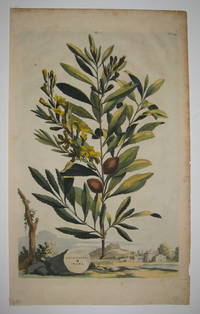
1696211439Leyden and Utrecht: Pieter Vander Aa 1696. unbound. very good. Botanical. Copper plate engraving with hand coloring. Image measures 12.75" x 8.25".<br/><br/> Beautiful print of an aloe plant. Abraham Munting 1626-1683 taught medicine and botany at the Academy of Groningem in the Netherlands. He had a particular interest in the uses of plants especially medicinally. This engraving is from "Naauwkeurige Beschryving Der Aardgewassen". Aging around edges small chip to lower right corner. Please visit our gallery for more Munting prints.<br/><br/> Pieter Vander Aa unknown books
1984140060Los Angeles: Orion Pictures 1984. Vintage French moyenne poster for the 1984 US film. Winner of eight Academy awards including Best Picture Best Director Best Adapted Screenplay and both Best Supporting Actor and Best Actor. <br/><br/>Adapted from Peter Shaffer's 1979 play of the same name the film presents a fictionalized account of Wolfgang Amadeus Mozart's life as well as that of his "rival" Antonio Salieri. <br/><br/>Set in Vienna shot on location in Prague Kromeriz and Vienna. <br/><br/>24 x 32 inches folded. Near Fine with two small stains to the verso. <br/><br/>Ebert II. Orion Pictures unknown books
1612219257Abraham Ortelius 1612. unbound. very good. Map. Engraving with hand coloring. Image measures 14" x 19.25".<br/><br/> This stunning 1612 map by Abraham Ortelius depicts the Western Hemisphere. At the time it was issued the coastal areas of the New World had been fairly well explored and Europeans were just beginning settlement and colonization. It is notable for depicting Spanish and Portuguese colonies in high detail for these powers were notoriously protective of their geographical surveys.<br><br>This is the first state of the third plate engraved for Ortelius's landmark map of the New World. It is distinguished from the first two plates by the lack of the bulge to the southwest coast of South America. Several other cartographic enhancements are apparent on closer inspections.<br><br>The Solomon Islands are depicted here for the first time since their discovery in 1568 by Alvaro de Mendana. The map identifies several places previously unpublished due to political reasons. These were provided to Ortelius by Haklyut on the basis of recent explorations. The nomenclature in California is also included.<br><br>Perhaps the most notable enhancements on the east coast is the Indian name Wingandkoa and an inlet just above possibly the first depiction of the Chesapeake Bay on a printed map reflecting early English efforts at Colonization in the Outer Banks of the Carolinas. <br><br> Based on Gerard Mercators 1569 World Map this map includes an abundance of cartographic speculation representing the knowledge of the region during the time. The kingdom of Quivira the supposed ancient city of gold in North America. Conquistador Francisco Vázquez de Coronado searched for Quivira for several years to finally find it was no more than American Indian settlement of farming people. Terro del Fueggo first reached by Magellan is here shown to be part of the large speculated continent of Terra Australis that extends westward with the annotation "The southern of Magellanican land as yet unknown".<br><br>Other interesting annotations throughout include "Somewhere here there are islands which according to some have gold" and Patagonia shows a notation that suggests its inhabitants were giants.<br><br>The waters are ornamented with illustrations of ships and a sea monster. In earlier plates the ships are different. A large title cartouche is included in the bottom left. Another scale cartouche appears in the top left. Published in the 1612 or 1608 edition the map is identical in both editions of Ortelius' famous "Theatrum Orbis Terrarum" which is historically considered the first modern atlas. Based on the text on verso only 300 copies of this particular edition were ever printed van der Broecke 11. <br><br> Italian text on verso. Minor chipping to edges. Full original margins. Minor wear along original centerfold. <br><br> Abraham Ortelius 1527--1598 a Flemish cartographer and geographer is widely regarded as one of the important and influential cartographers in history. He is known for his "Theatrum Orbis Terrarum" which was the first modern atlas.<br/><br/> Abraham Ortelius unknown books
1863WRCAM55251Washington 1863. 20pp. Original printed wrappers. Light toning. A near fine copy in wonderful condition. In a cloth chemise and green half morocco and cloth slipcase spine gilt. The rare pamphlet printing of Lincoln's December 8 1863 proclamation read before Congress the next day offering amnesty to citizens of the Confederacy providing they take an oath that they "will abide by and faithfully support all proclamations of the President made during the existing rebellion having reference to slaves" i.e. the Emancipation Proclamation. When the number of persons in any state taking the oath reached ten percent of the number of voters in 1860 this group of loyal voters could form a state government that could be recognized by the President. The Amnesty Proclamation was issued with President Lincoln's third Annual Message to Congress i.e. State of the Union Address on December 8 1863; the State of the Union Address follows the Amnesty Proclamation here. <br> <br> Toward the close of 1863 with the Confederate Army in full retreat discussions in Congress centered on how to restore the southern states to the Union. "The crisis which threatened to divide the friends of the Union is past" announced Lincoln. Now it was the duty of Congress to ensure that all citizens in the South regardless of race were guaranteed the equal protection of the law. A number of competing proposals emerged from deliberations but in the end during his message to Congress on December 8 1863 Lincoln declared reconstruction of the South a wholly executive responsibility and "offered 'full pardon.with restoration of all rights of property except as to slaves' to all rebels who would take an oath of future loyalty to the Constitution and pledge to obey acts of Congress and presidential proclamations relating to slavery" Donald p.471. <br> <br> Those excluded from taking the oath were the highest ranking members of the Confederacy - government officials judges military and naval officers above the rank of army colonel or navy lieutenant former congressmen and "all who have engaged in treating colored persons or white persons otherwise than lawfully as prisoners of war." Lincoln further encouraged the southern states to make provisions "in relation to the freed people of such State which shall recognize and declare their permanent freedom provide for their education and which may yet be consistent as a temporary arrangement with their present condition as a laboring landless and homeless class." <br> <br> "Lincoln indicated that this was only one plan for reconstructing the rebel South and while it was the best he could think of for now he would gladly consider others and possibly adopt them. He might even modify his own classes of pardons if that seemed warrantable.Afterward almost everybody but die-hard Democrats seemed happy with the plan" Oates p.371. <br> <br> A lovely copy of Lincoln's hugely important Amnesty Proclamation. MONAGHAN 191. SABIN 41162 note. David Herbert Donald LINCOLN New York 1995 p.471. Stephen B. Oates WITH MALICE TOWARD NONE: A LIFE OF ABRAHAM LINCOLN New York 1977 p.371. hardcover books
1958262865Zurich: The Safaho Foundation 1958. First edition one of 290 numbered copies of which 50 not for sale. xvii 304 pp. 1 vols. 4to. Crimosn cloth. Fine. First edition one of 290 numbered copies of which 50 not for sale. xvii 304 pp. 1 vols. 4to. The Safaho Foundation unknown books
1696211445Leyden and Utrecht: Pieter Vander Aa 1696. unbound. very good. Botanical. Copper plate engraving with hand coloring. Image measures 12.5" x 8.25".<br/><br/> Abraham Munting 1626-1683 taught medicine and botany at the Academy of Groningem in the Netherlands. He had a particular interest in the uses of plants especially medicinally. This engraving is from "Naauwkeurige Beschryving Der Aardgewassen". Scattered foxing to margins small chips to right edge. Hinges on back. Please visit our gallery for more Munting prints.<br/><br/> Pieter Vander Aa unknown books
1828009569This ciphering book measures 8" x 12.5". It contains 92 pages of ciphering work. There is also an additional 36 pages of text in a different hand perhaps by a sister copied from Timothy Shay Arthur's <i>Advice to Young Ladies</i> and the American Tract Society's <i>Helps for Every Hour</i>. Quarter-bound with marbled boards. The owner's label reads "Abraham Rex / Philadelphia / 1828." An 8.5" x 4" pencil drawing copied from <i>The Tours of Dr. Syntax</i> is laid in. <br /><br />Ciphering books were prepared as part of the basic mathematical training of relatively well-off American students usually boys. Most like this one contain examples of the Numeration Addition Subtraction Compound Multiplication Reduction Compound Reduction Rule of Three Indirect Proportion Vulgar Fractions Compound Proportions The Double Rule of Three Avoirdupois Weight Troy Weight Long and Land Measure etc. <br /><br />In addition to providing mathematical basics boys venturing into trades or businesses needed advanced or specialized training in mathematics. In this case Abraham's book includes some work that would prepare him for mercantile positions including Tare and Tret calculating weight adjustments for packing and shipping materials Insurance Commissions and Brokerage Compound Interest Rebate or Discount Equation calculating combined payments Barter Loss and Gain Fellowship calculating complicated partnership percentages etc. <br /><br />Abraham was a member of a prominent and prosperous Pennsylvania Dutch family. Online genealogical records show that the Rüx anglicized to Rex family immigrated to the United States sometime prior to 1720 and settled in Germantown north of Philadelphia. The family soon moved westward to Schaefferston in Lancaster County where it proliferated and prospered with members becoming merchants innkeepers informal bankers brokers pharmacists and physicians. <br /><br />For more information about the Rexes of Schaefferstown see Wenger's <i>Delivering the Goods: The Country Storekeeper and Inland Commerce in the Md-Atlantic</i>. An archive of Rex family business papers is held by the Winterthur Library. <br /><br />For more information about ciphering books see Kilpatrick's <i>Rewriting the History of School Mathematics in North America . . . The Central Role of the Cyphering Books</i> Doer's master's thesis: <i>Cipher Books in the Southern Historical Collection of the University of North Carolina</i> and Andries's "Learning Mathematics in North America" at the University of Pennsylvania's Kaplan Collection of Early American Judaica. <br /><br />18th-century American ciphering books are scarce as the overwhelming majority of extant examples date from the early 1800s into the mid-1850s. hardcover books
185211376New-York: Printed by John A. Gray 1852. 35 pp Disbound. Some tanning else Very Good. FIRST EDITION. Sabin 63733. Printed by John A. Gray unknown books