987 résultats
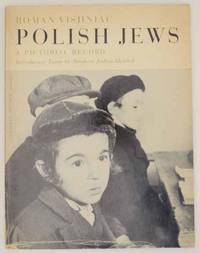
1972159043New York: Schocken Books 1972. First edition thus. Softcover. Vishniac's survey of the Jewish communities of Eastern Europe. Introductory essay by Abraham Joshua Heschel. Includes numerous black and white images. A very good copy in wrappers with some creasing to the base of the front cover and some other minor wear but internally a clean copy. Schocken Books unknown books
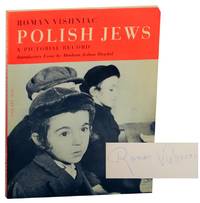
1972156332New York: Schocken Books 1972. Third printing. Softcover. Vishniac's survey of the Jewish communities of Eastern Europe. Introductory essay by Abraham Joshua Heschel. Includes numerous black and white images. A near fine copy in wrappers with some very minute wear. Signed by Vishniac on the title page. Schocken Books unknown books
18602741Columbus: Follett Foster and Company 1860. First edition. Original publisher's cloth binding with some rubbing to spine and extremities. First issue with all points as called for by Monaghan no line over the publisher's slug on title verso and the number 2 at the foot of page 17. Collates viii 268 pages: lacking front endpaper else complete. Some light scattered foxing as is common in American imprints of this era but in all a tight pleasing copy of this book documenting an important moment in American politics.<br/><br/>Documenting Lincoln and Douglas' rivalry for the 1858 U.S. Senate race this title captures an important moment of flux for American politics. Just beginning his political career the young Lincoln earned the Republican nomination right as the party was forming; and he already had proven himself "a leading figure because of his adroit and earnest dealing with the problem of slavery" Oxford Companion. One of his great strenghts was his eloquence -- something Lincoln put on full display in these debates against Douglas including the utterance of one of his most memorable lines that "A house divided against itself cannot stand." Though Lincoln lost the Senate in 1858 he had managed to develop a national reputation and in 1860 the year of this book's release would win the Presidency.<br/><br/>Monaghan 69. Follett, Foster and Company unknown books
1860RLINPOL00LRFollett Foster and Company 1860. Good. Lincoln Abraham and Stephen Douglas. Political Debates between Hon. Abraham Lincoln and Hon. Stephen A. Douglas in the Celebrated Campaign of 1858 in Illinois. Columbus Ohio: Follett Foster and Company 1860. Early printing: 2nd 3rd or 4th. 268pp. 8vo. Book condition: Good with moisture damage to covers and endsheets and light soiling to covers. Edges are rubbed slightly exposing boards at corners. Uniform foxing to text block with old library stamps on edges of text block and rear pastedown. Follett, Foster, and Company hardcover books
1860116741Columbus: Follett Foster and Company 1860. First edition second issue with the Table of Contents on page ii of "the most important series of American political debates" Howes L338. Octavo original publisher's brown cloth with gilt titles to the spine and elaborate blind stamping to the front and rear panels. In very good condition. Ownership name. Although the debates were originally performed during the Illinois Senatorial race in 1858 they were published when both men became presidential candidates in 1860. Douglas won the race for senator but the debates were his undoing in the presidential race as Lincoln reminded voters repeatedly of the inconsistency between Douglas' principle of "popular sovereignty" in which the new territories would individually determine the status of slavery and the Dred Scott decision in which the Supreme Court declared that slavery would not be excluded from the territories by Congress. As a result Douglas was too tolerant of slavery for many northerners and not vigorous enough for Southern Democrats. Somewhat surprisingly for an attorney Lincoln did not seek Douglas' permission to publish a book of their combined speeches although Douglas was later given the last-minute opportunity--he declined--to make corrections to his own remarks" Morris 121. Follett, Foster and Company hardcover books
186125613<p>An unusual and possibly unique Lincoln portrait above patriotic banners and a quotation from his first inaugural address.</p> <b>ABRAHAM LINCOLN. GABRIEL KAEHRLE.</b>Print. "Abraham Lincoln" with excerpt from First Inaugural Address ca. 1861-1864. 9¾ x 12 in.<p><b><br /></b></p><p><b>Complete Transcript</b></p><p> <i>ABRAHAM LINCOLN</i></p><p><i> SIXTEENTH PRESIDENT OF THE UNITED STATES</i></p><p><i>"In your hands my dissatisfied fellow-countrymen and not in mine is the momentous issue of Civil War. You have no oath registered in heaven to destroy the Government while I have the most solemn one to 'preserve protect and defend it.' The mystic chords of memory stretching from every battle-field and patriot-grave to every living heart in this broad land will swell the chorus of the Union when again touched as surely they will be by the better angels of our nature."</i></p><p><i>Extract from the closing paragraph of Lincoln's Inaugural Message March 4 1861.</i></p><p>A lithograph of this same Lincoln image retaining Kaehrle's signature was used in a jugate 1864 campaign illustration of Lincoln and Andrew Johnson published by H. H. Lloyd & Co. in New York.</p><p><b>Gabriel Kaehrle</b> is listed in an 1857 New York directory as an engraver and he illustrated books which were published in New York in 1860 and 1862.</p><p>Very rare and possibly unique. None in OCLC and no other examples traced.</p><p><b>Condition</b></p><p>Staining to edges shadow of former matting; professionally conserved.<br /></p> books
1896262839Chicago: Scott Foresman 1896. hardcover. good. Plates. viii 555pp. 2pp. of publisher's ads. 8vo maroon cloth lacks front flyleaf inner hinges strengthened spine sunned top margins lightly creased on pages 51-56 page 101 lightly soiled. Chicago: Scott Foresman 1896.<br/><br/> "Historically the most important series of American political debates." Howes L-338. Later edition of Monaghan I 69.<br/><br/> Scott, Foresman unknown books
1895RLINPOL00DGScott Foresman & Company 1895. Very Good. Lincoln Abraham. Political Speeches and Debates of Abraham Lincoln and Stephen A. Douglas 1854-1861. Douglas Stephen A. 1895: Scott Foresman & Company 1895. 555pp. Indexed. 8vo. Burgundy cloth with gilt titles on spine. Book condition: Very good; gentle bumping to edges; former owner's name written faintly on the front pastedown; endsheets split at hinges but hinges are sturdy and tightly bound with clean pages. Scott, Foresman & Company hardcover books
2015274N.P.: by the artist 2015. Original. Framed and matted. Fine. Lucas Richardson. Framed in black wood and matted in charcoal gray: overall size 18 1/2" x 15 1/2" / image displayed: 7 7/8" x 4 7/8". Lucas Richardson graduated valedictorian from DuCret School of Art in 2002. He has a double major in graphic design and fine art illustration. He continued to study with Peter Caras who had been instructed by Frank Reilley James Bama and Norman Rockwell. As a portrait artist Richardson has undertaken commissions in oil & charcoal mediums. He is also actively engaged in digital design. A STRIKING Portrait! by the artist unknown books
1952140938441London: Routledge & Kegan Paul Ltd 1952. First Edition. Very Good/Very Good. First edition first printing. Bound in publisher's green cloth with gilt stamping to spine. Very Good. Cloth lightly rubbed at extremities previous owner details and ownership stamp to front free endpaper and title page light ink underlining in text Else Near Fine. In a Very Good dust jacket unclipped though with revised price over-sticker; toning and edge wear with a short slightly open crease at the head of the rear spine joint. Routledge & Kegan Paul Ltd unknown books
1995289690Norwalk & Washington: Easton Press & Library of Congress 1995. pamphlet. near fine. Facsimile printing in brown satin and gilt-ruled leather clamshell boxes. 2 separate boxes. Norwalk & Washington: Easton Press & Library of Congress 1995. Near Fine.<br/><br/> Easton Press & Library of Congress unknown books
1971008089London: George Allen & Unwin 1971. 221p. b/w front. original grey cloth ex libris. George Allen & Unwin unknown books
1863013462Washington D. C.: Government Printing Office. Good. 1863. Hardcover. Recased in orange boards with title gilt on spine. Ex-library copy with rubber stamp on all edges and title page. All edges have moderate soiling and light wear. Light toning throughout text block. This book relates the status of Mexico during the second French Intervention and includes dispatches from various foreign emissaries to Secretary of State William Seward. At this time Mexican democracy was trying stay afloat as European powers tried establish a monarchy. Although President Lincoln sympathized with Mexico's plight the United States was in a Civil War of its own. ; Large 8vo 9" - 10" tall; 802 pp . Government Printing Office hardcover books
186325464<p>"<i>I esteem Gov. Francis Thomas as an able and very true man. I do not know that he agrees with me in everything—perhaps he does not; but he has given me evidence of sincere friendship & as I think of patriotism.</i>"</p> <b>ABRAHAM LINCOLN.</b>Autograph Letter Signed to Robert C. Schenck May 31 1863 Washington D.C. 1 p.<p><b><br /></b></p><p><b>Complete Transcript</b></p><p><i>Private</i></p><p><i>Executive Mansion</i></p><p> <i>Washington May 31 1863.</i></p><p><i>Major Gen. Schenck</i></p><p><i>Baltimore Md.</i></p><p> <i>I have been requested to say what I very truly can that I esteem Gov. Francis Thomas as an able and very true man. I do not know that he agrees with me in everything—perhaps he does not; but he has given me evidence of sincere friendship & as I think of patriotism.</i></p><p><i>Yours truly</i></p><p><i>A. Lincoln.</i></p><p><b>Historical Background</b></p><p>Lincoln had served in Congress together with fellow Whig Robert C. Schenck in the 1840s and made Schenck a Major General at the beginning of the war. Severely wounded at the Second Battle of Bull Run in August 1862 Schenck was given command of the Middle Department. He firmly supported the Unconditional Unionists from his headquarters in Baltimore and despite the necessity of tact in the politically sensitive border state of Maryland had little tolerance for middle ground.</p><p>In July 1861 Secretary of War Simon Cameron with the president's encouragement had authorized Thomas to raise four regiments of loyal citizens from western Maryland for the protection of the Chesapeake and Ohio Canal. A month later Thomas recommended and Lincoln endorsed three officers for the 1st Maryland Regiment Potomac Home Guard.</p><p>In early September 1862 Thomas sent Lincoln a lengthy private letter: "Our acquaintance is very limited…and it may be presumptuous in me to write this letter." Nevertheless he continued "In my humble judgment <u>all</u> the evils now threatening seriously the utter ruin of the country are to be traced to the error consumatted in the organization of your Cabinet. There is not so far as my knowledge extends at the head of any one of the Departments a single individual who has come into your Administration under the right influences…" "Now I have watched with the deepest anxiety" Thomas informed Lincoln "all or nearly all of your difficulties have their origin in the fact that you have Presidential aspirants in your cabinet and Presidential aspirants in your own party outside of your cabinet all of whom have their partisans in the Senate and House of Representatives." The "vast interests at stake" demanded that Lincoln reorganize his cabinet and announce his own candidacy for reelection.</p><p>Two months later Lincoln's cabinet crisis reached a boiling point when Radical Republican senators demanded Secretary of State William H. Seward's resignation. Lincoln called the senators to a meeting with every member of the cabinet except Seward who had offered his resignation. Lincoln asked if the cabinet had freely debated issues and offered input before important decisions were made. The cabinet agreed that they had. Chase who had painted a picture to the senators of Seward and Lincoln running roughshod over the cabinet was cleverly chastened and offered his resignation. Lincoln refused the resignations of Seward and Chase thus maintaining intact his now famous "team of rivals" and keeping the senate at bay.</p><p>Despite his criticism Thomas was also supportive. On April 23 1863 he was one of the speakers at a mass meeting of Unconditional Union men of Allegany County Maryland. Thomas "accorded to President Lincoln the purest motives and a patriotic determination to crush the rebellion and restore peace and prosperity to the country. He said that power and responsibility must rest somewhere and that he was willing to confide in the President and sustain him to the fullest extent in carrying out the measures adopted by Congress for prosecuting the war. He spoke of the emancipation proclamation of the President as a retaliatory measure for the confiscation acts of the southern conspirators and said it was a war measure calculated to subdue the rebels who had raised the standard of rebellion without any justifiable cause."</p><p>Despite the unsolicited advice and criticism Lincoln offered this honest testimonial. It isn't clear if this answered a request of Thomas or a mutual contact or if Lincoln wrote it to send Thomas with his own purpose in mind. In mid-April Schenck who had a reputation for ham-handed harshness ordered at least eight persons charged with "using treasonable language" or "disloyal practices" in Baltimore to be exiled to the South. Less than a week later he had two newspaper editors from smaller towns in Maryland sent South for "having published treasonable articles." On May 28 three days before Lincoln penned this letter Schenck and Maryland Governor Augustus W. Bradford visited Pennsylvania Governor Andrew G. Curtin in Harrisburg to discuss "the more effectual protection of the southern borders of Pennsylvania and Maryland against any further incursions of rebel cavalry." Schenck and the two governors then left for Washington. Within a month the entire Confederate Army of Northern Virginia was in Pennsylvania heading for a conflict at Gettysburg.</p><p>In mid-July 1863 a few weeks after writing this private letter Lincoln told his secretary John Hay that General Henry W. Halleck "thinks Schenck never had a military idea & never will learn one. however you may doubt or disagree with Halleck he is very apt to be right in the end."</p><p>Schenck resigned from the army in December 1863 after again winning election to Congress. On the other hand Lincoln maintained his trust of Thomas.</p><p>On July 5 1864 Confederate General Jubal Early crossed the Potomac River at Harper's Ferry with a corps of the Army of Northern Virginia aiming at Washington. General Lew Wallace's determined resistance near Frederick Maryland delayed the advance by a day providing defenders in Washington critical time to prepare. After the Confederate army withdrew into Virginia on July 14 Major General David Hunter ordered the provost marshal in Frederick to arrest "all male secessionists with their families" and force those who had given "undue sympathy" to the Confederates to sell their furniture for the benefit of Union families who had lost possessions during the incursion and to seize the sympathizers' houses for government use. By August 1 Major John I. Yellott had placed twenty-three southern sympathizers and their families under house arrest.</p><p>On August 3 Lincoln ordered the Secretary of War to suspend Hunter's order and have Hunter send a report of the charges against each individual. Hunter requested to be relieved of command a wish that was soon granted.On August 13 Thomas protested to fellow Marylander and Postmaster General Montgomery Blair writing that the arrests of "quiet inoffensive citizens who have not publicly given by words or acts encouragement to the enemy cannot but be mischievous." The President asked Thomas to investigate.</p><p>In September Thomas reported back. With the exception of two already discharged and two others charged with "a grave offence" who "ought to have an opportunity to establish their innocence" Thomas recommended that the President order the release of all the others on the list. Thomas followed up later that year reporting that specific charges had been made against only John W. Baughman an editor of the <i>Republican Citizen</i>newspaper in Frederick who had been sent South and against John Ruck and Isaack Ruck who were like the others on the list still under arrest at their homes in Frederick. On January 21 1865 Lincoln ordered all but Baughman discharged.</p><p>Lincoln's unmatched ability to take advice from all sides and to work with capable men whose own ambitions sometimes conflicted with Lincoln's views is reflected in our letter.</p><p><b>Robert C. Schenck</b> 1809-1890 was born in Ohio and graduated from Miami University in 1827. He received a master's degree in 1830 studied law under Thomas Corwin and gained admission to the bar in 1831. He moved to Dayton Ohio and opened a successful law practice. After serving in the state legislature he represented his district in Congress from 1841 to 1851 when President Millard Fillmore appointed him as U.S. Minister to Brazil. Schenck served there until 1853. In 1859 he gave perhaps the first public endorsement of Lincoln for the Presidency in a speech in Dayton. At the beginning of the Civil War Lincoln commissioned Schenck as a brigadier general and he served in both Battles of Bull Run and in the 1862 Valley Campaign. He was wounded at the Second Battle of Bull Run and held an administrative post in Maryland while recovering. He resigned his commission in December 1863 after election to Congress where he served again until 1871. President Ulysses S. Grant appointed him as U.S. Minister to Great Britain a position he held until 1876 though his involvement in an American mining scandal left him thoroughly discredited.</p><p><b>Francis Thomas</b> 1799-1876 was born in Frederick County Maryland attended college in Annapolis and was admitted to the bar in 1820. He began a practice in Frankville in western Maryland and served in the state legislature in 1822 1827 and 1829. From 1831 to 1833 he served in the U.S. House of Representatives. Thomas served as governor of Maryland from 1842 to 1845 but his term and political future was marred by his public and contentious divorce from his much younger wife Sally Campbell Preston McDowell the daughter of the governor of Virginia.Thomas was a strong opponent of slavery which was unusual in a border state like Maryland. Defeated for reelection in 1844 he served in the state constitutional convention of 1850. He was again elected to Congress in 1860 serving until 1869 as a Unionist an Unconditional Unionist and then a Republican. From 1870 to 1872 he was collector of internal revenue for Maryland and then U.S. Minister to Peru from 1872 to 1875. He was killed when struck by a locomotive near his estate in Frankville.</p> books
186536639New York 1865. Elephant Folio. 8pp. Each page printed in six columns. Uncut at top edge. Very Good. A contemporary hand has written in pencil at the top blank margin "His last Proclamation. Keep this Paper."<br/><br/> This was Lincoln's "Last Public Address" Abraham Lincoln Online. This issue of the Times appearing the following day is surely a candidate for its earliest printing. His Speech discloses Lincoln's most recent thoughts on Reconstruction the War having virtually ended by the surrender of Lee's Army at Appomattox Court House on April 9. Reconstruction he says is "fraught with great difficulty. We simply must begin with and mould from disorganized and discordant elements. Nor is it a small additional embarrassment that we the loyal people differ among ourselves as to the mode manner and means of reconstruction."<br/> Lincoln emphasizes his flexibility. He disclaims any intention to insist upon a single comprehensive plan. He makes clear that "the Executive claimed no right to say when or whether members should be admitted to seats in Congress" from the rebellious States. He remarks that he has never pronounced on the interesting legal question "whether the seceding States so called are in the Union or out of it." Such an issue has no practical significance. "We all agree that the seceded States so called are out of their proper relation with the Union; and that the sole object of the government civil and military in regard to those States is to again get them into that proper practical relation." Lincoln will act as circumstances require the only criterion being whether the proposed policy will expedite that "proper practical relation." It is obvious that Lincoln had he lived would have been much more successful than his dogmatic and inflexible successor at guiding Reconstruction.<br/> This issue treats many other issues arising from the War's end including the topic "What shall be done with Jeff. Davis unknown books
18642547081864. very good-. This historic and rare black printed broadside presents the platforms of both parties the Republicans having convened in Baltimore in June and nominated Abraham Lincoln for President and Andrew Johnson for Vice President and the Democrats having convened in Chicago in August and nominated George B. McClellan for President and George H. Pendleton for Vice President. This copy measures 29 x 23 cm is double columned and with the imprint "For sale by all News Agents. Price $1 per 100." Very light foxing at the bottom margin more visible on the verso. Fraying at the margins as usual. Sabin 63348 Exceedingly scarce.<br/><br/> unknown books
1566216th President of the United States. Original Lincoln Union Presidential Ticket dated November 8 1864. A Morgan County Ohio Union Presidential Ticket for the 1864 election listing Abraham Lincoln for President and Andrew Johnson for Vice President together with state electors and local candidates 3 "x 7". Patriotic motif depicts Columbia with a sword labeled "Union." In excellent condition. unknown books
15858Lincoln Abraham Montgomery County Presidential Ticket Election November 8 1864 for President Abraham Lincoln of Illinois. For Vice President Andrew Johnson of Tennessee. At head: "The Union:--It must and shall be Preserved." Dayton OH 1864. <br/><br/>Small multi-colored broadside 4.5" x 8.5" inches. Printed with blue and red inks on waxed cardstock. With a dramatic illustration of the Screaming Eagle wings spread sitting atop crossed flags with drums bugle cannons weapons and other military motifs. The text centered beneath the illustration is flanked on either side by an American flag; an eagle in red is beneath the text. Some spotting small chip to lower left margin with no loss of text. A very good memento of Lincoln's first successful presidential campaign. unknown books
186136386Philadelphia: Published by F. Bouclet 1861. Rare beautifully colored 20" x 25-3/4" lithograph printed on wove paper titled "Presidents of the United States". Displays all the Presidents through a beardless Lincoln surrounding a vignette of Lady Liberty the American eagle a steamboat and the Capitol the dome complete as anticipated though still under construction. Published by F. Bouclet and lithographed by A. Feusier. In superb condition with just a hint of toning from previous framing. Fine.<br/><br/> "A large patriotic print probably issued around the time of Abraham Lincoln's inauguration. Columbia stands before the U.S. Capitol holding a shield and a staff with a liberty cap. On her brow she wears a laurel wreath with a single star. Beside her is an eagle holding a streamer with the motto "E Pluribus Unum." A steamship is visible in the background left. The central scene is framed by oval portraits of the first sixteen presidents of the United States with George Washington at the top and a beardless Abraham Lincoln at the bottom" Reilly.<br/> The print "commemorates Lincoln's election and recognizes the challenges and opportunities facing the 16th president. In this image a portrait of Lincoln completes an unbroken ring of portraits depicting the 15 presidents who preceded him. The illustration calls to mind a quote from Lincoln's first inaugural 'Perpetuity is implied if not expressed in the fundamental law of all national governments'. By commemorating Lincoln's election and illustrating the troubled and complex scene he faced this chromolithograph encapsulates the spirit of Lincoln's presidency" Mast 'A Closer Look at Presidents of the United States 4 President Lincoln's Cottage page 2 2009. <br/>Reilly 1861-13. OCLC 41119329 2- Lib. Cong. MN Public School District as of November 2019. The print is also included in the Jay Last Collection at the Huntington. Published by F. Bouclet unknown books
186335588Auburn N.Y. 1863. Broadside 8" x 12-1/4". Very Good.<br/><br/> Congressman Pomeroy of Auburn who represented New York in Congress during the Civil War years and early Reconstruction has high praise for Colonel Clark serving on the staff of General Banks and recently wounded in the advance on Port Hudson. In the earliest days of the War during the Baltimore disorders he "mingled during the day and following night with the populace and rioters gathered all possible information and on the following morning returned to Washington and laid the information before the military authorities. Communications with Annapolis being cut off he accepted the hazardous position of bearer of dispatches from the War Department to Gen'l Butler and of the seventeen messengers sent on that mission was the only one who succeeded in reaching his destination without arrest and that was accomplished only by a night march on foot of twenty-five miles in a country with which he was unfamiliar and by swimming the Patuxent within sound of the voices of the enemies sentinels." <br/>OCLC 768761257 1- Allen Cy Pub. Lib. as of January 2019. unknown books
1864WRCAM55254N.p. perhaps Virginia 1864. 3pp. on a single folded sheet. with: OATH OF ALLEGIANCE. N.p. perhaps Harper's Ferry Va. 1864. Single sheet 3 x 7 3/4 inches. The OATH affixed to a partial manuscript ledger report recording lost military stores for an unidentified unit in 1863 which is itself glued to the verso of the last blank page of the Amnesty Proclamation. Minor toning light foxing some wrinkling. Overall very good. In a cloth chemise and green half morocco and cloth slipcase spine gilt. An exceedingly rare separate printing - perhaps by a military field press - of President Abraham Lincoln's December 1863 presidential proclamation offering amnesty to citizens of the Confederacy providing they take an oath that they "will abide by and faithfully support all proclamations of the President made during the existing rebellion having reference to slaves" i.e. the Emancipation Proclamation. When the number of persons in any state taking the oath reached ten percent of the number of voters in 1860 this group of loyal voters could form a state government that could be recognized by the President. The Amnesty Proclamation was issued with President Lincoln's third Annual Message to Congress i.e. State of the Union Address on December 8 1863. It was appended per the language in the title here to the official printing of that address but also printed separately. <br> <br> The present printing almost certainly executed in the weeks after Lincoln's State of the Union was likely hastily composed from the text of the official printing of the proclamation. The work carries no imprint information of any kind and bears the hallmarks of a military field press printing. <br> <br> Toward the close of 1863 with the Confederate Army in full retreat discussions in Congress centered on how to restore the Southern states to the Union. "The crisis which threatened to divide the friends of the Union is past" announced Lincoln. Now it was the duty of Congress to ensure that all citizens in the South regardless of race were guaranteed the equal protection of the law. A number of competing proposals emerged from deliberations but in the end during his message to Congress on Dec. 8 1863 Lincoln declared reconstruction of the South a wholly executive responsibility and "offered 'full pardon.with restoration of all rights of property except as to slaves' to all rebels who would take an oath of future loyalty to the Constitution and pledge to obey acts of Congress and presidential proclamations relating to slavery" Donald p.471. <br> <br> Those excluded from taking the oath were the highest ranking members of the Confederacy - government officials judges military and naval officers above the rank of army colonel or navy lieutenant former congressmen and "all who have engaged in treating colored persons or white persons otherwise than lawfully as prisoners of war." Lincoln further encouraged the southern states to make provisions "in relation to the freed people of such State which shall recognize and declare their permanent freedom provide for their education and which may yet be consistent as a temporary arrangement with their present condition as a laboring landless and homeless class." <br> <br> "Lincoln indicated that this was only one plan for reconstructing the rebel South and while it was the best he could think of for now he would gladly consider others and possibly adopt them. He might even modify his own classes of pardons if that seemed warrantable. Afterward almost everybody but die-hard Democrats seemed happy with the plan" Oates p.371. <br> <br> The proclamation is accompanied by a partially-printed OATH OF ALLEGIANCE dated 1864 and datelined Harper's Ferry Virginia. The oath requires the taker to "solemnly swear that I will support protect and defend the Constitution and Government of the United States against all enemies." It is signed in type by Henry A. Urban Lieutenant and A.D.C. Aide-de-Camp. The oath is printed with a blank space for the name of the person taking the oath and the date. There is also a space for people who know the oath-taker and "certify on honor that we know Mr. blank to be a true and loyal man to the Federal Government." The OATH is affixed to a partial manuscript ledger report recording lost military stores for an unidentified unit in 1863 <br> <br> This printing of the Amnesty Proclamation is just as interesting as the government broadside printing or the first pamphlet printing as this edition would have also been used in the field by Union troops encountering Confederate rebels. The composition of the beginning of the seventh paragraph is consistent with the first pamphlet printing of the Amnesty Proclamation Monaghan 191 and not the broadside printing. The text here begins "Therefore I Abraham Lincoln."; in the broadside printing the "Therefore" is present at the end of the preceding paragraph. The simple and somewhat loose execution of the composition seen here is consistent with field press printings as is the lack of an imprint of any kind. Perhaps this simple production was intended for Union troops to literally hand to Confederate soldiers to read. The presence of the portion of the ledger and the Oath of Allegiance lends credence to the notion that this edition of the Amnesty Proclamation was produced for use by the military. <br> <br> This printing of the Amnesty Proclamation is not in Monaghan OCLC nor in any reference work we could find. In fact we could find no other three-page editions of the Amnesty Proclamation at all. Surely printed in small numbers to begin with it is perhaps a unique surviving example. MONAGHAN 191 ref. SABIN 41162 note. David Herbert Donald: LINCOLN New York. 1995 p.471. Stephen B. Oates: WITH MALICE TOWARD NONE: A LIFE OF ABRAHAM LINCOLN New York. 1977 p.371. hardcover books
186564322Davenport Iowa: Designed by W.H. Pratt and lithographed by A. Hageboeck 1865. Broadside. 38 x 31 cm. Several small tape repairs on verso several untaped tears on edges. A calligraphic portrait memorial of Lincoln using shading to form his likeness with the text of his Emancipation Proclamation. "Designed and written by W. H. Pratt and printed in Iowa the state that sent the most soldiers per capita to the front in the Civil War"- EBERSTADT 40. <br/><br/> Designed by W.H. Pratt and lithographed by A. Hageboeck unknown books
1802WRCAM50572Hartford: John Babcock 1802. 166pp. Dbd. Faded library stamp and light foxing to titlepage. Scattered toning throughout else very clean. Very good. A pamphlet by this staunch Connecticut Republican discussing the continued practice of the dominance of religious institutions in New England government and the consequences in respect to the authority of the Federal government and the right to freedom of religion as put forth by the First Amendment. SHAW & SHOEMAKER 1907. SABIN 5597. John Babcock unknown books
1826705411826. COWLEY Abraham. PROSE WORKS OF ABRAHAM COWLEY ESQ. Including his essays in prose and verse. London: William Pickering 1826. Octavo large paper copy; 4xliii238 pp. Quarter bound in blue leather with blue cloth sides maroon lettering-piece and gilt-stamped fleurons and decorative rules at spine marbled endpapers t.e.g. Printed on quality paper but with intermittent light foxing. Light rubbing at perimeters and to lower board but still a handsome copy. Very good plus. unknown books
1603299062Antwerp: Abraham Ortelius 1603. unbound. Map. Engraving with hand coloring Image measures 14" x 18 3/4". Staining toning and chips to margins but otherwise is good condition.<br/><br/> Beautiful early map of Provence and part of Languedoc from the Rhone river to Monaco. Strap work cartouche and scale with two ships complete the design. Abraham Ortelius 1527--1598 a Flemish cartographer and geographer is widely regarded as one of the important and influential cartographers in history. He is known for his "Theatrum Orbis Terrarum" which was the first modern atlas. Van Den Broecke 47<br/><br/> Abraham Ortelius unknown books