773 résultats
1851168258London : Privately printed 1851. First Edition. Hardback. Finely bound in modern aniline calf over marble boards. Gilt cross-bands with a dark morocco gilt-blocked label. An exceptional copy - scans and additional bibliographic detail on request.; 8vo 8"" - 9"" tall; 295 pages; Physical desc.: 295 p. ; 23 cm. Subject: Jesus Christ - Criticism interpretation etc. Jewish. Christianity - Controversial literature. Judaism - Apologetic works. Referenced by: Vinograd v.2 p. 374; London 503. London : Privately printed hardcover
1885788101885. NEW YORK REGIMENTAL. PALMER Abraham John. The History of the Forty-eighth Regiment New York State Volunteers in the War for the Union. 1861-1865. Brooklyn NY: Veteran Association of the Regiment 1885. 1st ed. xvi 314 2 pp. Frontis. illus. portraits maps. Orig. gilt pictorial cloth. Fine. Nevins I p.141. Dornbusch I NY-327. unknown
1857JD1214Hayes & Zell 1857. hardcover. Acceptable. 0x0x0. 1857; Boards missing disbound housed in plain paper wrap; wear and discoloration around edges; tears along edges of housing; 8vo 7 3/4" to 9 3/4" tall; pages are toned; 281 pages. Photos available upon request. Hayes & Zell hardcover
1865144652Amsterdam Gebroeders Binger 1865 1865. First Edition. Hardback. Fine copy in the contemporary cloth with gilt-blocked morocco label. Slightest suggestion only of dust-dulling to the panel edges. Remains particularly well-preserved overall; tight bright clean and strong. ; 314 pages; Description: vii-viii 314 iv p. 20 cm. Subjects: Bills of lading --Netherlands. Amsterdam, Gebroeders Binger [1865] hardcover
18345037Half brown morocco; ruled raised bands marbled boards. Mouradgea d'Ohsson was a Swedish historian and diplomat of Armenian descent. This important work is a large expansion of his 1824 publication which was the first serious study of Genghis Khan. Kenneth Meyer Setton A History of the Crusades notes "among the general histories of the Mongols d'Ohsson remains unequaled. Avowedly or tacitly most later works rely on it." Two folding genealogical charts; large 1824 folding map of Asia in the thirteenth century to rear of volume four. Previous owner's bookplates removed from front pastedowns. A nice wide-margined set many pages yet uncut in a sound period binding.; lxviii452; 651; 6241; 774.; 8vo 22 x 15 cm; All shipments through USPS insured Priority Mail. Freres van Cleff hardcover books
186174763-A-66991Amsterdam: M.L. Ed. Lenting/C.A. Chais van Buren/Fréderic Muller 1861-1874. 4 volumes later binding cloth spines and thick boards original fronts glued-on. Verso front boards show an ex libris from P.J. Blok Dutch historian 1855-1929. -Covers toned pages browned with some foxing to the ends of the pages. Overall in good condition. M.L. Ed. Lenting/C.A. Chais van Buren/Fréderic Muller hardcover
18345037<p>Half brown morocco; ruled raised bands marbled boards. Mouradgea d'Ohsson was a Swedish historian and diplomat of Armenian descent. This important work is a large expansion of his 1824 publication which was the first serious study of Genghis Khan. Kenneth Meyer Setton A History of the Crusades notes "among the general histories of the Mongols d'Ohsson remains unequaled. Avowedly or tacitly most later works rely on it." Two folding genealogical charts; large 1824 folding map of Asia in the thirteenth century to rear of volume four. Previous owner's bookplates removed from front pastedowns. A nice wide-margined set many pages yet uncut in a sound period binding.; lxviii452; 651; 6241; 774.; 8vo 22 x 15 cm; All shipments through USPS insured Priority Mail.</p> Freres van Cleff hardcover
1835PS8051Nyon and Paris: M. Giral Prelaz 1835. HB. Half green cloth over marbled boards gilt lettering on spine 8vo. Volume I 621 pp. Volume II 555 pp. First two volumes of 7 in all these are Volumes I and II of the first part originally published in 1727-28 covering the years 1516 to 1536. Final three volumes of this edition covering the years 1536-1566 were published in 1838 after the discovery of additional manuscript material in a Swiss library. Books show minor edge wear no marks in text bindings solid. Book condition VG. M. Giral, Prelaz hardcover
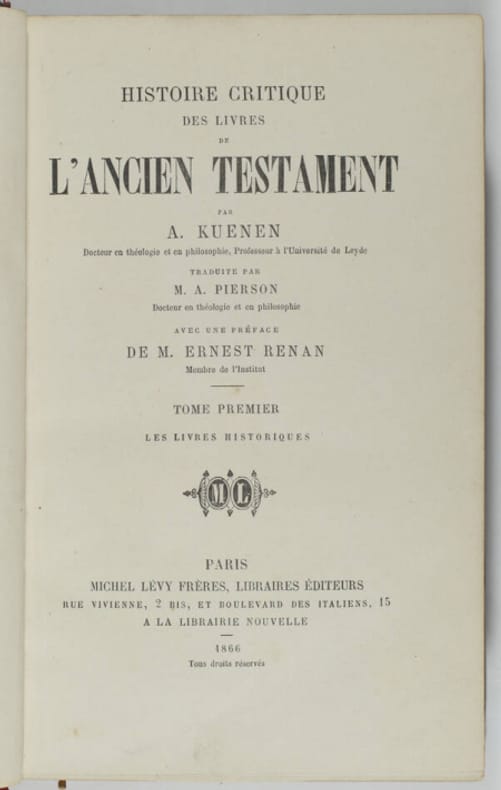
186610157Paris, Michel Lévy frères, 1866-1879. 2000 g 2 volumes in-8, demi maroquin rouge à coins, dos ornés à faux nerfs,tranches peignées, [2] ff., xxiv-602 pp.; [2] ff., iii-672 pp.. Traduit par A. Pierson, docteur eh théologie et en philosophie. Avec une préface de d'Ernest Renan, membre de l'institut. Abraham Kuenen était docteur en théologie et en philosophie, et professeur à l'université de Liège. Première traduction française, assez rare. Ex-libris du prince Roland Bonaparte. Petits frottements, coins émoussés, quelques rousseurs. . (Catégories : Religion, Histoire, )
185042526Jenae : prostat in Libraria Maukiana 1850. 240x160mm. XXXII- Basil-Halbledereinband. Plats papier marbrÂŽ. Auteur titre et ornementation dorÂŽs au dos. Rousseurs. DÂŽchirure de 3 cm au niveau de la charniÂre infÂŽrieure. 1285 prostat in Libraria Maukiana unknown
185013513Purewa: Printed at St. John's College Press. Very Good- with no dust jacket. 1850. First Edition. Softcover. No signatures. Upper corners of first few leaves slightly creased and dog-eared. Some light foxing. ; Part Two of Lessons on the Church Catechism. Title imprint has a date of 1850 but this was not actually published until 1852. 26 pages. Stitched into original plain light brown paper wrappers. Page dimensions: 179 x 116mm. Text in Maori. Bibliographical references: BIM 316 - "5003 copies were produced between 17 May and 2 July 1852"; Williams 199. ; 12mo . Printed at St. John's College Press paperback
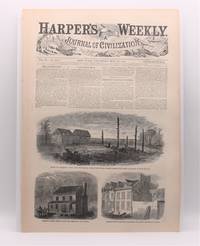
1865W2380New York: Harper's Weekly 1865. 16 pages. Large folio 16 inches by 11 1/4 inches. Original complete issue of Harper's Weekly. Harper's Weekly was the most important American pictorial newspaper in the 19th century. Because the original wood engravings in virtually every issue are highly collectible complete issues are becoming more difficult to obtain. The issue offered here focuses on the events following the assassination of Lincoln. On the front page are articles on the assassination and the funeral along with three original wood engravings: one showing the ruins of the Garrett barn where John Wilkes Booth was shot; another showing the house where Booth died; and a third engraving of the house of Booth's co-conspirator David Herold. On the interior are multiple engravings of various Lincoln funeral sites. Among the unrelated engravings is the double-page centerfold by Thomas Nast entitled "Palm Sunday"--one side portraying the arrival of Jesus in Jerusalem and the other side Lee surrendering to Grant. This issue of Harper's Weekly is disbound from an annual volume and has the usual sewing holes along the binding edge but it is still in very good condition: clean and bright with minimal toning of the paper. Note: we have available more than 500 complete issues of Harper's Weekly as well as thousands of individual wood engravings. Please inquire if you are looking for specific items. First Edition. Paperback. Very Good. Elephant Folio - over 15" - 23" tall. Magazine. Harper's Weekly Paperback
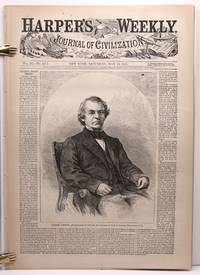
1865W2422<p>New York: Harper's Weekly 1865. 16 pages. Harper's Weekly was the most important American pictorial newspaper in the 19th century. Because the original wood engravings in virtually every issue are highly collectible complete issues are becoming more difficult to obtain. The issue here focuses on Lincoln's New York City funeral procession and the capture and killing of John Wilkes Booth. The front page features a wood engraving of the newly sworn-in President Andrew Johnson. It is based on a photograph by Alexander Gardner. The centerfold is a double-page wood engraving captioned "President Lincoln's Funeral--Procession in New York City." It is based on a photograph by Matthew Brady. Other wood engravings include "Sergeant Boston Corbett" a portrait based on a Brady photograph of the man who shot Booth; "Planning the Capture of Booth and Harold" based on a Gardner photograph; "Booth's Capture--The Assassin Brought to Bay" a recreated view of Booth in the burning barn in which he was killed; "President Lincoln's Funeral--Removal of the Body from the City Hall to the Funeral Car New York"; and "Post-Mortem Examination of Booth's Body on Board the Monitor 'Montauk'." There is text accompanying most images. Especially striking is the lengthy description of the interaction between Booth and his pursuers before he was killed. This newspaper is disbound from an annual volume and has the usual sewing holes along the binding edge but it is still in very good condition: clean and bright with minimal toning of the paper; a long but neat closed tear along the centerfold line of the double-page engraving; a one-inch closed tear limited to the blank margin of the front page; and a 1.5 inch by 3.5 inch triangular chip out of a corner of the last leaf primarily impacting one word in the title of an advertisement. Note: we have available more than 500 complete issues of Harper's Weekly as well as thousands of individual wood engravings. Please inquire if you are looking for specific items. . First Edition. Paperback. Very Good. Elephant Folio - over 15" - 23" tall. Magazine.</p> Harper's Weekly paperback
1827F63BZTTH4G5BGroningen 1827. 8vo. R.J. Schierbeek Contemporary boards sewn on 2 tapes and cut flush covered with red sprinkled paper rebacked with brown paper tape. With a lithographed folding plate and numerous letterpress tables numbered I-VI but some spread over several pages. 10 2 42 66 pp. 3 1 ll. Very rare first edition of a guide introducing Hazewinkel's method of calculating latitude which was subsequently implemented as the standard method in the national Dutch marine and remained in use until the end of the 19th century. This method by Abraham Cornelis Hazewinkel 1772-1842 a ship's captain who established a Dordrecht school for training sailors in 1817 was also invented simultaneously but independently by the Dutch mathematician Rehuel Lobatto 1797-1866 and is known as the Lobatto-Hazewinkel method. It replaced the longer method of Cornelis Douwes introduced in the late 18th century. An equally rare second edition published in 1839 was reprinted in facsimile in 1992.With a library stamp on title-page some occasional foxing one leaf slightly soiled in the lower margins binding slightly rubbed and rebacked with the top of the spine torn. Good nearly untrimmed copy with most of the deckles intact.l Bierens de Haan 1943; Cat. NHSM p. 687; Crone Library 807 cf. pp. xlvii-xlviii; Maritieme Gesch. der Nederlanden III p. 216; Picarta 2 copies; Saakes VIII pp. 371-372; WorldCat same 2 copies. ABE CAT Astronomy & Cosmography hardcover
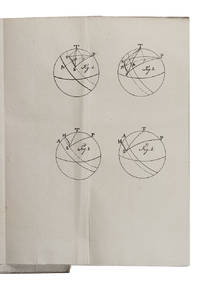
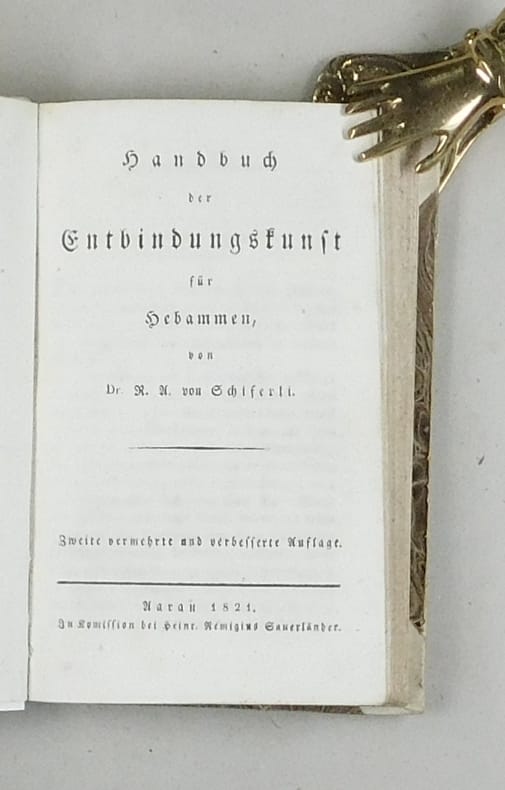
182159515BBAarau, Sauerländer. 1821. 8°. 214 S., 1 S.n.n. Druckfehler. Halbpergamentband der Zeit.
188230861882 1882 Imprimerie Alphonse Le Roy Fils, Rennes, 1882. In-4 demi basane rouge, dos lisse orné de filets, XIX et 481 pages. Ors ternis au dos, plats frottés, nombreux ressauts, gardes faibles. Exemplaire de travail.
184527749Lindau / Augsburg, Johann Thomas Stettner / Matth. Rieger'sche Buchhandlung, 1845. Kl.8°, ca. 17 x 10,3 cm, 606 S., 568 S., grüner Farbschnitt, Halblederbände der Zeit. (Abraham a St. Clara sämmtliche Werke, 15. und 16. / 17. und 18 Band in zwei Büchern) Band II mit handschriftlichem Inhaltsverzeichnis. Inhalt: Erste Lection von dem Glauben / Tugend der Hoffnung / Von der Barmherzigkeit Gottes / Von der Hoffart / Von der Verachtung der Welt // Von der geistlichen Vollkommenheit / Von der Handarbeit / Von dem besonderen Gerichte / Von der Verharrung im Guten / u.v.a. Vorsatz mit Namensausschnitt, vereinzelt Anstreichungen, ein Blatt mit kleinem Randabriss, kein Textverlust, wenige Seiten mit Eselsohren und Quetschfalten. Einbände berieben, im Vorsatz nachgeleimt.
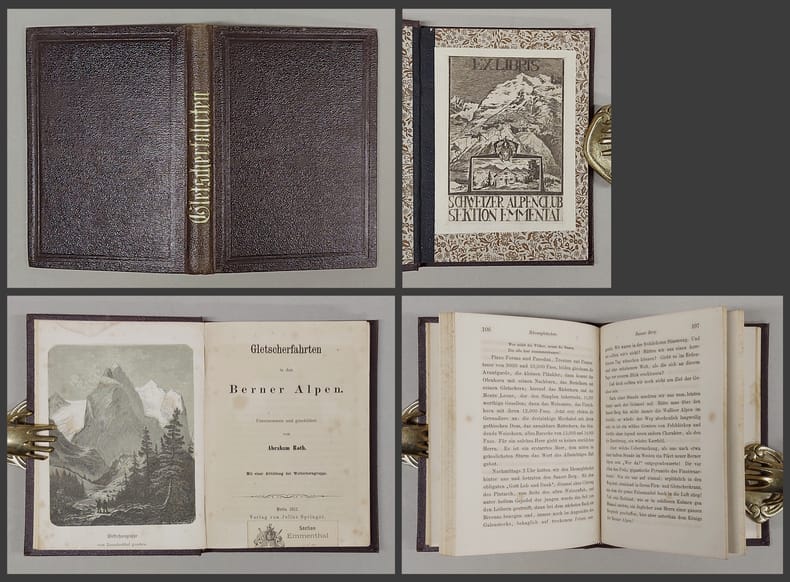
186159410BBBerlin, Verlag von Julius Springer. 1861. 15,5x11,7 cm. VI S., 1 n.n. Bl. Inhalt, 175 S. Mit Abbildung der Wetterhorngruppe als Frontispiz. Leinwandband der Zeit mit goldgeprägtem Rückentitel.
1863021633New York City: New York Daily Tribune. Good with no dust jacket. 1863. Newspaper. Original issue of the New York Daily Tribune November 21 1863 featuring a very early printing of Abraham Lincoln's Gettysburg Address. Paper measures 15 5/8 x 19 7/8 inches. Typical disbound tears to spine not intruding into text save for a couple tears to final leaf but no loss of text. Uneven trimming to bottom edge with loss of a line of text on several pages. Front page headlines include "Entire Success of the Rio Grande Expedition" "Siege of Charleston" and "From the Army of the Ohio". The report from the Gettysburg Ceremonies and Consecration of the National Cemetery fill three columns on page 2. Lincoln's short speech was preceded by several other orators including Edward Everett's ninety minute speech. Lincoln's 271 word speech remains one of America's best known and memorable speeches soon to be published in newspapers throughout the United States. Some Eastern papers published the speech on November 20th. Versions printed on the 20th are the Addresss first appearance and are highly desirable as are other early printings such as this copy. ; 12 pp . New York Daily Tribune unknown books
186423516Boston: Wright & Potter 1864. First Thus. Octavo 23.5cm.; publisher's drab printed wrappers; 88cxpp.; large folding map of Gettysburg bound in. Some shallow chipping and small losses to wrapper extremities none approaching text dampstaining most heavily so to rear cover title page and preliminary leaves else Near Very Good. Includes the third or fourth earliest appearance in book-form of Lincoln's Gettysburg Address printed here on p. lxxii simply as "Dedicatory Speech." See MONAGHAN p. 48. Wright & Potter unknown books
185190879BB1851 . Bern: Staempflische Verlagshandlung 1851. 8°. 2 Bl. 223 S. Interimsbroschur Seitenecken geknickt; angestaubt; stockfleckig Text in Fraktur. unknown
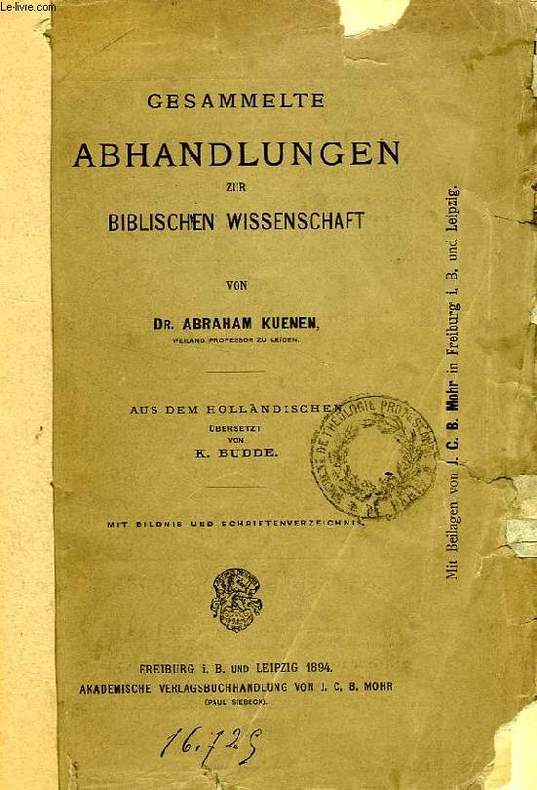
1894RO40174751Akademische Verlagsbucchhandlung von J. C. B. Mohr. 1894. In-8. Broché. Etat d'usage, Plats abîmés, Coiffe en tête abîmée, Intérieur acceptable. 511 pages. Photo-gravure en noir et blanc en frontispice (portrait). Papier annoté et étiquette de code collés sur le dos. Tampons et annotations de bibliothèque sur le 1er plat et en page de titre. Manques sur les bords des plats.. . . . Classification Dewey : 430-Langues germaniques. Allemand
186521167Washington: War Department Adjutant General's Office 1865. Very good. Single leaf 5 1/4 x 7 1/8 inches possibly originally issued with two leaves the second being blank. 1.5 pages of text signed in print by Lincoln William Seward and E.D. Townsend. Faint folding creases; near fine. Issued March 11 1865 this was the second of two general amnesties issued by the President during the Civil War. These proclamations were intended to bring deserters and draft evaders back into the fold and encourage loyalty to the Union. The first issued on March 10 1863 gave all deserters a full pardon with no consequences if they returned to their units by April 1. Those who did not would have their citizenship revoked and were subject to court-martial with penalties as severe as death. This second proclamation offered the same basic terms but allowed deserters 60 days to return to duty. War Department, Adjutant General's Office unknown books
18661009808vo one sheet printed on both sides. Even toning and aging small closed tear to the upper margin; otherwise very good. This is a rather scarce government document that informs the military that the "Thirteenth Amendment" has passed and slavery is officially abolished. Article XIII states "Neither slavery nor involuntary servitude except as a punishment for a crime whereby the party shall have been duly convicted shall exist within the United States or any place subject to their jurisdiction." This document is signed in type by William H. Seward 1801-1872 as the Secretary of State. Congress would follow with a Civil Rights Act of 1866 to give African Americans the same rights as all citizens but this small printed document presenting the essence of the "Thirteenth Amendment" is an important piece of history. ANB. books
1862WRCAM54585Washington D.C.: War Department Adjutant General's Office 1862. Three volumes with over 300 individual imprints. 12mo. Uniformly bound in contemporary three- quarter roan and marbled boards gilt leather labels. Wear to leather and edges boards somewhat rubbed front hinges tender. Contemporary ownership inscriptions and binder's tickets on front endpapers of second and third volumes; later bookplate on front pastedown of first volume. Light toning in places otherwise internally clean. Very good. A uniformly-bound set of General Orders issued by the Adjutant General's Office of the War Department in Washington D.C. previously owned by Brig. Gen. John Pope Cook. The orders cover 1861 and 1862 and comprise a nearly complete run of orders for the Union Army during the first two years of the Civil War. Undoubtedly the most significant General Order in this collection is a preliminary printing of the Emancipation Proclamation. <br> <br> A handful of the orders are signed in ink by the various adjutant generals. The Emancipation Proclamation bound in the third volume is as follows: <br> <br> GENERAL ORDERS No. 139. THE FOLLOWING PROCLAMATION BY THE PRESIDENT IS PUBLISHED FOR THE INFORMATION AND GOVERNMENT OF THE ARMY AND ALL CONCERNED: BY THE PRESIDENT OF THE UNITED STATES OF AMERICA A PROCLAMATION caption title. Washington D.C.: War Department Adjutant General's Office ca. September 24 1862. 3pp. This work is one of the earliest printings of the Preliminary Emancipation Proclamation issued to regimental commanders in the field during the Civil War in the week after President Lincoln's official manuscript version was finished. Here the third paragraph rings out with Lincoln's timeless words: "That on the first day of January in the year of our Lord one thousand eight hundred and sixty- three all persons held as slaves within any State or designated area of a State the people whereof shall then be in rebellion against the United States shall be then thenceforward and forever free." <br> <br> Following the Seven Days Battle and Gen. McClellan's retreat from the Peninsula at the end of June 1862 President Lincoln realized that there would be no early end to the war and found himself "as inconsolable as it was possible for a human to be and yet live." Anxious for news from the army and needing to escape the constant interruptions at the White House he frequently visited the telegraph office in the War Department building to await dispatches. It was during one such visit early in July that he asked the chief of the telegraph staff Maj. Thomas Thompson Eckert for some paper to "write something special" and began the first draft of the Emancipation Proclamation completing it in a few weeks. <br> <br> Lincoln had long hoped to resolve the slavery issue through a congressional act of emancipation compensating slave owners for their loss of "property" but that approach was roundly rejected by representatives from the border states leaving the President who had decided upon the necessity of emancipation with a presidential proclamation as the only option. The extraordinary document he conceived would announce the liberation on January 1 1863 of all slaves in those states still in rebellion against the Union and promised compensation to slave owners in those states that returned to the fold before that time if they adopted "immediate or gradual abolishment of slavery." This proclamation would be followed by a final proclamation issued on the 1st of January identifying those states still in rebellion and confirming the liberation of all slaves therein. <br> <br> On Tuesday July 22 Lincoln presented his draft to the Cabinet telling them that he had resolved firmly upon the course of action it specified and asking them not for advice but suggestions. The only observation he had not anticipated came from Secretary of State Seward who proposed that it might be best to wait for a military victory before issuing the Proclamation as it could otherwise seem like "the last measure of an exhausted government." Immediately recognizing the wisdom of the suggestion Lincoln held back. On September 17 after an anxious wait of nearly two months he received the victory he needed at the bloody Battle of Antietam. Completing his final draft Lincoln presented it to his cabinet for refinement on September 22. Following the meeting Seward took the amended draft with him to the State Department where a formal manuscript copy was made then signed by Lincoln and Seward. <br> <br> The first edition of the Preliminary Emancipation Proclamation Eberstadt #1 a small three-page circular intended for distribution within the government and to the local press was likely printed on September 22. At the time that Charles Eberstadt published his study of the Proclamation 1950 he was able to locate only one copy which he himself owned and as nearly as we have been able to determine no other copies have come to light since then. <br> <br> Eberstadt #2 is a supposed second edition no copy of which Charles Eberstadt was able to locate whose existence he inferred from the standard State Department practice of printing a folio edition consisting solely of the text of the proclamation followed by another printing consisting of the text of a letter of transmittal from the Secretary of State as well as the text of the proclamation. While there may be a copy of Eberstadt #2 in the National Archives as he speculated it is not recorded in their online catalogue nor have we been able to find a copy in any other online catalogue including OCLC the Library of Congress and the Abraham Lincoln Library. <br> <br> Eberstadt's third printing of the Preliminary Emancipation Proclamation is without a doubt the earliest obtainable printing. It consists of Secretary of State Seward's one-page letter of transmittal addressed "To the Diplomatic and Consular Officers of the United States in foreign countries" and the text of the proclamation. Eberstadt located a total of only five copies in institutions at the Library of Congress the National Archives Yale the Clements Library and Brown. OCLC does not record any additional copies nor is it recorded in Monaghan. This firm sold a copy several years ago. <br> <br> The present copy of GENERAL ORDERS No. 139 is Eberstadt's fourth printing of the Preliminary Emancipation Proclamation dated in print on September 24. Charles Eberstadt surmises that this field order printing could have been accomplished as late as September 29 or 30 and produced in as many as 15000 copies. It is however rather uncommon in the market and this is the first copy of this printing of the Preliminary Emancipation Proclamation offered by this firm. <br> <br> "From the first days of the Civil War slaves had acted to secure their own liberty. The Emancipation Proclamation confirmed their insistence that the war for the Union must become a war for freedom. It added moral force to the Union cause and strengthened the Union both militarily and politically. As a milestone along the road to slavery's final destruction the Emancipation Proclamation has assumed a place among the great documents of human freedom" - National Archives. "The proclamation has been called by responsible persons one of the three great documents of world history ranking with Magna Carta and the Declaration of Independence" - Eberstadt. <br> <br> Besides including about 300 orders on all manner of Union military activity at the outset of the Civil War the present collection also contains the 1861 printing of REGULATIONS FOR THE UNIFORM AND DRESS FOR THE ARMY OF THE UNITED STATES. Set out in GENERAL ORDERS No. 6 this twenty-four-page printing of the Army dress regulations was the first to set out uniform requirements for the Union during the conflict. The first sentence of the first section requires officers to "wear a frock coat of dark blue cloth." Thus the Blue and the Gray begins. <br> <br> This set was collected and bound by John Pope Cook who began the Civil War as a colonel in command of the 7th Illinois Volunteer Regiment. He was promoted to brigadier general after his troops played a key role in the Union victory at Fort Donelson early in 1862. After his promotion he was transferred to a command in the Department of Iowa and Dakota Territory where he remained until early 1863 conducting campaigns against the Sioux from his base in Sioux City Iowa. These orders must have been bound near the end of this period since contemporary labels note the binder one William F. Kiter as being from relatively close by Council Bluffs. <br> <br> A very early printing of one of the most important political acts in the Civil War and indeed in American history contained in a set of General Orders contemporaneously assembled by a significant Union Army commander. EBERSTADT LINCOLN'S EMANCIPATION PROCLAMATION 4. War Department, Adjutant General's Office hardcover books