Cowley AbrahamABAA

987 résultats
1923100305Soho: Nonesuch Press 1923. First Nonesuch Press limited edition of the Odes of Anacreon. Octavo bound in three quarters vellum over gold paper-covered boards with gilt titles to the spine illustrated with four full-page tissue-guarded copperplate engravings of Cupid Bathyllus Europa & Venus headpieces and tailpieces by Stephen Gooden. One of only 725 copies produced this is number 680. In very good condition. Founded in 1922 in London by Francis Meynell his second wife Vera Mendel and their mutual friend David Garnett The Nonesuch Press was established in the basement of Garnett's bookshop in Soho. Nonesuch was unusual among private presses in that it used a small hand press to design books and then had them printed by commercial printers. Among the press's best-known editions were the collected works of William Congreve and William Wycherley and translations of Cervantes and Dante. Originally published in 1686 Bernard le Bovier de Fontenelle's Conversations on the Plurality of Worlds is considered to be one of the first major works of the Age of Enlightenment offering an explanation for the heliocentric model of the Universe suggested by Nicolaus Copernicus in 1543. Nonesuch Press hardcover books
192330617Soho: Nonesuch Press 1923. Edition limited to 725 copies this no. 619 8vo pp. 20 52 4; 7 engravings by Gooden including the engraved title-page; original parchment-backed paper-covered boards gilt lettering on spine; small snag in the front joint edges rubbed marginal tear in leaf B3; all else very good. <br/><br/> Nonesuch Press hardcover books
1923223924Soho: The Nonesuch Press 1923. Number 487 of 725 copies. Newly embellished with copperplate engravings by Stephen Gooden title page head-piece to the first Ode 4 full-page engravings of Cupid Bathyllus Europa & Venus & a tail-piece to the last Ode. 52 4 pp. 1 vols. 8vo. Parchment-backed gilt-papered boards. Fine copy in original gilt dust jacket slightly worn. Gooden Stephen. Number 487 of 725 copies. Newly embellished with copperplate engravings by Stephen Gooden title page head-piece to the first Ode 4 full-page engravings of Cupid Bathyllus Europa & Venus & a tail-piece to the last Ode. 52 4 pp. 1 vols. 8vo. The Nonesuch Press unknown books
180025051Newark: Pennington and Gould 1800. 71 1 blank pp. Pages 61-68 are misnumbered 53-60 as issued. Disbound with moderate spotting. Good.<br/><br/> One of six contemporary printings this is the only one which does not begin with the phrase 'Connecticut Republicanism.' Bishop was a Jeffersonian and outspoken anti- Federalist which made him an unusual figure in Connecticut politics. "Learning that he would give this Republican campaign speech as the Phi Beta Kappa orator the Yale Corporation withdrew Bishop's invitation. Speaking to 1500 people at a local meeting-house Bishop in rousing rhetoric denounced the state and national Federalist party for its leadership social assumptions and class prejudices. He argued that the Federalists were deluding the people in order to enslave them under a monarchy and castigated the union of church and state in Connecticut charging the clergy with preaching Federalist propaganda. The two-hour harangue ended with a call for the election of Republicans to preserve the liberty so dearly and recently won." Sheidley. <br/>Evans 36980. Felcone 18. Sheidley 132. Pennington and Gould unknown books
186332764New York: Baker & Godwin 1863. 8vo. 9 x 5 5/8 inches. 48pp. Publisher's lettered wrappers publisher's ad on rear wrapper. Housed in a blue morocco box.<br/> <br/>"Four score and seven years ago.": the earliest publication of the Gettysburg Address in book form preceded only by the exceptionally rare sixteen-page pamphlet The Gettysburg Solemnities known in only three copies.<br/> <br/>Lincoln made his speech at the dedication of a cemetery on the Gettysburg battlefield some four months after the bloody and pivotal battle that turned the tide of the Civil War in favor of the Union. Lincoln's speech was preceded by an address from Edward Everett the most famous orator of his day. Everett's speech took some ninety minutes to deliver and is largely forgotten. Lincoln's speech delivered in only a few minutes is immortal. It is a supreme distillation of American values and of the sacrifices necessary for the survival of liberty and freedom. "The Washington Chronicle of 18-21 November reported extensively on this ceremony and included a verbatim text of 'Edward Everett's Great Oration.' On the fourth day it noted in passing that the President had also made a speech but gave no details. When it came to the separate publication on 22 November Everett's 'Oration' was reprinted from the standing type but Lincoln's speech had to be set up. It was tucked away as a final paragraph on page 16 of the pamphlet The Gettysburg Solemnities. It was similarly treated when the meanly produced leaflet was replaced by a 48-page booklet published by Baker and Godwin of New York in the same year" PMM. Lincoln's address appears on page 40 and parenthetical notes are added indicating "applause" and "long-continued applause." A diagram on page 32 gives the details of the Soldiers' National Cemetery at Gettysburg. A lovely example in original wrappers.<br/> <br/>Howes E232 "b"; Monaghan 193; Grolier American 100 72 note; Streeter Sale 1747; Sabin 23263; cf. Printing and the Mind of Man 351; Garry Wills Lincoln at Gettysburg pp.191-204. Baker & Godwin unknown books
186331428New York: Baker & Godwin 1863. 8vo. 9 x 5 5/8 inches. 48pp. Publisher's lettered wrappers publisher's ad on rear wrapper. Repair to paper spine. Within a modern box.<br/> <br/>"Four score and seven years ago.": the earliest publication of the Gettysburg Address in book form preceded only by the exceptionally rare sixteen-page pamphlet The Gettysburg Solemnities known in only three copies.<br/> <br/>Lincoln made his speech at the dedication of a cemetery on the Gettysburg battlefield some four months after the bloody and pivotal battle that turned the tide of the Civil War in favor of the Union. Lincoln's speech was preceded by an address from Edward Everett the most famous orator of his day. Everett's speech took some ninety minutes to deliver and is largely forgotten. Lincoln's speech delivered in only a few minutes is immortal. It is a supreme distillation of American values and of the sacrifices necessary for the survival of liberty and freedom. "The Washington Chronicle of 18-21 November reported extensively on this ceremony and included a verbatim text of 'Edward Everett's Great Oration.' On the fourth day it noted in passing that the President had also made a speech but gave no details. When it came to the separate publication on 22 November Everett's 'Oration' was reprinted from the standing type but Lincoln's speech had to be set up. It was tucked away as a final paragraph on page 16 of the pamphlet The Gettysburg Solemnities. It was similarly treated when the meanly produced leaflet was replaced by a 48-page booklet published by Baker and Godwin of New York in the same year" PMM. Lincoln's address appears on page 40 and parenthetical notes are added indicating "applause" and "long-continued applause." A diagram on page 32 gives the details of the Soldiers' National Cemetery at Gettysburg.<br/> <br/>Howes E232 "b"; Monaghan 193; Grolier American 100 72 note; Streeter Sale 1747; Sabin 23263; cf. Printing and the Mind of Man 351; Garry Wills Lincoln at Gettysburg pp.191-204. Baker & Godwin unknown books
1863WRCAM49250DNew York: Baker & Godwin 1863. 48pp. Publisher's printed wrappers publisher's advertisement on rear wrapper. Spine perished. Very good. In a blue morocco box. The earliest publication of the Gettysburg Address in book form. This edition was preceded only by the exceptionally rare sixteen-page pamphlet THE GETTYSBURG SOLEMNITIES known in only three copies. <br> <br> Lincoln made his speech at the dedication of a cemetery on the Gettysburg battlefield some four months after the bloody and pivotal battle that turned the tide of the Civil War in favor of the Union. Lincoln's speech was preceded by an address from Edward Everett the most famous orator of his day. Everett's speech took some ninety minutes to deliver and is largely forgotten. Lincoln's speech delivered in only a few minutes is immortal. It is a supreme distillation of American values and of the sacrifices necessary for the survival of liberty and freedom. "The WASHINGTON CHRONICLE of 18-21 November reported extensively on this ceremony and included a verbatim text of 'Edward Everett's Great Oration.' On the fourth day it noted in passing that the President had also made a speech but gave no details. When it came to the separate publication on 22 November Everett's 'Oration' was reprinted from the standing type but Lincoln's speech had to be set up. It was tucked away as a final paragraph on page 16 of the pamphlet THE GETTYSBURG SOLEMNITIES. It was similarly treated when the meanly produced leaflet was replaced by a 48-page booklet published by Baker and Godwin of New York in the same year" - PMM. <br> <br> Lincoln's address appears on page 40 and parenthetical notes are added indicating "applause" and "long-continued applause." A diagram on page 32 gives the details of the Soldiers' National Cemetery at Gettysburg. HOWES E232 "b." MONAGHAN 193. GROLIER AMERICAN 100 72 note. STREETER SALE 1747. SABIN 23263. PRINTING AND THE MIND OF MAN 351 ref. Garry Wills LINCOLN AT GETTYSBURG pp.191-204. Baker & Godwin unknown books
178819834Philadelphia: Dobson 1788. 12mo. 179 1 printer's ad pp. Untrimmed partly uncut. In unusual contemporary decorated-paper wrappers front wrap detached but present. Scattered dust Good. Booth's Preface is written from Goodman's Fields March 3 1778. <br/>FIRST AMERICAN EDITION. Evans 20976. Not in Jenkins. Dobson unknown books
1961048191London etc.: Abelard-Schuman 1961. vii 370p. b/w front. slightly chipped dj. Abelard-Schuman unknown books
1926EEG1345Baltimore:: American Jewish Historical Society 1926. 1926. Series: A special edition of Publications of the American Jewish Historical Society Number 30. Thick 8vo. xi 1 486 11 1 pp. Facsimiles index. Brown gilt-stamped cloth. Very good . First edition. American Jewish Historical Society, 1926. hardcover books
1926494851926. ERLANGER Abraham. AN AMERICAN CONTRIBUTION: A RESUME OF THE NATIONAL FARM SCHOOL CONFERENCE. NY: The National Farm School 1926. Small 4to. brick-colored cloth stamped in gilt. First Edition. Signed presentation by Erlanger on front pastedown: "Dear Mr. Black! Your sympathy and help goes to illegible word where the purpose is to and illegible word to keep themselves practical philanthropy hence I take great pleasure in inscribing this book to you. Very Sincerely Abraham Erlanger. New York. March 22 1927." Near fine limitation bookplate on front pastedown. $50.00. <br/><br/> hardcover books
1834602211834. Holmes Abraham 1754-1809. An Address Delivered Before the Members of the Bar of the County of Bristol Mass. At New-Bedford June Term 1834. New Bedford: Press of Benjamin T. Congdon 1834. 24 pp. Octavo 9-1/2" x 5-1/2". Stab-stitched pamphlet in printed wrappers. Some shelfwear and soiling to exterior "26" and later library stamp to head of front wrapper light toning to text internally clean. $75. unknown books
185211376New-York: Printed by John A. Gray 1852. 35 pp Disbound. Some tanning else Very Good. FIRST EDITION. Sabin 63733. Printed by John A. Gray unknown books
1828009569This ciphering book measures 8" x 12.5". It contains 92 pages of ciphering work. There is also an additional 36 pages of text in a different hand perhaps by a sister copied from Timothy Shay Arthur's <i>Advice to Young Ladies</i> and the American Tract Society's <i>Helps for Every Hour</i>. Quarter-bound with marbled boards. The owner's label reads "Abraham Rex / Philadelphia / 1828." An 8.5" x 4" pencil drawing copied from <i>The Tours of Dr. Syntax</i> is laid in. <br /><br />Ciphering books were prepared as part of the basic mathematical training of relatively well-off American students usually boys. Most like this one contain examples of the Numeration Addition Subtraction Compound Multiplication Reduction Compound Reduction Rule of Three Indirect Proportion Vulgar Fractions Compound Proportions The Double Rule of Three Avoirdupois Weight Troy Weight Long and Land Measure etc. <br /><br />In addition to providing mathematical basics boys venturing into trades or businesses needed advanced or specialized training in mathematics. In this case Abraham's book includes some work that would prepare him for mercantile positions including Tare and Tret calculating weight adjustments for packing and shipping materials Insurance Commissions and Brokerage Compound Interest Rebate or Discount Equation calculating combined payments Barter Loss and Gain Fellowship calculating complicated partnership percentages etc. <br /><br />Abraham was a member of a prominent and prosperous Pennsylvania Dutch family. Online genealogical records show that the Rüx anglicized to Rex family immigrated to the United States sometime prior to 1720 and settled in Germantown north of Philadelphia. The family soon moved westward to Schaefferston in Lancaster County where it proliferated and prospered with members becoming merchants innkeepers informal bankers brokers pharmacists and physicians. <br /><br />For more information about the Rexes of Schaefferstown see Wenger's <i>Delivering the Goods: The Country Storekeeper and Inland Commerce in the Md-Atlantic</i>. An archive of Rex family business papers is held by the Winterthur Library. <br /><br />For more information about ciphering books see Kilpatrick's <i>Rewriting the History of School Mathematics in North America . . . The Central Role of the Cyphering Books</i> Doer's master's thesis: <i>Cipher Books in the Southern Historical Collection of the University of North Carolina</i> and Andries's "Learning Mathematics in North America" at the University of Pennsylvania's Kaplan Collection of Early American Judaica. <br /><br />18th-century American ciphering books are scarce as the overwhelming majority of extant examples date from the early 1800s into the mid-1850s. hardcover books
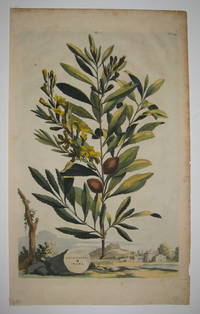
1696211445Leyden and Utrecht: Pieter Vander Aa 1696. unbound. very good. Botanical. Copper plate engraving with hand coloring. Image measures 12.5" x 8.25".<br/><br/> Abraham Munting 1626-1683 taught medicine and botany at the Academy of Groningem in the Netherlands. He had a particular interest in the uses of plants especially medicinally. This engraving is from "Naauwkeurige Beschryving Der Aardgewassen". Scattered foxing to margins small chips to right edge. Hinges on back. Please visit our gallery for more Munting prints.<br/><br/> Pieter Vander Aa unknown books
1958262865Zurich: The Safaho Foundation 1958. First edition one of 290 numbered copies of which 50 not for sale. xvii 304 pp. 1 vols. 4to. Crimosn cloth. Fine. First edition one of 290 numbered copies of which 50 not for sale. xvii 304 pp. 1 vols. 4to. The Safaho Foundation unknown books
1863WRCAM55251Washington 1863. 20pp. Original printed wrappers. Light toning. A near fine copy in wonderful condition. In a cloth chemise and green half morocco and cloth slipcase spine gilt. The rare pamphlet printing of Lincoln's December 8 1863 proclamation read before Congress the next day offering amnesty to citizens of the Confederacy providing they take an oath that they "will abide by and faithfully support all proclamations of the President made during the existing rebellion having reference to slaves" i.e. the Emancipation Proclamation. When the number of persons in any state taking the oath reached ten percent of the number of voters in 1860 this group of loyal voters could form a state government that could be recognized by the President. The Amnesty Proclamation was issued with President Lincoln's third Annual Message to Congress i.e. State of the Union Address on December 8 1863; the State of the Union Address follows the Amnesty Proclamation here. <br> <br> Toward the close of 1863 with the Confederate Army in full retreat discussions in Congress centered on how to restore the southern states to the Union. "The crisis which threatened to divide the friends of the Union is past" announced Lincoln. Now it was the duty of Congress to ensure that all citizens in the South regardless of race were guaranteed the equal protection of the law. A number of competing proposals emerged from deliberations but in the end during his message to Congress on December 8 1863 Lincoln declared reconstruction of the South a wholly executive responsibility and "offered 'full pardon.with restoration of all rights of property except as to slaves' to all rebels who would take an oath of future loyalty to the Constitution and pledge to obey acts of Congress and presidential proclamations relating to slavery" Donald p.471. <br> <br> Those excluded from taking the oath were the highest ranking members of the Confederacy - government officials judges military and naval officers above the rank of army colonel or navy lieutenant former congressmen and "all who have engaged in treating colored persons or white persons otherwise than lawfully as prisoners of war." Lincoln further encouraged the southern states to make provisions "in relation to the freed people of such State which shall recognize and declare their permanent freedom provide for their education and which may yet be consistent as a temporary arrangement with their present condition as a laboring landless and homeless class." <br> <br> "Lincoln indicated that this was only one plan for reconstructing the rebel South and while it was the best he could think of for now he would gladly consider others and possibly adopt them. He might even modify his own classes of pardons if that seemed warrantable.Afterward almost everybody but die-hard Democrats seemed happy with the plan" Oates p.371. <br> <br> A lovely copy of Lincoln's hugely important Amnesty Proclamation. MONAGHAN 191. SABIN 41162 note. David Herbert Donald LINCOLN New York 1995 p.471. Stephen B. Oates WITH MALICE TOWARD NONE: A LIFE OF ABRAHAM LINCOLN New York 1977 p.371. hardcover books
1612219257Abraham Ortelius 1612. unbound. very good. Map. Engraving with hand coloring. Image measures 14" x 19.25".<br/><br/> This stunning 1612 map by Abraham Ortelius depicts the Western Hemisphere. At the time it was issued the coastal areas of the New World had been fairly well explored and Europeans were just beginning settlement and colonization. It is notable for depicting Spanish and Portuguese colonies in high detail for these powers were notoriously protective of their geographical surveys.<br><br>This is the first state of the third plate engraved for Ortelius's landmark map of the New World. It is distinguished from the first two plates by the lack of the bulge to the southwest coast of South America. Several other cartographic enhancements are apparent on closer inspections.<br><br>The Solomon Islands are depicted here for the first time since their discovery in 1568 by Alvaro de Mendana. The map identifies several places previously unpublished due to political reasons. These were provided to Ortelius by Haklyut on the basis of recent explorations. The nomenclature in California is also included.<br><br>Perhaps the most notable enhancements on the east coast is the Indian name Wingandkoa and an inlet just above possibly the first depiction of the Chesapeake Bay on a printed map reflecting early English efforts at Colonization in the Outer Banks of the Carolinas. <br><br> Based on Gerard Mercators 1569 World Map this map includes an abundance of cartographic speculation representing the knowledge of the region during the time. The kingdom of Quivira the supposed ancient city of gold in North America. Conquistador Francisco Vázquez de Coronado searched for Quivira for several years to finally find it was no more than American Indian settlement of farming people. Terro del Fueggo first reached by Magellan is here shown to be part of the large speculated continent of Terra Australis that extends westward with the annotation "The southern of Magellanican land as yet unknown".<br><br>Other interesting annotations throughout include "Somewhere here there are islands which according to some have gold" and Patagonia shows a notation that suggests its inhabitants were giants.<br><br>The waters are ornamented with illustrations of ships and a sea monster. In earlier plates the ships are different. A large title cartouche is included in the bottom left. Another scale cartouche appears in the top left. Published in the 1612 or 1608 edition the map is identical in both editions of Ortelius' famous "Theatrum Orbis Terrarum" which is historically considered the first modern atlas. Based on the text on verso only 300 copies of this particular edition were ever printed van der Broecke 11. <br><br> Italian text on verso. Minor chipping to edges. Full original margins. Minor wear along original centerfold. <br><br> Abraham Ortelius 1527--1598 a Flemish cartographer and geographer is widely regarded as one of the important and influential cartographers in history. He is known for his "Theatrum Orbis Terrarum" which was the first modern atlas.<br/><br/> Abraham Ortelius unknown books
1984140060Los Angeles: Orion Pictures 1984. Vintage French moyenne poster for the 1984 US film. Winner of eight Academy awards including Best Picture Best Director Best Adapted Screenplay and both Best Supporting Actor and Best Actor. <br/><br/>Adapted from Peter Shaffer's 1979 play of the same name the film presents a fictionalized account of Wolfgang Amadeus Mozart's life as well as that of his "rival" Antonio Salieri. <br/><br/>Set in Vienna shot on location in Prague Kromeriz and Vienna. <br/><br/>24 x 32 inches folded. Near Fine with two small stains to the verso. <br/><br/>Ebert II. Orion Pictures unknown books
1696211439Leyden and Utrecht: Pieter Vander Aa 1696. unbound. very good. Botanical. Copper plate engraving with hand coloring. Image measures 12.75" x 8.25".<br/><br/> Beautiful print of an aloe plant. Abraham Munting 1626-1683 taught medicine and botany at the Academy of Groningem in the Netherlands. He had a particular interest in the uses of plants especially medicinally. This engraving is from "Naauwkeurige Beschryving Der Aardgewassen". Aging around edges small chip to lower right corner. Please visit our gallery for more Munting prints.<br/><br/> Pieter Vander Aa unknown books
196245060Amsterdam: Erasmus 1962. limp cloth dust jacket. Kubin Alfred. small 8vo. limp cloth dust jacket. 96 pages. Limited to 950 numbered copies. Biographical sketch and bibliography of 262 items illustrated by Kubin. Text in German. Erasmus unknown books
1865102324<p> Newspaper 16" x 22" six columns of text small Lincoln engraving 4 pp. Folded at center a few tears and chips at folds and extremities some loss of text at the center fold some aging and browning and a little uneven darkening; despite these faults the paper is in decent condition overall for a newspaper from this period. Dated April 26 1865 this paper provides considerable detail on Lincoln's funeral. The coverage includes an OBIT on Lincoln and a small engraving of the slain president. Most of the coverage is on the second page of the newspaper. The articles include stories on events at the capital to honor Lincoln and the impact of the event on a grieving nation.</p> books
1718102323<p> Newspaper 16" x 22" six columns of text 4 pp. Folded at center several tears and chips at folds and extremities some loss of text Lincoln text less affected some aging and browning and some uneven darkening ; in about fair condition overall for a newspaper from this period. Dated April 17 1865 this is a relatively early account of the Lincoln assassination. Most of the coverage is on the second and third pages of the newspaper. The articles include stories on the "death bed scene" the attacks on Secretary Seward and his son the national reaction and reports on those involved in the plot. Some interesting coverage of a national event in a local newspaper.</p> books
1956022993London: Eyre & Spottiswoode 1956. 301p. tables original cloth ex libris. Eyre & Spottiswoode unknown books
184721117.99<p>A list of stockholders entirely in Lincoln's hand filed as evidence in his first significant railroad case. Lincoln's own appearance in the shareholder list represents only the second known instance of a stock purchase by the future president. The Illinois Supreme Court's ultimate ruling in favor of Lincoln and the railroad set an important legal precedent upholding the binding nature of a stockholder's contractual and financial obligations. "The decision subsequently cited in twenty-five other cases throughout the United States helped establish the principle that corporation charters could be altered in the public interest and it established Lincoln as one of the most prominent and successful Illinois practitioners of railroad law" Donald p.155.</p> <b>ABRAHAM LINCOLN.</b>Autograph Manuscript Signed by Lincoln in text constituting his official transcript of the "<i>Subscription Book of the Capital Stock of the Alton and Sangamon Rail Road Company</i>" incorporated February 27 1847 transcribed in early 1851. Comprising a cover sheet titled in Lincoln's hand the joint stock subscription statement and list of 91 shareholders with the number of shares subscribed and leaf with Lincoln's legal docket: "<i>Alton and Sangamon Railroad Company vs. James A. Barret. Copy of contents of subscription book</i>." 8 pp. 6â… x 8¼ x ¼ in.<p><b><br /></b></p><p><b>Historical Background</b></p><p>The Alton and Sangamon Rail Road Company was chartered in 1847 to construct a line from Alton via New Berlin to Springfield. In 1850 however the Illinois General Assembly approved a more direct route bypassing the landholdings of some investors. Claiming breach of contract James A. Barret refused to make further installment payments for his 30 shares of stock as did several others who no longer stood to benefit from the new line. In 1851 Lincoln was hired to compel the defaulting shareholders to pay the balance of their promised investment.</p><p>The tactical details are spelled out in a February 19 1851 letter from Lincoln to William Martin a commissioner for the sale of the company's stock. Four suits were to be brought against stockholders who had subscribed to the initial offering but had then failed to make the additional installment payments. In preparation Lincoln listed the essential documents he would need in order to win a judgment. "We must prove" he advised Martin "that the defendant is a Stockholder" "that the calls have been made" and "that due notice of the calls has been given." To show that the defendants were in fact stockholders Lincoln explained he needed to produce "the subscription book with the defendant's name and proof of the genuineness of the signature together with any competent parole or evidence that he made the advance payment" Basler 2:99.</p><p>Lincoln's meticulous transcript of the subscription book was a key piece of the evidence filed in Sangamon Circuit Court on February 22 1851. The book includes Barret's name and the subscription statement transcribed by Lincoln on page two is explicit about the shareholders' obligations.</p><p><i>We the subscribers to the Capital Stock of the Alton and Sangamon Rail Road Company.do hereby agree.to pay the balance of the installments due on said stock by us subscribed when the same may be called for by the board of Directors of said Company when duly organized in conformity with the Charter approved February 27th 1847.</i></p><p>"<i>A. Lincoln</i>" with six shares for $600 is prominent among the 91 subscriber names. The only other known record of a Lincoln stock purchase dates from 1836 when he bought one share in the Beardstown and Sangamon Canal.</p><p>In June of 1847 as head of a committee to promote subscriptions for the projected railroad Lincoln wrote an open letter to the "People of Sangamon County" appealing for their support. Railroad construction was booming and Lincoln anticipated that a line between Springfield and Alton would prove a lucrative investment for himself and his state. "The whole is a matter of pecuniary interest" he argued. "The proper question for us is whether with reference to the present and the future and to direct and indirect results it is our interest to subscribe. If it can be shown that it is we hope few will refuse" Basler 1:396-398.</p><p>The list of subscribers is itself of considerable interest. It includes John Hay 1775-1865 the grandfather of Lincoln's later secretary John Hay 2 shares Ninian W. Edwards 1809-1889 husband of Mary Todd Lincoln's sister 20 shares John T. Stuart 1807-1885 Lincoln's law partner 5 shares Henry Yates 1786-1865 father of Illinois governor Richard Yates 10 shares Noah W. Matheny 1815-1877 clerk of Sangamon County and others. In the subscription book Henry Yates hedging his bets has added a condition beneath his name: "<i>if the Road intersects the M. & S R R at New Berlin.</i>"</p><p>Lincoln was mindful of the critical issues raised by the Alton and Sangamon lawsuits and "took extraordinary pains to construct an airtight case for his client" Donald p.155. To Martin he pointed out the legal issues adding "I have labored hard to find the law" in preparation for the trials. In the end two of the defaulting stockholders paid their delinquent calls. The suits against James A. Barret and Joseph Klein came to trial in the Sangamon Circuit Court in August of 1851 with Lincoln handling both the trials and the appeals for the railroad.</p><p>Lincoln's preparation proved its worth – the rulings were in favor of the railroad. "Illinois Supreme Court Justice Samuel H. Treat ruled that public utility superseded private profit. If Barret had won the case other stockholders would balk at fulfilling their obligations. The rule of caveat emptor protected corporate management from stockholder's personal interests and encouraged subsequent investment" <i>Lincoln Legal Briefs</i> Oct-Dec 1990 no. 16 online.</p><p>At the time he transcribed this document Lincoln was an attorney on the 8th Judicial Circuit and also managed a thriving appellate and federal court practice. He handled a number of railroad-related cases representing both private individuals as well as the railroads themselves. He was not as some have argued a hired gun for corporate interests. Rather as his law partner William Herndon described him Lincoln was "purely and entirely a case lawyer."</p><p>The fact that Lincoln despite his commitment to railroading often handled suits against the carriers casts light on his understanding of the lawyer's role in society…He simply could not afford to take only one side in legal disputes. Nor did Lincoln pursue some political or philosophical agenda through litigation. He was not concerned with developing a consistent legal ideology. His business as Donald reminds us "was law not morality." James W. Ely "Lincoln as Railroad Attorney" Indiana Historical Society Symposium April 15-16 2005</p><p>Though a prominent lawyer Lincoln was still smarting over recent political defeats. Elected to the U.S. Congress in 1846 he had served out his term but his outspoken opposition to the Mexican-American War had cost him any chance at a second term. He subsequently failed in his attempt to become commissioner of the General Land Office. Lincoln declined an appointment as governor of the Oregon Territory instead returning to his law practice with William H. Herndon in Springfield Illinois. He would not attempt a political comeback until 1854.</p><p>The rail line was ultimately highly profitable. Lincoln's overriding belief in the broader benefits of internal improvements is best expressed in a speech he delivered before Congress in 1848.</p><p>Let the nation take hold of the larger works and the states the smaller ones; and thus working in a meeting direction discreetly but steadily and firmly what is made unequal in one place may be equalized in another extravagance avoided and the whole country put on that career of prosperity which shall correspond with it's extent of territory it's natural resources and the intelligence and enterprize of it's people.</p> books