987 résultats
1966USACHIS00AFAlfred A. Knopf 1966. Good. Sachar Abraham Leon. A History of the Jews. NY: Alfred A. Knopf 1966. 478pp. Indexed. Illustrated. Bibliography. 8vo. Cloth. Book condition: Good. Dust Jacket Condition: Good with a few closed tears fading soiling and creases. Slightly yellowed. Alfred A. Knopf hardcover books
1966USACHIS01AFAlfred A. Knopf 1966. Good. Sachar Abraham Leon. A History of the Jews. NY: Alfred A. Knopf 1966. 478pp. Indexed. Illustrated. Bibliography. 8vo. Cloth. Book condition: Good. Dust Jacket Condition: Good with a few closed tears fading soiling and creases. Slightly yellowed. Alfred A. Knopf hardcover books
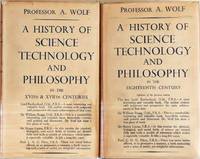
193549210New York: Macmillan Company 1935. 8vo pp. xxvii 1 692; 316 figures and plates original navy cloth with gilt title on spine bookplate of O. C. Lester; fine. "A thoroughly comprehensive sourcebook it deals with all the important developments in science and many of the innovations in the social sciences British and Continental philosophy and psychology." <br/><br/> Macmillan Company hardcover books
1935S12059New York:: Macmillan 1935 1939. 1935. 2 volumes. Royal 8vo. xxvii 692; 814 pp. 316 345 illus. indexes. Navy blue gilt-stamped cloth dust-jackets. Ownership mark of William B. Bjornstad Drake University Des Moines Iowa. Fine. First American edition. Unusually fine set with jackets of the original edition. Macmillan, 1935, 1939. hardcover books
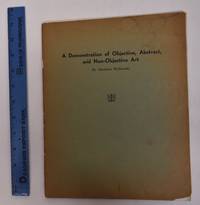
194514114Girard KS: Haldeman-Julius Publications 1945. Hardcover. VG exceptional copy but covers are off. Brown boards. 42 pp. 30 bw plates. This volume consists mostly of reproductions of the artist's work with several introductions as mentioned in the title a brief biography and a foreword by the artist. Haldeman-Julius Publications hardcover books
1883290160Philadelphia: J. B. Lippincott & Co 1883. First Edition. Hard Cover. Good binding. Previous owner's name on the front board and front flyleaf. Slight dusty odor. Binding is cocked with red stain on the front board some rubbing and shefwear to the edges joints and corners. Brown cloth with black decorations and gilt lettering. Good binding. J. B. Lippincott & Co unknown books
186322448.01New York N.Y. 1863. No binding. Fine. New York Journal of Commerce. Newspaper. New York Journal of Commerce. New York N.Y. January 3 1863. 4 pp. 24 x 32 1/2 in. An early report of the Emancipation Proclamation where the editors describe Lincoln's bold move as ""a farce coming in after a long tragedy.Most of the people regard it as a very foolish piece of business."" Historical BackgroundThe Emancipation Proclamation was the single most important act of Lincoln's presidency. Its text reveals the major themes of the Civil War: the importance of slavery to the war effort on both sides; the courting of border states; Lincoln's hopes that the rebellious states could somehow be convinced to reenter the Union; the role of black soldiers; Constitutional and popular constraints on emancipation; the place of African Americans in the United States and America's place in a worldwide movement toward the abolition of slavery. In sounding the death knell for slavery and the ""Slave power"" the President took a decisive stand on the most contentious issue in American history and the United States joined other western nations in embracing a future of free labor.In addition to the moral impact of this ""sincerely believed.act of justice"" the Proclamation aided the Union cause tangibly and decisively. Because it focused on territory still held by the Confederacy only small numbers of slaves compared to the total slave population were immediately freed. However the Proclamation deprived the South of essential labor by giving all slaves a reason to escape to Union lines. Failing that it freed slaves immediately upon the Union Army's occupation of Confederate territory. The Proclamation also encouraged the enlistment of black soldiers who made a crucial contribution to the Union war effort. Moreover England and France who had already abolished slavery were restrained from supporting the Confederacy which would have been in their own economic interests. Lincoln summed up the Proclamation's importance in 1864: ""no human power can subdue this rebellion without using the Emancipation lever as I have done.""Nonetheless the editors of the Journal of Commerce disagreed and their opinion reflects the truly controversial nature of the act for many contemporary Americans. books
186230007.01<p>On the front page under <i>"News from the North" </i>is the text of Abraham Lincoln's reply to <i>New York Tribune</i>editor Horace Greeley. Greeley's letter urging Lincoln to emancipate all slaves in Union-held territory was known as "The Prayer of Twenty Millions." It was first published on August 20 1862. Lincoln responded on August 22 declaring that his paramount goal is to save the Union regardless of its effect on slavery as well as his personal views that all men should be free.</p> <b>ABRAHAM LINCOLN.</b>Newspaper. <i>Richmond Whig</i> Richmond Va. August 30 1862. 2 pp. 17 x 24 in.<p><b><br /></b></p><p><b>Excerpt:</b></p><p><i>"…As to the policy I 'seem to be pursuing' as you say I have not meant to leave any one in doubt. </i></p><p><i> I would save the Union. I would save it the shortest way under the Constitution. The sooner the national authority can be restored the nearer the Union will be 'the Union as it was.' If there be those who would not save the Union unless they could at the same time </i>save<i> slavery I do not agree with them. If there be those who would not save the Union unless they could at the same time </i>destroy<i> slavery I do not agree with them—My paramount object in this struggle </i>is <i>to save the Union and is </i>not<i> either to save or to destroy slavery. If I could save the Union without freeing </i>any<i> slave I would do it and if I could save it by freeing </i>all<i>the slaves I would do it; and if I could save it by freeing some and leaving others alone I would also do that.—What I do about slavery and the colored race I do because I believe it helps to save this Union and what I forbear I forbear because I do not believe it would help to save the Union. I shall do </i>less<i> whenever I shall believe what I am doing hurts the cause and I shall do </i>more<i>whenever I shall believe doing more will help the cause. I shall try to correct errors when shown to be errors; and I shall adopt new views so fast as they shall appear to be true views. </i></p><p><i> I have here stated my purpose according to my view of </i>official<i> duty; and I intend no modification of my oft-expressed </i>personal<i> wish that all men every where could be free." </i></p><p><b>Historical Background</b></p><p>Though this letter is often as proof that Lincoln did not intend to abolish slavery unknown to Greeley and most Americans Lincoln had already drafted the preliminary Emancipation Proclamation and was only waiting for a Union military victory to deliver it. Moreover Lincoln makes a "divide and conquer" rhetorical move: he splits the issue by stating that his constitutional duty as president is to keep the Union together while simultaneously expressing his personal view of universal freedom at the end.</p><p>Additional content in this issue includes a front page editorial <i>"European Recognition" "The Indian Atrocities in Minnesota" "Yankee Finances" "An Order From Gen. Burnside" "The Peninsular Campaign—Gen. </i><b><i>J. Bankhead </i></b><i>Magruder's Official Report"</i> which takes over two columns with considerable detail.<br /><br />The back page has additional content with: <i>"A Brilliant Cavalry Exploit" "The Impressment of Slaves In Georgia" "Outrages in Arkansas" "From Kentucky"</i> and more. Additionally there are various reports from the <i>"Confederate Congress"</i> and numerous advertisements including a <i>"$100 Reward"</i> for a runaway slave.</p><p>The <i>Richmond Whig</i> is one of the less common—but still important—newspapers from the capital of the Confederacy.</p><p>In <i>Four Years in Rebel Capitals: An Inside View of Life in the Southern Confederacy from Birth to Death</i> journalist T. C. DeLeon wrote that the <i>Richmond</i> <i>Whig</i>was among the South's best wartime newspapers. Their pages "recorded the real and true history of public opinion during the war. In their columns is to be found the only really correct and indicative 'map of busy life its fluctuations and its vast concerns' in the South during her days of darkness and of trial."</p><p>One of the more interesting episodes in the history of the <i>Whig</i> is its alleged involvement in a terror plot against New York City during the Civil War. The <i>Whig</i>was reputed to have worked with the Confederate government to use advertisements and editorials to convey secret messages to Southern sympathizers in the North. In October 1864 the <i>Whig</i> was alleged to have run an editorial that signaled Southern supporters to embark on a terror campaign that called for widespread fires to be set in New York city and federal offices to be taken over and the capture of the city's military commander Maj. Gen. John Adams Dix.</p><p><b>Condition</b></p><p>Good. Never bound several folds with minor wear at the folds.</p> books
1731WRCLIT61268Dublin: Printed by and For Samuel Fuller 1731. 1351pp. Octavo. Extracted from bound pamphlet volume. faint old stamps of a defunct mercantile library title neatly detached at gutter with old paper mends at lower blank tips and some early ink spots early ink ownership inscription on verso of title and in blank portion of A2; somewhat tanned with occasional corner creases and small marginal chips; a fair but complete copy quite amenable to conservation and binding. First edition. Not in Bradshaw. ESTC T103086. POLLARD pp. 230-1. Printed by and For Samuel Fuller unknown books
1960028466New York: Bookman Associates 1960. 284p. burgundy cloth ex libris. Bookman Associates unknown books
1809WRCAM35310New York: Printed by Frank White & Co. 1809. xxiii105pp. Printed self-wrappers stitched. Portion of outer margin of rear wrapper a blank leaf torn away else very good untrimmed and partially unopened. A lengthy and detailed defense of the Jefferson and Madison administrations' international policies. Includes numerous pieces of correspondence and a table of commercial figures. SABIN 5982. SHAW & SHOEMAKER 17376. Printed by Frank, White & Co. unknown books
190931679Washington 1909. 60th Cong. 2d Sess. H.R. 25550. Light toning and wear else Very Good.<br/><br/> The Bill introduced by Congressman Rodenberg would appropriate $150000 to purchase Oldroyd's entire collection "of Lincoln relics containing three thousand pieces more or less and for the acquisition.of number five hundred and fourteen and five hundred and eighteen Tenth street northwest Washington adjoining the government property known as the house in which President Lincoln died." An outpouring of affectionate remembrance attended the hundredth anniversary of Lincoln's birth.<br/>Not in Monaghan. unknown books
1928163209New York: Boni and Liveright 1928. Octavo pp. i-iv v vi-viii 9-310 311-312: blank note: last leaf is a blank original tan cloth front panel stamped in red and gold spine panel stamped in red top edge stained red. First edition. First printing with "B&L" monogram on copyright page and no statement of printing. A mystery thriller in the mode of Sax Rohmer concerning Satan an unusual criminal mastermind who rules a band of thieves bound to his service by an elaborate game. The Boni and Liveright edition was reprinted at least twice and the novel was frequently reissued by various publishers in several formats through 1955. "7 FOOTPRINTS TO SATAN one of Merritt's most financially successful works appeared in ARGOSY ALL-STORY in five issues in 1927. Based upon Robert Barr's "A Game of Chess" it is his only pure mystery. Although it contains neither the fantasy nor the occult elements that characterize his earlier novels it is an intriguing tale containing an interesting plot and one of the most sinister villains in mystery fiction." - Foust p. 48. Clareson Science Fiction in America 1870s-1930s 558. In 333. Bleiler 1948 p. 199. Reginald 10068. Hubin 1994 p. 569. Neat contemporary owner's signature dated March 1928 on the front free endpaper. A fine copy in good four-color pictorial dust jacket priced $2.00 on the front flap with wear and shallow loss at spine ends and corner tips. rubbing along folds and several closed tears with internal tape mends. #163209 Boni and Liveright unknown books
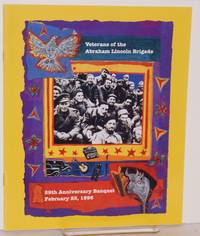
1996149605Oakland: the Post 1996. Pamphlet. 16p. 7x8.5 inches illustrated with photos program ads very good program in stapled glossy pictorial wraps. the Post unknown books
1996254923San Francisco: the Post 1996. Pamphlet. 12p. 7x8.5 inches illustrations program very good in stapled pictorial yellow wraps. Ronnie Gilbert was the guest artist. the Post unknown books
199651825San Francisco: the Post 1996. Pamphlet. 12p. 7x8.5 inches illustrations program creased vertically else very good in stapled pictorial yellow wraps. Ronnie Gilbert was the guest artist. the Post unknown books
1995172089San Francisco: the Post 1995. 8p. illus. program 8.5x7 inches staplebound pamphlet very good condition. the Post unknown books
1995149604San Francisco: the Post 1995. Pamphlet. 8p. illus. program 8.5x7 inches wraps very good condition. the Post unknown books
1994117928San Francisco: the Post 1994. 12p. illus. program 8.5x11 inches stapled wraps lightly worn front wrap lightly foxed else good condition. the Post unknown books
1983149598Oakland: the Veterans 1983. Four panel brochure 5.5x8.5 inch program. Studs Terkel was the guest of honor. the Veterans unknown books
1980120429Oakland: the Post 1980. 4p. brochure wraps creased from being folded in fourths small stain on front wrap else good condition. Congressman Ron Dellums was the guest of honor. the Post unknown books
1976227006Berkeley: n.p. 1976. Pamphlet. 12p. stapled wraps 5.5 x 8.5 inches front wrap slightly silverfished along top edge else very good condition. Page of contributions recieved after printing laid in. Short tributes to guest of honor Alvah Bessie by various authors including members of the Hollywood Ten. Also includes a tribute to Paul Robeson. n.p. unknown books
1953S13292College Park MD:: The Physical Review 1953. 1953. 3 Offprints. Original wrappers. From the collection of Abraham Pais. Very good. INVENTORY: 1. KLEIN Abraham. Convergence of the Adiabatic Nuclear Potential. II. Offprint from: The Physical Review Vol. 92 No. 4 pp. 1017-1020 November 15 1953. Signed by Pais. 2. KLEIN Abraham. The Construction of Potentials in Quantum Field Theory. Offprint from: The Physical Review Vol. 91 No. 5 p. 1285 September 1 1953. Signed by Pais. 3. KLEIN Abraham. Invariant Operators of the Unitary Unimodular Group in n Dimensions. Offprint from: Journal of Mathematical Physics Volume 4 Number 10 pp. 1283-1284 October 1963. American theoretical physicist his studies took him to Brooklyn College then to Harvard where he obtained his masters and doctorate in 1950 under Julian Schwinger. The Physical Review, 1953. unknown books
198672122San Francisco: the Veterans 1986. 1p. three-color poster/flyer 8.5x11 inches very good condition. the Veterans unknown books
186424901.02<p>"<i>with the same determination to divide the country unless they can secure universal abolition we are exposed to the same dangers every day and God only knows in what unlucky hour our ruin may be consummated. Compare his policy with McClellan's expression of readiness to receive any State when its people offer to submit to the Union.</i>"</p><p>This Democratic Party campaign pamphlet quotes an April 1864 letter to argue that Lincoln gave Lieutenant General Ulysses S. Grant free rein to conduct the war after having interfered with and micromanaged McClellan's Peninsula Campaign in 1862. The publication also declared that Republicans were stained with "<i>The Taint of Disunion</i>" and quoted from Republican speeches and editorials to insist that the Democrats were the party of "<i>UNION AND PEACE</i>."</p> <b>ABRAHAM LINCOLN.</b>Printed Document. Democrat Campaign "<i>Document No. 12</i>" with headings "<i>Lincoln's Treatment of Gen. Grant</i>" "<i>Mr. Lincoln's Treatment of Gen. McClellan</i>" and "<i>The Taint of Disunion</i>." New York 1864. 8 pp. 5¾ x 8â… in.<p><b><br /></b></p><p><b>Excerpts:</b></p><p>Lincoln to Grant April 30 1864</p><p>"<i>I wish to express in this way my entire satisfaction with what you have done up to this time so far as I understand it. The particulars of your plans I neither know nor seek to know. You are vigilant and self-reliant; and pleased with this I wish not to obtrude any restrains or constraints upon you while I am very anxious that any real disaster or capture of our men in great numbers be avoided.</i>" p1/c1</p><p>"<i>Such in brief are some of the most notable instances in which Mr. Lincoln interfered with General McClellan when he occupied a position similar to that held by General Grant. They reflect so severely upon the President that no attempt to gloss them over by his apparent subsequent repentance can disabuse the patriotic portion of the nation of the matured conviction that he is to be held responsible for the lack of decisive victories in Eastern Virginia. The blame must and will rest upon him to whom it belongs.</i>" p5/c2</p><p>"<i>Having shown by copious extracts from the speeches of Abraham Lincoln W. H. Seward Wendell Phillips Wm. Lloyd Garrison and from the editorial writings of the Chicago Tribune and the N. Y. Tribune… that they were all <b>original secessionists and disunion men</b> we propose now to give the evidence that Mr. Lincoln himself has within the last three months been concerned in a movement to make peace with Jeff. Davis on terms involving the direct proposal to divide the Union and let the South go.</i>" p7/c2-p8/c1</p><p>"<i>with the same determination to divide the country unless they can secure universal abolition we are exposed to the same dangers every day and God only knows in what unlucky hour our ruin may be consummated. Mark how Mr. Lincoln constantly keeps up the idea of negotiating only with Jefferson Davis. Why does he never address himself to the people or the States of the South. Compare his policy with McClellan's expression of readiness to receive any State when its people offer to submit to the Union.</i>" p8/c2</p><p><b>Historical Background</b></p><p>The 1864 presidential election pitted President Lincoln against his Democratic challenger General George B. McClellan. Although McClellan had been the commander of the Army of the Potomac and general-in-chief of the Union Army the Peace platform adopted by the Democratic National Convention in Chicago declared the war a failure. The party was bitterly divided between War Democrats who favored continuing the war to restore the Union while leaving slavery alone; moderate Peace Democrats who favored an armistice and a negotiated peace that would likely protect slavery in a reconstructed union and radical Peace Democrats who favored an immediate end to the war without securing Union victory. McClellan was a War Democrat but the platform was written by radical Peace Democrat Clement Vallandigham and Peace Democrat George H. Pendleton was nominated for vice president.</p><p>In 1864 Republicans created the National Union Party to attract War Democrats Unconditional Unionists and Unionist Party members who would not vote for the Republican Party though most state Republican parties did not change their name. President Abraham Lincoln won the nomination of the "National Union Party" at its Baltimore convention and won re-election with new running mate War Democrat Andrew Johnson.</p><p>Although Lincoln was convinced by August 1864 that he would not be reelected General William T. Sherman's capture of Atlanta in early September and General Philip Sheridan's successes in the Shenandoah Valley of Virginia from August to October ensured his victory. Without the participation of the seceded states Lincoln and Johnson won 55 percent of the popular vote and an overwhelming 212-to-21 victory in the Electoral College. McClellan and Pendleton carried only Kentucky Delaware and McClellan's home state of New Jersey.</p> books