42 895 résultats
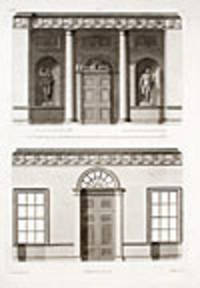
177517118London 1775. Engraving by T. Vivares. In excellent condition with the exception of some paper discolouration in the bottom right corner of the sheet. A fine architectural engraving of a part of the vast Adelphi development in London; the largest project undertaken by the Adam brothers.<br/> <br/>Robert and his brother James Adam forever changed the face of British architecture by introducing innovative Classical design ideas. From 1754-57 Robert lived in Italy where he had a long productive friendship with Piranesi which was inspirational for both men. Adam's first book on Diocletian's palace in Dalmatia is clearly very like the archaeological investigations Piranesi was making at the same time of similar ruins. Piranesi's friendship and passion for Roman Classicism were seminal influences on Adam and the greatest single factor other than his own talent in the work Adam produced on his return to England. Upon his return the brothers launched their career by building the Adelphi from the Thames to the Strand in London which although not a commercial success at the time included one of London's most cherished buildings the Adlephi Theatre. Together the Adam brothers designed and built some of the most famous buildings in England including such bastions of English architecture as Kenwood House Keddlestone Manor and Syon House. To the interiors of their English country houses the Adams brought wonderful ornamental elements in niches lunettes festoons and reliefs. Their classically designed buildings were so numerous in London that they changed the prevailing feel of the city and established their brand of neo-Classicism as the model of elegance and importance. It is asserted that the brothers originated the concept of the uniform facade attached to the typical English row house an architectural device that distinguishes London buildings. This monumental contribution is evidenced in the Adams' designs for Portland Place and Fitzroy Square and these were used as architectural models for the whole city. The brothers brought their talents into other areas by designing furniture to complement their beautiful interiors and by creating and publishing a treatise of design entitled 'Works in Architecture'. The work was published in three volumes over an extended span of time beginning in 1773 with the final volume being published posthumously in 1822.<br/> <br/>Cf. Brunet I.47; cf. Lowndes I p.8; DNB; Wilton-Ely The Mind and Art of Giovanni Battista Piranesi. unknown books
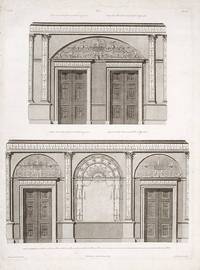
177517114London 1775. Engraving by T. Vivares. In excellent condition. An elegant elevation of the north and southe sides of Sutton Park in North Yorkshire the seat of the Earl of Bute.<br/> <br/>Robert and his brother James Adam forever changed the face of British architecture by introducing innovative Classical design ideas. From 1754-57 Robert lived in Italy where he had a long productive friendship with Piranesi which was inspirational for both men. Adam's first book on Diocletian's palace in Dalmatia is clearly very like the archaeological investigations Piranesi was making at the same time of similar ruins. Piranesi's friendship and passion for Roman Classicism were seminal influences on Adam and the greatest single factor other than his own talent in the work Adam produced on his return to England. Upon his return the brothers launched their career by building the Adelphi from the Thames to the Strand in London which although not a commercial success at the time included one of London's most cherished buildings the Adlephi Theatre. Together the Adam brothers designed and built some of the most famous buildings in England including such bastions of English architecture as Kenwood House Keddlestone Manor and Syon House. To the interiors of their English country houses the Adams brought wonderful ornamental elements in niches lunettes festoons and reliefs. Their classically designed buildings were so numerous in London that they changed the prevailing feel of the city and established their brand of neo-Classicism as the model of elegance and importance. It is asserted that the brothers originated the concept of the uniform facade attached to the typical English row house an architectural device that distinguishes London buildings. This monumental contribution is evidenced in the Adams' designs for Portland Place and Fitzroy Square and these were used as architectural models for the whole city. The brothers brought their talents into other areas by designing furniture to complement their beautiful interiors and by creating and publishing a treatise of design entitled 'Works in Architecture'. The work was published in three volumes over an extended span of time beginning in 1773 with the final volume being published posthumously in 1822.<br/> <br/>Cf. Brunet I.47; cf. Lowndes I p.8; DNB; Wilton-Ely The Mind and Art of Giovanni Battista Piranesi. unknown books
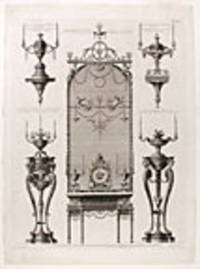
177517575London 1775. Engraving by B. Pastorini. In excellent condition. A fine engraving of various pieces of ornate furniture from Robert Adam's seminal work on British architecture.<br/> <br/>Robert and his brother James Adam forever changed the face of British architecture by introducing innovative Classical design ideas. From 1754-57 Robert lived in Italy where he had a long productive friendship with Piranesi which was inspirational for both men. Adam's first book on Diocletian's palace in Dalmatia is clearly very like the archaeological investigations Piranesi was making at the same time of similar ruins. Piranesi's friendship and passion for Roman Classicism were seminal influences on Adam and the greatest single factor other than his own talent in the work Adam produced on his return to England. Upon his return the brothers launched their career by building the Adelphi from the Thames to the Strand in London which although not a commercial success at the time included one of London's most cherished buildings the Adlephi Theatre. Together the Adam brothers designed and built some of the most famous buildings in England including such bastions of English architecture as Kenwood House Keddlestone Manor and Syon House. To the interiors of their English country houses the Adams brought wonderful ornamental elements in niches lunettes festoons and reliefs. Their classically designed buildings were so numerous in London that they changed the prevailing feel of the city and established their brand of neo-Classicism as the model of elegance and importance. It is asserted that the brothers originated the concept of the uniform facade attached to the typical English row house an architectural device that distinguishes London buildings. This monumental contribution is evidenced in the Adams' designs for Portland Place and Fitzroy Square and these were used as architectural models for the whole city. The brothers brought their talents into other areas by designing furniture to complement their beautiful interiors and by creating and publishing a treatise of design entitled 'Works in Architecture'. The work was published in three volumes over an extended span of time beginning in 1773 with the final volume being published posthumously in 1822.<br/> <br/>Cf. Brunet I.47; cf. Lowndes I p.8; DNB; Wilton-Ely The Mind and Art of Giovanni Battista Piranesi. unknown books
177517124London 1775. Engraving by Joshua Record. In excellent condition with the exception of some minor foxing across the sheet and some waterstaining along the upper margin. A decorative engraving by the celebrated architect Robert Adam depicting an elegant room in Lord Derby's house in Grosvenor Square London.<br/> <br/>Robert and his brother James Adam forever changed the face of British architecture by introducing innovative Classical design ideas. From 1754-57 Robert lived in Italy where he had a long productive friendship with Piranesi which was inspirational for both men. Adam's first book on Diocletian's palace in Dalmatia is clearly very like the archaeological investigations Piranesi was making at the same time of similar ruins. Piranesi's friendship and passion for Roman Classicism were seminal influences on Adam and the greatest single factor other than his own talent in the work Adam produced on his return to England. Upon his return the brothers launched their career by building the Adelphi from the Thames to the Strand in London which although not a commercial success at the time included one of London's most cherished buildings the Adlephi Theatre. Together the Adam brothers designed and built some of the most famous buildings in England including such bastions of English architecture as Kenwood House Keddlestone Manor and Syon House. To the interiors of their English country houses the Adams brought wonderful ornamental elements in niches lunettes festoons and reliefs. Their classically designed buildings were so numerous in London that they changed the prevailing feel of the city and established their brand of neo-Classicism as the model of elegance and importance. It is asserted that the brothers originated the concept of the uniform facade attached to the typical English row house an architectural device that distinguishes London buildings. This monumental contribution is evidenced in the Adams' designs for Portland Place and Fitzroy Square and these were used as architectural models for the whole city. The brothers brought their talents into other areas by designing furniture to complement their beautiful interiors and by creating and publishing a treatise of design entitled 'Works in Architecture'. The work was published in three volumes over an extended span of time beginning in 1773 with the final volume being published posthumously in 1822.<br/> <br/>Cf. Brunet I.47; cf. Lowndes I p.8; DNB; Wilton-Ely The Mind and Art of Giovanni Battista Piranesi. unknown books
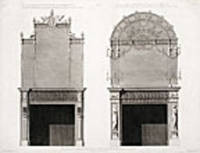
177517122London 1775. Engraving by Joshua Record. In excellent condition. An elegant engraving showing the chimney in the anteroom of Lord Derby's house in Grosvenor Square London.<br/> <br/>Robert and his brother James Adam forever changed the face of British architecture by introducing innovative Classical design ideas. From 1754-57 Robert lived in Italy where he had a long productive friendship with Piranesi which was inspirational for both men. Adam's first book on Diocletian's palace in Dalmatia is clearly very like the archaeological investigations Piranesi was making at the same time of similar ruins. Piranesi's friendship and passion for Roman Classicism were seminal influences on Adam and the greatest single factor other than his own talent in the work Adam produced on his return to England. Upon his return the brothers launched their career by building the Adelphi from the Thames to the Strand in London which although not a commercial success at the time included one of London's most cherished buildings the Adlephi Theatre. Together the Adam brothers designed and built some of the most famous buildings in England including such bastions of English architecture as Kenwood House Keddlestone Manor and Syon House. To the interiors of their English country houses the Adams brought wonderful ornamental elements in niches lunettes festoons and reliefs. Their classically designed buildings were so numerous in London that they changed the prevailing feel of the city and established their brand of neo-Classicism as the model of elegance and importance. It is asserted that the brothers originated the concept of the uniform facade attached to the typical English row house an architectural device that distinguishes London buildings. This monumental contribution is evidenced in the Adams' designs for Portland Place and Fitzroy Square and these were used as architectural models for the whole city. The brothers brought their talents into other areas by designing furniture to complement their beautiful interiors and by creating and publishing a treatise of design entitled 'Works in Architecture'. The work was published in three volumes over an extended span of time beginning in 1773 with the final volume being published posthumously in 1822.<br/> <br/>Cf. Brunet I.47; cf. Lowndes I p.8; DNB; Wilton-Ely The Mind and Art of Giovanni Battista Piranesi. unknown books
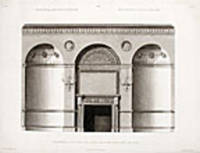
177817136London 1778. Copper engraving. Engraved by P. Mazell. In excellent condition. An elegant engraving the Porter's Lodge at Shelburne House in Berkeley Square in London.<br/> <br/>Robert and his brother James Adam forever changed the face of British architecture by introducing innovative Classical design ideas. From 1754-57 Robert lived in Italy where he had a long productive friendship with Piranesi which was inspirational for both men. Adam's first book on Diocletian's palace in Dalmatia is clearly very like the archaeological investigations Piranesi was making at the same time of similar ruins. Piranesi's friendship and passion for Roman Classicism were seminal influences on Adam and the greatest single factor other than his own talent in the work Adam produced on his return to England. Upon his return the brothers launched their career by building the Adelphi from the Thames to the Strand in London which although not a commercial success at the time included one of London's most cherished buildings the Adlephi Theatre. Together the Adam brothers designed and built some of the most famous buildings in England including such bastions of English architecture as Kenwood House Keddlestone Manor and Syon House. To the interiors of their English country houses the Adams brought wonderful ornamental elements in niches lunettes festoons and reliefs. Their classically designed buildings were so numerous in London that they changed the prevailing feel of the city and established their brand of neo-Classicism as the model of elegance and importance. It is asserted that the brothers originated the concept of the uniform facade attached to the typical English row house an architectural device that distinguishes London buildings. This monumental contribution is evidenced in the Adams' designs for Portland Place and Fitzroy Square and these were used as architectural models for the whole city. The brothers brought their talents into other areas by designing furniture to complement their beautiful interiors and by creating and publishing a treatise of design entitled 'Works in Architecture'. The work was published in three volumes over an extended span of time beginning in 1773 with the final volume being published posthumously in 1822.<br/> <br/>Cf. Brunet I.47; cf. Lowndes I p.8; DNB; Wilton-Ely The Mind and Art of Giovanni Battista Piranesi. unknown books
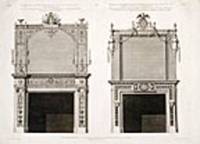
177517123London 1775. Engraving by Joshua Record. In excellent condition. An elegant engraving showing the two chimneys in Lord Derby's house in Grosvenor Square London.<br/> <br/>Robert and his brother James Adam forever changed the face of British architecture by introducing innovative Classical design ideas. From 1754-57 Robert lived in Italy where he had a long productive friendship with Piranesi which was inspirational for both men. Adam's first book on Diocletian's palace in Dalmatia is clearly very like the archaeological investigations Piranesi was making at the same time of similar ruins. Piranesi's friendship and passion for Roman Classicism were seminal influences on Adam and the greatest single factor other than his own talent in the work Adam produced on his return to England. Upon his return the brothers launched their career by building the Adelphi from the Thames to the Strand in London which although not a commercial success at the time included one of London's most cherished buildings the Adlephi Theatre. Together the Adam brothers designed and built some of the most famous buildings in England including such bastions of English architecture as Kenwood House Keddlestone Manor and Syon House. To the interiors of their English country houses the Adams brought wonderful ornamental elements in niches lunettes festoons and reliefs. Their classically designed buildings were so numerous in London that they changed the prevailing feel of the city and established their brand of neo-Classicism as the model of elegance and importance. It is asserted that the brothers originated the concept of the uniform facade attached to the typical English row house an architectural device that distinguishes London buildings. This monumental contribution is evidenced in the Adams' designs for Portland Place and Fitzroy Square and these were used as architectural models for the whole city. The brothers brought their talents into other areas by designing furniture to complement their beautiful interiors and by creating and publishing a treatise of design entitled 'Works in Architecture'. The work was published in three volumes over an extended span of time beginning in 1773 with the final volume being published posthumously in 1822.<br/> <br/>Cf. Brunet I.47; cf. Lowndes I p.8;DNB; Wilton-Ely The Mind and Art of Giovanni Battista Piranesi. unknown books
177717125London 1777. Engraving by J. Zucchi. In excellent condition. An elegant engraving depicting two chimneys in Lord Derby's celebrated house in Grosvenor Square London.<br/> <br/>Robert and his brother James Adam forever changed the face of British architecture by introducing innovative Classical design ideas. From 1754-57 Robert lived in Italy where he had a long productive friendship with Piranesi which was inspirational for both men. Adam's first book on Diocletian's palace in Dalmatia is clearly very like the archaeological investigations Piranesi was making at the same time of similar ruins. Piranesi's friendship and passion for Roman Classicism were seminal influences on Adam and the greatest single factor other than his own talent in the work Adam produced on his return to England. Upon his return the brothers launched their career by building the Adelphi from the Thames to the Strand in London which although not a commercial success at the time included one of London's most cherished buildings the Adlephi Theatre. Together the Adam brothers designed and built some of the most famous buildings in England including such bastions of English architecture as Kenwood House Keddlestone Manor and Syon House. To the interiors of their English country houses the Adams brought wonderful ornamental elements in niches lunettes festoons and reliefs. Their classically designed buildings were so numerous in London that they changed the prevailing feel of the city and established their brand of neo-Classicism as the model of elegance and importance. It is asserted that the brothers originated the concept of the uniform facade attached to the typical English row house an architectural device that distinguishes London buildings. This monumental contribution is evidenced in the Adams' designs for Portland Place and Fitzroy Square and these were used as architectural models for the whole city. The brothers brought their talents into other areas by designing furniture to complement their beautiful interiors and by creating and publishing a treatise of design entitled 'Works in Architecture'. The work was published in three volumes over an extended span of time beginning in 1773 with the final volume being published posthumously in 1822.<br/> <br/>Cf. Brunet I.47; cf. Lowndes I p.8; DNB; Wilton-Ely The Mind and Art of Giovanni Battista Piranesi. unknown books
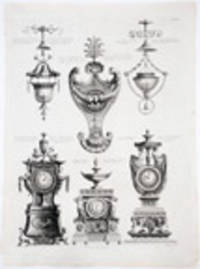
177517574London 1775. Engraving by P. Begbie. In excellent condition with the exception of being trimmed just outside the platemark on the left margin. An elegant engraving depicting various furnishings designed by Robert and James Adam including decorative clocks an ornamental knocker and two elaborate hanging lights.<br/> <br/>Robert and his brother James Adam forever changed the face of British architecture by introducing innovative Classical design ideas. From 1754-57 Robert lived in Italy where he had a long productive friendship with Piranesi which was inspirational for both men. Adam's first book on Diocletian's palace in Dalmatia is clearly very like the archaeological investigations Piranesi was making at the same time of similar ruins. Piranesi's friendship and passion for Roman Classicism were seminal influences on Adam and the greatest single factor other than his own talent in the work Adam produced on his return to England. Upon his return the brothers launched their career by building the Adelphi from the Thames to the Strand in London which although not a commercial success at the time included one of London's most cherished buildings the Adlephi Theatre. Together the Adam brothers designed and built some of the most famous buildings in England including such bastions of English architecture as Kenwood House Keddlestone Manor and Syon House. To the interiors of their English country houses the Adams brought wonderful ornamental elements in niches lunettes festoons and reliefs. Their classically designed buildings were so numerous in London that they changed the prevailing feel of the city and established their brand of neo-Classicism as the model of elegance and importance. It is asserted that the brothers originated the concept of the uniform facade attached to the typical English row house an architectural device that distinguishes London buildings. This monumental contribution is evidenced in the Adams' designs for Portland Place and Fitzroy Square and these were used as architectural models for the whole city. The brothers brought their talents into other areas by designing furniture to complement their beautiful interiors and by creating and publishing a treatise of design entitled 'Works in Architecture'. The work was published in three volumes over an extended span of time beginning in 1773 with the final volume being published posthumously in 1822.<br/> <br/>Cf. Brunet I.47; cf. Lowndes I p.8; DNB; Wilton-Ely The Mind and Art of Giovanni Battista Piranesi. unknown books
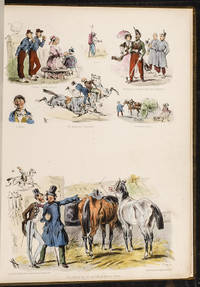
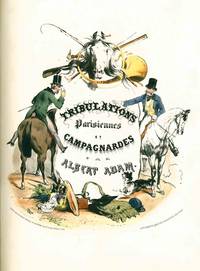
04860Paris: Hautecoeur Frères 1840. Parisian and Country Tribulations<br/>The Humorous Side of Distress Trouble Misery Anguish Agony Grief and Wretchedness.<br/><br/>ADAM Albert illustrator. Tribulations Parisiennes et Campagnardes. Par Albert Adam. Paris: Hautecoeur Frères ca. 1840.<br/><br/>First edition. Folio 12 7/8 x 9 7/8 inches; 328 x 251 mm. Lithographed pictorial title-page and Thirty-two plates hand-colored lithograph plates heightened with gum arabic on sixteen sheets. Several of the plates have more than one image depicted. Tiny piece of lower corner of title-page and plate 10 torn away small piece of lower inner margin of plate 16 torn away - nothing affecting any images. Some light marginal soiling and toning otherwise an excellent copy of this extremely scarce title.<br/><br/>Bound to contemporary style in full dark green straight-grain morocco. Covers elaborately decorated in gilt and blind spine with five raised bands decoratively tooled and lettered in gilt in compartments decorative gilt turn-ins gold marbled end-papers. This is the first time in over fifty years that I have seen this very amusing title which depicts the humorous side of distress trouble misery anguish agony grief and wretchedness. especially plate 12 the top image "Arrcheur de Dents sans douleur" pain-free teeth remover. <br/><br/>The Plates:<br/>1. Un Chien emporté / Culbute à la Marche<br/>2. Désagrément du Macdam / Le Pot de fer et le Pot de terre<br/>3. Une Famille d'Allemands / Touché !!! / Deux blaguers / Il l'aura . il l'aura pas! / Le Repas<br/>4. Ces Messieurs s'amusant. / C'est celle-là ! qui est une bête de premier mérite<br/>5. Une branche de salut / Une belle Famille<br/>6. Un accident imprévu / Marchands d'oranges etc<br/>7. Voiture à l'usage des amateurs de culbutes / Le Dejeuner interrompu<br/>8. Arrosement public et gratis / La Ruade<br/>9. Gentlemans au Bois / Visite désagréable<br/>10. Train de plaisir à l'heure / not titled<br/>11. Départ du Roulage / Position très désagréable<br/>12. Arrcheur de Dents sans douleur / Le bon père de Famille<br/>13. Concurrence monstre. - Route de Passy / Cheval qui a un défaut marquant<br/>14. Une glissade / not titled<br/>15. L'Artiste culbuté / Cheval antropophage<br/>16. Un Mosieur qui n'a pas l'habitude etc / Noouvelle course au Clocher<br/><br/>Very scarce: According to OCLC there are just five copies located in libraries and institutions worldwide Morgan Library NY; UCLA CA; Library of Congress DC; Clark Art Institute MA and Harvard Univ. Houghton Library MA.<br/><br/>Albert ADAM 1833-1900 was the son of Caricaturist and lithographer Jean Victor Adam 1801-1867 whom he often assisted with his commissions. Paris: Hautecoeur Frères, 1840 unknown books
50400Collection of mostly equestrian-themed caricatures 32 pp. lithographed by the Parisian firm Godard and depicting a variety of incidents such as a dog cart running in front of a horse-drawn buggy a racehorse stopping short and nearly launching its rider into a marsh a horse leaping over a group having a picnic and a bull headbutting an artist into a ravine. A few leaves trimmed slightly affecting page numbers extremely minor soiling. Slim 4to. Modern navy blue 3/4 morocco with marbled boards red gilt spine label. Very slight rubbing or scuffing some uneven fading or sunning to leather. Paris Hautecoeur Frères n.d. circa 1850. Albert Adam published a number of collections of humorous caricatures during his career but is perhaps best known for his views of Paris burning during the Paris Commune of 1871 and his Napoleonic scenes. He got his start working with his father caricaturist and lithographer Jean Victor Adam who he often assisted with his commissions. Quite scarce; as of November 2019 WorldCat locates just five holdings of this title in North American institutions. hardcover books
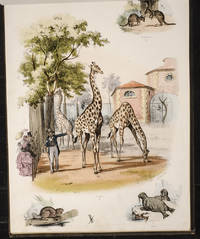
04374Paris: Maison Martinet - Hautecoeur Frères 1860. With Twenty-Four Superb Hand Colored Lithograph Plates<br/>Depicting All Species of Animals<br/><br/>ADAM Albert illustrator. ROSTAING Jules. Le Jardin Des Plantes en Estampes. Dessiné et Lithographié par A. Adam. Accompagné d'une histoire De Tous Les Animaux Que Possède La Ménagerie par Jules Rostaing. Paris: Maison Martinet - Hautecoeur Frères 1860. <br/><br/>First edition. Large oblong quarto 10 3/16 x 13 1/2 inches; 259 x 343 mm. iv 30 1 table 1 blank pp. Twenty four superb hand-colored lithograph plates heightened with gum arabic and with multiple images. Some light foxing to text leaves only the plates bright and clean.<br/><br/>Publisher's black pebble-grain cloth front cover pictorially stamped and lettered in gilt lower cover with center blind-stamped decoration yellow coated end-papers front inner hinge expertly and almost invisibly repaired. Neat early ink inscription on front fly-leaf dated 1860. <br/><br/>The wonderful hand-colored plates depict Bison Deer Moose Antelope Lama Goats Birds Giraffe Buffalo Elephant Hippopotomus Rhino Camel Zebra Donkey Lion Tiger Leopard Jackal Wolves Hyena Orang-Outang Monkeys Dogs Birds of Prey Crocodile Snakes Gazelle and People.<br/><br/>Albert ADAM 1833-1900 was the son of Caricaturist and lithographer Jean Victor Adam 1801-1867 whom he often assisted with his commissions.<br/><br/>OCLC locates just one copy - The Morgan Libary NY Gordon Ray copy.<br/><br/>Unknown to Denise Bibliography of the Jardin des Plantes. Paris: Maison Martinet - Hautecoeur, Frères, 1860 unknown books
18168538London. T. Cadell and W. Davies. 1816. Handsomely bound in full gilt ruled calfskin. Spine compartments with raised bands. Red morocco title label. Thick 8vo. 5.25" x 8.5"/ The Fifth Edition Corrected. Illustrated with 13 folding copper-engraved maps and 1 folding Astronomical Chart. Complete as issued. Covers rubbed corners lightly bumped. Front hinge cracked but cover held fast and firm by cords and professional interior re-enforcement. Various occassional very mild offset. Small patch of foxing to one map. A Very good exceedingly clean crisp copy with very fresh maps. T. Cadell and W. Davies. hardcover books
180114004London: Pr. by A. Strahan for T. Cadell & W. Davies 1801. 8vo. vi 626 pp. <br><br>Fifth edition with corrections. Adam 1741-1809 saw this work achieve great popularity and sales during his lifetime. Contemporary leather: Spine cracked front cover missing. Printed on pale blue paper Pr. by A. Strahan for T. Cadell & W. Davies hardcover books
1995119071Chicago Illinois: Alice Adam Ltd 1995. Softcover. VG. Dark blue wraps; Unpaginated approx. 30 pp.; 21 color and duotone plates. Features 21 new acquisitions by the gallery including works by Max Beckmann James Ensor Ernst Ludwig Kirchner Emil Nolde Kurt Schwitters and more; Price list included. Alice Adam, Ltd unknown books
1974141871Chicago: Allan Frumkin Gallery 1974. Softcover. VG- with very tiny sticker on upper front cover and ex-lib. stamp and sticker to back cover. Color-illustrated stapled wraps with no writing. 16 pp. with 20 bw illustrations. Price list set in. Includes a brief introduction by Adam and the complete list of 38 works described. Catalogue from the gallery exhibition of December 1974. Allan Frumkin Gallery paperback books
1973142527Chicago: Allan Frumkin Gallery 1973. Softbound. VG tiny label on top of front cover small label on rear cover. BW willustrated wraps. 22 pp. 83 small bw plates mostly 6-to-a-page. Catalogue listing indicates 135 works in this exhibition. Alice Adam indicates in the Foreword that this is the first photographic exhibition at the gallery. Allan Frumkin Gallery paperback books
1972033598London: Weidenfeld & Nicolson 1972. Translated by Herbert Tini. x 311 1p. original blue cloth Literature and society. Weidenfeld & Nicolson unknown books
197245435NY: Basic Books 1972. First Edition. 8vo pp. ix 311. Notes index. Translated by Herbert Tint. A VG tight copy in slightly chipped and soiled dj. A concise one volume history of French literature. Basic Books unknown books
033590Paris: Ãditions Domat. 5 vols. complete original stiff wrappers partially unopened. Contents: t. 1 L'Ãpoque d'Henri IV et de Louis XIII. t. 2 L'Ãpoque de Pascal. t. 3 L'Apogée du siècle: Boileau Molière. t. 4 L'Apogée du siècle: La Fontaine Racine La Rochefoucauld Mme de Sévigné. t. 5 La fin de l'école classique 1680-1715. Ãditions Domat unknown books