1 033 résultats
606973not signed of Theo Adam. 1. 3/4 length shot of Theo Adam as "Hans Sachs." 2. 1/2 length dramatic face shot of Theo Adam as "The Flying Dutchman." Photographs are on single weight stock; 8" x 10"; very good minor signs of handling; no date but circa 1960s. Photographs are from Mariedi Anders Artist Management Inc. and are titled in the lower margin. Provenance: from the collection of opera critic Charles Livermore Hurtgen. No Binding. Very Good. unknown books
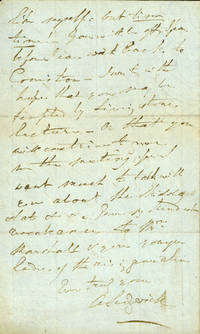
1857408581857. <p>Sedgwick Adam 1785-1873. Two autograph letters signed to James Marshall. Dent Yorkshire Oct. 7 1857; Trinity College Cambridge Oct. 31 1857. 8pp. total. 186 x 113 mm. Light soiling along folds but very good.</p> <p>Letters with excellent scientific content from one of the founders of modern geology. Sedgwick was responsible for defining the Devonian and Cambrian ages in the geological time scale and his immensely popular lecture courses on geology delivered annually at Cambridge between 1819 and 1870 had an enormous influence on succeeding generations of English geologists. One of his students was Charles Darwin who began attending Sedgwick's lectures in January 1831 and accompanied Sedgwick on a geological field tour of Wales the following summer. The two men remained friends until Sedgwick's death even though Sedgwick was never able to accept Darwin's theory of evolution by natural selection.</p> <p>IIn his Oct. 7 letter to Marshall Sedgwick discusses the geological researches he was then undertaking in England's Lake District:</p> <p>"I mean D.V. to work my way to Ulverston; & on Saturday or possibly Monday to transfer my head quarters to Broughton. I want to connect our work in all quarries on the east side of the road with the great open quarries in the Ireleth country; which we failed to do. The beds in the great open quarries strike very differently from those you & I saw; yet the strike of the cleavage is unchanged in direction & from end to end almost perpendicular--I think it highly probable that the bed between the Ireleth slate & the Ulverston estuary are nearly all from the flag or flag & grit--And I suspect that some hard gritty ridges I remember to have seen in a part of Cartmell Fell are but a repetition by enormous fault of the Comiston grits. . . ." </p> <p>Sedgwick also notes his intention to "hear Dr. Livingstone's evening lecture"; this is a reference to David Livingstone 1813-73 famous for his exploration of Africa. Sedgwick later provided a preface to Dr. Livingstone's Cambridge Lectures 1858.</p> <p>In his Oct. 31 letter Sedgwick touches on his precarious health--"On Monday I ought to have begun my course of lectures but on that day I had a severe relapse of vertigo & was obliged to put off my lectures until Friday yesterday"--and continues his discussion of his work:</p> <p>"All the rocks from the Ireleth country to the Comiston Ulverston sands are Comiston flag--But in our final traverse we found the hard Comiston grits in the hills S. W. of Penny Bridge--just where they ought to be--I think there is an enormous break down the valley meeting the complicated faults which come down from the hill a little North of Seathwaite at an angle.--In short the country from Ireleth Moor inclusive to the Sand of Ulverston has had a shove southwards of about five miles!"</p> <p>The recipient of these letters James Marshall was an amateur geologist and Fellow of the Geological Society. A friend of both Sedgwick and John Herschel Marshall was "a keen advocate of scientific education" Briggs Victorian Cities 1993 p. 161. Olroyd Earth Water Ice and Fire 2002 p. 20. Dictionary of Scientific Biography. </p> . unknown books
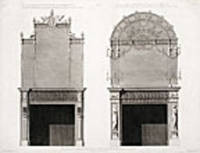
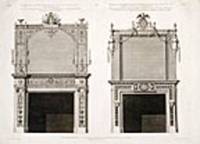
177517123London 1775. Engraving by Joshua Record. In excellent condition. An elegant engraving showing the two chimneys in Lord Derby's house in Grosvenor Square London.<br/> <br/>Robert and his brother James Adam forever changed the face of British architecture by introducing innovative Classical design ideas. From 1754-57 Robert lived in Italy where he had a long productive friendship with Piranesi which was inspirational for both men. Adam's first book on Diocletian's palace in Dalmatia is clearly very like the archaeological investigations Piranesi was making at the same time of similar ruins. Piranesi's friendship and passion for Roman Classicism were seminal influences on Adam and the greatest single factor other than his own talent in the work Adam produced on his return to England. Upon his return the brothers launched their career by building the Adelphi from the Thames to the Strand in London which although not a commercial success at the time included one of London's most cherished buildings the Adlephi Theatre. Together the Adam brothers designed and built some of the most famous buildings in England including such bastions of English architecture as Kenwood House Keddlestone Manor and Syon House. To the interiors of their English country houses the Adams brought wonderful ornamental elements in niches lunettes festoons and reliefs. Their classically designed buildings were so numerous in London that they changed the prevailing feel of the city and established their brand of neo-Classicism as the model of elegance and importance. It is asserted that the brothers originated the concept of the uniform facade attached to the typical English row house an architectural device that distinguishes London buildings. This monumental contribution is evidenced in the Adams' designs for Portland Place and Fitzroy Square and these were used as architectural models for the whole city. The brothers brought their talents into other areas by designing furniture to complement their beautiful interiors and by creating and publishing a treatise of design entitled 'Works in Architecture'. The work was published in three volumes over an extended span of time beginning in 1773 with the final volume being published posthumously in 1822.<br/> <br/>Cf. Brunet I.47; cf. Lowndes I p.8;DNB; Wilton-Ely The Mind and Art of Giovanni Battista Piranesi. unknown books
177717125London 1777. Engraving by J. Zucchi. In excellent condition. An elegant engraving depicting two chimneys in Lord Derby's celebrated house in Grosvenor Square London.<br/> <br/>Robert and his brother James Adam forever changed the face of British architecture by introducing innovative Classical design ideas. From 1754-57 Robert lived in Italy where he had a long productive friendship with Piranesi which was inspirational for both men. Adam's first book on Diocletian's palace in Dalmatia is clearly very like the archaeological investigations Piranesi was making at the same time of similar ruins. Piranesi's friendship and passion for Roman Classicism were seminal influences on Adam and the greatest single factor other than his own talent in the work Adam produced on his return to England. Upon his return the brothers launched their career by building the Adelphi from the Thames to the Strand in London which although not a commercial success at the time included one of London's most cherished buildings the Adlephi Theatre. Together the Adam brothers designed and built some of the most famous buildings in England including such bastions of English architecture as Kenwood House Keddlestone Manor and Syon House. To the interiors of their English country houses the Adams brought wonderful ornamental elements in niches lunettes festoons and reliefs. Their classically designed buildings were so numerous in London that they changed the prevailing feel of the city and established their brand of neo-Classicism as the model of elegance and importance. It is asserted that the brothers originated the concept of the uniform facade attached to the typical English row house an architectural device that distinguishes London buildings. This monumental contribution is evidenced in the Adams' designs for Portland Place and Fitzroy Square and these were used as architectural models for the whole city. The brothers brought their talents into other areas by designing furniture to complement their beautiful interiors and by creating and publishing a treatise of design entitled 'Works in Architecture'. The work was published in three volumes over an extended span of time beginning in 1773 with the final volume being published posthumously in 1822.<br/> <br/>Cf. Brunet I.47; cf. Lowndes I p.8; DNB; Wilton-Ely The Mind and Art of Giovanni Battista Piranesi. unknown books
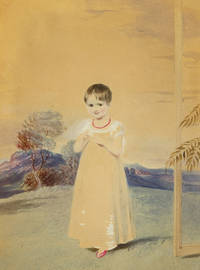
181036285London 1810. Watercolor on card first drawing signed lower right. 1 vols. 10 x 7-1/2 inches images. Framed and glazed. Watercolor on card first drawing signed lower right. 1 vols. 10 x 7-1/2 inches images. "Buck Adam 1758-1833 portrait painter elder son of Jonathan Buck a silversmith of Castle Street Cork was born there in 1759. With a younger brother Frederick he studied art from an early age and acquired some repute in youth in his native city as a painter of miniature portraits in water-colour. Coming to London in 1795 he settled at 174 Piccadilly and soon gained popularity. He not only continued to paint miniature portraits in water-colour but produced many portraits in oil and crayon of larger size. Between 1795 and 1833 the year of his death he exhibited at the academy as many as 171 pictures. He also exhibited ten other works at the British Institution and at the Society of British Artists in Suffolk Street. But the pictures that he exhibited represent a small proportion of his labours. Numerous pictures by him were reproduced in coloured engravings mostly in stipple and had a wide circulation. Of extant coloured engravings after his pictures the originals of as many as forty or fifty are not known to have been exhibited. Among his sitters were the Earl of Cavan the Duke of York Sir Francis Burdett Major Cartwright John Cam Hobhouse and John Burke author of the Peerage' and his family. His portraits were carefully finished although they were stiff in treatment and design.<br/>Buck was at the same time busily employed as a teacher of portrait painting and in 1811 he brought out a volume entitled Paintings on Greek Vases' which contained a hundred designs not only drawn but also engraved by himself. This work which was planned to continue a similar compilation by Sir William Hamilton is now extremely scarce.<br/>In 1807 he moved from Piccadilly to Frith Street Soho and after several changes of residence died at 15 Upper Seymour Street West in 1833. Buck was married and left two sons Alfred and Sidney; the latter followed his father's profession.<br/>A miniature portrait of Buck by himself dated 1804 is in the Sheepshanks gallery of the Victoria and Albert Museum London. " - DNB. unknown books
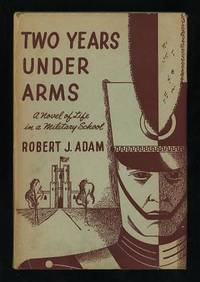
195317344New York: Exposition Press. Very Good in Very Good dj. c.1953. First Edition. Hardcover. NOISBN . moderate shelfwear light fading to cloth at edges light discoloration in gutters; jacket a little edgeworn spine is browned with some minor staining a few tiny nicks here and there. The author a native of Dunlap Kansas and a then-resident of Lyons Kansas about 110 miles to the west in case you were wondering novelizes his experience at military school -- by all accounts the sort of thing you never quite get over although it doesn't necessarily obligate you to write a book about it -- to present a "vivid and authentic account of . the hazing the maneuvers the sports the youthful rebellion and all the other countless facets of cadet life." Like many vanity-romans-a-clef the author effectively anonymizes the actual locations of the action -- his protagonist hails from "Centerville" but the description of the town doesn't match Centerville Kansas and attends "Sterling Military Academy in Longmont Missouri." There never has been either a military school or a Missouri town by those names near as I can tell. The novel is set mostly during 1934 and 1935 and although the locus is primarily the doings at the school itself there are at least some references to what was going in Depression-era America and a visiting lecturer even speaks of the rise of Hitler. There's also a kind of amusing passage in which the protagonist take a girl to see the movie LIMEHOUSE BLUES Paramount 1934 which he dismisses as "a morbid piece with many sordid undesirable scenes." All in all it presents a pretty balmy picture of life in a military academy -- even the "hazing" referenced above doesn't amount to much more than a sergeant who yells a bit and calls the cadets "the sorriest bunch of recruits I've ever seen." It does kind of leave you wondering though if the author -- especially since the book was published smack-dab in the middle of the McCarthy Era -- quite knew what he was doing when he named his protagonist "John Reed." . Exposition Press hardcover books
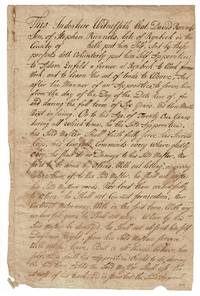
178957019Rhineback N.Y.: May 25 1789. Folio approx. 12" x 8" 42 lines approx. 300 words; a few minor breaks at the edges but overall very good and legible. This indenture binds David Runnels son of Stephen Runnels in the town of "Rynbeck" i.e. Rhinebeck Dutchess County New York to a farmer and weaver named Adam Zufeld 1760-1849 as a servant and apprentice "to work farmers work and to learn the art of trade to weave." Although a wax seal is affixed the document is unsigned. David Runnels b. ca. 1774 signed up for six years and three months until age 21 and vows to "faith fully serve his secrets keep his lawful commands every where gladly obey . not commet fornication nor contract matremony with any lawful games he shall not play nor absent himself from his master's service day or night." In return for this service Zufeld agrees to "teach and instruct the said apprentice in the trade of Weaven and shall send Runnels to school to lern English read and write" and to provide "sufficient meat drink apperal washing and lodging fitting for an apprentice." After the apprenticeship is over Zufelf agrees to "give the said apprentice a new cloth or garment and a mare colt." <br/><br/> May 25 hardcover books
1880S9851Halle a.S.:: R. Nietschmann 1880. 1880. 8vo. 30 1 pp. Self-wraps; paper browned disbound. Good. R. Nietschmann, 1880. paperback books
18891024811889. contemporary half red calf with pastepaper-covered boards. small 4to. contemporary half red calf with pastepaper-covered boards. p. 274-283. An article removed from Zeitschrift für Christliche Kunst No. 9 1889. From the reference library of the Zaehnsdorf Company with a commemorative booklabel loosely inserted. With the bookplate of the Zaehnsdorf Company. unknown books
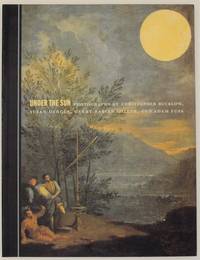
1997161305San Francisco CA: Fraenkel Gallery 1997. First edition. Softcover. 101 pages. Exhibition catalog for a show that ran December 1996 through January 1997. Introduction by Jeffrey Fraenkel. Essay by David Alan Mellor and with selections from the writings of Christopher Bucklow. Includes numerous color illustrations. A very near fine copy in wrappers. Fraenkel Gallery unknown books
1999700034NY: Arcade. 1999. Advance Reading Copy. Very Good in wrappers. Unless otherwise noted our first editions are first printings. First Edition. Softcover. Very Good. Arcade paperback books
2009Embry 143701Nan A. Talese 2009. First edition first printing. Fine in fine dust jacket in mylar cover. Signed by author. Nan A. Talese, 2009. First edition, first printing. unknown books
178956256Hamburg 1789. With four folding charts in vol. I. Pp.2 xxx 14 contents 578; xii 2 contents 556. 2 vols. 8vo. Contemporary quarter calf and boards. Rubbed. About very good. With four folding charts in vol. I. Pp.2 xxx 14 contents 578; xii 2 contents 556. 2 vols. 8vo. First and only edition of this important documentary source publishing letters and papers of Frederick IV of Denmark Queen Anna Sophia of Dänemark correspondence with the King of Prussia as well as texts concerning Copenhagen the judiciary police and city council changes in the Danish language etc.<br/><br/>A further continuation volume appeared in 1790. unknown books
2001285885New York: Viking Studio 2001. hardcover. very good/very good. Foreword by Albert Hadley. Illustrated. xxii 262 pages large 8vo white cloth d.w. New York: Viking Studio 2001. A very good copy in a very good dust wrapper. Presentation copy signed by the author on the half-title.<br/><br/> Viking Studio unknown books
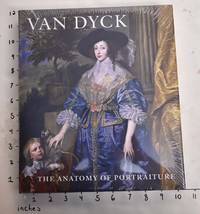
2016165196New York: The Frick Collection 2016. Hardcover. New in shrinkwrap. Black cloth boards. Color-illustrated dust jacket with white lettering. xi 307 pp. Mainly color illustrations. The first major examination of Anthony van Dyck's work as a portraitist and an essential resource on this aspect of his illustrious career. The Frick Collection hardcover books
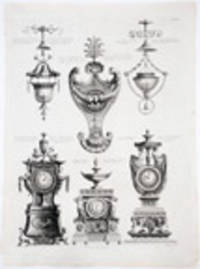
177517574London 1775. Engraving by P. Begbie. In excellent condition with the exception of being trimmed just outside the platemark on the left margin. An elegant engraving depicting various furnishings designed by Robert and James Adam including decorative clocks an ornamental knocker and two elaborate hanging lights.<br/> <br/>Robert and his brother James Adam forever changed the face of British architecture by introducing innovative Classical design ideas. From 1754-57 Robert lived in Italy where he had a long productive friendship with Piranesi which was inspirational for both men. Adam's first book on Diocletian's palace in Dalmatia is clearly very like the archaeological investigations Piranesi was making at the same time of similar ruins. Piranesi's friendship and passion for Roman Classicism were seminal influences on Adam and the greatest single factor other than his own talent in the work Adam produced on his return to England. Upon his return the brothers launched their career by building the Adelphi from the Thames to the Strand in London which although not a commercial success at the time included one of London's most cherished buildings the Adlephi Theatre. Together the Adam brothers designed and built some of the most famous buildings in England including such bastions of English architecture as Kenwood House Keddlestone Manor and Syon House. To the interiors of their English country houses the Adams brought wonderful ornamental elements in niches lunettes festoons and reliefs. Their classically designed buildings were so numerous in London that they changed the prevailing feel of the city and established their brand of neo-Classicism as the model of elegance and importance. It is asserted that the brothers originated the concept of the uniform facade attached to the typical English row house an architectural device that distinguishes London buildings. This monumental contribution is evidenced in the Adams' designs for Portland Place and Fitzroy Square and these were used as architectural models for the whole city. The brothers brought their talents into other areas by designing furniture to complement their beautiful interiors and by creating and publishing a treatise of design entitled 'Works in Architecture'. The work was published in three volumes over an extended span of time beginning in 1773 with the final volume being published posthumously in 1822.<br/> <br/>Cf. Brunet I.47; cf. Lowndes I p.8; DNB; Wilton-Ely The Mind and Art of Giovanni Battista Piranesi. unknown books
1982249253Berkeley: Velocities 1982. 40p. 5.5x8.5 inches illustrations poetry very good chapbook journal in stapled gray pictorial wraps. San Francisco poets and Speculative Poetry Science Fiction/Fantasy. Velocities unknown books
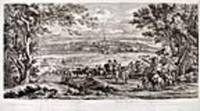
168516903Paris: distribuë par l'Auteur en l'Hostel des Manufactures des Gobelins et en la rue St.Jacques 1685. Copper engraving on two joined sheets after Van der Meulen. Titled in French and Latin. In excellent condition. Some infill work along the bottom margin. Image size: 18 1/2 x 38 5/8 inches. A striking contemporary view of Gray in Franche-Comte by the celebrated court painter Van der Meulen.<br/> <br/>This fine view shows the town of Gray in Franche-Comte built on the banks of the Saône River. One of the most important trading towns in Franche-Comte the region became a possession of the Spanish Hapsburgs in 1556. Although some of the region's fortified towns were occupied by France during the Wars of Religion peace and prosperity continued until the advent of the Thirty Years War when the region was ravaged by both Catholics and Protestants. Louis XIV conquered Franche-Comté in 1668 and again in 1674 and finally obtained its cession from Spain. Van der Meulen's striking image depicts the king and his armies entering the town after they successfully re-conquered the region. Adam Frans Van der Meulen was a landscape and genre painter who specialized in battle scenes and his early works i.e. those from the years before he left for Paris the earliest dated work is from 1653 are mainly cavalry skirmishes in the manner of his teacher Pieter Snayer. After he moved to Paris the character of his work changed and became more ceremonial. He now specialized in large topographical views and military scenes and in royal journeys processions and receptions. His most important task was to accompany the king on his many campaigns during the wars of conquest waged in the 1660s and 1670s against inter alia the Spanish Netherlands and as Peintre de conquêtes du roi officially to portray the memorable sieges battles and conquests of le Roi Soleil in large-scale canvases or cartoons which were later transformed into tapestries. Van der Meulen was born in Brussels where he was baptized in 1632. In 1646 he was apprenticed to the battle painter Pieter Snayers. In 1651 he became a master in the Guild of St. Luke in Brussels but by 1663 he had moved to Paris where he joined a group of Netherlandish artists associated with the French painter Charles Le Brun 1619-90 who not only was Premier peintre du roi but also from 1663 director of the Parisian tapestry manufactory Manufacture royale des Gobelins. Van der Meulen quickly became a protégé of Le Brun and on his recommendation Van der Meulen was appointed court painter to Louis XIV on 1 April 1664 and at the same time became Le Brun's collaborator in the tapestry manufactory. In 1673 he was accepted as a member of the Académie royale de Peinture et de Sculpture without any obligation to submit a morceau de réception; in 1681 he became conseiller and in 1686 premier conseiller. He died as a highly esteemed artist in the Hôtel des Gobelins 15 October 1690. distribuë par l'Auteur, en l'Hostel des Manufactures des Gobelins, et en la rue St.Jacques unknown books
16853659Paris: distribuë par l'Auteur en l'Hostel des Manufactures des Gobelins et en la rue St.Jacques 1685. Copper engraving on two joined sheets by A.F. Baudouin with the figures by R. Bonnart after Van der Meulen. Titled in French and Latin. A fine view of the fortified town of Calais and its environs recalling king Louis XIV's gradual acquisition of territory on the Channel coast from 1667 onwards.<br/> <br/>This excellent panorama shows Calais as seen from the landward side looking across to the ramparts of the fortifications surrounding the town to the roofs of the town itself and then beyond to the sea. In the fore and mid-ground the French army of King Louis XIV moves forward towards the town this scene enlivened by Van der Meulen's portrayal of the stormy conditions: hats blow off cloaks are wrapped around peoples' heads foot soldiers lean into the wind. This sort of detail supports the statement in the imprint that the present scene was painted from life by Van der Meulen. Adam Frans Van der Meulen was a landscape and genre painter who specialized in battle scenes and his early works i.e. those from the years before he left for Paris the earliest dated work is from 1653 are mainly cavalry skirmishes in the manner of his teacher Pieter Snayer. After he moved to Paris the character of his work changed and became more ceremonial. He now specialized in large topographical views and military scenes and in royal journeys processions and receptions. His most important task was to accompany the king on his many campaigns during the wars of conquest waged in the 1660s and 1670s against inter alia the Spanish Netherlands and as Peintre de conquêtes du roi officially to portray the memorable sieges battles and conquests of le Roi Soleil in large-scale canvases or cartoons which were later transformed into tapestries. Van der Meulen was born in Brussels where he was baptised in 1632. In 1646 he was apprenticed to the battle painter Pieter Snayers. In 1651 he became a master in the Guild of St Luke in Brussels but by 1663 he had moved to Paris where he joined a group of Netherlandish artists associated with the French painter Charles Le Brun 1619-90 who not only was Premier peintre du roi but also from 1663 director of the Parisian tapestry manufactory Manufacture royale des Gobelins. Van der Meulen quickly became a protégé of Le Brun and on his recommendation Van der Meulen was appointed court painter to Louis XIV on 1 April 1664 and at the same time became Le Brun's collaborator in the tapestry manufactory. In 1673 he was accepted as a member of the Académie royale de Peinture et de Sculpture without any obligation to submit a morceau de réception; in 1681 he became conseiller and in 1686 premier conseiller. He died as a highly esteemed artist in the Hôtel des Gobelins 15 October 1690. distribuë par l'Auteur, en l'Hostel des Manufactures des Gobelins, et en la rue St.Jacques unknown books
1997132350NY: Harry N. Abrams 1997. Softcover. New in plastic. Color illustrated wraps. 128 pp. Harry N. Abrams unknown books
1996144003New York New York: Whitney Museum of American Art 1996. Softcover. VG. Orange/blue color-illustrated wraps. 175 pp. Numerous bw and color illustrations. Parallel text English and German. Accompanied an exhibition held at the Whitney Museum of American Art and the Museum fur Moderne Kunst Frankfurt. Whitney Museum of American Art unknown books
1996152259New York New York: Whitney Museum of American Art 1996. Softcover. VG. Steel-grey/yellow color-illustrated wraps. 128 pp. Numerous bw and color illustrations. Dual text English and Dutch. Accompanied an exhibition held at the Whitney Museum of American Art and the Stedelijk Museum Amsterdam. Whitney Museum of American Art unknown books
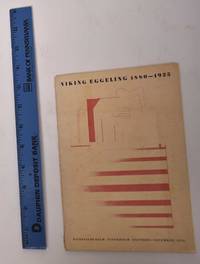
1950170831Stockholm: Nordisk Rotogravyr 1950. Paperback. VG- light general wear and discoloration pages detached from cover. Paper wraps with red illustration and black lettering. 29 pp. BW illustrations. Catalogue of an exhibition from October 27 to November 19 1950. Text in Swedish German French and English. Nordisk Rotogravyr paperback books
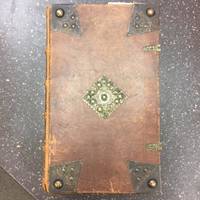
17831277019Augsburg Bavaria Germany: Joseph Wolffischen 1783. Hardcover. folio 750pp. 24pp. index 136pp.; VG; bound in brown leather paneled spine with no lettering; front board decorated with metal in the four corners diamond in the center; remnants of two clasps present two metal hooks on fore edge of front board two torn leather strips bound into rear board; moderate rubbing to boards; newer endpapers; title page has had a strip of paper approximately 1.25 inches 3.5cm. high torn off of the bottom primarily including the entirety of the publication information. It has been repaired with the backing of another sheet on that portion. There is a small tear in the middle of the page that is backed by a piece of paper on the verso and so barely impacts the legibility of the words; complete collation: endpaper title page 2pp. table of contents 4pp. 750pp. 24pp. index title page 6pp. 136pp.; separate title page with separate pagination; page 110 misprinted as 100 160 as 142 217 as 21 271 as 217 523 as 532 524 as 534 554 as 454 732 as 571 only the page number impacted; small repairs on pages 165/166 571/572 633/634 649/650 687/688 701/702 705/706 719/720 1/2; illustrated pages beginning parts two and three on pages 165 and 567. The pagination between pages 566-571 appear to be missing a page as is usual with this edition; ffep partially detached; profusely illustrated with over 800 black and white woodcut illustrations including genre scenes individual plants and animals and distilling apparatus; <br /> <br><br /> <br><br /> Adam Lonicer was a German botanist who studied at Marburg and the University of Mainz obtaining his Magister degree at sixteen years of age. After becoming a Doctor of Medicine in 1554 he became the town physician in Frankfurt am Main. His true interest though was herbs and the study of botany. His first important work on herbs the Kräuterbuch was published in 1557 with a large part dealing with distillation. He married Magdalena Egenolff the daughter of Christian Egenolff his Frankfurt publisher and a printer who specialized in herbals. The work that made his name famous is this popular herbal the Kräuterbuch. Lonicer provides us with one of the early descriptions of local flora as well as being one of the first to differentiate deciduous trees from conifers.<br /> <br /> shelved case 4. 1277019. Shelved Dupont Bookstore. Joseph Wolffischen hardcover books
182134467Paris: Gide fils 1821. 3 volumes text: 2 volumes 8vo 8 x 5 1/2 inches; atlas: folio 18 1/2 x 12 inches. xii 418; 4 531 1pp. 30 engraved plates portrait 9 maps and 20 plates; 2 double-page maps. Uncut. Text in period patterned paper wrappers the atlas bound to style in uniform period panelled wrappers. Housed in black morocco backed boxes.<br/> <br/>First edition in French of Krusenstern's seminal account of the first Russian expedition to circumnavigate the globe: complete with the rare atlas of plates.<br/> <br/>Capt. Ivan von Krusenstern's voyage was one of the most important post-Cook Pacific voyages specifically aimed at obtaining more knowledge of the northern Pacific region establishing diplomatic and commercial relations with Japan and visiting the Russian trading posts in Alaska and on the west coast of America. It comprised the first Russian expedition to circumnavigate the globe under the command of Krusenstern between 1803 and 1806. Sailing in 1803 the expedition touched on Brazil and rounded Cape Horn visiting the Marquesas Islands Hawaii Kamchatka and Japan. In Hawaii the expedition separated with ships under Langsdorff and Lisianski sailing to the Northwest Coast while Krusenstern himself undertook the delicate Japan expedition returning via Macao and the Cape of Good Hope. "The importance of this work stems from its being the official account of the first Russian expedition to circumnavigate the globe and form the discoveries and rectifications of charts that were made especially in the North Pacific and on the northwest coast of America" Hill. First published in St. Petersburg between 1809 and 1814 with issues in both Russian and German that first edition with its folio atlas of 105 plates is a major rarity of travel literature. Dutch English and Italian editions followed although none contained an atlas of plates. The present first edition in French is the first edition following the original publication to include an atlas of plates. The images are re-engraved versions of images in the original and includes a portrait of Krusenstern views and images of natives of the Marquesas Japan Sakhalin Island Kamtchatka etc. as well as nine maps of various Pacific regions visited.<br/> <br/>cf. Lada-Mocarski 62; Sabin 38332; Arctic Bibliography 9377; Howes K272 "c;" Borba de Moraes pp.374-75; Hill 952 ref; cf. Forbes Hawaii 407. Gide fils unknown books