Hopital Saint-Louis: = Perelle, AdamBiblio.com
95 résultats
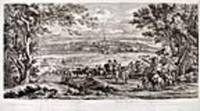
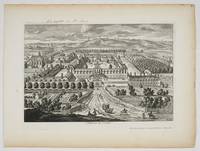
1660710681660. A Paris chez N. Langlois rue St. Jacques à la Victoire Avec privilege 1660-1670. Kupferstich. Plattengrösse 217 x 310 mm. Blattgrösse 290 x 358 mm. Weitwinklige Außenansicht des Hôpital Saint-Louis mit den langen Krankensaal-Flügeln und der zentralen Kapelle im historischen Quadrilater-Grundriss. Der Hospitalbau erscheint als geschlossener klar gegliederter Komplex mit Hofstruktur in damals noch peripherer Lage vor der Stadt. Im Vordergrund Straße mit Passanten und Wagen die den lebendigen Gebrauch des Hospitals als Seuchen- und Armenanstalt andeuten. Noch ohne Gebäude-Nummerierung und ohne ausführliche Legende. Medizinhistorisch wichtiges ikonographisches Zeugnis des 1607-1611 unter Heinrich IV. errichteten Pest- und Quarantänehospitals Saint-Louis. Die extramurale Lage der große Maßstab und die regelmäßige Anlage veranschaulichen frühneuzeitliche Strategien der räumlichen Isolierung und Belüftung für Pest- und Epidemiekranke. Gabriel Perelle 1604-1677 war ein französischer Zeichner und Stecher Schüler u. a. von Daniel Rabel und Simon Vouet der sich auf Landschaften und topographische Ansichten der Region Paris insbesondere Schlösser Gärten und städtische Ensembles spezialisierte. Er gründete eine Werkstatt in der seine Söhne Nicolas 1625-1692 und Adam 1638/1640-1695 mitarbeiteten und zahlreiche Platten nach seinen und eigenen Vorlagen ausführten. Adam Perelle ist vor allem für seine Architekturbedarstellungen und Stadtveduten bekannt; ein großer Teil seines Ouvres gehört zu Serien von Ansichten der "plus beaux bâtiments" Frankreichs und der Pariser Umgebung. Nicolas I. Langlois Paris 1640-1703 war ein bedeutender Pariser Verleger von Kupferstichen der ab etwa 1660 von der Adresse "A Paris chez N. Langlois rue St-Jacques à la Victoire" aus vor allem Serien von Architektur- Landschafts- und Dekorationsstichen edierte. Unter seiner Adresse erschienen zahlreiche Blätter der Perelle-Werkstatt darunter Pariser Veduten und Folgen wie die "vues" und "veües des belles maisons de France" die später teilweise bei Jean Mariette neu aufgelegt wurden. unknown
167027669Paris chezN. de Poilly 1670 une vue d'optique en couleurs, GRAVÉE A L'EAU-FORTE ET AQUARELLÉE SUR PAPIER DE FORMAT: 33 x 22,5 cm. , par Adam PERELLE(1670) à Paris : Chez N. de Poilly Editeur,
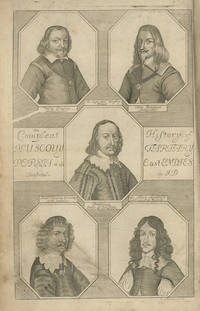
166928698London: Printed for John Starkey and Thomas Basset 1669 1669. Second edition in English preceded by the edition of 1662. ESTC R30756; Wing O270; Cox Literature of Travel I page 249. Several of the maps have paper repairs at the folds and in the margins; the third map of the River Volga is a little darkened at the edges and dust-soiled; the two leaves Q4 & R1 adjacent to that map are also a little darkened and dust-soiled; one clean tear to a leaf without loss; very good copy. Folio in fours contemporary mottled calf rebacked red morocco spine label blind rules and gilt lettering. Frontispiece six folding maps two portraits and one engraved Cyrillic alphabet in the text. In 1634 Frederick III of Holstein-Gottorp present day Denmark and Germany sent an expedition with Adam Olearus 1603-1671 as its secretary from Hamburg to Moscow in an attempt to establish commercial relations with Russia which failed. Undeterred Frederick sent a similar expedition to Persia in 1636 also with Adam Olearius as secretary The first part of this work is the first English translation by John Davies of Olearius' detailed account of those expeditions in its second edition. The second part contains the account by German adventurer Johan Albrecht de Mandelslo 1616-1644 of his departure from Frederick's mission to Persia and continuation on to India China Japan and Formosa also translated by Davies from Olearius' posthumous editing and publication of that travelogue. Though trade missions generally make for dull reading Olearius' narrative is quite engaging with details and anecdotes about the people and places they encountered. Typical of his observations is one about the Russians: "There is no place in the World where drunkenness is more common than in Muscovy . . . Ecclesiastics and laicks Men and Women Old and Young will drink strong water at any time before at and after their meals . . . will drink of it till they lye down and many times die in the place." From the library of John Evelyn with the Evelyn book label "JE" on the front paste-down. Early marginal notes in Mandelslo's adventures though not in Evelyn's hand alas. London: Printed for John Starkey and Thomas Basset, 1669 unknown
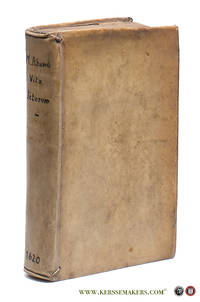
162054592Haidelbergae Heidelberg : Impensis heredum Jonae Rosae 1620. Full vellum hardcover. 3248832 pp.; 18.4x11.8 cm. Text in Latin. - used piece cut out of title page and last page paper seriously stained/ browned folding table torn and partly missing few small old worm-holes Otherwise complete and still good see pictures very rare Impensis heredum Jonae Rosae hardcover
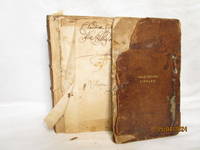
161847504Frankfurt Germany: Jonae Rosae. Good. 1620; 1618. Hardcover. Vitae Germanorum theologorum qui superiori seculo ecclesiam Christi voce scriptisque propgarunt et propugnarunt. Two titles bound in one. Old leather; Yale College Library stamped to cover. Covers detached included; spine partially perished. Front blanks attached by one thread two front blanks. PO name. Title page in red and black with vignette. 880pp plus index/errata in first title. Second title: Vitas theologorum exterorum principum qui ecclesiam Christi superiori seculo propagarunt et propugnarunt. 245pp plus index/errata in 2nd title. Several rear blanks are worn/torn. The pages are generally evenly browned and legible. ; 8vo 8" - 9" tall . Jonae Rosae hardcover
161514675Haidelbergae Heidelberg Heidelberg: Impensis Jonae RosaeTypis Johannis Lacelloti 1615. Fine. Impensis Jonae Rosae Typis Johannis Lacelloti Haidelbergae Heidelberg Heidelberg 1615 19 x 12 cm relié First edition. Printer's device on title page. Not in Brunet or Graesse. Contemporary full calf binding. Spine with raised bands decorated. Head worn. Lack to tail. Upper joint partially cracked. Lacking endpapers with marbled paper. Lives of Germanic philosophers from the late 15th century to 1614. The notion of Germanity and philosopher in the humanist sense is extended since the list includes Erasmus Swiss Dutch and even Dürer. but also Joan Faustus Georgius Fabricius Christophorus Longolius Copernicus Mercator Orlandus de Lasso Nicodemus Frischlinus Nicolas Clenard Henricus Glareanus. that is mathematicians physicians astronomers geographers. Impensis Jonae RosaeTypis Johannis Lacelloti hardcover
161514675Impensis Jonae Rosae Typis Johannis Lacelloti | Haidelbergae (Heidelberg) 1615 | 19 x 12 cm | relié
16853659Paris: distribuë par l'Auteur en l'Hostel des Manufactures des Gobelins et en la rue St.Jacques 1685. Copper engraving on two joined sheets by A.F. Baudouin with the figures by R. Bonnart after Van der Meulen. Titled in French and Latin. A fine view of the fortified town of Calais and its environs recalling king Louis XIV's gradual acquisition of territory on the Channel coast from 1667 onwards.<br/> <br/> This excellent panorama shows Calais as seen from the landward side looking across to the ramparts of the fortifications surrounding the town to the roofs of the town itself and then beyond to the sea. In the fore and mid-ground the French army of King Louis XIV moves forward towards the town this scene enlivened by Van der Meulen's portrayal of the stormy conditions: hats blow off cloaks are wrapped around peoples' heads foot soldiers lean into the wind. This sort of detail supports the statement in the imprint that the present scene was painted from life by Van der Meulen. Adam Frans Van der Meulen was a landscape and genre painter who specialized in battle scenes and his early works i.e. those from the years before he left for Paris the earliest dated work is from 1653 are mainly cavalry skirmishes in the manner of his teacher Pieter Snayer. After he moved to Paris the character of his work changed and became more ceremonial. He now specialized in large topographical views and military scenes and in royal journeys processions and receptions. His most important task was to accompany the king on his many campaigns during the wars of conquest waged in the 1660s and 1670s against inter alia the Spanish Netherlands and as Peintre de conquêtes du roi officially to portray the memorable sieges battles and conquests of le Roi Soleil in large-scale canvases or cartoons which were later transformed into tapestries. Van der Meulen was born in Brussels where he was baptised in 1632. In 1646 he was apprenticed to the battle painter Pieter Snayers. In 1651 he became a master in the Guild of St Luke in Brussels but by 1663 he had moved to Paris where he joined a group of Netherlandish artists associated with the French painter Charles Le Brun 1619-90 who not only was Premier peintre du roi but also from 1663 director of the Parisian tapestry manufactory Manufacture royale des Gobelins. Van der Meulen quickly became a protégé of Le Brun and on his recommendation Van der Meulen was appointed court painter to Louis XIV on 1 April 1664 and at the same time became Le Brun's collaborator in the tapestry manufactory. In 1673 he was accepted as a member of the Académie royale de Peinture et de Sculpture without any obligation to submit a morceau de réception; in 1681 he became conseiller and in 1686 premier conseiller. He died as a highly esteemed artist in the Hôtel des Gobelins 15 October 1690. distribuë par l'Auteur, en l'Hostel des Manufactures des Gobelins, et en la rue St.Jacques unknown
168516903Paris: distribuë par l'Auteur en l'Hostel des Manufactures des Gobelins et en la rue St.Jacques 1685. Copper engraving on two joined sheets after Van der Meulen. Titled in French and Latin. In excellent condition. Some infill work along the bottom margin. Image size: 18 1/2 x 38 5/8 inches. A striking contemporary view of Gray in Franche-Comte by the celebrated court painter Van der Meulen.<br/> <br/> This fine view shows the town of Gray in Franche-Comte built on the banks of the Saône River. One of the most important trading towns in Franche-Comte the region became a possession of the Spanish Hapsburgs in 1556. Although some of the region's fortified towns were occupied by France during the Wars of Religion peace and prosperity continued until the advent of the Thirty Years War when the region was ravaged by both Catholics and Protestants. Louis XIV conquered Franche-Comté in 1668 and again in 1674 and finally obtained its cession from Spain. Van der Meulen's striking image depicts the king and his armies entering the town after they successfully re-conquered the region. Adam Frans Van der Meulen was a landscape and genre painter who specialized in battle scenes and his early works i.e. those from the years before he left for Paris the earliest dated work is from 1653 are mainly cavalry skirmishes in the manner of his teacher Pieter Snayer. After he moved to Paris the character of his work changed and became more ceremonial. He now specialized in large topographical views and military scenes and in royal journeys processions and receptions. His most important task was to accompany the king on his many campaigns during the wars of conquest waged in the 1660s and 1670s against inter alia the Spanish Netherlands and as Peintre de conquêtes du roi officially to portray the memorable sieges battles and conquests of le Roi Soleil in large-scale canvases or cartoons which were later transformed into tapestries. Van der Meulen was born in Brussels where he was baptized in 1632. In 1646 he was apprenticed to the battle painter Pieter Snayers. In 1651 he became a master in the Guild of St. Luke in Brussels but by 1663 he had moved to Paris where he joined a group of Netherlandish artists associated with the French painter Charles Le Brun 1619-90 who not only was Premier peintre du roi but also from 1663 director of the Parisian tapestry manufactory Manufacture royale des Gobelins. Van der Meulen quickly became a protégé of Le Brun and on his recommendation Van der Meulen was appointed court painter to Louis XIV on 1 April 1664 and at the same time became Le Brun's collaborator in the tapestry manufactory. In 1673 he was accepted as a member of the Académie royale de Peinture et de Sculpture without any obligation to submit a morceau de réception; in 1681 he became conseiller and in 1686 premier conseiller. He died as a highly esteemed artist in the Hôtel des Gobelins 15 October 1690. distribuë par l'Auteur, en l'Hostel des Manufactures des Gobelins, et en la rue St.Jacques unknown
16853659Paris: distribuë par l'Auteur en l'Hostel des Manufactures des Gobelins et en la rue St.Jacques 1685. Copper engraving on two joined sheets by A.F. Baudouin with the figures by R. Bonnart after Van der Meulen. Titled in French and Latin. A fine view of the fortified town of Calais and its environs recalling king Louis XIV's gradual acquisition of territory on the Channel coast from 1667 onwards.<br/> <br/>This excellent panorama shows Calais as seen from the landward side looking across to the ramparts of the fortifications surrounding the town to the roofs of the town itself and then beyond to the sea. In the fore and mid-ground the French army of King Louis XIV moves forward towards the town this scene enlivened by Van der Meulen's portrayal of the stormy conditions: hats blow off cloaks are wrapped around peoples' heads foot soldiers lean into the wind. This sort of detail supports the statement in the imprint that the present scene was painted from life by Van der Meulen. Adam Frans Van der Meulen was a landscape and genre painter who specialized in battle scenes and his early works i.e. those from the years before he left for Paris the earliest dated work is from 1653 are mainly cavalry skirmishes in the manner of his teacher Pieter Snayer. After he moved to Paris the character of his work changed and became more ceremonial. He now specialized in large topographical views and military scenes and in royal journeys processions and receptions. His most important task was to accompany the king on his many campaigns during the wars of conquest waged in the 1660s and 1670s against inter alia the Spanish Netherlands and as Peintre de conquêtes du roi officially to portray the memorable sieges battles and conquests of le Roi Soleil in large-scale canvases or cartoons which were later transformed into tapestries. Van der Meulen was born in Brussels where he was baptised in 1632. In 1646 he was apprenticed to the battle painter Pieter Snayers. In 1651 he became a master in the Guild of St Luke in Brussels but by 1663 he had moved to Paris where he joined a group of Netherlandish artists associated with the French painter Charles Le Brun 1619-90 who not only was Premier peintre du roi but also from 1663 director of the Parisian tapestry manufactory Manufacture royale des Gobelins. Van der Meulen quickly became a protégé of Le Brun and on his recommendation Van der Meulen was appointed court painter to Louis XIV on 1 April 1664 and at the same time became Le Brun's collaborator in the tapestry manufactory. In 1673 he was accepted as a member of the Académie royale de Peinture et de Sculpture without any obligation to submit a morceau de réception; in 1681 he became conseiller and in 1686 premier conseiller. He died as a highly esteemed artist in the Hôtel des Gobelins 15 October 1690. distribuë par l'Auteur, en l'Hostel des Manufactures des Gobelins, et en la rue St.Jacques unknown books
168516903Paris: distribuë par l'Auteur en l'Hostel des Manufactures des Gobelins et en la rue St.Jacques 1685. Copper engraving on two joined sheets after Van der Meulen. Titled in French and Latin. In excellent condition. Some infill work along the bottom margin. Image size: 18 1/2 x 38 5/8 inches. A striking contemporary view of Gray in Franche-Comte by the celebrated court painter Van der Meulen.<br/> <br/>This fine view shows the town of Gray in Franche-Comte built on the banks of the Saône River. One of the most important trading towns in Franche-Comte the region became a possession of the Spanish Hapsburgs in 1556. Although some of the region's fortified towns were occupied by France during the Wars of Religion peace and prosperity continued until the advent of the Thirty Years War when the region was ravaged by both Catholics and Protestants. Louis XIV conquered Franche-Comté in 1668 and again in 1674 and finally obtained its cession from Spain. Van der Meulen's striking image depicts the king and his armies entering the town after they successfully re-conquered the region. Adam Frans Van der Meulen was a landscape and genre painter who specialized in battle scenes and his early works i.e. those from the years before he left for Paris the earliest dated work is from 1653 are mainly cavalry skirmishes in the manner of his teacher Pieter Snayer. After he moved to Paris the character of his work changed and became more ceremonial. He now specialized in large topographical views and military scenes and in royal journeys processions and receptions. His most important task was to accompany the king on his many campaigns during the wars of conquest waged in the 1660s and 1670s against inter alia the Spanish Netherlands and as Peintre de conquêtes du roi officially to portray the memorable sieges battles and conquests of le Roi Soleil in large-scale canvases or cartoons which were later transformed into tapestries. Van der Meulen was born in Brussels where he was baptized in 1632. In 1646 he was apprenticed to the battle painter Pieter Snayers. In 1651 he became a master in the Guild of St. Luke in Brussels but by 1663 he had moved to Paris where he joined a group of Netherlandish artists associated with the French painter Charles Le Brun 1619-90 who not only was Premier peintre du roi but also from 1663 director of the Parisian tapestry manufactory Manufacture royale des Gobelins. Van der Meulen quickly became a protégé of Le Brun and on his recommendation Van der Meulen was appointed court painter to Louis XIV on 1 April 1664 and at the same time became Le Brun's collaborator in the tapestry manufactory. In 1673 he was accepted as a member of the Académie royale de Peinture et de Sculpture without any obligation to submit a morceau de réception; in 1681 he became conseiller and in 1686 premier conseiller. He died as a highly esteemed artist in the Hôtel des Gobelins 15 October 1690. distribuë par l'Auteur, en l'Hostel des Manufactures des Gobelins, et en la rue St.Jacques unknown books
1700910188CGParis:, N. de Poilly, um 1700. Kupferstich Bildgröße 18 x 28,5 cm, Blattgröße 29 x 36,5 cm.
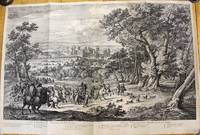
1685P5328Paris: Adam François van der Meulen 1685. Very Good. Notes: Title in French and in Latin.<br>The Château de Vincennes is a former fortress and royal residence next to the town of Vincennes on the eastern edge of Paris. Image Size : 471x769 mm 18.54x30.28 Inches Platemark Size : 513x782 mm 20.20x30.79 Inches Paper Size : 537x795 mm 21.14x31.30 Inches Coloring: Black & White Medium: Copper Engraving Categories: Views Europe France Paris; Adam François van der Meulen unknown
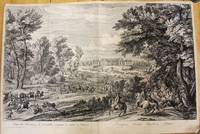
1685P5327Paris: Adam François van der Meulen 1685. Very Good. Notes: Title in French and in Latin.<br>Superb landscape view of Versailles.<br>Landscape with three horsemen in right foreground beyond at left horsemen and carriages heading towards the palace of Versailles which stands in the background. Image Size : 476x770 mm 18.74x30.31 Inches Platemark Size : 511x778 mm 20.12x30.63 Inches Paper Size : 542x791 mm 21.34x31.14 Inches Coloring: Black & White Medium: Copper Engraving Categories: Views Europe France Paris; Adam François van der Meulen unknown
168019670Paris 1680 Une gravure à l'eau-forte sur cuivre , Format : 56 centimètres de haut par 97 centimètres de large (cuvette : 53.0 x 96.5 cm ), sur papier verger crème, inscription au bas de la gravure : R. Bonnart Sculp. + puis inscrit dans la moitié gauche : "Valenciennes prise d'assaut, et sauvee du pillage par la clemence du Roy, le 10 Mars 1677 - Dessigne sur le lieux, pour le Roy tres-chrestien, par F. Vander Meulen. Se distribue a Paris par l'Auteur, en l'Hostel des Manufactures Royales des Gobelins, Et en la rue St Jacques, Avec privilege du Roy." + puis inscrit en latin dans la moitié droite : "Valencenae vi captae et clementia Victoris ab excidio servatae XVI Martii 1677 - Ad Verum delineatus pro Rege Christianissimo per F. Vander Meulen. Prostat Parisiis apud Authorem in Regia Artium officina Vulgo dicta des Gobelins Et in via Jacobea, Cum privilegio Regis.", Fait à Paris, sans date (1680),
16699791London: John Starkey and Thomas Basset 1669. 2nd revised English. Half morocco. Very good. Folio. 2 parts in 1 each separately paginated with separate title-pages. Note: in this copy the title page for Mandelslo appears first in error. 6316;2223210pp. Complete with an added engraved title with 5 portraits 2 separate engraved portraits and a total of 6 folding or double-page maps. In this copy the very large folding map of the Volga River found at p. 112 has been divided in two the second half bound at p. 126 with a slight loss at the fold where they were divided. Engraved table of the Ruthenian alphabet in text. 19th century brown morocco spine over old marbled boards rubbed. Small chip at the top of spine otherwise an attractive copy. This is an odd copy quite complete but with certain preliminaries for the first part bound at front of the second part. The second edition revised of the English translation first published in 1662 made from a 1659 version in French. It contains material not found in the original German edition of 1656 and 1658. An important account of Central Asia including Persia and Russia and the East Indies. The Duke of Holstein's embassies were to negotiate trade. See Cox's THE LITERATURE OF TRAVEL Vol. 1 pp. 249 and 271 for more details. Wing O270. John Starkey and Thomas Basset unknown books
1662B7309London: Thomas Dring John Starkey. 1662. Tear near gutter at fol. M affecting text. Dampstain at gutters affecting last leaves. Binding: Full speckled calf boards rebacked preserving original spine. Spine with 5 raised bands gilt-lettered black morocco label in second compartment. All edges red. Notes: Ex-Libris; bookplate of Edward Shipperdsson and another book ticket mounted to front pastedown. Ownership of John Parkhurst dated 1772 inked to flyleaf along with notations and page references to the book’s contents written below. <br><br>Adam Olearius c.1599-1671 was a German scholar mathematician geographer and librarian. He became secretary to the ambassador sent by Frederick III Duke of Holstein-Gottorp to the Shah of Safavid Iran and published two books about the events and observations during his travels.<br>He later became court official to Frederick III who was planning to establish economic ties between northern Germany and Russia. As a result in 1633 he was appointed secretary to the ambassadors Philipp Crusius jurisconsult and Otto Bruggemann a merchant from Hamburg sent by the duke to Muscovy and Persia in the hope of making arrangements by which his newly founded city of Friedrichstadt should become the terminus of an overland silk-trade.<br>His second Persian journey was again led by Brüggemann and Crusius with Olearius once more as secretary. They were accompanied by among others the traveller Johan Albrecht de Mandelslo and the poet and physician Paul Fleming. The delegation left Altona on 22 October 1635 embarked at Travemünde reached Moscow on 29 March 1636 and continued on 30 June via Balakhna near Nizhniy Novgorod to Volga in a boat specially built for this purpose by the Lübeck skippers who had been brought along. On 10 October they attempted to cross the Caspian Sea in a self-built vessel at Astrakhan but were shipwrecked in Niyazabad near modern Xaçmaz and Derbent on 14 November 1636. The land journey resumed on 22 December. They reached Shamakhi the capital of Shirvan province on 30 December and remained there until 27 March 1637. <br><br><br>PLATES <br>1.frontis<br>2.40 map 2 page Liefland<br>3.103 portrait federowitz<br>4.127 in text characters of language <br>5.356 portrait king of persia<br>6.388 map 2 page kilan <br>MENDELSLO<br>7.54 portrait great mogul <br><br>LACKING<br>1.60 map of Muscovy <br>2.150 map of river wolga<br>3.195 map of Persia<br>mendelslo<br>4.18 map of east indies<br>5.216 map of china<br> Size: Quarto 295 x 200 mm Illustration: Nice example. Illustrated with 7 plates including 2 double-page maps of Liesland Livonia and Kilan and an in-text engraving of the characters of the Muscovian language. Lacking 5 plates as per index of illustrations. Mispaginations: Voyages pg. 53 as 43 54 as 45 Mendelslo 135 as 136 136 as 138 262 as 254 263 as 254; jump from pg. 168 to 171. Pages: P Blank 5. Frontispiece. 1st title. 2nd title. Blank. Translator’s dedication 2. Note to the reader 4. Contents 15. Catalogue of illustrations. Pp. 1-424. Mandelslo Title. Blank. Dedication 2. Pp. 1-287. Contents 10. Blank. Category: Book Russia; Book Asia Middle East Iran; Thomas Dring, John Starkey. hardcover
1601Q-0760750025Barnes & Noble 1816-01-01. Audio CD. New. New. Barnes & Noble unknown
1601Q-B01FGIYB64Barnes & Noble 1816-01-01. Audio CD. New. New. Barnes & Noble unknown
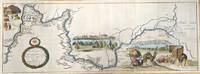
1662M11328London: Thomas Dring and John Starkey 1662. Very Good backed on acid free tissue paper for long term preservation. Notes: An important 17th century map of the Volga River beautifully illustrated and hand coloured. Scarce English edition of this early map of the Volga River. <br>Adam Olearius 1603 – 22 February 1671 was a German scholar mathematician geographer and librarian. He became secretary to the ambassador sent by Frederick III Duke of Holstein-Gottorp to the Shah of Safavid Iran and published two books about the events and observations during his travels. His detailed widely translated travelogues Aussführliche Beschreibung der kundbaren Reyse nach Muscow und Persien provided Europe with significant firsthand 17th-century accounts of Russian and Persian life. Size : 382x1073 mm 15.04x42.24 Inches Coloring: Hand Colored Category: Maps Russia; Thomas Dring, and John Starkey unknown
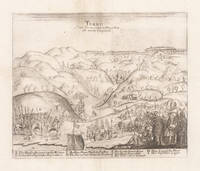
169625351Hamburg 1696. In excellent condition. 20.5 x 247 cm 8 x 975 inches. Original antique copper engraving uncolored. Early engraving of Tarku in the Republik of Dagestan published in „Viel Vermehrte Moscowitische und Persianische Reisebeschreibung“ by Adam Olearius. In the scene we see soldiers and hills with different buildings underneath is a description of the parts numbered „A-G“. Adam Olearius actually Oehlschlegel or Ölschläger; baptized September 24 1599 in Aschersleben; † February 22 1671 at Gottorf Castle today in Schleswig was a German writer scholar and diplomat. He was buried in the Trinity Church in Schleswig.Adam Olearius was the son of the tailor Adam Oehlschlegel and his wife Maria Porst. He grew up in simple circumstances. Nevertheless in 1620 he managed to enroll in theology at the University of Leipzig. He also studied philosophy and mathematics. In 1627 Olearius was awarded the title of Master of Philosophy and five years later in which he taught first at the Nikolaischule and then at the Thomasschule he was promoted to assistant at the philosophy faculty in Leipzig. He was also supported as a member of the Minor Princely Foundation. unknown
1680779131S. Roycroft for Richard Marriott. London 1680. Fair. 1680. Hardcover. hardback 4to lacking first title page and table of contents pp: 14Preface352; title page to '21 Sermons' dated 1679328; tp to '5 Sermons'102; 52 table of Matters. lacks upper board and prelims before the Dedication remaining text-block tightly bound browning and foxing throughout but otherwise clean no inscriptions lacks front board remaining binding full leather gilt decorated spine overall Fair condition . S. Roycroft for Richard Marriott., London, 1680, hardcover
1680V73264London: S. Roycroft for Richard Marriott. 1680. Hardcover. Good. Folio contemporary calf with newer label spine repaired with old spine relaid/recornered but some surface pitting.TP 14p=Preface & table of texts 352pp TP 328pp TP 102pp !0p= Scripture texts 52p=Index 1p=errata verso blank First titlepage in red and black 4 further titlepages dated 1679 one of which is within thru pagination Free endpapers with fine calligraphic ownership dated 1770 surrounded by Biblical inscriptions but endpaper restored to all margins and hinge. Both front and back pastedowns marked lacks rear free endpaper but final leaf of text errata is blank on rear except for ownerships which have ink show-through to the errata on the recto of Mmm4. Book block with some marginal browning and a few marks but wide margins and tightly bound sound condition. S. Roycroft for Richard Marriott. hardcover
16991295121Amsterdam: Jean-Louis De Lorme 1699. First French Edition. Hardcover. 12mo. 4 249 pages; newlyre bound in 1/4 brown leather brown cloth boards paneled spine with green label and gilt lettering; title page has two stamps for a Cabinet De Lecture or reading room; title page also has a pen scribble line underneath the word 'voyage' not impacting any text; two sheets of contemporary blue paper bound in presumably publisher's wraps; lacking engraved frontispiece; large folding map present in excellent condition; CM consignment; shelved case 3. First French edition original published in German one year earlier in 1698. A journal of the Russian embassy headed by Everard Isbrand Ides which went over land from Moscow to Peking written by the secretary of the embassy Adam Brand. The aim of the expedition was to conclude commercial agreements with the Chinese but in fact this was not incorporated. Includes a table "des chiffres de la carte" pp. 183-92 with numbers of cities and other places passed along the route indicated on the map. The map only to be found in this edition. At end there is an anonymous letter about the present state of Moscow included;. 1295121. Shelved Dupont Bookstore. Jean-Louis De Lorme hardcover books
1699NF2821RELATION DU VOYAGE DE MR. EVERT ISBRAND ENVOYE DE SA MAJESTE CZARIENNE A L'EMPEREUR DE LA CHINE EN 1692 93 & 94 Amsterdam Chez Jean-Louis De Lorme Librairie fur le Rockin a la Liberte 1699 first edition 250 pages with both frontispiece and map present some wear to the fore edge corner tips else a vg copy with just about fine contents void of any foxing whatsoever with attractive marbled end-papers bound in a full leather 19th century calf binding with faux raised spine of six compartments one of which is decorative and one which bears the title. A most uncommon work this volume with a bookplate and a handust-wrapper ritten pencil notation that this is from the library of the Duke of Devonshire. Text in French of course. Chez Jean-Louis De Lorme, Librairie fur le Rockin, a la Liberte hardcover