6 938 résultats
1787256660New York: Samuel Loudon 1787. First. hardcover. very good. Illustrated with 2 plates one torn and one edgeworn and 1 table torn and with some paper loss. 602 pages with continuous pagination. Thick 8vo contemporary leather-backed boards with red label well-worn but sound and attractive. New York: Printed by Samuel Loudon and sold for the printer by Messieurs Berry and Rogers Hodge Campbell Allen and Greenleaf December 1787 - July 1788. 8 of 12 issues bound together. First editions. Some light toning and foxing and a handful of contemporary ink marginalia still a very good copy of these scarce American periodicals edited by Noah Webster. OCLC list NO physical copies in any library.<br/><br/> Issues include: moral fiction curiosities travel descriptions of unusual or exotic places science religion biographical anecdotes poetry etc. A section of European and American current events marriages and deaths concludes each issue.<br/><br/> Samuel Loudon unknown books
1880118<p>Some fox in small edge portion of front free flyleaf has been cut off and someone has you say pencil and pulled out the front piece of page page 8 and six page 183 when you deployed one 7 but order rear 4 3 and vehicle problems however your word book and alleged to be the first story about baseball</p> Charles Scribner's Sons hardcover
05630Paris: Lange Lévy et Comp. 1850. First Edition Bound from the Original Parts<br /> Complete with all six of the original front wrappers and the five leaves of advertisements at the end<br /> From the Bibliothèque Antoine Vautier<br /> <br /> CHAM pseudonym of Amédée de Noé. HUART Louis. CHAMPS Victor binder. Punch à Paris par Cham. Revue Drolatique du Mois. Paris: Lange Lévy et Comp. February - June 1850.<br /> <br /> Complete with all six of the original front wrappers and the five leaves of advertisements at the end.<br /> <br /> First edition bound from the original parts. Small folio 11 x 7 7/8 inches; 280 x 200 mm. 1-192 pp. Six full page engraved plates and numerous engravings throughout the text. The six original pictorial front wrappers dated from January thru July 1850 bound in at front. Five leaves of advertisements and one blank bound in at end.<br /> <br /> Bound by Victor Champs ca. 1900 stamp-signed in black on verso of front free-endpaper. Three quarter red crushed levant morocco over marbled boards ruled in gilt spine with five raised bands elaborately decorated and lettered in gilt in compartments cockerel-style endpapers. With the small octagonal bookplate of the celebrated collection of Bibliothèque Antoine Vautier on front paste-down. <br /> <br /> The commencement of Punch à Paris was in February 1850 and was intended to be a monthly published magazine however in June 1850 after just six issues Punch à Paris had to cease publication "The excessive rigors of the new press law oblige us to suspend our publication".<br /> <br /> Cham pseudonym of Charles Amédée de Noé 1818-1879 has collaborated in many satirical newspapers and has also published a number of albums of lithographs or woodcuts. Very comfortable in political and moral caricatures he is one of the first to give stories in drawings that will soon be called comics and as such occupies a key place in the history of comics in France and among the pioneers of the genre.<br /> <br /> Louis Adrien Huart 1813-1865 was a French journalist writer and theater director. From 1835 he wrote for Le Charivari France's main opposition satirical daily of which he was to become the most assiduous editor. In his literary and theatrical chronicles as well as in his satires of daily political news he constantly approached the legal limit set by censorship without ever exceeding it. Many legends of lithographs by Honoré Daumier came from his pen. Editor-in-chief of Charivari from 1848 he later became its editor until his death. He had the merit of discovering and promoting young talents from the new generation such as Henri Rochefort who without him would have remained a simple employee of the administration. He also wrote the text for several books illustrated by Grandville and Cham.<br /> <br /> Victor Champs 1844-1912 was one of the most prolific and renowned bookbinders of the late nineteenth century. "His bindings for bibliophiles are sought after by collectors for the good performance of their body of work and the finish of the work. Together with Carayon they were the bookbinders who in relatively simple works summed up the highest degree of perfection of execution." Fléty p.41.<br /> <br /> Provenance: Bibliothèque Antoine Vautier. One of the great French bibliophiles whose superb collection "Catalogue de Vente aux Encheres" was sold in Paris at Hotel Drouot on April 21st 1971 and on May 11th 1977.<br /> <br /> Hatin 521. Paris: Lange Lévy et Comp., 1850 unknown
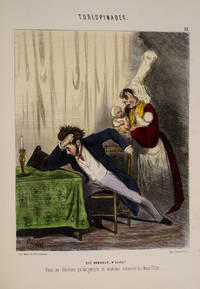
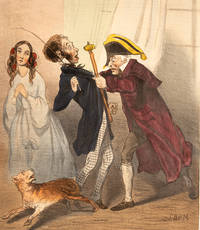
05330Paris: Chez Aubert & Cie. 1850. Jokes in Poor Taste<br /> <br /> CHAM pseudonym of Amédée de Noé. Turlupinades Contrariétés et Autres Amusemens Négatifs Jokes in Poor Taste Par Cham. Paris: Chez Aubert & Cie. ca. 1850. <br /> <br /> First edition. Folio 13 1/4 x 9 7/8 inches; 337 x 251 mm. Hand-colored lithographed title and fifteen full-page hand-colored lithographed plates with captions. Advertisement leaf at end Maison de Commission. Des Modes Parisiennes.<br /> <br /> Publisher's pictorial glazed green boards lower portion of spine renewed inner front hinge cracked some light wear to corners. An excellent copy.<br /> <br /> OCLC locates just four copies worldwide: Morgan Library & Museum; New York Public Library; Getty Institute; University of Illinois.<br /> <br /> CHAM pseudonym of Amédée de Noé 1818-1879. French caricaturist and lithographer published his first book Monsieur Lajeunesse in 1839 and from 1843 began to be regularly published in illustrated magazines such as Le Charivari which in 1835 focused primarily on publishing satires of everyday life thereafter becoming one of the most popular of French caricaturists through entertaining storybooks such as this work which satirized 'jokes in poor taste.'<br /> <br /> Several artists "followed in the wake of Daumier and Gavarni. Among the most attractive of the former is Amédéé de Noé "known as Cham that is Ham the son of Noah.it was said that he had 'an idea a day' for Le charivari. A good proportion of his thousands of lithographs were gathered into albums. His contributions to the Album du siège 173 in which Daumier was his collaborator are typical of his work" Ray pp. 155-156.<br /> <br /> Cham had contacts with English artists many of whom had trained on the Continent most in company with English artist and follower of the pioneering German lithographer Alois Senefelder.<br /> <br /> The Plates:<br /> 1. Tout ça c'est bel et bon!<br /> It's all well and good!<br /> 2. L'éducation es tune bonne chose!<br /> Education is a good thing!<br /> 3. Hardi! Conscrit la patrie a les yeux sur toi!.<br /> Daring! Conscript the fatherland has its eyes on you!.<br /> 4. Je veux que mon fils ait un prix!<br /> I want my son to have a prize!<br /> 5. Mes papiers.mes papiers!<br /> My papers.my papers!<br /> 6. Tiens tiens elle était pressée c'tte lettre<br /> Well well she was in a hurry that letter<br /> 7. De de quoi.de de quoi!.<br /> From what.from what!.<br /> 8. Malheureux! Tu me feras blancher avant l'âge.<br /> Unfortunate! You will make me white before my age.<br /> 9. Enfin j'en tiens un!.<br /> Finally I got one!.<br /> 10. Non vous ne vous trompez pas!<br /> No you are not mistaken!<br /> 11. Je risqué tout tant pis pour moi!<br /> I risked everything too bad for me!<br /> 12. Ah! Vous êtes ambitieux!<br /> Ah! You are ambitious!<br /> 13. Qué bonheur m'ssieu!<br /> What happiness sir!<br /> 14. Cré coquin mes chemises neuves.<br /> Naughty creation my new shirts.<br /> 15. Y sont drôles les maitres!<br /> The masters are funny there!<br /> <br /> Bobins IV 1349. Paris: Chez Aubert & Cie., 1850 unknown
04977Paris: Aux Bureaux du Charivari 1871. Thirty-Nine Wonderfully Satiric Images by Daumier & Cham<br/>of the Siege of Paris by the Prussian army in the Winter of 1870-1871<br/><br/>CHAM pseudonym of Amédée de Noé. DAUMIER Honoré. Album du Siége Par Cham et Daumier. Recueil de Caricatures publiées pendant Le Siege dans Le Charivari. Paris: Aux Bureaux du Charivari 1871. <br/><br/>First edition. Large quarto 12 x 9 5/8 inches; 305 x 244 mm. Pictorial lithograph title-page Cham and thirty-nine fine lithograph plates ten of which are by Honoré Daumier and the rest by Cham. <br/><br/>Publisher's red pebbled cloth over boards front cover lettered in gilt marbled endpapers. <br/><br/>Thirty-nine wonderfully satiric images of the siege of Paris by the Prussian army in the winter of 1870-1871 originally published in Le Charivari and reprinted as an album in 1871 with a new image used for the title page.<br/><br/>OCLC locates just sixteen copies in libraries and institutions worldwide nine in the USA four in the Netherlands two in Germany and one in Australia ten of these appear to be bound without the pictorial title. It would seem that this volume was only issued with uncolored plates.<br/><br/>"For many of Daumier's admirers his lithographs of 1870-1871 represent the peak of his achievement. They are in his last style massive stripped down direct which speaks as nothing else could for this tragic period in France's history. <br/><br/>The Siege of Paris - that took place from 19th September 1870 to 28th January 1871 and the consequent capture of the city by Prussian force - culminated in France's defeat in the Franco-Prussian War and the establishment of both the German Empire and the Paris Commune - the radical socialist anti-religious and revolutionary government that ruled Paris from 18th March to 28th May 1871. The Franco-Prussian War had led to the capture of Emperor Napoleon III in September 1870 the collapse of the Second French Empire and the beginning of the Third Republic.<br/><br/>The Plates:<br/><br/>1. Pictorial title-page Cham<br/>2. Modes Parisiennes en prévision du bombardment Cham 112<br/>3. Le bombardment Cham 5<br/>4. La valeur Prussienne n'attendant pas le nombre des années Cham 8<br/>5. Ceci a tué cela Daumier 3845<br/>6. Plus de Gaz Cham 127<br/>7. Préparant les éntrennes pour son peuple Cham <br/>8. Pour ne pas être bléssé je n'ai qu'a mettre ce plastron Oui monsieur en ayant soin bien entendu de ne pas sortir de chez vous Cham 107<br/>9. Un paysage en 1870 Daumier 3828<br/>10. Laissez appuyer moâ sur le bras à vôs! Fallait pas me laisser amputer Cham 129<br/>11. T'allais jamais à l'Église autrefois Pour le pain bénit on ne fait pas la queue Cham 18<br/>12. Tu t'es mis un faux ventre! Pour faire des sorties pour montrer à l'ennemi que nous avons beaucoup de vivres Cham 106<br/>13. Les animaux du jardin des plantes faisant queue comme tout le monde pour avoir leur viande Cham 110<br/>14. Square Napoléon Daumier 3824<br/>15. Je me suis mis dans les volontaires! Animal! Tu n'as pas 35 ans! On va dire que nous ne sommes pas mariés! Cham 121<br/>16. Ce pauvre Henri IV voyant emmener son cheval chez le boucher Cham 130<br/>17. Épouvantée de l'héritage Daumier 3838<br/>18. Madame Putois j/aurais tout de même jamais cru que vous tueriez votre chien pour nous en faire manger - Il a bien fallu. il était enrage! Cham 17<br/>19. Maintenant j'adore les gens grêlés ils me rappellent le gruyere! Cham 120<br/>20. Plus de viande! Allons donc! Cham 123<br/>21. Rationnement du pain - un monsieur allant diner en ville Cham 16<br/>22. Les Nouveaux Gardiens de Paris Cham 111<br/>23. Six heures et demie - les chevaux de Madame la Marquise sont sur la table Cham 104<br/>24. Le danger de manger de la souris est qu'ensuite votre chat ne coure après Cham 119<br/>25. On aurait pu profiter de passage du ballon-poste pour surprendre l'ennemi Cham 96<br/>26. L'empire c'est la paix Daumier 3814<br/>27. Ils auront beau emporter les pendules ils n'empêcheront pas l'heure de la vengeance de sonner Cham 138<br/>28. Nous ne nous serions jamais doutés tout de même que nous naviguerions un jour sur ce vaisseau-là Daumier 3819<br/>29. Le nouveau char de la victoire Daumier 3849<br/>30. Le revers de la médaille de Sainte-Hélène Cham 108<br/>31. Soldats! Il fait très froid; mais si l'on est content de vous on donnera un paletot fourré. au maréchal Fritz Cham 122<br/>32. La queue pour la viande de rats Cham 124<br/>33. Pauvre France!. le tronc est foudroyé mais les raciness tiennent bon! Daumier 3843<br/>34. Tant bis! Il aurait brobablement ennuyé blu tard les enfants de Fritz Cham 6<br/>35. J'ai besoin de quitter Paris - Pour rejoinder votre femme - Au contraire; voila cinq mois qu'elle ne m'a pas quitté Cham 27<br/>36. L'unité allemande Daumier 3831<br/>37. Les Prussiens m'ont donné un cigare! - C'est bien le moins alors qu'un Francais te donne aussi quelque chose Cham 28<br/>38. Aveugle! C'est triste mais c'est encore de la chance dans ce moment-ci! Cham 22<br/>39. Moi je suis ravitaillé!. le rests m'est égal Daumier 3851<br/>40. Après le Siége Cham 113<br/><br/>"Particularly to be noted are his bitter reflections on the legend which Charlet Bellangé Raffet and their imitators had helped to create. The desolate battleground of "The empire means peace" no. 26 offers an ironic commentary on an epigram uttered by Napoleon III in 1852. His "Square Napoleon" no. 14 displays the gravestones of those for whose death the Emperor has been responsible beginning with the Boulevard Monmartre in the winter of 1851 and ending with Sedan in 1870. In Cham's "The reverse of the Saint Helena medal" no. 30 indeed the country's disaster is attributed specifically to Napoleon Bonaparte as well as to Napoleon III. Daumier's first plate for 1871 showing France "Appalled by her heritage" no. 17 is bleak indeed but a later design offers a gleam of hope: "Poor France!. The trunk blasted but the roots hold fast" no. 33.<br/><br/>It should be mentioned that Cham's contributions to this album though trivial in comparison with Daumier's monumental compositions are by no means negligible. He provides the detail that Daumier omitted. The horrors of the bombardment are recorded in his plates but so too is the black humor of Parisian life during the siege. For example he shows the population pursuing food in any form - horses cats rats even a large woman regarded with speculation by an impudent boy: "No more meat! - Let's go then!" no. 20.<br/><br/>The plates included in Album du siège were transferred to zinc for engraving by Gillot's process rather than printed directly from Daumier's lithographic stones." Gordon N. Ray. The Art of the French Illustrated Book 1700 to 1914 p. 245. Paris: Aux Bureaux du Charivari, 1871 unknown books
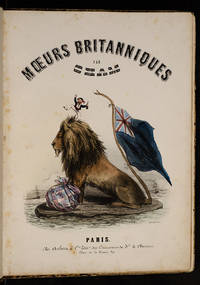
05311Paris: Chez Aubert & Cie. 1850. Fifteen Hand-Colored Lithographed Plates Caricaturing the British<br /> <br /> CHAM illustrator. Mœurs Britanniques. Paris: Chez Aubert & Cie. n.d. ca. 1850.<br /> <br /> Large folio 12 7/8 x 9 5/8 inches; 327 x 244 mm. Hand-colored lithographed title and fifteen numbered hand-colored lithographed plates heightened with gum arabic. Publisher's advertisement leaf at end. Small neat 1 1/8 inch repair to top margin of plate 12 not affecting image some minor and mainly marginal scattered foxing otherwise an excellent example.<br /> <br /> Contemporary quarter dark brown ribbed cloth over marbled boards. Some wear to corners and edges of boards.<br /> <br /> Of Amédée de Noé "known as Cham that is Ham the son of Noah.it was said that he had 'an idea a day' for Le charivari. A good proportion of his thousands of lithographs were gathered into albums. His contributions to the Album du siège 173 in which Daumier was his collaborator are typical of his work" Ray The Art of the French Illustrated Book pp. 155-156.<br /> <br /> The Plates: <br /> 1. Une femme bien attachée<br /> 2. Le Quaker<br /> 3. Le Recruteur<br /> 4. Visite au Musée<br /> 5. Mariage d'inclination<br /> 6. Les Hauts grades <br /> 7. Philanthropie. Bien entendue<br /> 8. Les Boxeurs<br /> 9. L'Écossais<br /> 10 Un Costume national<br /> 11. Baragouin Britannique <br /> 12. In the Stocks <br /> 13. Le Péage du turn-pike<br /> 14. L'Invalide de Chelsea<br /> 15. Smithfied Market. Paris: Chez Aubert & Cie., 1850 unknown
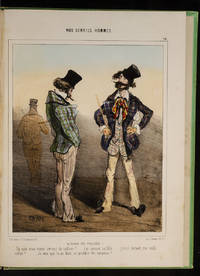
05327Paris: Chez Aubert & Cie. 1846. The Pleasures of Youth.<br /> Young Parisian Gentlemen At Play<br /> <br /> CHAM pseudonym of Amédée de Noé. Nos Gentils Hommes a Gout. Tournure Elégance Moeurs et Plaisirs de la Jeunesse Dorée. Par Cham Paris: Chez Aubert & Cie. n.d. 1846. <br /> <br /> First only edition complete. <br /> <br /> Folio 13 x 9 5/8 inches; 330 x 245 mm. Hand-colored lithographed title page and twenty hand-colored lithographed plates all heightened with gum arabic.<br /> <br /> Original pictorial lithographed green boards. Minimal rubbing to board edges and corners near fine.<br /> <br /> Rare with OCLC recording only six copies in institutional holdings worldwide and only one auction record since 1923.<br /> <br /> We have only seen one other copy of this title.<br /> <br /> A satire of the bustle behavior customs and pleasures of young Parisian gentlemen - golden youth.<br /> <br /> Of Amédée de Noé "known as Cham that is Ham the son of Noah.it was said that he had 'an idea a day' for Le charivari. A good proportion of his thousands of lithographs were gathered into albums. His contributions to the Album du siège 173 in which Daumier was his collaborator are typical of his work" Ray pp. 155-156.<br /> <br /> The Plates:<br /> 1. Ne vous effrayez pas!<br /> 2. Un objet de prix pour ne rien prendre<br /> 3. Fol de carrossier.<br /> 4. Un maitre dans une peau de domestique.<br /> 5. Des gages fabuleux.<br /> 6. Ton vicomte est un cuistre!<br /> 7. Pauvre créancier!<br /> 8. L'ami de coeur.<br /> 9. Tiens! C'est le m'sieu du château!<br /> 10. Palsambleu quél bon petit chic!!<br /> 11. L'etat d'heritier a bien ses charges!<br /> 12. Monsieur le baron après souper.<br /> 13. Prenez y garde John!<br /> 14. Un ci-devant.<br /> 15. Tachez donc de faire aller mes cheveux!<br /> 16 Le tir des pigeons.<br /> 17. Oh he! Ce cavalier! Ohe!<br /> 18. Bravo Marquis! Tu arrives le premier.<br /> 19. Dieu! La belle chasse.<br /> 20. Au diable les préjugés! Paris: Chez Aubert & Cie.,, 1846 unknown
05024Paris: Chez Aubert & Cie. 1845. All is Fair in Love and War"<br/>Thirty-One Hand-Colored Lithographed Plates Presenting a Satirical View of the French in Algeria <br/><br/>CHAM Pseudonym of Charles Amédée de Noé. À la guerre comme à la guerre. Par Cham. Paris: Chez Aubert & Cie. n.d. 1845. <br/><br/>First edition. Oblong folio 9 15/16 x 12 15/16 inches; 253 x 329 mm. Pictorial hand colored lithograph title-page and thirty hand-colored lithographed plates heightened with gum Arabic presenting a satirical view of the life of the French contingent in Algeria. Publisher's sixteen page catalog bound in at end. Some light marginal soiling to a few plates otherwise near fine.<br/><br/>Contemporary half plum calf over patterned plum cloth smooth spine decoratively titled in gilt marbled endpapers and edges. An excellent example with vivid hand coloring. <br/><br/>CHAM pseudonym of Charles Amédée de Noé 1818-1879. "It is to be regretted that space will not serve to represent the caricaturists and depictors of manners who followed in the wake of Daumier and Gavarni. Among the most attractive of the former is Amédée de Noé known as Cham that is Ham the son of Noah of whom it was said that he had ‘an idea a day' for Le charivari. A good proportion of his thousands of lithographs were gathered into albums. His contributions to the Album du siège in which Daumier was his collaborator are typical of his work" Ray The Art of the French Illustrated Book pp. 155-156.<br/><br/>The plates:<br/><br/>Hand-colored pictorial title-page<br/>1. Ça ne vaut pas l'eau filtrée!!.<br/>2. Au diable les chevaux arabes!<br/>3. Quelle chance!!<br/>4. Pour faire un bon pot-au-feu.<br/>5. V'là soixante lieues d'avalées!<br/>6. Ces gueux d'arabes.<br/>7. Dites donc caporal.<br/>8. Une visite sous la tente.<br/>9. Encore quinze lieues à faire.<br/>10. Une razzia.<br/>11. C'est fort drôle conscrit!.<br/>12. Un héritage flambé.<br/>13. Allons bon!.<br/>14. Gueux de sauvages!<br/>15. Y a des gens qui ont du bonheur!<br/>16. Il est bon d'avoir des amis.<br/>17. C'est une flêche empoisonnée.<br/>18. En toute chose il ne faut jamais considérer la faim.<br/>19. Qué beau pays!!!<br/>20. Est-ce que tu attends l'omnibus.<br/>21. Pauvres camarades!<br/>22. Cristi! V'la mon paletot qui se déchire!<br/>23. Y a pas de bon sens!<br/>24. Cher papa et chère maman.<br/>25. Mon Général.<br/>26. C'est un coup superbe!<br/>27. Un petit homme a grandes passions.<br/>28. Marche de nuit.<br/>29. Un réveil désagréable.<br/>30. L'appétit est le meilleur cuisinier. Paris: Chez Aubert & Cie., 1845 unknown books
183950059New Havens: S. Babcock 1839. First edition small 8vo pp. viii 9-248; full contemporary sheep rebacked; good sound copy with an important presentation "To Professor Silliman with the author's regards." A tear through the presentation has been skillfully mended and as the inscription is written in red pencil it is a bit faint. With Silliman's bookplate on the front pastedown and the subsequent bookplate of Henry McIntosh. In a quarter brown morocco clamshell box. Skeel 574. Silliman was perhaps the best-known scientific man in America in the first half of the 19th century a highly respected professor of chemistry and natural history at Yale and a long-time friend of Webster's. Like Webster he was an editor a compiler of textbooks and a prominent Connecticut citizen and Yale alumnus. <br/><br/> S. Babcock unknown books
Acquaforte mm. 203x400. Si tratta di uno dei soggetti preferiti da Castiglione, l'entrata degli animali nell'Arca, la tecnica acquafortista raggiunge qui il massimo della raffinatezza. In questa composizione sviluppa il tema accennato nell'incisione : "Noè che fa entrare gli animali nell'Arca" (1630 ca.). Il tema biblico è accennato nella parte sinistra del rame in primo piano gli animali. Le opere attribuibili al primo periodo di attività genovese (L'entrata degli animali nell'arca, Genova, Accademia Ligustica; Noè fa entrare gli animali nell'arca, Firenze, Gall. degli Uffizi, inv. 1336; per le molte versioni, vedi Meloni) mostrano il C. attento soprattutto alla tradizione di pittura animalistica - rappresentata a Genova da parecchie opere dei Bassano e dall'attivo gruppo fiammingo facente capo ai fratelli de Wael e a Jan Roos - ed estremamente vicino, nell'impianto delle scene e nel taglio compositivo, alla pittura dello Scorza (di quest'ultimo vedere soprattutto Noè che accoglie gli animali nell'arca, firmato e datato 1630, Genova, Gall. di palazzo Spinola). Bell'esemplare con margini sottili e piccolo timbro di collezione visibile in basso a destra.. Bartsch vol. 46 n. 1..
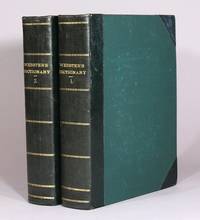
183234082London: published by Black Young and Young foreign booksellers to the King 1832. First English edition used by Webster as a template for his 1841 octavo "reprinted by E.H. Barker Esq. of Thetford Norfolk from a copy communicated by the author and containing many manuscript corrections and additions: with an appendix by the editor"; 2 volumes 4to; pp. viii i-civ plus unpaginated lexicon in triple column; 2 and unpaginated lexicon; the publisher's advertisements noted by Skeel have not been preserved in this copy. A good sound copy in mid-19th century half calf over marbled boards rubbed and scuffed top of one spine with small chip; good and sound. One of the scarcest of the early editions of Webster. Of note is the inclusion of Joseph Worcester's "Synopsis of Words pronounced by different Orthoepists" extracted from the American edition of 1829 which was edited by Worcester and published prior to the rift that developed between the two lexicographers. As to the text of the lexicon itself Skeel notes that it "was reworked by the English editor and was not merely a reprinting." Vancil p. 260; Skeel 589A. <br/><br/> published by Black, Young, and Young, foreign booksellers to the King hardcover books
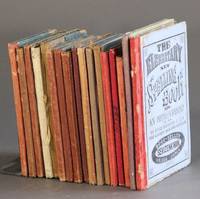
189060306Tokyo & Osaka: various publishers 1890. 17 volumes 12mo and 8vo all in original blue printed paper-covered boards backed in cloth; condition ranges from fair to near fine. All with the title or variant title of The Elementary Spelling-Book with the following imprints and variations: 1 Tokio: Bookselling Co. after 1866 pp. 3-170 2 Japanese title Japanese mss. notes on rear endpaper; 2 Tokio: Rikugokuwan after 1866 pp. 3-170 2 Japanese title Japanese licensing stamps and ownership stamp on first and last leaves in red; 3 Tokio & Osaka: Rikugokuwan after 1866 pp. 3-170 2 Japanese title Japanese licensing stamp in red; 4 Osaka: Nakagawa ca. 1885 pp. 2 Japanese title 170 2 endpapers printed in Japanese; 5 Tokio & Osaka: Bookselling Co. after 1866 Japanese mss. notes and a drawing on the endpapers sadly defective with the loss of the title-p. and several others; 6 Tokio & Osaka: Daitokuwan after 1880 colophon gives publisher as Hobunkwan pp. 3-174 6 ads in both Japanese and English; 7 Tokio & Osaka: Daitokuwan after 1880 pp. 3-174 2 title in Japanese; Japanese licensing stamp in red; 8 Tokio: Maruya & Co. after 1880 pp. 5-174 lacking title-p. printed Maruya ads on rear pastedown; 9 Tokio & Osaka: Daitokuwan after 1880 pp. 3-174 2 title in Japanese; Japanese licensing stamp printed in red; 10 Tokio & Osaka: Daitokuwan after 1880 pp. 3-174; 11 Tokyo: B. Tsujioka after 1880 pp. 3-174; Japanese title on rear pastedown; 12 New York: D. Appleton pp. 3-176; printed Japanese text on both pastedowns; 13 New York: D. Appleton pp. 3-176; printed Japanese text on verso of title page last leaf and rear pastedown; licensing stamp printed in red affixed to last flyleaf; 14 New York: D. Appleton pp. 3-128 lacks last signature Japanese text on rear pastedown; 15 Tokyo: Sugimoto after 1880 pp. 3-174 Japanese mss. on front pastedown Japanese text on rear pastedown; 16 Osaka: Sekizenkwan 1887 pp. 3-114 4 Japanese text; Japanese mss. notes on front and back flyleaves; 17 Osaka: Sekizenkwan 1887 pp. 5-114 1 Japanese text presumably lacking a title-p. but there's no evidence of it. various publishers unknown
183171210London: published by Black Young and Young foreign booksellers to the King 1831. First English edition used by Webster as a template for his 1841 octavo "reprinted by E. H. Barker Esq. of Thetford Norfolk from a copy communicated by the author and containing many manuscript corrections and additions: with an appendix by the editor"; 2 volumes 4to; 20th-century half green straight-grain morocco gilt-titled direct on gilt-paneled spines; title pages a bit foxed vertical crease on the title of volume II; otherwise a very good sound and clean copy preserving the terminal advertisement leaf in volume I. Early 20th-century ownership signature in pencil of Arno Clapham on the least leaf of each volume. One of the scarcest of the early editions of Webster. Of note is the inclusion of Joseph Worcester's "Synopsis of Words pronounced by different Orthoepists" extracted from the American edition of 1829 which was edited by Worcester and published prior to the rift that developed between the two lexicographers. As to the text of the lexicon itself Skeel notes that it "was reworked by the English editor and was not merely a reprinting" which is likely the reason Webster chose it as a model for his 1841 revision. Perhaps there is an article on the relationship between this English edition and the 1841 octavo but I'm not aware of one. Vancil p. 260; see Skeel 589 and 589A. published by Black, Young, and Young, foreign booksellers to the King unknown
183234082London: published by Black Young and Young foreign booksellers to the King 1832. First English edition used by Webster as a template for his 1841 octavo "reprinted by E.H. Barker Esq. of Thetford Norfolk from a copy communicated by the author and containing many manuscript corrections and additions: with an appendix by the editor"; 2 volumes 4to; pp. viii i-civ plus unpaginated lexicon in triple column; 2 and unpaginated lexicon; the publisher's advertisements noted by Skeel have not been preserved in this copy. A good sound copy in mid-19th-century half calf over marbled boards rubbed and scuffed top of one spine with small chip; good and sound. One of the scarcest of the early editions of Webster. Of note is the inclusion of Joseph Worcester's "Synopsis of Words pronounced by different Orthoepists" extracted from the American edition of 1829 which was edited by Worcester and published prior to the rift that developed between the two lexicographers. As to the text of the lexicon itself Skeel notes that it "was reworked by the English editor and was not merely a reprinting." Vancil p. 260; Skeel 589A. published by Black, Young, and Young, foreign booksellers to the King unknown
1819D17816New York and London: Kirk and Mercein 1819. First Edition. Hardcover. Very Good. Inscribed by the author and rare thus. This volume recounts Noah's experiences as American consul to Tunis where he successfully negotiated for the release of captured seamen and then was recalled by James Monroe on at least partially anti-Semitic grounds. Rosenbach 205. <br/><br/> Kirk and Mercein hardcover books
04212Paris: Arnauld De Vresse 1850. Exceedingly Scarce<br /> Highly Amusing Hand-Colored Caricatures Showing "The Crazy's of the Day"<br /> <br /> CHAM illustrator pseud. of Charles Amédée de Noé. Les Toqués Du Jour. Paris: Arnauld De Vresse n.d. ca. 1847. <br /> <br /> First edition. Large folio 13 3/4 x 10 5/16 inches; 349 x 261 mm. Hand-colored lithographed title and thirty-six comical scenes on eighteen fine hand-colored lithographed plates heightened with gum arabic. Each scene with printed caption below. <br /> <br /> Publisher's brown ribbed cloth bordered in blind front cover lettered in gilt. Expertly rebacked to style at an early date. Inner hinges cracked but sound corners very slightly rubbed. A near fine copy of this exceedingly scarce album.<br /> <br /> A highly amusing collection of lithographs by Cham 1819-1879 satirizing the varieties of Les Toqués Du Jour<br /> The Crazy's of the Day. <br /> <br /> Of Charles Amédée de Noé "known as Cham that is Ham the son of Noah.it was said that he had 'an idea a day' for Le charivari. A good proportion of his thousands of lithographs were gathered into albums. His contributions to the Album du siège 173 in which Daumier was his collaborator are typical of his work" Ray The Art of the French Illustrated Book pp. 155-156.<br /> <br /> Exceedingly scarce. No copies found in WorldCat or KVK and apparently no copies have appeared at auction certainly during the past thirty-five years. Paris: Arnauld De Vresse, 1850 unknown
03321Paris: Chez Aubert & Cie. 1846. The Pleasures of Youth.<br /> Young Parisian Gentlemen At Play<br /> <br /> CHAM pseudonym of Amédée de Noé. Nos Gentils Hommes a Gout. Tournure Elégance Moeurs et Plaisirs de la Jeunesse Dorée. Par Cham Paris: Chez Aubert & Cie. n.d. 1846. <br /> <br /> First only edition complete. <br /> <br /> Folio 13 1/4 x 9 7/8 inches; 336 x 250 mm. Hand-colored lithographed title page and twenty hand-colored lithographed plates. Pictorial lithographed advertisement and Aubert et Cie. catalogue 16 pp. at rear. <br /> <br /> Original pictorial lithographed green boards. Later dark green pebbled cloth spine and endpapers. Board edges and corners a little rubbed some light mainly marginal foxing. Small repaired tear to outer margin of lithographed advertisement leaf. An excellent example. With the bookplate of Joel Spitz on front paste-down. <br /> <br /> Provenance: purchased in Paris 1947.<br /> <br /> Rare with OCLC recording only six copies in institutional holdings worldwide and no auction records since 1923.<br /> <br /> We have only seen one other copy of this title.<br /> <br /> A satire of the bustle behavior customs and pleasures of young Parisian gentlemen - golden youth.<br /> <br /> Of Amédée de Noé "known as Cham that is Ham the son of Noah.it was said that he had 'an idea a day' for Le charivari. A good proportion of his thousands of lithographs were gathered into albums. His contributions to the Album du siège 173 in which Daumier was his collaborator are typical of his work" Ray pp. 155-156.<br /> <br /> The Plates:<br /> 1. Ne vous effrayez pas!<br /> 2. Un objet de prix pour ne rien prendre<br /> 3. Fol de carrossier.<br /> 4. Un maitre dans une peau de domestique.<br /> 5. Des gages fabuleux.<br /> 6. Ton vicomte est un cuistre!<br /> 7. Pauvre créancier!<br /> 8. L'ami de coeur.<br /> 9. Tiens! C'est le m'sieu du château!<br /> 10. Palsambleu quél bon petit chic!!<br /> 11. L'etat d'heritier a bien ses charges!<br /> 12. Monsieur le baron après souper.<br /> 13. Prenez y garde John!<br /> 14. Un ci-devant.<br /> 15. Tachez donc de faire aller mes cheveux!<br /> 16 Le tir des pigeons.<br /> 17. Oh he! Ce cavalier! Ohe!<br /> 18. Bravo Marquis! Tu arrives le premier.<br /> 19. Dieu! La belle chasse.<br /> 20. Au diable les préjugés! Paris: Chez Aubert & Cie.,, [1846] unknown
04212Paris: Arnauld De Vresse 1850. Exceedingly Scarce<br/>Highly Amusing Hand-Colored Caricatures Showing "The Crazy's of the Day"<br/><br/>CHAM illustrator pseud. of Charles Amédée de Noé. Les Toqués Du Jour. Paris: Arnauld De Vresse n.d. ca. 1847. <br/><br/>First edition. Large folio 13 3/4 x 10 5/16 inches; 349 x 261 mm. Hand-colored lithographed title and thirty-six comical scenes on eighteen fine hand-colored lithographed plates heightened with gum arabic. Each scene with printed caption below. <br/><br/>Publisher's brown ribbed cloth bordered in blind front cover lettered in gilt. Expertly rebacked to style at an early date. Inner hinges cracked but sound corners very slightly rubbed. A near fine copy of this exceedingly scarce album.<br/><br/>A highly amusing collection of lithographs by Cham 1819-1879 satirizing the varieties of Les Toqués Du Jour<br/>The Crazy's of the Day. <br/><br/>Of Charles Amédée de Noé "known as Cham that is Ham the son of Noah.it was said that he had ‘an idea a day' for Le charivari. A good proportion of his thousands of lithographs were gathered into albums. His contributions to the Album du siège 173 in which Daumier was his collaborator are typical of his work" Ray The Art of the French Illustrated Book pp. 155-156.<br/><br/>Exceedingly scarce. No copies found in WorldCat or KVK and apparently no copies have appeared at auction certainly during the past thirty-five years. Paris: Arnauld De Vresse, 1850 unknown books
03321Paris: Chez Aubert & Cie. 1846. The Pleasures of Youth.<br/>Young Parisian Gentlemen At Play<br/><br/>CHAM pseudonym of Amédée de Noé. Nos Gentils Hommes a Gout. Tournure Elégance Moeurs et Plaisirs de la Jeunesse Dorée. Par Cham Paris: Chez Aubert & Cie. n.d. 1846. <br/><br/>First only edition complete. <br/><br/>Folio 13 1/4 x 9 7/8 inches; 336 x 250 mm. Hand-colored lithographed title page and twenty hand-colored lithographed plates. Pictorial lithographed advertisement and Aubert et Cie. catalogue 16 pp. at rear. <br/><br/>Original pictorial lithographed green boards. Later dark green pebbled cloth spine and endpapers. Board edges and corners a little rubbed some light mainly marginal foxing. Small repaired tear to outer margin of lithographed advertisement leaf. An excellent example. With the bookplate of Joel Spitz on front paste-down. <br/><br/>Provenance: purchased in Paris 1947.<br/><br/>Rare with OCLC recording only six copies in institutional holdings worldwide and no auction records since 1923.<br/><br/>We have only seen one other copy of this title.<br/><br/>A satire of the bustle behavior customs and pleasures of young Parisian gentlemen - golden youth.<br/><br/>Of Amédée de Noé "known as Cham that is Ham the son of Noah.it was said that he had ‘an idea a day' for Le charivari. A good proportion of his thousands of lithographs were gathered into albums. His contributions to the Album du siège 173 in which Daumier was his collaborator are typical of his work" Ray pp. 155-156.<br/><br/>The Plates:<br/>1. Ne vous effrayez pas!<br/>2. Un objet de prix pour ne rien prendre<br/>3. Fol de carrossier.<br/>4. Un maitre dans une peau de domestique.<br/>5. Des gages fabuleux.<br/>6. Ton vicomte est un cuistre!<br/>7. Pauvre créancier!<br/>8. L'ami de coeur.<br/>9. Tiens! C'est le m'sieu du château!<br/>10. Palsambleu quél bon petit chic!!<br/>11. L'etat d'heritier a bien ses charges!<br/>12. Monsieur le baron après souper.<br/>13. Prenez y garde John!<br/>14. Un ci-devant.<br/>15. Tachez donc de faire aller mes cheveux!<br/>16 Le tir des pigeons.<br/>17. Oh he! Ce cavalier! Ohe!<br/>18. Bravo Marquis! Tu arrives le premier.<br/>19. Dieu! La belle chasse.<br/>20. Au diable les préjugés! Paris: Chez Aubert & Cie.,, [1846] unknown books
181927297New York: Kirk and Mercein; London: John Miller 1819. First edition 8vo pp. vi 2 431 1 xlvii; engraved frontis portrait and 4 engraved plates 3 with contemporary hand-coloring and 1 folding; contemporary full sheep red morocco label on gilt-paneled spine; spine scuffed and with a small chip out at the top minor foxing; all else good and sound with the full compliment of plates in an unusual colored state. Early ownership signature of "Richard L. Schieffelin New York 1819." Noah 1785-1851 was a lawyer playwright and journalist. He was born in Philadelphia of Portuguese-Jewish ancestry. "In 1813 he was appointed consul to Tunis with a special mission to Algers. He was instructed to negotiate for the release of some Americans held as prisoners by the Algerine pirates. On May 23 1813 he sailed from Charleston but his vessel being captured by the British he was taken to England and detained two months. In October he arrived in Cadiz where he contracted with Richard R. Keene an American who had become a Spanish subject to affect the release of the twelve Americans . After being detained in France and Spain for more than a year Noah finally arrived in Tunis. On July 30 1815 he received a letter from James Monroe secretary of state revoking his commission and hinting at irregularities in his accounts. Monroe's treatment of Noah was never satisfactorily explained though his association with Keene who had been accused of treason was doubtless detrimental.In January 1817 however Noah received a letter from the Department of State which vindicated his conduct and returned several thousand dollars due him in the enterprise which resulted in the release of the American captives" DAB. Rosenbach 205; American Travellers Abroad N17. <br/><br/> Kirk and Mercein; London: John Miller unknown books
183950059New Haven: S. Babcock 1839. First edition small 8vo pp. viii 9-248; full contemporary sheep rebacked; good sound copy with an important presentation "To Professor Silliman with the author's regards." A tear through the presentation has been skillfully mended and as the inscription is written in red pencil it is a bit faint. With Silliman's bookplate on the front pastedown and the subsequent bookplate of Henry McIntosh. In a quarter brown morocco clamshell box. Silliman was perhaps the best-known scientific man in America in the first half of the 19th century a highly respected professor of chemistry and natural history at Yale and a long-time friend of Webster's. Like Webster he was an editor a compiler of textbooks and a prominent Connecticut citizen and Yale alumnus. Skeel 574. S. Babcock unknown
Acquaforte mm. 203x400. Si tratta di uno dei soggetti preferiti da Castiglione, l'entrata degli animali nell'Arca, la tecnica acquafortista raggiunge qui il massimo della raffinatezza. In questa composizione sviluppa il tema accennato nell'incisione : "Noè che fa entrare gli animali nell'Arca" (1630 ca.). Il tema biblico è accennato nella parte sinistra del rame in primo piano gli animali. Le opere attribuibili al primo periodo di attività genovese (L'entrata degli animali nell'arca, Genova, Accademia Ligustica; Noè fa entrare gli animali nell'arca, Firenze, Gall. degli Uffizi, inv. 1336; per le molte versioni, vedi Meloni) mostrano il C. attento soprattutto alla tradizione di pittura animalistica - rappresentata a Genova da parecchie opere dei Bassano e dall'attivo gruppo fiammingo facente capo ai fratelli de Wael e a Jan Roos - ed estremamente vicino, nell'impianto delle scene e nel taglio compositivo, alla pittura dello Scorza (di quest'ultimo vedere soprattutto Noè che accoglie gli animali nell'arca, firmato e datato 1630, Genova, Gall. di palazzo Spinola). Bell'esemplare con margini sottili e piccolo timbro di collezione visibile in basso a destra.. Bartsch vol. 46 n. 1..
05552Paris: Maison Martinet / Hautecoeur Frères 1860. Oh What Fun To Travel! Not<br /> In Twenty Hand Colored Lithographs<br /> <br /> CHAM pseudonym of Amédée de Noé. Ah quel plaisir de voyager! Paris: Maison Martinet / Hautecoeur Frères n.d. ca. 1860. <br /> <br /> First edition. Folio 13 3/4 x 10 1/4 inches; 349 x 261 mm. Hand colored pictorial lithographed title and twenty hand colored lithographed plates with sixty-two humorous scenes with captions limning the downside to travel. <br /> <br /> Publishers dark brown patterned cloth front cover decoratively lettered in gilt spine slightly faded. Pictorial title a little foxed in blank margins otherwise clean. Extremities of spine and corners expertly restored front free endpaper replaced. An excellent example of a rather scarce Cham title.<br /> <br /> Only eight copies in institutional holdings worldwide. No copies have come to auction since ABPC began indexing results in 1923.<br /> <br /> Of Amédée de Noé "known as Cham that is Ham the son of Noah.it was said that he had 'an idea a day' for Le charivari. A good proportion of his thousands of lithographs were gathered into albums. His contributions to the Album du siège 173 in which Daumier was his collaborator are typical of his work" Ray pp. 155-156.<br /> <br /> CHAM pseudonym of Amédée de Noé 1818-1879. French caricaturist and lithographer published his first book Monsieur Lajeunesse in 1839 and from 1843 began to be regularly published in illustrated magazines such as Le Charivari which in 1835 focused primarily on publishing satires of everyday life thereafter becoming one of the most popular of French caricaturists through entertaining storybooks such as this work which satirized 'jokes in poor taste.'<br /> <br /> Several artists "followed in the wake of Daumier and Gavarni. Among the most attractive of the former is Amédéé de Noé "known as Cham that is Ham the son of Noah.it was said that he had 'an idea a day' for Le charivari. A good proportion of his thousands of lithographs were gathered into albums. His contributions to the Album du siège 173 in which Daumier was his collaborator are typical of his work" Ray pp. 155-156.<br /> <br /> Cham had contacts with English artists many of whom had trained on the Continent most in company with English artist and follower of the pioneering German lithographer Alois Senefelder. Paris: Maison Martinet / Hautecoeur Frères, 1860 unknown
05954Paris: Chez Aubert & Cie. 1850. Fifteen Hand-Colored Lithographed Plates Caricaturing the British<br /> <br /> CHAM pseudonym of Amédée de Noé. Mœurs Britanniques. Paris: Chez Aubert & Cie. n.d. ca. 1850.<br /> <br /> Large folio 13 1/4 x 10 inches; 336 x 252 mm. Hand-colored lithographed title and fifteen numbered hand-colored lithographed plates heightened with gum arabic.<br /> <br /> Publisher's cream-colored glazed lithographed boards neatly rebacked with cream-colored cloth backstrip. A little bit of marginal soiling. Otherwise a near fine copy.<br /> <br /> Of Charles Amédée de Noé 1818-1879 "known as Cham that is Ham the son of Noah.it was said that he had 'an idea a day' for Le charivari. A good proportion of his thousands of lithographs were gathered into albums. His contributions to the Album du siège 173 in which Daumier was his collaborator are typical of his work" Ray The Art of the French Illustrated Book pp. 155-156.<br /> <br /> The Plates: <br /> 1. Une femme bien attachée<br /> 2. Le Quaker<br /> 3. Le Recruteur<br /> 4. Visite au Musée<br /> 5. Mariage d'inclination<br /> 6. Les Hauts grades <br /> 7. Philanthropie. Bien entendue<br /> 8. Les Boxeurs<br /> 9. L'Écossais<br /> 10 Un Costume national<br /> 11. Baragouin Britannique <br /> 12. In the Stocks <br /> 13. Le Péage du turn-pike<br /> 14. L'Invalide de Chelsea<br /> 15. Smithfied Market<br /> <br /> Bobins III 842. Paris: Chez Aubert & Cie., 1850 unknown
18191266971819. First Edition. NOAH Mordecai M. Travels in England France Spain and the Barbary States in the Years 1813-14 and 15. New-York; London: C. Kirk and Mercein; John Miller 1819. Octavo contemporary marbled boards rebacked in period style speckled calf-gilt red morocco spine label uncut. $3400.First edition of this fascinating travelogue by Mordecai Manuel Noah the most prominent Jew in America at the timeU.S. Consul to Tunis the first American Jew to receive an overseas diplomatic assignmentillustrated with engraved frontispiece portrait and four engraved plates one folding. An excellent uncut copy in contemporary marbled boards.One of the early American republic's most influential Jews Mordecai Noah 1785-1851 was a journalist editor of New York newspaper The National Advocate publisher of the New York Enquirer and a community activist. He held the position of United States Consul to Tunis in 1816 was the sheriff of New York in 1821 the Surveyor of the Port from 1829-33 and a judge of the Court of General Sessions in 1841. He is perhaps most remembered as the originator of the ambitious though never-realized Ararat Project on Grand Island near Niagara Falls in 1825a proposed utopian city of refuge for persecuted European Jews. ""In 1813 Noah became U.S. Consul to Tunis. The government hoped that he would be able to forge special ties with influential Jews in North Africa and entrusted him with an additional secret mission: to devise a 'means for the liberation' of 11 captive American seamen in Algiers. Noah's efforts to free American captives were mostly unsuccessful. Only two seamen were released the ransom paid was excessive and the secret agent Noah appointed Richard R. Keene turned out to have an unsavory past. Although Noah carried out his other consular duties successfully and also established ties with local Tunis Jews Secretary of State James Monroe recalled him in 1815 In the wake of the recall Noah published Correspondence and Documents 1816 in his own defense followed by Travels in England France Spain and the Barbary States 1819 his most important book. It describes his experiences abroad and contains valuable information on early 19th-century Tunisian Jewry"" ANB. The appendix includes letters from Thomas Jefferson John Adams James Madison and John Quincy Adams addressed to Noah. Rosenbach American Jewish Bibliography 205. Frontispiece and one plate ""Merchant Slave & Arab"" with expertly repaired margins not affecting image or text. Light foxing to text. A nicely refurbished uncut copy in contemporary marbled boards. hardcover