Albert GrünwedelLivre Rare Book
96 résultats
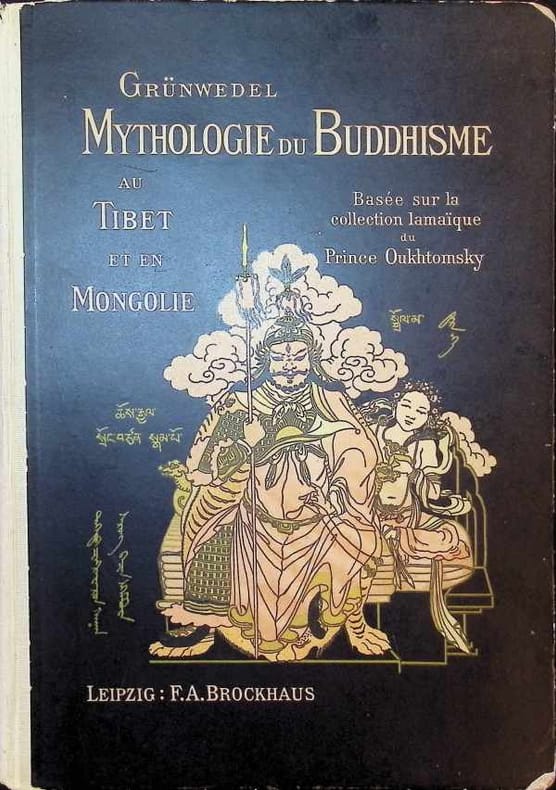
1900030087Leipzig 1900 F. A. Brockhaus Hardcover 1st Edition
1900030088Leipzig 1900 F. A. Brockhaus Hardcover 1st Edition
186547188Librairie Chrétienne de Bauchu & Cie | Paris & Lyon 1865 | 13.50 x 22 cm | 3 volumes reliés
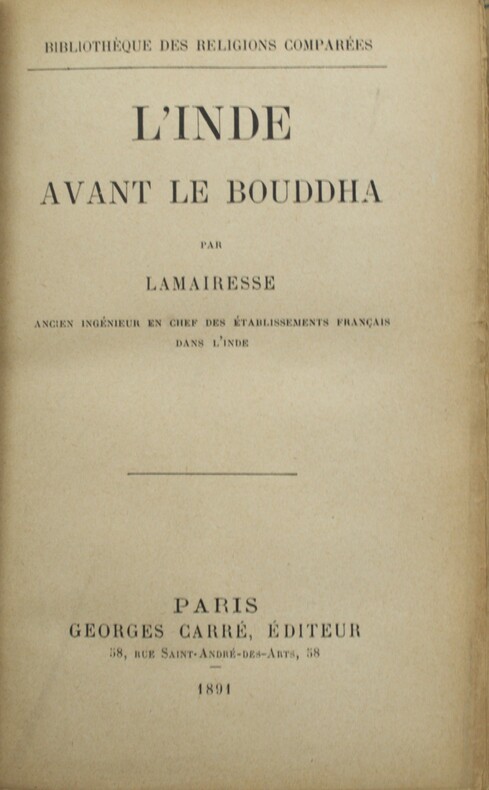
1891PHO-1643Paris : chez Georges Carré, 1891-92, 2 volumes in-8, relié demi veau blond, papier dominoté, dos à nerfs avec pièce d’auteur et titre rouge et date en pied, couvertures conservées, frottements et manque au dos (t2), Exlibris du Comte de Keller.
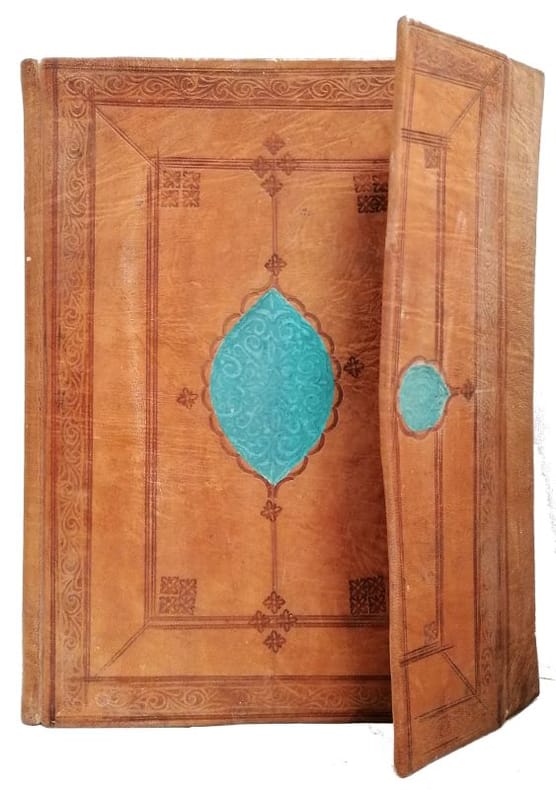
1891103292Paris Ernest Leroux, coll. "Annales du Musée Guimet" 1891 1 vol. relié in-4, plein maroquin fauve à rabat, grand décor et encadrements de roulettes et filets à froid sur les plats avec rehaut turquoise au centre, couvertures conservées, XXXVIII + 496 pp., index. Edition originale de cette traduction du texte original sanskrit en dix décades, accompagnée de trois index (noms propres, mots sanskrits et index français). Léon Feer avait précédemment publié dans le Journal asiatique (1881-1884) une série d'études sur ce recueil de légendes bouddhiques, l'abordant d'un strict point de vue religieux. Belle reliure marocaine de l'époque. Rare.
1891103292Paris Ernest Leroux, coll. "Annales du Musée Guimet" 1891 1 vol. relié in-4, plein maroquin fauve à rabat, grand décor et encadrements de roulettes et filets à froid sur les plats avec rehaut turquoise au centre, couvertures conservées, XXXVIII + 496 pp., index. Edition originale de cette traduction du texte original sanskrit en dix décades, accompagnée de trois index (noms propres, mots sanskrits et index français). Léon Feer avait précédemment publié dans le Journal asiatique (1881-1884) une série d'études sur ce recueil de légendes bouddhiques, l'abordant d'un strict point de vue religieux. Belle reliure marocaine de l'époque. Rare.
1884103286Paris Ernest Leroux 1884-1892 1 vol. relié 2 tomes reliés en 1 fort vol. in-4, plein maroquin bordeaux à rabat, grand décor et encadrements de roulettes et filets à froid sur les plats, couvertures conservées (reliure marocaine de l'époque) XXIII + 406 et VI + 240 pp., quelques planches, index. Edition originale de cette traduction du texte original sanskrit de la biographie du Bouddha Shākyamuni, publiée avec notes, variantes et index par Philippe-Edouard Foucaux (1811-1894), constituant les tomes 6 et 19 des Annales du Musée Guimet. Belle reliure marocaine de l'époque. Rare.
1884103286Paris Ernest Leroux 1884-1892 1 vol. relié 2 tomes reliés en 1 fort vol. in-4, plein maroquin bordeaux à rabat, grand décor et encadrements de roulettes et filets à froid sur les plats, couvertures conservées (reliure marocaine de l'époque) XXIII + 406 et VI + 240 pp., quelques planches, index. Edition originale de cette traduction du texte original sanskrit de la biographie du Bouddha Shākyamuni, publiée avec notes, variantes et index par Philippe-Edouard Foucaux (1811-1894), constituant les tomes 6 et 19 des Annales du Musée Guimet. Belle reliure marocaine de l'époque. Rare.
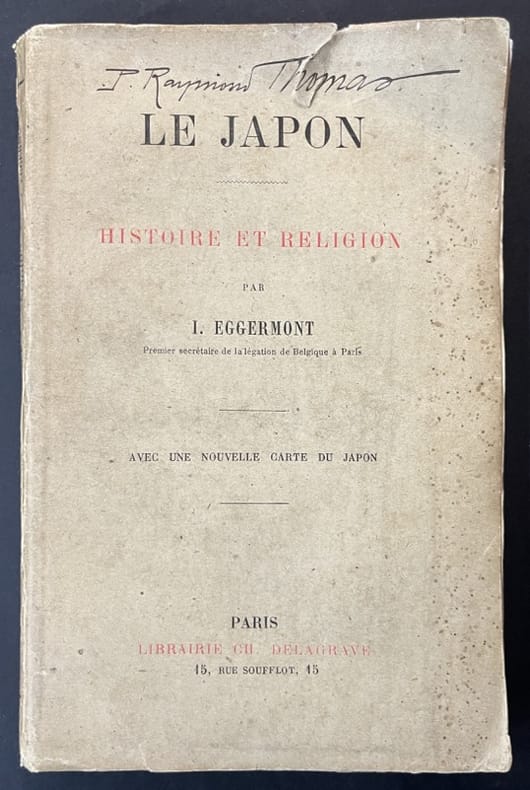
1885138695Paris, Ch. Delagrave 1885 In-12 18,5 x 12 cm. Broché, couverture beige, report auteur & titre en noir et rouge sur le dos et le premier plat de couverture, 156 pp., 1 carte repliée, table des matières. Ex-libris autographe. Couverture poussiéreuse avec accroc, intérieur frais. Ouvrage d’une relative rareté.
1853X77082, 1853-1867 Recueil de 6 ouvrages du 19e siècle concernant le Boudhisme reliés en un volume, reliure cart. (plats marbrés, dos en cuir avec titre et nerfs dorés, coins peu usés), 24cm., qqs.rousseurs, bon état, X77082, [contenu: I: D'EICHTAL Gustave, Etude sur les origines bouddhiques de la civilisation américaine, première partie (1865, 86pp.+ 1 planche), II: DE RAVISI Textor, Interprétations d'antiques idoles bouddhistes (1867, 66pp., qqs.annotations d'époque), III: DE RAVISI Textor, Mémoire sur la découverte d'antiques idoles bouddhistes à Negapatam (Indes-Orientales) (1866, 55pp.avec ills., qqs.annotations d'époque), IV: HOLMBOE C.A., Traces de Bouddhisme en Norvège avant l'introduction du christianisme (1857, 75pp.+ 2 planches), V: NEVE Felix, Le Bouddhisme sa fondateur et ses écritures (1853, 55pp.), VI: FOUCAUX Ph.-Ed., Le Bouddhisme au Tibet (Paris, 1864, 20pp.)]
183651984Lefèvre | Paris 1836 | 14 x 22.50 cm | relié
18428275BB1842. Cassoviae Typis Caroli Werfer 1842 8° Band 1: 248 S. Band 2: VIII 263 S. Halbleder-Einband der Zeit mit montiertem Rückenschild der Zeit hie und da zarte durchgehend radierbare Bleistiftanstreichungen und -notizen Vorsätze mit Notizen von alter Hand ansonsten insgesamt altersentsprechend sehr gut in lateinischer Sprache. Illustrissimo ac Reverendissimo Domino Domino Basilio Popovics Miseratione Divina. Abholung im Ladengeschäft in Frankfurt am Main Nordend ggü. Musterschule möglich. Das spart die Portokosten. Pickup at the store in Frankfurt am Main Nordend close to Musterschule is possible. It saves the shipping costs. unknown
189376893Librairie de l'Art Indépendant | Paris 1893 | 13 x 20.50 cm | broché
181490900Imprimerie de P. Didot l'aîné | Paris 1814 | 13 x 19 cm | Broché
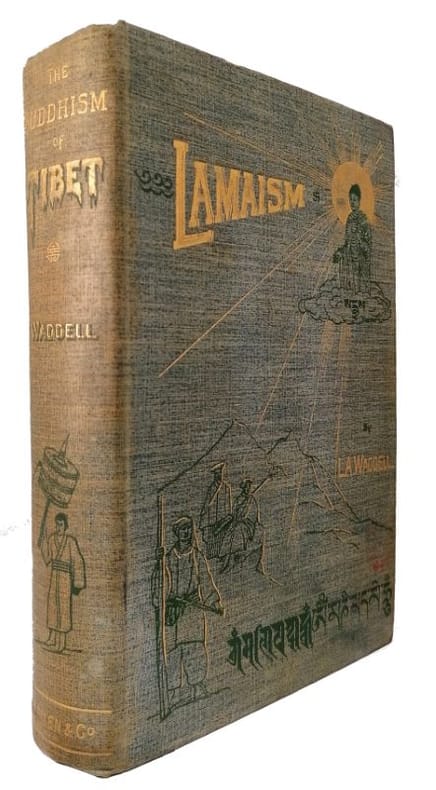
1895110453London W. H. Allen & Co 1895 1 vol. relié in-8, cartonnage illustré de l'éditeur, XVIII + 598 + (2) pp. (cartonnage un peu passé), index, bibliographie. Edition originale abondamment illustrée de photographies, dessins et reproductions. Première étude détaillée du bouddhisme tibétain en langue anglaise, par le linguiste, explorateur et médecin dans l'armée des Indes Laurence Austine Waddell (1854-1938). Bel exemplaire. Rare.
1895110453London W. H. Allen & Co 1895 1 vol. relié in-8, cartonnage illustré de l'éditeur, XVIII + 598 + (2) pp. (cartonnage un peu passé), index, bibliographie. Edition originale abondamment illustrée de photographies, dessins et reproductions. Première étude détaillée du bouddhisme tibétain en langue anglaise, par le linguiste, explorateur et médecin dans l'armée des Indes Laurence Austine Waddell (1854-1938). Bel exemplaire. Rare.
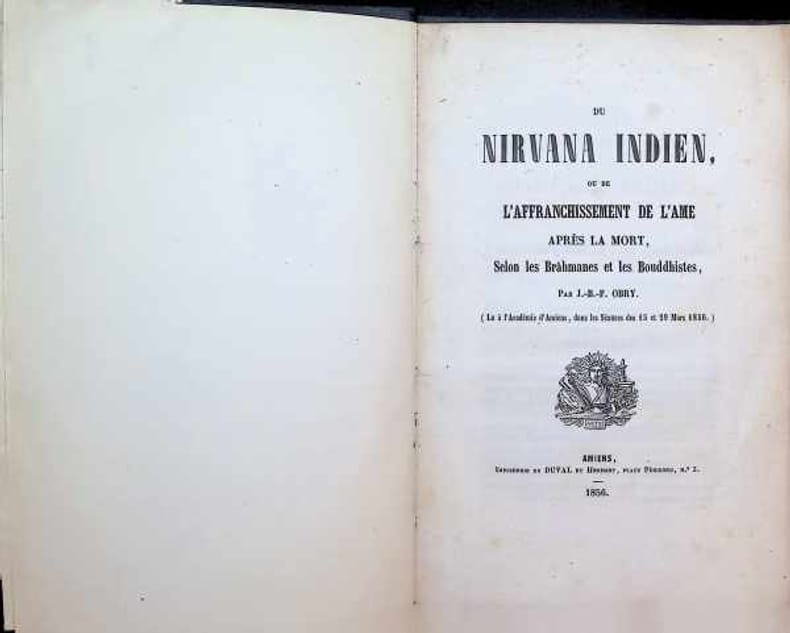
1856027649Amiens 1856 Imprimerie de Duval Hardcover
183589315Arthus Bertrand | Paris s. d. [1835] | 30.5 x 33.7 cm | Relié
187575492Tibet: N.p. ca. 1875. This Sutra comprises Volume 33 of the Narthang Kangyur. The dimensions including both wooden covers are 24 1/4 inches long; 6 3/8 inches wide; 4 1/2 inches high. This exemplar contains 448 leaves made of Tibetan rice paper and printed using carved wooden blocks on both recto an verso for a total of 896 pp. The leaves and the holder are in very good condition. We know that the Narthang Kangyur printing blocks were carved in the Narthang Monastery around 1730-1732. The legibility of this copy argues for a date of about 1875 but it could be as late as 1920. The upper wooden board has a nice Sanskrit inscription in Landza / Ranjana script. With the original saffron carrying cloth. A rare offering.The text is a sutra named The Perfection of Wisdom in Eight Thousand Lines. Copies of this text are often used for devotional purposes which may be why it has not been kept with the other volumes. This particular sutra was initially translated from Sanskrit into Tibetan in the 8th century then the translation was revised in the 11th. The original composition of the Sutras is unknown. the traditional answer to this is that these sutras were spoken by the Buddha then concealed by the Nagas for centuries before being revealed by Nagarjuna in the 3-4th century. While they are usually thought of as later compositions the sutras of the Perfection of Wisdom and especially this text are interestingly among the oldest physical Buddhist manuscripts preserved. The sutra deals with a number of topics but is primarily concerned with the conduct of a bodhisattva the realiation and attainment of the Perfection of Wisdom as one of the Six Perfections the realization of thusness tath t the attainment of irreversibility on the path to buddhahood avaivartika non-conceptualisation and abandonment of views as well as the worldly and spiritual benefit of worshipping the s tra.The s tra is among the most well-established in the Mahayana tradition and "was the first philosophical text to be translated from the Mahayana literature into Chinese." It was translated seven times into Chinese9 five times into Tibetan and eight times into Mongolan. The first Tibetan edition was in the eighth century. It remains one of the most relevant of all sutras. Even the dalai Lama acknowledges it preiminence - "“Now Khyongla Rato Rinpoche and I are both students of the late Kyabje Ling Rinpoche. He is the senior student but I the younger one have the name Dalai Lama. I have a close bond with him and with Richard Gere who is a friend of mine and a friend of Tibet. They asked me to give this teaching. For many years Rinpoche has requested me to give the oral transmission of the Perfection of Wisdom Sutra in 8000 lines. As we drove in from the airport yesterday he mentioned it again and I thought “Let’s start now.†The book is about 500 pages long so looking at it I feel somewhat daunted but I won’t try to read it all now I’ll just begin today.â€He explained that the Perfection of Wisdom Sutras form a large part of the Buddhist scriptures. Of those sections translated into Tibetan the longest is in 100000 lines and consists of 12 volumes the version in 25000 lines is in 3 volumes this edition in 8000 lines is only one volume while the shortest sutra simply consists of the syllable ‘A’. N.p. hardcover
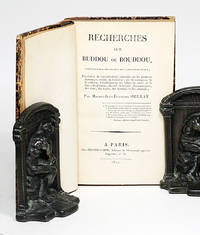
18172238Paris: Chez Brunot-Labbe 1817. First edition. contemporary morocco over marbled boards. Very Good. EXTREMELY RARE FIRST EDITION OF THE FIRST WESTERN BOOK ON BUDDHISM. "Although the Western encounter with Asia's largest religion may be the vastest and most consequential spiritual encounter in human history its protagonists and historical development are still barely known. Thus it comes as no surprise that even specialists have hitherto failed to appreciate the earliest Western book about Buddhism: Michel-Jean-François Ozeray's Recherches sur Buddou ou Bouddou instituteur religieux de l'Asie orientale Paris 1817.<br /> <br /> ". Ozeray's book represents a landmark in the history of the Western discovery of Buddhism. Published three years after the establishment of Europe's first academic chairs for indology and sinology and just before the organized academic study of Buddhist texts began Ozeray's reliance on images and reports by embassies and European residents in Asian countries rather than missionary literature marks a watershed as does the author's firm advocacy of a single historical founder his unwillingness to engage in etymological and mythological flights of fancy and his insistence on Buddhism's status as the largest of all religions of the Orient or even of the entire world. Though the book did not reach a large pan-European readership it was read by intellectuals interested in Buddhism such as the philosopher Arthur Schopenhauer Europe's first professor of Sinology Abel-Rémusat and the linguist Julius Klaproth. Klaproth and Abel-Rémusat were around the time of publication expressing increasing interest in Buddhism and its history. Both were involved in the birth of France's earliest Orientalist journal the Journal Asiatique which from the early 1820s became one of Europe's most important sources of information about Buddhism. Ozeray's book thus stands near the end of the mythological speculation period and near the beginning of organized research on Asia's greatest religion" Urs App The First Western Book on Buddhism and Buddha. <br /> <br /> Paris: Chez Brunot-Labbe 1817. Octavo contemporary half-morocco marbled boards and endpapers. Complete with half-title. Some scuffing to binding small closed tear to half-title. Text in outstanding condition with large margins. SCARCE. Chez Brunot-Labbe unknown
18172238Paris: Chez Brunot-Labbe 1817. First edition. contemporary morocco over marbled boards. Very Good. EXTREMELY RARE FIRST EDITION OF THE FIRST WESTERN BOOK ON BUDDHISM. "Although the Western encounter with Asia's largest religion may be the vastest and most consequential spiritual encounter in human history its protagonists and historical development are still barely known. Thus it comes as no surprise that even specialists have hitherto failed to appreciate the earliest Western book about Buddhism: Michel-Jean-François Ozeray's Recherches sur Buddou ou Bouddou instituteur religieux de l'Asie orientale Paris 1817.<br /> <br /> ". Ozeray's book represents a landmark in the history of the Western discovery of Buddhism. Published three years after the establishment of Europe's first academic chairs for indology and sinology and just before the organized academic study of Buddhist texts began Ozeray's reliance on images and reports by embassies and European residents in Asian countries rather than missionary literature marks a watershed as does the author's firm advocacy of a single historical founder his unwillingness to engage in etymological and mythological flights of fancy and his insistence on Buddhism's status as the largest of all religions of the Orient or even of the entire world. Though the book did not reach a large pan-European readership it was read by intellectuals interested in Buddhism such as the philosopher Arthur Schopenhauer Europe's first professor of Sinology Abel-Rémusat and the linguist Julius Klaproth. Klaproth and Abel-Rémusat were around the time of publication expressing increasing interest in Buddhism and its history. Both were involved in the birth of France's earliest Orientalist journal the Journal Asiatique which from the early 1820s became one of Europe's most important sources of information about Buddhism. Ozeray's book thus stands near the end of the mythological speculation period and near the beginning of organized research on Asia's greatest religion" Urs App The First Western Book on Buddhism and Buddha. <br /> <br /> 
Paris: Chez Brunot-Labbe 1817. Octavo contemporary half-morocco marbled boards and endpapers. Complete with half-title. Some scuffing to binding small closed tear to half-title. Text in outstanding condition with large margins. SCARCE. Chez Brunot-Labbe unknown books