BEN ISRAEL, MenassehBiblio.com
16 036 résultats
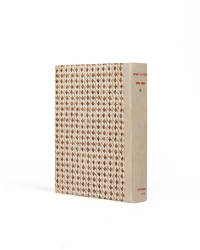
121995Amsterdam Samuel Abarbanel Soeiro printer 1652. . First edition. Small 4to 19 x 15 cm modern half-vellum with Hebrew title embossed in red to spine Title and first three leaves professionally restored tears with loss to three leaves at the end of the volume; numerous hand-written inscriptions in old brown ink signatures and inscriptions to title occasional staining and marginal tears; text in Hebrew; 8 174 2 ll. ll. 69-72 mispaginated.<br /> Menasseh Ben Yossef Ben Israel 1604-1657 was a Portuguese Sephardi rabbi kabbalist writer diplomat printer publisher teacher of the philosopher Baruch Spinoza and founder of the first Hebrew printing press in Amsterdam in 1626. This book is Ben Israel's only publication in Hebrew his other books were published in Spanish and Latin. Menasseh Ben Israel is an especially significant figure to British Jewry as he was the central advocate who successfully petitioned Oliver Cromwell to readmit Jews to England in the mid-1650s overturning the 1290 expulsion. Through his negotiations and writings he enabled the establishment of the first open Jewish community and synagogue in London. Despite his return to Holland at the end of his his efforts initiated the return of Jews to England for which he is remembered as the champion of British Jewish settlement.<br /><br />Presumably Menasseh Ben Israel gifted the book to his friend an important Ashkenazi Rabbi Moshe Shimshon Bacharach. Bacharach mentions Menasseh Ben Israel sever times in his responsa book 'Chavot Yair'. Both Moshe Shimashon and his son Yair Chaim read the book and left many marginal notes some of them appear to be critical of the text. Yair Chaim Bachrach was a Rabbi of the town of Worms and most likely due to financial need ended up selling the book to Rabbi Moshe Katz Naral who was a doctor and the Rabbi of Metz and came from an affluent family. <br /><br />Examples of Menasseh Ben Israel Hebrew hard-writing are scarce and few which makes this copy especially valuable.<br />This copy does not contain the frontispiece portrait of the author not found in all copies does not contain the leaf at the beginning of the book with poems in praise of the books by rabbis does not contain last eight leaves in Latin 3-10 which include title contents and dedication by the author to Emperor Ferdinand III omitted from most copies.<br /> CB no. 6205 1; Roest p.798; Vinograd Amsterdam 202; Mehlman 1211; Fuks Amsterdam 190; Silva Rosa 59; Rubens 1814. Amsterdam, Samuel Abarbanel Soeiro (printer), 1652. hardcover
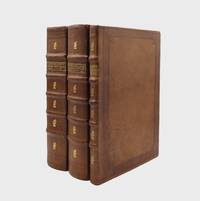
161319332Frankfurt 1613. 10 parts in three volumes small folio. Collations below. A few plates shaved along the foredge. Contemporary calf the covers ruled and tooled in gilt spines gilt with raised bands and gilt morocco labels some wear to covers. Bookplates on front pastedowns an occasional blindstamp see below<br/> <br/>Provenance: Earls of Macclesfield<br/> <br/>The fine Macclesfield set of De Bry's 'Petit Voyages' in a contemporary binding. This work is essential to any serious collection of travel books.<br/> <br/>A complete set of the first ten parts of the first Latin edition of the Petit Voyages of De Bry one of the grandest collections of voyages published in the Age of Discovery with all of the hundreds of maps and plates as detailed below. This series of voyages devoted mainly but not entirely to the East Indies was issued concurrently with the same publishers' Grand Voyages which are primarily devoted to the Americas. The present set is without Part XI and XII the latter so rare that even Church lacked much of the text and the appendix to Part I also a legendary rarity. Both of these parts were issued by a different publisher in 1625 and 1628 long after the rest of the series. Almost all sets lack some plates and maps and assembling complete copies has been a passion of collectors since the beginning of the collecting of voyages in the early 19th century. A number of the maps and plates are also highly prized individually which has contributed to parts being disassembled. The Petit Voyages comprise probably the greatest single collection of material on early voyages to the East Indies and are unique in their extraordinary wealth of cartographical and visual material on Africa India the Spice Islands and South Asia. The De Brys' intention as publishers to present an illustrated record sets them apart from other textual voyage collections such as Ramusio or Hakluyt. Their works are a cornerstone of any serious library of travels and voyages. The collations of the parts in the present set agree with those given in Church for the first Latin editions of each part with parts III and IX being the second issues of the first edition. Full titles and bibliographical details can be found in Church. A summary of the parts and their contents follow: Part I Vera Descriptio Regni Africani 1598. First edition. Fourteen plates and two maps on three sheets. Fillipo Pigafetta's description of the Congo describing Odoardo Lopez' voyage there in 1578 probably the most important early description of central Africa. Church 205. Part II Pars Indiae Orientalis in qua Johan. Hugonis Linscotani navagatio in Orientem 1599. First edition. Thirty-nine plates three maps and portrait of Linschoten at the head of the preface. Linschoten's famous voyages to the East of 1583-92 were published by De Bry the year after they first appeared as a separate book. Church 207. Part III Tertia Pars Indiae Orientalis. 1601. First edition second issue without the map of Nova Zembla on the verso of plate 58. Sixty plates and three maps. In this copy the plates are bound before the text. The large folding map "Descriptio Hydrographica" shows the eastern hemisphere and the routes to the east around Africa. This is a highly important piece of cartography. The rest of Linschoten Cornelius de Houtman's pioneering voyage to the East Indies of 1595-97 instrumental in opening the spice trade to the Dutch and Gerit de Veer's voyage in search of a northeast passage in 1594-96 are included. The plates show scenes in the East as well as Veer's tragic experiences in Spitzbergen where his expedition was attacked by polar bears. Church 209. Part IV Pars Quarta Indiae Orientalis. 1601. First edition. Twenty-one plates image in plate 20 printed upside down. Linschoten and Houtman's voyages concluded and the voyage of Jacob von Neck and Wybrandt van Warwijck to the East Indies in 1598-99. As in the two previous parts most of the plates are scenes in the East Indies. Church 211. Part V Quinta Pars Indiae Orientalis. 1601. Sole edition first issue.Twenty plates. More material on Von Neck and the establishment of Dutch power in Bantam. Church 212. Part VI Indiae Orientalis Pars VI. 1604. Sole edition first issue. Twenty-six plates. Pieter de Maree's description of Guinea in 1600 and other early voyages to Guinea by the Portuguese Dutch and French. This whole section therefore relates to the Gold and Slave coasts of Africa and the growing European trading presence there which laid the foundation for the trans-Atlantic slave trade. Church 213. Part VII Indiae Orientalis Pars Septima. 1606. Sole edition first issue. Twenty-two plates. Joris von Spilbergen's voyage to Ceylon in 1601-4 and Gasparo Balbi's voyage to Pegu via Syria in 1579-88. This part is mainly devoted to India and Ceylon with excellent plates of the latter. Church 216. Part VIII Indiae Orientalis Pars Octava. 1607. Sole edition first issue. Eighteen plates. A collection of five Dutch voyages to the East Indies 1600-6 including trips to China and the Spice Islands all illustrating the rising Dutch power in the East. The plates show various military encounters and a famous double-page plate of Macao. Note that in this copy plate 13 a double-page plate is bound in between plates 11 and 12 i.e. on the verso of plate 11 and on the conjoined leaf. Church 218. Part IX Indiae Orientalis Pars Nona. 1612. First edition second issue. Seventeen plates. A world map appears on the supplementary title to the extra plates section. This part describes the voyage of Admiral Pieter Willemsz to the Spice Islands to seize them from the Portuguese written by one of the officers on the expedition. Church 221. Part X Indiae Orientalis Pars X. 1613. First edition. Three plates and three maps. This part is important on several accounts. The first section gives one of the first published accounts of Hudson Bay describing the explorations of Henry Hudson. The most important of these is the map showing Henry Hudson's explorations which was first published the year before by Hessel Gerritsz in Amsterdam. It is the first map of Hudson Bay and the adjacent country and is present here in a slightly reduced version of Gerritsz's map with the name of the island "Frisland" clearly engraved see Burden. The double-page map shows Hudson's Bay in the west and stretches all the way east to include Ireland and Iceland. Befitting Hudson's extensive explorations the coast line of Hudson Bay is quite detailed and accurate place names are noted and islands in the bay are shown. Hudson did make mistakes however in his charting of the southern part of the bay in a rectangular shape. "This map serves as the foundation piece to Canada's basic economic history. It served as the only functional chart to the northern regions of Canada for several decades and enabled the successful establishment of the Hudson Bay Company which was to dominate trade exploration and the economic development of Canada for a long time" - Kershaw. The second section of Part X of De Bry describes other voyages to the North by Linschoten while the third section relates to De Quiros and his supposed discovery of a new continent "Terra Australis Incognita." The other two maps relate to a search for a Northeast passage. Church 222. A rare opportunity to acquire one of the great monuments of early travel literature.<br/> <br/>Church as cited above. For the Hudson map: Burden 162; Kershaw Early Printed Maps of Canada 53b & pp.55-58; Schwartz & Ehrenberg p.94; Verner & Stuart-Stubbs The Northpart of America 29. unknown books
1628376954Frankfurt 1628. First editions. 13 parts bound in 3 volumes. 290 engraved maps and plates. Detailed collations below. 3 vols. Folio. Modern calf covers bordered in blind spine with raised bands in six compartments ruled in blind and decorated and lettered in gilt. Some maps expertly repaired some leaves expertly remargined some leaves maps variably toned and supplied. First editions. 13 parts bound in 3 volumes. 290 engraved maps and plates. Detailed collations below. 3 vols. Folio. A first edition set of the Petit Voyages of De Bry one of the grandest collections of voyages published in the Age of Discovery. This series of voyages issued concurrently with the same publisher's "Grand Voyages" primarily devoted to the Americas comprises the greatest single collection of early voyages to the East Indies and holds a wealth of cartographical and visual material on Africa India America South Asia and the Middle East including the first Latin translation of Gasparo Balbi's travelogue Viaggio dell' Indie Orientali.<br /> <br /> The present set the first Latin editions is virtually complete lacking only the two maps to Part XII so rare that even Church lacked them; he also lacked much of the text of Part XII present here. Indeed Part XII and the Appendix to Part I are so rare as to be virtually unobtainable both issued by a different publisher in 1628 and 1625 respectively long after the rest of the series had been disseminated. <br /> <br /> Two parts warrant specific note for their importance in the historiography of the Arabian Peninsula. Part VII includes the Middle East travelogue of Gasparo Balbi 1550-1623 the Venetian state jeweller and merchant "the first writer to record the place names between al-Qatif and Oman that are still in use today" Geoffrey R. King "The Coming of Islam and the Islamic Period in the UAE" United Arab Emirates A New Perspective 2001 p. 74. This constitutes the earliest printed source for the place names along the coast of the UAE Qatar and Oman. It was first published in 1590 as Viaggio dell' Indie Orientali making this the second time it appeared in print and the first Latin translation. Balbi's account contains much information for merchants including rates of exchange duties travel routes distances and pearling grounds.<br /> <br /> The first Dutch trading expedition to the East Indies from 1595 to 1597 led by Cornelius de Houtman forms Part III. The comprehensive map Descriptio Hydrographica accommodata ad Battavorum navigatione in Javam insulam Indiae orien first published in 1599 shows Houtman's route and includes the Arabian Peninsula in its entirety with numerous places identified along the coast.<br /> <br /> Many of the maps and plates from the work are highly prized individually which has contributed to copies being disassembled and consequently copies are often found lacking maps or plates. The bibliographical understanding of this work is extremely complex thus discrepancies within references are often found. However remarkably the collations of the parts in the present set largely agree with those given in Church for the first Latin editions of each part.<br /> <br /> The Petit Voyages comprise probably the greatest single collection of material on early voyages to the East Indies and are unique in their extraordinary wealth of cartographical and visual material on Africa India the Spice Islands and South Asia. The De Brys' intention as publishers to present an illustrated record sets them apart from other textual voyage collections such as Ramusio or Hakluyt. They are a cornerstone of any serious library of travels and voyages<br /> <br /> A summary of the parts and their contents: <br /> <br /> Part I VERA DESCRIPTIO REGNI AFRICANI 1598. A translation of Pigafetta's description of the Congo first published in 1591 describing Odoardo Lopez' voyage there in 1578 probably the most important early description of central Africa. 4 including engraved title 60 4pp; 2 letterpress title 14 leaves of plates 2 folding maps. Lacks blank H6 following the Index; Aa1-Aa4 letterpress title and first three plates and Cc4 plate 11 suppled from 1624 second edition blank Dd4 following the maps likely supplied. Several leaves remargined repairs to folding maps the second folding map trimmed with loss along the right side of approx. 1 inch. Church 205; JCB I 2 p. 419; Crawford p. 159. <br /> <br /> Part II PARS INDIAE ORIENTALIS IN QU JOHAN. HUGONIS LINTSCOTANI NAVIGATIO IN ORIENTEM 1599. Linschoten's famous voyages to the East of 1583-92 were published by De Bry the year after they first appeared as a separate book. The maps are of Mozambique the Portuguese colony of Goa and a highly important and much sought folding map of Java and Sumatra. 12 including engraved title and engraved portrait 114 6 including terminal blank; 1 letterpress title 39 plates numbered I-XXXVIII plus unnumbered small folding plate 3 folding maps. Repairs to folding maps. Church 207; JCB I 2 pp. 422-423; Crawford p. 165. <br /> <br /> Part III TERTIA PARS INDIAE ORIENTALIS. 1601. The rest of Linschoten Cornelius de Houtman's pioneering voyage to the East Indies of 1595-97 instrumental in opening the spice trade to the Dutch and Gerit de Veer's voyage in search of a northeast passage in 1594-96 are included. The plan of Agra often absent is present along with a map of Nova Zembla. The large folding map shows the eastern hemisphere and the routes to the east around Africa. The plates show scenes in the East as well as Veer's horrible experiences in Spitzbergen where his expedition was attacked by polar bears. Four folding maps. 8 including engraved title and final blank 170 2 blankpp.; 1 letterpress title 60 plates on 59 leaves with plate 59 on verso of plate 58 and plate 60 unnumbered. Terminal blank q4 supplied. Church 208; JCB I 2 pp. 425-426; Crawford p. 167. <br /> <br /> Part IV PARS QUARTA INDIAE ORIENTALIS. 1601. Linschoten and Houtman's voyages concluded and the voyage of Jacob von Neck and Wybrandt van Warwijck to the East Indies in 1598-99. As in the two previous parts most of the plates are scenes in the East Indies. 8 including engraved title 111 1 blankpp; 1 letterpress title 21 plates. Church 211; JCB I 2 pp. 428-429 calling for a map not in Church or Crawford and not present here; Crawford p. 169.<br /> <br /> Part V QUINTA PARS INDIAE ORIENTALIS. 1601. Relations of voyages to the East Indies in 1598-1600 by Dutch ships commanded by Neck and van Warwijck. 6 of 8 including engraved title lacks blank 4 60pp; 1 letterpress title 20 plates. Church 212; JCB I 2 pp. 430-431; Crawford p. 171.<br /> <br /> Part VI INDIAE ORIENTALIS PARS VI. 1604. Pieter de Maree's description of Guinea in 1600 and other early voyages to Guinea by the Portuguese Dutch and French. This whole section therefore relates to the Gold and Slave coasts of Africa and the growing European trading presence there which laid the foundation for the trans-Atlantic slave trade. 8 including title and dedication with engraved vignettes terminal leaf blank 127 1 blankpp; 1 letterpress title 26 plates. Lacks terminal blank G4. Church 213; JCB I 2 pp. 433-434; Crawford p. 173. <br /> <br /> Part VII INDIAE ORIENTALIS PARS SEPTIMA. 1606. Joris von Spilbergen's voyage to Ceylon in 1601-4 and Gasparo Balbi's voyage to Pegu via Syria in 1579-88. 4 including engraved title 126 2 blank; 1 letterpress title 22 plates. Lacks blank G6 repairs to plates VIII and IX. Church 216; JCB I 2 pp. 435-436; Crawford p. 175. <br /> <br /> Part VIII INDIAE ORIENTALIS PARS OCTAVA. 1607. A collection of five Dutch voyages to the East Indies 1600-6 including trips to China by Coreille Nicolas and van der Venn all illustrating the rising Dutch power in the East. The plates show various military encounters and a famous double-page plate of Macao. 2 engraved title 3-114 2 blank; 1 letterpress title 18 plates. Church 218; JCB I 2 p. 437; Crawford p. 177.<br /> <br /> Part IX INDIAE ORIENTALIS PARS NONA. 1612-3. A world map appears on the supplementary title to the extra plates section. This part describes the voyage of Admiral Pieter Willemsz to the Spice Islands to seize them from the Portuguese written by one of the officers on the expedition. 4 including engraved title 49 1 blankpp; 4pp 12 plates; 2 Supplement title 88 2 blankpp; 1 5 plates. Terminal signature A1-6 the Supplement Icones misbound between D4 and E1. Church 220; JCB I 2 pp. 439-440; Crawford p. 179. <br /> <br /> Part X INDIAE ORIENTALIS PARS X. 1613. Three plates and three maps. This part is important on several accounts. The first section gives one of the first published accounts of Hudson's Bay from Gerritsz while the second describes other voyages to the North by Linschoten. All of the maps relate to the search for a northeast passage. The third section relates to De quiros and his supposed discovery of a new continent "Terra Australis Incognita." 2 engraved title 3-32pp; 1 letterpress title 3 plates and 3 double-page maps. Church 222; JCB I 2 pp. 441-442; Crawford p. 222. <br /> <br /> Part XI INDIAE ORIENTALIS PARS UNDECIMA. 1619. Includes the narratives of Vespucci's third and fourth voyages followed by a description of Robert Coverte's journeys in Persia and Mongolia and then an account of Spitzbergen and the northern whale fisheries. 2 title with engraved portrait of Vespucci 3-62pp; 1 letterpress title 10 plates. Lacks blanks H4 and c4. Church 223; JCB I 2 pp. 442-443; Crawford p. 183.<br /> <br /> Part XII HISTORIARUM ORIENTALIS INDIAE TOMUS XII. 1628. The text of the Latin edition of Part XII was published in the German edition as two parts XII and XIII. It describes recent voyages by the English and the Dutch in the East. For the great rarity of this part see Church and every other bibliographer who has treated De Bry from Camus onward. 4 208pp. 14 engraved plates within the text. Lacking the two maps as did Church who also lacked much of the text. Church 224; JCB I 2 pp. 444-445; Crawford p. 185.<br /> <br /> APPENDIX TO PART I APPENDIX REGNI CONGO. 1625. It contains five voyages to the Congo from 1611 to 1621 by Samuel Bruno a physician of Basle. As with Part XII this is one of the rarest and most difficult of parts to acquire. 2 engraved title 3-86 2 blankpp. Twelve plates in the text. Church 225; JCB I 2 pp. 420 i.e. within the description of the second edition of the first part; Crawford p. 163. Church 205 207 208 211 212 213 216 218 220 222 223 224 and 225; Crawford pp. 150-183; JCB I 2 p. 419-446 unknown
18499341London, Moon, 1842 - 1849. 6 Bde. 3 Bll., 30 S., 21 Bll.; 23 Bll.; 2 S., 18 Bll.; 2 Bll., 8 S., 21 Bll.; 22 Bll.; 24 Bll. mit 120 Textabb. 3 Frontisp., 6 Titel, 1 Porträt, 118 Tafeln (alles in getönter bzw. farbig getönter Lithographie von Louis Hague), 2 Kupferkarten. Gr.-Fol. OHLdr. (restauriert, fleckig, Rücken mit ergänzten Fehlstellen).
First English edition of Der Judenstaat, published in German in the same year. [xii], 102, [1] ad, pages. "Let the sovereignty be granted us over a portion of the globe large enough to satisfy the reasonable requirements of a nation; the rest we shall manage for ourselves". - p.25. In his July 10, 1896 diary entry Herzl wrote "Paid the publisher David Nutt 19 pounds and a few shillings for the English edition. He has sold only 160 copies". - p.414 of "The Complete Diaries of Theodor Herzl". Moderate external soiling. Above-average external wear with a variety of small chips from and short openings to the thin paper covers. Binding intact. Prior owner's details in pencil, dated 1896, atop half-title, otherwise unmarked. A sound copy of this profoundly influential work by the acknowledged father of the Jewish state. Emanuel p.53 Book
1601V48236Frankfort am Mayn: de Bry printed by Matthes/Matthias Becker 1601-1613. Hardcover. Very Good. Engraved titlepages 6 copperplates 80 ex 86 inc. double-page & folding maps by de Bry family. Quarto 305x195mm original blindstamped leather covered boards spine on 5 raised bands upper hinge cracked/covers slightly wormed small remains of front 2 tapes which held clasps no longer present slight damage to some plates uniform light paper browning throughout original small leather tags 5 of 6 to start of each part. Over 80 illustrations & 1 fold out map. Parts 5-10 in this collection each briefly described below cover the Dutch arrival in Mozambique & native customs in Africa & Indonesia during the early colonisation of the Dutch East Indies. Each of the 6 Parts here bound together are briefly described in German on each Titlepage as follows: Part 5. F nfter Theil. eygentlicher Bericht vnd warhafftige Beschreibung der gantzen volkommen Reyse oder Schiffart so die Holl nder mit acht Schiffen in die orientalische Indien sonderlich aber in die Iavanische vnd Molukische Inseln als Bantam Banda vnd Ternate 1st German edition titlepage dated 1601. Engraved/printed titles & 20 plates complete; 6. Sechster Theil . warhafftige historische Beschreibung dess gewaltigen goltreichen K nigreichs Guinea sonst das Goltgestatt von Mina genandt .dated 1603 Engraved/printed titles & 26 plates complete; 7. Siebender Theil darinnen zwo vntershiedliche Schiffarten begrieffen: erstlich eine dreyj hrige Reyse Georgij von Speilbergen Admirals vber drey Schiffe welche An. 1601. auss Seeland nach den orientalischen Indien abgefahren vnd nach viel widerwertigkeiten An.1604 wider in Seelandt ankommen . 2 Parts dated 1605. Engraved/printed titles 22 plates complete; 8. Achter Theil. begreiffend erstlich ein historische Beschreibung der Schiffart so der Admiral Iacob von Neck . in die Orientalische Indien von Ann. 1600 biss An. 1603 gethan. Darnach ein Historia so von Iohan Herman von Bree . dated 1606 with Appendix. Engraved/printed titles 18 plates 3 double-page or fold-out complete; 9. Neundter Theil darinnen begriffen ein kurtze Beschreibung einer Reyse so von den Holl ndern vnd Seel ndern in die Orientalischen Indien . vnter der Admiralschafft Peter Wilhelm Verhuffen in Iahren 1607 1608 vnd 1609 verricht worden . 4 Parts dated 1612-1613. Engraved/printed titles 1st in architect frame but with heading ARCHITECTVRA struck through 20 plates inc. 2 maps title dated 1613 with small world map & 5 plates all complete; 10. Zehender Theil . begreiffendt eine kurtze Beschreibung der neuwen Schiffart gegen Nordt Osten vber die Amerische Inseln in Chinam vnd Iapponiam von Heinrich Hudson newlich erfunden beneben kurtzer Andeutung der Inseln vnd Oerter so auff derselben Reyse von den Holl ndern hiebevor entdeckt worden auss Iohann Hegen von Lintschotten Reise gezogen . 1st Part only dated 1613 with engraved pictorial title but LACKS all 3 double-page maps & 3 plates. The first 2 parts of this present first and only German edition were published 1601-1606 by Johann Theodor de Bry and Johann Israel de Bry. Johann Theodor alone issued parts 9-10. A detailed Yale catalogue of all ten Parts of this German de Bry edition is accessible online at: //search.library.yale.edu/catalog/9995972683408651. de Bry, printed by Matthes/Matthias Becker hardcover
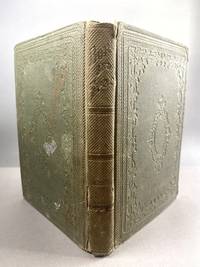
186110077<p>Extraordinary copy owned by another previously enslaved American who found his way to freedom.</p><p>Israel Campbell born in Kentucky in 1815 spent the first decades of his life as property of several owners before after several attempts escaping slavery to Canada. He later spent twenty-four years in Texas where he became known as the <em>"</em><em>Father of Black Texas Baptists" </em>having reorganized the African Baptist Church at Galveston the first completely independent black Baptist congregation in Texas. Campbell self-published this book to raise funds to free his three children from slavery:<em> "Three</em><em> of my children are yet in the land treading the wine-press and making bricks without straw. And as time rolls on I see the oppressor's rod becoming heavier and the shackles becoming tighter and tighter around them and my heart yearns for them and my prayers are often and earnest for their liberation"</em> iii. He mentioned the risks of attempting to liberate them<em>".few know the danger the suffering or the peril of such a course until they have passed through its experiences"</em> iv while also believing it would not be the moral way of gaining freedom. Campbell discusses trying to work and save up enough money without financial help<em>: </em><em>"I might by hard labor in some mechanical occupation gain after many years enough to buy their freedom. should I have</em> preferred <em>the former plan their hairs might become gray while I was trying.</em><em>"</em>iv. Campbell's intention of writing this book is to not only tell the story of his life honestly without elaboration <em>"Let facts speak for themselves.</em><em>"</em> but to primarily raise enough funds to buy his children out of slavery: "<em>I expect to devote the proceeds of the sale of this book; by which I consider that I am not only gaining their liberty but am placing before the world the truest picture of the South and its institutions- both the dark and the bright side"</em> VI.</p><p>Most likely the copy of George W. Price Jr. with the signature <em>"</em><em>Geo. W. Price"</em>in pencil to front fly & with <em>G. W. PRICE</em> stamped in purple ink below. An additional <em>Price</em> stamp to rear of frontis & an erased visible only under high magnification "Geo. W. Price's Book / cost $1.00" to top of title page see image 7.</p><p>In 1862 Price Jr. 1843-1901 escaped slavery and joined the United States Navy. After emancipation he served in the North Carolina legislature from 1869 to 1872 first in the House of Representatives 1869-1870 and then in the Senate 1870-1872. He and his father George W. Price Sr. 1810-1882 were leading ornamental plasterers in Wilmington North Carolina having both learned their trade as enslaved artisans and worked on buildings such as the Bellamy Mansion. After the Civil War Price jr. continued to practice his trades as well as working in politics.</p><p>Green pebbled cloth. Wear to head and tail of spine with some loss of cloth to the top and bottom of hinges; occasional staining and thumbing; gatherings at pages 163 to 206 standing a little proud nonetheless an exceptional copy.</p><p>Unaccountably scarce with no auction records & with but three original copies v-a-v multiple later held in institutions. The Library of Congress does not have a copy.</p><p>5.25 x 7.25 in 13.5 x 18.5 cm</p> Published by the Author hardcover
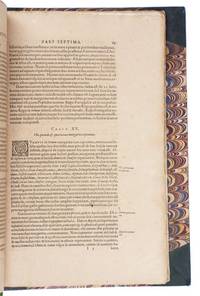
1606K8NDD6WJMUR8Frankfurt: Wolfgang Richter 1606. 20th-century half green morocco title in gold on spine marbled sides and endpapers. Folio 32.5 x 20 cm. With the letterpress title within an engraved architectural border an individual letterpress title-page for the Icones an engraved coat of arms on the dedication leaf 20 engravings in text and 2 double-page engraved plates. First edition of the Latin translation of book seven of Théodore de Bry's Petits voyages the greatest single collection of material on early voyages to the East Indies which is considered unique in its extraordinary wealth of cartographical and visual material. Crucially this much-sought volume includes Gasparo Balbi's groundbreaking account of the Middle East first published in 1590 as Viaggio dell' Indie Orientali - a mere 16 years before this present edition making this the second appearance in print altogether and the first Latin translation. Balbi a Venetian jewel merchant travelled extensively in the Arabian Peninsula in search of precious stones. From Venice he sailed for Aleppo proceeding to Bir and from there overland to Baghdad descending the Tigris to Basra where he embarked for India. While in the Persian Gulf he studied the pearl industry noting that the best pearls were to be found at Bahrain and Julfar. He refers to islands in the Emirate of Abu Dhabi including Sir Bani Yas and Das and to several coastal settlements that were to become permanently established such as Dubai and Ras al Khaima. Balbi was the first to record the place names along the coast of modern Qatar the United Arab Emirates and Oman. Practically "none of the names of places on the coast between Qatar and Ras al Khaima occur in other sources before the end of the eighteenth century" Slot. The volume also comprises the account of Joris von Spilbergen's voyage to Ceylon in 1601-1604 with excellent plates.A note with red pencil on the second leaf browned some small spots otherwise in good condition.l Brunet I col. 1334; cf. Carter Sea of pearls p. 79; Howgego to 1800 B7; Slot The Arabs of the Gulf 1602-1784; United Arab Emirates yearbook 2006 p. 20. Wolfgang Richter, unknown
1583000119Laugingen (d. i. Lauingen), Leonhart Reinmichel für Georg Willers, 1583. 8 Blatt, 487 S., 27 Blatt, 1 unbedrucktes Blatt. Alter Pergamentband mit umgeschlagenen Vorderkanten. 4 Teile in einem Band. Mit 2 Titelvignetten in Holzschnitt und 42 ganzseitigen Pflanzenholzschnitten. Deutschsprachige Beschreibung von Rauwolfs Reise ins Heilige Land und den Vorderen Orient mit zahlreichen authentischen und zuverlässigen Beobachtungen. Graesse VI, 39; Brunet IV, 1122f.; Pritzel 7430; VD16: R 431; Short-Title Catalogue of German Books in the British Museum, p. 727. Die hier vorliegende zweite Auflage enthält erstmals den wichtigen vierten Teil mit den Pflanzenholzschnitten zuvor teils unbekannter orientalischer Gewächse (Nissen: Die botanische Buchillustration, Nr. 1587). Dem Autor zu Ehren wurde später die Gattung "Rauvolfia" der Pflanzenfamilie der Hundsgiftgewächse (Apocynaceae) benannt. "Mit besonderer Vorliebe hat Rauwolf alle medicinischen Dinge, Krankheiten, Heilmittel, Bäder, Speisen und Getränke und alle Industrien besprochen, nicht ohne daß durch Leichtgläubigkeit, wie sie der Zeit gegenüber den Erzählungen von fremden Ländern eigen war, auch manches Fabelhafte (s. die Schilderung des Greifes im 8. Capitel des 2. Buches) mit unterläuft. Rauwolf muß ein genaues Tagebuch geführt haben, er würde sonst nicht im Stande gewesen sein, eine solche Fülle einzelner genauer Angaben zu bieten" (F. Ratzel in ADB 27). In der Schilderung seiner dramatisch verlaufenen Reise gibt der Autor außerdem die erste Beschreibung des Kaffees und eines Kaffeehauses: "Under andern habens ein gut getränck / welliches sie hoch halten / Chaube von jnen genennet / das ist gar nahe wie Dinten so schwartz / vnnd in gebresten / sonderlich des Magens / gar dienstlich. Dises pflegens am Morgen frü / auch an offnen orten / vor jedermenigklich one alles abscheuen zutrincken / auß jrdinen vnnd Porcellanischen tieffen Schälein / so warm / alß sies können erleiden." (S. 102f.). Zwischen die 4 Teile des Textes hat der Buchbinder jeweils mehrere unbedruckte Leerseiten eingebunden. Der Vorderdeckel innen und das Titelblatt am oberen Rand mit handschriftlichen Vermerken von alter Hand zur Bedeutung des Buches. Der Rücken nachgedunkelt und der Vorderdeckel etwas fleckig, insgesamt handelt es sich jedoch um ein ordentliches, breitrandiges und weitgehend fleckenfreies Exemplar.
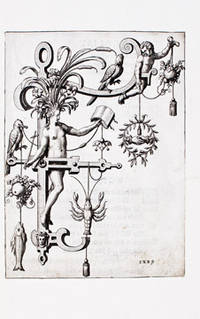
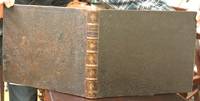
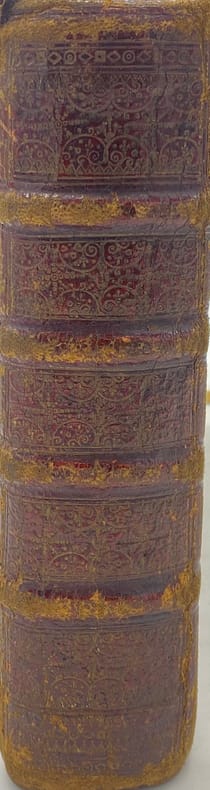
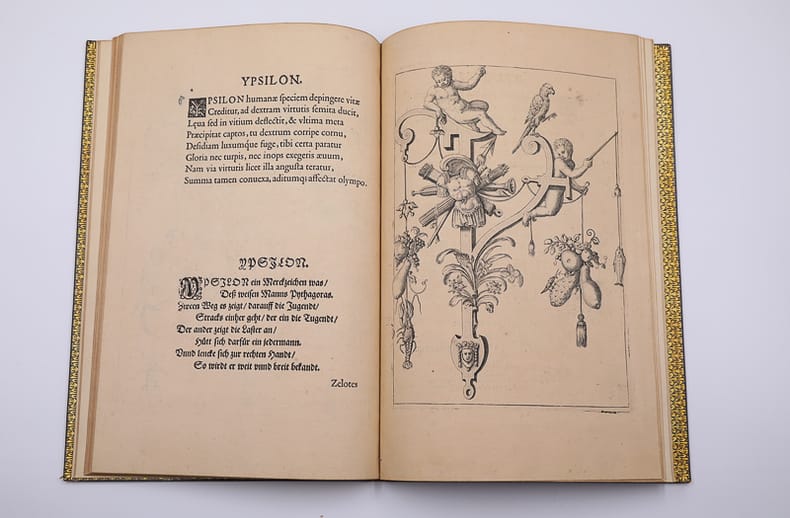
15751483181575. DE BRY Johann Theodor and J. I. DE BRY. Nova Alphati Effictio histories ad singulas literas correspondentibus et toreumate Bryanaeo artificiose in aes incises illustrate . Engraved title-page 24 elaborately engraved plates of letters all with grotesque Mannerist ornamentation. 4to. 325 x 212 mm bound by Rivière in full crushed brown morocco triple gilt fillet on covers floral gilt ornaments in corners spine with intricate floral tooling in compartments a.e.g. Frankfurt: De Bry 1595. First Edition of this celebrated and rare Renaissance Alphabet Book. "Elles représentent un grand Alphabet majuscule dont les lettres sont formées par découpures mouvementées ornées de figures de trophées d'oiseaux de fleurs et de fruits" Guilmard Les Maîtres Ornemanistes p. 368. The letters appear in uppercase and are embedded within elaborate ornamentation consisting of Biblical figures nymphs fauns musical instruments cherubs lovers insects fruits birds trophies fish lobsters flowers splendid entrelacs and luxurious arabesques. These extravagant illustrations are characterized by a disintegration of reality in which the forms have been redistributed in accordance with the fantasy of the De Bry brothers. The mixture of grotesque classical and symbolic imagery executed with supreme artistic bravado elevates this work to the pinnacle of published ornamental alphabet books. Each engraving is accompanied by a letterpress text in German and Latin on the verso where the subject matter is identified. The engravings are individually "signed" with "J.T.B. fe." A second edition of the work appeared at Cologne in 1613. The rarity of this first edition is attested by the recent facsimile of it Ravensburg 1997. No copies sold at auction as listed by ABPC; OCLC lists 7 copies in America at Houghton Morgan Library NYPL Walters Art Gallery RISD Newberry and the University of Virginia. There are also 7 copies listed in European institutions. This copy had the engravings cut out and mounted during the nineteenth century on large papier Hollande in a folio format. However the size of the cut-out sheets 195 x 150 mm remains fully intact; the folio sheets measure 325 x 212 mm. Some insignificant spots to interleaved sheets binding with minor rubbing to extremities. This copy lacks the two dedication leaves which includes the text to the letter A on the verso of the second leaf. A desirable copy nonetheless. PROVENANCE: Sir John Stirling Maxwell 1818-1878 with his private ex-libris his sale Christie's London 1958 Lot 59 and with the Nether Pollok "Arts of Design" ex-libris. Berlin Katalog 5281. Guimard Les Maîtres Ornemanistes p. 368 No. 38. Bonacini 292 "estremamente rara". Brunet I 1309. BMC German 161. See: Becker The Practice of Letters The Hofer Collection of Writing Manuals 1514-1800 for the 1596 German edition of Alphabeten. unknown
15751483181575. DE BRY Johann Theodor and J. I. DE BRY. Nova Alphati Effictio histories ad singulas literas correspondentibus et toreumate Bryanaeo artificiose in aes incises illustrate . Engraved title-page 24 elaborately engraved plates of letters all with grotesque Mannerist ornamentation. 4to. 325 x 212 mm bound by Rivière in full crushed brown morocco triple gilt fillet on covers floral gilt ornaments in corners spine with intricate floral tooling in compartments a.e.g. Frankfurt: De Bry 1595. First Edition of this celebrated and rare Renaissance Alphabet Book. "Elles représentent un grand Alphabet majuscule dont les lettres sont formées par découpures mouvementées ornées de figures de trophées d'oiseaux de fleurs et de fruits" Guilmard Les Maîtres Ornemanistes p. 368. The letters appear in uppercase and are embedded within elaborate ornamentation consisting of Biblical figures nymphs fauns musical instruments cherubs lovers insects fruits birds trophies fish lobsters flowers splendid entrelacs and luxurious arabesques. These extravagant illustrations are characterized by a disintegration of reality in which the forms have been redistributed in accordance with the fantasy of the De Bry brothers. The mixture of grotesque classical and symbolic imagery executed with supreme artistic bravado elevates this work to the pinnacle of published ornamental alphabet books. Each engraving is accompanied by a letterpress text in German and Latin on the verso where the subject matter is identified. The engravings are individually "signed" with "J.T.B. fe." A second edition of the work appeared at Cologne in 1613. The rarity of this first edition is attested by the recent facsimile of it Ravensburg 1997. No copies sold at auction as listed by ABPC; OCLC lists 7 copies in America at Houghton Morgan Library NYPL Walters Art Gallery RISD Newberry and the University of Virginia. There are also 7 copies listed in European institutions. This copy had the engravings cut out and mounted during the nineteenth century on large papier Hollande in a folio format. However the size of the cut-out sheets 195 x 150 mm remains fully intact; the folio sheets measure 325 x 212 mm. Some insignificant spots to interleaved sheets binding with minor rubbing to extremities. This copy lacks the two dedication leaves which includes the text to the letter A on the verso of the second leaf. A desirable copy nonetheless. PROVENANCE: Sir John Stirling Maxwell 1818-1878 with his private ex-libris his sale Christie's London 1958 Lot 59 and with the Nether Pollok "Arts of Design" ex-libris. Berlin Katalog 5281. Guimard Les Maîtres Ornemanistes p. 368 No. 38. Bonacini 292 "estremamente rara". Brunet I 1309. BMC German 161. See: Becker The Practice of Letters The Hofer Collection of Writing Manuals 1514-1800 for the 1596 German edition of Alphabeten. unknown books
1660B6282Paris: N. Langlois n/a c.1660’s-1670’s. Expertly rebacked; few tear repairs mostly marginal; overall in near fine condition with plates clean and crisp. . Binding: Contemporary mottled full calf; expertly rebacked; spine with five 5 raised bands; gilt lettered title on morocco label on two; compartments with central gilt floral ornament; dated; endpapers renewed; all edges cut. Notes: PERELLE GABRIEL 1603/or 10/ or 20 - 1675/or77/ or 80 an eminent French designer and engraver born at Paris. He excelled in drawing and engraving landscapes and views of which we have a prodigious number which prove the fertility of his invention and an extraordinary facility of execution rather than an observant study of nature. They are however composed in a very pleasing style and executed with neatness and taste. He usually enriched them with ruins and other objects which give an agreeable variety to his scenery. His principal defect is in the management of his masses and his lights are scattered and in spots by which the general effect of his prints is materially injured. Although by far the greater part of his plates are from his own compositions he also engraved from the designs of several other masters particularly Paul Brill Gaspar Poussin Jan Asselyn and above all after Silvestre. He was assisted in his numerous works by his sons ADAM 1638/ or 40-1695 and Nicholas b.1631/ or 38- 1695 PERELLE who after his death engraved a great number of plates of architectural views landscapes &c. but which are inferior to those of their father. <br>He is considered the Hollar of France both in his style of engraving and the esteem in which his views are held. His large views of public buildings and gardens in France Italy and Spain were published with those of Silvestre in 1680; and there is a set of smaller views by these artists.<br><br> Size: oblong folio 285x370mm Illustration: Illustrated with 164 architectural etchings of palaces great houses and churches detailed views of their gardens gates squares fountains etc. The album of Perelle engravings depict four 4 overall areas 1. Paris and surroundings 2. Versailles 3. France and 4. A collection on Rome - the latter containing six 6 plates etchings after drawings by Asselyn. This attractive album consists solely of large views no plan outlines or small sized half-paged etchings otherwise often featured as part of these albae. Title pages point to the publication being very early – not yet including the imprints printed in later publications.<br>The album on Paris containing 61 plates starts with a title without imprint but signatures by Perelle and Langlois; perspective views of Paris follow with its bridges the Seine the Louvre and Tuileries the Palais-Royal the Luxembourg or ‘Palais d'Orleans’ the Place Dauphine the College des quatre nations; the small island of the Notre Dame on the Seine the city hall the famous entrance gates to the city: Porte de la Conference St.Honore St. Denis St. Martin St.Bernard and St.Anthoine; depictions of monuments and buildings as the l'Arc de Triomphe the Notre Dame the ‘Monastere Royal de Val de Grace’ fountains and the observatory the ‘Invalides’ l'Hospital de la Salpestriere gardens of the Hotel de Conde and St. Victor. The views of the surrounding Paris feature the Chateau de Vincennes Conflans the Chateau of St. Maur the Chateau of Madrid the Chateau of St. Cloud the Chateau of Meudon the House of Boisfrant at St.Ouen the Grotte of Ruel.<br>The album on Versailles with 36 plates # 62- 97 starts with its title page without imprint then depicts perspectives of the castle the gardens and castle grounds the king's stables the great entrance cascades grottes water-fountains bassins dedicated to gods and the menagerie.<br>Perelle’s great houses of France with 45 plates #98-142 begins with its titlepage with no imprint except signatures followed by more buildings in the environs of Paris of Chaville St. Germain en Laye Maison Sceaux Rincy Pompone Choisi; this is followed by views of Fontaine-bleau the Chateau of the Vaux le Vicomte of Villiers-Coste-Rez Monceaux Liencour Chantilly Richelieu and Ancy.<br>The Rome or fourth album with 22 etchings starts with a title leaf without imprint but signatures of Perelle and N. Langlois; followed by magnificent views of St. Peter St. Angelo the new capitol and the arc of Constantin and the Colisseum the arc of Septimus Severus the bath of Emperor Diocletian; a group of six unsigned plates after I. Asselin e. showing Charles V Rome’s aquaeduct the Colisseum 2 ruins of the Palais Maior ruins of Marius’ trophies; this is followed by views of the Vigne Pamphili with its entrance garden amphitheatre and the fountain of Venus; at the end a plate depicting the fountain of Tivoli.<br> References: Michael Bryan Dictionary of Painters and Engravers Biographical and Critical 1849 p.560; Berlin Katalog 2483&2675; BNF - Getty Research Institute 2015 pp. 90-115 chap. II: Architecture and engraved views; Brunet IV p. 494; Fowler p. 245; Ganay Category: Book Art Architecture & Design; Book Plate Books General; Book Europe France; Book Europe Italy; N. Langlois hardcover
228786S.l., s.d. (1654) in-8 oblong, maroquin vieux-rouge, dos à nerfs orné de caissons richement décorés, double encadrement de double filet doré sur les plats avec fleurons d'angle, tranches dorées (reliure de l'époque). Coiffes et nerfs frottés, coins très abîmés, plats salis, certaines planches défraîchies ou avec mouillures.
1595bf5572Fr. ad Moe Relié 1595 EDITION ORIGINALE DES PLUS RECHERCHEES. Nova alphati effictio historiis ad singulas literas correspondentibus, et toreumate Bryanæo artificiose in æs incisis illustrata : Versibus insuper Latinis et Rithmis Germanicis non omnino inconditis. Nejw kunstliches Alphabet, gezirt mit schonen Figurn deren jede sich auff seinen Buchstaben acconmodirt ; artlich in kupffergestochen, durch die Bryen, Auch mit Lateineschen Versen und teutschen Reimen lustig beschrieben. Fr. ad Moe. [Francfort-sur-le-Main]. 1595. In-4 (28 x 19 cm). Titre-frontispice, (2) ff. [Dédicace et préface], (24) planches gravées avec le texte latin et allemand imprimé sur la page en regard : plein maroquin havane janséniste, dos à six nerfs, dentelle intérieure et tranches dorées. (Trautz-Bauzonnet). Édition originale, des plus recherchées, du somptueux alphabet des frères de Bry. Jean Théodore (Strasbourg 1561-1623 Francfort), graveur, dessinateur et éditeur, travailla, en association avec son frère, Jean Israël (1565-1609), dans l’imprimerie familiale de Strasbourg fondée par leur père, Théodore de Bry (Liège 1528-1598 Francfort), dessinateur, graveur et éditeur protestant. Remarquable suite de vingt-quatre planches, finement gravées sur cuivre, figurant vingt-quatre lettres richement ornées inspirées de la Bible : Adam, Caïn, David, Goliath, Holopherne, Judith, Luc, Moïse, Noé, Pierre, Roboam, Salomon, Thomas, Vrias, Xhristus, etc. Les personnages représentant l’occurrence sont agrémentés de fruits, animaux, objets et angelots. En regard, le texte en latin et allemand avec lettrines ornées. Seconde émission avec le texte en allemand. Merveilleux recueil et bel exemplaire dans une élégante reliure en plein maroquin de Trautz-Bauzonnet, conçue vers 1860, avec quelques très minimes frottements d’usage. Provenances : Bibliothèque d’Edmond Foulc (1826-1916), avec son ex-libris, remarquable collectionneur d’art et de recueils d’estampes d’architecture et d’ornements. Un second ex-libris, sous forme de carré magique, révèle le nom de Jules Riollot, ingénieur spécialiste de l’étude de ces carrés. Livraison a domicile (La Poste) ou en Mondial Relay sur simple demande.
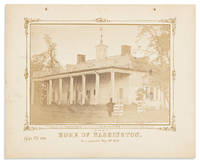
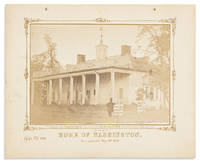
185932820595<p>Salted paper print 5 ¼ x 7 ½ in. on publisher's 8 ¼ x 10 ¼ inch mount with gold lithograph captions and decorative border. Neat punch holes in upper margin ½ inch adhesion at lower right faint pencil note in lower corner. Very good.</p><p><b>The earliest dated photograph of Mount Vernon this is one of the very earliest known photographs of George Washington's home.</b></p><p>By this time Mount Vernon was badly dilapidated. This view from the northeast shows ship masts propping up the portico's sagging roof where several columns had rotted away. A man wearing a dark suit and top hat stands in the foreground his arm on a white painted fence protecting a small tree.</p><p>The Mount Vernon Ladies' Association formed in 1853 purchased the mansion and estate from Washington's descendant John Augustine Washington III for $200000. After an intensive fund raising effort and protracted negotiations the organization took possession on February 22 1860 nearly one year after this photograph was made. Extensive renovations were soon made. As a result this image shows a number of architectural and landscape elements differing from those seen in photographs of the 1860s.</p><p><b>Rare. The other known examples are at the Fred W. Smith National Library at Mount Vernon and at the Getty Museum.</b></p> H.E. Hoyt & Co.
185932820670<br /><br /><br /><p><b>The earliest dated photograph of Mount Vernon this is one of the very earliest known photographs of George Washington's home.</b></p><p>By this time Mount Vernon was badly dilapidated. This view from the northeast shows ship masts propping up the portico's sagging roof where several columns had rotted away. A man wearing a dark suit and top hat stands in the foreground his arm on a white painted fence protecting a small tree.</p><p>The Mount Vernon Ladies' Association formed in 1853 purchased the mansion and estate from Washington's descendant John Augustine Washington III for $200000. After an intensive fund raising effort and protracted negotiations the organization took possession on February 22 1860 nearly one year after this photograph was made. Extensive renovations were soon made. As a result this image shows a number of architectural and landscape elements differing from those seen in photographs of the 1860s.</p><p><b>Rare. The other known examples are at the Fred W. Smith National Library at Mount Vernon and at the Getty Museum.</b></p>Salted paper print 5 ¼ x 7 ½ in. on publisher's 8 ¼ x 10 ¼ inch mount with gold lithograph captions and decorative border. Neat punch holes in upper margin ½ inch adhesion at lower right faint pencil note in lower corner. Very good.<br /> H.E. Hoyt & Co.
First edition, first issue as indicated by the closing left flower vignette on the final page. Period Cloth with typical period Polish cloth spine and corners, 8vo, 86 pages. In German. Title translates as, "The Jewish State: The Search for a Modern Solution to the Jewish Question." First edition of Herzl's seminal call for an independent Jewish state. Der Judenstaat "has remained the single most important manifesto of modern Zionism and is one of the most important books in the history of the Jewish People" (Heymann, Bibliotheca Rosenthaliana--Treasures of Jewish Booklore 46:102-03). Insisting that assimilation was not the solution to millenia if suffering by the Jewish people, Herzl proposed instead that "sovereignty be granted us over a portion of the globe large enough to satisfy the reasonable requirements of a nation; the rest we shall manage for ourselves." First published in Vienna in 1896 as Der Judenstaat and in English that same year (in London by David Nutt), this work set forth Herzl's lifes work to "transform Zionism from a weak and insignificant movement into a world organization and a political entity that Great Britain was prepared to accept as the authorized representative of the Jewish people. This in turn led to the Balfour Declaration and eventually to the founding of the State of Israel" (EJ). "It was Herzl's book which really crystallized the idea of a national home for the Jews. Two conceptions had prevailed hitherto: either that of the ghetto, presupposing an unbridgeable gulf between Jews and Gentiles, or that of assimilation, which meant a complete acceptance by the Jews of their environment leading eventually to becoming among whom they lived. Herzl took a different view. By his work he transformed the Jewish people from a passive community into a positive political force" (PMM 381). Shows the acquisition, and then deaccession, stamps of a prominent Eastern European library. Auction sales for this work reached over $10,600 in 2020 and then almost $12,000 (with commissions) in 2021. In sum, Theodor Herzls Der Judenstaat is considered one of the most important texts of early Zionism. Published on February 14, 1896, translations into Hebrew, English, French, Russian, and Rumanian appeared in the course of the same year. Altogether the book was published in 80 separate editions in 18 languages. SUBJECT(S): Jews -- Restoration. Geschichte. Quelle. Zionismus. Zionism. Judentum. OCLC: 4952913. Rubbing to boards as expected. Early number on front board and stamp on title page; modern dime-sized library stamps on obverse of title and on final page. Very Good Condition thus. (KH-10-6-E)
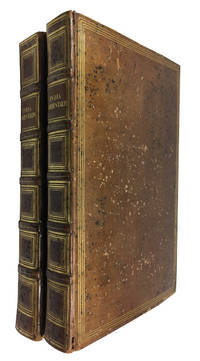
160690901Francofurti Pars Quarta Quinta et Septima. Francofurti ad Moenum Pars VI: Apud Matthaeum Becker Pars Quarta et Quinta Ex officina Wolfgang Richteri Pars VI Typis Wolffgangi Richteri Pars Septima 1606. 1st eds. Hardcover. Fair because of all the repairs trimming and reconstruction. 4 parts or volumes now bound in 2 volumes of the 12 parts or volumes which constitute de Bry's "Petits Voyages" on travels mostly to the East Indies and elsewhere in Asia Africa and the Middle East all of which were published between 1598 and 1628. Later leather probably 19th or early 20th century with joint tender and the appearance of shallow pitting. Armorial bookplate Henry Howard of Graystoke in both volumes as well as a later small nameplate "EHH" mounted on both bookplates. At some point the text and plates in these volumes were carefully and painstakingly repaired and reconstructed leaf by leaf from a damaged copy. A large percentage of the leaves have been trimmed mounted remargined etc. with some loss of text or portions of illustrations. The result is a serviceable copy with all illustrations and text appearing to be there often with some loss though not enough to say that anything is completely missing. Pencil notes on verso of free endpaper in first volume indicate that these volumes were purchased by our former owner from Blackwell's in Oxford in 1968. Latin text. <br/><br/> Apud Matthaeum Becker [Pars Quarta et Quinta], Ex officina Wolfgang Richteri [Pars VI], Typis Wolffgangi Richteri [Pars Septima hardcover books
"The first publication, in any language, of the complete diaries of the founder of the world Zionist movement. These diaries are Herzl's day-to-day record of his almost single-handed struggle, and of successes achieved at the cost of his career, his fortune, his family - and his very life. Contains, for the first time, every word Herzl entered in the eighteen copybooks he filled. A fascinating document, as well as an illuminating self-portrait of one of the most unusual personalities of recent times, the acknowledged "father of the Jewish State." - slip box. pp. vi, 431; 432-827; 828-1270; 1271-1631; 1632-1961. "[Volume 5] contains the annotations written by the editor; the list of code-words used by Herzl; and the index. The annotations, arranged alphabetically, contain brief biographies of practically all the individuals mentioned in the Diaries and short identifications of the place names and other geographical names appearing in the Diaries, either in the dateline or in the entries themselves." - p.1635. Different black and white photographic frontis portrait of Herzl in each volume. Issued without dust jackets. All volumes clean, bright and unmarked with light wear to publisher's burgundy cloth lettered in silver upon spines. All bindings sound. Narrow three-inch opening to lower left corner of slipcase which otherwise shows average wear and features illustrations of Herzl on two sides. A quality copy of this profoundly influential record. Book
163518006Amsterdam 1635. the author 2 works in 1 volume. 8vo. Contemporary calf rebacked with the original backstrip laid down. With a letterpress decoration on title-page Hebrew text of Psalm 85.11 in a frame a so-called "magical square" in which the the text can be read both horizontally as well as vertically some woodcut initials and some Hebrew passages in the text. 16 156 2 2 blank; 40 346 6 pp. Ad 1: First edition of a work on God's creation of Earth by the well-known Portuguese rabbi writer and printer Menasseh Ben Israel 1604-1657 who established the first Jewish printing office in the Netherlands. The work presents 30 questions or "problems" concerning God's creation of the Earth which Menasseh tries to answer and explain citing or referring to passages of the Tenach. Problems include "on which day were demons created" and "was there another world or earth before God created this one". The preliminaries including an important poem by Caspar Barlaeus which caused the Amsterdam authorities to consider the reintroduction of censorship for Jewish publications. As this didn't happen Barlaeus's poem can be seen as an indicator of the relationship between Jews and Christians and the religious tolerance in Amsterdam during the Golden Age.Ad 2: First edition of a work on the resurrection of the dead by the same author. The work is divided into three "books" and opens with several dedicatory letters an index of the chapters and 3 laudatory poems. The last page of the preliminaries gives a short list is of books translated from Hebrew into Spanish. The main text deals with the Last Judgment the resurrection of the dead and the immortality of the soul.With a bookseller's ticket and bookplate. Title-page of ad 1 slightly smudged browned throughout some water stains and small spots but still in good condition. Binding rubbed along the extremities and sides somewhat scratched rebacked with the original backstrip laid down.l Ad 1: Fuks & Fuks-Mansfeld p. 107; STCN 843242612 7 copies; ad 2: STCN 084840250 9 copies; for Menasseh in general: Fuks & Fuks-Mansfeld pp. 99-135; NNBW X cols. 604-613. unknown
162740628Frankfurt 1627. 15 1/8 x 12 7/16. Copper engraved map. Uncoloured on laid paper. The first Modern European map of India.<br/> <br/> Copper engraved map of modern-day India Pakistan and Bangladesh published by Wilhelm Fitzer the successor to Johann Theodor de Bry 1561-1623 and Johann Israel de Bry 1565-1609 the sons of Theodor de Bry. This version of the map includes the original Mughal seal with its contents in Persian Script. The map is closely related to that of William Baffin its use of original script in Jahangir's dynastic seal in the upper right precludes the De Bry edition having been derived directly from the printed Baffin map. Baffin is widely understood to be the author of the manuscript map on which the printed map is based having prepared it for Sir Thomas Roe's 1617 geographical commpendium on India. Susan Gole in Early Maps of India lists six states or editions of the Baffin map of India but did not record the present version. A comparison of this edition with the original Baffin and Purchas edition suggests that the Purchas was followed most closely with some material changes to toponyms such as "The Gate" having been replaced by "Porta Suretana". The map appears in the very rare Volume XII the penultimate volume of De Bry's "Petite" Voyages which was first published in 1627.<br/> <br/> Susan Gole Early Maps of India refers. unknown
1957171422Tel Aviv: Israel Defense Forces 1957-58. Oil in the wake of the Suez Crisis First and sole editions of these extremely rare strategic maps of the Middle East concentrating on oil production which were made by and for the IDF shortly after the joint Anglo-French-Israeli invasion of Nasserist Egypt. We locate just one copy of each of these maps in an institutional library. The Suez Crisis precipitated enormous geopolitical changes throughout the Middle East. France and Britain ceded influence and the United States and the Soviet Union emerged as the dominant external powers. Assessing resources and infrastructure was important in this febrile climate. The first map Neft ba-Mizrah ha-Tikhon examines oil fields refineries and pipelines marking the concessions run by companies such as the Arabian-American oil company Aramco and the Syrian-American Oil and Gas Co as well as highlighting the potential for development in Yemen Oman and the Trucial States. The second map Ha-Mizrah ha-Karov provides a more general overview of transportation infrastructure across the region including pipelines roads and railways. The third map Ha-Sahar ha-Poreh concentrates on Iraq which was an unknown quantity in Israeli foreign policy making in 1958 given the revolution of that very year which saw the monarchy overthrown and a republic established under Abdul Karim Qasim whose allegiances were at that point unclear. Three chromolithographic maps 827 x 560 mm; 960 x 820 mm; 698 x 496 mm. Text in Hebrew one in Hebrew and English. Creased where folded occasional small holes or tears along fold lines larger map with a few nicks to left margin a little toned faint tidemarks: a very good collection. unknown
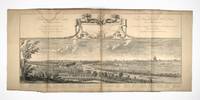
291568An assembled portfolio of eighteen 17th and 18th century engraved plans and plates relating to Paris. ~A true rarity in the portfolio is Israel Silvestre's 17th century "Vue General de Paris en Deux Feuilles". It is a magnificent panoramic view of Paris from the hill of Chaillot in two sheets. There is a third sheet with an elaborate cartouche and with flanking texts in Latin and in French. The "Vue General" in its two leaves is approximately 142 x 41 cm. to which the third sheet with cartouche adds an additional 15 cm. or so.~~This comment about Silvestre's "Vue General de Paris" is loosely translated from the Bulletin de la Societe d'Archaeologie de Lorraine Tome VI; Nancy: A. Lepage 1856; p. 135:~~Regarding the first sheet: "We see the Tuileries in the background of the first sheet; towards the middle the faubourg St. Honore and then the heights of Montmartre. In the foreground on the left there are three men two seated with the third who is without a hat leaning on a stick. In the middle of the print at the front are the houses of Chaillot and on the right the Seine."~~Of the second sheet: "In the background towards the middle we see the Invalides; on the left are the bell towers of Saint Germain des Pres Notre Dame and several other churches. The Observatory is on the right at the bottom. There Seine and land surrounding it are in the foreground." "It is a general view of Paris taken from the heights of Chaillot and drawn by Silvestre from the terrace of his house some time before his death. This view of Paris is very rare."~~At the bottom of the two sheets there are 45 numbered sites and buildings identified in Latin and French.~~There are two dampstains to the top sheet at the fold. ~Silvestre died in Paris in 1691. His Vue General is c. 1690.~~~~There is a complete set of Ten Plans of the City of Paris engraved by Coquart Nicolas de Fer and Delagrive and intended to illustrate Nicolas Delamare's Treaty of Police. The first eight plans accompanied Volume I in 1705. The last two are plans by Delagrive and accompanied the fourth volume of the Treaty of Police published after the death of Delamare in 1738.~It is uncommon to find all of the ten plans assembled together. Together they show the continuous growth of Paris from the Caesar's time Lutece to the beginning of the 18th century.~~Three plates follow: 1. L'Hostel de la Ville de Paris and 2. Statue of Louis XIV in Roman armor; engraved by Jean Frosne 1630-1676and 3. The Reception of Louis XIV at the Hotel de la Ville by Sebastian Leclerc 1637-1714.~~Four smaller plates mounted two to a leaf follow. They are engraved by Ballieul L'Aine mid-18th century.~The plates are: 1. Vue Geometrale de L'Illumination; 2. Vue Perspective de L'Ilumination de l Rue de la Ferronerie; 3. Decoration du Throne Eleve; and 4. Decoration du Salon Compose de Tranparents.~~The elephant folio is bound in marbled boards expertly rebacked with a new spine. There are several dampstains generally at the corners or folds. The binding is 64 x 42 cm. The largest of the plans of Paris is the Delagrive's elegant 1737 Neuvieme Plan de Paris 63 x 83 cm. unknown books
COMPLETE SIX VOLUME SET BOUND IN THREE. RARE elaborate and vast series of detailed lithograph prints of Egypt and the Near East by the eminent Scottish painter David Roberts (1796-1864), which he produced from sketches he had made during long tours of the region (1838-1840). These and his large oil paintings of similar subjects made him a prominent Orientalist painter, and he was elected as a Royal Academician in 1841. [ALL VOLUMES]: 300x220mm. Unpaginated. Half-leather gilt Hardcover with gilt ribbed spine. Text block edges gilt. Marbled endpaper. Cover and spine rubbed and slightly scratched. Cover slightly stained. Cover corners bumped and worn. Cover edges slightly bumped. Spine edges and hinges rubbed. Whitepages and few other pages age-stained. Some pages and plates slightly age-stained (otherwise the plates are in very good condition). Pages slightly yellowing. [VOLS.I-II]: Cover corner and spine upper edge peeling. [VOLS.III-IV]: Two bump-marks on spine rear hinge. [VOLS.III-IV & V-VI]: Front cover somewhat lumpy. [SUMMARY]: This extremely rare precious set of classic 19th-century Orientalist lithographs by the foremost artist in this genre is good condition. PLEASE NOTE: This item is overweight. We may ask for extra shipping costs.
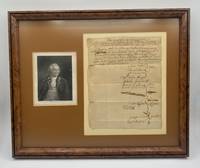
1766020388Pomfret CT: no publisher stated 1766. Handwritten. Very good condition. Unbound. Signed by Authors. First Edition. Octavo 8vo. One page document being an Annual Nomination to keep license Publick Houses of Entertainment of James Ingalls Ebenezer Grosvenor Abigail Waldo Samuel Cotton Joseph Abbott. Signed by Justices: William Osgood 1697-1791; Thomas Williams; John Grosvenor 1711-1804 who served with Putnam in French-Indian Wars; Stephen Keyes 1717-1788 who was a Lieutenant in the CT militia during American Revolution. Signed by Selectmen: Joseph Scarborough; Israel Putnam 1718-1790; Daniel Trowbridge. Signed by Constable Sam Lyon. Signed by Grand Jurors George Sumner; Daniel Holt Jr. Israel Putnam served as a Major in the Connecticut Militia in the French and Indian War and as a Major General in the Continental Army in the Revolutionary War fighting at Bunker Hill. In Colonial times a Publick House of Entertainment was a tavern offering food drink and lodging and served as community centers where one heard news and debate as well as held political meetings and they were essential stops for travelers. . no publisher stated Paperback