Singer, Israel JordanBiblio.com
16 073 résultats
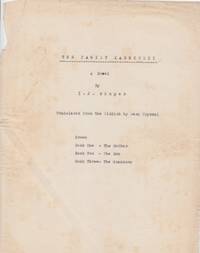
66-00651971. 4to. 575 leaves in orange binder with cardboard dividers. TMs photocopy corrected proofs unbound. Most leaves yellowed many frayed at edges. Extensively corrected by hand and with typewriter. Originally published in English in 1969 by Vanguard Press. Perhaps this is a revision for a later edition. Additional keywords: Carnowski Carnovski Karnovski. 1971. unknown
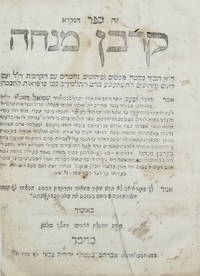
000132798Khagiz Yakov Israel ben Shmuel. Korban Mincha. Izmir 1675. In Hebrew. The listing price is for a single volume of this title. The copy is in fair condition without binding. Some imperfections are among the following common defects: holes damaged pages tears water stains foxing worm holes or tracers age spots frayed margins handwritten notes inscriptions censorship stamps. Please contact us for more details on the condition of the book. SKU000132798 unknown
1759CREskACR66Stockholm: Harber & Hesselberg 1759. 1759. small 4to. pp. 10 p.l. 533 ie. 503 1. woodcut ornaments. 19th century morocco gilt back inside dentelles gilt edges lightly browned throughout spine dull later inscriptions in Swedish on old flyleaves; a good copy with wide margins. First Edition of "the most trustworthy contemporary authority on Swedish settlements on the Delaware." Howes The author was Provost over the Swedish congregation in America and pastor of the Church at Christina Wilmington Delaware from 1749 to 1756. Besides the Swedish historians Campanius Swedberg Biorck and others Acrelius made extensive use of various manuscripts and documents in the Royal Archives at Stockholm and the Archives at New York including a valuable unpublished manuscript by the Rev. Anders Rudman pastor of the Swedish Lutheran congregation at Wicacoa from 1697 to 1701. Acrelius' account contains a history of the colonies under Swedish Dutch and English government with a general description of the land natural resources major towns &c. an ecclesiastical history from 1655 to 1697 with a list of the names of all the Swedish inhabitants of Pennsylvania in 1693 and an ecclesiastical history of the congregations at Wicacoa Christina Racoon and Pensneck. "This important work is hardly less scarce than that of Campanius.especially when in good condition; it has besides the merit of being much more extensive and of reproducing a large number of documents partly unpublished." Muller A complete English translation was not published until 1874. Bell A55. Howes A-34. JCB I 1202. Muller 1134. Rich I 132. Sabin 133. Winsor IV 494-95. 1st Edition. Hardcover. Very Good. Stockholm: Harber & Hesselberg, 1759. Hardcover
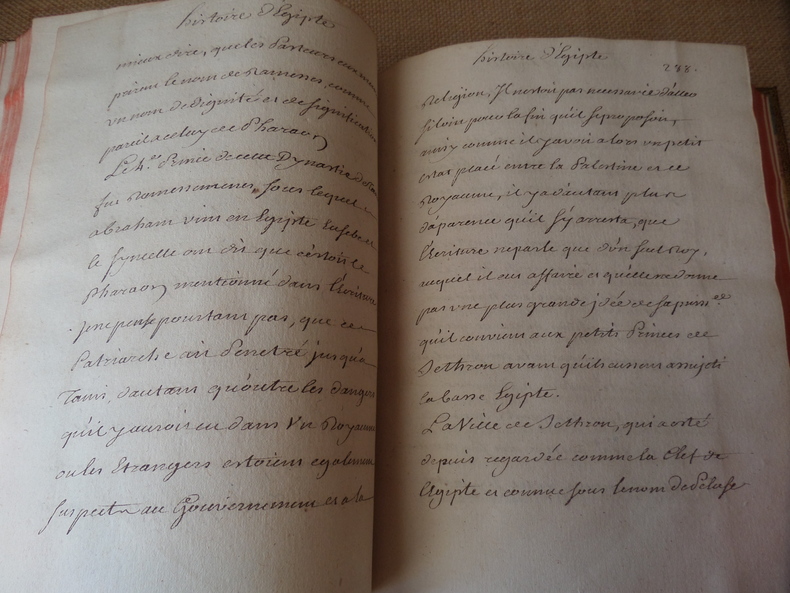
7819manuscrit sans date (début XVIIIe), reliure plein veau d'époque, dos à 5 nerfs, titres et fleurons dorés, roulette dorées sur chasses et champs, tranches rouges, 19,5x24 cm, pagination par feuilles, TOME I, partie 2 (251 à 474) : Histoire d'Egypte, 216 pages( 251 à 358) ; Histoire des Patriarches, 228 pages (359 à 472), table de l'histoire des Patriarches jusqu'à l'exode, 4 pages (473-474). TOME II, partie 1 (1 à 291) : Histoire de l'ancienne Grèce, 70 pages (2 à 36) ; Histoire d'Argos, 76 pages (37 à74) ; Histoire d'Athènes, 274 pages, (75 à 211) ; Histoire de Thèbes, 154 pages (215 à 291). TOME II, partie 2 (293 à 557) : Histoire de Lacedemone, d'Arcadie et de Troye en particulier : Histoire de Lacedemone, 48 pages (293 à 316), Histoire d'Arcadie, 10 pages (317 à 321), Histoire de Troye, 70 pages (323 à 357) ; Histoire de l'ancienne Italie, 154 pages (360 à 436) ; Histoire ancienne de la Sicile, 62 pages (437 à 467) ; Histoire ancienne de l'Affrique, des Isles de la mer méditeranée et des parties de l'Europe qui confinent à l'océan : Histoire ancienne de l'Affrique, 28 pages (469 à 482), Histoire ancienne de l'Espagne, 60 pages (483 à 512), Histoire ancienne de la Sardaigne, 8 pages (513 à 517), Histoire ancienne de la Corse, 3 pages (518 à 519), Histoire ancienne des Isles Baleaires, Majorique, Minorique et Irique, 2 pages (520), Histoire ancienne de l'Isle de Malthe, 3 pages (521 à 522) , Histoire ancienne de l'Europe, 12 pages (523 à 533) ; Histoire ancienne de la gaule, 30 pages (534 à548) ; Histoire ancienne de l'Angleterre, 16 pages (549 à 557).
71674aafASP, Walo Steiner (Druck), 1972, in-folio, book with 36 p. + 2 original colour lithographs signed by Niki and numbered by press, one of the 125 copies all numbered, this is copy no. 43 with the 2 original lithographs, in original colour ill. box.
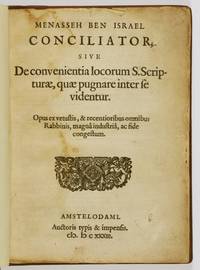
163355772Amsterdam: by the Author 1633. First edition. Modern calf. Good-. Quarto 19 by 14.6 cm. Collation: asterisk4 A-2G4. 8 240 pp. Woodcut printer's device at title; 4 half-titles; printed marginalia. Text in Latin. Recent full polished calf to style spine with raised bands. Text lightly toned with damstaining/spotting especially at outermost leaves; occasional slight chips or small tears at margins; one leaf with perforation resulting in loss of several letter on each side of page; small perforation in blank field at title. A fairly good copy.<br /> <br /> First part only of the first Latin edition of this classic work on Jewish apologetics written by the celebrated rabbi religious thinker and printer-publisher Menasseh ben Israel 1604-1657. The work was first published in Spanish at Amsterdam in four parts between 1632 and 1651. By providing a harmonization of all the apparent contradictions within the Hebrew Scriptures he hoped to encourage converso Jews of Iberian descent who had lost touch with their religious heritage to make the return to rabbinic Judaism. The present volume deals with the Pentateuch Five Books of Moses; the second volume treats the Prophetic books and the Hagiographa Writings. The work was first published a year earlier in a Spanish language edition.<br /> <br /> The work attempts resolution to no less than 180 seeming discrepancies in the Pentateuch. The breadth of Menasseh's encyclopedic knowledge is vast the Conciliador contains citations from 221 Jewish and 54 non-Jewish authorities. "No reader could fail to be impressed by the amazing range of titles which the author proudly appended to the work" Roth. References: Kayserling p. 69; C. Roth A Life of Menasseh ben Israel: Rabbi Printer and Diplomat Philadelphia 1945 p. 88. Silva Rosa 16. <br /> <br /> Full title and imprint: Conciliator sive De convenientia locorum S. Scripturae quae pugnare inter se videntur. Opus ex vetustis & recentioribus omnibus Rabbinis magnâ industriâ ac fide congestum. Amstelodami. Auctoris typis & impensis. M.D C XXXIII. by the Author unknown
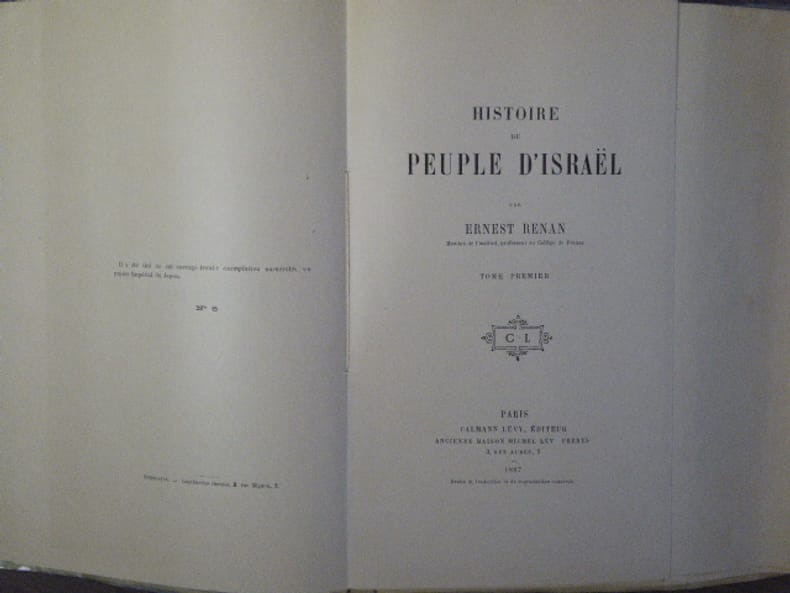
111433Camann Lévy, Editeur Paris 1887-1891 5 volumes grand in-8 ( 255 X 215 mm ) de 455, 545, 527, 411 et 427 pages, brochés sous couverture imprimée tango. EDITION ORIGINALE, 1 des 30 exemplaires numérotés sur Japon ( N°8 ), seul grand papier. SUPERBE EXEMPLAIRE en parfaite condition, rarissime en grand papier, témoins conservés.
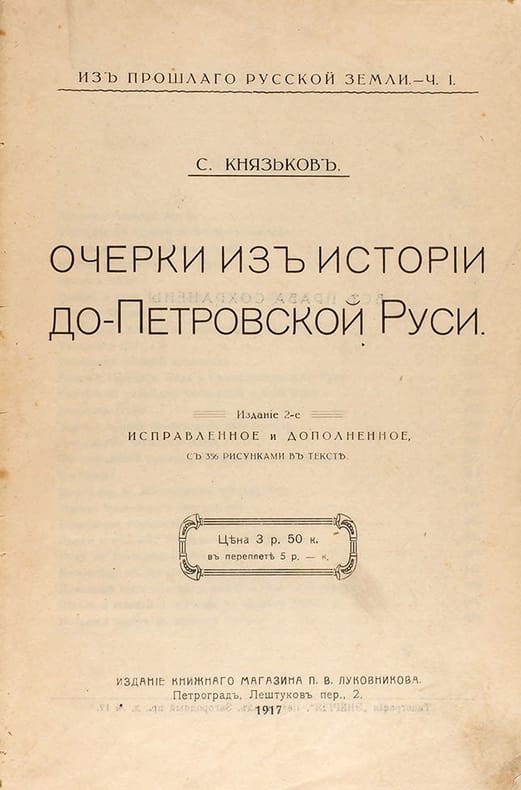
9102036Short description: In Russian. Knyazkov, Sergey Alexandrovich. Essays from the History of Pre-Petrovsk Rus. Petrograd: Book magician P. V. Lukovnikov, 1917. You are welcome to reach out to us for a detailed description of the copies currently available. Delivery of this book may take longer than usual including extended processing and pre-shipping time, no expedited shipping is available. Please advise us if you have a set date or a deadline to receive your order.SKU9102036
000109743Moshe ben Israel Iserlis. Torat haKhataat. Cracow 1590. Publisher: Izhak miProstitz. In Hebrew. The listing price is for a single volume of this title. The copy is in fair condition without binding. Some imperfections are among the following common defects: holes damaged pages tears water stains foxing worm holes or tracers age spots frayed margins handwritten notes inscriptions censorship stamps. Please contact us for more details on the condition of the book. SKU000109743 unknown
1778788401778. MAUDUIT Israel. Remarks upon Gen. Howe's Account of His Proceedings on Long-Island in the Extraordinary Gazette of October 10 1776. London: Printed for Fielding and Walker 1778. 454pp. Lacks the half title. 20th-century 3/4 green morocco and marbled boards spine gilt. Head of spine worn extremities rubbed. Minor foxing. Very good. HOWES M-430 "aa." American Controversy 78-69a. Sabin 46919. Criticism of Howe's conduct in the Battle of Long Island wherein he refused to allow the entrenchments at Brooklyn to be attacked because of the element of risk. Mauduit gives a detailed analysis of the battle including the deposition of troops involved. unknown
192855257Leipzig: Verlag Karl W. Hiersemann 1928. Limited edition. Hardcover. Very good condition. 1/350 copies. This is #326 hand-numbered on the colophon at the rear of the facsimile volume. This set provides a stunning full reproduction of the beautiful and notable late medieval illuminated manuscript Haggadah held at the State Library of Darmstadt along with critical text discussing the work.<br /> <br /> Originally produced by the scribe Israel Ben Meir of Heidelberg in conjunction with an unidentified artist this fascinating Passover Haggadah has been noted for its unique illustrations. Scholars have remarked on its inclusion of egalitarian images of men and women and have noted that it visually seems to have more in common with non-Jewish works from the period. The last two leaves of the manuscript are not connected with the Passover text but instead depict a hunting scene and the Fountain of Youth. All though the scholarly text of this edition written by German Rabbi Bruno Italiener 1881-1951 along with German art historian August L. Mayer 1885-1944 historian Aron Freimann 1871-1948 and Adolf Schmidt dates the manuscript to the 14th century superseding scholarship has now ruled out that possibility for stylistic reasons. The manuscript is now believed to have been produced sometime around 1430.<br /> <br /> Vol.1 text: Octavo. xi 1 313 1pp. 16 plates. Pebbled leather over decorative paper boards with gilt ruling tooling and lettering on the spine. Top edge in gilt. Frontispiece b/w photographic reproduction of the binding of the original manuscript. German and Hebrew text throughout critically discusses the Haggadah manuscript and analyses a number of other related manuscripts from the period. The final leaves contain 16 plates of high quality b/w photogravure reproducing pages of various manuscripts mentioned in the text. <br /> <br /> Vol. 2 "tafelband" facsimile volume: Folio. 58 double-sided leaves. Pebbled leather over decorative paper boards with gilt ruling tooling and lettering on the spine. Top edge in gilt. This volume gorgeously reproduces in full the content of the illuminated manuscript Haggadah. The reproduction utilizes what was at the time state of the art full color photography highlighted with lustrous gilt overprinting. The visual reproduction is surprising in its faithful accurate and vibrant reproduction of the leaves text and imagery. The resulting facsimile is successfully able to replicate the look and feel as well as the physical aspects of the interior of the original manuscript.<br /> <br /> Text volume with very minor rubbing to extremities of the binding and some minor foxing to the bottom and foredges of the book block. Interior with minor sporadic foxing to the pages usually confined to the margins. Facsimile volume with some very minor rubbing to the extremities of the binding. Interior clean and vibrant. Book blocks tight. Bindings in very good to near fine interiors in very good to near fine condition overall. Full title page: Die Darmstädter Pessach - Haggadah codex orientalis 8 der Landesbibliothek zu Darmstadt aus dem vierzehnten Jahrhundert herausgegeben und erläutert von Bruno Italiener unter Mitwirkung von Aron Freimann August L. Mayer und Adolf Schmidt; mit einer Gesamtbibliographie der illustrierten Haggadah<br /> <br /> Bibliographic references: Yaari 2064 Yudlov 3094; Mayer 1147. Verlag Karl W. Hiersemann hardcover
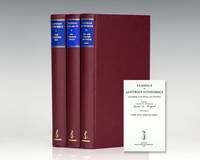
199463007London: William Pickering 1994. First editions of the collected works of the classics of Austrian economics. Octavo original cloth 3 volumes. Each volume is signed by Israel M. Kirzner on the title page. In fine condition. Edited by Israel M. Kirzner. William Pickering hardcover books
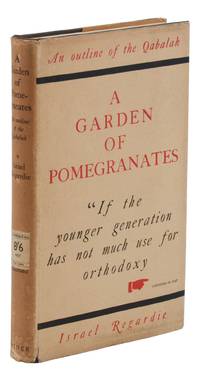
1932140948718London: Rider & Co 1932. First edition. Near Fine/Very Good. First edition first printing of the occult classic. 160 pp illustrated with black and white diagrams. Bound in publisher's black cloth with spine lettered in gilt. Near Fine with light rubbing and wear to spine ends and corners tiny stain to top edge of text block. Former owner's bookplate and bookseller's ticket from The Brotherhood of Light at front pastedown; Church of Light "Handy Order Form" laid-in. In a Very Good unclipped dust jacket with darkening to spine light wear and a little staining. <p>The occultist's enduring guidebook on the complex system of Qabalah with a dedication to Aleister Crowley for whom the author served as his personal secretary beginning in 1928. The work purposely designed to be a simple introductory has profoundly influenced modern magical and esoteric thought particularly through its focus on the Hermetic Order of the Golden Dawn. Uncommon in the first edition even more so in the scarce dust jacket. Rider & Co unknown
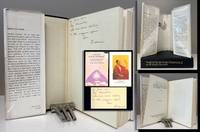
34165Saint Paul Minnesota: Llewellyn Publications 1970. 1st Edition. Hardcover. Near fine/Very Good. 1st Edition. Hardcover. Signed by Author Francis Israel Regardie. Inscribed Presentation Copy to Ursula Greville - Poet Editor Literary Confidante by Israel Regardie.<br /> Stated First Edition / First Printing. Octavo. Bound in the publisher's black cloth gilt-stamped on the spine. Light wear to the board extremities and to the crown and foot of the spine. Three small page notations on the final free endpaper. A near fine copy internally.<br /> <br /> Warmly inscribed by Israel Regardie:<br /> "For Ursula / who did some editing on this magnum opus / Love Francis."<br /> <br /> This superb association copy bridges literature occultism and personal history. Ursula Greville 1894-1991 was a poet editor and literary figure whose circle included avant-garde artists and esoteric thinkers. Regardie and Greville's decades-long friendship included her editorial contributions to this very work. In his earlier mystical poem AHA! Regardie dedicated the book to her as a "loving generous devoted friend of many years who like Aleister Crowley changed the entire course of my life."<br /> <br /> Dustwrapper: Not price-clipped retaining the original $10.00 publisher's price on the front flap. There is a 1" × 2" chip missing from the top right corner of the front panel with a 2" closed tear nearby; the crown of the spine has several small chips missing. Now protected in archival mylar.<br /> <br /> From the dustwrapper: "Many of Crowley's loveliest and holiest works are quoted from sources long out of print. THE EYE IN THE TRIANGLE is essential to an understanding not only of Crowley but of all modern magic and occultism." <br /> In THE EYE IN THE TRIANGLE Regardie - once Crowley's secretary - offers a "sympathetically objective" portrait of the man reviled by the press as "The Most Evil Man in the World" and hailed by others as the "Prophet of a New Aeon."<br /> <br /> Presentation copies inscribed by Regardie to Ursula Greville - a key editorial and personal influence - are extremely rare. Llewellyn Publications hardcover
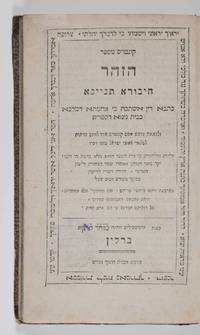
178248885Berlin and Dessau: Hevrat Hinukh Ne‘arim Berlin Freischule/n.p. 1782. First editions 2 of 4. Hardcover. Nearly Fine. Sammelband of four opuscules published between 1782 and 1819 octavo. Contemporary half calf top inch perished over pastepaper boards; spine lettered and tooled in gilt. Edges speckled blue. Covers lightly worn else fine clean copies the fourth work lightly foxed throughout. The first three works issued from the Hevrat Hinukh Ne'arim Berlin Freischule under the supervision of Isaac Satanow 1732-1804 the most prolific Hebrew writer of the Berlin Haskalah. As director of the publishing house Satanow was assigned the task of reissuing old Hebrew classics by the Marpeh ha-Nefesh a philanthropic group headed by the banker Daniel Itzig his son-in-law David Friedländer and the famous physican and philosopher Marcus Herz. A number of these editions however were in fact original works by Satanow which he presented as the work of earlier writers. The first item in the sammelband is an outstanding example of this latter type.<br /> <br /> I. Kuntres mi-Sefer ha-Zohar Hibura Tinyana Berlin: Hevrat Hinukh Ne‘arim 1783. aleph-gimel8 dalet1; 25ff. Vinograd Berlin 313. First edition of this polemic styled in imitation of the Zohar as a response to the Mitpahat Sefarim 1768 of Jacob Emden 1697-1776 in which the latter calls into question the antiquity and textual integrity of that chief work of the Jewish mystical tradition. Emden's critique may be understood as an attempt to undermine the doctrinal foundation of the Frankists who based their beliefs on the Zohar. "Emden had suspected the authenticity of the Zohar for a long time and he hoped some time 'to reveal the strange things found in the book.' But these intentions were secretly nursed within him for many years until the time was propitious for his exposé" Cohen. Perhaps surprisingly for a maskil Satanow held a very different view: "While advocating secular knowledge and the study of science Satanow also expressed great admiration for Kabbalah. In contrast to Emden he claims that the whole Zohar was written by Bar Yohai and Moses De Leon had nothing to do with its writing. He also rejects Emden's claim that in the Zohar there are words against the Talmud and promises to 'consult the Zohar and prove that all its words are right and truthful none of them is crooked Kuntres mi-Sefer ha-Zohar pp. 25 26" N. Rezler-Bersohn. Born in the Polish now Ukrainian town of Satanov Isaac Satanow settled in Berlin around 1771. "Among the most prolific of the early Haskalah writers. Satanow demonstrated a wealth of knowledge of the Hebrew language ranking as a model stylest throughout the Haskalah period" EJ 14: 905-906. As a leading representive of the eighteenth-century Jewish Enlightement Satanow boldly displayed a "conglomeration of contrasts" Jewish Enc. XI: 71: “Though Orthodox in his beliefs he nevertheless favored Reform in practice. He was one of the greatest authorities on Jewish tradition and lore yet he was one of the most free-thinking of philosophers.†For a more detailed discussion of this and other works by Satanow see N. Rezler-Bersohn "Isaac Satanow - An Epitome of an Era" in: Year Book XXV Leo Baeck Institute 1980. For Emden in the present context see M. L. Cohen Jacob Emden A Man of Controversy Philadelphia: The Dropsie College 1937 pp. 254ff.<br /> <br /> II. Sefer Igeret ha-Kodesh Berlin 553 1793. 7ff. Vinograd Berlin 415. Later edition of this well-known work. The celebrated talmudist and exegete Nachmanides the Ramban Moses ben Nachman ca. 1195-ca. 1270 acted as a conciliator between the parties in the early 13th-century controversies surrounding the philosophical and secular direction of Maimonides' growing influence. "After having given the earlier part of his life to his Talmudical works Moses Nachmanides devoted himself to writing of a homiletic-exegetic and devotional character. To these belong the "Iggeret ha-Kodesh" and the "Torat ha-Adam." In the former which deals with the holiness and significance of marriage Moses criticizes Maimonides for stigmatizing as a disgrace to man certain of the desires implanted in the human body. In Moses' opinion the body with all its functions being the work of God none of its impulses can be regarded as intrinsically objectionable" Jewish Enc. IX:88. The rare editio princeps appeared at Rome in 1546; the editor of the present edition Isaac Satanow notes at the title that the letter was “printed in Basel in the year 5340†referring to the 1580 edition of Ambrosius Froben Prijs 127.<br /> <br /> III. Nevu’at ha-Yeled Berlin: Hevrat Hinukh Ne‘arim 549 1789. asterisk8 2asterisk2. 10 unnumbered leaves. Vinograd Berlin 384. Later edition of a medieval Hebrew short story with commentary first printed at the end of Jacob Zemah's Sefer Nagid u-Metzaveh Constantinople 1726. "The body of the tale is followed by a number of occult prophecies in Aramaic. it was known already as early as the end of the 15th century and the beginning of the 16th when some kabbalists among them R. Abraham b. Eliezer ha-Levi wrote commentaries on the prophecies. The story tells of a wonder child Nahman born in the fifth century to a kabbalist; the child died very young but immediately upon birth began to tell his mother secrets of the heavenly worlds. His father cautioned him not to reveal mysteries forbidden to man and from then the child spoke only obscurely and enigmatically. Modern scholars have attempted to date the story and the prophecies therein by tracing known historical events hinted at and relating them to the text. The obscurity of the text makes this very difficult but it seems probable that historical events in the 15th century especially in the East are referred to in the prophecies. However the purpose of the story and its prophecies was to anticipate the coming of the Messiah and to describe the major political and historical events and catastrophes bringing about his final revelation. The kabbalists interpreted the prophecies as hinting at the coming of the Messiah in the early 16th century" JE XII:1020. Here the commentary on the Aramaic "prophecies" is likely attributable to Satanow.<br /> <br /> IV. Herev Nokemet Nekam Berit Dessau 5579 1819. 16pp. Vinograd Dessau 77. First edition of this famous polemical letter. A leader of the Reform movement Meyer Israel Bresselau d. 1839 together with I. S. Fraenkel edited and adapted in 1818 a prayer book for the Hamburg Reform Temple under the title Seder ha-Avodah. He anonymously published the present work in response to Eleh Divrei ha-Berit Altona 1819 "a pamphlet which collated the views of the greatest Orthodox rabbis of Western Europe against Reform Judaism and its innovations." A rhymed work written in a satirical biblical style Herev Nokemet is "remarkable in its witty take-off on the Orthodox rabbis who opposed the reforms in the Hamburg Reform synagogue. It ranks among the best Hebrew polemic literature written at the time of the Haskalah" EJ 4:1358 In response Meir Leib Reinitz published his Lahat ha-Herev ha-Mithappekhet in 1820. Bresselau's polemic was reprinted as an appendix to Bernfelds's Toledot ha-Reformazyon ha-Datit be-Yisrael in 1900. ×§×•× ×˜×¨×¡ מספר הזהר ×—×™×‘×•×¨× ×ª× ×™×™× ×<br /> ספר ×גרת הקדש<br /> × ×‘×•×ת הילד<br /> חרב × ×§×ž×ª × ×§× ×‘×¨×™×ª. Hevrat Hinukh Ne‘arim (Berlin Freischule)/[n.p.] hardcover
13745Amsterdam P.N. van Kampen 1924 187p ing omslag ontbreekt rug voor- en achterkant verwijderd en met rood stempel : "Bibliothek zur Erforschung der Judenfrage Frankfurt a M" - unknown
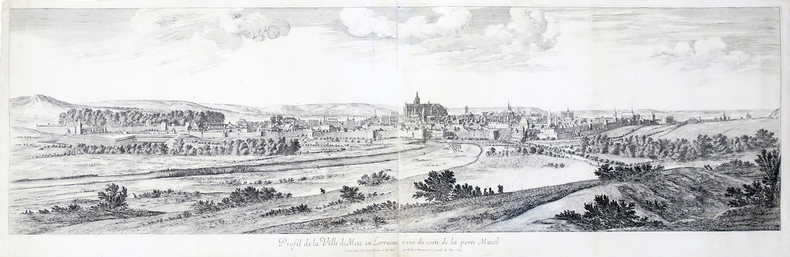
1667LBW-4500Paris, Israel Silvestre, 1667. En deux feuilles jointes de 400 x 1286 mm.
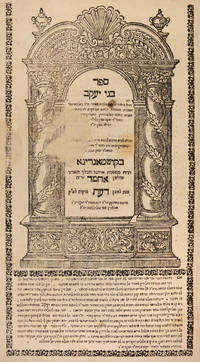
97170Constantinople Yonah ben Yaakov Ashkenazi 1714. . First only edition; 4to 31 x 21 cm; 18th-century-style calf spine gilt with red morocco label English title stamped in gilt; stains to title page with some text loss leaf 234 cracked without loss of text; occasional very light foxing and browning to pages; 3 243 ll.<br /> Commentary on 'Sefer HaItur' with Responsa by Rabbi Ya'akov Sasson Shushan brought to print by Rabbi Hayim Kimhi ben Rabbi Yitzhak. 'Sefer HaItur' is a halakha Jewish religious law book written by Isaac ben Abba Mari c. 1122-1193 who is often simply referred to as 'Ba'al HaItur'. A prominent Rabbi from Marseilles France his opus magnum 'Itur Soferim' aka Sefer HaItur discusses Jewish conjugal laws monetary laws Jewish holidays and some of the laws governing the kashrut Jewish dietary law. He largely based his own work on the judicial decisions passed down by the Babylonian 'Gaonic' authority.<br /><br />Rabbi Ya'akov Sassoon c. 1680-1711 was one of the greatest Gaonim Jewish scholars of Constantinople.<br /> Vinograd Const. 385; Yaari 282 p.163. Constantinople, Yonah ben Yaakov Ashkenazi, [1714]. unknown
20CCUBALOTCIsrael Jerusalem Havana Cuba New York Usa. Fair with no dust jacket. Non-Book. On offer is a remarkable nine-document archive tracing nearly two decades of Zionist political cultural and financial correspondence linking Cubas Jewish leadership with the centers of world Jewry in Jerusalem New York and Latin America. Together these communications chart the transformation of Cuban Jewry from a peripheral supporter of the Yishuv to an active and recognized participant in the international Zionist networka Caribbean outpost engaged in fundraising education youth mobilization and ideological exchange. Mandatory-Era Migration and Bureaucratic RestraintThe earliest piece dated September 22 1937 comes from the Jewish Agency for Palestine in Jerusalem addressed to the Zionist Federation of Cuba in Havana regarding an individual immigration request the case of Rudzenewsky. The letter opens: - . We do not have any immigration certificates in our possession; therefore we cannot discuss your request regarding obtaining Aliyah certificates at all. Issued amid the tightening British immigration quotas of the Arab Revolt this restrained refusal captures the bureaucratic limits of Mandatory-era migration and the frustration of a community newly seeking direct participation in the Zionist project. Even a sympathetic outpost such as Havana remained outside the gates of the Yishuvs allocation system dependent on permissions that never came. As one of the earliest known correspondence between the Cuban Zionist Federation and Jerusalem it marks the beginning of a paper trail that would over the following two decades trace the communitys evolution from petitioners to recognized partners in global Zionist coordination. Fundraising for Settlement and DefenseBarely six weeks later the tone shifts from denial to mobilization. On 5 Kislev 5698 November 5 1937 Keren Hayesod Ltd. the Erez Israel Palestine Foundation Fund issued a Hebrew circular from Jerusalem to its global committees including Havana. Typed on vivid blue-and-white letterhead it announced the forthcoming fourth issue of HaMassad dedicated to the great enterprise of construction and security of Keren Hayesod this year. Inviting regional feedback to ensure the bulletin fulfills its task perfectly and reflects the creative work being done in Eretz Israel the circular unites the twin imperatives of binyan uvebitachon building and defense central to the Yishuvs ethos amid the Arab Revolt. For Cubas emerging Zionist Federation this stands as one of the earliest direct communications from Jerusalem confirming the islands inclusion in the pre-state fundraising and ideological network. Wartime Solidarity and Political ConscienceTwo vivid wartime items from 1944 illustrate how ideology culture and politics intertwined in Havana. The Unión Sionista de Cuba issued a bilingual flyer inviting the Jewish public of Havana to a lecture by Nathan Bistritzky on Moscow and Jerusalem An Analysis of Two Revolutions adding: En este Acto se homenajeará al heroico Ejército Rojo en ocasión de su 26º Aniversario. In this Act the heroic Red Army will be honored on the occasion of its 26th Anniversary. An accompanying invitation from the Patronato de Ayuda al Pueblo Español greets the President of Zionist Youth and invites him to a December meeting about the struggle of the Spanish people and the delivery of economic contributions for the Year-End Effort. These intertwined documents vividly position Jewish Havana within the broader antifascist and humanitarian currents of the Second World War. Youth Networks and Ideological PluralismA Hashomer Hatzair letter of April 17 1945 conveys the disciplined optimism of the socialist-Zionist youth movement as it rebuilt its trans-American network in the final months of war. Written from the North American headquarters in New York to the Cuban branch it reports on arrangements for Tova Levin a young Hebrew teacher in training at the movements Hightstown farm who would soon travel to Cuba to assist with education and leadership development. The circular further details plans for a Latin-American management camp in Mexico and urges an immediate reply with participant names. The writers lament the branchs silence since October and request news and photographs for The Young Guard anniversary issue. Closing with With the blessing of the movement. Strong and courageous! it perfectly fuses administration and inspiration. Its bilingual Hebrew-English letterhead / Hashomer Hatzairembodies the groups dual mission: Hebrew in content international in spirit linking Havana New York and Mexico in a single youth-driven Zionist network. From Jerusalem the Executive of the Zionist Organization issued a communiqué on July 15 1946 signed by Dr. A. L. Leuterbach in the aftermath of the British arrests and seizure of the Jewish Agencys offices during the Black Sabbath raids: The imprisonment of members of the Jewish Agency came as a heavy blow to us and greatly shocked the Yishuv and the entire Zionist world. The statement thanks Jewish communities abroad for solidarity vows to continue our work without hesitation and appeals to every Zionist body to spread the spirit of Zionism even more strongly in their respective places. Although the Agencys files had been seized the call radiates steadfastness and unity amid repression. A decade later this networks endurance is reaffirmed through two trans-Atlantic communications. On December 14 1955 The Jewish Agency Inc. 16 E. 66th Street New York wrote to Betar Calle 10 esq. 3 Vedado Havana enclosing a check for $150 representing allocation by the Youth and Hechalutz Department for the period October 1 1955 through March 31 1956.The letter explicitly notes that the payment was made pursuant to instructions received from Israel confirming that the directive to fund Havanas Betar chapter originated in Jerusalem. Signed by Fannie Speiser Assistant Treasurer the letter attests to the continuing New YorkHavana financial conduit and to Israels oversight of diaspora youth programming. Soon afterward Dr. Aron Weinberger of Midstream magazine wrote inviting the Havana community to help distribute the journal for free and frank discussion of all problems that face the contemporary Jew. final item dated November 12 1956 brings the narrative full circle. Issued by the Club Juvenil del Patronato de la Casa de la Comunidad Hebrea de Cuba it invites Hashomer Hatzair Prado 260 Ciudad to attend the installation ceremony of the Patronatos new youth board to be held on Tuesday 20 November at 9 p. M. In the Conference Hall of the Patronato. Signed by Rafael Kapuskin Secretary the letter is both social and symbolicaffirming that by the mid-1950s Zionist youth movements were no longer peripheral study circles but active civic partners within Havanas central Jewish institutions. The letters tone En la seguridad de vernos honrados con vuestra presencia In the certainty of being honored by your presence embodies the confidence of a mature interconnected Jewish community just before the political transformations of late-1950s Cuba. Together these communications trace Havanas evolving role in Israel-oriented and diasporic intellectual lifefrom the practical fundraising of Keren Hayesod to the ideological pluralism of Betar and Hashomer Hatzair. As a whole the archive captures the rhythm of Cuban Zionist life from supplication and bureaucracy to political maturity and cultural dialogue. It offers scholars a uniquely multilingual cross-section of Hebrew Yiddish Spanish and English voices negotiating identity loyalty and nationhood from the Caribbean periphery of world Zionism. Condition and Language: Nine documents spanning Hebrew Yiddish Spanish and English. Mixed paper stocks; significant folds generally minor stains and varying edge tears especially prominent on thinner stock. Heavy handling all text complete and legible. Age toning. Overall Fair to Good.; Manuscripts; 8vo 8" - 9" tall; 10 pages; Signed by Author . unknown
275 pages. Footnotes. "Geula Cohen [1925-2019] was a ranking member of the notorious Stern Gang in its fight against the British for a free Palestine (Israel). Her memoirs explode with the ferocious intensity of her terrorist faith, her inflexible idealism. An open and intimate portrait of a woman, and the conditions that drove her underground to embrace a philosophy of violence and terror." - dust jacket. "I have no doubt that [this book] will be a proud memorial to the daring fighters who offered their lives for the cause of Jewish redemption. It also attests to the supreme nobility of the soul of its writer." - David Ben-Gurion. Book clean, bright and unmarked with light wear. Moderate lean to spine. Soiling to back panel of dust jacket which is otherwise moderately worn and now preserved in archival-grade Brodart. A sound copy. Book
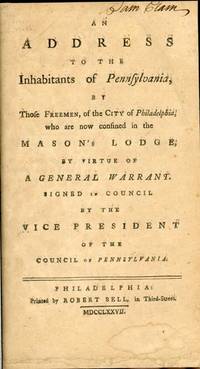
177754250Philadelphia: Printed by Robert Bell. 1777. 1777. PENNSYLVANIA. First edition. 8vo. Binder 4 52 pp. This is a paper of great significance in the struggle for civil liberty and religious freedom. On religious grounds Pemberton and other Quakers refused to swear allegiance to the Commonwealth of Pennsylvania. "These Quakers were imprisoned for security reasons by the Revolutionary Council of Pennsylvania." Howes P101. "These freemen principally Quakers were imprisoned in consequence of their refusal 'not to depart from their dwelling-houses and engage to refrain from doing anything injurious to the United States by speaking writing or otherwise." Sabin 59610. Pemberton offers a passionate denunciation of their arrests: no warrants charging a specific crime no opportunity to be heard. The documents and letters are printed here and Pemberton reviews them in detail. Inked name of former owner Sam Elam at top of front page minor light foxing throughout else a solid very good clean and tight copy. Housed in a quarter cloth and boards binder with titles stamped in silver on the front cover Printed by Robert Bell. 1777. hardcover
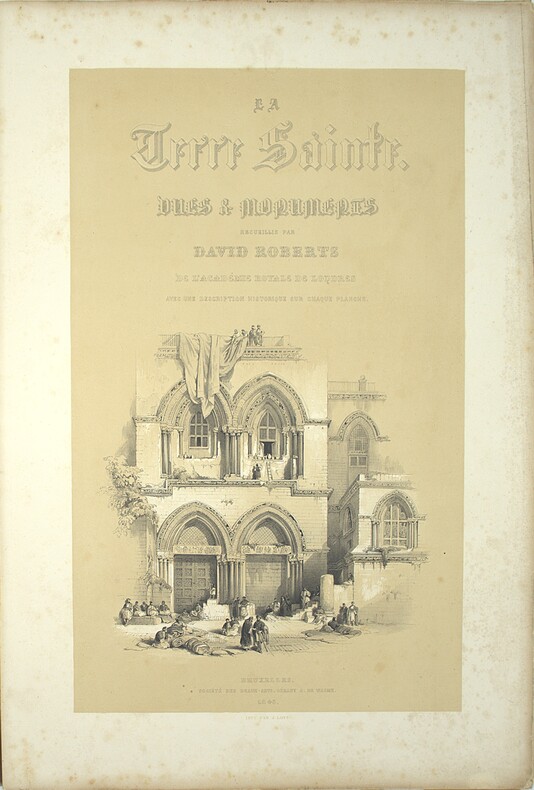
1843PHO-2188Bruxelles, A. de Wasme, 1843–1845. Grand in-folio. Reliures éditeur en demi-toile avec plats illustrés (dos en partie fendus, brunis, tachés et par endroits déchirés ; volume 10 avec dos restauré et manques), étui moderne en demi-cuir avec titre doré au dos (coins légèrement émoussés). Avec un titre gravé, 30 planches lithographiées et 31 vignettes gravées par Fr. Stroobant d’après L. Haghe, avec une description historique pour chaque planche, table des planches présente dans la dernière livraison. Feuillets brunis en marges et parfois fortement piqués ; volume 10 avec déchirures marginales (jusqu’à env. 2 cm). Étiquette montée sur la première livraison.
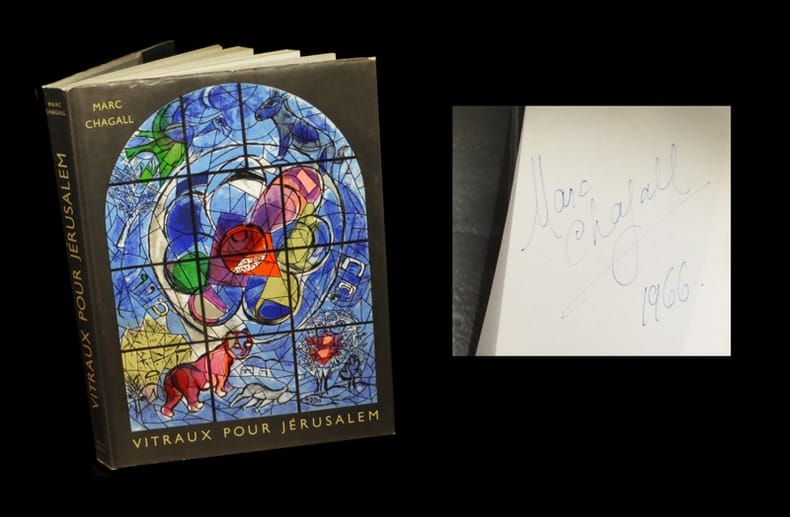
196230485S.l., André Sauret, (1962). Un vol. au format in-4 (333 x 252 mm) de 210 pp. Reliure d'édition de pleine percaline satinée gris-perle, sous jaquette illustrée et rhodoïd.
67122Berlin, Ferdinand Osertag Verlag,, 1923 Original hardcover binding,(1) 50 pages (1), 27x20cm. illustrated with 20 b/w illustrations (woodcuts) *fine condition.
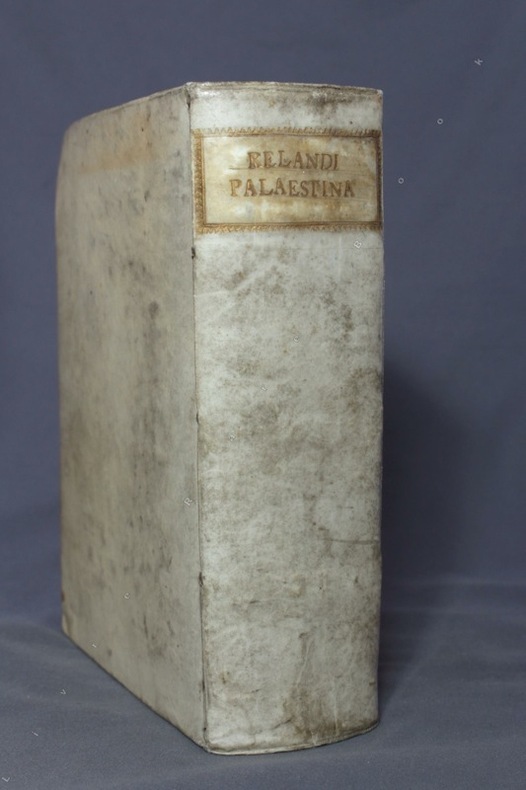
17168475Norimbergae [Nuremberg], Petrum Conradum Monathum, 1716. Gros in-8 de [18]-787-[83]-[2bl.] pages, plein vélin ivoire du temps, dos lisse, titre doré au dos dans une cartouche de roulette dorée, tranches mouchetées. Hormis une pâle auréole d'humidité en marge supérieure de quelques feuillets, bel exemplaire.