263 résultats
Two Volumes. pp. 578; 603, (30) [Index]. Lightly age stained. Top edges gilt. Marbled end papers. Early manuscript ownership of John Moore in both volumes. 8vo. 210 mm. Half leather over purple cloth boards. Leather worn with loss, especially on spines. Boards fragile. Title continues: "Intermixed With Several Remarkable Occurrences. Written Originally In Low Dutch, And Also Translated Into English." AI/SS #23920. **PRICE JUST REDUCED! PA SHELF 56
172519572London: Printed and Sold by the Assigns of J. Sowle 1725. Second edition in English. Boards somewhat scratched; some light toning; a very good copy collated and complete. Folio contemporary calf neatly rebacked with the original spine laid down and a new red cloth label lettered in gilt corners neatly restored and endpapers renewed 12 699 1 16 4 pages. First published in Dutch in Amsterdam in 1717 and per the OUDNB translated by the Quaker historian and lexicographer Sewel himself into English but published posthumously in London in 1722. Smith vol. 2 page 561; Sabin 79603. Printed and Sold by the Assigns of J. Sowle, unknown books
1725035981London: Assigns of J. Sowle 1725. Second Edition Corrected . Original Full Leather. Very Good. 12 7/8" Tall. X 699 Xvi Index 4 Pp Catalog At End. Original Simple Full Calf Five Bands Morocco Spine Label Yellow Endpapers. "Second Edition Corrected". Worn Fraying At Corners Front Hinge Patly Cracked Nicely Refurbished. Contents Clean Slight Wear Pp 123-126 Partly Detached. Original Signatures Of Joseph Pike On Front Pastedown Title Page 1 And Rear Endpaper; Pike D. 1729 Wrote "An Epistle To The National Meeting Of Friends In Dublin" One Of Three Important Early Treatises On Quaker Conduct The Other Two Written By Penn And Barclay. Additional Ownership Information Of The Quakers Sarah And Margaret Beale Myrtle Hill Terrace CorkAnd John And Fanny Edmondson Dublin 1860. An Exceptional Association Copy Of An Important History. <br/> <br/> Assigns of J. Sowle hardcover
pp. vii, 157. 8vo. Original publisher's cloth binding. Original priced dust jacket. Fine analysis of the Quaker schism of 1827. The Appendix is especially valuable. PA 59
317297London. Good. Softcover. 30 issues mostly good-very good. . paperback
1951002847Hereford Eng: Lincoln Record Society 1951. Hardcover. Very Good. 3 volumes 149 222 217 p.: 1 map; 27 cm. Light yellow-green cloth vols. 1 and 2 and light yellow cloth vol. 3; black-stamped spine and cover titles with the emblem of the Lincoln Record Society on the front cover of each. Pages are unopened. The Publications of the Lincoln Record Society vols. 38 40 44. Published in 1949 1949 and 1951 respectively. Contents: v. 1. 1669-1689. -- v. 2. 1689-1709. -- v. 3. 1709-1719. Vol. 3 contains an index and several appendices with biographical information about Lincolnshire Quakers who are mentioned in the minutes as well as information about contemporary matters referred to in the minutes. The volumes cover a critical period in the history of Quakerism. In Very Good Condition: light soiling at head of spines; spine of vol. 2 is sunned; cover of vol. 2 is lightly soiled; otherwise all 3 volumes are clean and bright. Lincoln Record Society hardcover
18242222184<p>First edition thus. Folio 4 pages. Old folds. With printed signature of Josiah Forster Clerk to the Meeting. Very good light age stains.</p><p>Printed by Solomon W. Conrad No. 32 Church Alley Philada. The first American printing.</p> Quakers unknown books
17912222185<p>First edition thus. Folio 12 1/2" x 8". 4 pages. Old folding creases. With printed signature of Philip Debell Tuckett Clerk to the Meeting. Good age soiling.</p><p>Front page title reads: "The Yearly-Epistle 1791."</p> Quakers unknown books
18242222184<p>First edition thus. Folio 4 pages. Old folds. With printed signature of Josiah Forster Clerk to the Meeting. Very good light age stains.</p><p>Printed by Solomon W. Conrad No. 32 Church Alley Philada. The first American printing.</p> Quakers unknown
17912222185<p>First edition thus. Folio 12 1/2" x 8". 4 pages. Old folding creases. With printed signature of Philip Debell Tuckett Clerk to the Meeting. Good age soiling.</p><p>Front page title reads: "The Yearly-Epistle 1791."</p> Quakers unknown
1822415530Richmond Ind: Elijah Lacey Printer 1822. Unbound. Very Good. First Indiana edition. Bifolia folded to make four pages. Old folds age-toning and small tears about very good. OCLC locates no physical copies. Elijah Lacey, Printer unknown
0970137532.Gperfect. Good. Access codes and supplements are not guaranteed with used items. May be an ex-library book. unknown
1715WRCAM39823London 1715. Broadsheet 11 1/2 x 7 3/4 inches with printed docket title on verso. Dbd. Early folds and early stab holes in left margin. Moderate toning and foxing. Very good. In 1696 after experiencing decades of exclusion and imprisonment for conscientiously refusing to take loyalty and court oaths Parliament granted Quakers the right to take a "solemn affirmation" in legal situations in place of an actual oath. Over the next two decades numerous Quakers objected to the invocation of God's name in the official affirmation and refused it as they had the oath. In 1715 a bill was under consideration in Parliament to renew indefinitely the Quakers' right to the affirmation. The Quaker authors of the present petition support the bill but ask that it be amended with a revised affirmation that does not include the name of God. ESTC lists copies at four institutions: British Library Library of the Religious Society of Friends National Library of Scotland and Oxford. SMITH FRIENDS' BOOKS II p.265 listing its imprint at "about 1721". unknown books
171521197London 1715. Broadsheet. 1p. plus printed docket title on verso. Dbd. Early folds and early stab holes in left margin. Moderate toning and foxing. Very good. Quakers seek relief on affirmation.<br/> <br/>In 1696 after experiencing decades of exclusion and imprisonment for conscientiously refusing to take loyalty and court oaths Quakers were granted the right by Parliament to take a "solemn affirmation" in legal situations in place of an actual oath. Over the next two decades numerous Quakers objected to the invocation of God's name in the official affirmation and refused it as they had the oath. In 1715 a bill was under consideration in Parliament to renew indefinitely the Quakers' right to the affirmation. The Quaker authors of the present petition support the bill but ask that it be amended with a revised affirmation that does not include the name of God. ESTC lists copies at four institutions: the British Library the Library of the Religious Society of Friends the National Library of Scotland and Oxford.<br/> <br/>Smith A Descriptive Catalogue of Friends' Books Vol. II p.265 listing its imprint at "about 1721". unknown books
171521197London 1715. Broadsheet. 1p. plus printed docket title on verso. Dbd. Early folds and early stab holes in left margin. Moderate toning and foxing. Very good. Quakers seek relief on affirmation.<br/> <br/> In 1696 after experiencing decades of exclusion and imprisonment for conscientiously refusing to take loyalty and court oaths Quakers were granted the right by Parliament to take a "solemn affirmation" in legal situations in place of an actual oath. Over the next two decades numerous Quakers objected to the invocation of God's name in the official affirmation and refused it as they had the oath. In 1715 a bill was under consideration in Parliament to renew indefinitely the Quakers' right to the affirmation. The Quaker authors of the present petition support the bill but ask that it be amended with a revised affirmation that does not include the name of God. ESTC lists copies at four institutions: the British Library the Library of the Religious Society of Friends the National Library of Scotland and Oxford.<br/> <br/> Smith A Descriptive Catalogue of Friends' Books Vol. II p.265 listing its imprint at "about 1721". unknown
1843E13387BPhiladelphia: Joseph Rakestraw 1843. Wraps. Near Fine. Pamphlet of 84 pp. in printed wrappers. A tight near fine example light even embrowing to the wraps and a small strip of loss to the spine. <br/><br/> Joseph Rakestraw paperback
1861480881861. QUAKERS: SOCIETY OF FRIENDS. THE AMERICAN ANNUAL MONITOR FOR 1861; OR OBITUARY OF THE MEMBERS OF THE SOCIETY OF FRIENDS IN AMERICA FOR THE YEAR 1860. NY: Tract Association of Friends/ Samuel S. & William Wood 1861. 16mo. embossed brown cloth stamped in gilt. First Edition. Very Good minor wear very shallow chip title page. $35.00. <br/><br/> hardcover books
1861011467New York: Tract Association of Friends / Samuel S. & William Wood 1861. 4" wide by 6" tall. Lower corners worn through else Very Good condition. Clean square tight unmarked copy. Inner hinges are sound. Biographical profiles of American Quakers who died in 1860 arranged alphabetically. Many listings are brief but others are quite substantial. For example the entry for Richard H. Thomas of Baltimore fills more than 13 pages. Original brown cloth with spine lettered in gold and covers blind-stamped. First Edition. Hardcover. Very Good condition. 204pp. Tract Association of Friends / Samuel S. & William Wood Hardcover
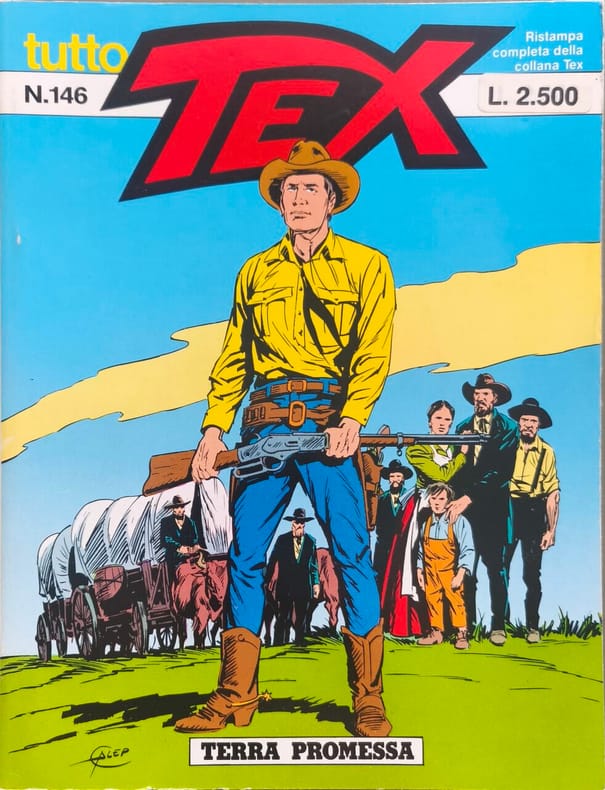
199311776Sergio bonelli editore 1993 114 pages collection tex #146. in8. 1993. broché. 114 pages. Une communauté de Quakers souhaite émigrer de l'Utah vers la Californie sans rejoindre d'autres convois mais une bande de malfaiteurs dirigée par l'homme d'affaires Goldfield s'est arrogé le droit d'organiser toutes les caravanes partant de Cedar City dans le but de les dépouiller
18472345Boston: Printed by S.N. Dickinson & Co. 1847. 12mo 7 1/4 x 4 5/8 inches; 183 x 119 mm 12 pages in original printed wrappers softcover.<br /><br />A full-throated cry against slavery. The Quakers who had long opposed slavery wonder how a supposedly Christian nation could allow such evil to exist. "From the border slave states to the far south and southwest the vessels of the slave-trader regularly ply laden with youthful victims reared like cattle for the market" page 4. <br /><br />OCLC shows 21 physical holdings of this pamphlet by institutions with far more in digital formats. None in commerce. <b>SCARCE.</b> <br /><br />CONDITION: Slight soiling and creasing to wrappers horizontal fold probably for mailing. Very Good or better. Printed by S.N. Dickinson & Co. paperback books
18472345<p>Boston: Printed by S.N. Dickinson & Co. 1847.</p><p>A full-throated cry against slavery. The Quakers who had long opposed slavery wonder how a supposedly Christian nation could allow such evil to exist. "From the border slave states to the far south and southwest the vessels of the slave-trader regularly ply laden with youthful victims reared like cattle for the market" page 4. <br /><br />This pamphlet is scarce to the market.</p><p>PHYSICAL DETAILS: 12mo 7 1/4 x 4 5/8 inches; 183 x 119 mm 12 pages in original printed wrappers softcover.</p><p><br />CONDITION: Slight soiling and creasing to wrappers horizontal fold probably for mailing. Very Good or better.</p> Printed by S.N. Dickinson & Co. paperback
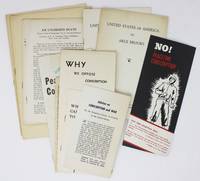
19544307Philadelphia 1954. About very good. Thirty-five printed and typescript items approximately 150pp. total. Some staples old folds. Scattered contemporary ink stamps. Light toning and minor wear heavier in places. Scattered chipping and occasional short edge tears. A fascinating and scarce group of newsletters pamphlets and ephemera published by the American Friends Service Committee during and after World War II comprising thirty-five printed and typescript items. The Committee administered roughly one third of the camps in the Civilian Public Service system which was established to provide a means of non-military service to religious conscientious objectors during the war and also played a significant role in the anti-draft anti-conscription movement. The first group of material present here includes seven issues of the Civilian Public Service Friends Newsletter. These provide a detailed contemporary account of the overall state of the camps including camp populations incoming "campers" camp openings and closures and the financial situation. The newsletters also include news relating to the administration of the camps and developments regarding their operation and the activities of the interned objectors. Included as well are a promotional report issued on the two-year anniversary of the Service's inception and an elaborate four-page solicitation for donations to the CPS both also issued by the American Friends Service Committee. The issues of the newsletters present are: No. 5 October 30th 1942; No. 6 December 21 1942; No. 8 February 25 1943; No. 9 March 15 1943; No. 10 April 21 1943; No. 12 July 12 1943; No. 13 August 23 1943. A substantial run of a scarce and short-lived newsletter. We locate individually catalogued groups of these reports only at Bethel College and the University of Oregon and not in the Swarthmore Peace Collection.<br /> <br /> A second group of newsletters contains three issues of a weekly periodical Information and eleven issues of its monthly offshoot Information Digest dating December 1943 to July 1945 with two issues from later in 1946. These issues document the administration process of the CPS camps and contain reports on various facets of their operation including finances fundraising working and social conditions religious life and legal issues. Amongst these are reports on internal efforts and negotiations to fund the camps both within the Society of Friends and in partnership with other pacifist religious sects such as the Mennonites who were involved in camp operations. The December 2 1943 issue of Information for example contains a detailed narrative of the negotiation to fund the camps in 1944. The newsletters also contain a wealth of information on developments initiatives and daily life at the camps which include some particularly interesting reports on mental health among internees and on civil rights as the issue related to conscientious objectors but also to racial equality in the United States during the war era. OCLC locates holdings of this periodical at just a small handful of institutions.<br /> <br /> The third group of material comprises four scarce typed reports prepared and distributed by the AFSC during the war regarding the rights of conscientious objectors and their status. Three of the reports address the Selective Service Act and continued amendments thereto concentrating on the portions of the law that applied to religious objectors to military service and changes that affected objectors during the early years of the war. The first these issued in March 1942 first outlines the changes made to the draft law during December 1941 in the wake of the attack on Pearl Harbor and the declaration of war on the Axis powers and then provides an extensive step-by-step procedure for the application process to become a conscientious objector. Two further lengthy "memoranda" explain the rights of conscientious objectors as of December 1942 and March 1943 when each report was produced and gives advice for completing the objector application as well as for preparing supplementary documents and written statements. The other report in this group dated September 1941 gives an outline of the finances and disposition of the Civilian Public Service the system of labor camps for conscientious objectors on the eve of the war including lists of camps already in operation their capacities and statistical charts of objectors already registered and camp populations and assignments. These reports are quite striking as first-hand evidence of the role played by the Society of Friends administration in counseling their members to become conscientious objectors.<br /> <br /> Finally there is an interesting group of Quaker anti-conscription ephemera from World War II consisting of nine pamphlets that outline the pacifist views of the Society of Friends and the reasons behind them. The works go on to detail how these beliefs necessitate the Quakers' refusal to be conscripted into the American armed forces and defend this stance. Two pamphlets deal specifically with the opposition to peacetime conscription which became a political issue towards the end of the war. The individual titles are as follows:<br /> <br /> 1 "Why They Cannot Go to War." Philadelphia: American Friends Service Committee 1940.<br /> 2 "Why We Oppose Conscription." Philadelphia: American Friends Service Committee 1941.<br /> 3 "United States of America vs. Arle Brooks." Philadelphia: American Friends Service Committee 1941. Two copies.<br /> 4 Royden A. Maude. "An Unarmed State." Philadelphia: American Friends Service Committee N.d.<br /> 5 Muste A.J. "Conscription and Conscience." Philadelphia: American Friends Service Committee 1944. Two copies.<br /> 6 "Peace Time Conscription.A Problem for Americans." Philadelphia: American Friends Service Committee 1944.<br /> 7 "Permanent Conscription." Philadelphia: American Friends Service Committee 1945.<br /> 8 "No! To Peacetime Conscription." Philadelphia: American Friends Service Committee 1945.<br /> 9 "Advices on Conscription and War." Philadelphia: American Friends Service Committee 1954. unknown
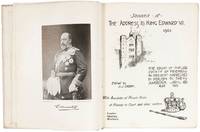
190120890291901. London: Headley Brothers. 1901. 8vo. Original decoratively gilt-stamped white cloth the upper board somewhat marked top edge gilt; pp. 90 2 portrait photo frontis and 8 other b/w photo plates; inscribed in pencil to the recto of the ffep 'Barrow Cadbury Birmingham'; endpapers lightly embrowned else a bright copy.First edition. One of a limited edition of 250 numbered copies. This copy numbered in pencil 175. A collection of addresses made to the Sovereign between 1654 up to the address made to King Edward VII in 1902 by the Deputation of the Society of Friends The Quakers.Barrow Cadbury 1862-1958 was the head of the chocolate factory and founder of the Barrow Cadbury Trust. The Cadburys were a leading Quaker family and George Cadbury Barrow's uncle was one of the Friends that formed the deputation to Edward VII. hardcover
1715WRCAM39824London 1715. 4pp. Printed in two columns. Dbd. Small folio. Early folds and early stab holes in left margin. Some foxing. Very good. A rare and expansive appeal to Parliament against the 1715 bill to renew the Quakers' right to the "solemn affirmation" in place of the legal oath. In 1696 after experiencing decades of exclusion and imprisonment for conscientiously refusing to take loyalty and court oaths Quakers were granted the right by an act of Parliament to take a "solemn affirmation" in legal situations in place of an actual oath. In 1715 a bill was under consideration in Parliament to renew that act indefinitely. Significantly longer than most lobbying documents from this time this petition asks that Parliament only extend the act if the affirmation be made "of no Force where they are concern'd in Interest but where they only Affirm as Witnesses between others there being no Temptation for them to Lye when it brings no Profit to them." Many Quakers by this time had achieved significant prosperity in manufacturing and commerce adding fuel to their enemies' resentment. The author of this pamphlet charges various Friends with hypocrisy greed and swindling and reprints an earlier petition describing six widows of commanders of two "Guinea ships" allegedly defrauded by Quakers including one Quaker from Maryland. Not listed in Joseph Smith's BIBLIOTECA ANTI- QUAKERIANA or A DESCRIPTIVE CATALOGUE OF FRIENDS' BOOKS. ESTC records only one copy at Oxford there are also copies at Haverford College. unknown books
171521205London 1715. 4pp. Printed in two columns. Disbound. Small folio. Early folds and early stab holes in left margin. Some foxing. One of Two Known Copies<br/> <br/> A rare and expansive appeal to Parliament against the 1715 bill to renew the Quakers' right to the "solemn affirmation" in place of the legal oath. In 1696 after experiencing decades of exclusion and imprisonment for conscientiously refusing to take loyalty and court oaths Quakers were granted the right by an act of Parliament to take a "solemn affirmation" in legal situations in place of an actual oath. In 1715 a bill was under consideration in Parliament to renew that act indefinitely. Significantly longer than most lobbying documents from this time this petition asks that Parliament only extend the act if the affirmation be made "of no Force where they are concern'd in Interest but where they only Affirm as Witnesses between others there being no Temptation for them to Lye when it brings no Profit to them." Many Quakers by this time had achieved significant prosperity in manufacturing and commerce adding fuel to their enemies' resentment. The author of this pamphlet charges various Friends with hypocrisy greed and swindling and reprints an earlier petition describing six widows of commanders of two "Guinea ships" allegedly defrauded by Quakers including one Quaker from Maryland. Not listed in Joseph Smith's Biblioteca Anti-Quakeriana or A Descriptive Catalogue of Friends' Books. ESTC records only one copy at Oxford. unknown