Koran; [Sale George, translator]Biblio.com
Antiquariat.de
The Holy Qur'an.
83735o. O., o. V., o. J. XX + 1862 S. Gr.-8° Groß-Oktav, Leinen

Antiquariat Boller · DE - Staufenberg23,50 €
736 résultats
184034888London: Orlando Hodgson 1840. A new edition with a memoir of the translator a long preliminary discourse on Islam and its history and with various readings and illustrative notes from Savary’s version of the Koran. 8vo contemporary three-quarter calf over marbled paper covered boards the spine in compartments decorated with central ornamental devices raised bands hatched in blind tan morocco lettering label gilt marbled endleaves. xvi 143 1-472 pp. including index. A very good copy handsome and well preserved the binding tight and strong internally quite fresh and clean. A HANDSOME EXPANDED EDITION OF ISLAM’S HOLIEST BOOK. Sale's version published initially in 1734 is the best early translation of the Islamic holy book and the first English translation taken directly from the original Arabic. The only translation published previously to Sale's was "the despicable French version" of André Du Ryer issued in 1649 and Alexander Ross’s English version derived from Du Ryer's published in the same year. <br> Sale’s intent in translating the Q’uran was seemingly to educate English readers and perhaps those in power about Islam in an atmosphere of what he perceived to be ignorance and intolerance: “.it seems as if there was something more than what is vulgarly imagined in a religion which has made so surprising a progress.†He states “.as Mohammed gave his Arabs the best religion he could as well as the best laws preferable at least to those of the ancient pagan lawgivers I confess I cannot see why he deserves not equal respect though not with Moses or Jesus Christ whose laws came really from heaven yet with Minos or Numa notwithstanding the distinction of a learned writer who seems to think it a greater crime to make use of an imposture to set up a new religion founded on the acknowledgment of one true God and to destroy idolatry than to use the same means to gain reception to rules and regulations for the more orderly practice of heathenism already established.†He goes on to argue that “.if the religious and civil Institutions of foreign nations are worth our knowledge those of Mohammed the lawgiver of the Arabians and founder of an empire which in less than a century spread itself over a greater part of the world than the Romans were ever masters of must needs be so.â€<br> Sale’s translation and prefatory statements were a landmark step towards education and understanding about unfamiliar religious beliefs and cultures as opposed to fear and persecution of them. This edition has been expanded with notes based on French author Claude Etiénne Savary’s translation of the Q’uran. Orlando Hodgson hardcover
83735o. O., o. V., o. J. XX + 1862 S. Gr.-8° Groß-Oktav, Leinen
New English Paperback. Pbo. Oblong 4to. (31 x 29 cm). In English, Arabic, and Turkish. 93 p., color ills. The holy qur'an past and present.= Geçmisten günümüze Mushaf-i Serîf.
198128857Delhi : Taj Company, o. J. (ca. 1981). Revised ed. of the 1. Ed. from 1978. XXXV, 613 S. ; 25 cm, blauer Org.-Pappb. mit Deckel- und Rückentitel [3 Warenabbildungen]
1998020535Istanbul: Acar Matbaacilik 1998. Hardcover. Fine. 8vo - over 7¾ - 9¾" tall. Original bdg. Large roy. 8vo. 25 x 18 cm. In English. 34 613 p. The Holy Qur'an. Translation and commentaries. Translated and introduced by Nurettin Uzunoglu. <br/> <br/> Acar Matbaacilik hardcover
New English Paperback. 4to. (28 x 24 cm). In English, Turkish, and Arabic. 198 p., color ills. "The Holy Message Exhibition of Qur'anic Manuscripts" will be open to visits throughout the month of Ramadan, when the Prophet received the first verses of the Qur'an and assumed his post as the holy messenger. In the exibition, where also the sanjak (flag) mushafs will be exhibited along with the large-sized Mushaf al-Sherifs, more than 70 manuscripts will be displayed. The manuscripts will also be elucidated for the visitors by information boards mounted along their display where, apart from their historical and artistic value, also the pigments used in their illumination and ornamentation, covering techniques, and details on their prior reparations which cannot be immediately recognized by an untrained eye. In the exhibition, alongside the Korans, all of which are masterpieces prepared by Ottoman calligraphers (hattat) and painters (nakkas), the Mushafs with Kufic strips from different periods such as: Abbasids, Seljuks, Ilkhanids, Gaznavids, Safavids, and Mamluks; as well as from different regions such as India and the Maghreb that has never been exhibited before will be put to display. The notable artefacts of the exhibit are the Mushaf al-Sherif donated by Mehmed the Conqueror, the Mushaf al-Sherif written down with gold ink for Özbeg Khan, and particularly the 12 centuries old ancient Mushaf al-Sherif registred in the Nuruosmaniye Mosque inventory, which was written with a Kufic gold-inscribed calligraphy on a parchement at a time when paper was not commonly used in the Islamic World.
New Turkish Original aesthetics full leather bdg. in traditional Ottoman style. In publisher's special box. 4to. (30 x 20 cm). In Arabic. All edges gilt. Fully illuminated as traditional: Serlevha, hecde hizb, cüz roses, zahriye semses, müsenna besmele, with 'tevafuk' and color secavends, and med-kasirs. 605, 11, [4] p. The glorious Quran. Kur'an-i Kerim. was an Islamic calligrapher born during Ottoman times. His real name is Sheikh Musa Azmi, which is why his works may be found to be signed as Azmi. He is known by the pseudonym Hamid. He is also known as Hamid Al Amidi in international circles. Hamid learned the jali-thuluth (Turkish: celi-sülüs) style from Mehmed Nazif (1846-1913), the naskh and thuluth styles from Kamil Akdiç (1862-1941) and the ta'liq style from Mehmed Hulusi (1869-1940). His works are on display in many countries including Egypt and Iraq. His works are also on display in many newly built mosques of Istanbul. Some of his popular students include Hasan Çelebi and Fuat Basar. He was buried in the Karacaahmet Cemetery of Üsküdar district, Istanbul.
New Turkish Original aesthetics full leather bdg. in traditional Ottoman style. With flap (miklep). In publisher's special luxury box. Large 4to. (30 x 25 cm). In Arabic. All edges gilt. Fully illuminated as traditional: Serlevha, hecde hizb, cüz roses, zahriye semses, müsenna besmele, with 'tevafuk' and color secavends, and med-kasirs. 605, 11, [4] p. The glorious Quran. Kur'an-i Kerim. was an Islamic calligrapher born during Ottoman times. His real name is Sheikh Musa Azmi, which is why his works may be found to be signed as Azmi. He is known by the pseudonym Hamid. He is also known as Hamid Al Amidi in international circles. Hamid learned the jali-thuluth (Turkish: celi-sülüs) style from Mehmed Nazif (1846-1913), the naskh and thuluth styles from Kamil Akdiç (1862-1941) and the ta'liq style from Mehmed Hulusi (1869-1940). His works are on display in many countries including Egypt and Iraq. His works are also on display in many newly built mosques of Istanbul. Some of his popular students include Hasan Çelebi and Fuat Basar. He was buried in the Karacaahmet Cemetery of Üsküdar district, Istanbul.
New English Original bdg. Small 4to. 184, 564, 216 p. A heavy volume. Ills. In Arabic. This is a facsimile edition of the copy (Mushaf) of the Holy Quran which is attributed to the time of Ali b. Abi Talib and located in Sana'a, Yemen. It comes out as a third publication in IRCICA's series of editions of oldest copies of the Quran. Earlier IRCICA had published editions, accompanied by descriptive and comparative studies, of two Quran copies that are attributed to the time of Othman b. Affan namely the copies of Topkapi, Istanbul and al-Mashhad al-Husayni, Cairo. The other copies attributed to the same period are in the following cities: Istanbul (the Museum of Turkish and Islamic Arts, edition published by ISAM, Istanbul, 2008); London; Paris; St. Petersburg, and Tashkent. There are other editions of Quran copies that IRCICA published outside this series. One of them is the copy dated 582 H/1186 and known as the Fazil Pasha (Sherifovic) Mushaf, which is located in Gazi Husrevbegova Library, Sarajevo. Another edition, supervised by IRCICA, is the reprint of the Mushaf of Kazan dated 1803 which is known to be the first copy printed in the Muslim world; it was reprinted in cooperation with Kazan Municipality in the year 2005 corresponding to the millennium of Kazan city. By publishing these editions, with studies in the case of the former ones, IRCICA aims to contribute in preserving them and making them known and accessible to all. The Sana'a copy is located at the Grand Mosque of Sana'a. The elaborate Introduction to the edition is a study by Dr. Tayyar Altikulaç, specialist of the history of copies of the Quran and ex-Head of Religious Affairs in Turkey. The study is a concise history of the dissemination of the Holy Quran through its copies and of the developments relating to script, orthography, punctuation, locations, etc. of the copies. It examines, describes and analyses the characteristics of the Sana'a copy as to script, orthography, binding, etc. It also describes the other copies attributed to the period of Othman b. Affan as well as the copy printed by the King Fahd Complex for the Printing of the Holy Quran, Medina, which is known to be in conformity with the orthography of the time of Othman b. Affan. IRCICA planned to publish this edition during the 2010-2011 period which, at the suggestion of IRCICA, was designated by the 2010 meeting of the OIC's Council of Foreign Ministers as the "1400th Year of the Revelation of the Holy Quran". The Council had invited all OIC member countries and Muslims' associations and institutions world-wide to commemorate this anniversary of the beginning of the revelation with cultural and scholarly activities that would contribute in diffusing a correct and deeper understanding of the Holy Quran. IRCICA for its part is honoured to have been able to record this publication among its activities related to the said Year.
New Arabic Original cloth bdg. 592 p. In Arabic. Elephant folio. (49 x 35 cm). First Edition. Illuminated. Reprinted from the original manuscript of Topkapi Palace Museum dated 1584-87. The Koran known as Ahmed Karahisarî's Mushaf-i Serif is leading among the most important works created by artists, who are experts of letters of the Ottoman Palace dealing with the art of books. The work is registered at number 5 among the Hirka-i Saadet books of the Library of Topkapi Palace Museum. Its binding with golden gilded ornament, angle and border has miklep and is made of black leather and was repaired in time. Being the Koran with the largest size written in the Ottoman world, is sized 61.5x42.5 cm and consists of 300 sheets. The place of the work where the name of the calligrapher and the date of transcription would have been written, i.e. the colophon is left empty. The reason for attributing it to Ahmed Karahisarî, the famous calligrapher of the period of Kanunî Sultan Suleyman, is based on a foundation record at its beginning: in this foundation record on page 1b, it is briefly stated that the work is the Mushaf-i Serîf of Karahisarî, was kept in the sultan's treasure until then and was devoted to the Hirka-i Serîf Chamber (Private Chamber) for being recited in 1107 (1696) by Sultan Mustafa II. The beginnings of Fâtiha and Bakara chapters of the Koran, every page of which is gilded carefully, are written with celî muhakkak (large cursive style) and reyhanî calligraphy. Two opposed pages following the epigraph demonstrate a different arrangement. Here, one line each of celî calligraphy at the bottom and top and reyhanî calligraphy in a round medallion at the middle are used. In the opposed pages following this, the same arrangement is used without the medallion. Following this diversity at the beginning, the Koran is written according to a classical arrangement known as Yakut style, consisting of one line of celi muhakkak, five lines of nesih (roundish writing), one line of celî sulus (large style), again five lines of nesih and celî muhakkak calligraphy at the bottom. Ahmed Karahisarî is the most famous artist writing in this style among 16th century Ottoman calligraphers. However, it is quite surprising that the signature of Ahmed Karahisarî, who had great reputation in his time, is not seen at the end of the work. This can be explained by the failure to complete the Koran of the artist due to his death or his old age. It is possible to determine the period in which the work, accepted to be written by Ahmed Karahisarî, famous calligrapher of the time of Kanunî Sultan Suleyman, and incorporating the richest examples of Ottoman palace gilding art was completed with its main lines in the light of some documents.It is understood that 220 pages of the Koran known as Ahmed Karahisarî Mushaf-i Serif and which is one of the most valuable works of Topkapi Palace Museum were written by Karahisarî at the time of Kanunî Sultan Suleyman between 1545-55 and was left unfinished upon the death of the artist. It is also understood that the remaining 80 pages completing the Koran were possibly written by Hasan Celebi, his adoptive son, under the patronage of Sultan Murad III between 1584-87. Conjunction, drawing of rulers, gilding of every page and binding and final completion of the work was performed between 1584-1596. Murad III, who died in 1595, could not see the result of this study that he assumed the patronage of for long years.
New Turkish Original imitation leather bdg. with a flap. Roy. 8vo. (24 x 17 cm). In Arabic. [5], 604, [21] p., color illuminations. The Glorious Quran - Kur'an-i Kerim. Calligraphed by Huseyin Kutlu. Illuminated by Ersan Percem.
1974X56768Lahore (Pakistan), Muhammad Ashraf 1974 viii + 144pp., cart., dustwrapper, 22cm., G, [text in english]
viii + 144pp., cart., dustwrapper, 22cm., G, [text in english]
1958ST20505-03Piedmont California: The Nova Press 1958. 260 x 170 mm. 10 1/4 x 6 3/4". 17 1 pp. 1 leaf. <br/> Publisher's sage green paper boards cover with title printed in black. WITH A LEAF FROM THE 1865 BIELEFELD "DER KORAN." In fine condition.<br/> <br/> This charming and attractively printed leaf book served as the ultimate bibliophile's Christmas card. William P. Barlow Jr. 1934-2021 was a dedicated Bay Area book collector who for many years served as president of the Roxburghe Club of San Francisco. Along with collecting Barlow printed under the Nova Press imprint putting out a smattering of pamphlets and "cards" such as the present volume. This tongue-in-cheek production gently pokes fun at the norms of the bibliophilic world even as it celebrates them as evident in the limitation statement: "A moderate number of copies printed and distributed by the Nova Press Piedmont and its proprietor Wm. P. Barlow Jr. as a form of Season's Greetings to members of the Roxburghe Club of San Francisco and other friends. To the latter I apologize for a rather parochial parody and a somewhat un-Christmassy Christmas card; to the former I need apologize only for the way in which it has been done as they are used to getting all sorts of strange things at Christmas." The leaf included in this book is from the 1856 Bielefeld edition of Ludwig Ullmann's influential German translation of the Qur'an which was first published in 1840. The print run of this work must have been a good deal less than "moderate" as copies seem not to be readily available. The Nova Press unknown
New English Paperback. 4to. (33 x 25 cm). Edition in English. 382 p., color ills. The art of the Qur'an. Treasures from the Museum of Turkish and Islamic Arts. 15 October 2016 - 20 February 2017. [Exhibition catalogue]. With contributions by François Derroche, Edhem Eldem, Jane McAuliffe, Sana Mirza, Zeren Tanindi. In the early twentieth century, the Ottoman Empire was in political turmoil. Officials moved valuable artworks--including thousands of sumptuous Qur'an (Koran) manuscripts and loose pages dating from the 7th to 17th century--to Istanbul to ensure their safety. Penned by celebrated calligraphers and embellished by skilled illuminators and bookbinders, these manuscripts are now housed in the Museum of Turkish and Islamic Arts (Türk ve slam Eserleri Müzesi or TIEM) in Istanbul, established in 1914. This story unfolds in "The Art of the Qur'an: Treasures from the Museum of Turkish and Islamic Arts," the companion publication to the Arthur M. Sackler Gallery's groundbreaking exhibition, the first major presentation of Qur'ans in the United States. The book's authors describe the formation of this one-of-a-kind collection and the history of TIEM, whose centuries-old records on patrons, calligraphers, illuminators, and provenance allow us to create "biographies" detailing the production of the Qur'ans in the exhibition. Essays address the Qur'an as a written text--from content and organization to the elaborate calligraphy and illuminated designs that transformed the volumes into beautiful artworks. "The Art of the Qur'an "also includes in-depth descriptions of some seventy works from TIEM and the Smithsonian's Sackler and Freer Galleries. It features full-page, color images of the earliest known Qur'an folios and manuscripts from the Umayyad and Abbasid Near East (7th-10th century), Seljuk Iran and Anatolia (12th century), the Mongol Il-Khanid and Timurid empires and Mamluk Cairo (14th and 15th centuries), Safavid and Ottoman empires (16th and 17th centuries) as well as a number of mosque furnishings, such as Qur'an boxes and stands. Most of these works have rarely, if ever, been published.
1791149081.Glibrary. Good. Access codes and supplements are not guaranteed with used items. May be an ex-library book. unknown
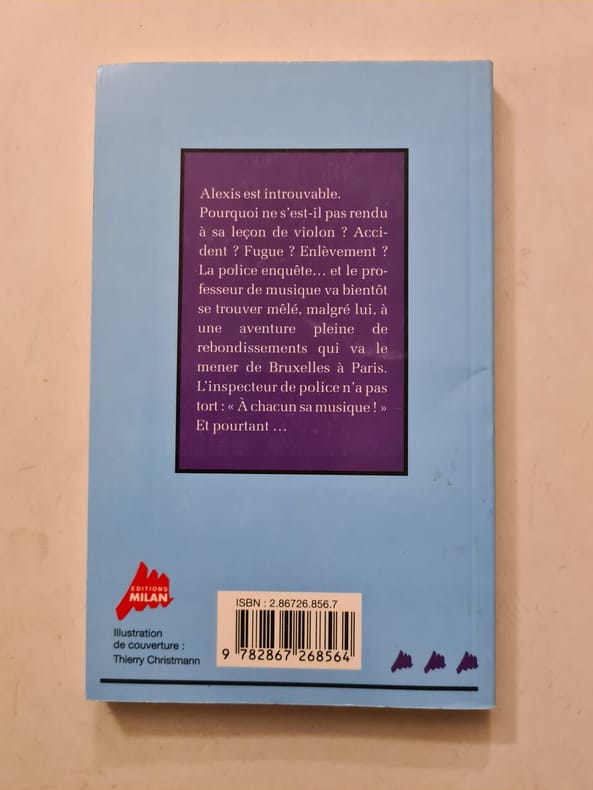
1992RO20263898Milan / Zanzibar. 1992. In-12. Broché. Etat d'usage, Couv. légèrement passée, Dos satisfaisant, Quelques rousseurs. 121 + 124 pages illustrées de dessins en noir/blanc, dans et hors texte. . . . Classification Dewey : 840.091-XX ème siècle
500364086Zanzibar Sans date.
1993138786Milan 1993 121 pages 17x10 6x1cm. 1993. Poche. 121 pages.
New Turkish Paperback. Pbo. Demy 8vo. (21 x 14 cm). In Turkish. 236 p. Tefsir usûlü. A study on commentary method.
2005mon0000185482RAK 2005T. paperback. Like New. in x in x in. like new softcover. no marks. clean text. solid binding. very light wear. ISBN matches listing RAK paperback
New Arabic Original bdg. HC. Roy. 8vo. (24 x 17 cm). In Arabic. 197 p. Tanbih al-hatir ala zallah al-qari wa' al-zaqir. ISLAMICA Commentaries Quran Theology Hermeneutics.
200390354Köln, arcelmedia, 2003. kartoniert, gebunden; dunkelblauer, weiss bedruckter Einband / Anz. Seiten: 1539 / 16,5 x 23,4 cm / Zustand: sehr gut, geringe Gebrauchsspuren; Einband etwas berieben und am Hinterdeckel leicht zerkratzt, Kopfschnitt etwas bestaubt, Besitzereintrag auf Vorsatz
202378769WWP. New. 2023. Paperback. New paperback copies. Series No. G069.; Over 400 colour photographs including exterior and interior close-up photos. With brief descriptive notes. Photo Manual for Modelers. ; 180 pages . WWP paperback
201731493Wings & Wheels Publications. As New with No dust jacket as issued. 2017. First Edition. Softcover. 8087509609 . As new copy from a meticulous collector. May show light shelf or edge wear from shop shelving. Read descriptions carefully. Avoid GLASSFROGBOOKS ERGODOBOOKS MORE BOOKS IRISH BOOKSELLERS PRO QUO/BAYSIDE BOOKS BOOKSPLEASE RIA CHRISTIE DISCOVER BOOKS BOOKS2ANYWHERE BOOKS EXPRESS CHIRON MEDIA! These "Booksellers" have no books of their own. they buy honest booksellers' books upcharge you and have no idea what the book is really like. Support your local and small bookstore owners! . Wings & Wheels Publications paperback