[CHINESE CULTURAL REVOLUTION POSTERS].Biblio.com
3 154 résultats
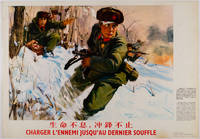
1970157974北京.Pekin.: 外文出版社.Wai wen chu ban she. 1970. Chinese Cultural Revolution poster in colour depicting a wounded soldier in the centre of the image charging fearlessly towards the enemy while behind him a combat medic tries to resume medical treatment on him. In the background more soldiers fight. Lower and right edges lightly browned occasional closed tears right edge otherwise in very good condition. Blocks of text right section and lower margin in Chinese and French. Poster measures 53.1 x 76.6cm. Blocks of text in French and Chinese give a brief summary of the story it translates as: <br> <br>"The picture depicts a heroic soldier who was wounded in the head in a battle against aggression. In order to defend Chairman Mao and the motherland he stops the medical treatment from a combat medic and continues to rush to the enemy with his submachine gun. The PLA's heroic spirit and desire to defeat the enemy demonstrates his revolutionary spirit of 'not afraid of bitterness not afraid of death' as with hatred in his eyes he moves swiftly towards the enemy." . 外文出版社.[Wai wen chu ban she]. unknown
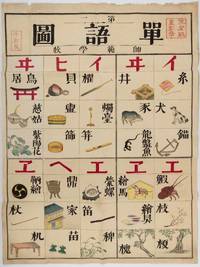
1873214113Japan. Meiji 6 1873. Four very attractive colour folded woodblock school posters 60 x 78cm each with accompanying woodblock printed textbook 32 double-folded leaves 22.5 x 15cm. Edges of posters worn with some minimal loss at margins the accompanying textbook is worn at edges with some thumb marks at lower corners but sound and generally clean. Overall good. Offers a fascinating glimpse into the beginnings of modern Japanese education. A wonderful collection of four primary school colour posters and a teacher's textbook dating to the very beginning of modern school education in Japan. The four posters contain sets of beautifully coloured and delicately printed pictures illustrating key words which children would be taught to read together with the corresponding kanji characters. The posters are divided by theme - one showing parts of the body and clothes; one showing crockery and cooking utensils; one with animals plants and tools; and one household items including a clock chair and abacus. They are particularly interesting for their combination of traditional Japanese and western items. The accompanying woodblock print text book 師範学校小学教授法 Shihan gakkō shōgaku kyōjuhō was published in Meiji 6 1873 and show how to explain each item in the classroom. <br> <br>The posters have the chops of Chikuma Prefecture current Nagano Prefecture and 1000 limited copies at the top. . hardcover
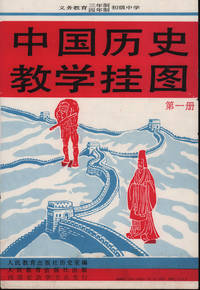
1980216371人民教育出版社. People's Educational Publishing House. Reprint. Circa1980s. Set I complete. 19 coloured posters on topics relating to Chinese history for use with 3rd and 4th grade primary school students. Each has arresting photographic illustrations clearly captioned minor wear at extremities but overall in very good condition. Cover sheet slightly creased repaired with archival paper on reverse. Posters measure 77 x 53cm; folded 38 x 26.4cm. Text in simplified Chinese characters. The set includes an introductory poster with questions that can be answered by history; about military events the economy politics culture foreign affairs science and technology and ethnic groups. The other 18 posters relate to the topics of Paleolithic and Neolithic Banpo culture; Xia and Shang Dynasty culture and bronzes; slave cultural relics; Qin Shi Huangdi; social economic and cultural information about the two Han Dynasties; the Xiongnu; balance of power during the Three Kingdoms; the two Jin Dynasties; and the Southern and Northern Dynasties. . 人民教育出版社. [People's Educational Publishing House. unknown
199869332ABo. O., o. V., 1998. 82,8 x 68,2 cm. [1] unpaginiertes Blatt., 69332A Erste Auflage. Sehr gutes Exemplar.
196981224Hamburg, 1969. Rot-Schwarz-Druck, tlw. in Prägedruck. 87 x 61 cm.
62539BBo.J. (Horst Janssen, geboren am 14. November 1929 in Wandsbek bei Hamburg, gestorben am 31. August 1995 in Hamburg. Zeichner, Grafiker, Autor, Plakatkünstler, Illustrator und Fotograf, einer der herausragendsten und produktivsten Zeichner und Grafiker des 20. Jahrhunderts). [3 Warenabbildungen]
15893DBo.J. (Otto Piene, geboren am 18. April 1928 in Laasphe, gestorben am 17. Juli 2014 in Berlin. Künstler und Mitbegründer der K
- S.n., s.l. (Circa 1776), Cadre : 32x40,5cm ; dessin : 26x28,5cm, une feuille encadrée. - Dessin original à l'encre et à l'aquarelle. Encadrement moderne. Dessin réalisé pendant le voyage fait avec le marquis de Sade au cours de l'année 1776. Jean-Baptiste Tierce (1737-1794), élève à l'école des Beaux-arts de Rouen puis à l'Académie de Peinture et de Sculpture de Paris, se fit rapidement remarquer comme paysagiste pour ses vues du Sud de la France et de l'Italie. Ses tableaux sont conservés aux Offices de Florence et dans plusieurs musées français. Lorsqu'en décembre 1775 Sade quitte Rome pour Naples, il est accueilli par le gendre de son ami le Docteur Mesny, Jean-Baptiste Tierce, qui à cette époque reçoit les commandes du Cardinal de Bernis. Il trouve un logement au Marquis « [qui] entend tout voir [de la région], s'instruire de tout, juger, admirer, critiquer, aimer, haïr, bref se livrer sans frein à cette curiosité insatiable et passionnée qui le conduit aussi bien dans les musées, les galeries, les églises, les palais et les bibliothèques, que dans les grottes, les caveaux, les catacombes, et jusque dans les entrailles des volcans. Il ne se contente pas de contempler les uvres d'art, les monuments antiques ou modernes, il observe aussi les murs, la politique, la religion, l'administration, la vie sociale. La beauté des femmes, les usages du monde, la qualité des spectacles, les manières de manger, de boire, de s'habiller, de prier, de se conduire dans le monde : rien ne le laisse indifférent. Il voudrait saisir tout le présent et tout le passé de cette civilisation, l'embrasser toute entière dans une vision unique et universelle. Programme gigantesque, à la mesure de son imagination exceptionnelle, mais qu'il n'a plus remplir, qu'il lui était impossible de remplir. Pourtant, telle est sa première ambition d'écrivain : grandiose, démesurée. En vue de ce « grand uvre », Sade prend des notes à la hâte, au bord des chemins ou dans les auberges, qu'il complète avec les fiches de ses correspondants Mesny et Iberti. Ainsi s'édifie ce monument qu'il destine au public, mais qui ne verra le jour qu'au XXème siècle. Jean-Baptiste Tierce y collabore étroitement : il relit les notes et consigne ses observations sur de petits cahiers, avec des numéros renvoyant aux uvres décrites. Sade en tient le plus grand compte. Souvent, le peintre l'accompagne dans ses randonnées, son carnet de croquis à la main, dessinant les édifices et les paysages qu'ils ont sous les yeux. Une centaine de ces dessins et gouaches ont été récemment retrouvés dans les archives de la famille de Sade. Ils confèrent au Voyage en Italie l'allure d'un véritable reportage. » (Maurice Levert, Sade, pp. 283-284). Provenance : archives de la famille de Sade. [ENGLISH DESCRIPTION ON DEMAND]
- Fin XIXème - Début XXème, 23 x 36 cm. - Dessin original au crayon.Signature du cachet de la signature de l'artiste dans l'angle inférieur droit de l'uvre, et signature du cachet de l'atelier au verso. Légères traces de pliure, deux infimes déchirures en marge gauche (1 cm) et en marge droite (0,5 cm), sinon très bel état de conservation.Provenance : atelier de l'artiste, référencée au catalogue Atelier Louis Anquetin (Thierry de Maigret, 28/11/08).Louis Anquetin, né à Étrépagny en 1861 et mort à Paris en 1932, est un important peintre français.Il commence sa carrière aux côtés de peintres d'avant-garde tels que Vincent Van Gogh ou Henri de Toulouse-Lautrec. Avec Émile Bernard, il est l'inventeur du Cloisonnisme. De 1884 à 1893, Louis Anquetin ne cesse d'explorer les possibilités nouvelles offertes par la libération introduite par l'Impressionnisme dans la peinture française. A partir de 1893, à la suite d'une longue confrontation avec les « maîtres d'autrefois », il adopte un parti-pris pictural qui le mettra en marge du mouvement général de l'art, et l'éloignera de ses amis. Ébloui par l'art baroque et sa vigueur créatrice, il pense alors que ses amis de jeunesse se sont engagées dans une voie qui mènera à la mort de la peinture. Il croit en une « peinture parfaite » qui s'incarne dans le re-souvenir des leçons de Michel-Ange et de Rubens notamment. Son travail devient donc plus classique, il prône le retour au métier, en proposant de réfléchir sur les conditions a priori de toute forme d'art possible dans le respect des règles de la perspective et de l'anatomie, telles que pratiquées par les maîtres du XVIème et XVIIème siècle.Ne laissant que quelques uvres que l'on peut qualifier de monumentales, Anquetin s'avère prolifique par ses nombreuses études et esquisses, lui qui considérait que le dessin était « un moyen d'expression tout puissant », le fondement obligatoire de tous les arts plastiques.En travaillant volontairement à rebours de son époque, Louis Anquetin a rendu possible l'existence d'une figuration moderne originale. Par son obstination et sa passion de la peinture, il a en effet évité que ne soit totalement obturé le chemin de la grande tradition occidentale.On peut admirer ses uvres dans de nombreux et prestigieux musées comme le Musée d'Orsay ou Le Louvre à Paris, à San Francisco ou à Detroit, au Musée de l'Hermitage de Saint-Petersbourg, à la National Gallery et à la Tate de Londres, etc. [ENGLISH DESCRIPTION ON DEMAND]
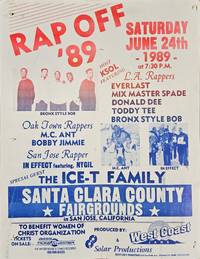
List2880San Jose California 1989. 17 x 22 inch poster on heavy cardstock. Scuffed staple holes with tears at corners and in center; very good minus. Poster for “Rap Off ‘89†a sizable hip-hop festival and possibly as the name suggests rap competition held at the Santa Clara County Fairgrounds in San Jose California. The event features acts from Oakland “Oak Town†San Jose and Los Angeles with the “Ice-T Family†as special guests and benefits the Women of Christ Organization. unknown
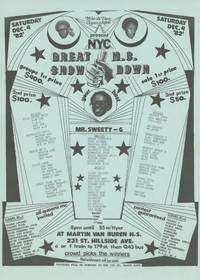
1982List2881Queens New York 1982. 6 x 8 ½ inch flyer. Fine. Flyer for the “Great M.C. Showdown†at Martin Van Buren High School in Queens New York hosted by Mr. Sweety-G. According to his personal website Mr. Sweety-G—aka Glenn Toby—was working with some of the biggest hip hop artists of the late 1970s and early 1980s including Grandmaster Flash Doug E. Fresh Biz Markie and more thanks in part to Harlem-based promoters Mike & Dave Productions. The flyer is uncredited but looks to have been designed by Buddy Esquire Lemoin Thompson an artist from the Bronx who designed over 300 flyers for hip hop events around this time and described his style based on old Art Deco movie posters as “neo-decoâ€.1<br /> <br /> 1 Amanda Lalonde “Buddy Esquire and the Early Hip Hop Flyer†Popular Music 33 no. I 2014: 19–38. unknown
199265022[Paris], Elina/Sofedis, [1992]. 180 S. Mit zahlr. meist farb. Abb. 4to (ca. 29,5 x 22,5 cm). OPp. mit SU (dieser mit ca. 5 cm hinterklebtem Einriß im Rückenbereich).
Paris, Éditions Édmond Nalis, 1968; in-8, 132 pp., broché. Nombreuses illustrations en couleurs. Très bon état.
- 1900, 16,5x24,4cm, autre. - Album constitué de 5 gouaches (peintures à la colle) érotiques sur soie. Sur la première page, le titre et la signature du peintre ainsi qu'un cachet rouge. Si le titre peut se traduire par : Une source d'intérêt sans fin, ou, le plaisir des saveurs sans limite, le nom du peintre n'a pu être traduit. Chaque peinture est signée d'un cachet, condition des plus rares, ces productions érotiques étant toujours anonymes par crainte de la censure ou de possibles représailles. L'élément le plus rare étant le titre manuscrit ainsi que le nom du peintre en page de titre. Ce peintre pouvait donc afficher son nom dans ce genre pictural alors qu'il était interdit d'en produire. Livre monté en accordéon, recouvert de soie brochée bleu composée de motifs chinois. Etiquette de titre grège semée d'or muette. Peintures sur soie ocre montées sur carton et bordées de soie beige. Superbe état et très belle fraîcheur de l'ensemble, peintures et livre. Ce type de représentation est la plupart du temps fruste, dans un style naïf et utilisant l'encre et l'aquarelle. Toutes les peintures sont ici à la colle traditionnelle ( qu'on peut assimiler à la technique de la gouache) et sont remarquables de finesse et d'élégance. On remarque un début de représentation des personnages et des drappés en volume, ce qui est peu le cas dans de genre de production. Les scènes érotiques se passent dans des intérieurs richement meublés. L'ensemble obéit aux canons de l'esthétique érotique chinoise, ainsi ne voit-on pas les pieds des femmes, toujours chaussées et munies de pieds minuscules. La date que nous donnons est bien entendu approximative, le recueil pouvant dater de la fin du XIXe ou de quelques décenies après 1900. [ENGLISH DESCRIPTION ON DEMAND]
1988974DGO.O., 1988. Farbiger Offsetdruck auf Papier. Bildgrösse: 127 x 90 cm. + Wichtig: Für unsere Kunden in der EU erfolgt der Versand alle 14 Tage verzollt ab Deutschland / Postbank-Konto in Deutschland vorhanden +
1992390BGO.O., 1992. Farbiger Offsetdruck auf Papier. Bildgrösse: 127 x 90 cm. + Wichtig: Für unsere Kunden in der EU erfolgt der Versand alle 14 Tage verzollt ab Deutschland / Postbank-Konto in Deutschland vorhanden +, Theater Spektakel
15887DBo.J. (Otto Piene, geboren am 18. April 1928 in Laasphe, gestorben am 17. Juli 2014 in Berlin. Künstler und Mitbegründer der K
16126DBo.J. (Horst Janssen, geboren am 14. November 1929 in Wandsbek bei Hamburg, gestorben am 31. August 1995 in Hamburg. Zeichner, Grafiker, Autor, Plakatkünstler, Illustrator und Fotograf, einer der herausragendsten und produktivsten Zeichner und Grafiker des 20. Jahrhunderts). [2 Warenabbildungen]
- Lucien Vogel éditeur, Paris Avril 1913, 19x24,5cm, une feuille. - Original color print, printed on vergé paper, signed in the plate. An original print used to illustrate the Gazette du bon ton, one of the most attractive and influential 20th century fashion magazines, featuring the talents of French artists and other contributors from the burgeoning Art Deco movement. A celebrated fashion magazine established in 1912 by Lucien Vogel, La Gazette du bon ton appeared until 1925, with a hiatus from 1915 to 1920 due to the war (the editor-in-chief having been called up for service). It consisted of 69 issues printed in only 2,000 copies each and notably illustrated with 573 color plates and 148 sketches of the models of the great designers. Right from the start, this sumptuous publication "was aimed at bibliophiles and fashionable society," (Françoise Tétart-Vittu, "La Gazette du bon ton", in Dictionnaire de la mode, 2016) and was printed on fine vergé paper using a type cut specially for the magazine by Georges Peignot, known as Cochin, later used (in 1946) by Christian Dior. The prints were made using stencils, heightened in colors, some highlighted in gold or palladium. The story began in 1912, when Lucien Vogel, a man of the world involved in fashion (he had already been part of the fashion magazine Femina) decided, with his wife Cosette de Brunhoff - the sister of Jean, creator of Babar - to set up the Gazette du bon ton, subtitled at the time: "Art, fashion, frivolities." Georges Charensol noted the reasoning of the editor-in-chief: "'In 1910,' he observed, 'there was no really artistic fashion magazine, nothing representative of the spirit of the time. My dream was therefore to make a luxury magazine with truly modern artists...I was assured of success, because when it comes to fashion, no country on earth can compete with France.'" ("Un grand éditeur d'art. Lucien Vogel" in Les Nouvelles littéraires, no. 133, May 1925). The magazine was immediately successful, not only in France but also in the United States and Latin America. At first, Vogel put together a team of seven artists: André-Édouard Marty and Pierre Brissaud, followed by Georges Lepape and Dammicourt, as well as eventually his friends from school and the School of Fine Arts, like George Barbier, Bernard Boutet de Monvel and Charles Martin. Other talented people soon came flocking to join the team: Guy Arnoux, Léon Bakst, Benito, Boutet de Monvel, Umberto Brunelleschi, Chas Laborde, Jean-Gabriel Domergue, Raoul Dufy, Édouard Halouze, Alexandre Iacovleff, Jean Émile Laboureur, Charles Loupot, Chalres Martin, Maggie Salcedo. These artist, mostly unknown when Lucien Vogel sought them out, later became emblematic and sought-after artistic figures. It was also they who worked on the advertising drawings for the Gazette. The plates put the spotlight on, and celebrate, dresses by seven designers of the age: Lanvin, Doeuillet, Paquin, Poiret, Worth, Vionnet and Doucet. The designers provided exclusive models for each issue. Nonetheless, some of the illustrations are not based on real models, but simply on the illustrator's conception of the fashion of the day. The Gazette du bon ton was an important step in the history of fashion. Combining aesthetic demands with the physical whole, it brought together - for the first time - the great talents of the artistic, literary, and fashion worlds; and imposed, through this alchemy, a completely new image of women: slender, independent and daring, which was shared by the new generation of designers, including Coco Chanel, Jean Patou, Marcel Rochas, and so on... Taken over in 1920 by Condé Montrose Nast, the Gazette du bon ton was an important influence on the new layout and aesthetics of that "little dying paper" that Nast had bought a few years earlier: Vogue. [FRENCH VERSION FOLLOWS] Estampe originale en couleur, tirée sur papier vergé et signée en bas à droite dans la planche. Gravure originale réalisée pour
9867DBo.J. 75,5 x 56 cm., 9867D Auflage 100 Exemplare. Blattkanten etwas lichtrandig und stellenweise mit kleinen Bereibungen, rückseitig kleiner Klebestreifen und Stempel "edition tangente, Heidelberg". Sonst gutes bis sehr gutes Exemplar.
1932441BGZürich, Globus, um 1932. Blattgrösse: 38.5 x 25 cm. + Wichtig: Für unsere Kunden in der EU erfolgt der Versand alle 14 Tage verzollt ab Deutschland / Postbank-Konto in Deutschland vorhanden +, bild
65446CBo.J. [3 Warenabbildungen] (Frieder Grindler, geb. 03.06.1941 in Berlin, deutscher Grafikdesigner. Er gehört der Kasseler Plakatkunst Schule an).
200133943ABHannover., Kestner Gesellschaft., 2001. 84 x 59 cm., Umschlag Sehr gutes Exemplar.
197158271Chicago IL: National Safety Council 425 N. Michigan Ave. 1971. 4to. 56 80 pp. w/ 100’s of posters illustrated printed on blue-tinted paper. Colour-illustrated softcovers minor shelfwear creasing still VG copy w/ received stamp for Clark County WA Dept. of HIghways on back cover. First edition of this scarce occupational safety and public safety catalogue of teaching aids instructional films packets and posters to be distributed widely to businesses and public. The 1500 posters feature artwork of astronauts on the moon advisories against smoking near flammable materials installing guard rails logs rolling down on loggers after snapping cables safe driving and seat belt wearing advisories. No copies in Worldcat. National Safety Council, 425 N. Michigan Ave., paperback
16104DBo.J. (Horst Janssen, geboren am 14. November 1929 in Wandsbek bei Hamburg, gestorben am 31. August 1995 in Hamburg. Zeichner, Grafiker, Autor, Plakatkünstler, Illustrator und Fotograf, einer der herausragendsten und produktivsten Zeichner und Grafiker des 20. Jahrhunderts).