11 720 résultats
192979718Nrf | Paris 1929 | 25.50 x 33.50 cm | relié
1918127251918 1 Mine de plomb signée en bas à droite, titrée et datée en bas à gauche, 1918, 38 X 30,5 cm., encadrée.
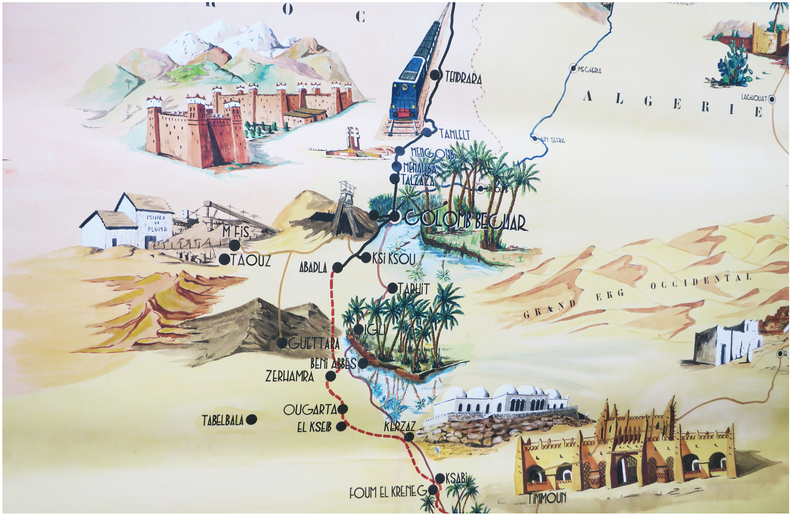
1957LBW-8887S. l., 1957. Carte exécutée à la gouache et à l’aquarelle, signée et datée dans la partie inférieure, et mesurant 3 m 35 sur 1 m 50 ; enroulée, bords renforcés, traces de fixation.
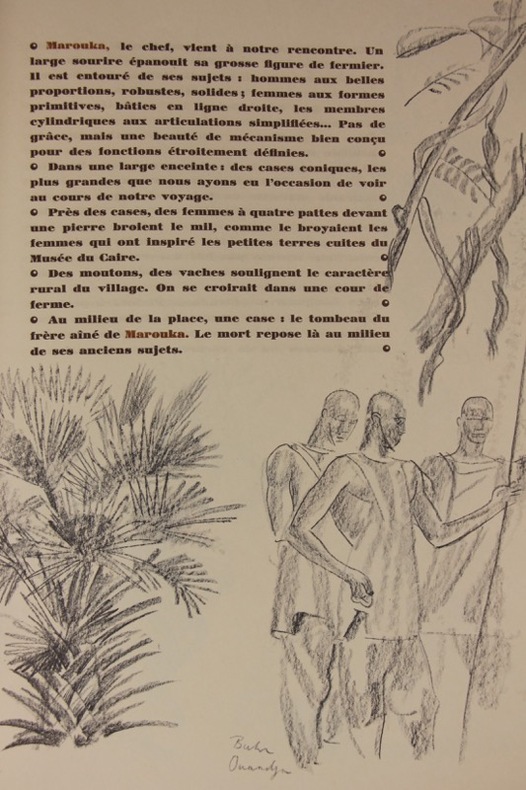
1927104162Paris, Jules Meynial, sous la direction de Lucien Vogel 1927 Chemise in-folio à lacets de cuir, revêtue d'une peau en plein filali de Marrakech avec auteur et titre estampés au premier plat tous les exemplaires sont reliés par Félix. Rabats intérieurs cartonnés contenant 50 compositions en couleurs de Iacovleff dont 1 à double page et un volume de texte 15 ff. à dos en peau retournée et plats de soie noire, avec une bande décorée verticalement sur le premier plat, d'un motif repris de la planche 39. Le texte est illustré à toutes pages de reproductions d'esquisses au crayon prises sur le vif et parfois légendées. Petits accrocs et salissures à la reliure, légères salissures aux rabats. Planches et texte en parfait état.
1938241H0034London: Secker and Warburg. Fair in Poor dust jacket. 1938. First Edition. Hardcover. Signed and inscribed by Jomo Kenyatta atop front free endpaper. "One of the first really competent and instructive contributions to African ethnography by a scholar of pure African heritage. Through his upbringing Mr. Kenyatta combines to an unusual extent the knowledge of Western ways and Western modes of thought with a training and outlook essentially African. As a first-hand account of a representative African culture as an invaluable document in the principles underlying culture-contact and change; last not least as a personal statement of the new outlook of a progressive African this book will rank as a pioneering achievement of outstanding merit." - Introduction. Author was the founding father of Kenya and led the nation from its independence in 1963 until his passing in 1978. pp. xxvi 339. Index. Glossary. Eight pages of black and white photographic plates. One-page map of Gikuyu Country. Somewhat above-average soiling and wear to original tan cloth. One-inch opening between foot of backstrip and front board. Brilliant gilt lettering in green panels upon backstrip. Contents unmarked with occasional moderate soiling and minimal foxing. Binding tender in places but intact. Two openings each less than one centimetre to central portion of front hinge. Very heavy wear to dust jacket now in archival protection.; 8vo - over 7¾" - 9¾" tall; Facing Mount Mt. Kenya - The Tribal Life of the Gikuyu Kenya Africa Mau Mau Kikuyu Gekoyo Gikuyu; Signed by Authors . Secker and Warburg hardcover
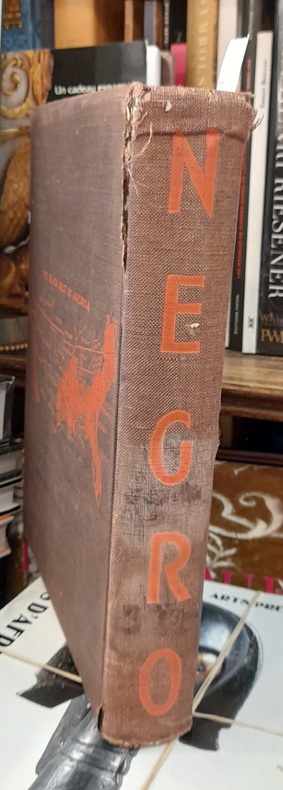
19349184London, 1934, grand in-4 pleine toile (viii-854 pages). Editions originale. Elle rassemble 255 contributions signées par 150 auteurs. Illustrée de reproductions dans et hors-texte en noir et blanc.
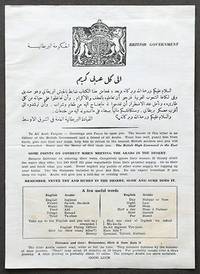
1940170773London: British High Command in the East c.1940-43. Greetings and Peace be upon you A rare chit for RAF pilots to carry during the North Africa Campaign 1940-3 in case of being lost or captured. Written for the benefit of British personnel in the field the focus is simple and concise. The first paragraph in English and Arabic presents a simple greeting asking for hospitality. The following gives points of conduct such as "remove footwear before entering their tents" and "do not expect breakfast if you sleep the night. Arabs will give you a mid-day or evening meal". A word list includes translations of "friend" "food" "tired" and "enemy". The document was colloquially known as a "goolie chit" a "throwback from an earlier war when Royal Flying Corps pilots in India and Mesopotamia needed security in the form of a document that promised a reward to anyone who would bring a British aviator back to British lines. It was so called because local tribesmen in the area were said to turn over aviators to the women who castrated them for use as servants" Feast. We have encountered two other issues: one slightly simplified British issue and an American issue carried by all pilots and crewmen of the Twelfth Air Force with a message from President Roosevelt instead of the British High Command in the East. Quarto single-sheet 244 x 173 mm text in Arabic and English on recto only edge-mounted on thick black card within white card mount all on laminate board presented in dark oak frame with conservation acrylic glazing 353 x 280 mm. Vignette of the Great Seal of the Realm at head. Backed on coarse linen minor foxing sometime folded. A very good example of a fragile publication. "Notes for Communicating with Arabs" IBCC Digital Archive document 25543; Sean Feast Coming Down 1988. unknown
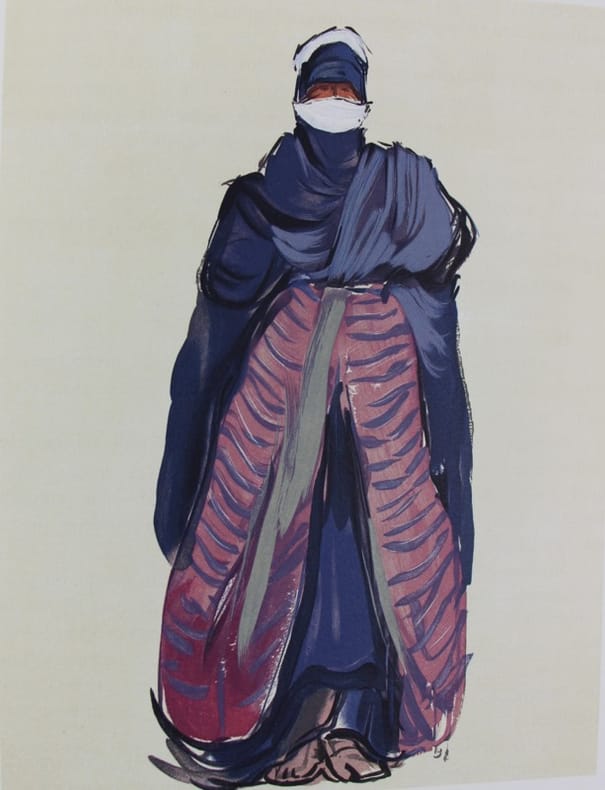
1934129656Cercle lyonnais du Livre 1934 Fort volume in-4 310 x 235 mm en ff, 304 pp., 6 ff. Pl. couv. rempliée, chemise, étui. Illustré par Paul-Elie DUBOIS de 89 compositions peintures, dessins et croquis, 7 à pleine page gravés sur bois en couleurs par Pierre BOUCHET. Les lettres ornées et tirées en noir et or sont adaptées d’ornements et motifs de décoration touareg. In fine liste des membres du Cercle Lyonnais. Tirage limité à 162 exemplaires tous sur vélin d’Arche. Tiré à 162 exemplaires, un des 120 nomùinatifs pour les membres du cercle Exemplaire imp. pour M. Jacque Sagnier. Paul-Elie DUBOIS a fait partie de la mission officielle envoyée au Hoggar en 1928. C’était la première fois qu’un peintre parcourait cette région mystérieuse. Il en a rapporté quantité de peintures, dessins, croquis et documents décoratifs. “Par son illustration comme par son exécution, l’oeuvre se place parmi les plus remarquables de la production contemporaine. Certains exemplaires en souscription sont payés jusqu’à cinquante mille francs... L’artiste curieux des réalités du pays touareg, de la psychologie de ses habitants, les traduits avec intelligence. C’est émerveillé qu’au grès des heures et des circonstances, il représente les princesses de la famille de l’Amenokal, de “belles et rieuses Targuia”, avoue-t-il.... Paul Elie Dubois, après avoir vécu ce pays, l’offre au monde civilisé par l’intermédiaire de l’art, “la plus belle et la plus efficace propagande coloniale, observe la presse” Elisabeth Cazenave, Paul-Elie Dubois peintre du Hoggar
19103013551910. Containing 70 silver print photographs of various dimensions many captioned in white ink. 1 vols. Large 4to 33.5 x 28 cm. Contemporary beige buckram 'Pictured Records' blocked in black on upper cover 'British Central Africa' added by hand in white; cover worn and a little stained upper joint partly split. Containing 70 silver print photographs of various dimensions many captioned in white ink. 1 vols. Large 4to 33.5 x 28 cm. A handsome album documenting missionary work in a little-known area. <br/><br/>The party almost certainly attached to the Church of Scotland Mission evidently enjoyed their time in Africa as they proceeded from Tanganyika into Central Africa. Among the photographs are shots of a native witch doctor women preparing food native sports including pillow fighting as well as topographical images. The also found time to hunt and thirteen pages are dedicated to big game. There are images of eland lion leopard elephants koodoo bushbuck hippopotamus zebra reedbuck porcupine sable wild boar buffalo hartebeeste and wildebeeste. <br/><br/>Lastly there is a photo of the Zomba Church belonging to the Church of Scotland Mission and one of the Blantyre Church which was completed in 1891. Inspired by the example of David Livingstone the Church of Scotland decided to establish a mission in Malawi in the mid-1870s. It was on the basis of their influence that Malawi became a British Protectorate. unknown books
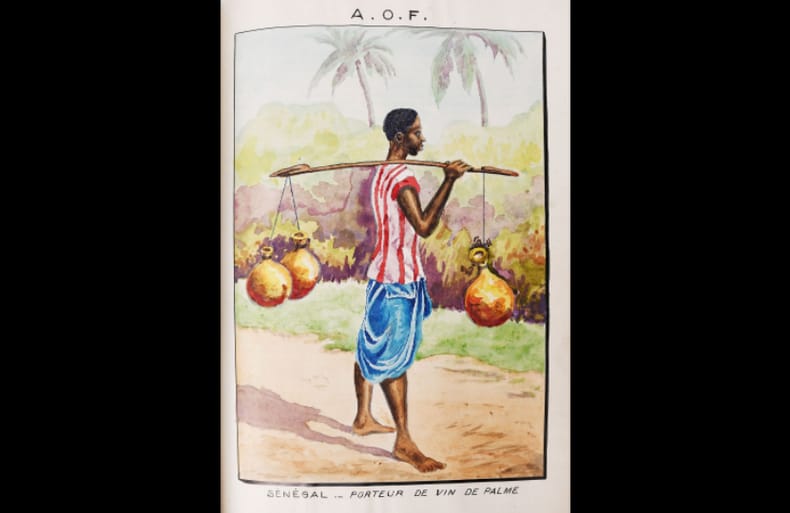
193823642Sans lieu, sans nom, 1938. Fort in-4 (21 x 30 cm) maroquin marron, premier plat orné des lettres dorées A. O. F. dans un contour dessinant l'Afrique de l'Ouest avec petit décor d'instruments de musique, dos à nerfs avec filets dorés, plats et doublures de maroquin marron, chemise de maroquin marron à bandes doublée de suédine de couleur noisette, étui bordé. 662 pages.
1934132256Cercle lyonnais du Livre 1934 Fort volume in-4, plein maroquin cerise, dos à faux nerf, filet en coupe, filets en contreplats, gardes de soie, couvertures et dos cons., tête dorés, étui toilé rel. H. Jacquet, 4 ff.- 304 pp.- 2 ff. Liste des membres- 1 ff.- 13 pp. de planches remplacées- 4 ff. table et justification. Illustré par Paul-Elie DUBOIS de 89 compositions peintures, dessins et croquis, 7 à pleine page gravés sur bois en couleurs par Pierre BOUCHET. Les lettres ornées et tirées en noir et or sont adaptées d’ornements et motifs de décoration touareg. Tiré à 162 exemplaires, tous sur vélin d’Arche, un des 120 nomùinatifs pour les membres du cercle Exemplaire imp. pour Georges Descours. Notre exemplaire comporte l'impression de trois dessins qui furent remplacés aux pages 185, 188 et 248, ainsi que de deux dessins en noir avant la lettre13:59:56Paul-Elie DUBOIS a fait partie de la mission officielle envoyée au Hoggar en 1928. C’était la première fois qu’un peintre parcourait cette région mystérieuse. Il en a rapporté quantité de peintures, dessins, croquis et documents décoratifs. “Par son illustration comme par son exécution, l’oeuvre se place parmi les plus remarquables de la production contemporaine. Certains exemplaires en souscription sont payés jusqu’à cinquante mille francs... L’artiste curieux des réalités du pays touareg, de la psychologie de ses habitants, les traduits avec intelligence. C’est émerveillé qu’au grès des heures et des circonstances, il représente les princesses de la famille de l’Amenokal, de “belles et rieuses Targuia”, avoue-t-il.... Paul Elie Dubois, après avoir vécu ce pays, l’offre au monde civilisé par l’intermédiaire de l’art, “la plus belle et la plus efficace propagande coloniale, observe la presse” Elisabeth Cazenave, Paul-Elie Dubois peintre du Hoggar
19134001Oxford University Press 1913. First Edition in English. Hardcover. VG. decouverts par Aurel Stein dans les Sables due Turkestan Oriental.TEXT IN FRENCH translated by and published for E. Chavannes. Large format. 232 pp 37 plates one folding. Oxford University Press hardcover
190522629<p>Manuscript record of Chinese immigrant workers in the Rose Deep Gold Mine near Johannesburg 996 pages large 4to.; original half leather binding title in gilt on upper cover. The manuscript chronicles the service of 874 Chinese immigrants dating from February 1905 to January 1908. Each miner has a full page listing: registration number name and surname amount earned moneys advanced remittance to China number of shifts worked number of working shifts in month leave sickness accidents desertion unlawful absence deaths repatriation total shifts lost and remarks as to conduct and character. After the Anglo-Boer War production on the gold mines of the Witwatersrand was very low due to a lack of labour. The British government was eager to get these mines back working as quickly as possible as part of their overall effort to rebuild the economy. Much of the local labour had returned to farming and the Governor Lord Milner reluctantly agreed with the assent of the British government to import Chinese coolies each on a three-year contract that terminated with compulsory repatriation. The mines had become unpopular with Africans due to attempts to reduce wages in order to maximise profits. Some mines experimented using whites as unskilled labour but these experiments were unsuccessful as they tended to demand higher wages. On the 19th of June 1904 the first Chinese labourers thus arrived at the Witwatersrand. Between 1904 and 1910 there were almost 64000 Chinese working on the Witwatersrand gold mines near Johannesburg. Most of these contractors were recruited from the Chinese provinces of Zhili Shandong and Henan. This measure was very successful in increasing the production of gold from mining but in the long run it faced stiff resistance from white labour that considered the Chinese unfair competition in terms of skilled and semi-skilled jobs. Chinese labour in the South African Mines met appallingly dangerous condition a lack of sanitation good food and welfare. Herbert Hoover who would become the 31st U.S. president was a director of Chinese Engineering and Mining Corporation CEMC when it became a supplier of coolie labour to South African mines. The first shipment of 2000 Chinese workers arrived in Durban from Qinhuangdao in July 1904. Almost all the Chinese labour was entirely recruited and shipped by CEMC. When the living and working conditions of the labourers became known public opposition to the scheme grew and questions were asked in the British Parliament. The scheme was abandoned in 1911. The mass importation of Chinese to work on the gold mines contributed to the fall from power of the Conservative government in the Britain. However it did stimulate to the economic recovery of South Africa after the Anglo-Boer War by once again making the mines of the Witwatersrand the most productive gold mines in the world. Little is known about the lives of the Chinese men who actually worked in the Witwatersrand gold mines and this is a rare document which sheds light on this largely forgotten page in Imperial history. Spine lacking and worn.</p> No Publisher hardcover
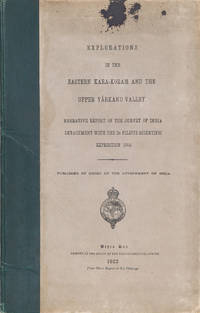
19223976Dehra Dun: Government of India 1922. First Edition. Hardcover. VG. narrative of the report of the survey of India detachment with the DeFilippi Scientific expedition 1914. Printed at the office of the trigonometrical survey. 42 pp ill. panoramas 29 lithographed plates and two folding maps inserted in rear pocket. The Depsand Plateau upper Yarkand River march to Suget Yarkand Valley and journey to Europe. Notes regarding the disused routes of the Kora-Koram. Large format. VG to VG. Internally nice. There is a splash of dark ink on the top front cover about 1 1/2 inches x 1 inch. Soiling on board edges. Better than vg but not quite vg. Rare. Government of India hardcover
19123986Paris: Privately printed 1912. First Edition. Hardcover. Very Good. Itinerary of the Pelliot Mission. Three Years in Upper Asia. mimeographed translated from Pelliot's article in L'Illustration. TEN Original photos inserted in text presumably these were originals from the magazine illustration. Paul Pelliot made an important three year journey through Central Asia Chinese Turkestan and Western China. Soon after his return he related details of his journey and that speech was printed in L'Illustration. Henry Getty translated that article and obtained original photos to insert. It seems like only a small number of copies could have been printed. Half leather over marbled boards marbled endpapers. Other than some browning around the very edges of the sheets this is in VG to vg condition and RARE. Privately printed hardcover
196887563Lahore: Nisar Art Press 1968. Gebunden mit Plastik Schutzumschlag. Nisar Art Press unknown
1955410891Johannesburg 1955. Foxing to prelims and postlims light spotting to text leaves photographs clean and well-preserved. 8 x 9.5 inches 203 x 242 mm. Preliminary text leaf: "Visit of British Educationists to Southern Africa December 28 1954––January 12 1955." 48 black-and-white photographic prints mounted back-to-back; interleaved with text leaves all mounted on guards. Light-brown cloth gilt-lettered on front cover. Provenance: G. H. G. Harris a member of the tour gilt initials on front cover pencil signature on title typed letter from the Harry Oppenheimer 27 June 1955 mounted on front pastedown. The letter on the pastedown from Harry Oppenheimer Deputy Chairman presents the volume to Mr. Harris: "After your visit to Southern Africa. it occurred to us that you might care to have some photographs to remind you of the places and people you encountered here. We have accordingly had a selection of photographs assembled in the form of an album. It is as you are aware our hope that as a result of your visit more young men from the British Isles may be interested in making their careers with us."<br /> <br /> The opening text describes the trip made during December 1954 and January 1955 on which "twenty educationists–University Professors Careers Masters and Headmasters from the United Kingdom–visited South Africa and the Rhodesias as guests of Anglo American Corporation of South Africa Limited."<br /> <br /> In South Africa they visited the gold mine of South African Land and Exploration Company Ltd.; the uranium and sulphuric acid plants of Daggafontein Mines Ltd.; the Orange Free State Goldfields Welkon and Allanridge; Premier diamond mine at Cullinan near Pretoria; the diamond mines at Kimberley; and the Cornelia Colliery near Vereeniging. They went to Victoria Falls and in the Rhodesias they visited the copper mines of Nchanga Consolidated Copper Mines Ltd and Rhokana Corporation; the research labs of Rhoanglo Mine Services Ltd at Kitwe; and the mining towns of Chingola and Nkana. <br /> <br /> The names of the twenty members of the party are listed on the preliminary text leaf. The photos start at the company's headquarters in Johannesburg and then follow the course of the trip. A number show The Ernest Oppenheimer Hospital at Welkom and others show the De Beers facilities including dogs trained to attack intruders. Each photo faces a printed caption detailing the subject in the image. <br /> <br /> The Anglo American Corporation of South Africa was founded in 1917 by Ernest Oppenheimer with financial backing from the American bank J.P. Morgan & Co. The AAC became the majority stakeholder in De Beers in 1926. In the late 1940s and 50s the AAC focused on the development of the Free State goldfields and the Vaal Reefs mine. Ernest Oppenheimer died in 1957 and the company continued under his son Harry the author of the letter to Mr. Harris that is found on the pastedown of this album. The company has at least one connection to the literary world: they loaned a diamond to artist Richard Chopping to use as a model for the paintings he made for Ian Fleming's James Bond series’ dust jackets.<br /> <br /> Rare: given the presentation of this volume it is likely that twenty albums were compiled and distributed to the educationists. We trace no copies in WorldCat/OCLC nor any at auction. A very scarce piece of corporate promotion. unknown
1901172982-1Berlin, Reimer 1901-04. 4°. VIII, 262 S., 2 Bll., 28 S., 2 B ll.; 2 Bll., 330, 4 Bll., 34 S., 1 Bl. Mit 4 Titelbildern, 150 Tafeln (davon 103 ethnographische, 30 ethnologische und 17 Gehörntafeln) und 16 farbige Faltkarten. Orig.-Velourbände mit Goldschnitt.
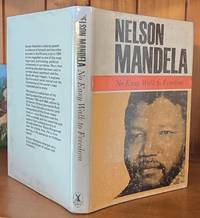
196527180London: Heinemann Educational Books. Near Fine in Very Good dust jacket. 1965. First Edition. Hardcover. Foreword by Ahmed Ben Bella - President of Algeria introduction by Oliver Tambo. Edited by Ruth First. With black/white photographic illustrations unclipped dustjacket that has small piece missing from top of spine see images overall a very good copy of this first edition. ; 210 x 140mm; 189 pages . Heinemann Educational Books hardcover
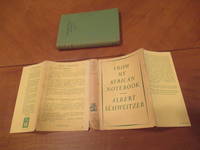
1951051287London Uk: George Allen & Unwin 1951. 1st Edition 2nd Printing. Hardcover. Near Fine/Very Good. Map Photographs. 132 Pp. Catalog At End. Green Cloth Lettered In Brown. Second Printing Stated 1951. Signed By Albert Schweitzer On The Half Title Page Obtained In Person On A Trip To Lambarene By The Previous Owner. Near Fine Slight Browning To Upper And Lower Edges Five Words Faintly Underlined. Dust Jacket Priced 8S 6D Light Usage Slight Browning To Spine A Few Short Tears And Minute Losses At Edges. <br/> <br/> George Allen & Unwin hardcover
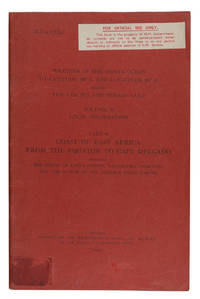
1940ABC_46347London: Meteorological Office Air Ministry 1940. Original publisher's printed red wrappers. 8vo. With map frontispiece and several illustrations and tables in the text. First edition of a rare climatological study originating from a series of meteorological handbooks of the Indian Ocean issued by the British government between 1940 and 1944. The three-volume series comprising a total of 12 parts was prepared by the Meteorologial Office Air Ministry in cooperation with the Naval Meteorological Branch Admiralty London; it was reprinted for the U.S. Navy as late as 1980. The ESSA Technical Memorandum of 1969 mentions another reprint in 1945.The present volume is the last of nine parts of volume II covering the climate of the East African coast from the equator to Cape Delgado discussing tropical cyclones and depressions winds visibility clouds rain and hail temperature humidity and other meteorological events. The frontispiece shows a map of the relevant area; additional diagrams illustrate surface winds and higher winds as well as the amount of clouds and rainfall. The tables show the general climate in Mombasa Tanga Zanzibar Dar es Salaam Kilwa and Lindi as well as the monthly frequency of wind direction and force at sea and in the upper air and the visibility at coastal stations.Library shelfmark in pencil as well as a mounted blank loaning sheet to final blank page. 7 combinations of letters and digits in black felt pen to lower cover. Traces of a shelfmark label and a cancelled inscription to front cover. Not a single copy in auction records.l U.S. Department of Commerce ESSA Technical Memorandum EDSTM10 A Note on Climatology of Thailand and Southeast Asia 164 19; WorldCat 1181290135. Meteorological Office, Air Ministry, unknown
1950LBW-8621Rabat, Éditions Africaines Perceval, [1950]. Lithographie en couleurs de 635 x 985 mm ; encadrée sous verre.
192189090Sans nom d'éditeur | Paris 1921-1923 | 22.5 x 29 cm | 3 volumes brochés
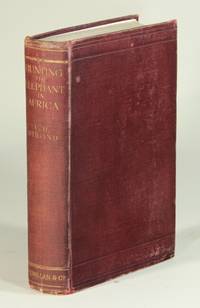
191352528London: Macmillan and Co 1913. First edition 8vo pp. xv 1 379 1 6 ads; folding table giving particulars of 25 felled elephants 27 photographic illustrations on 16 plates; some rubbing at the extremities otherwise a very good copy in original red cloth gilt-lettered spine. Czech Africa p. 156: "A pre-eminent elephant hunting title this details Stigand's big game hunting efforts primarily in British East Africa North Eastern Rhodesia Nyasaland and the Lado Enclave." <br/><br/> Macmillan and Co hardcover books
191352528London: Macmillan and Co 1913. First edition 8vo pp. xv 1 379 1 6 ads; folding table giving particulars of 25 felled elephants 27 photographic illustrations on 16 plates; some rubbing at the extremities otherwise a very good copy in original red cloth gilt-lettered spine. Czech Africa p. 156: "A pre-eminent elephant hunting title this details Stigand's big game hunting efforts primarily in British East Africa North Eastern Rhodesia Nyasaland and the Lado Enclave. Macmillan and Co unknown