[EGYPT].Biblio.com
911 résultats
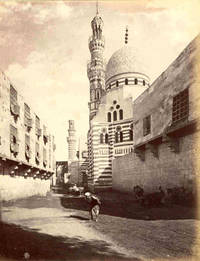
60971c.1880. . Albumen print. Good rich tones and an enchanting image showing a street in Cairo with a mosque and domestic dwellings. Numbered in negative; Dimensions: 250 x 200mm. 10 x 8 inches.<br /> <br /> [c.1880]. unknown
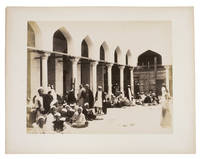
71314c. 1880s. . Albumen print loose. Dimensions 20 x 26 cm. <br /> <br /> [c. 1880s]. unknown
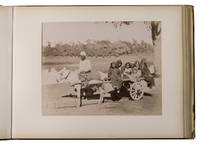
65163c.1880. . Albumen print. Good tonal range and in good condition pasted on original mount.<br /> <br /> [c.1880]. unknown
1929303083London A. & C. Black 1929. 1929. 8vo. Author's preface. 48 full-page photographs 2 maps. Chronological list of Egyptian dynasties and kings bibliographical note index. Gilt stamped green cloth. Dust jacket unclipped; chip to back panel of Vol. I small chip to spine top of Vol. II short tears foxing to edges; light soiling. Very good. 2 volumes. No signatures or bookplates. Uncommon in dust jackets. Hardcover. Very Good/Very Good. London, A. & C. Black, 1929. hardcover
1923303089New York Dodd Mead and Company; London Hopkinson & Company 1923. 1923. First edition. 8vo. 53 b/w illustrations. Bibliographical references. Original 3/4 dark brown cloth over gray patterned boards paper spine label medium foxing to edges. Very good. 160 pages. No dust jacket. Bookplate of Irma Dehn Young on the front pastedown. 1st Edition. Hardcover. Very Good/No Jacket. New York, Dodd, Mead and Company; London, Hopkinson & Company, 1923. hardcover
192143653London: Hodder and Stoughton 1921. 8vo. ix 3 336 pp. Photo frntsp. Red cloth gilt lettrng mnr rubbng edgewear hnges startng some foxng to endpapers still a G copy from the library of Humphrey Bagnall Vernon b. 1895 Lieutenant in the Grenadier Guards w/ armorial bkplate on frnt pstdn. Second edition of this fascinating posthumous memoir of these amusing series of anecdotes by one of the most important British officials of Victorian & Edwardian England. The work provides a revealing portrait of the deeply ingrained cultural biases while the Empire controlled Egypt. Of particular interest is an unconsciously biting assessment of Lord Kitchener with whom he served as Aid-de-camp in the Sudan. Hodder and Stoughton, hardcover
188856383London: Wells Gardner Darton & Co. 1888. 4to. ix 1 187 7 pp. plus 4 pp. publisher’s ads. Blue-gray publisher’s cloth black ruling & gilt lettering on front cover & spine minor rubbing shelfwear slight bumping to corners still VG bright copy. First edition of this anthology of historical and descriptive sketches along with travel through Victorian Egypt by the noted journalist and manager of “The Times.†He sent newspaper and magazine reports during the Arab revolt of 1882 the subsequent British occupation and was well remembered for his telegrahpic description of the bombardment of Alexandria. Wells Gardner, Darton & Co., hardcover
1900229490Printed by Newcastle-upon-Thane Fenwick & Wade ca. 1900. 1900. First edition. 8vo. 8 b/w figures. Original 1/2 light brown cloth over tan boards spine and upper cover with printed labels lower right corner is worn. Very good. 138 pages. No signatures or bookplates. 1st Edition. Hardcover. Very Good/No Jacket. [Printed by Newcastle-upon-Thane, Fenwick & Wade, ca. 1900]. hardcover
188334775London: Richard Bentley & Son 1883. First Edition. 8vo publisher's original dark-green polished cloth the upper blocked in blind at the borders and with gilt depiction of a sailing dhow at the center the spine lettered and decorated in gilt the lower cover blocked in blind. viii 359 pp. An as fine copy with little evidence of age and no evidence of use the text-block still unopened unusual thus. SCARCE FIRST EDITION IN PREMIUM CONDITION. Gabriel Charmes 1850-1886 was a prolific writer on diverse subjects. One of the most brilliant of French journalists of his time he was destined to die relatively young from tuberculosis. FIVE MONTHS AT CAIRO AND IN LOWER EGYPT is a vivid and detailed account of life in Egypt in the 19th century and it offers a unique window into a fascinating period of history. Charmes journalist and adventurer describes his travels through the teeming streets of Cairo his encounters with many characters and his excursions to historic sites such as the pyramids and the Sphinx. With its rich descriptions and firsthand observations this book is an special read for anyone interested in the history and culture of Egypt and the work has been selected by scholars as being culturally important and is part of the knowledge base of civilization as we know it. Richard Bentley & Son hardcover
190434771London: Methuen & Co. 1904. First Edition. With thirty illustrations on plates eight of which are in colour including a drawing by Howard Carter. With two large folding maps in pocket at the rear. 8vo publisher's original blue cloth with elaborate decorative design in an Egyptian motif in black lime and white on the upper cover and spine the spine also gilt lettered. xiv 1 473 31ads pp. A fine and very pleasing copy the prelims mellowed lightly as is normal the text clean and fresh the binding handsome and with no evidence of use light age evidence only. FIRST EDITION BY THE MOST FAMOUS FEMALE ARCHAEOLOGIST OF HER DAY who was one of the few English women to have held a peerage in her own right. Mary Cecil was encouraged by Howard Carter and took on a series of excavations near Aswan Thirty-two of the Tombs of the Nobles were uncovered in her excavations and for many years these were known as the "Cecil Tombs".<br> In addition to the colour drawing by Howard Carter there is a photograph taken by him. The other illustrations in this work include photographs sketches and drawings from various sources. There is also a large folding map of Egypt and the valley of the Nile as far south as Khartoum and a historical map of Egypt and the countries associated with it. Both maps are in an excellent state of preservation. Methuen & Co. hardcover
187133745London: John Murray 1871. 2 volumes. Fifth Edition With Numerous Additions and Improvements From a Copy Annotated by the Author With 130 illustrations through the two volumes appearing in both text and as full-page plates. 8vo publisher's original blind-embossed cloth the spine panels lettered in gilt. xxiii 386; viii 379 pp. A very fine set beautifully preserved as pristine and near mint hinges and text-blocks both in excellent condition very scarce in this condition. A VERY FINE WORK ON MANY ASPECTS OF EGYPTIAN MANNERS UP TO THE MIDDLE OF THE NINETEENTH CENTURY. Illustrated throughout the books were acknowledged for their accuracy and scope. They were reprinted many times well into the 20th century and have long been considered one of the most astute texts on Egypt and the Egyptians into the 20th century. Subjects included in the chapters relate to the country and climate religion and laws government domestic life society language literature science superstitions and magic alchemy industry tobacco bath games and music public celebrations and festivals as well as many more subjects. A complete work on Egypt. John Murray hardcover
184134772London: Hamilton Adams & Co. 1841. First Edition. Illustrated with an engraved portrait frontispiece of Mohammed Ali. 8vo publisher's original brown cloth the spine lettered in gilt the covers decorated and blocked in blind with fillet rules and inner decorations at the borders the upper cover with gilt pictorial device showing a camel being led by a tender and with palms and pyramid in the background. xvi 280 pp. A handsome copy in unusually pleasing condition the binding in good order even as age is observable the gilt bright the text block clean the hinges sound a bit of offset to the plate very well preserved and rare thus. SCARCE FIRST EDITION. An important and primary work on man who would Muhammad Alia 1769 – 1849 was the Ottoman viceroy and governor who became the de facto ruler of Egypt from 1805 to 1848 widely considered the founder of modern Egypt. At the height of his rule in 1840 he controlled Egypt Sudan Hejaz the Levant Crete and parts of Greece and transformed Cairo from a mere Ottoman provincial capital to the center of an expansive empire.<br> Ali was a military commander in an Albanian Ottoman force sent to recover Egypt from French occupation following Napoleon's withdrawal. He rose to power through a series of political maneuvers and in 1805 he was named W li of Egypt and gained the rank of Pasha. As W li Ali attempted to modernize Egypt by instituting dramatic reforms in the military economic and cultural spheres. He also initiated a violent purge of the Mamluks consolidating his rule and permanently ending the Mamluk hold over Egypt.<br> Militarily Ali recaptured the Arabian territories for the sultan and conquered Sudan of his own accord. In 1831 Ali waged war against the sultan capturing Syria crossing into Anatolia and directly threatening Constantinople.<br> After defeating the Ottomans multiple times he accepted a peace brokered by European powers in 1842 and withdrew from the Levant; in return he and his descendants were granted hereditary rule over Egypt and Sudan. His dynasty would rule Egypt for over a century until the revolution of 1952 when King Farouk was overthrown by the Free Officers Movement led by Mohamed Naguib and Gamal Abdel Nasser establishing the Republic of Egypt. <br> Hamilton, Adams & Co. hardcover
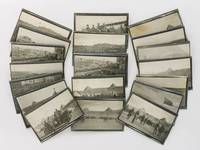
121058Vintage gelatin silver photographs each one approximately 99 × 147 mm extensively captioned in ink on the versos; they are dated between 19 December 1914 and 8 January 1915 shortly prior to Galagher's deployment to Gallipoli where he was killed in action on 8 May 1915 in the 2nd Division's attack on Krithia near Cape Helles. Four of the prints are slightly stained; a few have tiny ink marks on the recto identifying landmarks or soldiers; an excellent group. All but three of the captions are signed 'Fred' or initialled 'F' but all captions are in the same hand; seven are numbered in series. Seven images show Australian New Zealand and Allied troop movements in central Cairo around the coronation of the newly-installed puppet Sultan Hussein Kamel misidentified as the Khedive in the captions; nine show life in and around Mena Camp at the foot of the pyramids with numerous landmarks and several officers identified. The final six images show the visit to the camp of Sir George Reid High Commissioner in London and former Prime Minister of Australia accompanied by Brigadier General Bridges and Major General Birdwood 'This is midwinter & the temperature on this day at noon was 98 deg shade 189 in the sun' writes Galagher on a scene showing Sir George in tails and top hat. 22 items. unknown
19033864Egypt: various dates 1903. Various sizes. Twenty-nine printed menus with specific offerings printed or in manuscript. On various papers some with chromolithograph illustrations; some with embossed debossed or die-cut elements; some with edges beveled and gilt. Texts in Arabic French German and English. An unusual group of Egyptian menus from a moment when the British Germans and Austro-Hungarians were jockeying for Power in the region and the last of the Khedive rulers was in power. The collection includes menus from Palais Ismaïlia; Palais D’Abdine; Savoy Hotel Cairo; Ziftah Barrage; Hotel Angst; Unter den Belten bei den Chalifen-Gräbern Kairo under the straights at the Khalifa Tombs Cairo; and Ghésireh Palace Hotel. ~ Four of the menus are from the Palais D'Abdine in November and December of 1902 and bear the coat of arms of Abbas Helmi II Khedive of Egypt the last to serve as King of Egypt before being deposed by the British in 1914. One of these menus is labeled for S.E. El-Lewn F. Thurneyssen Pacha ecuyer riding instructor to the King and one of many Austro-Hungarians close the Khedive court much to the consternation of the British. A second menu from this group is labeled in Arabic which we have been unable to translate. Additionally two menus hail from the Palais Ismaila and record dinners on consecutive evenings March 3 and March 4 1903. Each of bears the hand-lettered names of the guests: Moustapha Fehmi Pasha who had served as 7th Prime Minster of Egypt; and Hr. Van der Does de Villebois the Dutch Consul General later posted to Constantinople. Perhaps some light soiling or a bumped corner to a few menus otherwise condition throughout is very good. various dates unknown
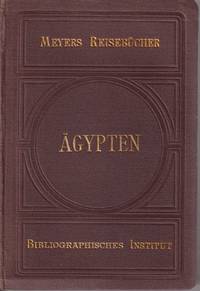
190921173Leipzig Und Wien: Bibliographisches Institut. 1909. Fifth Edition. Hardcover. Very Good. A handsome and tight copy. ; 11 color maps 31 plans and numerous b&w illustrations. Brown boards with blindstamped linear design. Gilt lettering and gilt spine lettering. ; 16mo 6" - 7" tall; xiv 437 52 pages . Bibliographisches Institut hardcover
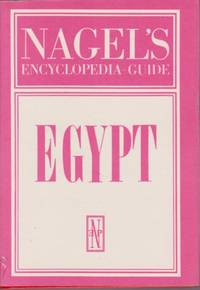
198320264Geneva: Nagel Publishers. 1983. Hardcover. Very Good in Very Good dust jacket. 61 plans in black and white 6 maps and plans in colors. Including publisher mail-in card and "note of control" card laid-in. In VG slipcase ; 16mo 6" - 7" tall; 815 pages . 2826307266 . Nagel Publishers hardcover
1895ABC_475631895. Oblong folio 28 x 39 cm. Contemporary gold-tooled black morocco gilt edges. With 58 photograph prints ca. 21 x 25.5 to 13.5 x 20 cm. Mounted on both sides of the leaves in the album. 60 pp. The album contains 15 silver albumen photographs of Melbourne taken mainly from the series C. Rudd's new views of Melbourne 1886-1887 by Charles Rudd 1849-1901. They show Collins Street Melbourne town hall the public library Parliament House the Court of Law Government House and various other buildings and infrastructure as well as botanical gardens such as Fitzroy Gardens. The photographs of Sydney were the work of the renowned Australian photographer Henry King 1855-1923 born in England in 1855 who emigrated to Australia with his family in 1856. He worked as a photographer at J. Hubert Newman's studio in Sydney before opening his own studio in 1880. King gained recognition for his photographic studies of Australian Aboriginal people and his scenic views of Sydney. He died in 1923 leaving behind his wife son and three daughters. His glass negatives were acquired by J.R. Tyrrell after his death and are now held by the Powerhouse Museum. King is one of Australia's most significant early photographers. The album contains seventeen of Kings photographs of the harbour including Farm Cove and the Circular Quay Government House and interior and exterior photographs of the town hall King and George Street the Mutual Life Association Building the General Post Office and the Ferner Botanical Garden. Rural New South Was appears in nine photographs including images of Illawarra National Park the Hawkesbury River and a series of outdoor photographs taken along the coast at Blackwall and dated July 1895.This curious album of 58 photographs from France Egypt and most importantly Australia opens with a section with six photos from Marseille showing street views the city harbour the Avenue du Prado and the castles.The ten photographs from Egypt depict both the cultural highlights of the country such as the Pyramids the Sphinx the Citadel of Cairo and the Palace of Gizeh as well as ordinary Arabian villages and street scenes. They stemmed from the ateliers of the Abdullah brothers of Constantinople. The Abdullah Frères namely Viçen 1820-1902 Hovsep 1830-1908 and Kevork 1839-1918 Abdullahyan were three Ottoman brothers of Armenian heritage who gained international fame as photographers during the late Ottoman Empire. Some evidence suggests that he may have collaborated with the Zangaki Brothers and he may have been the official photographer for the Universal Company of the Suez Canal. Later he worked in partnership with the British-Italian photographer Antonio Beato.With an owners inscription in pencil "a appartenu Alfred Schmid" some photographs are captioned in black ink or pencil detailing the places. With a small label from the bookshop that sold the album: "Papeterie Sauwen-Jehotte" in Antwerp. The edges are somewhat bumped and some browning and foxing throughout. Otherwise in good condition. unknown
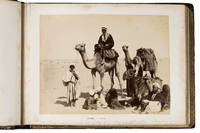
1889ABC_49512Yemen Egypt and other places 1889. Contemporary burgundy/auburn gold- and blindstamped calf lozenge-patterned blindstamping. Re-backed with the original back strip laid down. Gold-stamped turn-ins white watered silk endpapers gilt edges. Oblong folio 37.8 x 28 cm. An album containing 25 albumen prints ca. 20 x 27 cm including 1 double page mounted on thick card leaves many captioned in English. Photographic record of a journey begun in Australia and taken via Aden through the Suez canal and to the Mediterranean and then on to England. While the first image shows the steamship R.M.S. Ormuz in the port of Sydney three images including a double-page spread show the port of Aden in Yemen the famous water tanks and a native of the Southern Arabian region in a studio portrait. The majority of the album is dedicated to Egypt showing Arabs on their camels the Khedive's Ismailia Palace the Suez Canal Port Said and members the local population as well as the famous pyramids. The last few photographs show the final leg of the journey Naples and ultimately Gibraltar. Among the studios identified in the photographs are those of Hippolyte Arnoux and the Zangaki brothers based at Port Said.With a near-contemporary manuscript inscription in blue ink on the verso of the first flyleaf: "Edith Elkington or Elrington Aunt Ediths voyage home - to England about 1889". Foxed throughout slightly water stained but the prints are largely clean and clear some paper repairs in the margins the last flyleaf is lacking the final leaf is nearly detached. unknown
1940ABC_484251940. Contemporary embossed brown calf with flowers on the front and back board and an aluminium view of David's Tower and Jerusalem's old city wall embedded in the front board. Oblong album 30 x 20 cm. With 128 gelatin silver prints most ca. 6.5 x 9.5 cm. Beautiful album with 128 photographs of Egypt and Palestine present day Israel and the West Bank during the British Mandate. It was likely compiled by a British soldier who was stationed in the Middle East during the 1940s. Some of the photographs are numbered in the negative and may have been made by important photographers active in the area at the time like G. Eric Matson and his wife Edith the founders of the Matson Photo Service. The images show Cairo and various locations in Palestine including Jerusalem Bethlehem Nazareth Tiberias Sea of Galilee Nathanya Tel Aviv the Jordan river Haifa Beirut and the Dead Sea. Other than important locations like churches and gates the photographs also show many locals including for example street barbers in Cairo shepherds and farmers in Palestine and beautifully dressed women in Haifa. In the back of the work a few dried leaves from local plants have been mounted namely orange lemon fig eucalyptus grapevine and mulberry. The eucalyptus leaf still retains some of its scent.The edges and vorners of the boards are somewhat scuffed with some loss of material at the head and foot of the spine and around the edges of the embedded aluminium plate. The photographs mounted on the inside of the front board are slightly stained the fig leaf mounted on one of the final pages is damaged and the cyprus leaf is missing. Otherwise in good condition. unknown
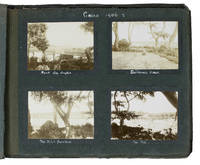
1906ABC_456561906. With: 2 LEHNERT & LANDROCK. Souvenir of Cairo. 12 real artistic photos. Serie A.Egypt late 1920s. Envelope containing 12 silver gelatin prints 12 x 9 cm.3 PHOTOGRAPHY - SINGAPORE. Photograph of a woman and a baby sitting in a rickshaw with a child in front and the rickshaw puller.Singapore late 1920s. Silver gelatin print 7.5 x 12.5 cm. A four-volume photo album compiled by an unknown British woman who also seems to have taken most of the photographs illustrating travels through Egypt Italy Wales and the Isle of Wight. Although the specific background to the album is unknown a photograph of a woman holding a camera is captioned " snapshotted" suggesting that she was the compiler of the album and probably took most of the photographs herself.The first volume starts in 1906 with several photographs showing the interior and exterior of a "summer house" near the "Pont des Anglais" now called the Evacuation bridge a Cairo neighbourhood containing many riverside villas. The final part of the second volume is devoted to the Tanta fair: Egypt's largest fair which normally attracted half a million visitors. Afterwards the party visited the village of Toukh north of Cairo.The third volume opens in May 1907 with a railway visit to the village of "El-Rico" near Hosh Essa also in the Nile delta but nearer to Alexandria. Photographs depict the travelling party as well as local agriculture another wedding and a visit to the weekly market at Abou El Matamer. The final part of the album shows a visit to the Isle of Wight in August 1908.With two photographs in volume IV Cairo on the Nile torn out. Bindings slightly worn spines damaged and volume III without a spine. A few photographs somewhat worn at the edges and with a few spots but otherwise in very good condition. An extensive and remarkable photo album especially for Egypt 1906-1908.l For the excavation at Deir-el-Bahari: Naville The XIth dynasty temple at Deir el-Bahari. Part II. unknown
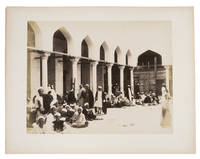
1888ABC_47975Cairo 1888. 34 albumen prints ca. 22 x 27 cm mounted on cream cardstock ca. 28 x 35.5 cm. Remarkable collection of 34 stunning photographic prints of Egypt all numbered titled and signed in the negative by photographer Jean Pascal Sébah 1872-1947 who owned the leading studio for Orientalist photography. He was even named the official photographer of the Sultan of Turkey together with his business partner Polycarpe Joailllier 1848-1904. The majority of the images in the present collection show streets and buildings from lesser known Egyptian cities and scenes of daily life. Larger collections of Sébah's work are relatively rare on the market.Sébah continued the business of his father Pascal Sébah 1823-1886 one of the first photographers working in Egypt. Pascal rose to prominence because of his well-organized compositions careful lighting and quality of his prints. The majority of his photographs are of tourist destinations and locals. Jean Pascal inherited his father's good eye but was more interested in depicting lesser known locations. His photos of people also appear more spontaneous. The present collection includes photographs of El-Souroughieh street and the Khalig canal in Cairo the Virgin Mary's tree in Matariya a local with a buffalo a group of seated men in a mosque a sugarcane market locals working on a sugarcane field a group of boys fishing and the hustle and bustle along the Nile.With a small purple ownership stamp of an anchor in mirror image and the letters "S A" near the top edge of one of the photographs of the Nile. The cardstock is very slightly foxed and yellowed and has somewhat warped from past temperature fluctuations. The prints have somewhat yellowed around the edges but are otherwise in good condition.l Cf. Saretzky The history of photography online. unknown
1888ABC_47975Cairo 1888. 34 albumen prints ca. 22 x 27 cm mounted on cream cardstock ca. 28 x 35.5 cm. Remarkable collection of 34 stunning photographic prints of Egypt all numbered titled and signed in the negative by photographer Jean Pascal Sébah 1872-1947 who owned the leading studio for Orientalist photography. He was even named the official photographer of the Sultan of Turkey together with his business partner Polycarpe Joailllier 1848-1904. The majority of the images in the present collection show streets and buildings from lesser known Egyptian cities and scenes of daily life. Larger collections of Sébah's work are relatively rare on the market.Sébah continued the business of his father Pascal Sébah 1823-1886 one of the first photographers working in Egypt. Pascal rose to prominence because of his well-organized compositions careful lighting and quality of his prints. The majority of his photographs are of tourist destinations and locals. Jean Pascal inherited his father's good eye but was more interested in depicting lesser known locations. His photos of people also appear more spontaneous. The present collection includes photographs of El-Souroughieh street and the Khalig canal in Cairo the Virgin Mary's tree in Matariya a local with a buffalo a group of seated men in a mosque a sugarcane market locals working on a sugarcane field a group of boys fishing and the hustle and bustle along the Nile.With a small purple ownership stamp of an anchor in mirror image and the letters "S A" near the top edge of one of the photographs of the Nile. The cardstock is very slightly foxed and yellowed and has somewhat warped from past temperature fluctuations. The prints have somewhat yellowed around the edges but are otherwise in good condition.l Cf. Saretzky The history of photography online. unknown
1891ABC_47521Egypt: Zangaki brothers 1891. Original gold-stamped bubble-grained maroon cloth over boards modern maroon cloth spine and leather corners. Gold stamped title and year on the front white watered silk endpapers. Oblong album 31.5 x 41 cm. With 34 large albumen prints mounted on heavy cardstock leaves. Most of the photographs are numbered and captioned in French in the negative and signed 'Zangaki'. The last one is signed Sebah & Joallier. The Zangaki prints measure 22.5 x 28.5 cm; the Sebah & Joallier one is 20.5 x 26.5 cm. A large German album with 34 albumen prints of Egypt. The Greek brothers G. and C. Zangaki were photographers who worked in Egypt in the second half of the 19th century. Due to increased tourism to this region after the opening of the Suez Canal there was a large demand for souvenir photographs. Photographers like the Zangaki brothers as well as Sebah & Joallier catered to this. The Zangakis were among the first commercial photographers to produce large-scale images of Egypt. They travelled through the country with a portable darkroom to capture high-quality images of famous monuments and daily life though the latter were usually posed. These images were then printed and sold to tourists either separately or compiled into albums. According to John Hannavy the brothers "produced some of the finest images of late Victorian Egypt". The 34 photographs include: the great pyramid Cairo and the Nile dervishes and other exotic looking locals Egyptians standing on top of the sphinx obeliscs the Ramesseum Karnak temple the temple of Dendera the Great Pyramid Egyptians climbing the pyramid the mosque and tomb of Muhammad Ali Saqqara and many others.With two small library stamps on the first page not affecting the photograph. The book has been rebacked. The left side of the front board has faded and the corners are worn. Minor browning around the edges of the leaves. Back flyleaf loose. The photos are crisp and clear and the book is otherwise in good condition.l Erdem Views of Egypt by Georgios and Constantinos Zangaki: Examining a late nineteenth-century photographic album at the Art Gallery of Ontario thesis 2006; Hannavy Encyclopedia of Nineteenth Century Photography pp. 1036 1093 & 1521. Zangaki brothers, hardcover
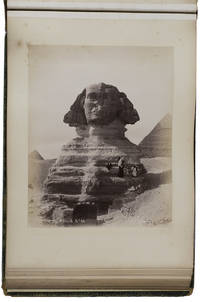
1890TK0363Probably ca. 1890s. i.e. certainly before 1905. 1890. Folio. 14 x 15.5 inches. 48 original mounted professional photographs each a full-page image. Modern half red morocco cloth. A piece of the original cloth cover with the title in German as shown is mounted within the volume. Fine. 48 fine vintage photographs 23 of which are signed by the photograph 19 by the Zangaki Brothers; 4 by Antoine Beoto. The images are taken in the southern Egyptian Luxor region including images of the Valley of the Kings at Luxor temple the Nile Karnak temple and Thebes. / The first photograph shows the Sphynx and in front are a couple presumedly a husband & wife perhaps German or Swiss-German obviously tourists. This is their memory album of a visit to Luxor in southern Egypt the place of the Valley of the Kings. The photographs some of which are titled are chiefly titled in French. Even though 23 of the photographs are signed it is clear that the whole album is made up of images from these two photographers meaning that 47 of the images should be either by the Zangaki Brothers or Antoine Beoto's studio. The only unique image should be the first one showing the two travelers and their guides. Probably ca. 1890s. [i.e., certainly before 1905]. hardcover
25889Undated but on Britannia paper watermarked 1805; and the San Ysidro was a prison ship at Plymouth between May 1805 and September 1814. Napoleon’s Egyptian Campaign 1798-1801 inspired a period of ‘Egyptomania’ culminating in Champollion’s decipherment of the Rossetta Stone. The contribution of the author of this letter to this outpouring of scholarly activity is an offer to the President of the Society of Antiquaries of London to blow up one of the pyramids in order to extract their contents. See the recipient’s entry in the Oxford DNB. 3pp 8vo. Bifolium of laid Britannia paper watermarked 1805. Fifty-five lines well laid out and written in a neat and stylish hand. In fair condition somewhat grubby and warn folded into a packet. Addressed to ‘The Right Honorable the Earl of Leicester. / F.R.S. / President of the Society of Antiquaries / London.’ Signed: ‘Wm. Lydiard - / Master’s Mate of HM Prison Ship San Ysidro / Plymo’ Dock’. The text begins: ‘. excess of servility and drudgery to which they were driven even to the making of Brick and other debasing services; some writers have from thence inferred that the Pyramids being of stone is a proof that they were not founded by them no work of that kind being recorded: but is it not recorded that they built Treasure Cities’ He proceeds to discuss whether as ‘Some authors affirm’ the pyramids are ‘the Tombs of Kings’. He states that he was ‘a few days since’ ‘furnished with the official account of the capture of Alexandria’ The French garrison at Alexandria had surrendered to the British on 2 September 1801. and that ‘it immediately struck me with a desire of troubling you on this subject with the view of observing to you that if it is the intention of government to follow up their success in that quarter; whether this may not afford a good opportunity for opening one or two of these mysterious piles’ Warming to his theme he continues: ‘it surely can be done - gunpowder has a speedy effect in operations of this nature - the trouble might not be small but I certainly would not hesitate to undertake the performance of it neither can I imagine I would take any very considerable time or expense to execute it.’ After this surprising offer he goes some way to redeeming himself by stating: ‘There may be some valuable remains of antiquity deposited in those closed which may materially tend to the illustration of the ancient history manners or customs of the Egyptians’. He ends with reference to ‘sacred Scripture’ and the ‘plundering of the Temple by Shishak’. Undated, but on Britannia paper watermarked 1805; and the San Ysidro was a prison ship at Plymouth between May 1805 and Septembe unknown