(LIVINGSTONE, David) WALLER, HoraceBiblio.com
248 résultats
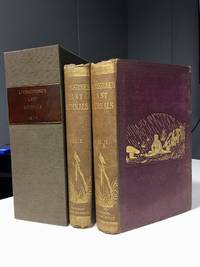
1874157<b>Two octavo volumes original maroon cloth gilt-decorated spines and centerpieces. Interiors clean; a few very short closed splits to folding map along folds. The two folding maps are color lithographs one is quite large and housed in a pocket at the rear of Volume I. With publisher's ads at rear of each volume. Spines lightly sunned gilt bright. An about near-fine set in the original cloth housed in a brown cloth clamshell box with a Morocco label. First edition of the journals from David Livingstone's last African expedition from 1865 to 1873 illustrated with frontispiece portrait 20 full-page wood-engravings including some after Livingstone's sketches and facsimiles from his journal in-text illustrations and two folding maps. A splendid copy in the original cloth. The best known and most admired African explorer and missionary of the 19th century Livingstone was the first to map much of central Africa. The Last Journals presents a detailed description of Livingstone's last expedition which began in Zanzibar in 1866 and ended with his death in 1873. An attractive set.</b> John Murray hardcover
1857326003London: John Murray 1857. hardcover. 22 plates 2 folding maps a folding frontispiece 17 text illustrations. 687pp. index 8vo handsomely rebound in 3/4 brown morocco marbled boards and edges decoratively gilt spine with green leather spine label. London: John Murray 1857. First Edition. A fine copy but for heavy foxing on the portrait. London: John Murray 1857. First Edition. Near Fine.<br/> <br/> John Murray unknown
187412948London: John Murray 1874. Signature of Thos. Thornton dated 1875 on both titles. Complete with the publisher's advertisements. With frontispiece portrait 2 coloured folding maps 1 in a map pocket at the end of Volume I and numerous illustrations. Original gilt pictorial cloth some fading to the spine and spotting to the blank fly-leaves. Signature of Thos. Thornton dated 1875 on both titles. First edition of the record of Livingstone's extraordinary series of travels which reflect a continuous seven years of scientific geographical work and new discoveries. From the time of Livingstone's departure from Zanzibar in the beginning of 1866 to the day of his death in Illala at the end of April 1873 he drew the world's attention to the great evil of the African slave traffic. The objects of the expeditions were the suppression of slavery and the exploration of the south central lake system of South Africa.<br /> <br /> Livingstone 1813-1873 was a celebrated explorer who produced a wide body of knowledge in such fields as geography technology and the social and medical sciences. His insight concerning quinine as an ingredient for the cure of malaria was important. Horace Waller 1833-96 was a writer on Africa close friend of Livingstone and Bishop Mackenzie and a great advocate of the abolition of slavery. John Murray unknown
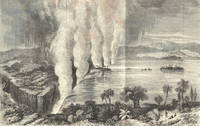
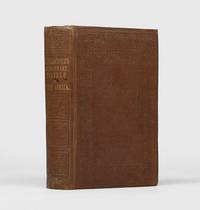
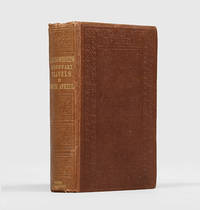
1857KBFFF0XG3X24London 1857. 8vo. John Murray back of title-page: W. Clowes and sons Original publisher's blind-blocked brown cloth with short-title in gold on spine. With a folding tinted lithographed plate as frontispiece a wood-engraved illustration on the title-page a lithographed portrait of Livingstone 20 lithographed plates 2 tinted lithographed plates a folding lithographed plate with a geological cross section a lithographed folding map of southern Africa a lithographed folding map pasted on cloth with Livingstone's route from west to east Africa highlighted in red and many wood-engraved illustrations in text. IX 1 687 1 8 pp. First edition of the famous account of the first mission and expedition through southern Africa undertaken by the Scottish physician missionary and explorer David Livingstone 1813-1873. The account narrates chronologically his travels and experiences including numerous descriptions of African tribes and chiefs deserts rivers lakes forests cities diseases animals trees etc. Livingstone arrived in July 1841 at Kuruman in southern Africa. " In 1841-43 he travelled a considerable distance to the north of Kuruman and selected for his future operations the valley of Mabotsa Mabotse" Howgego. He changed station several times in the following years and was the first European to locate Lake Ngami Botswana in 1849. In 1852 Livingstone left Cape Town travelling north trying to find a suitable location on the Zambezi for a missionary station and travelled further to Luanda Angola where he arrived in 1854. He decided to travel back to Lintanti Botswana and further eastward becoming in 1855 the first European to see the waterfall he named Victoria Falls. From there he continued his journey to the east by canoe and arrived in Quelimane Mozambique in May 1856. The map included at the end shows this impressive journey. From Quelimane Livingstone sailed back to England. The folding frontispiece depicts Victoria Falls based on the sketch that Livingstone brought back the first published view apparently produced for Livingstones book though Murray appears to have issued it separately in May 1857 a few months before the book appeared; the other plates show many wild animals and natives in their villages.Occasionally some small spots stains or minor foxing internally otherwise in very good condition. Binding worn damaged at head and foot of spine and back board partly detached.l Abbey Travel 347; Bradlow Africana books and pictures p. 123; Gay 3034; Henderson Publishing Livingstones Missionary travels; Howgego 1850-1940 L 33; Mendelssohn South African Bibliography pp. 908-910; PMM 341. hardcover
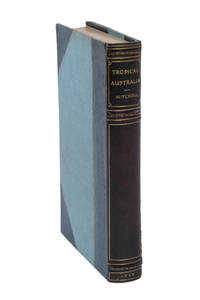
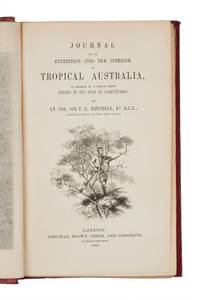
18485000630London: Longman Brown Green and Longmans 1848. Octavo frontispiece 11 lithograph plates and seven maps four folding; a fine copy unusually clean bound without the advertisements in later half blue morocco gilt top edges gilt. <p><p>An elegantly bound copy of the first edition.</p> <p>In late 1845 with Edmund Kennedy as his second-in-command Mitchell set out from Sydney in search of an overland route to the Port Essington settlement. Although he did not find the hoped-for route over the next year he explored a vast area of unknown country in tropical Queensland returning to Sydney in December 1846. As with his earlier expeditions Mitchell showed contempt for official orders preferring instead to follow his instincts. In this instance he seemed more interested in discovering the fabled Kindur River one of his more enduring but erroneous beliefs. To justify his decision he here represented his discovery of the Victoria River which was in fact the Barcoo as the legendary great north-flowing source. Although Mitchell did not succeed in finding a northward route and - if anything - further confused the riddle of the inland rivers upon his return the expedition charted a vast area of previously unknown country without significant mishap or the loss of a single man.</p> <p>The fine tinted lithograph views in the books are all after Mitchell's own drawings. His work as a topographical artist has gained increasing respect in recent years and can be appreciated in the plates prepared for this book. It is characterised by a fine attention to detail and an accomplished use of tone and shading.</p> </p> . Provenance: G.R. Nicolaus with pictorial bookoplate. Longman, Brown, Green, and Longmans unknown
185720183London: John Murray 1857. First Edition. Folding frontispiece engraved portrait 2 large folding maps including one in the rear pocket 43 black and white illustrations many full page. 8vo publisher’s original brown cloth decorated in all over designs on the covers in blind and lettered in gilt on the spine. x 687 folding map8 ads folding map in rear pocket pp. A very bright and handsome copy well preserved with very minimal wear to the fragile cloth a much better copy than normally encountered inner hinges can be expertly and unbtrusively strengthened and refurbished and an endleaf restored. FIRST EDITION IN THE ORIGINAL PUBLISHER'S BINDING. This is the account of Livingstone’s first great expedition 1853-56 during which he explored the Zambesi and its Victoria Falls. This first American edition is taller then its English counterpart. It retains all of the illustrations though arranged a bit differently.<br> AN IMPORTANT PMM ENTRY. One of the most important of all 19th century books on African exploration this title is listed in Printing and the Mind of Man. <br> ".David Livingstone the Scottish medical missionary is known to history as the greatest explorer of his age and a dedicated humanitarian who devoted his life to the eradication of the African slave trade. He was a national hero to his contemporaries and time has confirmed his reputation as one of the greatest if not the greatest of the eminent Victorians both in his achievement and in his influence." - George Myrtle<br> “ In this literary tour de force Livingstone exhibited impressive gifts as a descriptive write a sharp sense of humour and an instinctive feeling for what people who knew nothing of Africa would find interesting.†David Livingstone and the Victorian encounter with Africa National Portrait Gallery p.37. John Murray hardcover
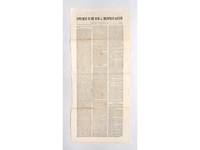
1864128416Bath: Printed and published by the Proprietor George Harvey Wood Proprietor of the Gazette 1864. The reverend and eminent traveller was greatly applauded Livingstone's first public remarks concerning the Second Zambezi Expedition given on Monday 19 September 1864 to a packed meeting of the British Association for the Advancement of Science at Bath's Theatre Royal. Attended by over 2000 people the lecture was the first in a series of speaking engagements - the public fascination with Livingstone's travels showed no signs of abating. Following the end of the expedition Livingstone arrived back in London on 23 July 1864. After several weeks of society engagements with the Palmerstons and others he travelled to Bath with his daughter Agnes. Although preparations for his lecture were difficult - "Worked at my Bath speech. A cold shiver comes over me when I think of it. Ugh!" quoted in Blaikie p. 343 - at the event itself he warmed to his subject. "He used it to report and denounce Portuguese slave trading in and around Mozambique. The speech caused enough of a stir to provoke an official response from Lisbon accusing him of 'exploring for no other purpose than to drive the Portuguese out of Africa'. This encouraged him to expand the lecture into a book which by the time it was finished had become a full-length account of the Zambezi expedition Narrative of an Expedition to the Zambesi and Its Tributaries" Tomkins p. 174. Single sheet 650 x 270 mm letterpress both sides the lecture occupying almost one full side. Old folds light wear to edges and damp-staining small ink spill and split along one fold text legible: very good. William Blaikie The Personal Life of David Livingstone 1881; Stephen Tomkins David Livingstone: The Unexplored Story 2013. unknown
1857165500London: John Murray 1857. It surpasses in interest the most exciting narratives of modern travel and adventure First edition. Missionary Travels is one of the emblematic accounts of African exploration in the 19th century and the foundation of the Livingstone legend. He "both embodied and transcended the nineteenth-century tension between religion and science and it was this which accounted for the scale and complexity of his career in Africa" ODNB. The book describes the first of his three major expeditions "in which he followed the Zambezi discovering Victoria Falls in the process as well as the Shire and Ruyuma rivers ranging from Angola in the west to Mozambique in the east. During these years he explored vast regions of central Africa" PMM. This is Bradlow's variant I: the frontispiece and plate facing page 66 are tinted lithographs by West and the plate facing page 225 is a black and white lithograph from a sketch by Bell; the extra leaf after page 8 is absent. As many as 11 variants of the first edition are known and a reliable order of precedence has never been established: it is now accepted that "the only thing that can be said with certainty is that the issue with the extra leaf numbered 8 and 8 is not the first issue" Bradlow. The extra leaf contains information on Moffat's mission at Kuruman and on Livingstone's marriage and the upbringing of his children. Provenance: with the armorial bookplate of Colonel William O'Neill on the front pastedown. Born in Ireland O'Neill 1800-1869 served with the 83rd County of Dublin Regiment of Foot during the Peninsular War for which he was awarded a war medal and eight clasps. He later served during the Third Kandyan War in Ceylon. Octavo. Folding tinted lithographed frontispiece engraved portrait of Livingstone 2 lithographed and 20 wood-engraved plates folding geological cross section 2 folding maps 1 in endpocket wood engravings in the text; 8 pp. publisher's advertisements at end. Original moderate brown sand-grain cloth spine lettered gilt spine and boards panelled in blind pink surface-paper endpapers top and fore-edge uncut. Contemporary and recent bookseller's tickets on front pastedown. A few marks to cloth binding and inner hinges expertly repaired endpapers discoloured minor repair to stub of folding map. A very good copy with cloth bright. Abbey Travel 347; Howgego IV L39; Mendelssohn I p. 908; Printing and the Mind of Man 341; SABIB III p. 136. F. R. Bradlow "The Variants of the 1857 edition" Livingstone 1873-1973 1973. hardcover
1857182195London: John Murray 1857. It surpasses in interest the most exciting narratives of modern travel and adventure First edition. Missionary Travels is one of the emblematic accounts of African exploration in the 19th century and the foundation of the Livingstone legend. He "both embodied and transcended the nineteenth-century tension between religion and science and it was this which accounted for the scale and complexity of his career in Africa" ODNB. The book describes the first of his three major expeditions "in which he followed the Zambezi discovering Victoria Falls in the process as well as the Shire and Ruyuma rivers ranging from Angola in the west to Mozambique in the east. During these years he explored vast regions of central Africa" PMM. This is Bradlow's variant II: the frontispiece and plates facing pages 66 and 225 are tinted lithographs by Picken. As many as 11 variants of the first edition are known and a reliable order of precedence has never been established. Octavo. Tinted lithographed folding frontispiece engraved portrait of Livingstone 22 wood-engraved or lithographed plates folding geological cross section 2 folding maps one in endpocket wood-engravings in the text; 8 pp. publisher's advertisements at end. Original brown cloth spine lettered in gilt spine and covers panelled and decorated in blind yellow coated endpapers fore edge uncut. Alex U. Denniston Brown of Balloch Castle bookplate on front pastedown; William M. Lese Collection ticket on front pastedown. Spine and front inner hinge sometime repaired inner hinges cracked remnants of label to front pastedown minor split along folds to maps and frontispiece. A very good copy. Abbey Travel 347; Howgego IV L39; Mendelssohn I p. 908; Printing and the Mind of Man 341; SABIB III p. 136. F. R. Bradlow "The Variants of the 1857 edition" Livingstone 1873-1973 1973. hardcover
1857119267London: John Murray 1857. First edition Bradlow's variant 2: the frontispiece and plates facing pages 66 and 225 are all tinted lithographs by T. Picken and the extra leaf after page 8 is absent. Frank R. Thorold called this the first issue and Gaston Renard believed it to be the second but as many as 11 variants of the first edition are known and a reliable order of precedence has never been established: it is now accepted that "the only thing that can be said with certainty is that the issue with the extra leaf numbered 8 and 8 is not the first issue" Bradlow. The extra leaf contains information on Moffat's mission at Kuruman and on Livingstone's marriage and the upbringing of his children and Bradlow could only speculate as to the reasons for the interpolation: "Why did Livingstone decide to have the extra leaf after page 8 inserted Did he feel that he had neglected his wife by not mentioning her in this way in the first place All these questions and a host of others will occur to trained bibliographers and it may well be that in the future some indefatigable researcher will find the answers." Missionary Travels is one of the emblematic accounts of African exploration in the 19th century and the foundation of the Livingstone legend. It describes the first of his three major expeditions "in which he followed the Zambezi discovering Victoria Falls in the process as well as the Shire and Ruyuma rivers ranging from Angola in the west to Mozambique in the east. During these years he explored vast regions of central Africa many of which had never been seen by white men before" PMM. Provenance: from the noted travel collection of Humphrey Winterton with his monogram book-label to the front pastedown. Octavo. Folding frontispiece engraved portrait of Livingstone with tissue-guard 22 further plates folding geological cross section 2 folding maps of which one in end-pocket wood-engravings to the text. Original reddish-brown sand-grain cloth title gilt to the spine blind panels to spine and boards brown coated endpapers binder's ticket Edmonds & Remnants to rear pastedown. With 8 pages of publisher's advertisements dated 1 November 1857 to rear. Ownership inscription "Lizzie Henderson Jany 1906" to front free endpaper. Spine gently rolled slightly bumped at foot front inner hinge cracked but firm light spotting to edges frontispiece foxed and offset quire 2E starting. A very good copy. Abbey Travel 347; Bradlow "The Variants of the 1857 edition " in Lloyd ed. Livingstone 1873-1973; Howgego IV L39; Mendelssohn I p. 908; Printing and the Mind of Man 341; SABIB III p. 136. hardcover
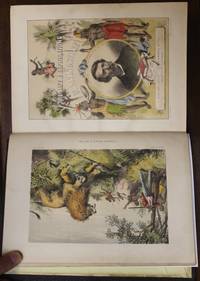
1878B3867London: Adam & Co c.1878. A handsome copy in decorative period binding with fine colour plates text and plates clean and crisp. Binding: Contemporary morocco with gilt rules and wide gilt band surrounding the central gilt medallion rebacked expertly saving the original spine in 6 compartments of gilt raised bands gilt text on 2 edges gilt. Size: Large 4to Illustration: Adorned with 20 full page hand colour plates. Pages: P. blanks frontispiece title blank preface iii-iv contents v-viii p.1-632 blanks. Category: Book Plate Books Colour;Book Africa General; Adam & Co hardcover
18575000745London: John Murray 1857. Mild stains to frontispiece perhaps due to paper type; otherwise a really fine copy. Large octavo engraved portrait and 23 plates including folding frontispiece view two folding maps by Arrowsmith at the end of the book and numerous wood engraved illustrations through the text; in a fine period binding of half black morocco and grained cloth sides spine gilt in compartments marbled edges and endpapers. <p><p>The most famous account of African exploration recording three years spent in the wilderness between 1853-1856. 'Livingstone one of the great characters of the nineteenth century embodying all the virtues of the Victorian age is often remembered more for his qualities as a man than for his achievements as an explorer. Born with no social advantages it was his courage and boldness of conception his deep religious feelings and his great powers of endurance that carried him through the trials and hardships of a dedicated life and eventually gained him the honour of burial in Westminster Abbey' Printing and the Mind of Man 341.</p> <p>This first edition appeared in various issues. Abbey suggested that those with plates 1 and 8 as wood-engravings -- as in this copy -- preceded those in which they were reprinted as tinted lithographs while Bradlow argued much the reverse. In any case this very attractive copy has them as wood-engravings and is one of the issues that appeared before the addition of a leaf following p. 8 in which Livingstone later expounded on the subject of his family. Renard seem to have called this variant the third issue but no reliable order of precedence has been established for the 11 issues that have been identified; Bradlow notes that "the only thing that can be said with certainty is that the issue with the extra leaf numbered 8 and 8 is not the first issue".</p> </p> . Provenance: With the blind stamp of "Walch and Sons Booksellers Hobart Town" booksellers in Tasmania from 1846. John Murray unknown
1857030745London: Routledge and Co. 1857 12mo. original pictorial paper boards paper spine chipped at both ends slightly rubbed & bumped occ. spots bookseller's blindstamp to FFE else internally clean & neat; pp. i-iv 5-64 with a folding map. A very good copy of a rare and fragile item. The earliest appearance of Livingstone's first major expedition in book form preceeding the more expansive 'Missionary Travels and Researches'. First Edition. Hard Cover. VG-. Routledge and Co. hardcover
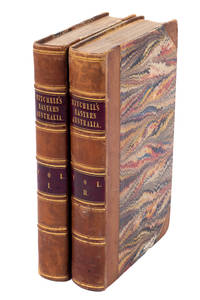
18394505219London: T. & W. Boone 1839. A little rubbed with map at end of volume 2 in poor condition and with obtrusive tape repairs. Two volumes octavo with lithographed title-pages large folding map repaired and 51 lithographed plates a few folding or coloured and small text illustrations; contemporary half calf with marbled boards. <p><p>Thomas Livingstone Mitchell was appointed to succeed Oxley as Surveyor General of New South Wales in 1828. The first expedition described here was undertaken to establish the veracity of a story spread about the colony by escaped convict George Clarke "The Barber" who claimed to have discovered a large river flowing to the north of Australia known by the Aboriginal name of Kindur. This expedition investigated the Namoi Gwydir and Barwon rivers but failed to prove or disprove the existence of the Kindur.</p> <p>The second and third expeditions were both aimed at fully determining the course of the Darling River extending on Sturt's earlier discoveries. Despite meeting hostilities with local Aboriginal tribes resulting in a retreat to Sydney and dismissing Burke's specific instructions regarding the Darling Mitchell went on to make a discovery of the greatest importance: the rich lands of western Victoria which he named Australia Felix in 1836.</p> <p>As well as being a fine surveyor Mitchell was an accomplished draughtsman and the plates in the book are all after his own drawings.</p> <p>This is the second edition revised and extended from the first publication the previous year. Despite the huge European interest in Australian exploration reflected in the number of titles published in London mid-century only Mitchell's and Sturt's journals would run into second editions.</p> </p> . Provenance: Lionel Gilbert historian with bookplate. T. & W. Boone unknown
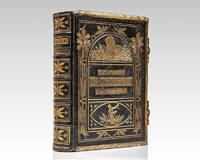
1875151484London and Newcastle: The Tyne Publishing Company Limited c. 1875. First edition of this magnificently illustrated and bound compendium of David Livingstone’s life and explorations. Folio bound in full black morocco with gilt titles and tooling to the spine in six compartments within raised bands gilt titles and elaborate pictorial gilt decorations to the front and rear panels engraved brass-mounted edges and double clasps to the front and rear panels chromolithographic vignette title page illustrated with 19 tinted lithograph plates including frontispiece of the meeting of Stanley and Livingstone map of Central and South Africa. Tyne Publishing Company issue issued from the same stereotype plates as the Adam & Co. and John G. Murdoch editions and bound uniformly. In near fine condition. An exceptional example. Scottish physician Congregationalist and pioneer Christian missionary and explorer of Africa David Livingstone was one of the most popular British heroes of the late 19th-century Victorian era. Livingstone's fame as an explorer and his obsession with learning the sources of the Nile River was founded on the belief that if he could solve that age-old mystery his fame would give him the influence to end the East African Arab–Swahili slave trade. His subsequent exploration of the central African watershed was the culmination of the classic period of European geographical discovery and colonial penetration of Africa. At the same time his missionary travels "disappearance" and eventual death in Africa†‌led to the founding of several major central African Christian missionary initiatives carried forward in the era of the European "Scramble for Africa." The Tyne Publishing Company, Limited hardcover
1838173536London: T. & W. Boone 1838. The deep tracks of his boat carriage quickly became their ribbon to follow to the south-west First edition of this illustrated account by the explorer who opened up the lush pastures of western Victoria to colonial settlement. His three daring expeditions added extensively to knowledge of Australia's inland waterways. This copy is from the collection of Jonathan Wantrup a leading bibliographer of Australiana with his book label on the front pastedowns. Appointed deputy surveyor-general of New South Wales in 1827 Mitchell 1792-1855 arrived in Sydney in September and began a six-year effort to produce a topographical map of the colony. His "Map of the Colony of New South Wales 1834 otherwise known as the 'map of the nineteen counties' has scarcely been equalled anywhere. It was perhaps Mitchell's greatest achievement. He determined too to extend his surveys outside the nineteen counties and though there are other reasons for his exploratory expeditions this was a major factor" ODNB. Mitchell's first expedition begun in late 1831 while his map was still in progress "explored between the Nammoi and the Gwydir and crossed the latter to strike the Barwon but there was no north-west river; all streams were clearly tributaries of the Darling. The murder by Aborigines of two of his party as they were bringing up provisions made a return to the settled colony imperative" ODNB and his party reached Sydney in February 1832. His second expedition undertaken three years later charted the course of the Darling to the point where it turned south establishing the likely region where it met the Murray. "Mitchell's third and most significant journey was undertaken ostensibly to connect the Murray with the Darling but also to explore the Murray and perhaps the country south of it. The expedition left Sydney in March 1836 and moved down the Lachlan. It was impossible to cross to the Darling so Mitchell proceeded to the Murrumbidgee and into the Murray following it down to what was thought to be the Darling junction. He traced the Darling upstream only sufficiently far to satisfy himself that it was in fact that river. Some 30 miles below the Goulburn river junction he turned off south-west. The region he then opened up he named Australia Felix now the western district of Victoria which certainly forms one of the richest tracts in Australia. At the Murray he found the country on the eve of being taken up by graziers and the deep tracks of his boat carriage quickly became their ribbon to follow to the south-west. This journey which lasted over seven months thus added greatly to the knowledge of a very fertile region of Australia" ODNB. Copies in the original cloth are nearly always found either rebacked or recased and this is a better example than most. 2 vols octavo. Frontispieces Vol. I hand-coloured 44 plates 3 hand-coloured 1 folding 5 maps and plans 3 hand-coloured 2 folding large folding map at rear with hand colouring vignette title pages illustrations and tables in text; 16 pages of publisher's advertisements at end of Vol. II. Original green vertically combed cloth recased spines lettered in gilt with gilt vignettes of kangaroos emus and aboriginal weapons boards decoratively blocked in blind yellow coated endpapers edges untrimmed binder's ticket of Remnant & Edmonds on front pastedown of Vol. I. Cloth clean light cockling and creasing small split at head of spine of Vol. II some plates foxed as usual large folding map with small splits at folds and stub rear repaired on verso: a very good set. Ferguson 2553; Hill 1165; Wantrup 124a. hardcover
18485001112London: Longman Brown Green and Longmans 1848. Octavo frontispiece 11 lithograph plates and seven maps four folding a very good copy complete with 24 pp. publisher's advertisements neatly recased in the original red cloth spine gilt the cloth in bright condition. <p><p>First edition of Mitchell's account of his last expedition. In late 1845 with Edmund Kennedy as his second-in-command Mitchell set out from Sydney in search of an overland route to the Port Essington settlement. Although he did not find the hoped-for route over the next year he explored a vast area of unknown country in tropical Queensland returning to Sydney in December 1846. As with his earlier expeditions Mitchell showed contempt for official orders preferring instead to follow his instincts. In this instance he seemed more interested in discovering the fabled Kindur River one of his more enduring but erroneous beliefs. To justify his decision he here represented his discovery of the Victoria River which was in fact the Barcoo as the legendary great north-flowing source. Although Mitchell did not succeed in finding a northward route and - if anything - further confused the riddle of the inland rivers upon his return the expedition charted a vast area of previously unknown country without significant mishap or the loss of a single man.</p> <p>The fine tinted lithograph views in the books are all after Mitchell's own drawings. His work as a topographical artist has gained increasing respect in recent years and can be appreciated in the plates prepared for this book. It is characterised by a fine attention to detail and an accomplished use of tone and shading.</p> <p>An attractive copy in its original cloth binding.</p> </p> . Longman, Brown, Green and Longmans unknown
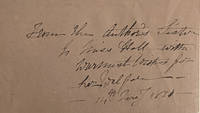
184810244London: John Murray 1848<br>. First edition. Frontispiece 10 tinted lithographs & 7 maps 4 folding. Pp. xiv 438 2pp publisher’s advertisements. 8vo. original red cloth blindstamped border gilt vignette to spine. Joints a little worn some rubbing and soiling to cloth.Booksellers label from Melbourne. <br>With a presentation inscription from Mitchell’s sister: ‘From the Author’s sister to Miss Hall with warmest wishes for her welfare’.<br>Between 1831 and 1848 Mitchell made four major expeditions into the Australian interior. Mitchell's final year long expedition sought to solve once and for all the question of the drainage of North-Eastern Australia. He set out in December 1845 with Edmund Kennedy as second in command and proceeded north into tropical Queensland. He had hoped the Barcoo River what he called the Victoria would lead all the way to the Gulf of Carpentaria and thereby provide an overland route between Sydney and Port Essington on the Gulf of Carpentaria. A very good copy with a lovely association.Ferguson 4828 Association copy belonging to the author’s sister and inscribed by her John Murray hardcover
185819814No place: Livingstone’s Blue Stationery 22 February 1858. The original letter unrestored. 230 x 184mm noted at the top "A true copy D.L." three pages written on blue paper in greyish-brown ink folded once. One page folio folded once. A clean copy with remains of mounting on the last page blank but for the note "copy to Dr. Tidman. A RARE AND IMPORTANT AUTOGRAPH LETTER FROM LIVINGSTONE. A fine letter expressing concern that money raised for his explorations in central Africa should be properly used: ".I am anxious for my own satisfaction and the information of those who may enquire to know when it is likely that young missionaries who are expected to commence the Zambesi mission will.take their departure from this country. Abundant funds having been furnished for all that is needed in the case and there being no obstacle in the path through the Cape Colony I should be glad to be assured before my departure that the intentions of your friends in subscribing so liberally are likely soon to be realized."<br> Livingstone’s MISSIONARY TRAVELS AND RESEARCHES IN SOUTH AFRICA.relates the story of his first great expedition 1853-56 during which he explored the Zambesi and its Victoria Falls. It is still considered one of the most important of all 19th century books on African exploration by one of the greatest explorer/missionaries of all time. It is entered in Printing and the Mind of Man as one of the greatest and most important books ever penned.<br> ".David Livingstone the Scottish medical missionary is known to history as the greatest explorer of his age and a dedicated humanitarian who devoted his life to the eradication of the African slave trade. He was a national hero to his contemporaries and time has confirmed his reputation as one of the greatest if not the greatest of the eminent Victorians both in his achievement and in his influence." - George Myrtle Livingstone’s Blue Stationery unknown
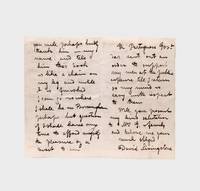
1857374734London 57 Sloane St 1857. 4pp. in pen. 1 vols. 8vo 7-1/4 x 4-1/4 inches. Fine. In morocco backed autograph case. 4pp. in pen. 1 vols. 8vo 7-1/4 x 4-1/4 inches. An intriguing letter reading in part "all your kind assistance in the matter of the hoes and gun. Everything is now in a fair way of accomplishment. The hoes to be made into an Enfield rifle. The gun to be repaired and new ones made by Mr. Goodman.I ought to thank your brother in law Mr. Lea for the kind invitation.you will perhaps kindly thank him in my name and tell him this book is like a chain on my leg and until it is finished I can go nowhere.The Portuguese Govt. has sent out an order to support my men at the public expense till I return so my mind is easy with respect to them." <br /> The burdensome book in question was his MISSIONARY TRAVELS IN SOUTH AFRICA published in November 1857. unknown
1857139047London: John Murray 1857. A rare fragment of the original manuscript of Missionary Travels A remarkable fragment the only portion of the original manuscript of Missionary Travels known to remain in private hands. We understand that all other manuscript material is held in the John Murray Archive at the National Library of Scotland. Together with an autograph letter signed from Livingstone's sister sending the manuscript fragment and a copy of the first edition. The holograph manuscript is on blue laid paper watermarked "Thomas James" possibly a correction or revision slip measuring 152 x 197 mm and reads in full: "12th May. As we were about to start this morning the commandant Sr. Arsenio provided bread and meat most bountifully for my use in the way to the nearest station and sent too militia soldiers as guides instead of our Cassange corporal who left us here. About midday we asked for shelter from the sun at the house of Senhor Mellot at Zangu and though I was unable to sit and engage in." This 15-line section is published on page 383 of the first edition. The National Library of Scotland confirms that among the papers used in the original manuscript is blue paper watermarked "Thomas James". On 12 January 1892 the manuscript was sent by Livingstone's sister Janet 1818-1895 to "my dear Mrs Metzler" with an accompanying 2-page autograph letter signed addressed from Castle Lodge Kendal discussing her health and her meeting with Mrs Metzler at the popular Scottish watering-place of Wemyss Bay. "The bit of manuscript enclosed for your dear boy was written by Dr. Livingstone in 1857 for his first book 'Missionary Travels'". A full transcript of the letter is available on request. The recipient of Janet's letter may be a relative of the German missionary Peter Martin Metzler 1824-1907; if this is the case then Mrs Metzler is probably the wife of one of his four sons. Metzler worked mainly in the Middle East with a brief sojourn in East Africa in 1851. While in Mombasa he fell seriously ill and by the end of the year had returned to Germany. This item emerged in Germany. The book itself is a first edition corresponding to SABIB's variant 7. The frontispiece and plates facing pages 66 and 225 are woodcuts by Whymper and the extra leaf numbered 8 and 8 is present corresponding with Bradlow's variant 3. As many as 11 variants of the first edition are known and a reliable order of precedence has never been established. It is now accepted that "the only thing that can be said with certainty is that the issue with the extra leaf numbered 8 and 8 is not the first issue" Bradlow. The extra leaf contains information on Moffat's mission at Kuruman and on Livingstone's marriage and the upbringing of his children and Bradlow could only speculate as to the reasons for the interpolation: "Why did Livingstone decide to have the extra leaf after page 8 inserted Did he feel that he had neglected his wife by not mentioning her in this way in the first place All these questions and a host of others will occur to trained bibliographers and it may well be that in the future some indefatigable researcher will find the answers." Missionary Travels is one of the emblematic accounts of African exploration in the 19th century and the foundation of the Livingstone legend. It describes the first of his three major expeditions "in which he followed the Zambezi discovering Victoria Falls in the process as well as the Shire and Ruyuma rivers ranging from Angola in the west to Mozambique in the east. During these years he explored vast regions of central Africa many of which had never been seen by white men before" PMM. It was also "an instant commercial success. The initial print run of 12000 copies sold out through pre-publication subscriptions while second 8000 copies and third 11000 copies printings followed quickly on its heels. Later printings reportedly brought the sales total to 70000 for the first two years. Such figures were almost unprecedented for a work of exploration and ensured Livingstone's place alongside earlier celebrated British explorers like James Bruce and Mungo Park" website livingstoneonline. Octavo. Folding wood-engraved frontispiece steel-engraved portrait of Livingstone by William Holl after Henry Phillips with tissue-guard 22 further wood-engraved plates folding geological cross section 2 folding maps of which one in end-pocket wood-engravings to the text. Original reddish-brown sand-grain cloth title gilt to the spine blind panels to spine and boards brown coated endpapers binder's ticket Edmonds & Remnants to rear pastedown. Housed in a dark brown quarter morocco solander box by the Chelsea Bindery. Contemporary bookseller's ticket of Ginder of Canterbury to front pastedown. Spine gently sunned a little wear to extremities professional repair to inner hinges customary scattered foxing. A very good bright copy with the 8 pages of publisher's advertisements dated 1 November 1857 to rear. Abbey Travel 347; Bradlow "The Variants of the 1857 edition " in Lloyd ed. Livingstone 1873-1973; Howgego IV L39; Mendelssohn I p. 908; Printing and the Mind of Man 341; SABIB III p. 136. hardcover