AAVVMareMagnum

2 931 résultats
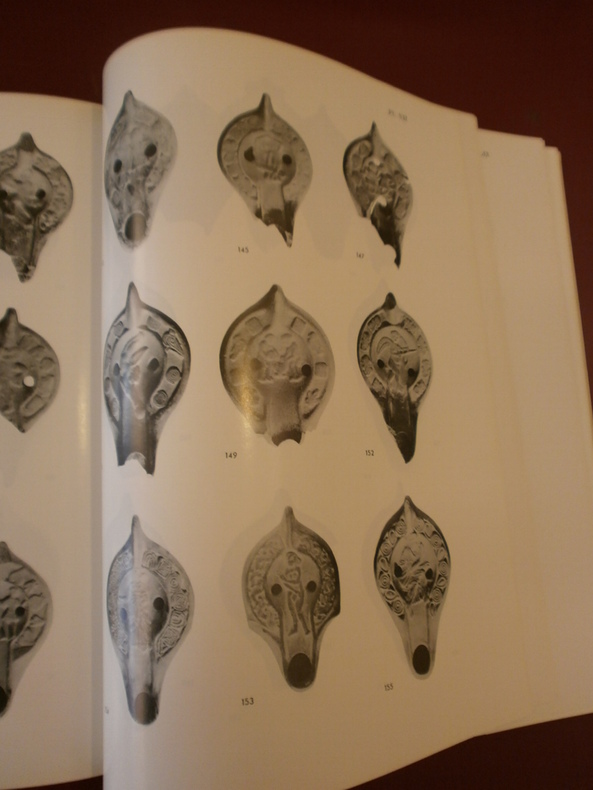
Brossura, cm 22x26, pp 143 (3), tavole in nero. Miscellanea, costituente il decimo e ultimo volume dei Cahiers de Byrsa, pubblicazione archeologica del Museo Nazionale di Cartagine (fino al 1956 Musée Lavigerie). Contiene: Pierre Amiet, Les intailles orientales de la collection Chavanne à Tunis (2e partie); Robert P. Charles, Remarques sur une maxime religieuse: à propos d’un scarabée égyptien à Kyrénia (Chypre); Anna Maria Bisi, L’idra, antecedenti figurative orientali di un mito greco e Une figurine phénicienne trouvée à Carthage et quelques monuments apparentés; Jean L. Ferron, Inscription punique archaïque à Carthage e L’inscription dite bilingue des disques en plomb de Carthage; James G. Février, La constitution municipale de Dougga à l’époque numide e A propos dl’épitaphe néopunique d’un prêtesse; Pierre Salama, Le militaire archaïque de Lorbeus; Paul Veyne, Un bas-relief transposé en ronde-bosse; Jean Deneavue, Terres cuites de l’Afrique romaine; Jean Mallon et Charles Perrat, Liste de noms écrits sur marbre; Maurice Pianrd, Une plaque d’os sculpté musulmane provenant de Carthage.
Volume fotografico in lingua italiana dedicato ai paesi del Nordafrica: Marocco, Algeria, Tunisia, Libia.
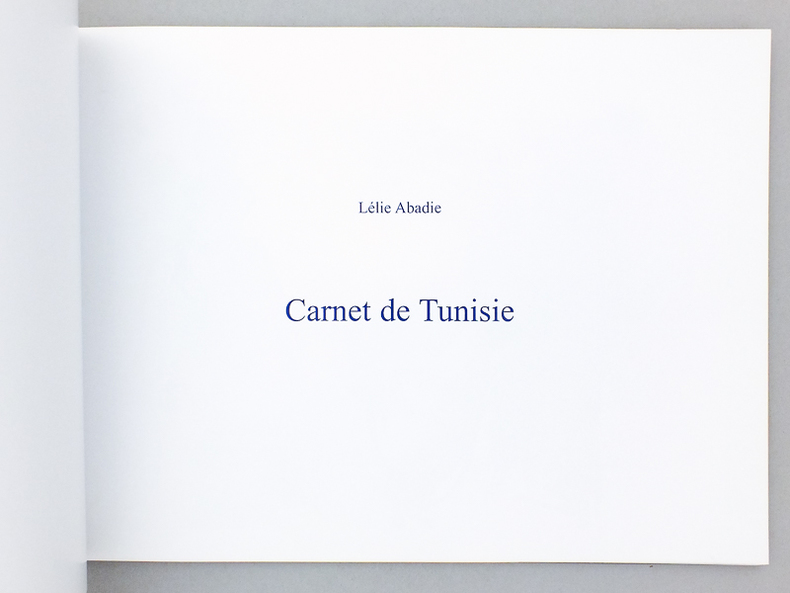
2003522841 vol. in-4 à l'italienne, couv. ill. couleurs, reprod. couleurs d'aquerelles de l'artiste, Albert Abadie, 2003, 64 pp.
2000RO40181228Le Layeur - Alif - Editions de la Méditerranée. 2000. In-8. Broché. Bon état, Couv. convenable, Dos satisfaisant, Intérieur frais. 47 pages. Illustré de nombreuses photos en noir et blanc et en couleur dans le texte. Avec CD-Audio. Etiquette de code sur le dos. Annotations en page de titre.. . . . Classification Dewey : 961-Tunisie et Lybie
1 vol. in-4 à l'italienne, couv. ill. couleurs, reprod. couleurs d'aquerelles de l'artiste, Albert Abadie, 2003, 64 pp. Très bon état pour ce bel ouvrage thématique de l'aquarelliste Lélie Abadie (1938-). Titre très peu courant désormais. Français
ISBN : 2911468465. Le Layeur - Alif - Editions de la Méditerranée. 2000. In-8 Carré. Broché. Bon état. Couv. convenable. Dos satisfaisant. Intérieur frais. 47 pages. Illustré de nombreuses photos en noir et blanc et en couleur dans le texte. Avec CD-Audio. Etiquette de code sur le dos. Annotations en page de titre. Ya hasra ! Tunis chante et danse, 1900-1950...
1899229401899 Alfred Mame, 1899. Format 20x29 cm, cartonnage editeur, toutes tranches dorees, 288 pages.Bon etat, petites traces d'usage sur un livre d'occasion.
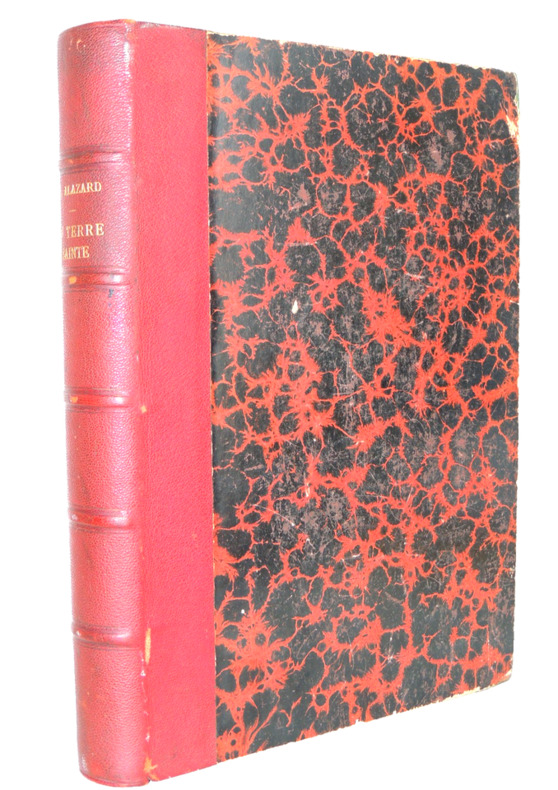
CZC-12990avec de nombreuses gravures, dont hors-texte. Abbé L. Alazard, Chanoine honoraire de Rodez De Marseille à Jérusalem - Jérusalem et Bethléem- de Jérusalem en France vol. in-4, relié demi cuir, 30x22 cm, très bel exemplaire, 476pp. Veuve Magnin et fis, ss date 1890
CZC-12990avec de nombreuses gravures, dont hors-texte. Abbé L. Alazard, Chanoine honoraire de Rodez De Marseille à Jérusalem - Jérusalem et Bethléem- de Jérusalem en France vol. in-4, relié demi cuir, 30x22 cm, très bel exemplaire, 476pp. Veuve Magnin et fis, ss date 1890
2005LFA-126749726Un ouvrage de 64 pages, format 215 x 295 mm, illustré, relié cartonnage couleurs, publié en 2005, Editions Contraste, bon état
UEI-272Editions C N R S 1976 Format : 29/22 Pages : 256 + 57 de planches Richement illustré Défraîchi
239552Paris, C. Klincksieck, 1973 fort vol. in-8, 590 pp., un f. n. ch., broché.
1993RO80207802Plurigraf. 1993. In-8. Broché. Bon état, Couv. convenable, Dos satisfaisant, Intérieur frais. Environ 90 pages. Nombreuses photographies en couleurs dans et hors texte.. . . . Classification Dewey : 961-Tunisie et Lybie
New English Paperback. Pbo. Roy. 8vo. [xv], 200, [2] p., maps. In French. Contents: Table des Matieres; Introduction: Les Turcs au Maghreb, do Mina Tion Turque en Tunisie, Rapports Franco Tunisiens et Turco Tunisiens. Les Turcs au Maghreb, do Mina Tion Turque en Tunisie, Rapports Franco Funisiens et Turco Tunisiens. Chapitre 1: Offre de Tunis à la France, Rivalité Franco-Italienne et Intervention Française. Offre de Tunis à la France, Rivalité franco-Italienne et Intervention Française. 1 - Offre de Tunis à la France au Congrès de Berlin. 2 - Hésitations Françaises et Rivalité Franco-Italienne 3 - Intervention Française. Chapitre 2 : Intervention de la Sublime Porte. Intervention de la Sublime Porte. 1 - Intervention Diplomatique de la Sublime Porte. 2 - Intention D'intervention Navale de la Sublime Porto Dans les Eaux Tunisiennes 3 - La signature du Traite du 12 mai et la Protestation du Gouvernement Ottoman. a) La Signature du Traite du 12 mai b) La Protestation de la Sublime Porte, Contre le traite de Kasr Said c) La Protection des Tunisiens par les Agents Consulaires et Diplomatiques de la France et la Protestation de la Sublime Porte. Chapitre 3: Moures Militaires Prises par la Sublime Porte en Tripolitaine, Insurrection en Tunisie et Pour Parlers Relatifs. Moures Militaires Prises par la Sublime Porte en Tripolitaine, insurrection en Tunisie et Pour parlers Relatifs.
193033796P., Société Parisienne d'Editions, s.d. (1930), in-8°, 270 pp, nombreuses photos dans le texte, 3 cartes, broché, pt mque angulaire au 1er plat, bon état (Coll. Les colonies françaises)
Société Parisienne d'Edition SD (1930), In-8 broché de 270 pages. Cartes, photos in et hors texte. Parfait état.
français In-8 de 201 pp.; broché de l'éditeur. Préface Béji Caïd Essebsi. Envoi autographe signé de l'auteur en première garde.
Cartonnage de l'?diteur. 160 pages. 23x27cm.
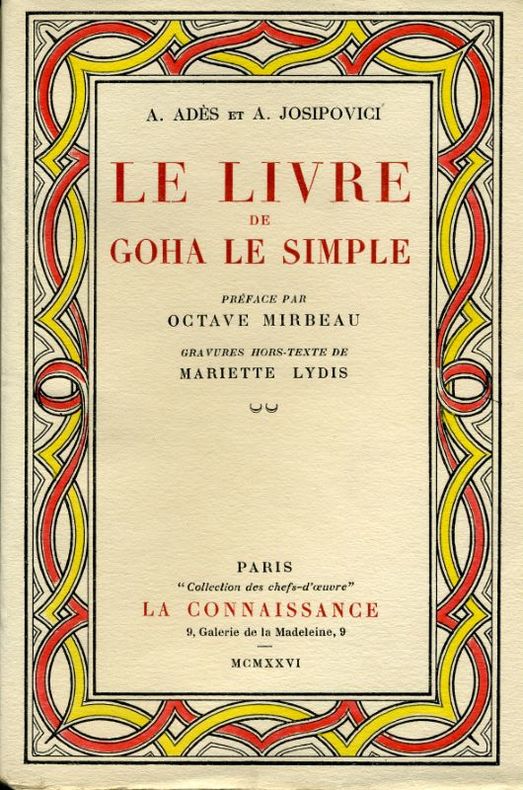
19268087Paris LA CONNAISSANCE 1926 1 in-12 Préface par Octave Mirbeau. Gravures hors-texte de Mariette LYDIS. Paris, La Connaissance, collection "Les Chefs d'oeuvre", 1926, 2 volumes in-12, couverture brochée rempliée, plat avec double filet d'encadrement et motifs d'arabesque rouge et jaune, 191-400 pp.
192618169Paris LA CONNAISSANCE 1926 1 Préface par Octave Mirbeau. Gravures hors-texte de Mariette LYDIS. Paris, La Connaissance, collection "Les Chefs d'oeuvre", 1926, 2 volumes in-12, couverture brochée rempliée, plat avec double filet d'encadrement et motifs d'arabesque rouge et jaune, 191-400 pp.
Milano, 1939, stralcio con copertina posticcia muta, pp. 18 con numerose illustrazioni e con tavole fotografiche. - !! ATTENZIONE !!: Con il termine estratto (o stralcio) intendiamo riferirci ad un fascicolo contenente un articolo di rivista, sia che esso sia stato stampato a parte utilizzando la stessa composizione sia che provenga direttamente da una rivista. Le pagine sono indicate come "da/a", ad esempio: 229/231 significa che il testo è composto da tre pagine. Quando la rivista di provenienza non viene indicata é perchè ci è sconosciuta. - !! ATTENTION !!: : NOT A BOOK : “estratto” or “stralcio” means simply a few pages, original nonetheless, printed in a magazine. Pages are indicated as in "from” “to", for example: 229/231 means the text comprises three pages (229, 230 and 231). If the magazine that contained the pages is not mentioned, it is because it is unknown to us.
1930120111930 br. in-8, 89pp., Lyon Arlaud, 1930,
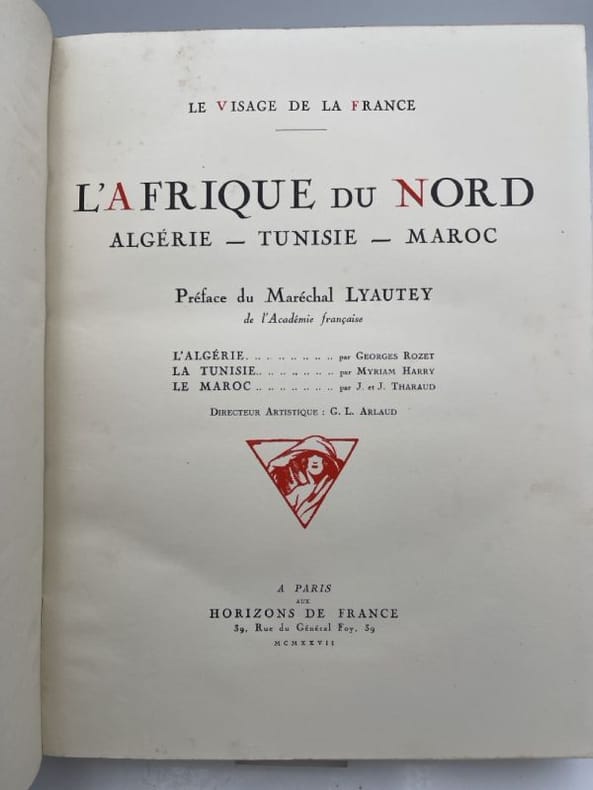
1927192117Horizons de France Horizons de France, 1927. In-folio relié demi basane brune, dos à nerfs soulignés de filets dorés, pièce de titre rouge. 305 pages. Initialement paru en livraisons, les 5 ouvertures ont été reliées en fin de volume. Les photographies, en sépia, ont été prises spécialement pour l'ouvrage par MM. G.L Arlaud, Girard et Prouho. Petits frottemest à la reliure en partie haute du sos sans gravité. Très bon exemplaire
192234571922 in-8, VIII, 199pp., XXXII hors texte photo., br. Paris Hachette 1922,
Very Good Arabic Original autograph document/letter sealed by Ahmad I of Tunisia. 54x42 cm. 1 p. 6 long lines. The letter includes full of poetic praise. It must be sent after successful diplomatic intercourse with Naples. Ferdinand II (Ferdinando Carlo) was King of the Two Sicilies from 1830 until his early death in 1859. It starts with 'Thank God alone', and goes on 'From poor Ahmad Pasha to Lord Almighty Field Marshal Amîr [ruler]. Sealed by the seal of Ahmad Basha Beg including an impressive qasidah in Arabic. Ahmed I (ibn Mustafa), born 2 December 1805 in Tunis died May 1855 at La Goulette, was the tenth Husainid Bey of Tunis, ruling from 1837 until his death. He was responsible for the abolition of slavery in Tunisia in 1846. He succeeded his father Mustafa Bey on 10 October 1837. He had grand ambitions - to expand his army and create a modern navy; to build a new royal residence, a mint and modern institutions of education but neither he nor his brother-in-law the young Mustapha Khaznadar who served as his finance minister, had a clear idea of what such initiatives would cost. As a result, many of his projects became expensive failures which damaged the financial health of the country. Soon after his accession, Ahmad Bey received the traditional Firman from the Sublime Porte which formally invested him with authority to rule from the Ottoman Empire and furnished him with the insignia of office. The Ottoman envoy, Osman Bey, arrived in la Goulette on 15 May 1838 onboard a frigate. The following day, Osman Bey made his official entry into Tunis on horseback, preceded by all the ministers of the beylical cabinet who went before him until he was two leagues from the city. Before he were carried the sword of honor and the caftan to be presented to the Bey. He was escorted by spahis and followed by a large contingent of regular troops an Arab cavalry. Three days after his official entry into the city, the envoy presented himself at the Bardo Palace to formally invest Ahmad Bey with his insignia of office and present gifts. Named as a Divisional General in the Ottoman army in May 1838, he was later promoted by the Sultan to the rank of Marshal on 14 August 1840. This was the first time that a Bey of Tunis had held a rank higher than Divisional General. The purpose of these honors was to emphasize the supremacy of the Ottoman Empire over the Regency of Tunis. Under a treaty with France signed in 1830 by Hussein Bey, a piece of land in Carthage had been ceded to allow the erection of a monument to Louis IX of France who had died there during the Eighth Crusade. On 25 August 1840, the first stone was laid in the cathedral of Carthage. Ahmad Bey also permitted the Christian community of Tunis, consisting mainly of European merchants, to enlarge their small church near the Bab el Bhar. In June and July 1846 the Duke of Montpensier, son of King Louis Philippe of France visited Tunis and Carthage. He was received with great solemnity by Ahmad Bey. According to the Tunisian historian Mohamed Bayram V, Bey's reforms were focused on state structures, the army, and education. He established a modern structure of government and gave his high officials the title of 'minister'. His senior ministers were his Grand Vizier Mustafa Sahib at-Taba'a, Mustapha Khaznadar, Minister of Finance and of the Interior, Mustafa Agha as Minister of War, Mahmoud Khodja as Minister of the Navy and Giuseppe Raffo as Foreign Minister. At certain times Mahmoud Ben Ayed also served as Trade Minister, Kuchuk Muhammad in the honorific post of Minister in charge of the security home of Ahmad Bey's reforms wasted money, such as the large frigate built at La Goulette that could not make it through the channel to the sea. of Tunis and Mohamed Lasram IV as Minister of the Pen. The historian Ibn Abi Dhiaf was the Bey's private secretary. Among Ahmad Bey's successes may be counted as the abolition of slavery in January 1846. To this may be added the formation of the military academy at...