4 198 résultats
195840767Rome: Sacrum Polniae Millenium 1958. Sml. folio. 444 pp. Printed wrappers blk lettrng on frnt cvr & spine vry mnr darkng to cvrs shlfwr slghtly shakn occasional pencil notes & a couple leaves w/ vry minimal underlining still a VG- copy. First edition of this scarce and informative monograph on the efforts to unite parts of the Eastern Orthodox Church in Poland Lithuania and Western Russia with the Catholic Church and the impact of the Synod of Brest in 1596 which brought the Ruthenian churches and monasteries back into the Catholic sphere. Sacrum Polniae Millenium, unknown
84069Paris L’imprimerie royale 1733. 4to. 14 pp. Sewn together with: Declaration aux princes & electeurs de l’Empire. Paris L’imprimerie royale 1733. 4to. 1 pp. Disbound. The king of France presents his reasons for intervening in the war of the Polish succession 1733-38 and offers assurances to the princes and electors of the Holy Roman Empire. unknown
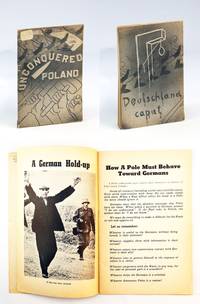
1943442j1479New York: Poland Fights - Polish Labor Group. Fair with no dust jacket. 1943. First Edition. Paperback. "As German boots marched and German tanks rumbled through the mined streets of Warsaw the workers buried their remaining arms drew closer to one another and silently disappeared to continue the fight with means other than rifles and bullets. Underground Poland was born! And this is its story." - page 2. Topics include: How a Pole Must Behave Toward Germans; List of 15 Strictly Forbidden Activities; Underground Poetry; Invisible Sabotage; Roads To Death; 1.5 Million Slave Laborers; Boycott; Recalcitrant Peasants; Avengers and Guerrillas; The Ghetto Strikes Back; Collective Responsibility of Monuments; Wawer Massacre; Hide It From The Germans!; Our Future. Stapled booklet with 44 glossy unnumbered pages in illustrated covers. Text in English. Profusely illustrated with black and white reproductions of photos document facsimiles illustrations and a map. No indication of any prior printings. Former library copy with related markings to front and back of front cover. Bound by a single staple which is pulling from the tender illustrated covers. One-inch opening at bottom of coverfold. A worthy example of this highly informative WWII-era artifact. Wiener Library Catalogue Series 7 1004. 8.5" x 5.5"; Front Cover; 8vo . Poland Fights - Polish Labor Group paperback
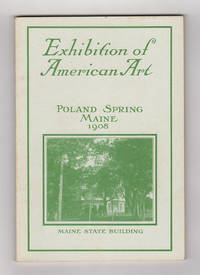
717N.p.: Hiram Ricker & Sons 1908. 8vo light green wraps. 80 pp. 19 b&w illus. The fourteenth annual exhibition included 138 paintings as well as miniatures and sculpture featuring works by such major figures as Frank Benson J.G. Brown Charles Courtney Curran J. Carroll Beckwith and others. Seventeen paintings are illustrated in half-tone as well as two works of sculpture. Includes brief biographies. The art exhibitions at the Poland Spring House one of the most fashionable resorts of the period included works by many if not most of the leading painters of the period. Scarce and desirable. A very nice copy. N.p.: Hiram Ricker & Sons, 1908 unknown
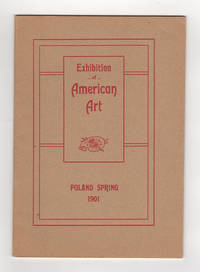
235South Poland: Hiram Ricker & Sons 1901. Small 8vo tan wraps.32 pp. 6 b&w illus. Gives names addresses biographies and works exhibited for 67 American painters. Among those exhibiting were Frank Benson Irving Ramsey Wiles Julian Alden Weir John La Farge William Merritt Chase. The art exhibitions at the Poland Spring House one of the most fashionable resorts of the period included works by many if not most of the leading painters of the period. Scarce and desirable. Tape stain and pull mark at upper left of front cover a few light stains within near very good overall. South Poland: Hiram Ricker & Sons, 1901 unknown
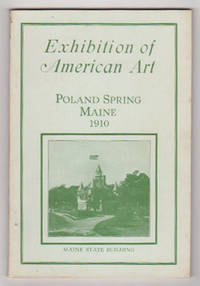
29N.p.: Hiram Ricker & Sons 1910. 8vo light green wraps. 43 pp. illus. The sixteenth annual exhibition included 138 paintings featuring works by such major figures as Frank Benson William Merritt Chase Childe Hassam and Irving Ramsey Wiles. Fifteen paintings are illustrated in half-tone. Includes brief biographies. The art exhibitions at the Poland Spring House one of the most fashionable resorts of the period included works by many if not most of the leading painters of the period. Scarce and desirable. A very nice copy. N.p.: Hiram Ricker & Sons, 1910 unknown
236South Poland: Hiram Ricker & Sons 1906. Small 8vo. tan wraps. 46 pp. 10 b&w illus. Lists 161 American paintings total includes 28 miniatures and 6 works of sculpture. Of the ten illustations nine are of paintings and one shows a work sculpture. Includes an index of painters and sculptors with addresses and biographies. The art exhibitions at the Poland Spring House one of the most fashionable resorts of the period included works by many if not most of the leading painters of the period. Scarce and desirable. Very good light soiling. South Poland: Hiram Ricker & Sons, 1906 unknown
240South Poland: Hiram Ricker & Sons 1915. Small 8vo wrappers. 48 pp. 17 b& w illus. Lists 162 American paintings total includes 14 miniatures and 22 works of sculpture. Also includes an index of painters and sculptors with addresses and biographies. Among the artists exhibiting were Robert Vonnoh Walter Launt Palmer Phillip Little Childe Hassam and William Merritt Chase. The art exhibitions at the Poland Spring House one of the most fashionable resorts of the period included works by many if not most of the leading painters of the period. Scarce and desirable. Very good. South Poland: Hiram Ricker & Sons, 1915 unknown
195342814Jerusalem; Youth Dept. Of The Zionist Organisation 1953. 1st edition. Clothbound with dust jackets. 4to. 215 10 288 pages. 28 cm. In Hebrew. With 14 black and white illustrations. Title translates as: "House of Israel in Poland; from the earliest days to the Holocaust. " A two volume Yizkor for Polish Jewish community history. Bound in red cloth. Subjects: Jews - Poland - History. Light shelf wear to cloth jacks show wear very good condition in good jackets. YIZ-15-20A-E. Jerusalem; Youth Dept. Of The Zionist Organisation unknown
pages; 1st edition. Original publisher's cloth, large 8vo 566 pages. In Yiddish. Yizkor book to murdered teachers in Poland. Very Good Condition. (yiz-20-13) xx
195331692Nyu-York; Farlag “unzer Tsayt†1953. 1st edition. Publishers cloth. 8vo. 252; 318; 288; 304; 308; 244; 275 pages. 23 cm. First edition. In Yiddish. “Poland; Memoirs and Picturesâ€. The grand epic memoir of Yekhiel Yeshaye Trunk 1887–1961 ; which he began as soon as arriving in New York in 1941 it took a decade to complete. “Trunk’s broad political social and cultural experiences informed his autobiographical epic Poyln a study of the decline of the upper strata of Polish Jewish society and the rise of a new secular Jewishness embodied in folklore Yiddish literature and the Bund. This work his crowning achievement focused almost entirely on the multifaceted collectivity of Polish Jewry while relegating his personal story and inner struggle to the sideline. †YIVO Encyclopedia . Trunk was the chief archivist of YIVO at the time of his death and was considered in an obituary published in the New York Times “one of the leading historians in the United States on the destruction of European Jewry during the Nazi era. †Seven volume set bound in green cloth with gilt title. Subjects: Authors Yiddish - Poland - Biography. Jews - Poland - History. First volume cloth heavily worn with previous owners bookstamp otherwise very clean. All other volumes have minor shelf wear to cloth otherwise clean and fresh. Very good condition. YIZ-15-9. Nyu-York; Farlag “unzer Tsayt†unknown
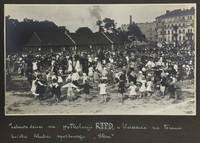
3728825<p>Poland c.1920s. 21ff. Album. 9½ x 13 inches. Beige cloth with colorful woven onlay; cord-bound. 23 captioned photographs mounted on black cardstock rectos approx. 4¾ x 8¾ inches tissue guards. Brief wear to head and tail of spine and corners; very good.</p> <p>Made by the Workers’ Society of Friends of Children in Warsaw and given to their Chicago branch this 1920s photograph album illustrates the strong link between Poles living in Warsaw and Chicago reflecting the wider story of the Polish diaspora at that time. The album documents that Polish immigrants in Chicago supported social projects back in Poland highlighting the cross-continental connections among Polish communities.</p> <p>The Workers’ Society of Friends of Children was established in 1919 to provide childcare and education centers for workers’ children and the children of the unemployed. The outreach included kindergartens schools summer camps meals and medical care. </p> <p>The album’s photographs show children’s homes and tents kindergarten-age children playing with blocks playtime camp scenes communal meals calisthenics sports clubs and a view of children on a beach along the Vistula River. Places seen include Warsaw the Helena Dłuska Children’s Home in Helenów Broszków Brok and Brest.</p> <p>The album is autographed inside by Tomasz Arciszewski 1877–1955 and Dr. Aleksander Landy 1881–1969 the Society’s founders in Poland. Arciszewski served as founding chairman of The Workers’ Society of Friends of Children Robotnicze Towarzystwo Przyjaciół Dzieci RTPD and along with Landy was an active member of the Polish Socialist Party PPS. Arciszewski served in the Socialist party and became Poland’s 31st Prime Minister. The album’s first image shows children at a Warsaw “Children’s Home†featuring Bolesław Limanowski 1835–1935 PPS co-founder among them.</p> <p>Clear evidence of how Polish immigrants in Chicago supported and engaged with social efforts back in Poland showing the strong international connections among Polish communities worldwide.</p> unknown
2 volumes in-8, demi-toile chagrinée noir, titres dorés, (4), 523 p. et (4), 499 p. Rarissime première et unique édition. Historique classé chronologiquement. Important appareil d'appendices au tome II. L'ouvrage a été édité à la librairie polonaise du Luxembourg dirigée par W adys aw Mickiewicz, fils d’Adam Mickiewicz. Historienne, publiciste, philanthrope, née Iwanowska, Dionizja Poniatowska (1816-1868) épousa Dariusz Poniatowski. "Dzielo wyd. anonimowo, autorka Dionizja Poniatowska ustalona na podst. bibliografii i PSB" (Nukat Union Cat. of Polish Res. librs). Reliure amateur. Cachet de bibliothèques. Quelques défauts de papier. Rousseurs éparses.
1369150Paris: Musée de l'Homme, Museum National d'Histoire Naturelle, 1962 in-4, nombreuses illustrations. Broché. Très bon état, cachet. Sommaire: Jacqueline DELANGE, Les arts anciens de la plaine du Tchad. - Annette LAMING-EMPERAIRE, Travaux archéologiques en Amérique du Sud. - Jacques MILLOT et Yvette LAPLAZE, Les felana malgaches. - Marie-Louise PASQUINO, Un costume finnois du XIIe siècle. - Monique ROUSSEL de FONTANES, Une exposition de papiers découpés polonais.
1373568Paris: Musée de l'Homme, Museum National d'Histoire Naturelle, 1987 in-4, nombreuses illustrations. Broché, très bon état.
40541766 - 1768 Pour les Eloges historiques de la Princesse Marie [...] et de Stanislas I [...] par M. l'abbé Bellet, Desaint, Paris, 1768, page de titre, 92 pages en numérotation continue et [1f.]. Pour l'Eloge du vrai sage [...], Claude Jean-Baptiste Bauche, Paris, 1766, 120 pages et [1f.] blanc. Pour l'Eloge de Monseigneur le Dauphin [...], François-Théodore Hautot, Saint-Quentin, 1766, 13 pages. Pour l'éloge funèbre de Monseigneur le Dauphin [...] par Marquez [...], Sacarau & Dupleix, Toulouse, 1766, faux-titre, page de titre, 40 pages. Pour l'Eloge [...] de M. Thomas, Regnard, Paris, 1766, 62 pages et [1f.] blanc. Pour l'Examen d'un discours de M. Thomas [...], H. C. De Hansy le jeune, Paris, 1766, faux-titre, page de titre, 63 pages. Pour l'Eloge funèbre [...] par l'Abbé Maury, Tarbé, Sens, Veuve Pierres & Fils, Paris, 1766, faux-titre, page de titre, 58 pages et [1f.] blanc. Pour l'Eloge funèbre [...] par M. Puget de St Pierre, Panckoucke, Paris, 1766, 40 pages et [1f.] blanc. L'ensemble relié en 1 volume plein veau brun, dos lisse orné de fleurons, pièce de titre de maroquin rouge, tranches rouges, coins frottés, coiffe supérieure arasée, première charnière très faible. En l'état.
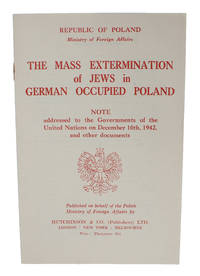
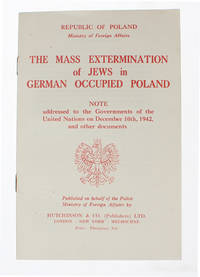
194360436London New York Melbourne printed in Great Britain Published on behalf of the Polish Ministry of Foreign Affairs 1943. 8vo. Stapled as issued. Title-page printed in red. Stapels with rust slightly affecting surrounding paper. A very fine near mint copy. 16 pp. <br/><br/><em>The scarce first printing of this hugely important publication which constitutes one of the very first official reports on Holocaust and one of the most accurate accounts that had been presented to the West changing their knowledge of what was actually going on. This seminal pamphlet consists of 1 Raczynski's account of the ongoing Holocaust based among other reports on the eye-witness-report by Jan Karski a Polish Government emissary in occupied Poland who bribed his way into a German concentration camp and witnessed the mass extermination of Jews 2 the seminal "Joint Declaration" by members of the United Nations in which "The above-mentioned Govenments and the French National Committee condemn in the strongest possible terms this bestial policy of cold-blooded extermination. They declare that such events can only strengthen the resolve of all free-loving peoples to overthrow the barbarous Hitlerite tyranny. They reaffirm their solems resolution to ensure that those responsible for these crimes shall not escape retribution and to press on with the necessary practical measures to this end." p. 12 3 an extract of Deputy Prime Minister Mikolajczy's statement on behalf of the Polish Government and 4 the text of Raczynski's broadcast of December 1942 in which pleaded for action wishing to make the public and the Allied nations "understand how real is the tragedy which is taking place not so very far from the shores of this island on the continet of Europe - on the soil of Poland. For more than three years the Germans have consistently done everything they could to hide from the eyes of the world the martyrdom of the Polish nation the like of which has never been known in the history of humanity. But "when we would keep silence the very stones will cry out"." p. 15.While the details were neither complete nor wholly accurate the Allies were aware of most of what the Germans had done to the Jews at a relatively early date. The mass murder of the Jews was of such dimensions however that at first they could not believe the reports that reached them. This quickly changed though.In February of 1942 Jacob Grojanowski an escaped prisoner of the Chelmno extermination camp provided the Oneg Shabbat group with detailed information about what went on at the Chelmno camp. His report became known as the Grojanowski Report. It was smuggled out of the Warsaw Ghetto via the Polish underground and reached London in June of 1942. It is not known exactly what happened to the report at that point but by February of 1942 the United States Office of War Information had decided not to release information about the extermination of Jews thinking that there was a risk of the public viewing the war as only being a Jewish problem. Thus the Grojanowski Report was not released. By at least October of 1942 British radio had broadcast news of the gassing of Jews to the Netherlands and in December 1942 the Western Allies released their Joint Declaration which is printed in the present publication describing and condemning in the strongest manner Hitler's violent attempts at exterminating the Jews of Europe. In 1942 Jan Karski 1914-2000 a Polish World War II resistance movement fighter and later professor at Georgetown University gave his first report to the Polish British and U.S. governments on what was going on in the German extermination camps in Poland.Karski reported to the Polish government in exile i.e. Raczynski who was the Ambassador and one of its most prominent leaders and the Western Allies on the situation in German-occupied Poland. Karski personally met with Franklin Roosevelt and British Foreign Secretary Anthony Eden to explain what went on in Poland and Raczynski wrote up the report. Eventually the American Government confirmed the reports to Jewish leaders in late November 1942 and shortly thereafter they were publicized i.e. in the present publication. Karski's report through Raczynski became one of the most important reports in the history of the Holocaust being a major factor in informing the West. It sparked one of the first official publications from the Allies on the mass extermination of Jews in Poland and resulted in the official reports and condemnations from the Allied countries i.e. the "Joint Declaration" also published here."The purpose of this publication is to make public the contents of the Note of December 10th 1942 addresses by the Polish Government to the Governments of the United Nations concerning the mass extermination of Jews in the Polish territories occupied by Germany and also other documents treating on the same subject. . In the hope that the civilized worlds will draw the appropriate conclusions the Polish Government desire to bring to the notice of the public by means of the present White Paper these renewed German efforts at mass extermination with the employment of fresh horrifying methods." From the Introductory Note p. 3."Most recent reports present a horrifying picture of the position to which the Jews in Poland have been reduced. The new methods of mass slaughter applied during the last few months confirm the fact that the German autorities aim with systematic deliberation at the total extermination of the Jewsih population of Poland and of the many thousands of Jews whom the German authorities have deported to Poland from Western and Central European countries and from the German Reich itself.The Polish Government consider it their duty to bring to the knowledge of the governments of all civilized countries the following fully authentical information received from Poland during recent weeks which indicates all too plainly the new methods of extermination adopted by the German authorities." p. 4. </em> unknown
194360182London New York Melbourne printed in Great Britain Published on behalf of the Polish Ministry of Foreign Affairs 1943. 8vo. Stapled as issued. Title-page printed in red. Stapels with rust slightly affecting surrounding paper. A very fine near mint copy. 16 pp. <br/><br/><em>The scarce first printing of this hugely important publication which constitutes one of the very first official reports on Holocaust and one of the most accurate accounts that had been presented to the West changing their knowledge of what was actually going on. This seminal pamphlet consists of 1 Raczynski's account of the ongoing Holocaust based among other reports on the eye-witness-report by Jan Karski a Polish Government emissary in occupied Poland who bribed his way into a German concentration camp and witnessed the mass extermination of Jews 2 the seminal "Joint Declaration" by members of the United Nations in which "The above-mentioned Govenments and the French National Committee condemn in the strongest possible terms this bestial policy of cold-blooded extermination. They declare that such events can only strengthen the resolve of all free-loving peoples to overthrow the barbarous Hitlerite tyranny. They reaffirm their solems resolution to ensure that those responsible for these crimes shall not escape retribution and to press on with the necessary practical measures to this end." p. 12 3 an extract of Deputy Prime Minister Mikolajczy's statement on behalf of the Polish Government and 4 the text of Raczynski's broadcast of December 1942 in which pleaded for action wishing to make the public and the Allied nations "understand how real is the tragedy which is taking place not so very far from the shores of this island on the continet of Europe - on the soil of Poland. For more than three years the Germans have consistently done everything they could to hide from the eyes of the world the martyrdom of the Polish nation the like of which has never been known in the history of humanity. But "when we would keep silence the very stones will cry out"." p. 15. While the details were neither complete nor wholly accurate the Allies were aware of most of what the Germans had done to the Jews at a relatively early date. The mass murder of the Jews was of such dimensions however that at first they could not believe the reports that reached them. This quickly changed though. In February of 1942 Jacob Grojanowski an escaped prisoner of the Chelmno extermination camp provided the Oneg Shabbat group with detailed information about what went on at the Chelmno camp. His report became known as the Grojanowski Report. It was smuggled out of the Warsaw Ghetto via the Polish underground and reached London in June of 1942. It is not known exactly what happened to the report at that point but by February of 1942 the United States Office of War Information had decided not to release information about the extermination of Jews thinking that there was a risk of the public viewing the war as only being a Jewish problem. Thus the Grojanowski Report was not released. By at least October of 1942 British radio had broadcast news of the gassing of Jews to the Netherlands and in December 1942 the Western Allies released their Joint Declaration which is printed in the present publication describing and condemning in the strongest manner Hitler's violent attempts at exterminating the Jews of Europe. In 1942 Jan Karski 1914-2000 a Polish World War II resistance movement fighter and later professor at Georgetown University gave his first report to the Polish British and U.S. governments on what was going on in the German extermination camps in Poland.Karski reported to the Polish government in exile i.e. Raczynski who was the Ambassador and one of its most prominent leaders and the Western Allies on the situation in German-occupied Poland. Karski personally met with Franklin Roosevelt and British Foreign Secretary Anthony Eden to explain what went on in Poland and Raczynski wrote up the report. Eventually the American Government confirmed the reports to Jewish leaders in late November 1942 and shortly thereafter they were publicized i.e. in the present publication. Karski's report through Raczynski became one of the most important reports in the history of the Holocaust being a major factor in informing the West. It sparked one of the first official publications from the Allies on the mass extermination of Jews in Poland and resulted in the official reports and condemnations from the Allied countries i.e. the "Joint Declaration" also published here. "The purpose of this publication is to make public the contents of the Note of December 10th 1942 addresses by the Polish Government to the Governments of the United Nations concerning the mass extermination of Jews in the Polish territories occupied by Germany and also other documents treating on the same subject. . In the hope that the civilized worlds will draw the appropriate conclusions the Polish Government desire to bring to the notice of the public by means of the present White Paper these renewed German efforts at mass extermination with the employment of fresh horrifying methods." From the Introductory Note p. 3. "Most recent reports present a horrifying picture of the position to which the Jews in Poland have been reduced. The new methods of mass slaughter applied during the last few months confirm the fact that the German autorities aim with systematic deliberation at the total extermination of the Jewsih population of Poland and of the many thousands of Jews whom the German authorities have deported to Poland from Western and Central European countries and from the German Reich itself.The Polish Government consider it their duty to bring to the knowledge of the governments of all civilized countries the following fully authentical information received from Poland during recent weeks which indicates all too plainly the new methods of extermination adopted by the German authorities." p. 4. </em> unknown
223835A Paris, chez Plancher, 1818 in-8, LX-166 pp., tableau et plan dépliants, bradel demi-basane brune à coins, dos orné (reliure postérieure). Rousseurs. Restauration au tableau avec légère perte d'une lettre.
12825Varsovie, Editions Polonia, 1960 ; in-4. 267 pp. - Nombreuses photographies in-texte en héliogravure. Pleine toile grise déditeur (décolorée), titre imprimé à froid sur le plat sup et au dos. Jaquette absente. Intérieur frais.
1983LFA0185cN° 25 de la revue "SILEX" (1983) : 144 pages, format 200 x 240 mm, illustrée, brochée (Grenoble)
1983LFA-126737826Revue trimestrielle de 142 pages, format 200 x 240 mm, illustrée, brochée, Impr. du Néron, bon état
9927Paris, Didier, 1856. 2 volumes in-12, reliure plein cuir.
2000LFA-126742126Revue de 28 pages, format 205 x 300 mm, illustrée, brochée, bon état
1977LFA-126748680Une revue de 24 pages, format 150 x 240 mm, illustrée, brochée, publiée en 1977, Société des Amateurs de Jardins Alpins, bon état