1 679 résultats
192599933239Rieder 1925, In-8 Rieder 1925, In-8 broché, 136 pages. Bon état.
199874Paris, Honoré Champion, 1912 in-8, VIII-493-[2] pp., demi-toile Bradel cerise, pièce de titre noire, couverture conservée (reliure moderne). Bon exemplaire.
1833115186P., Mme Cardinal, Cherbuliez, 1833, in-8°, xlvii-501 pp, deuxième édition, un portrait gravé sous serpente en frontispice, reliure demi-chagrin carmin, dos lisse avec titres, filets pointillés et caissons dorés (rel. de l'époque), traces d'humidité anciennes, bon état. Exemplaire très bien relié
244825Paris, Leroy, 1913 fort gr. in-4, III-314 pp., index et biblio., toile écrue (reliure moderne).
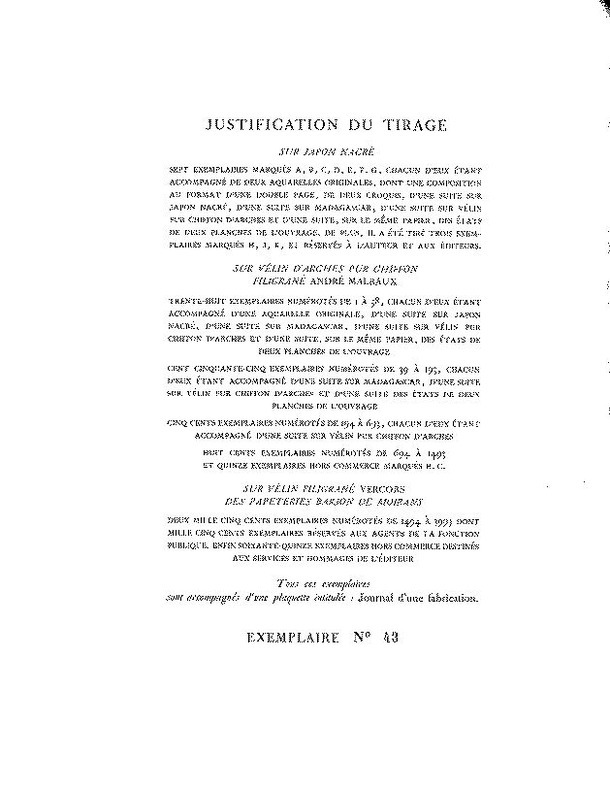
25566Paris Imprimerie Nationale / Editions Lidis 1961 in 4 (28,5x23) 1 volume broché en faux-feuillets sous couverture rempliée imprimée, rhodoïd, 158 pages [1]. Ouvrage illustré de lithographies originales en couleurs de Walter Spitzer tirées par les ateliers Mourlot Frères. Tirage limité, celui-ci un des exemplaires numérotés sur papier vélin d'Arches pur chiffon filigrané Malraux (un des 800 exemplaires numérotés 694 à 1493). Bel exemplaire ( Photographies sur demande / We can send pictures of this book on simple request )
25568Paris Imprimerie Nationale / Editions Lidis 1961 in 4 (28,5x23) 1 volume broché en faux-feuillets sous couverture rempliée imprimée, rhodoïd, 120 pages [1]. Ouvrage illustré de lithographies originales en couleurs de Walter Spitzer tirées par les ateliers Mourlot Frères. Tirage limité, celui-ci un des exemplaires numérotés sur papier vélin d'Arches pur chiffon filigrané Malraux (un des 800 exemplaires numérotés 694 à 1493). Bel exemplaire ( Photographies sur demande / We can send pictures of this book on simple request )
20736Imprimerie Nationale Editions Lidis, 1961 Broché, couverture rempliée in 4 (29 x 23 cm), 120 pages. Illustration de 3 lithographies tirées sur les Presses de Mourlot, oeuvres de Walter Spitzer. sous rhodoïd et étui dans la même matière. Tirage à 4075 exemplaires : 7 exemplaires marqués de A à G sur Japon, un des 1493 exemplaires numérotés de 1 à 1493 sur Vélin d'Arches Pur Chiffon filigrané André Malraux,N°43.Plats de l’emboitage defraichis,traces de mouillures en marge de quelques feuillets,sinon bon etat.
25569Paris Imprimerie Nationale / Editions Lidis 1961 in 4 (28,5x23) 1 volume broché en faux-feuillets sous couverture rempliée imprimée, rhodoïd, 75 pages [1]. Ouvrage illustré de lithographies originales en couleurs de Walter Spitzer tirées par les ateliers Mourlot Frères. Tirage limité, celui-ci un des exemplaires numérotés sur papier vélin d'Arches pur chiffon filigrané Malraux (un des 800 exemplaires numérotés 694 à 1493). Bel exemplaire ( Photographies sur demande / We can send pictures of this book on simple request )
25567Paris Imprimerie Nationale / Editions Lidis 1961 in 4 (28,5x23) 1 volume broché en faux-feuillets sous couverture rempliée imprimée, rhodoïd, 202 pages [2]. Ouvrage illustré de lithographies originales en couleurs de Walter Spitzer tirées par les ateliers Mourlot Frères. Tirage limité, celui-ci un des exemplaires numérotés sur papier vélin d'Arches pur chiffon filigrané Malraux (un des 800 exemplaires numérotés 694 à 1493). Bel exemplaire ( Photographies sur demande / We can send pictures of this book on simple request )
25570Paris Imprimerie Nationale / Editions Lidis 1962 in 4 (28,5x23) 1 volume broché en faux-feuillets sous couverture rempliée imprimée, rhodoïd, 177 pages [2]. Ouvrage illustré de lithographies originales en couleurs de Walter Spitzer tirées par les ateliers Mourlot Frères. Tirage limité, celui-ci un des exemplaires numérotés sur papier vélin d'Arches pur chiffon filigrané Malraux (un des 800 exemplaires numérotés 694 à 1493). Bel exemplaire ( Photographies sur demande / We can send pictures of this book on simple request )
20734Paris, Imprimerie Nationale, Editions Lidis 1961,IN4 ,177pp. Bon Etat. Un vol. sous chemise imprimée, rempliée, étui et emboîtage décoré un peu defraichi, Ouvrage illustré de lithographies originales en couleurs de Walter Spitzer tirées par les ateliers Mourlot Frères. Tirage lim. celui ci; un des exemplaires numéroté sur papier vélin d'Arches.Bon etat sauf bord tranche un peu tachée,N°43
20737Paris, Imprimerie Nationale, Editions Lidis 1961,IN4 en feuilles, 8 lithogr. orig. (1 a double page),pp. 208 . Bon Etat. Un vol. sous chemise imprimée, rempliée, étui et emboîtage décoré, Ouvrage illustré de lithographies originales en couleurs de Walter Spitzer tirées par les ateliers Mourlot Frères. Tirage lim. celui ci; un des exemplaires numéroté sur papier vélin d'Arches N°43..Bon etat,bords chemise leg.defraichis.
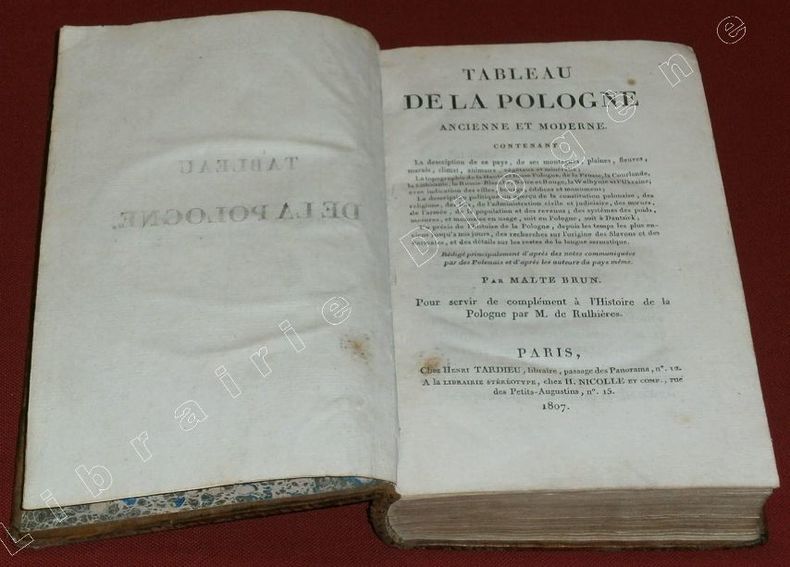
49175Paris Chez Henri Tardieu, libraire / , A la Librairie Stéréotype, chez H. Nicole et comp 1807 in 8 (20x12,5) 1 volume reliure demi basane fauve de l'époque, dos lisse orné de faux nerfs dorés (épidermures sur le dos, mors faibles), XII et 498 pages [1], petite trace de mouillure claire dans le bas des 8 premiers feuillets. Conrad Malte-Brun, 1775-1826. Contenant: Tableau de la Pologne ancienne et moderne contenant : La description de ce pays, de ses montagnes, plaines, fleuves, marais, climat, animaux, végétaux et minéraux ; La Topographie de la Haute et Basse Pologne, de la Prusse, la Courlande, la Lithuanie, la Russie-Blanche, Noire et Rouge, la Wolhynie et l'Ukraine ; avec indication des villes, bourgs, édifices et monumens ; La description politique ou aperçu de la constitution polonaise, des religions, des lois, de l'administration civile et judiciaire, des moeurs, de l'armée, de la population et des revenus ; des systèmes des poids, mesures, et monnaies en usage, soit en Pologne, depuis les temps les plus anciens jusqu'à nos jours, des recherches sur l'origine des Slavons et des Sarmates, et des détails sur les restes de la langue sarmatique. Rédigé principalement d'après les notes communiquées par des Polonais et d'après les auteurs du pays même par Malte Brun, pour servir de complément à l'Histoire de la Pologne par M. de Rulhières. Bon exemplaire ( Photographies sur demande / We can send pictures of this book on simple request )
91877Paris, chez Henri Tardieu, Libraire, A la Librairie Stéréotype, chez H. Nicole et comp., 1807, 1 volume in-8 de 203x130 mm environ, xij-498 pages, (1) f. (errata), pleine basane racinée fauve, titres dorés sur dos lisse, orné de motifs répétés et fers dorés, coupes dorés, gardes marbrées. Quelques rousseurs, petites galeries de ver dans la marge sans atteinte au texte, coins émoussés, frottements et épidermures sur le cuir, sinon bon état.
27214PARIS, P.U.F. - Fondée en 1878 par Gabriel Monod, publiée avec le concours du CNRS et de la 6e section de l'Ecole des Hautes Etudes.- Revue historique N° 533, janvier-mars 1980 - In-8, 15,5 x 24 cm - Broché - 296 pages - Très frais, comme neuf - Envoi rapide et sqoigné
2024LFA-126749281Un ouvrage de 348 pages, format 205 x 315 mm, illustré, relié cartonnage couleurs, publié en 2024, Pekowice, bon état
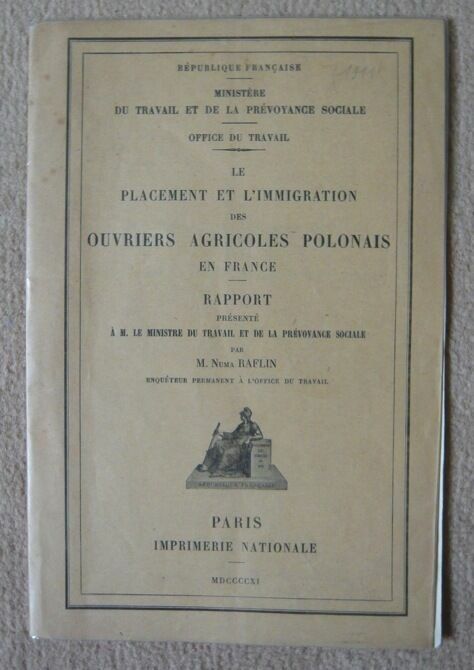
191165451911. Paris Imprimerie nationale 1911 - Broché couv rempliée 15 cm x 23 cm 30 pages - Rapport présenté à M. le Ministre du Travail et de la Prévoyance sociale par M. Numa Raflin - Bon état
8648Adolphe Rion Vers 1840
17627Grenoble, imp. Prudhomme, 1864, 1 broché, dos renforcé. in-8 de 256 pages, exemplaire à pleines marges ;
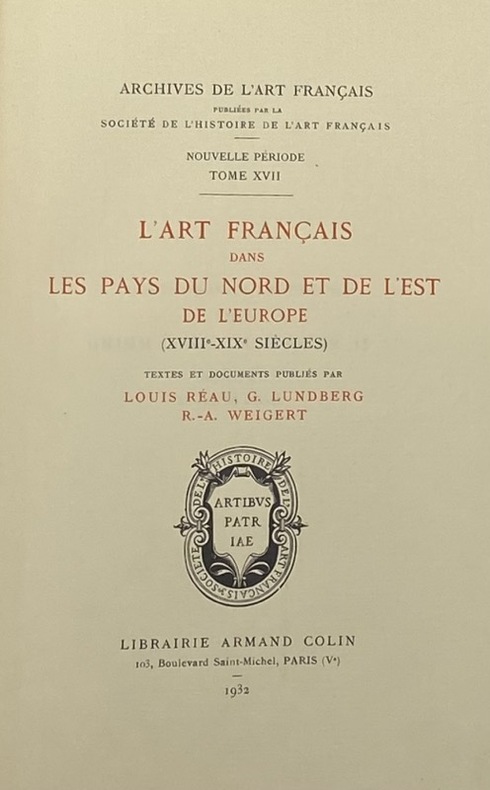
174662Paris, Armand Colin, 1932 in-8, 488 pp., planches, broché. Mouillure sur la couverture.
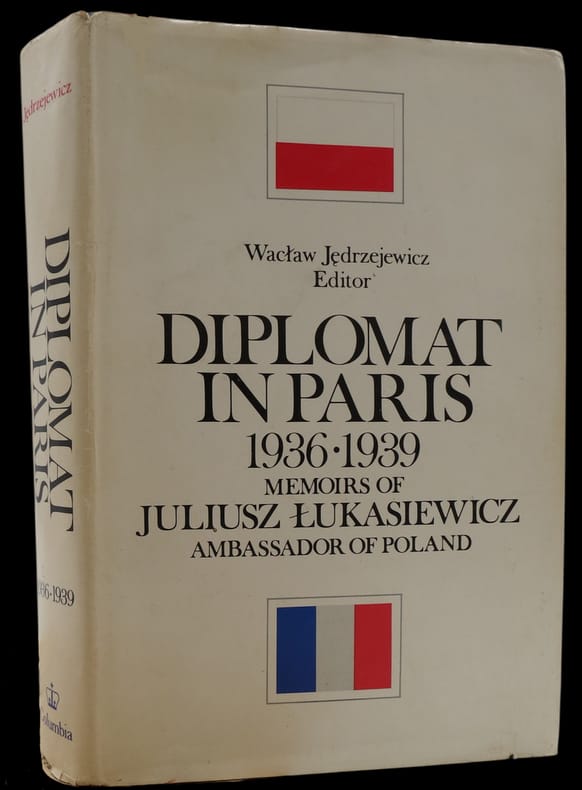
197071531New York, Columbia University Press, 1970, gr. in-8°, xxvi-408 pp, 8 pl. de photos hors texte, biblio, index, reliure toile éditeur, jaquette, bon état. Texte en anglais
20743Krakow ,WB.L. Anczyc i Spolki, 1886.IN8 pleine toile noire,titre au dos,260 p. ; 22 cm.
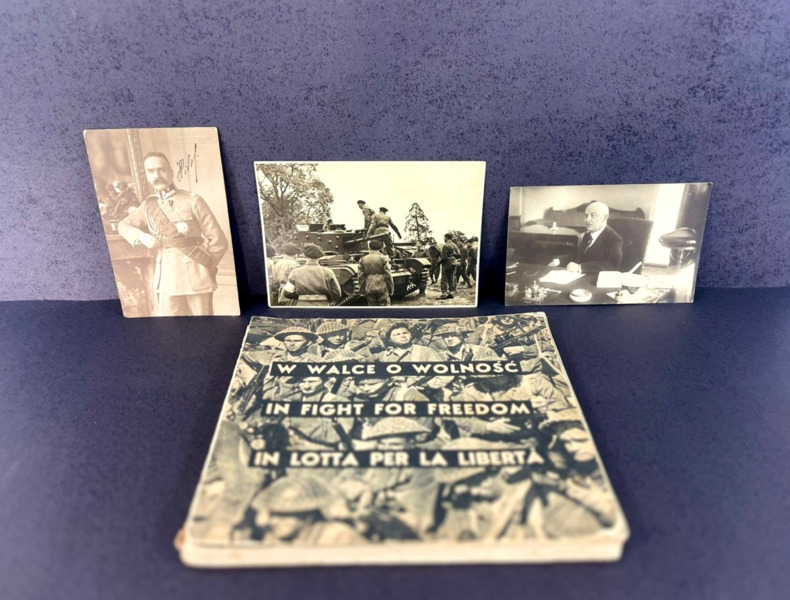
1945517This is a set which belonged to Janusz Gluchowski, a high-ranking Polish military officer at the time of the WW2. The set contains three original B&W pictures. First one: undated postcard showing Marshal Jozef Pilsudski, signed by himself in black ink, 8.5 x 13.5 cm, with two embossed mentions above and below. Second picture: undated postcard showing Poland President Gabriel Narutowicz, with a written mention on the back. Third picture: 11 x 15.5 cm photograph. General Tadeusz Bór-Komorowski inspecting a British Cromwell tank, accompanied by Polish officers of the 3rd Armored Regiment (3 puk pancerny). The image was captured during an official ceremony in the city of Kelso, Scotland, in the immediate post-war period, on June 15, 1945. The scene shows the General in an observation position, climbing onto the tank while surrounded by Polish soldiers. The tank corresponds to a British model widely used by Polish forces in exile during the Western European campaign. On the reverse, the following handwritten inscriptions appear: VI 1945, Kelso. N. Wódz gen. Bór-Komorowski dokonuje inspekcji 3 p. panc. N. Wódz w towarzystwie bryg. puku na czogu." / June 15, 1945, Kelso The book is an illustrated three-languages (Polish, English and Italian) set commemorating the struggles of the Polish II Corps. Edited by Wyda Rererat [Referat] Kultury i Prasy Kresowej Dywizji Piechoty in Rome, 1945. Oblong book of 21 x 19 cm, unpaginated (144 pp.). Cover detached. Endpapers and first page show Janusz Gluchowski's stamp. In publisher's photographically illustrated wrappers. Each page contains a photographic image or a photomontage accompanied with a short text in three languages. Front cover shows some wear and tear, the binding is a bit loose - we would advise having this book bound. The Polish II Corps was a major tactical and operational unit recruited from Polish deportees in the Soviet Gulags in 1943. First they fought in the Middle East, and in 1944 February they were transferred to Italy and as independent part of the British Army to fight in the Italian campaign, in the battles of Monte Cassino and Ancona and also the Battle of Bologna during the final offensive in Italy in 1945. The book goes through the story of Poland and the later established Polish II Corps, starting with the German and Soviet occupation in 1939. It shows the deportation of Poles to forced labour to the Gulag and, after the Polish-Russian Military Agreement in 1941, the establishment of the Polish Army on Soviet soil, also their military training and their fights in various battles. Janusz Julian Gluchowski was a Major General in the Polish Army during the Second Polish Republic. He was born on August 6, 1888, in Bukowa. He fought in the Polish Legions in World War I, the Polish-Ukrainian War, the Polish-Soviet War, and the invasion of Poland by Nazi Germany, Slovakia, and the Soviet Union in 1939, which culminated in the start of World War II. In his adolescence, he attended high school in Czstochowa. In 1905, he became a member of the Combat Organization of the Polish Socialist Party and was wounded in the hand during an attack near Czstochowa. To avoid arrest by the Russian authorities, he left for Belgium, where he studied at the University of Liège. He returned to divided Poland around 1910 and settled in Austrian Galicia. In 1912 he graduated from the Officers' School of the Riflemen's Association in Stroza, near Krakow. In the early hours of August 1914, he commanded a platoon in Oleandria and was Wadysaw Belina-Pramowski's representative during the legendary attack of the so-called Seven Lancers of Belina (Uaska siódemka). On August 6th, together with the First Cadre Company, he left Krakow and marched to Miechów. In October 1914 he was promoted to Lieutenant (Poruchik) and, in November 1916, to Rittmeister (Cavalry Master). Until 1917 he served in the First Uhlan Regiment of the Polish Legions. After the Oath Crisis (Kryzys przysigowy) he was interned first in Fort Beniaminów and later in Werl. Released in October 1918, he went to Lublin, where, in early November, he formed the Third Ulan Regiment (later renamed the Seventh Ulan Regiment of Lublin). Along with his unit, he fought in the Polish-Soviet War. On May 29, 1920, he was promoted to Polkovnik. He was transferred in July 1920 to Eastern Galicia, taking command of the First Cavalry Brigade, fighting against the Soviets in Galicia and Volhynia. After the war, he remained in this position until 1925, when he was transferred to the Fourth Cavalry Brigade. Promoted to Brigadier General on March 16, 1927. Appointed commander of the Center for Higher Military Studies on June 4, 1930, and three years later, after the death of General Stanislaw Tessaro, he was appointed commander of Military District X in Przemyl. In October 1935, he became Deputy Minister of Military Affairs. In the early days of the 1939 invasion of Poland, Gluchowski ordered General Walerian Czuma to prepare the defense of Warsaw. In mid-September 1939, he fled to Romania. After his escape, he managed to travel to the Middle East and, in January 1941, received orders to go to London. In October 1941, he was appointed Commander of the Training Brigade stationed in Scotland. On September 23, 1943, he was appointed commander of all Polish Army units stationed in Great Britain, except the First Independent Parachute Brigade, which remained under the authority of the Commander-in-Chief. He was promoted to Major General on June 1, 1945. He decided not to return to Soviet-occupied Poland and remained in Great Britain. He frequently criticized the Soviet regime and the Soviet occupation authorities in postwar Poland. Furthermore, he was one of the founders and president of the Jozef Pilsudski Institute in London. He was, therefore, an active member of the Polish community in Great Britain. He was president and honorary member of several Polish veterans' organizations. He died on June 11, 1964, in London, England.
89076aafBruxelles, Imprimerie et Lithographie de Ch. Vanderauwera, 1860, in-8vo, 75 p., brochure originale, fendue.