Cospar Colloquium 1989 (Warsaw, Poland)Biblio.com

76 résultats
Z1-L-032-01900Pergamon. Used - Good. Ships from UK in 48 hours or less usually same day. Your purchase helps support Sri Lankan Children's Charity 'The Rainbow Centre'. Ex-library so some stamps and wear but in good overall condition. 100% money back guarantee. We are a world class secondhand bookstore based in Hertfordshire United Kingdom and specialize in high quality textbooks across an enormous variety of subjects. We aim to provide a vast range of textbooks rare and collectible books at a great price. Our donations to The Rainbow Centre have helped provide an education and a safe haven to hundreds of children who live in appalling conditions. We provide a 100% money back guarantee and are dedicated to providing our customers with the highest standards of service in the bookselling industry. Pergamon unknown
2134058-6Used - Good. Pages intact with minimal writing/highlighting. The binding may be loose and creased. Dust jackets/supplements are not included. Stock photo provided. Product includes identifying sticker. Better World Books: Buy Books. Do Good. unknown
19981303421PN. New. 1998. Soft Cover. Date is original print. This is a reprint edition . PN paperback
2018BN127142Taylor & Francis Ltd 2018. 2018. Hardcover. Qualitative Marketing Research <br/><br/>Qualitative Marketing Research Dominika University of Warsaw Poland Maison Taylor & Francis Ltd hardcover
1998Star-9783790811193Springer 1998. Hardcover. New. Springer hardcover
1998Star-9783790811193Springer 1998. Hardcover. New. Springer hardcover
1023897555.Ghardcover. Good. Access codes and supplements are not guaranteed with used items. May be an ex-library book. hardcover
50642065like new. unknown
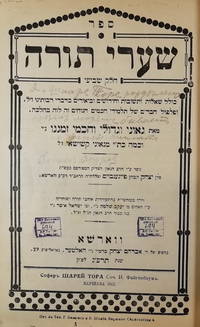
000201123Yitschak Faigenbaum of Warsaw. Shaarei Tora. Djerba 1913. Publisher: Avraham Yitzhak Halter Yakov Shvabe Gutman Piment. In Hebrew. The listing price is for a single volume of this title. The copy is in fair condition without binding. Some imperfections are among the following common defects: holes damaged pages tears water stains foxing worm holes or tracers age spots frayed margins handwritten notes inscriptions censorship stamps. Please contact us for more details on the condition of the book. SKU000201123 unknown
2026x-1009732269Cambridge University Press 2026. Hardcover. New. 75 pages. 6.00x0.25x9.00 inches. Cambridge University Press hardcover
197649668Washington DC: Defense Intelligence Agency 1976. good. Approx. 50 wraps illus. diagrams recommended reading. DDI-1100-128-76. This Intelligence Handbook supersedes Department of the Army Pamphlet No. 20-236 Historical Study Night Combat dated June 1953. The information in this Handbook has been obtained principally from Soviet open-source publications. It was written for the general orientation of members of the United States Armed Forces and for the training of troops both in the field and in the classroom in night combat operations. Defense Intelligence Agency paperback
198223277Washington DC: Defense Intelligence Agency 1982. fair to good. Quarto approx. 250 wraps profusely illus. appendices covers somewhat worn & soiled sm tears at spine lower corner fr cover & some pgs bent. This unclassified guide to Soviet Navy surface ships covers aircraft carriers principal surface combatants patrol combatants amphibious warfare ships mine warfare ships coastal patrol--river/roadstead craft amphibious warfare craft mine warfare craft underway replenishment ships material support ships fleet support ships and other auxiliaries. Defense Intelligence Agency paperback
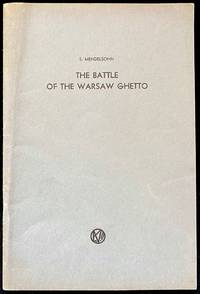
19444620<p>New York: Yiddish Scientific Institute 1944. Paperback. 1st separate edition. Original Paper Wrappers. 8vo. 28 pages. 23 cm. Wolff #I: 1441. Includes map in black red and white as the full-page center spread. <br />Early report on the uprising: "It is as yet impossible to give a complete picture of the resistance in the Warsaw Ghetto.The material is as yet too scarce. " <br />"This paper was read at the eighteenth annual conference of the Yiddish scientific institute on January 9 1944 .The paper was delivered in Yiddish and is published in the Yivo bleter Journal of the Yiddish scientific institute XXIII 1 January-February 1944." <br />Very good condition. B HOLO2-65-17.</p> Yiddish Scientific Institute paperback
1258590883.Gpaperback. Good. Access codes and supplements are not guaranteed with used items. May be an ex-library book. paperback
2025x-1032501030Taylor & Francis Ltd 2025. Hardcover. New. 114 pages. 8.50x5.43x8.74 inches. Taylor & Francis Ltd hardcover
1391823176.Gpaperback. Good. Access codes and supplements are not guaranteed with used items. May be an ex-library book. paperback
1396761489.Ghardcover. Good. Access codes and supplements are not guaranteed with used items. May be an ex-library book. hardcover
0243057407.Gpaperback. Good. Access codes and supplements are not guaranteed with used items. May be an ex-library book. paperback
ria9780198892915_inpHardback. New. New Book; Fast Shipping from UK; Not signed; Not First Edition; Drawing on a rich variety of ideas theories empirical cases real and fictitious stories as well as examples and images from art and literature Monika Kostera demonstrates the splendid complexity of academic ecosystems. hardcover
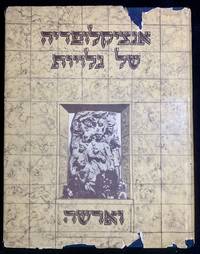
195343056Yerushalayim Jerusalem: Hevrat Entsiklopedyah shel galuyot 1953. First edition. Original boards with illustrated dust jacket 4to 816 columns 408 pages including illustrations and portraits. 31 cm. In Hebrew.<br> Encyclopedia on Jewish life in Warsaw published as part 1 of the Encyclopedia of the Diaspora series published in Jerusalem from the 1950s-1970s. Includes bibliographical references. Includes errata slip.<br> “Before World War II Warsaw was a major center of Jewish life and culture in Poland. Warsaw's prewar Jewish population of more than 350000 constituted about 30 percent of the city's total population. The Warsaw Jewish community was the largest in both Poland and Europe and was the second largest in the world second only to New York City…<br> Following the German invasion of Poland on September 1 1939 Warsaw suffered heavy air attacks and artillery bombardment. German troops seized Warsaw on September 27 1939.†USHMM.<br> SUBJECTS: Jews -- Poland -- Warsaw -- History. Holocaust Jewish 1939-1945 -- Poland -- Warsaw. Ethnic relations. Jews. OCLC: 34717605.<br> Dust jacket is lightly worn. Very Good condition in Good Dust Jacket. YIZ-23-66-. Yerushalayim [Jerusalem]: Hevrat Entsiklopedyah shel galuyot unknown
1987AME_9780139623745PrenticHall 1987. 1st. Hardcover. New/New. PrenticHall hardcover
1987DBS-9780139623745Prentice Hall 1987. 1st. Hardcover. New. Prentice Hall hardcover
1987DBS-9780139623745Prentice Hall 1987. 1st. Hardcover. New. Prentice Hall hardcover
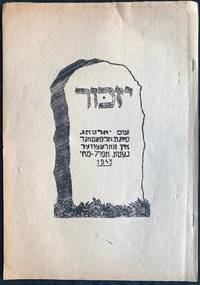
194443395Shvayts Switzerland: Undzer Vort Poale Tziyon Left 1944. May 1944. 1st edition. Original stapled printed paper cover 4to 2 25 pages. <br> In Yiddish. Title translates as "In Memoriam. On the Anniversary of the Uprising in the Warsaw Ghetto April-May 1943.<br> First Anniversary of the Warsaw Ghetto uprising published in Europe during the Holocaust by Jewish "Poale Tziyon Left" members in Switzerland. The organization's name which means "Workers of Zion" is sometimes also romanized as "Poale Zion" or "Poaley Syjon." <br> <br> The imprint "Undzer Vort" "Our Word" was a Left Poale Tziyon publisher in Switzerland which also published a mimeograph newspaper titled "Undzer Vort" OCLC: 232675203 during this same period. A fully underground version of the paper was also published in Nazi-Occupied Belgium see below.<br> <br> Indeed Poale Tsiyon Left was an important part of Jewish resistance throughout Europe most notably during the Warsaw Ghetto Uprising which this publication commemorates. <br> <br> "The Holocaust-era Jewish resistance group ZOB was formed from a coalition including Hashomer Hatzair Dror Bnei Akiva the Jewish Bund various Jewish Communist groups and both factions of Poale Zion. Poale Zion was also active in the Anti-Fascist Bloc.<br> Several notable Jewish resistance fighters during the Holocaust particularly those involved in the Warsaw Ghetto Uprising were members of Poale Zion. They include:<br> <br> Adolf Berman Warsaw ZOB fighter; Secretary of Zegota Poale Zion Left<br> Hersz Berlinski member of Warsaw ZOB Command Poale Zion Left<br> Yochanan Morgenstern member of Warsaw ZOB Command Poale Zion Right<br> Emanuel Ringelblum member of Warsaw ZOB; chronicler of the Warsaw Ghetto Poale Zion Left" Wikipedia.<br> <br> The booklet opens with the moving story of the start of the uprising:<br> <br> "It has been a year since the glorious uprising of the Jews in the Warsaw ghetto.<br> April 19 1943 - barely a few tens of thousands of Jews left in Warsaw after about half a million of their brothers and sisters were exterminated in the most gruesome way they rose up with organized resistance against the renewed attempts.that they too like the previous ones would be led out like sheep to the slaughter.<br> Forty thousand Jews weapons in hand opposed an enemy tenfold a hundred hundred times outnumbered.Women men and children the high class and the humble.<br> From the beginning they all knew without exception that they would be defeated that the outcome was not in doubt and that the enemy intended nothing but destruction for all of them.<br> But no Nazi expected to fall on such a battlefield.<br> And his was the biggest slap in the face which the proud Nazis.so hated when it was received from these these trampled down these unrefined these scorned these despised Jewish 'untermenchen'" Translated from the opening paragraphs on page 1.<br> <br> The publication later continues with a damnation of the "democracies" who did so little and a holding up of the comrades of Poale Tziyon who are doing so much fighting on all fronts:<br> <br> "The 'world democracies' didn't do anything.to save the Jewish victims and to stop the misery train they issued platonic statements about punishing the 'crimes' after the massacre. The warnings have so far helped little.<br> The.Sacrifices keep growing.The world that is fighting 'for justice' and that is busy with courts after the massacre has not found any means to rescue the few escaped heroes in the ghetto for a whole year.<br> This long eulogy is for dozens and hundreds of comrades who fell as loyal children of the nation and fighters for its working class on the fronts in the distant.north in the camps of France and Belgium. who went from one end of the world to the other - at their wounds and from hundreds of thousands of others - comrades of the Poale-Tziyon movement." page 24. <br> <br> Poale Zion.was a movement of Marxist-Zionist Jewish workers founded in various cities of Poland Europe and the Russian Empire at about the turn of the 20th century after the Bund rejected Zionism in 1901.<br> Poale Zion was torn between left-wing and right-wing factions in 1919-1920; the organization formally split at the Poale Zion fifth world congress in Vienna in 1920 following a similar division that occurred in the Second International.<br> The right wing was less Marxist and more nationalist and favoured a more moderate socialist program and supported the International Working Union of Socialist Parties to continue the work of the Second International essentially becoming a social democratic party. The left-wing faction did not consider the Second International radical enough and some accused its members of betraying Borochov's revolutionary principles although Borochov had begun to modify his ideology as early as 1914 and publicly identified as a social democrat the year before his death.<br> Poale Zion Left which supported the Bolshevik revolution continued to be sympathetic to Marxism and Communism and attended the second and third congresses of the Communist International in a consultative capacity. They lobbied for membership but their attempts were unsuccessful as the internationalist communist movement under Lenin and Trotsky was opposed to Zionist nationalism. The Comintern advised individual members of Left Poale Zion to join their national Communist parties as individuals; at their 1922 Danzig conference these terms were rejected by the party. The Comintern declared it an enemy of the workers' movement.<br> Poale Zion Left opposed the decision by Poale Zion to rejoin the World Zionist Organization viewing it as essentially bourgeois in character and viewed the Histadrut as reformist and non-socialist. Aside from differing attitudes towards Zionism and Stalinism the two wings of Poale Zion parted ways over Yiddish and Yiddish culture.<br> The Left was more supportive of the latter similar to the members of the Jewish Bund while the Right bloc identified strongly with the emerging modern Hebrew movement in the early 20th century.<br> In Poland for a brief period following World War I both factions of Poale Zion were reported as legal and functioning political parties. The Polish Left party was the largest Left Poale Zion party in the world. It worked closely with the Bund in developing Yiddish schools in Poland and supporting secular Yiddish culture although they had political differences e.g. the Bund was more supportive of the Polish Socialist Party than LPZ.<br> As part of the large-scale ban on Jewish political parties in post-World War II Poland by the Communist leadership both Poale Zion groups were disbanded in February 1950" Wikipedia.<br> <br> Interestingly the image on the front cover this distinctive gravestone with "Yizkor" in a specific heavy font was a frequent image for memorials to the victims of pogroms as well as the Shoah in particular for memorials to the Warsaw Ghetto Uprising. A few examples include:<br> • Hashin & Ben Gurion Yizkor tsum ondenken di gefalene vekhter un arbeiter in Erets Yisroel New York Poale Zion Palestine Committee 1917. Internal illustrated title page<br> • Hurbn Proskurov New York: Proskurover Relief Organization 1924. See image on JHU's online Yizkor Book Exhibit at www.library.jhu.edu/news/2025/06/yizkor-books-traveling-homelands-and-portable-memorials And from another memorial to the first anniversary of the Warsaw Ghetto Uprising:<br> • Tsum Yortog Funm Oyfshtand in Varshever Geto April-May 1943. Ramat Gan: Defus "liga" 1944. OCLC: 63647084. See Nr. 35 in our catalog 215 at danwymanbooks.cdn.bibliopolis.com/images/upload/catalog-215.pdf <br> <br> "Undzer Vort" also published similar underground Poale Tziyon Left newspapers and other materials in Nazi-occupied countries such as Belgium: <br> "'Linke Poale Zion' Left-wing Workers of Zion was a Zionist-Socialist party in Belgium and one of the initiators of the Jewish Defense Committee of Belgium. This committee managed to save about 3000 children and several thousand Jewish adults from the clutches of the Nazis.<br> With his party comrades Abusz Werber ensured the editing publication and distribution of 28 issues of a secret underground newspaper in Yiddish"Unzer Wort" Undzer Vort Our Word which appeared until the Liberation in September 1944 and even after" Werber The Word of Abusz Werber 2017. Note how the Yiddish documents on the cover of the book are similar to our Undzer Vort publication from Switzerland: https://m.media-/images/I/71sWHrhxgoL._SL1360_.jpg. <br> <br> SUBJECTS: Holocaust Jewish 1939-1945 -- Poland -- Warsaw -- Illustrations. <br> OCLC: 233365664. OCLC locates only 1 copy worldwide NLI.<br> <br> Final leaf in facsimile. Paper toning as expected but strong. About Very Good Condition thus. Rare and important. B Holo2-163-28-XX. Shvayts [Switzerland]: Undzer Vort [Poale Tziyon Left] unknown
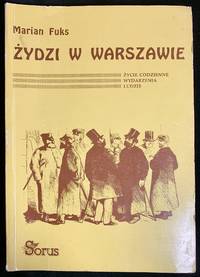
199243036Poznan/Daszewice: Sorus 1992. First edition. 8vo. Original illustrated paper wrappers 403 pages with 87 pages of illustrations. 24 cm. In Polish. Title translates to “Jews In Warsaw: Everyday Life Events People.â€<br> Book containing essays on the history of Jews in Warsaw. Includes bibliographical references pages 372-376 and index.<br> “Before World War II Warsaw was a major center of Jewish life and culture in Poland. Warsaw's prewar Jewish population of more than 350000 constituted about 30 percent of the city's total population. The Warsaw Jewish community was the largest in both Poland and Europe and was the second largest in the world second only to New York City…Following the German invasion of Poland on September 1 1939 Warsaw suffered heavy air attacks and artillery bombardment. German troops seized Warsaw on September 27 1939.†USHMM. SUBJECTS: Jews -- Poland -- Warsaw -- History. Ethnic relations. OCLC: 27969297.Very Good Condition. YIZ-23-43XX-CCLX–’e. Poznan/Daszewice: Sorus unknown