GAŁĄZKA, GrzegorzLivre Rare Book
344 résultats
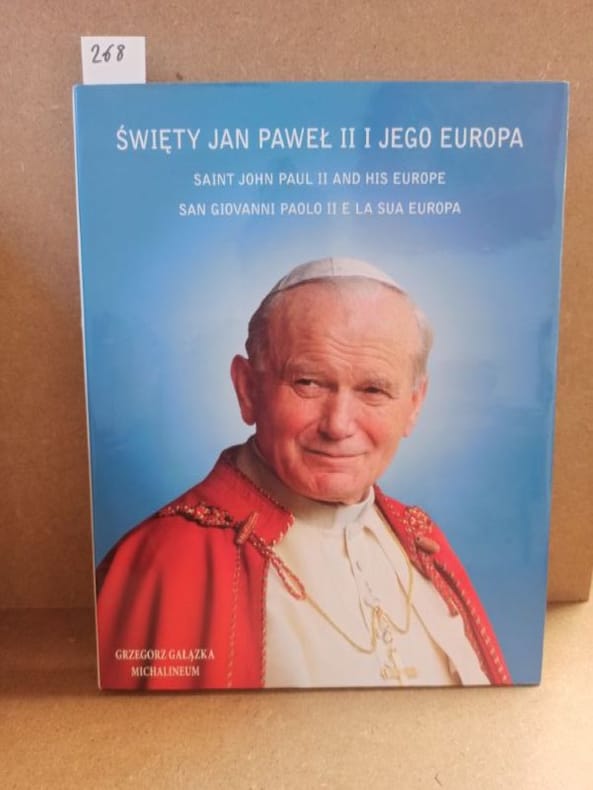
20152682015 - cartonné - Wydawnictwo Michalineum - Libreria Editrice Vaticana - Polish National Foundation (Polska Fundacja Narodowa) - 2015 - In-folio (32 x 24,5 cm) cartonné sous jaquette illustrée de l'éditeur - 212 pages - Très nombreuses photographies en couleurs - ISBN : 9788370196615 - Ouvrage trilingue avec texte en polonais, anglais et italien
18-4626Warsaw Poland: Desa-Unicum 2015. . 4to. 79 pp. Stiff color wraps. Very good with marginal edgewear. Color plates and xolor photographic endpapers. Includes works by Tadeus Brzozowski Aleksander Kobzdej Teresa Rudowicz et al. Text by Peter Selz. Scarce. Po Polsku.From the Collection of the Art Historian Peter Selz. Warsaw, Poland: Desa-Unicum, 2015. paperback
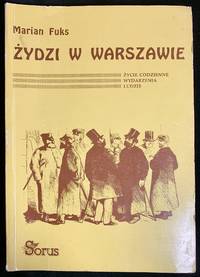
199243036Poznan/Daszewice: Sorus 1992. First edition. 8vo. Original illustrated paper wrappers 403 pages with 87 pages of illustrations. 24 cm. In Polish. Title translates to “Jews In Warsaw: Everyday Life Events People.â€<br> Book containing essays on the history of Jews in Warsaw. Includes bibliographical references pages 372-376 and index.<br> “Before World War II Warsaw was a major center of Jewish life and culture in Poland. Warsaw's prewar Jewish population of more than 350000 constituted about 30 percent of the city's total population. The Warsaw Jewish community was the largest in both Poland and Europe and was the second largest in the world second only to New York City…Following the German invasion of Poland on September 1 1939 Warsaw suffered heavy air attacks and artillery bombardment. German troops seized Warsaw on September 27 1939.†USHMM. SUBJECTS: Jews -- Poland -- Warsaw -- History. Ethnic relations. OCLC: 27969297.Very Good Condition. YIZ-23-43XX-CCLX–’e. Poznan/Daszewice: Sorus unknown
In 8° (18×12 cm); 113, (3) pp. Brossura editoriale con titolo, autore e stampatori impressi entro cornice al frontespizio. Qualche lievissimo segno del tempo ma nel complesso esemplare in buone condizioni di conservazione. Prima edizione di questa celebre raccolta di componimenti di uno dei più famosi e non convenzionali poeti ed artisti polacchi, Konstanty Ildefons Galczynski (Varsavia, 23 gennaio 1905 – Varsavia, 6 dicembre 1953). Allo scoppio della Prima Guerra Mondiale si trasferì a Mosca dove suo padre lavorava come impiegato e vi rimase fino al 1918. Tornato a Varsavia, seguì gli studi classici all’Università non disdegnando però gli studi musicali che tanta importanza avranno poi nella sua composizione letteraria ricca di liriche e di neologismi. Proprio la stravaganza dei suoi versi ha reso difficili la traduzione degli stessi in altre lingue. A 23 anni si avvicinò al circolo culturale Kwadryga dove venivano diffuse le idee e ideali innovativi ispirati dal Futurismo italiano e al costruttivismo russo che segnarono in modo decisivo la produzione poetica polacca d’avanguardia. Il suo debutto letterario risale al 1930 con il poema folkloristico La fine del mondo. Dal 1931 al 1933 soggiornò a Berlino, mentre dal 1934 al 1938 si trasferì a Vilnius. Durante la Seconda Guerra Mondiale venne catturato dai nazisti e internato nel lager di Altengrabov. La fine della guerra gli permise di viaggiare per l’Europa, soggiornando a Parigi, Bruxelles e Roma. Fin dall’origine della sua produzione letteraria l’umorismo fu la base della sua poesia accentuato da una forte vena satirica che prendeva in giro il mondo politico contemporaneo. Nella sua poesia si trovano in perfetto equilibrio una visione realistica del mondo ed un illogicità dirompente esaltate da veri e propri virtuosismi lessicali. Trattò temi di grande importanza sociale in farse, racconti grotteschi, e favole esopiche. Intorno al 1950 le sue opere divennero il centro di un acceso dibattito ideologico e alcuni suoi lavori vennero denunciati all’autorità per sospetto deviazionismo politico ed iniziarono così a diventare sempre meno comuni da reperire sul mercato librario. La musicalità del suoi componimenti ancora oggi inspirano autori di ballate e musica popolare polacca. “Zaczarowana Dorozka” (La Cabina Incantata) contiene i componimenti scritti a Szczecin dove fondò, insieme a Helena Kurcyusz e Jerzy Andrzejewski il gruppo letterario “Klub 13 Muz”. Fra i componimenti presenti nell’opera „Lyrika, Lyrika, Tkliwa Dynamika”, „Wjazd na wielorybe”, „Wiosna w Szczecinie”, „Przygoda w Szczecinie”, „Szczecin”, „Wrobla Wielkanoc” ed altre. Galczynski si può considerare come il giullare della poesia polacca del novecento, un giullare che con il suo atteggiamento giocoso e incostante, veniva perdonato per una polemica politica, sempre coperta sotto il manto salvifico dell’umorismo, dei neologismi e dei giochi di parole. Prima edizione illustrata. First edition.
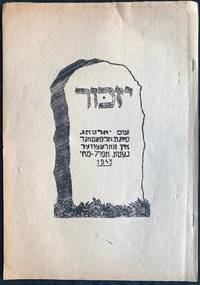
194443395Shvayts Switzerland: Undzer Vort Poale Tziyon Left 1944. May 1944. 1st edition. Original stapled printed paper cover 4to 2 25 pages. <br> In Yiddish. Title translates as "In Memoriam. On the Anniversary of the Uprising in the Warsaw Ghetto April-May 1943.<br> First Anniversary of the Warsaw Ghetto uprising published in Europe during the Holocaust by Jewish "Poale Tziyon Left" members in Switzerland. The organization's name which means "Workers of Zion" is sometimes also romanized as "Poale Zion" or "Poaley Syjon." <br> <br> The imprint "Undzer Vort" "Our Word" was a Left Poale Tziyon publisher in Switzerland which also published a mimeograph newspaper titled "Undzer Vort" OCLC: 232675203 during this same period. A fully underground version of the paper was also published in Nazi-Occupied Belgium see below.<br> <br> Indeed Poale Tsiyon Left was an important part of Jewish resistance throughout Europe most notably during the Warsaw Ghetto Uprising which this publication commemorates. <br> <br> "The Holocaust-era Jewish resistance group ZOB was formed from a coalition including Hashomer Hatzair Dror Bnei Akiva the Jewish Bund various Jewish Communist groups and both factions of Poale Zion. Poale Zion was also active in the Anti-Fascist Bloc.<br> Several notable Jewish resistance fighters during the Holocaust particularly those involved in the Warsaw Ghetto Uprising were members of Poale Zion. They include:<br> <br> Adolf Berman Warsaw ZOB fighter; Secretary of Zegota Poale Zion Left<br> Hersz Berlinski member of Warsaw ZOB Command Poale Zion Left<br> Yochanan Morgenstern member of Warsaw ZOB Command Poale Zion Right<br> Emanuel Ringelblum member of Warsaw ZOB; chronicler of the Warsaw Ghetto Poale Zion Left" Wikipedia.<br> <br> The booklet opens with the moving story of the start of the uprising:<br> <br> "It has been a year since the glorious uprising of the Jews in the Warsaw ghetto.<br> April 19 1943 - barely a few tens of thousands of Jews left in Warsaw after about half a million of their brothers and sisters were exterminated in the most gruesome way they rose up with organized resistance against the renewed attempts.that they too like the previous ones would be led out like sheep to the slaughter.<br> Forty thousand Jews weapons in hand opposed an enemy tenfold a hundred hundred times outnumbered.Women men and children the high class and the humble.<br> From the beginning they all knew without exception that they would be defeated that the outcome was not in doubt and that the enemy intended nothing but destruction for all of them.<br> But no Nazi expected to fall on such a battlefield.<br> And his was the biggest slap in the face which the proud Nazis.so hated when it was received from these these trampled down these unrefined these scorned these despised Jewish 'untermenchen'" Translated from the opening paragraphs on page 1.<br> <br> The publication later continues with a damnation of the "democracies" who did so little and a holding up of the comrades of Poale Tziyon who are doing so much fighting on all fronts:<br> <br> "The 'world democracies' didn't do anything.to save the Jewish victims and to stop the misery train they issued platonic statements about punishing the 'crimes' after the massacre. The warnings have so far helped little.<br> The.Sacrifices keep growing.The world that is fighting 'for justice' and that is busy with courts after the massacre has not found any means to rescue the few escaped heroes in the ghetto for a whole year.<br> This long eulogy is for dozens and hundreds of comrades who fell as loyal children of the nation and fighters for its working class on the fronts in the distant.north in the camps of France and Belgium. who went from one end of the world to the other - at their wounds and from hundreds of thousands of others - comrades of the Poale-Tziyon movement." page 24. <br> <br> Poale Zion.was a movement of Marxist-Zionist Jewish workers founded in various cities of Poland Europe and the Russian Empire at about the turn of the 20th century after the Bund rejected Zionism in 1901.<br> Poale Zion was torn between left-wing and right-wing factions in 1919-1920; the organization formally split at the Poale Zion fifth world congress in Vienna in 1920 following a similar division that occurred in the Second International.<br> The right wing was less Marxist and more nationalist and favoured a more moderate socialist program and supported the International Working Union of Socialist Parties to continue the work of the Second International essentially becoming a social democratic party. The left-wing faction did not consider the Second International radical enough and some accused its members of betraying Borochov's revolutionary principles although Borochov had begun to modify his ideology as early as 1914 and publicly identified as a social democrat the year before his death.<br> Poale Zion Left which supported the Bolshevik revolution continued to be sympathetic to Marxism and Communism and attended the second and third congresses of the Communist International in a consultative capacity. They lobbied for membership but their attempts were unsuccessful as the internationalist communist movement under Lenin and Trotsky was opposed to Zionist nationalism. The Comintern advised individual members of Left Poale Zion to join their national Communist parties as individuals; at their 1922 Danzig conference these terms were rejected by the party. The Comintern declared it an enemy of the workers' movement.<br> Poale Zion Left opposed the decision by Poale Zion to rejoin the World Zionist Organization viewing it as essentially bourgeois in character and viewed the Histadrut as reformist and non-socialist. Aside from differing attitudes towards Zionism and Stalinism the two wings of Poale Zion parted ways over Yiddish and Yiddish culture.<br> The Left was more supportive of the latter similar to the members of the Jewish Bund while the Right bloc identified strongly with the emerging modern Hebrew movement in the early 20th century.<br> In Poland for a brief period following World War I both factions of Poale Zion were reported as legal and functioning political parties. The Polish Left party was the largest Left Poale Zion party in the world. It worked closely with the Bund in developing Yiddish schools in Poland and supporting secular Yiddish culture although they had political differences e.g. the Bund was more supportive of the Polish Socialist Party than LPZ.<br> As part of the large-scale ban on Jewish political parties in post-World War II Poland by the Communist leadership both Poale Zion groups were disbanded in February 1950" Wikipedia.<br> <br> Interestingly the image on the front cover this distinctive gravestone with "Yizkor" in a specific heavy font was a frequent image for memorials to the victims of pogroms as well as the Shoah in particular for memorials to the Warsaw Ghetto Uprising. A few examples include:<br> • Hashin & Ben Gurion Yizkor tsum ondenken di gefalene vekhter un arbeiter in Erets Yisroel New York Poale Zion Palestine Committee 1917. Internal illustrated title page<br> • Hurbn Proskurov New York: Proskurover Relief Organization 1924. See image on JHU's online Yizkor Book Exhibit at www.library.jhu.edu/news/2025/06/yizkor-books-traveling-homelands-and-portable-memorials And from another memorial to the first anniversary of the Warsaw Ghetto Uprising:<br> • Tsum Yortog Funm Oyfshtand in Varshever Geto April-May 1943. Ramat Gan: Defus "liga" 1944. OCLC: 63647084. See Nr. 35 in our catalog 215 at danwymanbooks.cdn.bibliopolis.com/images/upload/catalog-215.pdf <br> <br> "Undzer Vort" also published similar underground Poale Tziyon Left newspapers and other materials in Nazi-occupied countries such as Belgium: <br> "'Linke Poale Zion' Left-wing Workers of Zion was a Zionist-Socialist party in Belgium and one of the initiators of the Jewish Defense Committee of Belgium. This committee managed to save about 3000 children and several thousand Jewish adults from the clutches of the Nazis.<br> With his party comrades Abusz Werber ensured the editing publication and distribution of 28 issues of a secret underground newspaper in Yiddish"Unzer Wort" Undzer Vort Our Word which appeared until the Liberation in September 1944 and even after" Werber The Word of Abusz Werber 2017. Note how the Yiddish documents on the cover of the book are similar to our Undzer Vort publication from Switzerland: https://m.media-/images/I/71sWHrhxgoL._SL1360_.jpg. <br> <br> SUBJECTS: Holocaust Jewish 1939-1945 -- Poland -- Warsaw -- Illustrations. <br> OCLC: 233365664. OCLC locates only 1 copy worldwide NLI.<br> <br> Final leaf in facsimile. Paper toning as expected but strong. About Very Good Condition thus. Rare and important. B Holo2-163-28-XX. Shvayts [Switzerland]: Undzer Vort [Poale Tziyon Left] unknown
1st edition. Original stiff paper wrappers. 4to. 11 sheets of illustrations, 33 cm. In Hebrew, English, and Yiddish, with a Hebrew introduction. Title translates to Children in the Ghetto. An assortment of illustrations from the Warsaw Ghetto. SUBJECTS: Jewish children -- Poland -- Warsaw -- History -- 20th century -- Pictorial works. The US Holocaust Museum keeps their copy in their Rare Book Collection. OCLC lists 12 copies worldwide (OCLC: 54613924) . Very light edge wear to stiff wrappers. Very Good Condition. (YID-41-44)
1987AME_9780139623745PrenticHall 1987. 1st. Hardcover. New/New. PrenticHall hardcover
1987DBS-9780139623745Prentice Hall 1987. 1st. Hardcover. New. Prentice Hall hardcover
1987DBS-9780139623745Prentice Hall 1987. 1st. Hardcover. New. Prentice Hall hardcover
8vo., First Edition, with portrait frontispiece and plates; black cloth, gilt back, a very good, bright, clean copy. Enser, p.180.
21,5×15,8 cm; 90, (5) pp. e una c. di tav. con ritratto dell’autore. Brossura editoriale illustrata. Firma autografa di Broniewski alla prima carta bianca datata Warszawa 14.V.50. Esemplare in buone condizioni di conservazione ed ancora a fogli chiusi. Prima edizione di questa raccolta di componimenti del celebre poeta e combattente polacco, Wladyslaw Broniewski (December 17, 1897, Plock – February 10, 1962, Warsaw). L’autore venne educato nello spirito dell’intellighienza polacca che voleva mantenere vive la tradizione rivoluzionaria, patriottica ed indipendentista della Polonia dell’epoca romantica quando la nazione era stata cancellata dalle carte geografiche dopo la spartizione operata da Prussia, Impero Russo ed impero Austriaco nel 1772. Nel 1918 l’autore si arruola volontario nelle Legioni polacche e alla fine dello stesso anno sostiene l’esame di maturità in una Polonia di nuovo indipendente. Nel 1920 prende parte alla guerra Polacco-Sovietica. Nel 1922, con un processo di radicalizzazione marxista, pubblica i suoi primi componimenti sulla rivista “Skamander”. Nel 1931 venne arrestato con tutta la redazione della rivista “Miesiecznik Literacki” per le sue idee socialiste. Nel 1939 viene di nuovo arrestato a Lwow, territorio occupato dall’Unione Sovietica, in seguito ad un una falsa accusa. Nel 1941 segue l’armata del generale Anders in Medio Oriente e rimane fino al termine della guerra in Palestina. Dal 1946 rientra in patria e partecipa con la sua poesia alla rinascita del paese elogiando con fede incrollabile il socialismo. Non comune raccolta di componimenti poetici in prima edizione. First Edition. Autografo.
116 pages. Occasional black and white sketches. "This collection of eight stories - some inspired by traditional Jewish tales - ranges from devilish comedy to delicate fantasy to parable to a tale of witchery and demons." - from dust jacket. Gift greetings upon title page, otherwise contents clean and unmarked. Cream cloth-covered boards soiled but overlaid by dust jacket which is now preserved in a glossy new archival-grade Brodart cover. A worthy reading copy of this wonderful compilation. Book
4to., First Edition, with very numerous full-page photographs throughout; oatmeal Holland, backstrip lettered in black, black endpapers, a near fine copy in unclipped dustwrapper, the latter very lightly chafed at extremities. Comprehensive photographic survey with over 240 contemporary images of WWII destruction. Very scarce, especially in this condition.
Original boards. 8vo; 53, 75 pages; Some text in English, some in Yiddish. Nice book Co-sponsored by the Emma Lazarus Federation, the Furrier Joint Council of N. Y. & the Joint Board of the Fur Dressers & Dyers Unions. Bumps to edges. Very Good Condition. (HOLO2-127-6)
8vo., First Edition; cloth, a fine copy in unclipped dustwrapper. First edition in English of this remarkable memoir by a suruvivor of the Uprising
525 pages. Index. Bibliography. Maps. Black and white photographic plates. Illustrated map endpapers. "Based on previously classified archival research and over 100 interviews, including with British and German Commanders who worked with the Canadians. Particularly fascinating are details of NATO planning for meeting a Warsaw Pact attack, including how nuclear weapons would be used." - from dust jacket. Printed on glossy stock. Moderate peripheral wear. Contents clean, bright and unmarked. A quality copy. Book
1954110513Warszawa, s. n. 1954 In-12 18 x 15 cm. En feuillets, sous portefeuille basane lie-de-vin, premier plat gaufré à froid d’une vue de Varsovie, 10 eaux-fortes originale de la vieille ville de Varsovie, sous passe-partout, légendées et signées à la main par l’artiste, table des planches quadrilingue français, anglais, allemand, russe. L’ensemble sous coffret. Exemplaire en bon état.
13967098Warszawa (Varsovie): Wydawnictwo Ministerstwa Obrony Narodowej, 1959 in-8, 508 p., nombreuses ill. dans le texte, plan dépliant, index des noms. Broché, exemplaire et couverture défraichis. Texte polonais. Sur le Ghetto de Varsovie.
182259Paris, chez le capitaine Bacheville ; Corréard, libraire ; Ponthieu, libraire ; Imprimerie de David, 1822, in-8, broché ; VIII- 401 pp. et 1 p. de table, portrait lithographié de Antoine en frontispice (dans la deuxième édition, le frontispice montre les frères Bacheville se séparant pour toujours, en Turquie d'Europe), couverture muette de papier gris.
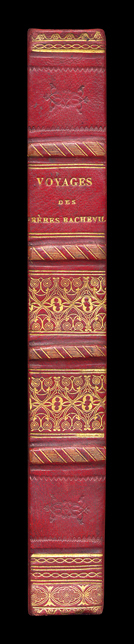
182215861Paris, Béchet Ainé et chez le Capitaine Bacheville, 1822 ; in-8 ; demi-veau glacé grenat à petits coins, dos à quatre nerfs plats décorés encadrant le titre et deux caissons décorés "à la cathédrale", palette et roulettes décoratives dorées, fleurons et roulettes à froid, tranches marbrées (reliure de l'époque) ; XII, 432, (2) pp., frontispice lithographié par G. Engelmann montrant les frères Bacheville se séparant pour toujours en Turquie d'Europe.
26992Hardcover. VG corners slightly bumped. Brown cloth. 172 pp. 68 bw plates. Text in French. Essays address Polish books manuscripts and binding methods. hardcover books
4721Henschelverlag, Berlin, 1985. In-4, cartonnage éditeur sous couverture illustrée en couleur, 70 pp.
in-4 carre, 326 pages, abdt ill. in-t., cartes, rel. cartonnage ed., jaq. ill. Jaq. leg. us. sin. bel exemplaire [PLG-1]
in-8°, 276 pp., broche, couv. Bon etat. [LA-3]
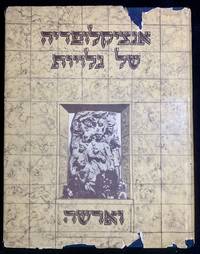
195343056Yerushalayim Jerusalem: Hevrat Entsiklopedyah shel galuyot 1953. First edition. Original boards with illustrated dust jacket 4to 816 columns 408 pages including illustrations and portraits. 31 cm. In Hebrew.<br> Encyclopedia on Jewish life in Warsaw published as part 1 of the Encyclopedia of the Diaspora series published in Jerusalem from the 1950s-1970s. Includes bibliographical references. Includes errata slip.<br> “Before World War II Warsaw was a major center of Jewish life and culture in Poland. Warsaw's prewar Jewish population of more than 350000 constituted about 30 percent of the city's total population. The Warsaw Jewish community was the largest in both Poland and Europe and was the second largest in the world second only to New York City…<br> Following the German invasion of Poland on September 1 1939 Warsaw suffered heavy air attacks and artillery bombardment. German troops seized Warsaw on September 27 1939.†USHMM.<br> SUBJECTS: Jews -- Poland -- Warsaw -- History. Holocaust Jewish 1939-1945 -- Poland -- Warsaw. Ethnic relations. Jews. OCLC: 34717605.<br> Dust jacket is lightly worn. Very Good condition in Good Dust Jacket. YIZ-23-66-. Yerushalayim [Jerusalem]: Hevrat Entsiklopedyah shel galuyot unknown