1 409 résultats
1945HALL511529Hardback. 1945. 19 x 15cm. Covers worn. . hardcover
1970RO40216923Non précisé. 1970. In-8. Broché. Bon état, Couv. convenable, Dos satisfaisant, Intérieur frais. Plaquette de 31 pages illustrée de nombreux dessins et photos en noir et blanc. Quelques rares annotations dans le texte.. . . . Classification Dewey : 949.7-Yougoslavie
Non précisé. 1970. In-8 Carré. Broché. Bon état. Couv. convenable. Dos satisfaisant. Intérieur frais. Plaquette de 31 pages illustrée de nombreux dessins et photos en noir et blanc. Quelques rares annotations dans le texte. Sommer 1970.
230391Paris, Librairie Chapelot, 1914 in-12, 268 pp., 36 planches, carte dépliante, broché.
1974146710Sibenik 1974. 201, III, (1) pages and a lot of plates. With many illustrations. Original cloth binding. Very good condition. 24x16 cm
Very Good Croatian Paperback. Demy 8vo. (21 x 15 cm). In Croatian. 52 p. Kasim Hadzic (Zaostar near Priboj (Novopazarski Sandzak, 1917 - Sarajevo 1990)) was a sharia judge and teacher, graduated from the Great Madrasa in Skopje in 1937, and graduated from "Visem islamskom serijatsko-bogoslovnom ucilistu" [i.e. the Higher Islamic Sharia Theological College] in Sarajevo in 1941. In the summer of 1941 he served as mayor of Priboj during the short-lived rule of the Independent State of Croatia in Sandzak, and since 1942 he has been an intern at the District Sharia Court in Sarajevo. From 1942 to 1945 he was the editor of the Sarajevo Croatian Muslim weekly 'Osvit' [i.e. Dawn]. He has been a teacher at the Gazi Husrev-Beg Madrasa in Sarajevo since 1957. He died in Sarajevo.
Very Good Serbo-Croatian Paperback. Roy. 8vo. (23 x 15 cm). In Aljamiado (Serbo-Croatian in Arabic letters), Arabic, and Persian with an introduction in Arabic. The third revised edition of the Waqf Directorate in Sarajevo. 104 p., 4 unnumbered b/w plates. "Ilmihal" [i.e. Catechism] recommended to all who want to know and learn Islamic ceremonies and practice. Learn how to pray, what are basic principles of the Islamic faith, what are the Islamic duties, what are the Islamic holidays, what constitutes proper Islamic behavior, and lots more. This extremely rare catechism book printed in Sarajevo in Croatian with Arabic letters (Aljamiado). This book is one of the late examples of Aljamiado literature beginning in early Andalusia and constitutes one of the rarest examples of the Ottoman book tradition. Aljamiado or Aljamía texts are manuscripts that use the Arabic script for transcribing European languages, especially Romance languages such as Mozarabic, Portuguese, Spanish or Ladino, and Bosnian with its Arebica script. According to Anwar G. Chejne, Aljamiado or Aljamía is "a corruption of the Arabic word ?ajamiyah (in this case it means foreign language) and, generally, the Arabic expression ?ajam and its derivative 'Ajamiyah are applicable to peoples whose ancestry is not of Arabian origin". During the Arab conquest of Persia, the term became a racial pejorative. In linguistic terms, the Aljamía is the use of the Arabic alphabet to transcribe a Romance language. It was used by some people in some areas of Al-Andalus as an everyday communication vehicle, while Arabic was reserved as the language of science, high culture, and religion. The systematic writing of Romance-language texts in Arabic scripts appears to have begun in the fifteenth century, and the overwhelming majority of such texts that can be dated belong to the sixteenth century. A key aljamiado text was the mufti of Segovia's compilation Suma de los principales mandamientos y devediamentos de nuestra santa ley y sunna, of 1462. In later times, Moriscos were banned from using Arabic as a religious language and wrote in Spanish on Islamic subjects. Examples are the Coplas del alhichante de Puey Monzón, narrating a Hajj, or the Poema de Yuçuf on the Biblical Joseph (written in Aragonese). Aljamiado played a very important role in preserving Islam and the Arabic language in the life of the Moriscos. After the fall of the last Muslim kingdom on the Iberian peninsula, the Moriscos (Andalusian Muslims in Granada and other parts of what was once Al-Andalus) were forced to convert to Christianity or leave the peninsula. They were forced to adopt Christian customs and traditions and to attend church services on Sundays. Nevertheless, some of the Moriscos kept their Islamic belief and traditions secretly through the usage of Aljamiado. In 1567, Philip II of Spain issued a royal decree in Spain, which forced Moriscos to abandon using Arabic on all occasions, formal and informal, speaking and writing. Using Arabic in any sense of the word would be regarded as a crime. They were given three years to learn the language of the Christian Spanish, after which they would have to get rid of all Arabic written material. Moriscos translated all prayers and the sayings of their prophet Mohammed into Aljamiado transcriptions of the Spanish language while keeping all Qur'anic verses in the original Arabic. Aljamiado scrolls were circulated amongst the Moriscos. Historians came to know about Aljamiado literature only in the early nineteenth century. Some of the Aljamiado scrolls are kept in the Spanish National Library in Madrid. The word aljamiado is sometimes used for other non-Semitic languages written in Arabic letters. For example, Bosnian and Albanian texts written in Arabic script during the Ottoman period have been referred to as aljamiado. However, many linguists prefer to limit the term to Romance languages, instead of using Arebica to refer to the use of Arabic script for Slavic languages... Not in OCLC.
194621781V.p. 1946-1947. 18 volumes all large quartos. Very Good to Fine. Includes titles from the songbook series "Partizanske Pjesme: nos. 1-8 all located in the British Library only in OCLC and "Nova Pjesma" see nos. 10-16 uniformly bound in red pictorial wrappers; none located in OCLC.<br/><br/>1. Hercigonja Nikola. Partizanska with Budi Se Istok I Zapad. Zagreb: Nakladni Zavod Hrvatske 1946. Second edition. Bifolium; grey pictorial upper cover.<br/><br/>2. Krnic Boris. Eto Ide Omladina. Zagreb: Nakladni Zavod Hrvatske 1946. Second edition. Bifolium; brown pictorial upper cover. <br/><br/>3. Hercigonja Nikola. Naša Pjesma text in Cyrillic Nasha Pesma. Ruski prevod S. Bolotina - Obradba G. Šneerson. Zagreb: Nakladni Zavod Hrvatske 1946. Bifolium; blue pictorial upper cover lettered in navy blue. <br/><br/>4. Saka Branimir. Zdignete brati with N. Hercigonja. Selja ka. Zagreb: Nakladni Zavod Hrvatske 1946. Bifolium; orange pictorial upper cover lettered in brown. <br/><br/>5. Hercigonja Nikola. Crveni Makovi. Obradio Milan Majer; Rije i Pavlek Miškina. Zagreb: Nakladni Zavod Hrvatske 1946. Second edition bifolium; red pictorial upper cover. Text by Mihovel Pavlek Miškina a poet socialist supporter and member of the Croatian Peasant Party who had been executed in the Jasenovac concentration camp in 1942.<br/><br/>6. Apih Milan. Bile anka. Obradio Nikola Hercigonja. Zagreb: Nakladni Zavod Hrvatske 1946. Second edition bifolium; purple pictorial upper cover. Composed by Slovenian activist Apih during his second 1940 imprisonment for his active membership in the illegal Communist Party of Yugoslavia.<br/><br/>7. a e Ive. Nek Se uje Omladinska. Muzika: Natko Dev i . Zagreb: Nakladni Zavod Hrvatske 1946. Bifolium; green pictorial upper cover. <br/><br/>8. Hercigonja Nikola. Padaj Silo with Fran Lhotka. Oj Ilija! Zagreb: Nakladni Zavod Hrvatske 1946. Bifolium; brown pictorial upper cover. <br/><br/>9. Slavenski Josip. Partizanske Narodne Pjesme cover title. Imprint in Cyrillic Beograd: "Rad" 1946. Original red pictorial staplebound wrappers; 12pp. At head of title in Cyrillic: "Nasha Pesnya." Text almost entirely printed in Cyrillic. Not in OCLC. <br/><br/>10. Bombardelli S. Oj Mosore. Zagreb: Izdanje Zemaljskog Odbora J. S. R. N. J. za Hrvatsku Kulturno Prosvjetno Odjeljenje 1946. Bifolium. <br/><br/>11. Lenjinov. Posmrtni with Bile anka. Zagreb: Izadnje. 1947. Bifolium. <br/><br/>12. Hercigonja N. Selja ka. Zagreb: Izadnje.1947. Bifolium. <br/><br/>13. Novikov A. Živjela Crvena Armija. Zagreb: Izadnje.1946. 6pp. Sheet music for "Long Live the Red Army" by Anatoli Novikov recipient of the Stalin Prize in 1946 and again in 1948 and later named a Hero of the Socialist Party in 1976. <br/><br/>14. Gotovac J. Pjesme Obnove. 1. Na Rad; 2. Novi Grad; 3. Slava. Zagreb: Izadnje. 1946. 6pp. <br/><br/>15. Markovac P. Protuletje Medimurska Narodna with H. Singer. Nasred Gore Romanije Partizanska Narodna. Zagreb: Izdanje. 1946. Bifolium. <br/><br/>16. Hercigonja N. Naša Pjesma with I. Tijardovi . Oj Moravo. Zagreb: Izdanje. 1946. Bifolium. The second song was composed by Ivo Tijardovi member of the Unitary National Liberal Front and mayor of the Dalmatian city Split where he led the underground resistence Yugoslav Partisans during the Italian occupation of World War II.<br/><br/>17. Bombardelli Silvije. Šamac-Sarajevo Šime Vu eti Omladinsko Kolo Ive a e cover title. Split: Izdanje K. U. D. "Ivan Lozica" 1947. Bifolium; printed in red and black. <br/><br/>18. Bombardelli Silvije. Pjesma Mladih Graditelja Grigor Vitez cover title. Split: "Ivan Lozica" 1947. Bifolium; printed in red and black. unknown books
1955294236London: Cassell and Company 1955. First edition. hardcover. very good/very good. 8vo. pp.214 Cassell and Company hardcover
1955011159<p>London: Cassell & Co Ltd 1955. 1st Edition 1st Printing. Hardcover. Very Good/Very Good. 8vo - over 7¾ - 9¾" tall. First Printing Cassell London 1955; xvi 214 pages; black cloth gold titling to spine slightly bumped at spine ends spotting on page block & outer pages a very good copy; in like illustrated price-clipped dustjacket rubbed with a couple small tears at top. Uncommon book detailing the unusual life of Yugoslavia's last king - installed as a child in 1934 & deposed by Marshall Tito in 1945. These memoirs in some way amount to a call for reclamation from exile. <br /><br /></p> Cassell & Co Ltd hardcover
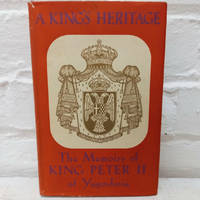
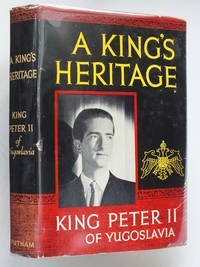
1954z0099New York: G. P. Putnam's Sons 1954. Memoirs of the young King Peter II of Yugoslavia concentrating mostly on political affairs & barely mentioning his wife who wrote her own more personal memoir two years later. Hardcover in jacket as pictured. Book shows light wear pages & endsheets tanned; jacket rubbed creased chipped heavy internal foxing. Text clean; vii 3 304 pages; b/w photos. . First American Edition. Hard Cover. Very Good/Good. Octavo. G. P. Putnam's Sons Hardcover
1954299936New York: Putnam 1954. hardcover. very good/very good-. Illustrated in black and white 304 pages 8vo black cloth tattered d.w. New York: Putnam 1954. Newspaper stain on front end-page still a very good copy in a very good- dust wrapper.<br/><br/> Putnam unknown books
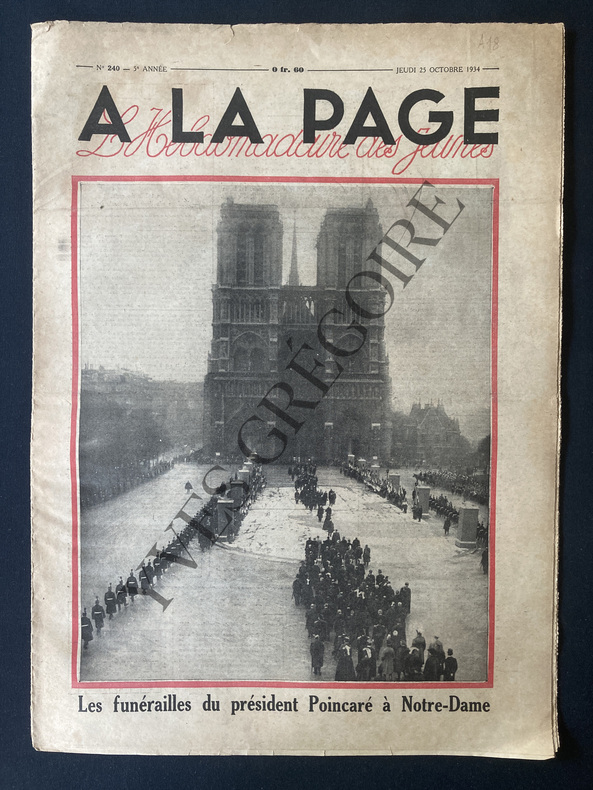
1934ABE-1857248391716 PAGES-29,5 CM X 41 CM-EN UNE "LES FUNERAILLES DU PRESIDENT POINCARE A NOTRE-DAME"-LE FILM DE LA MAUVAISE CHANCE, ASSASSINAT DU ROI ALEXANDRE DE YOUGOSLAVIE, MOLLISON-UN NOUVEAU FILM DE RENE CLAIR "LE DERNIER MILLIARDAIRE", 2P, 8 PHOTOS, MAX DEARLY, RENEE SAINT CYR, CARPENTIER-ALBERT FLORY, PHOTO (PJ14)
19463201946 Paris, Susse (Collection "Voyages et Aventures"), 1946, in 8 broché, 428 pages ; carte dépliante in fine ; nombreuses photos hors-texte ; couverture illustrée (un peu fanée, minuscule manque angulaire en pied du plat supérieur).
1963dl2307La Cité éditeur, Lausanne Broché 1963 In-12 (12,9 x 18,8 cm), broché, 163 pages ; mors et plats frottés, coins cornés, rousseurs aux tranches, par ailleurs assez bon état général. Livraison a domicile (La Poste) ou en Mondial Relay sur simple demande.
23237Montpellier, Luis Sasinada 1998, 180x330mm, Couverture imprimée. Tirage limité à 45 exemplaires sur papier Japon Sanmore, dont 20 h-c. comportant 4 illustrations originales tirées sur Japon Dosabiki et réhaussées de gouache par le peintre qui à signé et justifié chaque exemplaire avec l’éditeur, XXX/VL. Bel exemplaire.
8vo., First Edition, with plates, page-edges tanning slightly; black cloth, gilt back, a very good, bright, clean copy in unclipped dustwrapper. SCARCE. Enser, p.20.
55831Paris, 1896, EDITION ORIGINALE, librairie Hachette et Cie, in-4, demi-chagrin orange à coins, plats papier "cailloux" rose/jaune/gris, titre doré sur dos (reliure moderne), couverture conservée, VIII + 350 pp, 154 illustrations dont 9 en pleine page, 2 cartes dont 1 grande dépliable hors-texte en couleurs, très bon état de la reliure, manques à la couverture ancienne, restaurations au papier, rousseurs sur la grande carte dépliable, tranches non rognées; les livres sur cette partie de l'ancienne Yougoslavie sont très rare et celui-ci est un extraordinaire voyage décrivant l'architecture et les coutumes du pays; belles photographies en noir
Paper wrappers; small 8vo. 32 pages. Illustrated in two colors. Last pag e contains recipe for Sephardi-style Huevos Haminados as used in the Saraje vo Seder. Card with a suggested reading for the Seder service laid in. OCLC lists four copies worldwide. Excellent condition. (W-62)
7551Lausanne, F.Mermod 1959, 280x220mm, 72pages, broché.
In-16°, leg. in bross. edit., pp. 24 di testo con ill. in nero intercalate. Seguono 28 tavv. a colori, alcune delle quali ripiegate.
8vo., First Edition, with plates and full-page map in the text; black cloth, backstrip lettered in silver, a very good, bright, clean copy in price-clipped dustwrapper, the latter lightly spotted at fold-ins. Enser, p.204.
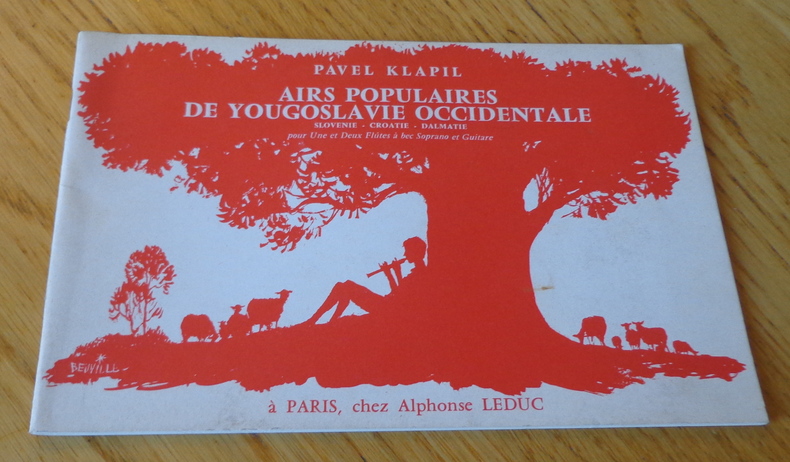
1976UUI-6565In-8 broché de format à l'italienne, Chez Alphonse Leduc, 1976, 28 pp. Un peu frotté et écorné, usure d'usage, bon état général. Peu courant. Poids 70 g. Frais d'envoi 1,60 euro sur la France, 2 euros UE et Suisse, 2,50 euros pour le reste du monde (tarifs de base hors envois suivis).