981 résultats
18652210-11Barcelona/Madrid, José Ribet/ Emilio Font 1865. 3 vols. gr.-2°. 3 Bll., 99 S. 2 Bll.; 2 Bll., 91 S. 1 Bl.; 3 Bll., 103 (2) S. Mit insges. 141 (v. 144) tonlithogr. Taf. HLdr. d. Zt. Mit Rückengoldpräg. Es fehlt d. Frontisp. im 1. Bd. u. 2 Taf. im 2. Bd. (Abside interoir de la catredal de Burgos; Portada de la capilla de Reyes Nuevos); 2 Taf. m. kl. Einr., 3 Textbll. gelockert. Durchgeh. gebräunt bzw. stockfl.
182069056Paris, Pierre Didot l'ainé, 1806 1820 4 volumes grand in-folio, demi chagrin fauve, dos à nerfs ornés de filets dorés reliure fin XIXe s., faux titre gravé, 1 portrait de SAS le Prince de la Paix d'après Steven, XLVI pp. dont le titre, 72 pp., 1 f. n. ch. et LXXXVIII planches - Faux-titre, titre, pp. de 73 à 132, planches de LXXXIX à CLXXXIX - Faux-titre, titre, XLV pp., 36 pp. et XC planches - Faux-titre, titre, XCI pp., 38 pp. et LXX planches, 2 cartes doubles de l'Espagne et du Portugal. Soit 272 planches hors texte.
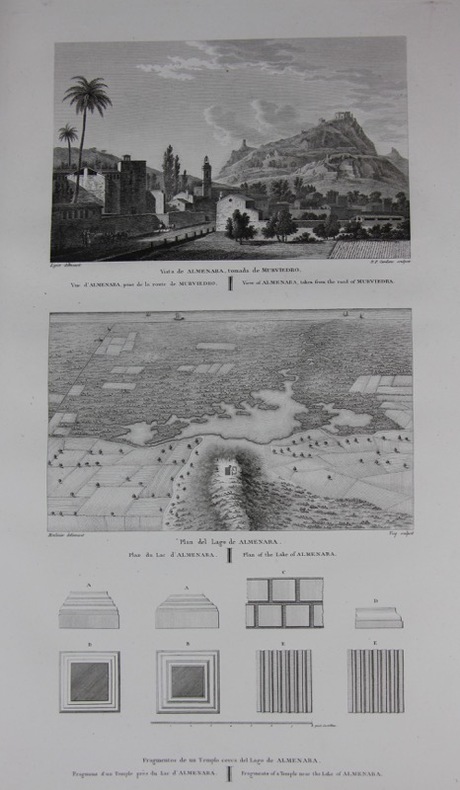
182061011Paris, P. Didot L'Ainé, 1806-1820. Gr.-Fol. Mit gest. Titel, einem gest. Porträt, 4 gest. Titelvignetten, 2 doppelblattgr. Kupferkarten u. 349 tlw. ganzs. Kupfern auf 272 Tafeln. Zus. ca. 400 S., Ldr.-Bde. d. frühen 20. Jhds. a. 5 Bünden m. ornamentaler Deckelverg. u. goldgepr. Rückentiteln in HLdr.-Schubern (61 x 47 cm).
1897464381897. Fair to very good or better. Spanning 110 years 64 different titles nearly 2000 issues and tens of thousands of pages with numerous illustrations both black and white and colored. A few are more popular titles but most are quite uncommon rarely for sale found only at a few institutions a number only at the Duque de T' Serclaes periodical collection at the Univ. Connecticut. Many of the Cadiz publications remarkably have only scattered holdings. The content is varied from the first Spanish periodical edited by a woman to a description of the massive defeat of the Spanish at the Battle of Trafalgar just after it occurred to periodicals aimed at women illustrated with color fashion plates including a very rare set of periodicals from a philanthropic organization whose goal was to educate the people free of chargeto satire to politics such as the transfer of the Cortes to Madrid and so on. Detailed list upon request. unknown
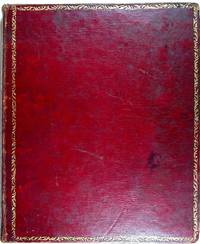
18142677Hunthill House Scotland 1814. Written in English in a small and narrow but legible italic hand with occasional corrections or additions in a different hand on wove paper watermarked Budgen & Wilmott / 1812. Four unnumbered pages of French text at front and four at back the latter dated 27 May 1814 in a different hand apparently the author’s on different paper with no visible watermark. Very good; some occasional spotting. Contemporary red straight-grained morocco gilt edges scuffed and scraped joints strained head of spine chipped.<br /> <br /> An unpublished first-hand memoir filled with searing descriptions of the horrors of war by a French army officer veteran of the terrible Peninsular War. The narrator was one of few survivors of the surrender of French forces after the Battle of Bailén in July 1808. The background to this event was Napoleon's attempt to complete the isolation of England from the continent by sending a French army into the Iberian Peninsula to occupy Portugal and Spain thereby preventing British trade with the Continent.  Napoleon later referred to the Peninsular War characterized by appalling cruelty on both sides as the ‘Spanish ulcer’; it was to be one of the primary factors in his downfall. <br /> <br /> General Pierre Dupont de l'Étang was charged with securing French control of the major cities in Spain. Dupont's 20000 men had initial success but as they penetrated deeper into Spain they faced increasing resistance. This memoir by H. de Montvaillant an 18-year-old Protestant officer from Montpellier who was serving in the second Corps d’Observation of the Gironde recounts the route and experiences of Dupont's army to its furthest point of penetration into Spain: Córdoba. There after a particularly bloody and cruel occupation the army was forced to withdraw and was soon overwhelmed. Dupont surrendered his army at Bailén. Originally promised safe passage most of the French were slaughtered immediately after their surrender. <br /> <br /> Montvaillant’s account commences with the French arrival in Bayonne in November 1807. By December 22 the French troops had arrived in the town of Vittoria 50 miles west of Pamplona and by January 9 1808 they had advanced to south of Burgos. Detailed descriptions of the monuments churches libraries art and inhabitants of various localities passed through in their zigzagging progress south through French-occupied Spain enliven this first part of Montvaillant’s narrative: he describes with evident pleasure Burgos Valladolid Guadarrama and the Escorial Madrid and Toledo where the troops spent most of May. He makes the acquaintance of many Spaniards. In Toledo a young woman explains to him the contradictions of Spanish women rendered emotionally susceptible by their extreme religious devotion but whose sometimes shocking to the French frankness contrasts with a strict sexual morality. Later he deplores the time wasted in Toledo while the Spanish insurgents were building up their strength. <br /> <br /> As the French troops proceed southward the local populations exhibit increasing hostility often hidden under excessive politeness. They encounter a Frenchwoman who has fled Bailén saying that she was not safe there because of her nationality but the soldiers assume that she exaggerates. By the end of May the French pass the Sierra Morena and enter Andalusia and the truth becomes evident. It is at this point that the narrative takes on an ominous tone. Montvaillant notes that the population had abandoned the villages taking all foodstuffs. He records that the senior officers had assumed that the army would only be harassed by small bands of “brigands†a far cry from the massive resistance that it encountered: “We learned that the insurgents each day gathered strength and that the Junta of Seville was determined to stop us in our March. The following day we got to the little town Baylen in whose plains two months afterwards our destiny was decided†p. 86. <br /> <br /> The first battle was engaged at Alcoléa just upstream from Córdoba an event Montvaillant describes in a poem in French transcribed. The next day the French arrived at Córdoba where the Spanish enemy had taken refuge. A musketry attack upon their arrival so enraged General Dupont that “he gave up the town to pillage" p. 88. Allowed to run wild the French soldiers sacked the city committing hideous crimes: “Neither tears promises or humble supplications could arrest the thirst for pillage.†p. 89. Discipline was nonexistent drunkenness and looting continued for eight days. The soldiers raped the women and ransacked homes. Montvaillant presents himself as a savior of women and the elderly on several occasions but notes that some of the Spanish whom he and fellow officers placed under protection in Córdoba were later “the first to persecute the unprotected French prisoners and even those who had been their Benefactors†p. 92. While he does not detail the contents of the soldiers’ plunder it is known that the rich churches of Córdoba were heavily looted. Notwithstanding the circumstances he manages to visit and describes in amazement the great mosque-cathedral scarcely changed in a thousand years. <br /> <br /> Nine days after the French entrance into Córdoba Montvaillant and his troops were ordered back to Alcolea to guard a bridge crossing. En route there from Cordóba he discovered and graphically describes the many mutilated corpses of the French sick and wounded who had been left along the line of march while the main body of General Dupont's troops had taken Córdoba. “It is almost incredible how people calling themselves Christians could push inhumanity to such an excess†p. 96.<br /> <br /> The army moved back to Andújar near Bailén and encamped. Montvaillant records that the general staff had by now realized that the French were outnumbered and that the opposition had organized itself. Dupont's army was isolated without hope of reinforcement or re-supply defending a garrison situated on a flat plain in the scorching sun. The narrative becomes one of revenge heat troop dispositions losses tactical mistakes errors of the general staff and increasing difficulties. Dupont's surrender came on July 20 1808 and thus begins the second part of the memoir devoted to the narrator’s experiences as a prisoner of war. <br /> <br /> The officers were segregated from the defeated army before being escorted supposedly to return to France. Most of the army was slaughtered within days. Montvaillant records details of the survivors’ months-long “death march†southwards to the coast. Having finally arrived at Jerez de la Frontera near Cádiz to await embarkation to France they waited in vain. Their captors kept them in Jerez having discovered that the ruling Junta of Seville had abrogated the surrender treaty and that the inhabitants were planning to massacre them on their approach to Cádiz. Montvaillant’s account is henceforth devoted to anecdotes of captivity and of the prisoner’s horrendous treatment at the hands of their escorts and guards. He is unclear as to exact dates but it seems that the French captives were held at Jerez until mid-December and then hastily driven aboard ships to sail for the Balearic Islands. A severe storm intervened and they were blown off course to Africa finally coming to port at Gibraltar; several days later they were blown back to Andalusia at Málaga. After more storms and much sailing having been at sea 25 days for a voyage which normally took a week they finally made the Balearics. <br /> <br /> And here the worst surprise of many bad surprises awaited them: the desert island of Cabrera. Montvaillant counts some 4000 soldiers and 400 officers who were forced to survive as best they could on this scorching hot nearly waterless uninhabited island p. 148. Details of his account square with Denis Smith’s monograph on the subject. During the next four years close to 9400 French prisoners of war were exiled to this island; possibly 40% died of disease or malnutrition. The officers as usual fared much better than their soldiers. Montvaillant was one of 216 officers who were collected from this exile after a month and taken to the capital Palma p. 150; another group was sent to Mahon in Minorca. There imprisoned in better circumstances the group waited although the news from outside was threatening as the Spanish "mobs" were calling for their "sacrifice." The officers between attempting escapes were able to conjure up some distractions. The narrator passed the time translating Spanish poems and plays and spending up to eight hours at a stretch playing chess. They also freely imbibed the good Mallorcan wine danced and partied; making do without women Bacchus presided as he delicately puts it. <br /> <br /> But nearly half these officers were massacred during a riot and assault on the prison by the inhabitants of Palma described by Montvaillant in gory detail pp. 158-162. The survivors were returned to Cabrera in March 1810 as were the officers from Mahon. They found there a diminished population of half-naked walking skeletons. During the next five months spent on Cabrera Montvaillant was nonetheless able to observe a thriving “political economy†on the island where enough food was still provided that the prisoners had the energy for theater productions and dances. Describing the gender-bending that took place as the men playing female roles in the performances instinctively took on conventionally feminine attitudes even to the point of inspiring crushes bickering and jealousy among the audience members Montvaillant comments that the theatrical chronicle of Cabrera would make quite a book â€un bel in folioâ€- p. 170.<br /> <p>In early August Montvaillant and the officers were removed from the island on an English ship — all unhesitatingly leaving their men to rot on the island where they remained for four more years. A diplomatic impasse kept the officers off the coast at Gibraltar for several weeks until they were finally put on ships for Portsmouth and Plymouth. Montvaillaint went on to Salisbury for a short time and then embarked again for Leith en route to his final destination in Scotland where he remained in comfortable exile until the accession of Louis XVIII in 1814. <br /> <br /> The text is written in an occasionally stilted English a translation from the author’s own French account by a family whom he had befriended at Hunthill House near Jedburgh Scotland where he stationed. Eight pages of notes in French by the author are inserted four pages at the beginning the bifolium is inserted using wax seals and four pages at the end. The French preface contains a romanticized account of the author’s Scottish sojourn including a temptress fairy and concludes with the author’s promise to never forget his friends in Scotland. The English text is preceded by the title-leaf and a one-page dedicatory poem introduced by a statement that these “`Recollections’ in an English Garb are presented by the sincerest of Friends to the Author†and dated Hunt Hill 1 January 1814. <br /> <br /> Following the narrative in a letter to his family dated from Jedburgh 27 May 1814 Montvaillant explains the history of the manuscript the remaining pages contain literary notes including translations into French of poems by Robert Burns and Sir Walter Scott. During his years of exile in Jedburgh Montvaillant had become deeply attached to the owners of Hunthill House and to their three daughters. Without them he claims he would not have survived the loneliness of his exile. In homage and gratitude he dedicated his memoir to them. His friends retained the original French version as a keepsake of their friend and an engrossing biographical narrative and presented him with this translation which he brought back to France planning to render it anew into French to share with his family and close friends. He emphasizes that he plans to keep the manuscript unpublished; perhaps the memories were too painful. <br /> <br /> Cf. Denis Smith The Prisoners of Cabrera: Napoleon's Forgotten Soldiers 1809-1814 New York 2001.</p> unknown
1893236066London: Chiswick Press 1893. No. 11 of 13 copies printed on vellum there were also 88 copies printed on paper. Title with vignette numerous woodcut illustrations and large initial capitals. 1 vols. Folio 12-3/4 x 8-7/8 in.; 32.4 x 22.5 cm. Loose as issued in publisher's decorated board portfolio with maroon velvet straps in publisher's maroon morocco-backed clamshell box with printed label on upper cover; box worn a few rust marks on upper board. No. 11 of 13 copies printed on vellum there were also 88 copies printed on paper. Title with vignette numerous woodcut illustrations and large initial capitals. 1 vols. Folio 12-3/4 x 8-7/8 in.; 32.4 x 22.5 cm. One of 13 Copies on Vellum. This work consists of two important ordinances issued by the Spanish monarchy on November 20 1542 and June 4 1543. Under the active influence of Bartolomeo de las Casas "friend of the Indians" the new laws had the special design of ensuring better treatment of the Indians limiting the distribution of their lands and above all protecting them against enslavement by the conquering Spaniards. <br/><br/>"Las Leyes Nuevas" are reprinted here in this fine facsimile from the copy on vellum in the British Museum and are followed by an English translation. Much of the book is taken up by the historical Introduction by Henry Stevens who denounces the Spanish mistreatment of the Indians. Ironically the Spanish crown was later forced to rescind the new laws by colonists who were outraged at having to give up their right to a quota of enslaved Indian laborers.<br/><br/>A magnificent and impressive production by the Chiswick Press one of only 13 printed on vellum. Chiswick Press unknown books
1893236066London: Chiswick Press 1893. No. 11 of 13 copies printed on vellum there were also 88 copies printed on paper. Title with vignette numerous woodcut illustrations and large initial capitals. 1 vols. Folio 12-3/4 x 8-7/8 in.; 32.4 x 22.5 cm. Loose as issued in publisher's decorated board portfolio with maroon velvet straps in publisher's maroon morocco-backed clamshell box with printed label on upper cover; box worn a few rust marks on upper board. No. 11 of 13 copies printed on vellum there were also 88 copies printed on paper. Title with vignette numerous woodcut illustrations and large initial capitals. 1 vols. Folio 12-3/4 x 8-7/8 in.; 32.4 x 22.5 cm. This work consists of two important ordinances issued by the Spanish monarchy on November 20 1542 and June 4 1543. Under the active influence of Bartolomeo de las Casas "friend of the Indians" the new laws had the special design of ensuring better treatment of the Indians limiting the distribution of their lands and above all protecting them against enslavement by the conquering Spaniards. <br /> <br /> "Las Leyes Nuevas" are reprinted here in this fine facsimile from the copy on vellum in the British Museum and are followed by an English translation. Much of the book is taken up by the historical Introduction by Henry Stevens who denounces the Spanish mistreatment of the Indians. Ironically the Spanish crown was later forced to rescind the new laws by colonists who were outraged at having to give up their right to a quota of enslaved Indian laborers.<br /> <br /> A magnificent and impressive production by the Chiswick Press one of only 13 printed on vellum. Chiswick Press unknown
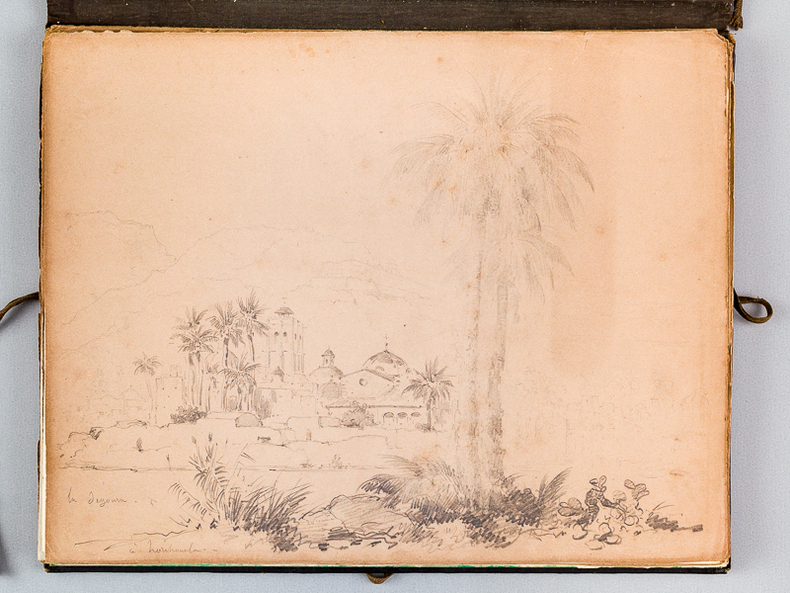
185059765Ensemble de 53 dessins et esquisses au crayon réalisées d'un séjour en Espagne vers 1850 (plusieurs dessins sont datés de 1850), sous portfolio d'époque, format général approximatif : 32 x 25 cm : [ Description de certains dessins, la plupart des dessins ne sont pas situés, les titres sont les nôtres : ] Vue de l'Alcazar et du pont d'Alcantara à Tolède - Aqueduc, vue de la ville et encombrements [ Ségovie ? ] - Noria et pêcheur à la ligne - Portail d'Eglise à Ségovie - A Tolède. La Boucherie. - Cathédrale de Ségovie - Marché très populeux à Valence - Eglise Saint Jean des Rois à Tolède - Cathédrale de Ségovie - Esquisses Madrid 1850 - Le Tage à Tolède - Couvent de la Merced - Alcazar de Ségovie (4 dessins) - Aqueduc et vue de la ville [ Ségovie ] - Berger allongé - Fuente Anton Martin à Madrid avec marché 1850 [ Fontaine de la Fama ] - Puerta del Cambron à Toledo - Pont d'Alcantara à Tolède -Xeres [ Jerez de la Frontera ], etc. etc.
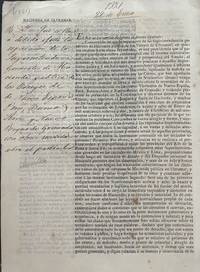
18212758Spain: s.n 1821. First edition. Unbound as published. Signed at the end undecipherable. With date 1821 29. de Enero and summary note on the first page by a contemporary hand in ink. Folded once. Small closed tears at the gutter. Sporadic foxing. In fine condition. First edition. Unbound as published. 4 p. A scarce royal decree on the creation and definition of the office of the General Superintendency in the Spanish Viceroyalties in the Americas.<br /> During the dusk of the Spanish Empire a bulk of administrative reforms were introduced trying to avoid the disintegration of the overseas territories especially in the Americas. By the present royal instruction Fernando VII introduced the office of the Superintendencies in the Viceroyalties of New Spain Peru New Granada and Buenos Aires the RÃo de la Plata and detailed the duties of the position in fifteen articles. <p><br /> <br /> “Y ellà también el de 29 de enero de 1811sic! impreso que contiene una Instrucción en 15 ArtÃculos para los nuevos Superintendentes que por la misma fuerza de los principios liberales quedaban privados de todo conocimiento en los asuntos contenciosos de Real Hacienda lo cual era también aplicable a la Junta Superior y del Vice-Patronato que tampoco tendrÃan los Intendentes porque lógicaÂmente pasaba a los Gobenadores polÃticos. Por supuesto estaba abolido el Fuero de Hacienda y se les cortaba casi totalmente cualquier inicitiva para reformar el sistema. De 3 y 4 de noviembre de 1820 datan las propuestas para la separación de la Superintendencia …. El Real Decreto de 29 de enero de 1821 pasó a las Cortes en 7 de marzo siendo aprobado en 7 de abril ….†Navarro GarcÃa 1959 p. 147 note 61; text reproduced: pp. 221–6<p><br /> <br /> Scarce we could trace only one copy in Spain at the Biblioteca Lázaro Galdiano IB 11662-50.<br /> Literature: Navarro GarcÃa L.: Intendencias en Indias. Sevilla: Escuela de Estudios Hispano-Americanos. 1959. [s.n] unknown
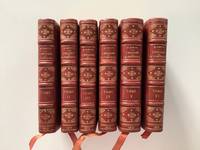
181518769ABParis, Nepveu, 1815. 13,5 : 9 cm. With 54 partly folded engraved plates. Red contemporary calf binding, spine richly decorated in gold, 2 red back labels, ornamental burdure on the boards. 6 volumes.
181518769AB1815. 6 volumes. Paris Nepveu 1815. 135 : 9 cm. With 54 partly folded engraved plates. Red contemporary calf binding spine richly decorated in gold 2 red back labels ornamental burdure on the boards. Rare describtion of the kingdoms of Spain and Portugal with beautiful engraved illustrations of small gengre-scenes farmers military persons religious persons bull fight traditional costumes dancing scenes views and so on. -Very mint copy in extraordinary decorative bindings. - Brunet I 1226; Graesse I 530; Colas 439; Hiler 113; Lipperheide Jc 8. hardcover
1856R67192Parisiis, apud Ludovicum Vivès 1856-1878 complete in 28 volumes: 26 volumes + 2 volumes of indices, text in latin, original 1856-1878-edition, Editio nova (second edition, the first of which was printed in 1740-1751 in Venice), 27cm., text printed in 2 columns, all vols. are uniformely bound in hardcover (marbled plates, spine in cloth, with marginal spots), few library stamps, good set [cfr. De Backer & Sommervogel, VII col.1680 no.24, Suarez Franciscus S.J., Grenada 1548 - Lisbon 1617], R67192
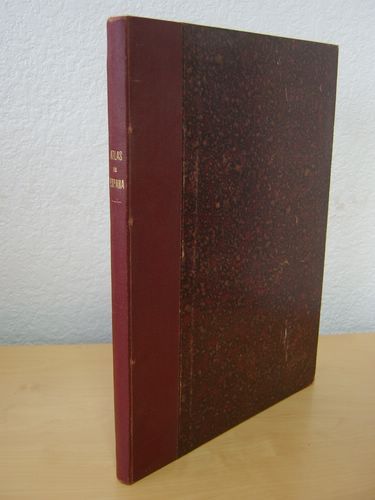
185227095Obra adoptada por texto por el Consejo de Instruccion Publica para los establecimiento de 2a ensenanza, dessiné et lithographié par E. Massinger, 1 vol. petit in-folio reliure moderne demi-percaline bordeaux, Madrid, 1852, Imprenta de A. Vicente (texte), Lita. [ litografia ]de Bachiller (cartes), 1 f. (page de titre), 104 ff. avec une alternance de page de texte et de cartes rehaussées en couleurs, et 1 grande carte dépliante de l'Espagne en couleurs. Les cartes sont datées de 1849 à 1852 (1853 pour la grande carte dépliante). Très rare atlas espagnol destiné à l'enseignement secondaire, décrivant les 49 provinces et îles espagnoles, ainsi que les possessions espagnoles en Afrique, aux Philippines, aux Carolines et aux Mariannes, à Cuba et Porto Rico. Bel exemplaire (minimes frott. sur reliure et petite déchirure sans atteinte à la gravure sur la grande carte dépliante), très rare ainsi parfaitement complet et en bel état. L'unique exemplaire répertorié sur Worldcat, celui de la Henry Charles Lea Library (University of Pennsylvania) qui provient de la propre bibliothèque du célèbre historien américain et grand spécialiste de l'histoire espagnole, ne semble pas contenir la grande carte dépliante en couleur de l'Espagne, bien présente dans notre exemplaire.
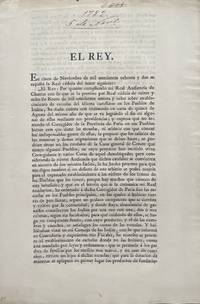
18152757Spain 1815. First edition. Unbound as published. Dated on the top of the first page and numbered at the lower left corner in ink by a contemporary hand. Printed on Santiago Serra’s paper: watermark of an ornamented Maltese cross and the word “Capelladesâ€. In fine condition. First edition. Unbound as published. 4 p. <p><br /> Royal order concerning the establishment and finance of schools in Indian communities in South America for the teaching of the Castilian language.<br /> This 1815 Royal order is a reinforcement and partly a reprint of a previous ordinance concerning the establishment of schools for teaching the Spanish language in the pueblos de Indios January 28 1778 and a supplement November 5 1782 which — as a response to the appeal of the Corregidor de la Provincia de Paria — permits to finance these schools and provide the salary of the teachers by newly imposed taxes on the local indigenous communities. <p><br /> <br /> Apparently not all the desirable schools were established by 1815 and in a response to another appeal this time by Tadeo JoaquÃn Gárate Cañizares’ 1774–1827 a former Deputy of the Cortes Generales y Extraordinarias in Puno viceroyalty of Peru Charles III’s earlier order and the encouragement of the taxation were repeated and reinforced by Ferdinand VII.<p><br /> <p><br /> <br /> Scarce WorldCat locates only 2 copies worldwide UC Berkeley Libraries; Harvard University. unknown
186717389Winterthur, Wurster, 1867. 16 S. 1 tonlithographierte doppelblattgr. Karte mit dem dazugehörigen Auflageblatt aus Transparentpapier und 5 (2 doppelblattgr. und 3 gefalt.) lithograph. Tafeln. Fol. Mod. HLwd. unter Verwendung der alten Buchdeckel (beschabt, fleckig, bestoßen und gestempelt). [7 Warenabbildungen]
1803WRCAM40396Madrid: En la imprenta de la Viuda de Ibarra 1803. 2xxxvi19498pp. Folio. Contemporary Spanish calf spine gilt leather label. Lightly rubbed at extremities boards lightly scuffed. Contents bright and clean. Near fine. Administrative regulations for Spanish colonial rule in the Americas and the Philippines. These laws represent the last ditch efforts of the Spanish monarchy to bring reform to the administration of their colonial holdings in the Americas. Six years later in 1809 the first declaration of independence from Spanish rule would be signed in Quito in modern Ecuador which would be the first spark of the movement for independence across Spain's American colonies. With this ORDENANZA Spain hoped to restructure and reform colonial rule in such a way to prevent that from happening. A nice piece of Spanish-American history. MEDINA BHA 5971. PALAU 202973. En la imprenta de la Viuda de Ibarra hardcover books
18495749Madrid: La Viuda de Burgos 1850 i.e. 1849. 8vo signed in 4s 22.1 cm 8.65". 761 1 blank pp. <br><br>Bound for presentation by Queen Isabella. Complete budgetary accounting for the year 1850 issued by the Spanish government printed by a woman printer of Madrid and here in an early example of the work of noted Madrid binder Ginesta.<br>Â Â Â Â Binding: Signed presentation binding by Miguel Ginesta II of Madrid of oxblood straight-grain morocco covers framed in double gilt fillets surrounding gilt-stamped arabesques and the gilt-stamped coat of arms of Queen Isabella II of Spain; spine with gilt-stamped title and arabesques. Board edges and turn-ins gilt-stamped pink moiré endpapers all edges gilt.<br>Â Â Â Â Provenance: Infante Duc de Montpensier sixth son of King Louis Philippe husband of the Infanta Maria Louisa Queen Isabella's sister with his bookplate. <br>Â Â Â Â <br>Â Â Â Â Palau 236716. Binding as described above covers showing only very minor wear spine slightly faded. Front pastedown with bookplate described above. Pages gently age-toned a few showing mild foxing but most clean. Very attractive. La Viuda de Burgos unknown books
1868256369Paris Deyrolle 1857/1868. cclxxvi, 140 [2],463 [1], 295, 284 S., zus. 303 Taf. (davon 292 koloriert u. 11 s/w Taf.) Gr 8° HLdr. Bde 1+2: beide Deckel lose, Rücken nur fragmentarisch vorhanden bzw.Bruchstücke lose beiliegende, Bd 3: bereits neuaufgebunden* Text und Tafeln schön und frisch*.
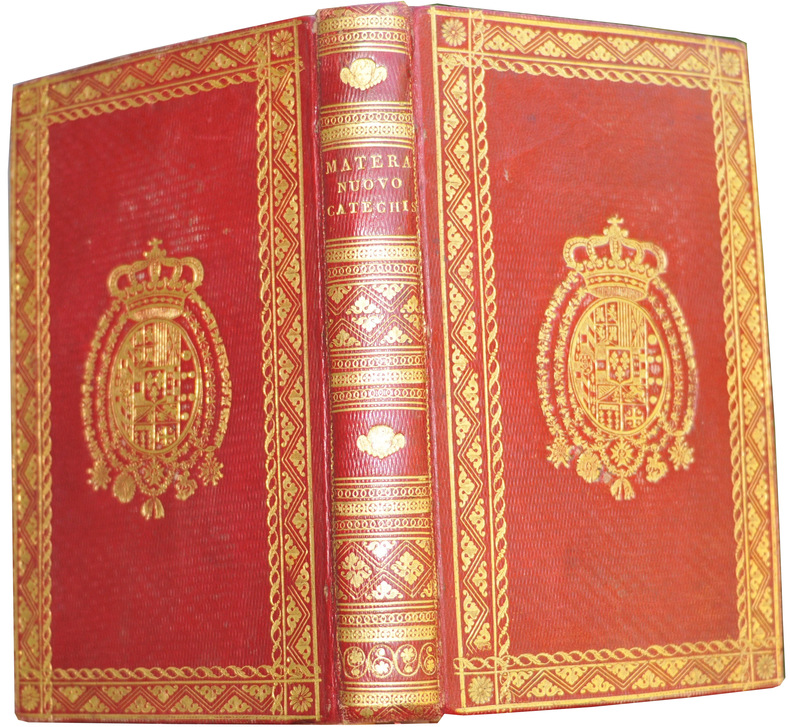
182746401033Napoli, Angelo Coda, 1827 ; in-12, plein cuir de Russie rouge, large encadrement de guirlandes et dentelles dorées, armes dorées sur les plats, dos recouvert d'un décor doré, tranches dorées (reliure de l'époque) - Frontispice gravé, 276 pp. PRECIEUX CATECHISME AYANT APPARTENU A LA REINE MARIE CHRISTINE D'ESPAGNE. Le volume est en italien parce que cette princesse née Marie Christine de Bourbon était fille du Roi de Naples. En 1827, l'année de la parution du volume elle venait d'épouser le sanguinaire roi d'Espagne Ferdinand VII. Celui-ci mourut en 1833 et la reine Marie Christine gouvernera comme régente avec Isabelle II de 1833 jusqu'en 1843. Le volume est relié aux armes royales et porte l'ex libris gravé de la Reine : M. C. Ra de Ea (Maria-Christina Reina de España).
1826003361Paris, Lugan.8 volumes in-32 (105 x 65 mm.), 380 p, 386 p, 387 p, 403 p, 446 p + 1, 450 p, 455 p, 443 p. Reliure veau glacé vert-olive encadrant les plats, filet de, dos à quatre nerfs orné de filets or et à froid et d'un ornement à froid entre les nerfs, filet or et dentelle à froid encadrant les plats, filet sur les coupes et dentelle intérieure, tranches dorées, fine reliure d'époque signée Duplanil (dos légèrement éclairci) Ouvrage illustré d'un portrait de l'auteur en frontispice du tome I et 15 gravures par Dulompré, Paul Legrand d'après les dessins de Chasselat, Paul Legrand, Tassaert
185222882du nom de la Reine qui l'a inauguré en 1852 (le 23 février) ; commencé en 1845, il enjambe le Guadalquivir, est le premier pont fixe de Séville et remplace le pont flottant. C'est en 1824 qu'il est envisagé de construire un pont permanent et que sa construction est encouragée par un décret royal.
180512798Madrid 1805. Madrid 1805-1807. En folio. 6 volúmenes. Texto a dos columnas. Encuadernación de la época en piel adornos y letrería dorada en la lomera. Primera edición de esta nueva recopilación de leyes de España mandada formar por Carlos IV donde se reforma la Recopilación publicada por Felipe II en 1567 y se reincorporan las pragmáticas cédulas decretos órdenes y otras providencias no recopiladas y expedidas hasta 1804. Ejemplar completo del sexto y último volumen publicado en 1807 que contiene sus tres índices generales y el suplemento correspondiente a los años de 1805 y 1806 y suele faltar en la mayoría de ejemplares que se ofrecen. Palau describe este volumen como libro independiente. Obra importante que conformó el cuerpo legislativo del siglo diecinueve es la primera recopilación moderna de las leyes de España. Ante la necesidad de un nuevo cuerpo legislativo Carlos IV comisionó a Juan de la Reguera Valdelomar la realización del trabajo el cual fue aprobado por la Junta de Recopilación creada al efecto. Fue un proyecto ambicioso que finalizó con la Real Cédula de 15 de julio de 1805 promulgando la Novísima Recopilación. Sin embargo la técnica jurídica y la orientación política era idéntica a la Nueva Recopilación publicada en el siglo dieciocho lo que convirtió a la Novísima en una obra vieja desde su nacimiento. Se convirtió en el texto fundamental para los estudios de derecho ya que los Borbones habían logrado introducir en las universidades el derecho real frente al derecho común y se mantuvo vigente hasta la aprobación del Código civil de 1889 siendo derogada de forma paulatina a medida que se fueron promulgando las constituciones y los diferentes códigos. Muy buen ejemplar impreso sobre fuerte papel limpio. unknown
189519565ABWirzburgo, Imprés y publicat por la imperial y real llibreria de cort de Leo Woerl, 1895. 19 : 13 cm. 2 hojas, 230 páginas. Tela original, titulo en oro en el lomo y la tapa.
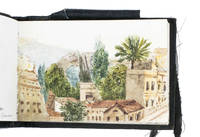
1881ABC_45368London sketchbook used in the Mediterranean 1881. Small oblong 8vo 85 x 13 cm. Half checkered black morocco smooth spine divided into 6 fields by 5 gold fillets pebble-textured cloth sides each board with a gold fillet with pencil sleeve and frayed strap to hold the sketchbook easily in hand while drawing. With advertising label of Lechertier Barbe & Co. Artists colourmen and Stationers Regent Street London with prices of the various sketchbooks for sale; at the head the artists initials and date: J.M. 1881. Album sketchbook containing 28 pencil drawings 1 double-page 2 colored drawings and 4 watercolors 1 double-page with handwritten captions in English. 70 pp. Very charming album apparently made during a Mediterranean cruise ca. 1881. The cruise began in Marseille and ended in Biarritz:The Notre Dame de la Garde in Marseille drawing; View of Palma de Mallorca: deleted Minorca Menorca; or: Ibiza; drawing; Two women in Algiers: one standing one sitting drawing; Sketch of a mosque in Algiers drawing; Street in the old city of Algiers colored drawing; Charming view of a café with people sitting outside under banana palm trees colored drawing; Beautiful double-page view of the recently built 1872 Notre Dame dAfrique on a hill above Algiers watercolor; Moslem cemetery in Algiers watercolor; Beautiful watercolor of a street in Oran; Les deux-Frères in the harbor of Nemours now: Ghazaoue drawing; The old harbor of Biarritz drawing; Moorish woman with a description of her costume drawing; pasted to inside back board: Plant Salide drawing.The strap is frayed but the sketchbook is further in very good condition. ABE CAT Art History hardcover
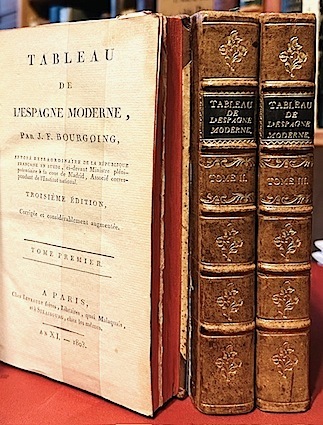
18039983Levrault frères Paris, Strasbourg An XI - 1803 3 vol. 3 vol. in-8 de 2 ff.n.ch. VIII 398 pp., 2 ff.n.ch. 410 pp. et 2 ff.n.ch. 374 pp.; demi-veau à petits coins de l'époque, dos à nerfs orné, pièces de titre, tranches rouges.