19 574 résultats
162189S.l., (1793-1802) , Sept dessins gouachés sur vergé bleu ou blanc, contrecollés par l'auteur lui-même sur papier fort, certains encadrés d'un bord noir ou entourés d'un liseré de papier doré collé. Les deux pour certains. De formes rectangulaires, tous entre 40 cm de largeur sur 60 cm de longeur. Titre et date à l'encre au bas du recto de la vue a, "Vue de l'intérieur d'une Prison, inventée et Dessinée par Géligny, prisonnier de Guerre en Espagne (a Valladolida), le 28 Vendémiaire An 3". Les vues c, d et e sont signées à l'encre "Géligny inv'" et certaines sont datées. Des poèmes manuscrits conemporains (encre) au verso des vues b et d et au recto de la vue a. Quelques rousseurs et accrocs sans gravité.
148213220España posiblemente Avila 1482. 910x620mm. 35¾x24½". Manuscrito España posiblemente Avila c-1482-1492. 910 x 620mm. 1 hoja manuscrita por las dos caras. Rica orla miniada formando un rectángulo en colores y oro con el escudo de los Reyes Católicos repetido cuatro veces uno a cada lado de la orla. Magnífico ejemplo de la iluminación miniada medieval española reflejado en esta enorme hoja realizada para el cantoral de Isabel de Castilla y Fernando de Aragón reyes de España llamados los Reyes Católicos realizado para el convento dominicano de Santo Tomás en Avila entre los años 1482 y 1492 "uno de los libros de cantos más suntuosos y artísticos producidos en España" Bordona Iluminación española 1930 p.61. <u>Iluminación</u>: enorme orla miniada de 850 x 560mm. en oro y colores azul rojo verde rosa marrón y amarillo. Incluye cuatro escudos de los Reyes Católicos uno a cada lado de la orla y cuatro yugos con flechas a su lado; el escudo inferior que es el más grande y elaborado contiene dos ángeles a gran tamaño a cada lado del escudo. La extensa y abundante decoración incluye abundante flora y fauna monos pájaros zorros y dragones así como putti todo pintado en colores vivos y dorados. <u>Data</u>: El escudo de armas se puede fechar después del matrimonio de los reyes en 1469 y anterior a la toma de Granada de 1492. <u>Ejecución</u>: Este Gradual fue presentado a los Reyes Católicos por el convento dominicano de Santo Tomás en Avila fundado en 1478 y que aun existe. El manuscrito probablemente permaneció en Santo Tomás por más de cuatro siglos hasta que unos restos del manuscrito fueron adquiridos por Manuel Rico y Sinobias quien cortó muchas de las miniaturas y dispersó las hojas. Domínguez Bordona en su <em>Iluminación Española</em> afirma que este libro de cantos fue un regalo de los Reyes Católicos al convento dominico de Santo Tomás en Avila fundado recientemente. Los reyes realizaron diferentes contribuciones al convento como la construcción de la capilla donde los reyes enterraron a su único hijo varón el príncipe Juan. En el mismo lugar fue enterrado el Gran Inquisidor Tomás de Torquemada m. 1498 también promotor de la construcción del convento. Autoría: Bordona atribuye la autoría de las miniaturas posiblemente a Juan de Carrión pintor y miniaturista al servicio de los reyes quien trabajó activamente en Avila a partir de 1470 que obtuvo gran fama en su tiempo. En la catedrla de Avila se conservan algunos otros ejemplo de su trabajo. Documento realmente extraordinario y de gran rareza. Se conservan dos hojas en el Museo Arqueológico de Madrid J.D.Bordona Exposición de Códices Miniados Españoles 1929 nos. CIV-CVII. Otra hoja estuvo en la colección C.P.D. Maclagan vendida en Sotheby's lote 238 de su subasta 19 marzo 1909 adquirida por Ludwig Rosenthal cat. 155. Dos hojas fueron adquiridas por el Fitzwilliam Museum en Cambridge MS.293 y otra más se encuentra depositada en el Museo Lázaro Galdiano de Madrid. Finalmente una miniatura que perteneció al Príncipe de Liechtenstein adquirida por H.P. Kraus así como otra hoja ofrecida en su catálogo 112 1965 fueron adquisidas por Sam Fogg para la Piermont Morgan Library. Procedencia: 1. Reyes Católicos ofrecida como donación a: 2. Convento de Santo Tomás. 3. Manuel Rico y Sinobias. 4. Manuel Moreno unknown
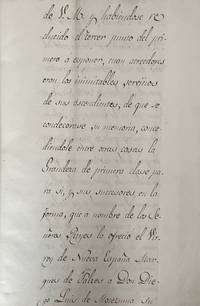
2956Spain Early 19th century. An important 18th-century manuscript text of historical and legal interest related to the privileges and grants of the House of Moctezuma. Manuscript text in brown ink by a neat hand. Text from the second half of the 18th century a somewhat later copy. On early 19th-century laid paper watermarks: A. Romani T.; Bartolmé Costas - for the genealogy table. In contemporary green half maroquin binding gilt spine. Panels covered with marbled paper. Blank title vignette on the front panel. Binding worn and damaged at the extremities. The first leaf and the genealogical table are creased in the middle vertically. Inside clean and firm in very good condition. An important 18th-century manuscript text of historical and legal interest related to the privileges and grants of the House of Moctezuma. Manuscript text in brown ink by a neat hand. Text from the second half of the 18th century a somewhat later copy. On early 19th-century laid paper watermarks: A. Romani T.; Bartolmé Costas - for the genealogy table. In contemporary green half maroquin binding gilt spine. 214 f. and a large folding sheet of genealogical table. .An important 18th-century manuscript text of historical and legal interest related to the privileges and grants of the House of Moctezuma<br /> A very interesting text containing summaries of the important merits of the House of Moctezuma the dynasty of the descendants of Moctezuma II Emperor of the Aztec Empire during the Spanish conquest of Mexico their privileges and grants encomiendas mercedes entitled estates mayorazgos and the annuities gained and kept throughout the centuries. With references to the corresponding Royal grants declarations notes and appeals and a few credits of historical sources such as Herrera and SolÃs.<br /> Compiled for the VII Conde de Moctezuma de Tultengo for an appeal to the Court regarding the family’s estate. Divided into three parts the first “Señor†ff. 1–58 contains 46 paragraphs dealing mainly with the succession line and the estate; the second “Demanda del Conde de Motezuma†ff. 59–172 related mainly to the 1740–41 appeal regarding the Conde’s encomiendas mercedes mayorazgos in Mexico and later controversial affairs such as the lawsuit with the 5th Duke of Atrisco Ventura Osorio de Moscoso y Fernández de Córdoba over a grant of 8250 ducats of silver for the assets in Atlixco ff. 171v. The last part “Cedulas Reales†ff. 173–214 are copies and summaries of Royal decrees to justify the Conde’s appeal. At the end of the text a large folding family tree is attached. <br /> Jerónimo MarÃa de Oca y Nieto de Silva Jerónimo MarÃa de Oca Nieto de Silva Cisneros y Moctezuma was the 7th Count of Moctezuma de Tultengo. Son of Gaspar Antonio de Oca Sarmiento de Zúñiga y Navarro and Teresa Nieto de Silva Cisneros y Moctezuma Guzmán Cueva y BoÂcanegra the 6th Countess of Moctezuma de Tultengo Jerónimo was born in Murcia in 1695 and inherited the title of Count of Moctezuma in 1736. King Charles III granted him the title of Grandee of the First Class Grandeza de España de Primera Clase in 1765. He married Josefa de Mendoza Caamaño y Sotomayor at the age of twenty-five and their son JoaquÃn Ginés de Oca Moctezuma y Mendoza succeeded him after his death in 1778. <br /> Unique document related to the House of Moctezuma we couldn’t trace a printed version of the text. <br /> Literature: Conde y DÃaz-RubÃn J. I.; Sanchiz Ruiz J.: Conde de Moctezuma de Tultengo …. In: Historia genealógica de los tÃtulos y dignidades nobiliarias en Nueva España y México. Volumen II. Casa de Austria siglos XVI–XVII. México Universidad Nacional Autónoma de México Instituto de Investigaciones Históricas 2012 fotografÃas y grabados Serie Historia Novohispana 90 unknown
18652210-11Barcelona/Madrid, José Ribet/ Emilio Font 1865. 3 vols. gr.-2°. 3 Bll., 99 S. 2 Bll.; 2 Bll., 91 S. 1 Bl.; 3 Bll., 103 (2) S. Mit insges. 141 (v. 144) tonlithogr. Taf. HLdr. d. Zt. Mit Rückengoldpräg. Es fehlt d. Frontisp. im 1. Bd. u. 2 Taf. im 2. Bd. (Abside interoir de la catredal de Burgos; Portada de la capilla de Reyes Nuevos); 2 Taf. m. kl. Einr., 3 Textbll. gelockert. Durchgeh. gebräunt bzw. stockfl.
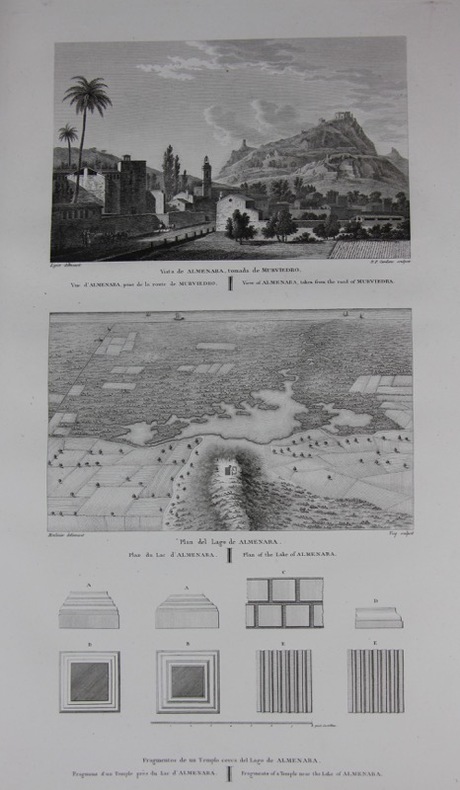
182069056Paris, Pierre Didot l'ainé, 1806 1820 4 volumes grand in-folio, demi chagrin fauve, dos à nerfs ornés de filets dorés reliure fin XIXe s., faux titre gravé, 1 portrait de SAS le Prince de la Paix d'après Steven, XLVI pp. dont le titre, 72 pp., 1 f. n. ch. et LXXXVIII planches - Faux-titre, titre, pp. de 73 à 132, planches de LXXXIX à CLXXXIX - Faux-titre, titre, XLV pp., 36 pp. et XC planches - Faux-titre, titre, XCI pp., 38 pp. et LXX planches, 2 cartes doubles de l'Espagne et du Portugal. Soit 272 planches hors texte.
220820S.l., 4 décembre 1700 (1701) in-12, 108 pp., couvertes d'une écriture fine et très lisible (environ 30 lignes par page, quelques biffures et ratures), avec un frontispice gravé avec un cartouche vide (Paris, chez Bonnart), portant un titre manuscrit Journal du sr. Frigard, ordinaire de la musique du Roy, veau brun, dos à nerfs cloisonné et fleuronné, tranches mouchetées de rouge (reliure de l'époque).
182061011Paris, P. Didot L'Ainé, 1806-1820. Gr.-Fol. Mit gest. Titel, einem gest. Porträt, 4 gest. Titelvignetten, 2 doppelblattgr. Kupferkarten u. 349 tlw. ganzs. Kupfern auf 272 Tafeln. Zus. ca. 400 S., Ldr.-Bde. d. frühen 20. Jhds. a. 5 Bünden m. ornamentaler Deckelverg. u. goldgepr. Rückentiteln in HLdr.-Schubern (61 x 47 cm).
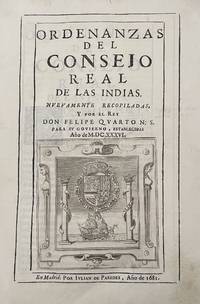
16812474Madrid: Por Julian de Paredes 1681. Second revised and enlarged edition. In contemporary limp vellum. Engraved device on title page. Woodcut initials throughout and a tailpiece at end of each part. Tinted edges. Stains on binding string missing panels with small damage at the outer edge. Tinted title on spine rubbed. 19th-century shelfmark on the inner front panel in ink. Contemporary notes and sings to the margins throughout the first part. Old restoration with paper tape to a few pages in the first part. Otherwise in very good condition. Second revised and enlarged edition. In contemporary limp vellum. 206 14 p. <p><p><br /> Revised and enlarged second edition of these substantial bodies of law relating to the New World and the treatment of Native Americans an important volume on the Administrative History of the Indies.<br /> <p><p><br /> One of the most important volumes of the administrative history of the Indies a fundamental collection of laws and ordinances decreed by the Council of the Indies the supreme governing body of Spain’s colonies in America during the reign of Philip IV. <br /> <p>The first part Ordenanzas del Consejo Real de las Indias contains 245 ordinances of the Council of the Indies pp. 3–112; first published in 1636 the second part Autos acuerdos y decretos de govierno del Conseio Real y supremo de las Indias embodies an additional 190 ordinances concerning for the most part the administration of Spanish America pp. 113–206 plus 14 p. of index; first published in 1658.<br /> <p><p><br /> Any editions of these bodies of law are extremely scarce on the market RHB lists only 2 copies of the present edition within the last 70 years. <br /> Sabin 57477. Por Julian de Paredes unknown
16154007Ávila and La Horcajada 1615. Manuscript on parchment 380 x 270 mm. 18. Complete. Contents: ff. 1r-4v: Regla in Spanish in 30 numbered sections inconsistent numbering on ff. 3v-4v in a rounded script in brown ink the first page slightly larger up to 27 lines. F. 1r: incipit first four lines in large lettering with very large calligraphic initial: En el nombre de dios todo poderoso padre y hijo y espiritu sancto tres personas y una esencia. Section 30 f. 4v added in a slightly later hand. The word Cruz symbolized by a red Maltese cross. Text on ff. 2r-2v underlined in red. Calligraphic initials some with marginal extensions in brown purple or red. Marginal drawings of prickly foliage some in the shapes of fantastic animals. Later marginal notes opposite many sections. Ff. 5r-5v: Heading: Este es traslado de un testimonio followed by two notarial subscriptions on f. 5v one partially in cursive signed and dated Ávila 11 May 1527 the other in italic partly faded including the date 1615. F. 6r: A cerca de la procession de la Resurrection. After an introductory portion in a small round early 16th-century hand in brown ink the text continues from f. 4v with sections 32-37 of the Regla of which sections 33-37 are in a later sixteenth-century hand; these sections ruled through with light diagonal lines. Signatures or notes in lower margin. F. 6v: blank except for five lines heavily cancelled in red. Ff. 7r-7v: five paragraphs in a fine upright italic hand the first and third with headings in red La orden que han de tener en la procession de la Resurxection sic en la faded and illegible.; La orden que sea de tener en la procession de la Resurretion sic en el domingo de pascua es la siguente. Followed on f. 7v by a note in a different hand dated from La Horcajada 21 May 1550. Ff. 7v-8v and back inner cover: later additions some quite faded. A few later marginal annotations throughout.Rubrication and decoration: headings and line fillers in red a few ornamented line fillers or borders some passages underlined in red or light purple else ruled in dry point numerous calligraphic initials in red or brown ink opening initial with purple filigree extension filling left margin numerous foliate vegetable and zoomorphic ornamental designs in the margins in red purple and brown ink.Binding: stitched into the original parchment cover with title "Regla de la Pasion" in large letters the R with decorative extensions above a large cross in green ink entwined with the snake and in the margins apparently the instruments of the Passion.Condition: rubbing and staining vertical crease from folding causing occasional erasure of text outer edge of first page somewhat rubbed affecting legibility of text some words at line ends helpfully written over in a later hand the inks used in the last two leaves quite faded; wrapper worn and darkened with tears at top and 3 small holes in lower cover.Provenance: Confraternity of the Holy Cross of Horcajada; purchased in France with export license. An early Spanish confraternity manuscript containing the rules and statutes that governed the Confraternity of the Holy Cross referred to as the Cofradía or Hermandad de la Cruz the word Cruz being supplied by a Maltese cross in red of La Horcajada a town located in Castile y León in the province of Ávila. As in other Roman Catholic countries confraternities or lay brotherhoods played a vital role in community life in Spain functioning as mutual aid societies and venues for laypeople to express their piety and perform charitable acts. Vernacular manuscript confraternity statutes from the Iberian peninsula surface much more rarely than for example their Italian counterparts although it appears that Spain had a larger number of confraternities proportional to the population especially in Castile y Leon than the other Catholic lands. Virtually every community including small villages had at least one confraternity. While exact numbers of confraternities in sixteenth-century Spain are unknown "studies carried out for a number of cities suggest that the number of confraternities and brotherhoods in the Hispanic kingdoms was larger than elsewhere in Catholic Europe. The reasons behind the extraordinary popularity of confraternities and brotherhoods in the Hispanic kingdoms cannot yet be established however in view of the current state of research on the topic. There has been a tendency for scholars to emphasize the confraternity as a primarily urban phenomenon a reflection perhaps of their early development in Italy where they formed an essential part of civic and urban life. In the Hispanic kingdoms however these institutions were equally important in the religious and social life of the small village. Pastoral visitations carried out by the bishops of Cuenca during the sixteenth century found that `nearly every community had at least one brotherhood' even small villages of 500 inhabitants. A similar pattern prevailed in villages around Toledo during the late sixteenth century" Callahan pp. 18-19.In his article on Spanish confraternities William Callahan further points out their popular nature which "arose from the initiative of the laity rather than the clergy prime examples of the lay piety that began to flourish in late medieval Europe. This piety developed largely on its own uncontrolled by either local bishops or the pope both of whom regarded its manifestations with some suspicion. The resiliency of traditional confraternities and brotherhoods developed from their connection to local religious cultures. It also reflected a fact noted by scholars who have studied specific cities and regions the strongly popular character of membership. There were of course some associations that limited membership to the nobility or clergy but in most cases members were recruited from the popular classes. This was obviously true in the case of peasant villages where only one or two confraternities existed." pp. 22-23. In spite of the centrality of confraternities to early modern religious life in Spain there is comparatively little modern scholarly literature especially on the rural confraternities. Note the absence for example of any articles on Spain or Portugal in Brill's recently published Companion to Medieval and Early Modern Confraternities edited by Konrad Eisenbichler.This working manuscript bears witness to this central but understudied aspect of Spanish popular religious culture before the restrictions placed on confraternities by the Council of Trent and succeeding Popes. Consulted frequently and contributed to by members of the confraternity the manuscript includes abundant interlinear and marginal additions and corrections and half- or full-page later additions. The town of La Horcajada is identified in the opening page. Ff. 1r to 5v contain the introduction the first 30 statutes and a notarized testimony with heading "Este es traslado de un testimonio" which relates to the apparently recent establishment of the confraternity. The statutes cover admission of new members general rules of comportment requirements of prayer and confession for feast days and for the canonical hours charity for poorer members of the confraternity chants etc. Several paragraphs relate to processions including required habits and admission of non-members into the processions. On f. 6r a paragraph on the procession de la Resurrection is followed by six entries numbered 32 to 37 of which paragraphs 33 to 37 are in a later 16th-century hand. Several light diagonal lines through these five paragraphs may indicate that they were cancelled. The verso f.6v contains only five lines heavily cancelled in red ink and f. 7r continues discussion of the procession of the Resurrection on a feast day the name of the saint is smudged and on Easter Sunday in a different 16th-century upright cursive. This second section of which portions are difficult to read because of fading ends on f. 7v and is followed by a note in a larger hand dated from La Horcajada 21 May 1550. The final leaf and inner back cover contain later additions some quite faded. One late addition in the lower margin of f. 5v is dated 1615.The manuscript is decorated in a popular style. Some of the leafy plant designs have a thorny look that may reflect local vegetation. Animals and grotesques include a scorpion-like creature birds and possibly imaginary mammals. A witness to the central role played by religious confraternities in early modern Spain bearing the marks of its use and in original condition it is a rare survival and would repay further study.Cf. William Callahan "Confraternities and Brotherhoods in Spain 1500-1800" Confraternitas: The Newsletter of the Society for Confraternity Studies 12:1 2001 17-25. See also William A. Christian Local Religion in Sixteenth Century Spain Princeton 1981; Maureen Flynn Sacred Charity: Confraternities and Social Welfare in Spain 1400-1800 Basingstoke 1989. unknown books
16154007Ãvila and La Horcajada 1615. <p>Manuscript on parchment 380 x 270 mm. 18. Complete. Contents: ff. 1r-4v: Regla in Spanish in 30 numbered sections inconsistent numbering on ff. 3v-4v in a rounded script in brown ink the first page slightly larger up to 27 lines. F. 1r: incipit first four lines in large lettering with very large calligraphic initial: En el nombre de dios todo poderoso padre y hijo y espiritu sancto tres personas y una esencia. Section 30 f. 4v added in a slightly later hand. The word Cruz symbolized by a red Maltese cross. Text on ff. 2r-2v underlined in red. Calligraphic initials some with marginal extensions in brown purple or red. Marginal drawings of prickly foliage some in the shapes of fantastic animals. Later marginal notes opposite many sections. Ff. 5r-5v: Heading: Este es traslado de un testimonio followed by two notarial subscriptions on f. 5v one partially in cursive signed and dated Ãvila 11 May 1527 the other in italic partly faded including the date 1615. F. 6r: A cerca de la procession de la Resurrection. After an introductory portion in a small round early 16th-century hand in brown ink the text continues from f. 4v with sections 32-37 of the Regla of which sections 33-37 are in a later sixteenth-century hand; these sections ruled through with light diagonal lines. Signatures or notes in lower margin. F. 6v: blank except for five lines heavily cancelled in red. Ff. 7r-7v: five paragraphs in a fine upright italic hand the first and third with headings in red La orden que han de tener en la procession de la Resurxection sic en la faded and illegible…; La orden que sea de tener en la procession de la Resurretion sic en el domingo de pascua es la siguente. Followed on f. 7v by a note in a different hand dated from La Horcajada 21 May 1550. Ff. 7v-8v and back inner cover: later additions some quite faded. A few later marginal annotations throughout.<br /> Rubrication and decoration: headings and line fillers in red a few ornamented line fillers or borders some passages underlined in red or light purple else ruled in dry point numerous calligraphic initials in red or brown ink opening initial with purple filigree extension filling left margin numerous foliate vegetable and zoomorphic ornamental designs in the margins in red purple and brown ink.<br /> Binding: stitched into the original parchment cover with title “Regla de la Pasion†in large letters the R with decorative extensions above a large cross in green ink entwined with the snake and in the margins apparently the instruments of the Passion.<br /> Condition: rubbing and staining vertical crease from folding causing occasional erasure of text outer edge of first page somewhat rubbed affecting legibility of text some words at line ends helpfully written over in a later hand the inks used in the last two leaves quite faded; wrapper worn and darkened with tears at top and 3 small holes in lower cover.<br /> Provenance: Confraternity of the Holy Cross of Horcajada; purchased in France with export license.  <br /> <br /> An early Spanish confraternity manuscript containing the rules and statutes that governed the Confraternity of the Holy Cross referred to as the CofradÃa or Hermandad de la Cruz the word Cruz being supplied by a Maltese cross in red of La Horcajada a town located in Castile y León in the province of Ãvila. As in other Roman Catholic countries confraternities or lay brotherhoods played a vital role in community life in Spain functioning as mutual aid societies and venues for laypeople to express their piety and perform charitable acts. Vernacular manuscript confraternity statutes from the Iberian peninsula surface much more rarely than for example their Italian counterparts although it appears that Spain had a larger number of confraternities proportional to the population especially in Castile y Leon than the other Catholic lands. Virtually every community including small villages had at least one confraternity. While exact numbers of confraternities in sixteenth-century Spain are unknown “studies carried out for a number of cities suggest that the number of confraternities and brotherhoods in the Hispanic kingdoms was larger than elsewhere in Catholic Europe. The reasons behind the extraordinary popularity of confraternities and brotherhoods in the Hispanic kingdoms cannot yet be established however in view of the current state of research on the topic. There has been a tendency for scholars to emphasize the confraternity as a primarily urban phenomenon a reflection perhaps of their early development in Italy where they formed an essential part of civic and urban life. In the Hispanic kingdoms however these institutions were equally important in the religious and social life of the small village. Pastoral visitations carried out by the bishops of Cuenca during the sixteenth century found that `nearly every community had at least one brotherhood’ even small villages of 500 inhabitants. A similar pattern prevailed in villages around Toledo during the late sixteenth century†Callahan pp. 18-19.<br /> <br /> In his article on Spanish confraternities William Callahan further points out their popular nature which “arose from the initiative of the laity rather than the clergy prime examples of the lay piety that began to flourish in late medieval Europe. This piety developed largely on its own uncontrolled by either local bishops or the pope both of whom regarded its manifestations with some suspicion. The resiliency of traditional confraternities and brotherhoods developed from their connection to local religious cultures. It also reflected a fact noted by scholars who have studied specific cities and regions the strongly popular character of membership. There were of course some associations that limited membership to the nobility or clergy but in most cases members were recruited from the popular classes. This was obviously true in the case of peasant villages where only one or two confraternities existed.†pp. 22-23. In spite of the centrality of confraternities to early modern religious life in Spain there is comparatively little modern scholarly literature especially on the rural confraternities. Note the absence for example of any articles on Spain or Portugal in Brill’s recently published Companion to Medieval and Early Modern Confraternities edited by Konrad Eisenbichler.<br /> <br /> This working manuscript bears witness to this central but understudied aspect of Spanish popular religious culture before the restrictions placed on confraternities by the Council of Trent and succeeding Popes. Consulted frequently and contributed to by members of the confraternity the manuscript includes abundant interlinear and marginal additions and corrections and half- or full-page later additions. The town of La Horcajada is identified in the opening page. Ff. 1r to 5v contain the introduction the first 30 statutes and a notarized testimony with heading “Este es traslado de un testimonio†which relates to the apparently recent establishment of the confraternity. The statutes cover admission of new members general rules of comportment requirements of prayer and confession for feast days and for the canonical hours charity for poorer members of the confraternity chants etc. Several paragraphs relate to processions including required habits and admission of non-members into the processions. On f. 6r a paragraph on the procession de la Resurrection is followed by six entries numbered 32 to 37 of which paragraphs 33 to 37 are in a later 16th-century hand. Several light diagonal lines through these five paragraphs may indicate that they were cancelled. The verso f.6v contains only five lines heavily cancelled in red ink and f. 7r continues discussion of the procession of the Resurrection on a feast day the name of the saint is smudged and on Easter Sunday in a different 16th-century upright cursive. This second section of which portions are difficult to read because of fading ends on f. 7v and is followed by a note in a larger hand dated from La Horcajada 21 May 1550. The final leaf and inner back cover contain later additions some quite faded. One late addition in the lower margin of f. 5v is dated 1615.<br /> <br /> The manuscript is decorated in a popular style. Some of the leafy plant designs have a thorny look that may reflect local vegetation. Animals and grotesques include a scorpion-like creature birds and possibly imaginary mammals. A witness to the central role played by religious confraternities in early modern Spain bearing the marks of its use and in original condition it is a rare survival and would repay further study.<br /> <br /> Cf. William Callahan “Confraternities and Brotherhoods in Spain 1500-1800†Confraternitas: The Newsletter of the Society for Confraternity Studies 12:1 2001 17-25. See also William A. Christian Local Religion in Sixteenth Century Spain Princeton 1981; Maureen Flynn Sacred Charity: Confraternities and Social Welfare in Spain 1400-1800 Basingstoke 1989.</p> unknown
231001S.l., s.d. (1826-28) in-folio, en feuilles ou broché sous couverture d'attente de cartonnage souple orange moucheté, le tout dans double emboîtage de carton vert moderne.
P., Pierre Didot l'aîné, 1806-1820. Deux tomes en 4 volumes in-plano (480 x 645 mm) reliure cartonnée de papier marbré, dos lisse, pièce de titre papier (reliure de l'époque). Tome I, 1ère partie : Un frontispice contenant le titre général illustré (monument allégorique à la gloire de l'Espagne), XLVI pages (dont faux-titre et titre illustré de 2 petites vignettes gravées), 72 pages, 61 planches hors-texte, (1) f. de table des matières - Tome 1, 2nde partie : (2) f.de faux-titre et titre illustré d'une vignette gravée, 73 - 132 pp. (table des matières comprise), 76 planches hors-texte - Tome II, 1ère partie: (2) f de faux-titre et titre illustré de d'une grande vignette gravée, XLV pp. 33 pp, 79 planches hors-texte, (1) f. de table des matières - Tome II, 2nde partie : (2) f. de faux-titre et titre illustré de 2 petites vignettes gravées, XCI pp., 38 pp dont table des matières, 56 planches hors-texte. Cerne de mouillure en tête d'une partie des feuillets de la 2nde partie du tome I, rousseurs éparses, manque en haut du dos de 3 volumes, un mors entièrement fendu, fentes à quelques mors. EDITION ORIGINALE de ce "magnifique ouvrage" (Brunet), le plus important publié au XIXe siècle sur l'Espagne. Il contient 272 planches hors-texte de gravures dessinées et gravées sur acier par les plus grands artistes de l'époque et 2 CARTES doubles de l'Espagne et du Portugal. [Complet des 272 planches présentant 349 figures gravées (vues, scènes, plans, détails architecturaux, tableaux), MANQUE le portrait du Prince de la Paix ). Publié en 48 livraisons pendant 14 ans, cet ouvrage est souvent incomplet d'une partie des planches. Bel EXEMPLAIRE en reliure d'attente de l'époque mais au corps d'ouvrage non rogné, tel que paru avec ses belles marges conservées. Première édition d'un des ouvrages les plus complets et précis publiés sur l'Espagne. Bel exemplaire à l'intérieur très frais, à grandes marges et bien complet de toutes les planches requises (hormis le portrait). CONDITION RARE. Brunet III, 713 - Palau, 128975 : - Vicaire, IV, 742.
15695032541569. Book. A lengthy series of royal edicts / decrees / writs produced by the court under Philippe's close scrutiny in 1569 regarding financial and other obligations on the part of the persons in the area of Castro del Rio and elsewhere. 49 vellum leaves 98pp of manuscript 4 blank pages. The last page of which bears the date 18 November 1569 and the elaborate signatures and marks of the King and a number of his courtiers. Each page of the text bears 2 flourishes ie initials likely by the King and by the person responsible for the production of the document. In the original leather covers much rubbing and wear with remnants of the binding ribbons but the document still well-bound and with we think the original tri-coloured spine-cord binding the text to the cover. The first page with ornate decoration and illustrations in ink embellished with gold detailing and flourishes. Exquisite calligraphy throughout on well-preserved vellum. No seals present. 14" x 10". hardcover
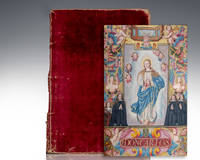
1685148310Valladolid Spain 1685. Rare 17th century elaborately illuminated nobility patent of King Carlos II of Spain for the late Diego Merino de Bargas of Tornavacas represented by two procurators and his sons Rodrigo Francisco and Luis Merino de Bargas residents of Lugar de Cavecuela. Quarto bound in early red velvet over pasteboards with red and yellow silk cord on the spine the patent is comprised of 144 leaves numbered 1-145 in contemporary Arabic numerals partially illegible ink stamps in bottom margins of each page manuscript on vellum written in italic Spanish script within a broad liquid gold border with decorated six-line cadel initials and some in text illuminations. Decorated with two full-pages of illumination depicting the Virgin standing on a crescent moon surrounded by seraphim and cherubim flanked by two kneeling men on the right and two on the left and an achievement of arms on pages 1 and 2 with a blue silk curtain between and a smaller illuminated miniature of the king on page 142. In very good condition with the illuminated pages exceptionally bright. King Carlos II of Spain 1661–1700 the last Habsburg ruler of the Spanish Empire is a pivotal figure in early modern European history due to both his personal condition and the dynastic crisis his death provoked. His reign was marked by severe political and economic decline compounded by his physical and mental disabilities which contemporary and modern historians attribute to generations of Habsburg inbreeding. Lacking a direct heir Carlos II's death triggered the War of the Spanish Succession 1701–1714 a major European conflict over control of the Spanish throne and its vast territories. His reign thus represents both the culmination of Habsburg rule in Spain and the beginning of a transformative shift in the balance of European power ultimately leading to the rise of the Bourbon dynasty under Philip V. hardcover
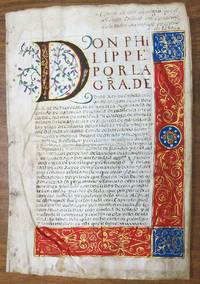
1572RF 1076<p><strong>Royal Provision of Phillip II Confirming and Ratifying the Privileges Granted by the Masters of the Order of Santiago to the Village of Corral de Almaguer Toledo 1572</strong></p><p>Manuscript. Small folio. 12 1/4 x 8 1/4". 8 double-sided vellum manuscript leaves originally bound together now unbound hand painted and decorated in blue red and gilt at various points throughout the text. The first page is hand-painted and decorated along the edge and includes a large decorative initial in multiple colors. Manuscript text in gothic style. Signed "Yo el Rey" on the back of the final leaf by King Phillip II of Spain in 1572.</p><p>ATTRACTIVELY ILLUMINATED EARLY MANUSCRIPT. JUDAICA INTEREST. Our manuscript contains the 4 confirmed provisions originally drafted by Infante Henry Duke of Aragon 1421 and 1440 Alonso de Cárdenas here listed as "Alfoso" sic in 1480 and then "The Catholic Kings" in 1494 all of whom at various times served as "Grand Masters of the Order of Santiago". The provisions were instigated against the Jewish communities of the villages of Corral de Almaguer and Ocana in Toledo province. Residents of the towns affiliated with the Order of Santiago repeately complained throughout the 15th and 16th centuries to the the authorities of that order of that the Jews and later conversos had bought land from Christians and had not paid any taxes on their purchases. Ultimately the Jews of Corral de Almaguer were ordered to pay comparable taxes to the Christians for said property but the Jews of Ocana were excepted because of their previous payments of other taxes. Given the fact that this manuscript copy dates from 1572 and was signed and reconfirmed by King Phillip II so long after the expulsion of 1492 shows there were still clearly tensions and persecution of local conversos even long after the communities had converted to Catholicism.</p><p>The top left margin on the front of the first leaf contains a handwritten note in ink stating in Spanish "It consists of this-privilege that Juan Collado was a secretary of the Order of Santiago in the year 1480". There are a few additional scant marginal notes in ink throughout and additional handwritten notes and signatures some indecipherable on the verso of the final leaf under the King's signature.</p><p>This document provide a fascinating and invaluable resource to those studying the history of Jews in Spain during the 15th and 16th centuries.</p><p>Text in Spanish.</p> hardcover
1699107920Madrid May 28 1699. Rare elaborately illuminated nobility diploma signed by King Charles II of Spain appointing Don Martin Damian Mendizabal the title of Marquis of Torre Gines. Quarto bound in full red contemporary velvet covered boards with two metal clasps containing five illuminated leaves two fully illuminated in color with the Royal coat of arms and portrait of King Charles II text in Spanish. Signed by King Charles II "Yo el Rey" and additionally signed by several Royal secretaries. Bound with a printed manuscript of the Oath of Fidelity to the King of Spain with Royal stamps dated 1701 and with two autograph letters laid in the first dated September 17 1701 and signed by Philip V and the second addressed to the Marquis. Exceptionally rare. Referred to as 'the Bewitched' and 'El Hechizado' Charles II of Spain was the last Habsburg ruler of the Spanish Empire. He died childless in 1700 with no immediate Habsburg heir. His will named his successor as 16-year-old Philip of Anjou grandson of Louis XIV and Charles's half-sister Maria Theresa and disputes over the inheritance led to the War of the Spanish Succession. hardcover
1699107920Madrid May 28 1699. Rare elaborately illuminated nobility diploma signed by King Charles II of Spain appointing Don Martin Damian Mendizabal the title of Marquis of Torre Gines. Quarto bound in full red contemporary velvet covered boards with two metal clasps containing five illuminated leaves two fully illuminated in color with the Royal coat of arms and portrait of King Charles II text in Spanish. Signed by King Charles II "Yo el Rey" and additionally signed by several Royal secretaries. Bound with a printed manuscript of the Oath of Fidelity to the King of Spain with Royal stamps dated 1701 and with two autograph letters laid in the first dated September 17 1701 and signed by Philip V and the second addressed to the Marquis. Exceptionally rare. Referred to as 'the Bewitched' and 'El Hechizado' Charles II of Spain was the last Habsburg ruler of the Spanish Empire. He died childless in 1700 with no immediate Habsburg heir. His will named his successor as 16-year-old Philip of Anjou grandson of Louis XIV and Charles's half-sister Maria Theresa and disputes over the inheritance led to the War of the Spanish Succession. hardcover books
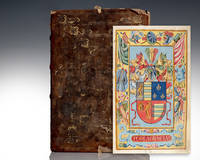
1612148287Valladolid Spain 1612. Rare 17th century elaborately illuminated nobility patent of King Philip III of Spain for the brothers Juan and Alonso de Rivera de la Cerda. Quarto bound in full leather with gilt detailing the patent is comprised of 100 leaves numbered 1-99 in contemporary Arabic numerals written in round Spanish script within a frame ruled in brown ink with decorated seven-line cadel initials and some in text illuminations. Decorated with two full-pages of illumination depicting the Virgin and Child in heaven with the brothers Juan de Rivera de la Cerda and Alonso de Rivera de la Cerda kneeling below and an achievement of arms on pages 1 and 2 with red silk curtains between and a smaller illuminated miniature of the king on page 97. In very good condition with the illuminated pages exceptionally bright with some wear and losses to the leather including to the crown and foot of the spine. King Philip III of Spain 1578–1621 is often regarded as a monarch who shifted the balance of power between the Spanish crown and the nobility in a more collaborative direction. Ascending to the throne at a young age Philip III relied heavily on his favorites particularly the Duke of Lerma to manage the kingdom’s affairs. This reliance on the nobility allowed them to gain significant political influence especially within the royal court. While Philip III did not possess the same autocratic control as his father Philip II his reign marked an era where the Spanish nobility enjoyed a degree of increased prominence albeit through the lens of court politics and patronage. However the resulting factionalism and the concentration of power in the hands of a few noble families eventually led to instability weakening the monarchy's control and contributing to the broader challenges faced by Spain in the early 17th century. hardcover
1897464381897. Fair to very good or better. Spanning 110 years 64 different titles nearly 2000 issues and tens of thousands of pages with numerous illustrations both black and white and colored. A few are more popular titles but most are quite uncommon rarely for sale found only at a few institutions a number only at the Duque de T' Serclaes periodical collection at the Univ. Connecticut. Many of the Cadiz publications remarkably have only scattered holdings. The content is varied from the first Spanish periodical edited by a woman to a description of the massive defeat of the Spanish at the Battle of Trafalgar just after it occurred to periodicals aimed at women illustrated with color fashion plates including a very rare set of periodicals from a philanthropic organization whose goal was to educate the people free of chargeto satire to politics such as the transfer of the Cortes to Madrid and so on. Detailed list upon request. unknown
1794000035bNew Spain Mexico. Fine with no dust jacket. 1794. Full-Leather. Handsome Folio Manuscript in early calf with gilt written by the Attorney of the Real Audiencia see Bibliografia Mexicana 220 and prepared for the Viceroy. Lengthy stipulations of taxes for the freed mestizos mulattoes and negroes as well as exemptions for Indians of the repartimientos even when married to Spanish women. These taxes were the root of the perceived injustice that explains why freed men formed the core of the Revolution when it came. EXTREMELY RARE AND IMPORTANT FIRST HAND TEXT OF MEXICAN HISTORY. see Archivo General de la Nation "Los Precursores Ideologicos della Guerra de Independencia 1929 pgs 137.139." LAID IN NOTE: Arce Y Echeagary J. Yinstruction para que los Administradores de Aduanas del Reyno de Nueva Espana hagan la legitima exaccion de los dros. de Alcabalas y Pulques en los casos que por lo regular se ofrecen en las propias Aduanas. Mexico 1794. ADDITIONAL BACKGROUND: In 1519 the Spaniards conquered Mexico. This led to the formation of a new state called New Spain and later into a new hybrid culture. Several military expeditions were led to extend 'New Spain'. The whole of Central America West Indies Philippines and parts of the current Texas and California were later conquered to become part of New Spain. The Spanish political control over Mexico lasted for three centuries. The entire region was formed into a viceroyalty in 1535. The colony was divided into provinces ruled by governors. These provinces were divided into departments and subdivided into districts. Magistrates controlled the districts and mayors led smaller villages. The parliament court handled all political matters and the Council of Indies controlled the other administrative matters. Off course the supreme authority over the Spanish empire belonged to the king. This system was pretty inefficient as it took several years for directives from the king to be implemented at the lower levels. During the initial administration grants called Encomiendas were given to colonists which controlled Indian labor and produce. This led to the misuse of power and atrocities against the Indians increased. The Indians revolted against the Spaniards in 1541 but were easily subdued. The Spanish emperor Charles V initiated the decline of the Encomienda system in 1542. This decline saw the emmergence of the Roman Catholic Church. The church was successful in carrying out mass conversions. The Spaniards protected the Indians that converted. Missions and monasteries dominated much of the land. The Spaniards thrived by the new found wealth in the colonies. They amassed huge wealth by controlling silver mining large ranches and estates that grew wheat sugarcane and indigo for export. Spanish merchants exported such goods as cotton silk and dye that were produced by the Indians. The prosperity of New Spain began to decline in the 17th century. Disease and natural disasters destroyed most of the Indian population. Most others migrated slowly to remote parts. Mines were abandoned and large areas of farmland were destroyed. The economy of New Spain collapsed. In 1810 a catholic priest named Miguel Hidalgo called upon Mexicans to rise up and fight the Spanish. Although father Hidalgo was killed another priest Jose Morelos continued to lead the fighting. New Spain finally won its independence from Spain in 1810 and came to be called Mexico. ; Spanish Language; 4to - over 9¾" - 12" tall; MEXICO MEXICAN TAXES NEW SPAIN MEXICAN REVOLUTION NAPOLEON BONAPARTE CHARLES V HIDALGO MORELOS HANDWRITTEN HISTORICAL HISTORY HAND WRITTEN HOLOGRAPH MANUSCRIPT MANUSCRIPTOS SPANISH ESPANOL VICEROY mestizos repartimientos antiquité contrat vélin document manuscrit papier Antike Brief Pergament Dokument Manuskript Papier oggetto d'antiquariato atto velina documento manoscritto carta antigüedad hecho vitela documento manuscrito papel. . hardcover
1573B556<p>Mexico City 9th day of March1573 size 450 x 320mm</p><p>SIR FRANCIS DRAKE'S ENGLISH PIRATES</p><p>Arrest Warrant For English Pirates Signed By The First Inquisitor of New Spain in 1573</p><p>Remarkable arrest warrant signed by the Inquisitor of New Spain directing the arrest and capture of 5 accused heretics including two English Pirates who had recently completed a daring jail break from prison in Mexico City.</p><p>This is an official arrest warrant dated March 9 1573 ordered by Pedro Moya de Contreras c. 1528-1591 first inquisitor of the newly founded Mexican Inquisition addressed to Don Alonso Sánchez de Miranda Dean of Guadalajara.</p><p>Moya de Contreras arrived in New Spain in 1571 as the newly appointed inquisitor thereafter rising to the office of Archbishop of Mexico City and finally Viceroy of New Spain 1584-1585. This two-fold letter is part of the legacy of the Inquisition in the New World aimed at ecclesiastical authorities and their flock to raise awareness of the rampant menace of Lutheran individuals in Mexico.</p><p>Following the failed attempt by the fabled pirates Francis Drake and John Hawkins to seize San Juan de Ulúa in 1568 about 500 mostly English pirates remained stranded in New Spain. Over the course of the next several years these 500 scattered throughout Mexico where they intermingled with the locals. Some 77 of these fell into the hands of Luis Carvajal the elder alcalde mayor of Tampico. Carvajal a converso was the patriarch of the Carvajal family which was later tragically tortured and murdered by the Inquisition as crypto-Jews. They were delivered to Mexico City as prisoners of war and were given relatively minor sentences of forced labor in various places throughout Mexico.</p><p>With the arrival of Moya de Contreras in 1571 the remaining pirates were no longer considered as mere prisoners of war but as heretics - "Luteranos" - and as such subject to the Inquisition's regulations. In 1572 Pedro Moya de Contreras issued a general order for all remnants of the Hawkins expedition to be apprehended and put to trial in New Spain. As a result about 36 were again rounded up captured and condemned for heresy. This group was processed through the Inquisition's court where they were subjected to a grand auto-da-fe in 1574 the largest ever held.</p><p>Three of these pirates are mentioned in Moya's letter to Don Alonso Sánchez de Miranda:</p><p>"Guillermo de Siles a Frenchman of 24 years of age small in height with pale features with little growth of hair on his face small blue eyes ."</p><p>"Pablo Haquines de la Cruz Paul Hawkins an Englishman who came with the armada of John Hawkins with sturdy shoulders and pale features with little growth of hair on his face of about 20 years of age ."</p><p>"Andres Martin Andrew Martin an Englishman with those from the said armada young man without growth of hair tall and slim with pale features of about 18 years of age."</p><p>The three had escaped from the Jail of the Inquisitor by burrowing under the walls of the cell in the middle of the night an escape which was apparently previously unrecorded. The arrest warrant provides that should anyone contravene the order or give aid to these heretics they will face the prospect of "latae sentenciae excommunication" including the sequestration of their possessions.</p><p>The actions of Pedro Moya de Contreras at that time under the supervision of Pedro de los Ríos chief inquisitor in Mexico clearly reflect all new precepts and creeds from the Tridentine Council 1545-1563 brought along to the New World to reform the Catholic faith.</p><p>The following is an English Translation of the arrest warrant provided by Boris Bruton:</p><p>We doctor don Pedro Moya de Contreras apostolic inquisitor against vile heresy and apostasy for the city of Mexico and Provinces of New Spain by our authority apostolic etc. order you Reverend don Alonso Sanchez de Miranda dean of Guadalajara commissary of this Holy Office to arrest the persons of Gomes de Leon his Majesty's servant or His Majesty's scribe resident of Puebla de Los Angeles a man of about 30 years old very fair of complexion of a good height wearing breeches with a short green cape; and Francisco Gonzales captain resident of Toluca elderly man of about 50 years grey-haired short in size scant beard hooked nose and tanned as though coming from the mountains dressed all in black. And William de Siles Frenchman about 24 years old short fair complected scant blond beard small blue eyes dressed in doublet and pants of coarse cloth; And Pablo Hawkins de la Cruz Englishman one of those who came on the fleet of John Hawkins young man somewhat stooped heavy-set fair beardless about 20 years old. And Andrew Martin Englishman member of the same fleet young man beardless lanky fair about 18 years old. Both of these are fluent in Spanish.</p><p>Last Sunday. All these men last Sunday night the eighth of this month about midnight burrowed through one of the cells of this Holy Office and escaped. These men you may seize and remove from any church or any other sacred exempted place whether in your district or outside of it in your own person or others whom you shall choose by authority of this letter or in prosecution of this our order as authorized on your own authority relaying my own warning and order with respect to all the other towns and cities of your bishopric. You are to order announce and publish this order so that no person whether he be Spanish or indian of whatever class or distinction shall receive hide shelter help on their way give any benefit or supplies or mounts horses to them;</p><p>and anyone who shall have information concerning these felons shall it to you or whomever you will have designated for this. Those who act contrary to this will be liable for prosecution for having received and sheltered heretics and in addition they shall incur the penalty of automatic excommunion excommunion latae sentenciae and forfeiture of all their property. To accomplish all the foresaid we give the power and authority for any person Spanish mestizo indian negro or mulato even if he has not been appointed officially by you to arrest these men as noted so that if anyone has given shelter or concealed them let a report be made of it and send it to us without delay.</p><p>Written in Mexico City the 9th day of March 1573.</p><p>Signed Doctor Moya de Contreras / by order of the Señor Inquisitor / Pedro de los Rios</p><p>Condition Description: ALS 2 ff. both folios tide marked on both left and right margins extending into written area both folios with loss to fore margins but written area unaffected.</p><p>Please go to www.marshallrarebooks.com for many more books on this subject.</p>
193823436Valencia - Barcelona: Tip. Moderna y Tip. La Académica respectivamente 1937-1938.- 22 fascÃculos de unas 90 páginas cada uno: Viñetas; 4º 222 x 162 cm.- La revista se imprimió en Valencia desde enero a diciembre de 1937 y en Barcelona desde enero a octubre de 1938. IMPORTANTISIMA Y RARISIMA REVISTA EN MAGNIFICO ESTADO DE CONSERVACION. INTERVIENEN EN ELLA LAS MEJORES PLUMAS DE LA INTELECTUALIDAD ESPAÑOLA REPUBLICANA ENTRE LAS QUE SE ENCUENTRAN LOS POETAS DE LA GENERACION DEL 27. En excelente estado de conservación. Falta el Nº 23 último publicado. LITERATURA Y FILOSOFÃA ESPAÑOLAS DE LOS SIGLOS XIX-XXI Y SU HISTORIA EN GENERAL Libro en español Tip. Moderna y Tip. La Académica respectivamente paperback
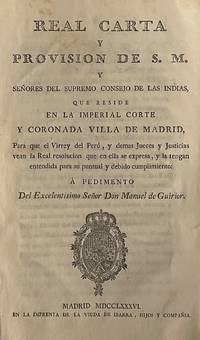
17862566Madrid: En la Imprenta de la Viuda de Ibarra Hijos y Compañia 1786. First edition. In later marbled paper. Binding damaged at tail of spine. Lower outer corner bumped. A dark stain to the lower outer corner of the first five quires. Otherwise clean. Overall in fine condition. First edition. In later marbled paper. 2 138 p. Scarce document related to the estate of Manuel de Guirior former Viceroy of Peru.<br /> <p><br /> José Antonio de Areche –1788 as the appointed visitador or royal inspector arrived in Peru in 1777. The difference between him and the Viceroy Manuel de Guirior 1708–1788 arose immediately concerning the extent of authorities. Their conflict culminated with the dismissal of Viceroy Guirior upon the charges brought by Areche. The quarrel went on after Guirior went back to Spain and eventually he was acquitted of the charges but only after his death. <p><br /> The present document Dated in San Ildefonso October 6 1785 is a summary of the case and it relates to Viceroy Guirior’s “residencia†taken by the Spanish colonial functionary Fernando Márquez de la Plata.<br /> <p><br /> Extremely scarce we could trace only 2 copies in institutional holding both in the Biblioteca Nacional de España. En la Imprenta de la Viuda de Ibarra, Hijos y Compañia unknown
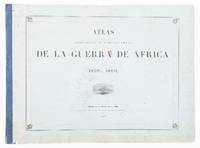
54197Madrid 1861. FIRST EDITION. Large oblong folio. 52 x 70 cm. Original printed blue boards. Complete with title index first part title and 12 text leaves second part title and 20 plates lithographs with hand-colourof battle plans &c. inc 6 double page and third part title and 12 very fine tinted lithographs by J. Donon after Hurrel and Velasco Madrid 1861 hardcover
161414701614 Antverpiae (Anvers), Apud Ioannem Keerbergium, 1614., Coll : fol 1025 contenant 23 gravures hors-texte et une carte, 80, 36p (table) In folio, en peau de daim teintée médaillons estampés à froid, sur les deux plats dos à 6 nerfs pièce de titre