158 résultats
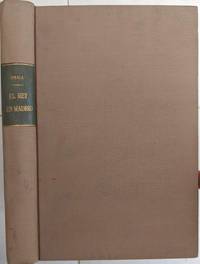
1871GG01476Madrid:: Por Quiros Impresor de Camara 1871. 1871. 8vo. 406 2 pp. Full beige cloth green leather gilt-stamped spine label. Fine copy. Records the history of the first king of Spain elected in Parliament Amadeo de Saboya 1845-1890 from the House of Savoy. Written by the Spanish historian and politician Don Antonio Pirala. "After the Spanish revolution deposed Isabella II the new Cortes decided to reinstate the monarchy under a new dynasty. The Duke of Aosta was elected King as Amadeus Amadeo on 16 November 1870. He swore to uphold the constitution in Madrid on 2 January 1871. The election of the new King coincided with the assassination of General Marques de los Castillejos his main backer. After that Amadeo had to deal with difficult situations with unstable Spanish politics republican conspiracies Carlist uprisings separatism in Cuba same-party disputes fugitive governments and assassination attempts." His reign was from Nov. 1870 to Feb. 1873. Por Quiros, Impresor de Camara, 1871. hardcover books
82079Madrid. hardcover. fine. 490 color illustrations. 4to full black leather gilt silk moire endpapers; slipcase. Madrid: Banco de Espana 1979. Fine.<br/><br/> unknown books
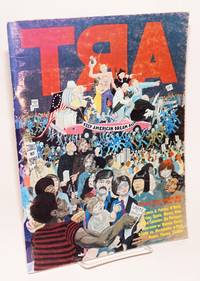
1976193887San Francisco: TRA 1976. Magazine. 48p. 8.5x11 inches worn magazine in stapled pictorial wraps edgeworn with a faint edge stain to back cover cover art by Guy Colwell and Jay Kinney last and slickest of the seven issues of the New Left's most important art magazine. TRA covered developments in revolutionary and avant-garde art with the energy and zeal unique to the New Left. As it expanded it involved an increasing number of Chicano artists - poets and painters both whose work related directly to the growing struggles in Latin America as well as US barrios. This seventh issue contains a portfolio of political comics with contributions by Trina Robbins Spain Rodriguez and others as well as an interview with Rius by Daniel del Solar interview with RG Davis of the San Francisco Mime Troup poetry by Luis Talamantex and Ricardo Gonzaleves and more. TRA unknown books
197640053San Francisco: TRA 1976. Magazine. 48p. 8.5x11 inches magazine in stapled pictorial wraps very good condition cover art by Guy Colwell and Jay Kinney seventh and slickest of the seven issues of the New Left's most important art magazine. TRA covered developments in revolutionary and avant-garde art with the energy and zeal unique to the New Left. As it expanded it involved an increasing number of Chicano artists - poets and painters both whose work related directly to the growing struggles in Latin America as well as US barrios. This seventh issue contains a portfolio of political comics with contributions by Trina Robbins Spain Rodriguez and others as well as an interview with Rius by Daniel del Solar interview with RG Davis of the San Francisco Mime Troup poetry by Luis Talamantex and Ricardo Gonzaleves and more. TRA unknown books
198649448NY: Russell Sage 1986. First printing. 8vo pp. xxii 286. Bibliography index. The population of the United States in the 1980s. National Committee for Research on the 1980 census. Gray paper over boards. Edges little spotted some notes in pencil o/w a VG tight copy in scuffed dj. Census monograph series. Russell Sage unknown books
2007175974Madrid: TF Editores 2007. Softcover. VG. Color illustrated wraps with white lettering 216 3 pp profusely illustrated in color. Text in Spanish. Ecuador tradition and modernity: National Library of Madrid April 26-August 26 2007. Includes bibliographical references pages 213-216. TF Editores paperback books
199666210Pontevedra: Deputación de Pontevedra 1996. 28.5 cm. Agosto-Setembro 1996 140p color plates bio/chron. color pict. wrps Exhibition of 10 artists from throughout Latin America held at the 24 Bienal of art at Pontevedra Spain. Artists include Milton Becerra Venezuela 1951 Octavio Blasi Argentina 1960 Maria Orensanz Argentina 1936 Ana Patricia Palacios Columbia 1961 Pancho Quilici Venezuela 1954 Alberto Ramírez México 1959 Pablo Reinoso Argentina 1955 Vivian Scheihing Chile 1947 Julio Villani Brazil 1956 and Eduardo Zamora México 1942. GALLEGO AND SPANISH TEXT. Deputación de Pontevedra unknown books
1982248927Berkeley: Last Gasp 1982. Comic. 44p. comicbook toning to interior a couple light spots to back cover small nick to bottom of front cover else good. Eclectic anthology comic with an interesting mix of underground and alternative cartoonists. The content's relationship to the comic's name is extremely loose. A good read and a fine example of late underground comix embracing capable artists not part of the original movement. The initial conception of the comic was something of a homage to the old "Mars Attack" trading cards. Pulpy cover painting by John Pound. Last Gasp unknown books
1973244795San Francisco: Bruce R. Brugmann Bay Guardian Inc 1973. Newspaper. 32p. folded tabloid newspaper articles opinion reviews ads personals comics listings events mailing label on front page and mild toning otherwise very good on newsprint. Full-page story on the stabbing death of Vacaville inmate Tommy Horn who was transferred to San Quentin where he died "of natural causes" Also an eyewitness report from inmate Johnny Larry Spain. Bruce R. Brugmann, Bay Guardian Inc unknown books
198410340Centro Cubano de Espana Madrid 1984. Paperback. Very Good. Slim stapled wrappers. Rustica. Arriving First Class. Centro Cubano de Espana, Madrid paperback books
1990003958Madrid Spain: Circulo de Bellas Artes. Very Good. 1990. Softcover. 8477821321 . Exhibition catalogue for 1990 retrospective at the Circulo de Bellas Artes in Madrid. En espanol 109pp with bibliography. Photographs and biography of early Peruvian photographer Martin Chambi noted for his landscapes and portraits of native Peruvians. Very little shelfwear. Fascinating photographs.; Book; 4to - over 9¾" - 12" tall . Circulo de Bellas Artes paperback books
180325817Madrid: No publisher/printer 1803. Folio. 4 pp. last blank. <br><br>Clarification of an earlier royal decree concerning legal marriage age for "españoles" outside of Spain and who were not orphans was required and obtained from the courts. Now the king orders local officials in the Spanish Empire to obey and publish the original decree with its amendments.<br>Â Â Â Â Signed by the crown with a wooden stamp "Yo el Rey."<br>Â Â Â Â This copy sent to Santiago Chile and docketed there. Removed from a nonce volume. Clean and untattered. No publisher/printer unknown books
17982674Aranjuez 23 February 1798. Folio 288 x 210 mm. 3 ff. <br><br>Decree confirming Pedro Inocencio Bejarano as bishop of Buenos Aires succeeding the late Manuel de Azamor y Ramírez. Written in a cursive hand. With in addition to the stamped royal signature those of various witnesses. Stitched. unknown books
1893236066London: Chiswick Press 1893. No. 11 of 13 copies printed on vellum there were also 88 copies printed on paper. Title with vignette numerous woodcut illustrations and large initial capitals. 1 vols. Folio 12-3/4 x 8-7/8 in.; 32.4 x 22.5 cm. Loose as issued in publisher's decorated board portfolio with maroon velvet straps in publisher's maroon morocco-backed clamshell box with printed label on upper cover; box worn a few rust marks on upper board. No. 11 of 13 copies printed on vellum there were also 88 copies printed on paper. Title with vignette numerous woodcut illustrations and large initial capitals. 1 vols. Folio 12-3/4 x 8-7/8 in.; 32.4 x 22.5 cm. One of 13 Copies on Vellum. This work consists of two important ordinances issued by the Spanish monarchy on November 20 1542 and June 4 1543. Under the active influence of Bartolomeo de las Casas "friend of the Indians" the new laws had the special design of ensuring better treatment of the Indians limiting the distribution of their lands and above all protecting them against enslavement by the conquering Spaniards. <br/><br/>"Las Leyes Nuevas" are reprinted here in this fine facsimile from the copy on vellum in the British Museum and are followed by an English translation. Much of the book is taken up by the historical Introduction by Henry Stevens who denounces the Spanish mistreatment of the Indians. Ironically the Spanish crown was later forced to rescind the new laws by colonists who were outraged at having to give up their right to a quota of enslaved Indian laborers.<br/><br/>A magnificent and impressive production by the Chiswick Press one of only 13 printed on vellum. Chiswick Press unknown books
1520WRCAM17720Augsburg 1520. 4pp. Small quarto. Later plain paper boards. Marginal tears and old fold marks with slight discoloration else very good. "After the death of Ferdinand II Charles V succeeded to the Kingdom of Spain. In 1517 he proceeded to Spain which he left in 1520. At his departure he was very unpopular; he made this speech when he left and said 'That he did not see the happy faces with which he had been received.' He also mentions America in the following words: 'He might have been satisfied with the Spanish Empire the Balearic Islands and Sardinia the Kingdom of Sicily Italy and a large part of Germany and Gaul AND THAT OTHER GOLD-BEARING WORLD'" - Maggs. <br> <br> EUROPEAN AMERICANA locates only two copies at The New York Public Library and the Bibliothèque Nationale. There is also a Rome edition of which a copy is located at Harvard. The present copy appears to be the only one offered for sale in this century. EUROPEAN AMERICANA 520/17. MAGGS BIBLIOTHECA AMERICANA I:33 this copy. PALAU 44419. ROTHSCHILD 3137. hardcover books
189238902Madrid: La Real Academia de la Historia 1892. First edition. Imitation alligator cloth gilt title and rules on spine. A very good copy owner's bookplate and bookseller label on front paste-down. x 680 1 pp. 4to. By E. Saavedra Juan de la Rada y Delgado M. Menendez y Pelayo A.M. Fabié and C. Fernandez Duro. A bibliography of Christopher Columbus released on the 400th anniversary of his voyage to America. Palau 29308. Spain & Spanish America I: 4. La Real Academia de la Historia hardcover books
1974200024Los Angeles: the Committee 1974. 14p. 8.5x11 inch sheets stapled in upper left corner horizontally folded for mailing address penned on rear panel uneven toning to rear cover from contact with newsprint since removed else good condition. Introductory issue describing the formation of the Committee intended to support progressive groups struggling in Spain in Franco's twilight. Includes discussion of leftist support for Spain since the days of the Republic. the Committee unknown books
48418London: The CNT 196-. 1p. flyer printed one side only 8x11.5 inches lightly worn creased from being folded in half else very good condition. The Appeal asked for support the families of workers arrested during the upsurge within Spain that centered around the creation of free trade unions. The CNT unknown books
16154007Ávila and La Horcajada 1615. Manuscript on parchment 380 x 270 mm. 18. Complete. Contents: ff. 1r-4v: Regla in Spanish in 30 numbered sections inconsistent numbering on ff. 3v-4v in a rounded script in brown ink the first page slightly larger up to 27 lines. F. 1r: incipit first four lines in large lettering with very large calligraphic initial: En el nombre de dios todo poderoso padre y hijo y espiritu sancto tres personas y una esencia. Section 30 f. 4v added in a slightly later hand. The word Cruz symbolized by a red Maltese cross. Text on ff. 2r-2v underlined in red. Calligraphic initials some with marginal extensions in brown purple or red. Marginal drawings of prickly foliage some in the shapes of fantastic animals. Later marginal notes opposite many sections. Ff. 5r-5v: Heading: Este es traslado de un testimonio followed by two notarial subscriptions on f. 5v one partially in cursive signed and dated Ávila 11 May 1527 the other in italic partly faded including the date 1615. F. 6r: A cerca de la procession de la Resurrection. After an introductory portion in a small round early 16th-century hand in brown ink the text continues from f. 4v with sections 32-37 of the Regla of which sections 33-37 are in a later sixteenth-century hand; these sections ruled through with light diagonal lines. Signatures or notes in lower margin. F. 6v: blank except for five lines heavily cancelled in red. Ff. 7r-7v: five paragraphs in a fine upright italic hand the first and third with headings in red La orden que han de tener en la procession de la Resurxection sic en la faded and illegible.; La orden que sea de tener en la procession de la Resurretion sic en el domingo de pascua es la siguente. Followed on f. 7v by a note in a different hand dated from La Horcajada 21 May 1550. Ff. 7v-8v and back inner cover: later additions some quite faded. A few later marginal annotations throughout.Rubrication and decoration: headings and line fillers in red a few ornamented line fillers or borders some passages underlined in red or light purple else ruled in dry point numerous calligraphic initials in red or brown ink opening initial with purple filigree extension filling left margin numerous foliate vegetable and zoomorphic ornamental designs in the margins in red purple and brown ink.Binding: stitched into the original parchment cover with title "Regla de la Pasion" in large letters the R with decorative extensions above a large cross in green ink entwined with the snake and in the margins apparently the instruments of the Passion.Condition: rubbing and staining vertical crease from folding causing occasional erasure of text outer edge of first page somewhat rubbed affecting legibility of text some words at line ends helpfully written over in a later hand the inks used in the last two leaves quite faded; wrapper worn and darkened with tears at top and 3 small holes in lower cover.Provenance: Confraternity of the Holy Cross of Horcajada; purchased in France with export license. An early Spanish confraternity manuscript containing the rules and statutes that governed the Confraternity of the Holy Cross referred to as the Cofradía or Hermandad de la Cruz the word Cruz being supplied by a Maltese cross in red of La Horcajada a town located in Castile y León in the province of Ávila. As in other Roman Catholic countries confraternities or lay brotherhoods played a vital role in community life in Spain functioning as mutual aid societies and venues for laypeople to express their piety and perform charitable acts. Vernacular manuscript confraternity statutes from the Iberian peninsula surface much more rarely than for example their Italian counterparts although it appears that Spain had a larger number of confraternities proportional to the population especially in Castile y Leon than the other Catholic lands. Virtually every community including small villages had at least one confraternity. While exact numbers of confraternities in sixteenth-century Spain are unknown "studies carried out for a number of cities suggest that the number of confraternities and brotherhoods in the Hispanic kingdoms was larger than elsewhere in Catholic Europe. The reasons behind the extraordinary popularity of confraternities and brotherhoods in the Hispanic kingdoms cannot yet be established however in view of the current state of research on the topic. There has been a tendency for scholars to emphasize the confraternity as a primarily urban phenomenon a reflection perhaps of their early development in Italy where they formed an essential part of civic and urban life. In the Hispanic kingdoms however these institutions were equally important in the religious and social life of the small village. Pastoral visitations carried out by the bishops of Cuenca during the sixteenth century found that `nearly every community had at least one brotherhood' even small villages of 500 inhabitants. A similar pattern prevailed in villages around Toledo during the late sixteenth century" Callahan pp. 18-19.In his article on Spanish confraternities William Callahan further points out their popular nature which "arose from the initiative of the laity rather than the clergy prime examples of the lay piety that began to flourish in late medieval Europe. This piety developed largely on its own uncontrolled by either local bishops or the pope both of whom regarded its manifestations with some suspicion. The resiliency of traditional confraternities and brotherhoods developed from their connection to local religious cultures. It also reflected a fact noted by scholars who have studied specific cities and regions the strongly popular character of membership. There were of course some associations that limited membership to the nobility or clergy but in most cases members were recruited from the popular classes. This was obviously true in the case of peasant villages where only one or two confraternities existed." pp. 22-23. In spite of the centrality of confraternities to early modern religious life in Spain there is comparatively little modern scholarly literature especially on the rural confraternities. Note the absence for example of any articles on Spain or Portugal in Brill's recently published Companion to Medieval and Early Modern Confraternities edited by Konrad Eisenbichler.This working manuscript bears witness to this central but understudied aspect of Spanish popular religious culture before the restrictions placed on confraternities by the Council of Trent and succeeding Popes. Consulted frequently and contributed to by members of the confraternity the manuscript includes abundant interlinear and marginal additions and corrections and half- or full-page later additions. The town of La Horcajada is identified in the opening page. Ff. 1r to 5v contain the introduction the first 30 statutes and a notarized testimony with heading "Este es traslado de un testimonio" which relates to the apparently recent establishment of the confraternity. The statutes cover admission of new members general rules of comportment requirements of prayer and confession for feast days and for the canonical hours charity for poorer members of the confraternity chants etc. Several paragraphs relate to processions including required habits and admission of non-members into the processions. On f. 6r a paragraph on the procession de la Resurrection is followed by six entries numbered 32 to 37 of which paragraphs 33 to 37 are in a later 16th-century hand. Several light diagonal lines through these five paragraphs may indicate that they were cancelled. The verso f.6v contains only five lines heavily cancelled in red ink and f. 7r continues discussion of the procession of the Resurrection on a feast day the name of the saint is smudged and on Easter Sunday in a different 16th-century upright cursive. This second section of which portions are difficult to read because of fading ends on f. 7v and is followed by a note in a larger hand dated from La Horcajada 21 May 1550. The final leaf and inner back cover contain later additions some quite faded. One late addition in the lower margin of f. 5v is dated 1615.The manuscript is decorated in a popular style. Some of the leafy plant designs have a thorny look that may reflect local vegetation. Animals and grotesques include a scorpion-like creature birds and possibly imaginary mammals. A witness to the central role played by religious confraternities in early modern Spain bearing the marks of its use and in original condition it is a rare survival and would repay further study.Cf. William Callahan "Confraternities and Brotherhoods in Spain 1500-1800" Confraternitas: The Newsletter of the Society for Confraternity Studies 12:1 2001 17-25. See also William A. Christian Local Religion in Sixteenth Century Spain Princeton 1981; Maureen Flynn Sacred Charity: Confraternities and Social Welfare in Spain 1400-1800 Basingstoke 1989. unknown books
1600WRCAM34111Madrid 1600. 4pp. Folio. Later plain wrappers. Minute dust soiling. Very good. In a half morocco and cloth box. Four contracts between the sundry kings of Spain and certain conquistadors. "The agreements are with Rodrigo de Bastidas of Santo Domingo for the colonization of the Province and Port of Santa Marta in 1524 with Don Gonzalo Ximinez de Quesada in 1569 for the discovery of the New Kingdom of Granada with Captain Don Diego Fernandez de Cerpa in 1568 for the discovery and colonisation of the province of La Guayana Caura and New Andaluzia and with Panfilo de Narvaez in 1526 for the discovery of Florida" - BIBLIOTHECA AMERICANA. The terms of the agreements generally discuss rights granted by the Crown to the relevant explorer and stipulate what the explorer is required to provide the Crown in return. Gold and other precious metals top the lists. When originally catalogued by Maggs the official signature at the end of the last agreement was attributed to Baltasar Lopez de Castro; but on the original cataloguing present with the text a later hand has suggested Antonio Fernandez de Castro. <br> <br> Good evidence of the terms under which the conquistadors operated in the New World including Florida. Extremely rare. Not on OCLC nor in Palau or Servies. MAGGS BIBLIOTHECA AMERICANA I:109 this copy. MAGGS BIBLIOTHECA AMERICANA VI:177 this copy. hardcover books
17759578Madrid: Consejo de Indias 1775. Boards. Very good. Folio. 8pp. Bound in modern circa 1900 white boards over brown cloth spine hand lettered. The judgment of the Spanish Council on Joseph Solanos governorship of Venezuela 1763-1770. The various charges against him were absolved. Consejo de Indias hardcover books
1969256227New York: East Village Other 1969. Newspaper. 24p. 11.5x17 inches newspaper lightly toned comix throughout some in color including covers mild toning and edgewear else very good on newsprint. Cover by Robert Williams of Antonio Gaudi. Issued as a monthly comic supplement to the East Village Other. Only eight issues were published. Editors included Vaugh Bode Kim Deitch and Bhob Stewart. East Village Other unknown books
16080Spain-A 10 pesetas revenue stamp imprint in a license granted to a 21 year old female teacher for primary school education on vellum with ornate border coat of arms Castilla y Leon by order of His Majesty The King and the "Governing Queen of the Kingdom." Madrid 1891.<br/><br/>This license was granted during the unstable period between the First and Second Republic when the Monarchy ruled with a tenuous grasp and educational reform remained in constant flux between the agendas of liberals and conservatives. Secondary and higher education received the most true reform however all would later fall into the iron grasp of General Primo de Rivera and his military government in 1923. For nearly a century leading up to the time this license was issued Spain had struggled to fulfill a promise to its people to provide education. Like most nations during the 19th century it found the fulfillment in that promise to lie in employment of female teachers. unknown books
200113230872001. Hardcover. Octavo; VG/no DJ; Hardcover w/out DJ; Spine white with white print on red banner; Boards clean and strong; Text block clean and tight; Text in Spanish; 135 pages illustrated color. 1323087. FP New Rockville Stock. hardcover books
1920274599Barcelona: Casellas Moncanut 1920. hardcover. very good. 14pp. of text. 84 plates several in color. folio decorative red and black cloth; corners dented spine ends worn. Barcelona: V. Casellas Moncanut 1920. Binding is worn but internally very nice still a very good copy.<br/><br/> Casellas Moncanut unknown books