Zeit-und Sittenbilder aus SpanienBiblio.com

1 605 résultats
0666271852.Gpaperback. Good. Access codes and supplements are not guaranteed with used items. May be an ex-library book. paperback
ria9781032060668_inpHardback. New. New Book; Fast Shipping from UK; Not signed; Not First Edition; This book offers a unique model for understanding the cognitive underpinnings interactions and discursive effects of our evolving use of smartphones in everyday app-mediated communication from text messages and gifs to images video a hardcover
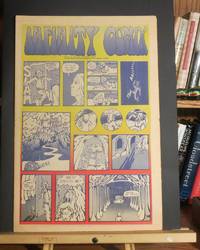
197118050203Buffalo NY: East Coast Comic Book Conspiracy 1971. 1st Edition 1st Printing. Soft cover. Fine. Tabloid Size Magazine. About 17 x 11 1/2 inches. First Printing. Printed on newsprint. Color covers with black/white interior comix. 24 pages. VERY FINE. All corners pointed. Without tears creases bumps or chips. Not marked in any way and very clean and bright. All items carefully wrapped and sent boxed. <br/> <br/> East Coast Comic Book Conspiracy paperback
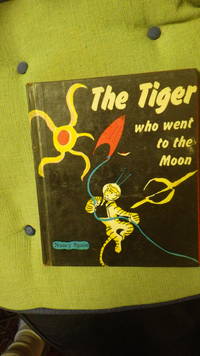
195628149<p>MAX PARRISH LONDON 1956. HARDBACK NODJ 1956 1st edition GOOD Condition EX-LIBRARY USUAL WEAR STAMPSpocket few margin edge tears chips ETC. 36 pgs NO JACKET. 1st Edition. Hard Cover. Good/No Jacket. Illus. by Nancy Spain. Ex-Library.</p> MAX PARRISH LONDON hardcover
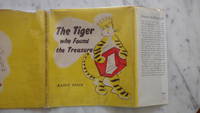
196128183<p>MAX PARRISH LONDON 1961. HBDJ 1961 1st Edition 1st printing VG/VG AS-IS hardback dust wrapper. SOILING and tears & Extremity Chips to bright yellow dust wrapper with Crowned Tiger holding red box on Front otherwise copy in very good condition. Blue Cloth Hardback with Tiger in Gold Gilt on front 36 pgs Last blank pg corner crease Extremely rare copy of the book Simpkin the wonderful Tiger who couldn't eat Meat must be about most travelled Tiger there is. Together with Capt. Nicky Tommy & Baxy the Little Moon-Beast with the Electronic whiskers Thru which he Talks He sails to the South Seas & is Shipwrecked. 1 day Simpkin was out Collecting Wood for the Fire when 6 Gun Pete Hit Him behind the Ear with a Shovel. By his side was No Good Sal Busily searching for buried Treasure but guess who finds it 1st. 1st Edition. Hardcover. Very Good/Very Good. Illus. by Nancy Spain.</p> MAX PARRISH LONDON hardcover
5105254-nnew. unknown
5105254like new. unknown
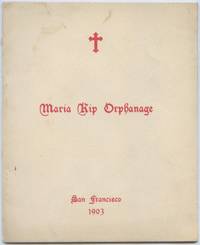
1903540317San Francisco: Maria Kip Orphanage 1903. Softcover. Very Good. First edition. Small octavo. 40pp. Frontispiece of the orphanage. Stapled off-white wrappers printed in red. Some light toning and a couple of tiny stains on the wrappers staples a bit rusted very good. Nearly half of the pamphlet is devoted to advertisers and patrons. Maria Kip Orphanage unknown
20182-6139049512Editorial Académica Española 2018. Paperback. New. 160 pages. Spanish language. 8.66x5.91x0.37 inches. Editorial Académica Española paperback
197518101501Berkeley. CA: Keith Green 1975. 1st Edition 2nd Printing. Soft cover. As New. Comic Book. Digest size 7 x 5 inches. Second Printing. With color illustrated covers and black/white interior art. For sale to adults only. AS NEW but for a light small crease to bottom right corner. All corners pointed. Binding firm without stress creasing and square. Without tears other creases bumps or chips. Not marked in any way and very clean glossy and bright. All items carefully wrapped and sent boxed. <br/> <br/> Keith Green paperback
21191Without date or place. On one side of 7 x 11 cm slip of paper possibly cut down. In good condition lightly aged with stub from mount adhering. Reads: 'Have you any engagement on Tuesday 9th. 7/30 and will you come to a masculine dinner with Yours always W M Thackeray'. Addressed at bottom left to 'One Two Three Park Street Esqr.' The celebrated travel writer Richard Ford best-known for his 'Handbook for Travellers in Spain' 1845 lived at 123 Park Street Grosvenor Square from 1849 to his death in 1858. Without date or place. unknown
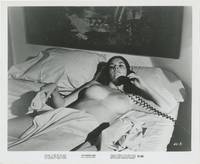
1970162000N.p.: R and S Film Enterprises 1970. Two vintage studio still photographs from the 1970 film. Both photographs with provenance stamps on the versos. <br /> <br /> A rare pair of photographs from Rita Hayworth's low-budget wanderings between 1967-1970 during which she worked with French and Italian genre filmmakers as well as the likes of William Grefè in the US. Note however that Ms. Hayworth is not present in either of these images.<br /> <br /> A psychedelic exploitation film in which Hayworth stars as a wealthy matron married to a wheelchair-bound husband. She has an affair with a young author triggering disastrous results. <br /> <br /> Shot on location in Florida. <br /> <br /> 8 x 10 inches. Near Fine. R and S Film Enterprises unknown
71911 July to 29 Aug. 1885. Traveller in Spain and elsewhere and author. 2-4pp. 8vo. He discusses extensively his work on "a Handbook on Russia & Great Britain in Central Asia" giving a resume of chapters and asking for copies to be sent to various places. "No question is more important at present". FOUR ITEMS 11 July to 29 Aug. 1885 unknown
1999__3484365447De Gruyter 1999. Hardcover. New. reprint edition. 768 pages. German language. 9.21x6.14x1.63 inches. De Gruyter hardcover
1994Q-0817305890University Alabama Press 1994-08-30. Hardcover. New. In shrink wrap. Looks like an interesting title! University Alabama Press hardcover
0817357955.Gpaperback. Good. Access codes and supplements are not guaranteed with used items. May be an ex-library book. paperback
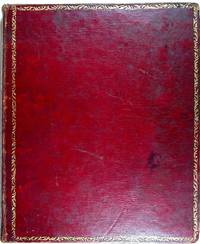
18142677Hunthill House Scotland 1814. Written in English in a small and narrow but legible italic hand with occasional corrections or additions in a different hand on wove paper watermarked Budgen & Wilmott / 1812. Four unnumbered pages of French text at front and four at back the latter dated 27 May 1814 in a different hand apparently the author’s on different paper with no visible watermark. Very good; some occasional spotting. Contemporary red straight-grained morocco gilt edges scuffed and scraped joints strained head of spine chipped.<br /> <br /> An unpublished first-hand memoir filled with searing descriptions of the horrors of war by a French army officer veteran of the terrible Peninsular War. The narrator was one of few survivors of the surrender of French forces after the Battle of Bailén in July 1808. The background to this event was Napoleon's attempt to complete the isolation of England from the continent by sending a French army into the Iberian Peninsula to occupy Portugal and Spain thereby preventing British trade with the Continent.  Napoleon later referred to the Peninsular War characterized by appalling cruelty on both sides as the ‘Spanish ulcer’; it was to be one of the primary factors in his downfall. <br /> <br /> General Pierre Dupont de l'Étang was charged with securing French control of the major cities in Spain. Dupont's 20000 men had initial success but as they penetrated deeper into Spain they faced increasing resistance. This memoir by H. de Montvaillant an 18-year-old Protestant officer from Montpellier who was serving in the second Corps d’Observation of the Gironde recounts the route and experiences of Dupont's army to its furthest point of penetration into Spain: Córdoba. There after a particularly bloody and cruel occupation the army was forced to withdraw and was soon overwhelmed. Dupont surrendered his army at Bailén. Originally promised safe passage most of the French were slaughtered immediately after their surrender. <br /> <br /> Montvaillant’s account commences with the French arrival in Bayonne in November 1807. By December 22 the French troops had arrived in the town of Vittoria 50 miles west of Pamplona and by January 9 1808 they had advanced to south of Burgos. Detailed descriptions of the monuments churches libraries art and inhabitants of various localities passed through in their zigzagging progress south through French-occupied Spain enliven this first part of Montvaillant’s narrative: he describes with evident pleasure Burgos Valladolid Guadarrama and the Escorial Madrid and Toledo where the troops spent most of May. He makes the acquaintance of many Spaniards. In Toledo a young woman explains to him the contradictions of Spanish women rendered emotionally susceptible by their extreme religious devotion but whose sometimes shocking to the French frankness contrasts with a strict sexual morality. Later he deplores the time wasted in Toledo while the Spanish insurgents were building up their strength. <br /> <br /> As the French troops proceed southward the local populations exhibit increasing hostility often hidden under excessive politeness. They encounter a Frenchwoman who has fled Bailén saying that she was not safe there because of her nationality but the soldiers assume that she exaggerates. By the end of May the French pass the Sierra Morena and enter Andalusia and the truth becomes evident. It is at this point that the narrative takes on an ominous tone. Montvaillant notes that the population had abandoned the villages taking all foodstuffs. He records that the senior officers had assumed that the army would only be harassed by small bands of “brigands†a far cry from the massive resistance that it encountered: “We learned that the insurgents each day gathered strength and that the Junta of Seville was determined to stop us in our March. The following day we got to the little town Baylen in whose plains two months afterwards our destiny was decided†p. 86. <br /> <br /> The first battle was engaged at Alcoléa just upstream from Córdoba an event Montvaillant describes in a poem in French transcribed. The next day the French arrived at Córdoba where the Spanish enemy had taken refuge. A musketry attack upon their arrival so enraged General Dupont that “he gave up the town to pillage" p. 88. Allowed to run wild the French soldiers sacked the city committing hideous crimes: “Neither tears promises or humble supplications could arrest the thirst for pillage.†p. 89. Discipline was nonexistent drunkenness and looting continued for eight days. The soldiers raped the women and ransacked homes. Montvaillant presents himself as a savior of women and the elderly on several occasions but notes that some of the Spanish whom he and fellow officers placed under protection in Córdoba were later “the first to persecute the unprotected French prisoners and even those who had been their Benefactors†p. 92. While he does not detail the contents of the soldiers’ plunder it is known that the rich churches of Córdoba were heavily looted. Notwithstanding the circumstances he manages to visit and describes in amazement the great mosque-cathedral scarcely changed in a thousand years. <br /> <br /> Nine days after the French entrance into Córdoba Montvaillant and his troops were ordered back to Alcolea to guard a bridge crossing. En route there from Cordóba he discovered and graphically describes the many mutilated corpses of the French sick and wounded who had been left along the line of march while the main body of General Dupont's troops had taken Córdoba. “It is almost incredible how people calling themselves Christians could push inhumanity to such an excess†p. 96.<br /> <br /> The army moved back to Andújar near Bailén and encamped. Montvaillant records that the general staff had by now realized that the French were outnumbered and that the opposition had organized itself. Dupont's army was isolated without hope of reinforcement or re-supply defending a garrison situated on a flat plain in the scorching sun. The narrative becomes one of revenge heat troop dispositions losses tactical mistakes errors of the general staff and increasing difficulties. Dupont's surrender came on July 20 1808 and thus begins the second part of the memoir devoted to the narrator’s experiences as a prisoner of war. <br /> <br /> The officers were segregated from the defeated army before being escorted supposedly to return to France. Most of the army was slaughtered within days. Montvaillant records details of the survivors’ months-long “death march†southwards to the coast. Having finally arrived at Jerez de la Frontera near Cádiz to await embarkation to France they waited in vain. Their captors kept them in Jerez having discovered that the ruling Junta of Seville had abrogated the surrender treaty and that the inhabitants were planning to massacre them on their approach to Cádiz. Montvaillant’s account is henceforth devoted to anecdotes of captivity and of the prisoner’s horrendous treatment at the hands of their escorts and guards. He is unclear as to exact dates but it seems that the French captives were held at Jerez until mid-December and then hastily driven aboard ships to sail for the Balearic Islands. A severe storm intervened and they were blown off course to Africa finally coming to port at Gibraltar; several days later they were blown back to Andalusia at Málaga. After more storms and much sailing having been at sea 25 days for a voyage which normally took a week they finally made the Balearics. <br /> <br /> And here the worst surprise of many bad surprises awaited them: the desert island of Cabrera. Montvaillant counts some 4000 soldiers and 400 officers who were forced to survive as best they could on this scorching hot nearly waterless uninhabited island p. 148. Details of his account square with Denis Smith’s monograph on the subject. During the next four years close to 9400 French prisoners of war were exiled to this island; possibly 40% died of disease or malnutrition. The officers as usual fared much better than their soldiers. Montvaillant was one of 216 officers who were collected from this exile after a month and taken to the capital Palma p. 150; another group was sent to Mahon in Minorca. There imprisoned in better circumstances the group waited although the news from outside was threatening as the Spanish "mobs" were calling for their "sacrifice." The officers between attempting escapes were able to conjure up some distractions. The narrator passed the time translating Spanish poems and plays and spending up to eight hours at a stretch playing chess. They also freely imbibed the good Mallorcan wine danced and partied; making do without women Bacchus presided as he delicately puts it. <br /> <br /> But nearly half these officers were massacred during a riot and assault on the prison by the inhabitants of Palma described by Montvaillant in gory detail pp. 158-162. The survivors were returned to Cabrera in March 1810 as were the officers from Mahon. They found there a diminished population of half-naked walking skeletons. During the next five months spent on Cabrera Montvaillant was nonetheless able to observe a thriving “political economy†on the island where enough food was still provided that the prisoners had the energy for theater productions and dances. Describing the gender-bending that took place as the men playing female roles in the performances instinctively took on conventionally feminine attitudes even to the point of inspiring crushes bickering and jealousy among the audience members Montvaillant comments that the theatrical chronicle of Cabrera would make quite a book â€un bel in folioâ€- p. 170.<br /> <p>In early August Montvaillant and the officers were removed from the island on an English ship — all unhesitatingly leaving their men to rot on the island where they remained for four more years. A diplomatic impasse kept the officers off the coast at Gibraltar for several weeks until they were finally put on ships for Portsmouth and Plymouth. Montvaillaint went on to Salisbury for a short time and then embarked again for Leith en route to his final destination in Scotland where he remained in comfortable exile until the accession of Louis XVIII in 1814. <br /> <br /> The text is written in an occasionally stilted English a translation from the author’s own French account by a family whom he had befriended at Hunthill House near Jedburgh Scotland where he stationed. Eight pages of notes in French by the author are inserted four pages at the beginning the bifolium is inserted using wax seals and four pages at the end. The French preface contains a romanticized account of the author’s Scottish sojourn including a temptress fairy and concludes with the author’s promise to never forget his friends in Scotland. The English text is preceded by the title-leaf and a one-page dedicatory poem introduced by a statement that these “`Recollections’ in an English Garb are presented by the sincerest of Friends to the Author†and dated Hunt Hill 1 January 1814. <br /> <br /> Following the narrative in a letter to his family dated from Jedburgh 27 May 1814 Montvaillant explains the history of the manuscript the remaining pages contain literary notes including translations into French of poems by Robert Burns and Sir Walter Scott. During his years of exile in Jedburgh Montvaillant had become deeply attached to the owners of Hunthill House and to their three daughters. Without them he claims he would not have survived the loneliness of his exile. In homage and gratitude he dedicated his memoir to them. His friends retained the original French version as a keepsake of their friend and an engrossing biographical narrative and presented him with this translation which he brought back to France planning to render it anew into French to share with his family and close friends. He emphasizes that he plans to keep the manuscript unpublished; perhaps the memories were too painful. <br /> <br /> Cf. Denis Smith The Prisoners of Cabrera: Napoleon's Forgotten Soldiers 1809-1814 New York 2001.</p> unknown
2026x-1032037660Taylor & Francis Ltd 2026. Paperback. New. 182 pages. 9.18x6.12x9.21 inches. Taylor & Francis Ltd paperback
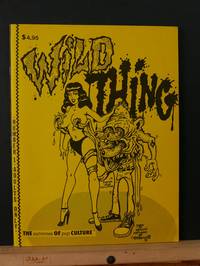
199221020802Wild Thing 1992. 1st Edition 1st Printing. Soft cover. Fine. Comic book. Magazine size and format Staple bound with 48 pages. With black/yellow cover art and black/white interior illustration. FINE. Binding tight without stress creasing and square. Small bumps to right side corners. Without tears creases other bumps or chips. Not marked in any way and very clean and bright. All items carefully wrapped and sent boxed. <br/> <br/> Wild Thing paperback
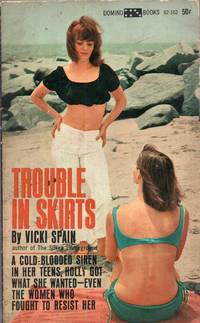
1965SL-BOX-09-Skirts<p>Trouble in Skirts by Vicki Spain</p> Domino Books paperback
2003SBS-9788995359846DAMDI 2003. Paperback. New. DAMDI paperback
2003SBS-9788995359846DAMDI 2003. Paperback. New. DAMDI paperback
175411579AB1754. Göttingen Vandenhöck 1754. 205 : 125 cm. 15 hojas 340 páginas 8 hojas Con láminas grabadas plegadas y un mapa grabado y plegado. Tapas de carton de época. Primera edición en Aleman. - Armstrong describe la historia geografia y folkore Cleghorn describe la vegetación de la isla. - Sammlung neuer und merkwürdiger Reisen zu Wasser und zu Lande vol. 8. - El mapa con arrugas encuadernación rozada. - Palau 133052. unknown
1B-SK62-4RA3Hardcover. A Little Golden Book 299. Fine. 1957 Simon and Schuster "A" printing. Hardcover with light wear. Interior clean bright and unmarked. unknown
3R-L8U5-WT5SHardcover. Very Good. 1958 Simon and Schuster :A" printing. Cheyenne TV tie-in western vintage hardcover book in very good condition. VG interior with no writing or markings mild cover wear and 25c cover price. No. 318 hardcover