1 605 résultats
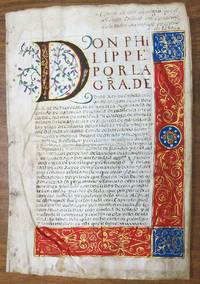
148213220España posiblemente Avila 1482. 910x620mm. 35¾x24½". Manuscrito España posiblemente Avila c-1482-1492. 910 x 620mm. 1 hoja manuscrita por las dos caras. Rica orla miniada formando un rectángulo en colores y oro con el escudo de los Reyes Católicos repetido cuatro veces uno a cada lado de la orla. Magnífico ejemplo de la iluminación miniada medieval española reflejado en esta enorme hoja realizada para el cantoral de Isabel de Castilla y Fernando de Aragón reyes de España llamados los Reyes Católicos realizado para el convento dominicano de Santo Tomás en Avila entre los años 1482 y 1492 "uno de los libros de cantos más suntuosos y artísticos producidos en España" Bordona Iluminación española 1930 p.61. <u>Iluminación</u>: enorme orla miniada de 850 x 560mm. en oro y colores azul rojo verde rosa marrón y amarillo. Incluye cuatro escudos de los Reyes Católicos uno a cada lado de la orla y cuatro yugos con flechas a su lado; el escudo inferior que es el más grande y elaborado contiene dos ángeles a gran tamaño a cada lado del escudo. La extensa y abundante decoración incluye abundante flora y fauna monos pájaros zorros y dragones así como putti todo pintado en colores vivos y dorados. <u>Data</u>: El escudo de armas se puede fechar después del matrimonio de los reyes en 1469 y anterior a la toma de Granada de 1492. <u>Ejecución</u>: Este Gradual fue presentado a los Reyes Católicos por el convento dominicano de Santo Tomás en Avila fundado en 1478 y que aun existe. El manuscrito probablemente permaneció en Santo Tomás por más de cuatro siglos hasta que unos restos del manuscrito fueron adquiridos por Manuel Rico y Sinobias quien cortó muchas de las miniaturas y dispersó las hojas. Domínguez Bordona en su <em>Iluminación Española</em> afirma que este libro de cantos fue un regalo de los Reyes Católicos al convento dominico de Santo Tomás en Avila fundado recientemente. Los reyes realizaron diferentes contribuciones al convento como la construcción de la capilla donde los reyes enterraron a su único hijo varón el príncipe Juan. En el mismo lugar fue enterrado el Gran Inquisidor Tomás de Torquemada m. 1498 también promotor de la construcción del convento. Autoría: Bordona atribuye la autoría de las miniaturas posiblemente a Juan de Carrión pintor y miniaturista al servicio de los reyes quien trabajó activamente en Avila a partir de 1470 que obtuvo gran fama en su tiempo. En la catedrla de Avila se conservan algunos otros ejemplo de su trabajo. Documento realmente extraordinario y de gran rareza. Se conservan dos hojas en el Museo Arqueológico de Madrid J.D.Bordona Exposición de Códices Miniados Españoles 1929 nos. CIV-CVII. Otra hoja estuvo en la colección C.P.D. Maclagan vendida en Sotheby's lote 238 de su subasta 19 marzo 1909 adquirida por Ludwig Rosenthal cat. 155. Dos hojas fueron adquiridas por el Fitzwilliam Museum en Cambridge MS.293 y otra más se encuentra depositada en el Museo Lázaro Galdiano de Madrid. Finalmente una miniatura que perteneció al Príncipe de Liechtenstein adquirida por H.P. Kraus así como otra hoja ofrecida en su catálogo 112 1965 fueron adquisidas por Sam Fogg para la Piermont Morgan Library. Procedencia: 1. Reyes Católicos ofrecida como donación a: 2. Convento de Santo Tomás. 3. Manuel Rico y Sinobias. 4. Manuel Moreno unknown
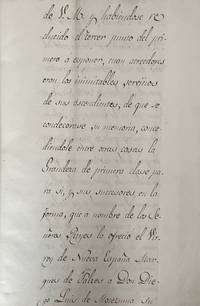
2956Spain Early 19th century. An important 18th-century manuscript text of historical and legal interest related to the privileges and grants of the House of Moctezuma. Manuscript text in brown ink by a neat hand. Text from the second half of the 18th century a somewhat later copy. On early 19th-century laid paper watermarks: A. Romani T.; Bartolmé Costas - for the genealogy table. In contemporary green half maroquin binding gilt spine. Panels covered with marbled paper. Blank title vignette on the front panel. Binding worn and damaged at the extremities. The first leaf and the genealogical table are creased in the middle vertically. Inside clean and firm in very good condition. An important 18th-century manuscript text of historical and legal interest related to the privileges and grants of the House of Moctezuma. Manuscript text in brown ink by a neat hand. Text from the second half of the 18th century a somewhat later copy. On early 19th-century laid paper watermarks: A. Romani T.; Bartolmé Costas - for the genealogy table. In contemporary green half maroquin binding gilt spine. 214 f. and a large folding sheet of genealogical table. .An important 18th-century manuscript text of historical and legal interest related to the privileges and grants of the House of Moctezuma<br /> A very interesting text containing summaries of the important merits of the House of Moctezuma the dynasty of the descendants of Moctezuma II Emperor of the Aztec Empire during the Spanish conquest of Mexico their privileges and grants encomiendas mercedes entitled estates mayorazgos and the annuities gained and kept throughout the centuries. With references to the corresponding Royal grants declarations notes and appeals and a few credits of historical sources such as Herrera and SolÃs.<br /> Compiled for the VII Conde de Moctezuma de Tultengo for an appeal to the Court regarding the family’s estate. Divided into three parts the first “Señor†ff. 1–58 contains 46 paragraphs dealing mainly with the succession line and the estate; the second “Demanda del Conde de Motezuma†ff. 59–172 related mainly to the 1740–41 appeal regarding the Conde’s encomiendas mercedes mayorazgos in Mexico and later controversial affairs such as the lawsuit with the 5th Duke of Atrisco Ventura Osorio de Moscoso y Fernández de Córdoba over a grant of 8250 ducats of silver for the assets in Atlixco ff. 171v. The last part “Cedulas Reales†ff. 173–214 are copies and summaries of Royal decrees to justify the Conde’s appeal. At the end of the text a large folding family tree is attached. <br /> Jerónimo MarÃa de Oca y Nieto de Silva Jerónimo MarÃa de Oca Nieto de Silva Cisneros y Moctezuma was the 7th Count of Moctezuma de Tultengo. Son of Gaspar Antonio de Oca Sarmiento de Zúñiga y Navarro and Teresa Nieto de Silva Cisneros y Moctezuma Guzmán Cueva y BoÂcanegra the 6th Countess of Moctezuma de Tultengo Jerónimo was born in Murcia in 1695 and inherited the title of Count of Moctezuma in 1736. King Charles III granted him the title of Grandee of the First Class Grandeza de España de Primera Clase in 1765. He married Josefa de Mendoza Caamaño y Sotomayor at the age of twenty-five and their son JoaquÃn Ginés de Oca Moctezuma y Mendoza succeeded him after his death in 1778. <br /> Unique document related to the House of Moctezuma we couldn’t trace a printed version of the text. <br /> Literature: Conde y DÃaz-RubÃn J. I.; Sanchiz Ruiz J.: Conde de Moctezuma de Tultengo …. In: Historia genealógica de los tÃtulos y dignidades nobiliarias en Nueva España y México. Volumen II. Casa de Austria siglos XVI–XVII. México Universidad Nacional Autónoma de México Instituto de Investigaciones Históricas 2012 fotografÃas y grabados Serie Historia Novohispana 90 unknown
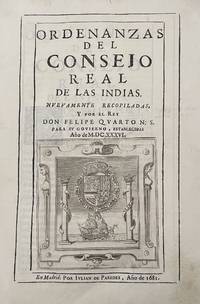
16812474Madrid: Por Julian de Paredes 1681. Second revised and enlarged edition. In contemporary limp vellum. Engraved device on title page. Woodcut initials throughout and a tailpiece at end of each part. Tinted edges. Stains on binding string missing panels with small damage at the outer edge. Tinted title on spine rubbed. 19th-century shelfmark on the inner front panel in ink. Contemporary notes and sings to the margins throughout the first part. Old restoration with paper tape to a few pages in the first part. Otherwise in very good condition. Second revised and enlarged edition. In contemporary limp vellum. 206 14 p. <p><p><br /> Revised and enlarged second edition of these substantial bodies of law relating to the New World and the treatment of Native Americans an important volume on the Administrative History of the Indies.<br /> <p><p><br /> One of the most important volumes of the administrative history of the Indies a fundamental collection of laws and ordinances decreed by the Council of the Indies the supreme governing body of Spain’s colonies in America during the reign of Philip IV. <br /> <p>The first part Ordenanzas del Consejo Real de las Indias contains 245 ordinances of the Council of the Indies pp. 3–112; first published in 1636 the second part Autos acuerdos y decretos de govierno del Conseio Real y supremo de las Indias embodies an additional 190 ordinances concerning for the most part the administration of Spanish America pp. 113–206 plus 14 p. of index; first published in 1658.<br /> <p><p><br /> Any editions of these bodies of law are extremely scarce on the market RHB lists only 2 copies of the present edition within the last 70 years. <br /> Sabin 57477. Por Julian de Paredes unknown
16154007Ãvila and La Horcajada 1615. <p>Manuscript on parchment 380 x 270 mm. 18. Complete. Contents: ff. 1r-4v: Regla in Spanish in 30 numbered sections inconsistent numbering on ff. 3v-4v in a rounded script in brown ink the first page slightly larger up to 27 lines. F. 1r: incipit first four lines in large lettering with very large calligraphic initial: En el nombre de dios todo poderoso padre y hijo y espiritu sancto tres personas y una esencia. Section 30 f. 4v added in a slightly later hand. The word Cruz symbolized by a red Maltese cross. Text on ff. 2r-2v underlined in red. Calligraphic initials some with marginal extensions in brown purple or red. Marginal drawings of prickly foliage some in the shapes of fantastic animals. Later marginal notes opposite many sections. Ff. 5r-5v: Heading: Este es traslado de un testimonio followed by two notarial subscriptions on f. 5v one partially in cursive signed and dated Ãvila 11 May 1527 the other in italic partly faded including the date 1615. F. 6r: A cerca de la procession de la Resurrection. After an introductory portion in a small round early 16th-century hand in brown ink the text continues from f. 4v with sections 32-37 of the Regla of which sections 33-37 are in a later sixteenth-century hand; these sections ruled through with light diagonal lines. Signatures or notes in lower margin. F. 6v: blank except for five lines heavily cancelled in red. Ff. 7r-7v: five paragraphs in a fine upright italic hand the first and third with headings in red La orden que han de tener en la procession de la Resurxection sic en la faded and illegible…; La orden que sea de tener en la procession de la Resurretion sic en el domingo de pascua es la siguente. Followed on f. 7v by a note in a different hand dated from La Horcajada 21 May 1550. Ff. 7v-8v and back inner cover: later additions some quite faded. A few later marginal annotations throughout.<br /> Rubrication and decoration: headings and line fillers in red a few ornamented line fillers or borders some passages underlined in red or light purple else ruled in dry point numerous calligraphic initials in red or brown ink opening initial with purple filigree extension filling left margin numerous foliate vegetable and zoomorphic ornamental designs in the margins in red purple and brown ink.<br /> Binding: stitched into the original parchment cover with title “Regla de la Pasion†in large letters the R with decorative extensions above a large cross in green ink entwined with the snake and in the margins apparently the instruments of the Passion.<br /> Condition: rubbing and staining vertical crease from folding causing occasional erasure of text outer edge of first page somewhat rubbed affecting legibility of text some words at line ends helpfully written over in a later hand the inks used in the last two leaves quite faded; wrapper worn and darkened with tears at top and 3 small holes in lower cover.<br /> Provenance: Confraternity of the Holy Cross of Horcajada; purchased in France with export license.  <br /> <br /> An early Spanish confraternity manuscript containing the rules and statutes that governed the Confraternity of the Holy Cross referred to as the CofradÃa or Hermandad de la Cruz the word Cruz being supplied by a Maltese cross in red of La Horcajada a town located in Castile y León in the province of Ãvila. As in other Roman Catholic countries confraternities or lay brotherhoods played a vital role in community life in Spain functioning as mutual aid societies and venues for laypeople to express their piety and perform charitable acts. Vernacular manuscript confraternity statutes from the Iberian peninsula surface much more rarely than for example their Italian counterparts although it appears that Spain had a larger number of confraternities proportional to the population especially in Castile y Leon than the other Catholic lands. Virtually every community including small villages had at least one confraternity. While exact numbers of confraternities in sixteenth-century Spain are unknown “studies carried out for a number of cities suggest that the number of confraternities and brotherhoods in the Hispanic kingdoms was larger than elsewhere in Catholic Europe. The reasons behind the extraordinary popularity of confraternities and brotherhoods in the Hispanic kingdoms cannot yet be established however in view of the current state of research on the topic. There has been a tendency for scholars to emphasize the confraternity as a primarily urban phenomenon a reflection perhaps of their early development in Italy where they formed an essential part of civic and urban life. In the Hispanic kingdoms however these institutions were equally important in the religious and social life of the small village. Pastoral visitations carried out by the bishops of Cuenca during the sixteenth century found that `nearly every community had at least one brotherhood’ even small villages of 500 inhabitants. A similar pattern prevailed in villages around Toledo during the late sixteenth century†Callahan pp. 18-19.<br /> <br /> In his article on Spanish confraternities William Callahan further points out their popular nature which “arose from the initiative of the laity rather than the clergy prime examples of the lay piety that began to flourish in late medieval Europe. This piety developed largely on its own uncontrolled by either local bishops or the pope both of whom regarded its manifestations with some suspicion. The resiliency of traditional confraternities and brotherhoods developed from their connection to local religious cultures. It also reflected a fact noted by scholars who have studied specific cities and regions the strongly popular character of membership. There were of course some associations that limited membership to the nobility or clergy but in most cases members were recruited from the popular classes. This was obviously true in the case of peasant villages where only one or two confraternities existed.†pp. 22-23. In spite of the centrality of confraternities to early modern religious life in Spain there is comparatively little modern scholarly literature especially on the rural confraternities. Note the absence for example of any articles on Spain or Portugal in Brill’s recently published Companion to Medieval and Early Modern Confraternities edited by Konrad Eisenbichler.<br /> <br /> This working manuscript bears witness to this central but understudied aspect of Spanish popular religious culture before the restrictions placed on confraternities by the Council of Trent and succeeding Popes. Consulted frequently and contributed to by members of the confraternity the manuscript includes abundant interlinear and marginal additions and corrections and half- or full-page later additions. The town of La Horcajada is identified in the opening page. Ff. 1r to 5v contain the introduction the first 30 statutes and a notarized testimony with heading “Este es traslado de un testimonio†which relates to the apparently recent establishment of the confraternity. The statutes cover admission of new members general rules of comportment requirements of prayer and confession for feast days and for the canonical hours charity for poorer members of the confraternity chants etc. Several paragraphs relate to processions including required habits and admission of non-members into the processions. On f. 6r a paragraph on the procession de la Resurrection is followed by six entries numbered 32 to 37 of which paragraphs 33 to 37 are in a later 16th-century hand. Several light diagonal lines through these five paragraphs may indicate that they were cancelled. The verso f.6v contains only five lines heavily cancelled in red ink and f. 7r continues discussion of the procession of the Resurrection on a feast day the name of the saint is smudged and on Easter Sunday in a different 16th-century upright cursive. This second section of which portions are difficult to read because of fading ends on f. 7v and is followed by a note in a larger hand dated from La Horcajada 21 May 1550. The final leaf and inner back cover contain later additions some quite faded. One late addition in the lower margin of f. 5v is dated 1615.<br /> <br /> The manuscript is decorated in a popular style. Some of the leafy plant designs have a thorny look that may reflect local vegetation. Animals and grotesques include a scorpion-like creature birds and possibly imaginary mammals. A witness to the central role played by religious confraternities in early modern Spain bearing the marks of its use and in original condition it is a rare survival and would repay further study.<br /> <br /> Cf. William Callahan “Confraternities and Brotherhoods in Spain 1500-1800†Confraternitas: The Newsletter of the Society for Confraternity Studies 12:1 2001 17-25. See also William A. Christian Local Religion in Sixteenth Century Spain Princeton 1981; Maureen Flynn Sacred Charity: Confraternities and Social Welfare in Spain 1400-1800 Basingstoke 1989.</p> unknown
15695032541569. Book. A lengthy series of royal edicts / decrees / writs produced by the court under Philippe's close scrutiny in 1569 regarding financial and other obligations on the part of the persons in the area of Castro del Rio and elsewhere. 49 vellum leaves 98pp of manuscript 4 blank pages. The last page of which bears the date 18 November 1569 and the elaborate signatures and marks of the King and a number of his courtiers. Each page of the text bears 2 flourishes ie initials likely by the King and by the person responsible for the production of the document. In the original leather covers much rubbing and wear with remnants of the binding ribbons but the document still well-bound and with we think the original tri-coloured spine-cord binding the text to the cover. The first page with ornate decoration and illustrations in ink embellished with gold detailing and flourishes. Exquisite calligraphy throughout on well-preserved vellum. No seals present. 14" x 10". hardcover
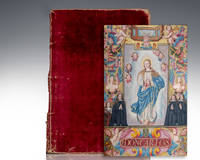
1685148310Valladolid Spain 1685. Rare 17th century elaborately illuminated nobility patent of King Carlos II of Spain for the late Diego Merino de Bargas of Tornavacas represented by two procurators and his sons Rodrigo Francisco and Luis Merino de Bargas residents of Lugar de Cavecuela. Quarto bound in early red velvet over pasteboards with red and yellow silk cord on the spine the patent is comprised of 144 leaves numbered 1-145 in contemporary Arabic numerals partially illegible ink stamps in bottom margins of each page manuscript on vellum written in italic Spanish script within a broad liquid gold border with decorated six-line cadel initials and some in text illuminations. Decorated with two full-pages of illumination depicting the Virgin standing on a crescent moon surrounded by seraphim and cherubim flanked by two kneeling men on the right and two on the left and an achievement of arms on pages 1 and 2 with a blue silk curtain between and a smaller illuminated miniature of the king on page 142. In very good condition with the illuminated pages exceptionally bright. King Carlos II of Spain 1661–1700 the last Habsburg ruler of the Spanish Empire is a pivotal figure in early modern European history due to both his personal condition and the dynastic crisis his death provoked. His reign was marked by severe political and economic decline compounded by his physical and mental disabilities which contemporary and modern historians attribute to generations of Habsburg inbreeding. Lacking a direct heir Carlos II's death triggered the War of the Spanish Succession 1701–1714 a major European conflict over control of the Spanish throne and its vast territories. His reign thus represents both the culmination of Habsburg rule in Spain and the beginning of a transformative shift in the balance of European power ultimately leading to the rise of the Bourbon dynasty under Philip V. hardcover
1572RF 1076<p><strong>Royal Provision of Phillip II Confirming and Ratifying the Privileges Granted by the Masters of the Order of Santiago to the Village of Corral de Almaguer Toledo 1572</strong></p><p>Manuscript. Small folio. 12 1/4 x 8 1/4". 8 double-sided vellum manuscript leaves originally bound together now unbound hand painted and decorated in blue red and gilt at various points throughout the text. The first page is hand-painted and decorated along the edge and includes a large decorative initial in multiple colors. Manuscript text in gothic style. Signed "Yo el Rey" on the back of the final leaf by King Phillip II of Spain in 1572.</p><p>ATTRACTIVELY ILLUMINATED EARLY MANUSCRIPT. JUDAICA INTEREST. Our manuscript contains the 4 confirmed provisions originally drafted by Infante Henry Duke of Aragon 1421 and 1440 Alonso de Cárdenas here listed as "Alfoso" sic in 1480 and then "The Catholic Kings" in 1494 all of whom at various times served as "Grand Masters of the Order of Santiago". The provisions were instigated against the Jewish communities of the villages of Corral de Almaguer and Ocana in Toledo province. Residents of the towns affiliated with the Order of Santiago repeately complained throughout the 15th and 16th centuries to the the authorities of that order of that the Jews and later conversos had bought land from Christians and had not paid any taxes on their purchases. Ultimately the Jews of Corral de Almaguer were ordered to pay comparable taxes to the Christians for said property but the Jews of Ocana were excepted because of their previous payments of other taxes. Given the fact that this manuscript copy dates from 1572 and was signed and reconfirmed by King Phillip II so long after the expulsion of 1492 shows there were still clearly tensions and persecution of local conversos even long after the communities had converted to Catholicism.</p><p>The top left margin on the front of the first leaf contains a handwritten note in ink stating in Spanish "It consists of this-privilege that Juan Collado was a secretary of the Order of Santiago in the year 1480". There are a few additional scant marginal notes in ink throughout and additional handwritten notes and signatures some indecipherable on the verso of the final leaf under the King's signature.</p><p>This document provide a fascinating and invaluable resource to those studying the history of Jews in Spain during the 15th and 16th centuries.</p><p>Text in Spanish.</p> hardcover
1699107920Madrid May 28 1699. Rare elaborately illuminated nobility diploma signed by King Charles II of Spain appointing Don Martin Damian Mendizabal the title of Marquis of Torre Gines. Quarto bound in full red contemporary velvet covered boards with two metal clasps containing five illuminated leaves two fully illuminated in color with the Royal coat of arms and portrait of King Charles II text in Spanish. Signed by King Charles II "Yo el Rey" and additionally signed by several Royal secretaries. Bound with a printed manuscript of the Oath of Fidelity to the King of Spain with Royal stamps dated 1701 and with two autograph letters laid in the first dated September 17 1701 and signed by Philip V and the second addressed to the Marquis. Exceptionally rare. Referred to as 'the Bewitched' and 'El Hechizado' Charles II of Spain was the last Habsburg ruler of the Spanish Empire. He died childless in 1700 with no immediate Habsburg heir. His will named his successor as 16-year-old Philip of Anjou grandson of Louis XIV and Charles's half-sister Maria Theresa and disputes over the inheritance led to the War of the Spanish Succession. hardcover
1612148287Valladolid Spain 1612. Rare 17th century elaborately illuminated nobility patent of King Philip III of Spain for the brothers Juan and Alonso de Rivera de la Cerda. Quarto bound in full leather with gilt detailing the patent is comprised of 100 leaves numbered 1-99 in contemporary Arabic numerals written in round Spanish script within a frame ruled in brown ink with decorated seven-line cadel initials and some in text illuminations. Decorated with two full-pages of illumination depicting the Virgin and Child in heaven with the brothers Juan de Rivera de la Cerda and Alonso de Rivera de la Cerda kneeling below and an achievement of arms on pages 1 and 2 with red silk curtains between and a smaller illuminated miniature of the king on page 97. In very good condition with the illuminated pages exceptionally bright with some wear and losses to the leather including to the crown and foot of the spine. King Philip III of Spain 1578–1621 is often regarded as a monarch who shifted the balance of power between the Spanish crown and the nobility in a more collaborative direction. Ascending to the throne at a young age Philip III relied heavily on his favorites particularly the Duke of Lerma to manage the kingdom’s affairs. This reliance on the nobility allowed them to gain significant political influence especially within the royal court. While Philip III did not possess the same autocratic control as his father Philip II his reign marked an era where the Spanish nobility enjoyed a degree of increased prominence albeit through the lens of court politics and patronage. However the resulting factionalism and the concentration of power in the hands of a few noble families eventually led to instability weakening the monarchy's control and contributing to the broader challenges faced by Spain in the early 17th century. hardcover
1897464381897. Fair to very good or better. Spanning 110 years 64 different titles nearly 2000 issues and tens of thousands of pages with numerous illustrations both black and white and colored. A few are more popular titles but most are quite uncommon rarely for sale found only at a few institutions a number only at the Duque de T' Serclaes periodical collection at the Univ. Connecticut. Many of the Cadiz publications remarkably have only scattered holdings. The content is varied from the first Spanish periodical edited by a woman to a description of the massive defeat of the Spanish at the Battle of Trafalgar just after it occurred to periodicals aimed at women illustrated with color fashion plates including a very rare set of periodicals from a philanthropic organization whose goal was to educate the people free of chargeto satire to politics such as the transfer of the Cortes to Madrid and so on. Detailed list upon request. unknown
1794000035bNew Spain Mexico. Fine with no dust jacket. 1794. Full-Leather. Handsome Folio Manuscript in early calf with gilt written by the Attorney of the Real Audiencia see Bibliografia Mexicana 220 and prepared for the Viceroy. Lengthy stipulations of taxes for the freed mestizos mulattoes and negroes as well as exemptions for Indians of the repartimientos even when married to Spanish women. These taxes were the root of the perceived injustice that explains why freed men formed the core of the Revolution when it came. EXTREMELY RARE AND IMPORTANT FIRST HAND TEXT OF MEXICAN HISTORY. see Archivo General de la Nation "Los Precursores Ideologicos della Guerra de Independencia 1929 pgs 137.139." LAID IN NOTE: Arce Y Echeagary J. Yinstruction para que los Administradores de Aduanas del Reyno de Nueva Espana hagan la legitima exaccion de los dros. de Alcabalas y Pulques en los casos que por lo regular se ofrecen en las propias Aduanas. Mexico 1794. ADDITIONAL BACKGROUND: In 1519 the Spaniards conquered Mexico. This led to the formation of a new state called New Spain and later into a new hybrid culture. Several military expeditions were led to extend 'New Spain'. The whole of Central America West Indies Philippines and parts of the current Texas and California were later conquered to become part of New Spain. The Spanish political control over Mexico lasted for three centuries. The entire region was formed into a viceroyalty in 1535. The colony was divided into provinces ruled by governors. These provinces were divided into departments and subdivided into districts. Magistrates controlled the districts and mayors led smaller villages. The parliament court handled all political matters and the Council of Indies controlled the other administrative matters. Off course the supreme authority over the Spanish empire belonged to the king. This system was pretty inefficient as it took several years for directives from the king to be implemented at the lower levels. During the initial administration grants called Encomiendas were given to colonists which controlled Indian labor and produce. This led to the misuse of power and atrocities against the Indians increased. The Indians revolted against the Spaniards in 1541 but were easily subdued. The Spanish emperor Charles V initiated the decline of the Encomienda system in 1542. This decline saw the emmergence of the Roman Catholic Church. The church was successful in carrying out mass conversions. The Spaniards protected the Indians that converted. Missions and monasteries dominated much of the land. The Spaniards thrived by the new found wealth in the colonies. They amassed huge wealth by controlling silver mining large ranches and estates that grew wheat sugarcane and indigo for export. Spanish merchants exported such goods as cotton silk and dye that were produced by the Indians. The prosperity of New Spain began to decline in the 17th century. Disease and natural disasters destroyed most of the Indian population. Most others migrated slowly to remote parts. Mines were abandoned and large areas of farmland were destroyed. The economy of New Spain collapsed. In 1810 a catholic priest named Miguel Hidalgo called upon Mexicans to rise up and fight the Spanish. Although father Hidalgo was killed another priest Jose Morelos continued to lead the fighting. New Spain finally won its independence from Spain in 1810 and came to be called Mexico. ; Spanish Language; 4to - over 9¾" - 12" tall; MEXICO MEXICAN TAXES NEW SPAIN MEXICAN REVOLUTION NAPOLEON BONAPARTE CHARLES V HIDALGO MORELOS HANDWRITTEN HISTORICAL HISTORY HAND WRITTEN HOLOGRAPH MANUSCRIPT MANUSCRIPTOS SPANISH ESPANOL VICEROY mestizos repartimientos antiquité contrat vélin document manuscrit papier Antike Brief Pergament Dokument Manuskript Papier oggetto d'antiquariato atto velina documento manoscritto carta antigüedad hecho vitela documento manuscrito papel. . hardcover
1573B556<p>Mexico City 9th day of March1573 size 450 x 320mm</p><p>SIR FRANCIS DRAKE'S ENGLISH PIRATES</p><p>Arrest Warrant For English Pirates Signed By The First Inquisitor of New Spain in 1573</p><p>Remarkable arrest warrant signed by the Inquisitor of New Spain directing the arrest and capture of 5 accused heretics including two English Pirates who had recently completed a daring jail break from prison in Mexico City.</p><p>This is an official arrest warrant dated March 9 1573 ordered by Pedro Moya de Contreras c. 1528-1591 first inquisitor of the newly founded Mexican Inquisition addressed to Don Alonso Sánchez de Miranda Dean of Guadalajara.</p><p>Moya de Contreras arrived in New Spain in 1571 as the newly appointed inquisitor thereafter rising to the office of Archbishop of Mexico City and finally Viceroy of New Spain 1584-1585. This two-fold letter is part of the legacy of the Inquisition in the New World aimed at ecclesiastical authorities and their flock to raise awareness of the rampant menace of Lutheran individuals in Mexico.</p><p>Following the failed attempt by the fabled pirates Francis Drake and John Hawkins to seize San Juan de Ulúa in 1568 about 500 mostly English pirates remained stranded in New Spain. Over the course of the next several years these 500 scattered throughout Mexico where they intermingled with the locals. Some 77 of these fell into the hands of Luis Carvajal the elder alcalde mayor of Tampico. Carvajal a converso was the patriarch of the Carvajal family which was later tragically tortured and murdered by the Inquisition as crypto-Jews. They were delivered to Mexico City as prisoners of war and were given relatively minor sentences of forced labor in various places throughout Mexico.</p><p>With the arrival of Moya de Contreras in 1571 the remaining pirates were no longer considered as mere prisoners of war but as heretics - "Luteranos" - and as such subject to the Inquisition's regulations. In 1572 Pedro Moya de Contreras issued a general order for all remnants of the Hawkins expedition to be apprehended and put to trial in New Spain. As a result about 36 were again rounded up captured and condemned for heresy. This group was processed through the Inquisition's court where they were subjected to a grand auto-da-fe in 1574 the largest ever held.</p><p>Three of these pirates are mentioned in Moya's letter to Don Alonso Sánchez de Miranda:</p><p>"Guillermo de Siles a Frenchman of 24 years of age small in height with pale features with little growth of hair on his face small blue eyes ."</p><p>"Pablo Haquines de la Cruz Paul Hawkins an Englishman who came with the armada of John Hawkins with sturdy shoulders and pale features with little growth of hair on his face of about 20 years of age ."</p><p>"Andres Martin Andrew Martin an Englishman with those from the said armada young man without growth of hair tall and slim with pale features of about 18 years of age."</p><p>The three had escaped from the Jail of the Inquisitor by burrowing under the walls of the cell in the middle of the night an escape which was apparently previously unrecorded. The arrest warrant provides that should anyone contravene the order or give aid to these heretics they will face the prospect of "latae sentenciae excommunication" including the sequestration of their possessions.</p><p>The actions of Pedro Moya de Contreras at that time under the supervision of Pedro de los Ríos chief inquisitor in Mexico clearly reflect all new precepts and creeds from the Tridentine Council 1545-1563 brought along to the New World to reform the Catholic faith.</p><p>The following is an English Translation of the arrest warrant provided by Boris Bruton:</p><p>We doctor don Pedro Moya de Contreras apostolic inquisitor against vile heresy and apostasy for the city of Mexico and Provinces of New Spain by our authority apostolic etc. order you Reverend don Alonso Sanchez de Miranda dean of Guadalajara commissary of this Holy Office to arrest the persons of Gomes de Leon his Majesty's servant or His Majesty's scribe resident of Puebla de Los Angeles a man of about 30 years old very fair of complexion of a good height wearing breeches with a short green cape; and Francisco Gonzales captain resident of Toluca elderly man of about 50 years grey-haired short in size scant beard hooked nose and tanned as though coming from the mountains dressed all in black. And William de Siles Frenchman about 24 years old short fair complected scant blond beard small blue eyes dressed in doublet and pants of coarse cloth; And Pablo Hawkins de la Cruz Englishman one of those who came on the fleet of John Hawkins young man somewhat stooped heavy-set fair beardless about 20 years old. And Andrew Martin Englishman member of the same fleet young man beardless lanky fair about 18 years old. Both of these are fluent in Spanish.</p><p>Last Sunday. All these men last Sunday night the eighth of this month about midnight burrowed through one of the cells of this Holy Office and escaped. These men you may seize and remove from any church or any other sacred exempted place whether in your district or outside of it in your own person or others whom you shall choose by authority of this letter or in prosecution of this our order as authorized on your own authority relaying my own warning and order with respect to all the other towns and cities of your bishopric. You are to order announce and publish this order so that no person whether he be Spanish or indian of whatever class or distinction shall receive hide shelter help on their way give any benefit or supplies or mounts horses to them;</p><p>and anyone who shall have information concerning these felons shall it to you or whomever you will have designated for this. Those who act contrary to this will be liable for prosecution for having received and sheltered heretics and in addition they shall incur the penalty of automatic excommunion excommunion latae sentenciae and forfeiture of all their property. To accomplish all the foresaid we give the power and authority for any person Spanish mestizo indian negro or mulato even if he has not been appointed officially by you to arrest these men as noted so that if anyone has given shelter or concealed them let a report be made of it and send it to us without delay.</p><p>Written in Mexico City the 9th day of March 1573.</p><p>Signed Doctor Moya de Contreras / by order of the Señor Inquisitor / Pedro de los Rios</p><p>Condition Description: ALS 2 ff. both folios tide marked on both left and right margins extending into written area both folios with loss to fore margins but written area unaffected.</p><p>Please go to www.marshallrarebooks.com for many more books on this subject.</p>
193823436Valencia - Barcelona: Tip. Moderna y Tip. La Académica respectivamente 1937-1938.- 22 fascÃculos de unas 90 páginas cada uno: Viñetas; 4º 222 x 162 cm.- La revista se imprimió en Valencia desde enero a diciembre de 1937 y en Barcelona desde enero a octubre de 1938. IMPORTANTISIMA Y RARISIMA REVISTA EN MAGNIFICO ESTADO DE CONSERVACION. INTERVIENEN EN ELLA LAS MEJORES PLUMAS DE LA INTELECTUALIDAD ESPAÑOLA REPUBLICANA ENTRE LAS QUE SE ENCUENTRAN LOS POETAS DE LA GENERACION DEL 27. En excelente estado de conservación. Falta el Nº 23 último publicado. LITERATURA Y FILOSOFÃA ESPAÑOLAS DE LOS SIGLOS XIX-XXI Y SU HISTORIA EN GENERAL Libro en español Tip. Moderna y Tip. La Académica respectivamente paperback
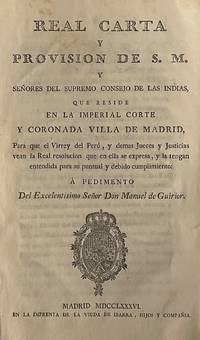
17862566Madrid: En la Imprenta de la Viuda de Ibarra Hijos y Compañia 1786. First edition. In later marbled paper. Binding damaged at tail of spine. Lower outer corner bumped. A dark stain to the lower outer corner of the first five quires. Otherwise clean. Overall in fine condition. First edition. In later marbled paper. 2 138 p. Scarce document related to the estate of Manuel de Guirior former Viceroy of Peru.<br /> <p><br /> José Antonio de Areche –1788 as the appointed visitador or royal inspector arrived in Peru in 1777. The difference between him and the Viceroy Manuel de Guirior 1708–1788 arose immediately concerning the extent of authorities. Their conflict culminated with the dismissal of Viceroy Guirior upon the charges brought by Areche. The quarrel went on after Guirior went back to Spain and eventually he was acquitted of the charges but only after his death. <p><br /> The present document Dated in San Ildefonso October 6 1785 is a summary of the case and it relates to Viceroy Guirior’s “residencia†taken by the Spanish colonial functionary Fernando Márquez de la Plata.<br /> <p><br /> Extremely scarce we could trace only 2 copies in institutional holding both in the Biblioteca Nacional de España. En la Imprenta de la Viuda de Ibarra, Hijos y Compañia unknown
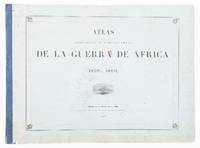
54197Madrid 1861. FIRST EDITION. Large oblong folio. 52 x 70 cm. Original printed blue boards. Complete with title index first part title and 12 text leaves second part title and 20 plates lithographs with hand-colourof battle plans &c. inc 6 double page and third part title and 12 very fine tinted lithographs by J. Donon after Hurrel and Velasco Madrid 1861 hardcover
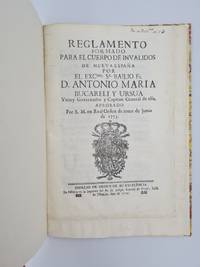
17742162<p><em><strong>Founding Royal ordinance for the Corps of Invalids of New Spain</strong></em></p><p>Antonio Maria Bucareli y Ursua 1717-1779 Viceroy of New Spain.</p><p><strong>Reglamento formado para el cuerpo de invalidos de Nueva España por el Excmo. Sr. Bailio Fr. D. Antonio Maria Bucareli y Ursua Virrey Governador y Capitan General de ella aprobado por S. M. en Real Orden de trece de Junio de 1773.</strong></p><p>Mexico City Joseph Antonio de Hogal 1774.</p><p>Folio. 2 19 1 blank pp. Collates: π A-D2 π.</p><p>With the woodcut Royal coat of arms on the title. Signature of Viceroy Bucareli in ink on the final page.</p><p>Modern stiff marbled paper covers leaves remargined in order to match the size of the volume. In linen made-to-measure case with title on front.</p><p>Very rare first and only edition of the founding document for the establishment of the Corps of Invalids in the Viceroyalty of New Spain. This Royal ordinance marks a crucial step in the military organisation of the Spanish Americas and greatly expanded the colonial military presence there.<br />The <em>Cuerpo de Invalidos</em> consisted of men not fit for field duty due to injury illness or advanced age. They were assigned to the defence and custody of the coasts and borders of the Viceroyalty of New Spain a massive area stretching from Panama to Alaska including California and Mexico. They also served as guardians of the most prolific national buildings. This military reform took place in the context of a major administrative restructuring of the Spanish Americas under King Carlos III known as the Bourbon Reforms. The Spanish Crown established a standing overseas military Including the <em>Cuerpo de Invalidos</em> with the aim of defending its colonial territories. Carlos III created the first Corps of Invalids in Spain in 1764 with the aim of providing a dignified old age to those disabled for active service. With the creation of this type of units the Crown benefited those people who were under its orders for years. Thus far from completely separating them from their functions and in addition to giving them monetary compensation they were kept working and being participants in the life of their community. They were not separated or discriminated against and they were considered capable and that they could continue to participate in society. Also having a Corps of Invalids in the colonies gave the oppressor a significantly larger presence on the streets because men who were not active soldiers were still able to wear a uniform.<br />The person to carry out the reforms and signee of the present document was Viceroy Antonio María de Bucareli y Ursúa marqués de Valleheroso y conde de Jerena who served from 1771 to 1779. The present ordinance provides the rules and regulations of the Corps in 37 points.</p><p><strong>Condition: </strong>inscription in ink in head margin of title-page. Minor repairs to leaf A2. Otherwise in very good condition.</p><p><strong>Reference: </strong>Beristáin Mexico no.516; Medina Mexico no. 8693; not in Palau; Sabin.</p> Joseph Antonio de Hogal
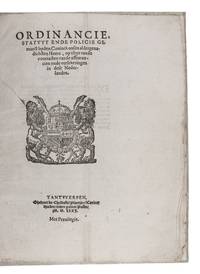
1571HCLAD73TWO2SAntwerp: Christophe Plantin 1571. Modern vellum. 4to. With armorial woodcut on the title page. Rare royal decree on marine insurance addressed to the Council of Brabant replacing the decree of 27 October 1570. In 1569 the Duke of Alfa took a radical measure by banning all marine insurance. "This "provisional" decree of 31 March 1569 was abolished by an ordinance of 27 October 1570 of Philips II. Marine insurances were again allowed. Ships could only leave the port with the permission of an officer after an inspection of their armament. This decree also charged that all policies should contain a detailed report of the goods on board. Diego Gonzalez Gante was appointed to inspect these contracts. He also had to prepare an new instruction. This decree contained as well a formulary of an marine insurance. After a petition of the merchants and Nations of Antwerp a new ordinance was promulgated three months later on 20 January 1571. This decree provided that only ten percent remained to the own risk of the insurance taker. The goods the name of the vessel and the captain had to be mentioned in the insurance policy. To prevent fraud Diego Gonzalez Gante was also appointed to control everything. An insurance policy which was not recorded by him was to be declared null and void. Not only in Antwerp but also in Bruges Amsterdam and Middelburg people under his authority had full powers to verify this" Huybrechts. This decree also prohibited life assurance.With three lines underscored otherwise a very good copy and wholly untrimmed.l USTC 401508 6 copies; Voet 1981 4 copies incl. 3 the same; WorldCat 3 the same copies; cf. M. Huybrechts ed. Marine insurance at the turn of the millennium II 2000 p. 18; V.d. Wulp 213 1570 ordinance. Christophe Plantin, hardcover
18142677Hunthill House Scotland 1814. Written in English in a small and narrow but legible italic hand with occasional corrections or additions in a different hand on wove paper watermarked Budgen & Wilmott / 1812. Four unnumbered pages of French text at front and four at back the latter dated 27 May 1814 in a different hand apparently the author’s on different paper with no visible watermark. Very good; some occasional spotting. Contemporary red straight-grained morocco gilt edges scuffed and scraped joints strained head of spine chipped.<br /> <br /> An unpublished first-hand memoir filled with searing descriptions of the horrors of war by a French army officer veteran of the terrible Peninsular War. The narrator was one of few survivors of the surrender of French forces after the Battle of Bailén in July 1808. The background to this event was Napoleon's attempt to complete the isolation of England from the continent by sending a French army into the Iberian Peninsula to occupy Portugal and Spain thereby preventing British trade with the Continent.  Napoleon later referred to the Peninsular War characterized by appalling cruelty on both sides as the ‘Spanish ulcer’; it was to be one of the primary factors in his downfall. <br /> <br /> General Pierre Dupont de l'Étang was charged with securing French control of the major cities in Spain. Dupont's 20000 men had initial success but as they penetrated deeper into Spain they faced increasing resistance. This memoir by H. de Montvaillant an 18-year-old Protestant officer from Montpellier who was serving in the second Corps d’Observation of the Gironde recounts the route and experiences of Dupont's army to its furthest point of penetration into Spain: Córdoba. There after a particularly bloody and cruel occupation the army was forced to withdraw and was soon overwhelmed. Dupont surrendered his army at Bailén. Originally promised safe passage most of the French were slaughtered immediately after their surrender. <br /> <br /> Montvaillant’s account commences with the French arrival in Bayonne in November 1807. By December 22 the French troops had arrived in the town of Vittoria 50 miles west of Pamplona and by January 9 1808 they had advanced to south of Burgos. Detailed descriptions of the monuments churches libraries art and inhabitants of various localities passed through in their zigzagging progress south through French-occupied Spain enliven this first part of Montvaillant’s narrative: he describes with evident pleasure Burgos Valladolid Guadarrama and the Escorial Madrid and Toledo where the troops spent most of May. He makes the acquaintance of many Spaniards. In Toledo a young woman explains to him the contradictions of Spanish women rendered emotionally susceptible by their extreme religious devotion but whose sometimes shocking to the French frankness contrasts with a strict sexual morality. Later he deplores the time wasted in Toledo while the Spanish insurgents were building up their strength. <br /> <br /> As the French troops proceed southward the local populations exhibit increasing hostility often hidden under excessive politeness. They encounter a Frenchwoman who has fled Bailén saying that she was not safe there because of her nationality but the soldiers assume that she exaggerates. By the end of May the French pass the Sierra Morena and enter Andalusia and the truth becomes evident. It is at this point that the narrative takes on an ominous tone. Montvaillant notes that the population had abandoned the villages taking all foodstuffs. He records that the senior officers had assumed that the army would only be harassed by small bands of “brigands†a far cry from the massive resistance that it encountered: “We learned that the insurgents each day gathered strength and that the Junta of Seville was determined to stop us in our March. The following day we got to the little town Baylen in whose plains two months afterwards our destiny was decided†p. 86. <br /> <br /> The first battle was engaged at Alcoléa just upstream from Córdoba an event Montvaillant describes in a poem in French transcribed. The next day the French arrived at Córdoba where the Spanish enemy had taken refuge. A musketry attack upon their arrival so enraged General Dupont that “he gave up the town to pillage" p. 88. Allowed to run wild the French soldiers sacked the city committing hideous crimes: “Neither tears promises or humble supplications could arrest the thirst for pillage.†p. 89. Discipline was nonexistent drunkenness and looting continued for eight days. The soldiers raped the women and ransacked homes. Montvaillant presents himself as a savior of women and the elderly on several occasions but notes that some of the Spanish whom he and fellow officers placed under protection in Córdoba were later “the first to persecute the unprotected French prisoners and even those who had been their Benefactors†p. 92. While he does not detail the contents of the soldiers’ plunder it is known that the rich churches of Córdoba were heavily looted. Notwithstanding the circumstances he manages to visit and describes in amazement the great mosque-cathedral scarcely changed in a thousand years. <br /> <br /> Nine days after the French entrance into Córdoba Montvaillant and his troops were ordered back to Alcolea to guard a bridge crossing. En route there from Cordóba he discovered and graphically describes the many mutilated corpses of the French sick and wounded who had been left along the line of march while the main body of General Dupont's troops had taken Córdoba. “It is almost incredible how people calling themselves Christians could push inhumanity to such an excess†p. 96.<br /> <br /> The army moved back to Andújar near Bailén and encamped. Montvaillant records that the general staff had by now realized that the French were outnumbered and that the opposition had organized itself. Dupont's army was isolated without hope of reinforcement or re-supply defending a garrison situated on a flat plain in the scorching sun. The narrative becomes one of revenge heat troop dispositions losses tactical mistakes errors of the general staff and increasing difficulties. Dupont's surrender came on July 20 1808 and thus begins the second part of the memoir devoted to the narrator’s experiences as a prisoner of war. <br /> <br /> The officers were segregated from the defeated army before being escorted supposedly to return to France. Most of the army was slaughtered within days. Montvaillant records details of the survivors’ months-long “death march†southwards to the coast. Having finally arrived at Jerez de la Frontera near Cádiz to await embarkation to France they waited in vain. Their captors kept them in Jerez having discovered that the ruling Junta of Seville had abrogated the surrender treaty and that the inhabitants were planning to massacre them on their approach to Cádiz. Montvaillant’s account is henceforth devoted to anecdotes of captivity and of the prisoner’s horrendous treatment at the hands of their escorts and guards. He is unclear as to exact dates but it seems that the French captives were held at Jerez until mid-December and then hastily driven aboard ships to sail for the Balearic Islands. A severe storm intervened and they were blown off course to Africa finally coming to port at Gibraltar; several days later they were blown back to Andalusia at Málaga. After more storms and much sailing having been at sea 25 days for a voyage which normally took a week they finally made the Balearics. <br /> <br /> And here the worst surprise of many bad surprises awaited them: the desert island of Cabrera. Montvaillant counts some 4000 soldiers and 400 officers who were forced to survive as best they could on this scorching hot nearly waterless uninhabited island p. 148. Details of his account square with Denis Smith’s monograph on the subject. During the next four years close to 9400 French prisoners of war were exiled to this island; possibly 40% died of disease or malnutrition. The officers as usual fared much better than their soldiers. Montvaillant was one of 216 officers who were collected from this exile after a month and taken to the capital Palma p. 150; another group was sent to Mahon in Minorca. There imprisoned in better circumstances the group waited although the news from outside was threatening as the Spanish "mobs" were calling for their "sacrifice." The officers between attempting escapes were able to conjure up some distractions. The narrator passed the time translating Spanish poems and plays and spending up to eight hours at a stretch playing chess. They also freely imbibed the good Mallorcan wine danced and partied; making do without women Bacchus presided as he delicately puts it. <br /> <br /> But nearly half these officers were massacred during a riot and assault on the prison by the inhabitants of Palma described by Montvaillant in gory detail pp. 158-162. The survivors were returned to Cabrera in March 1810 as were the officers from Mahon. They found there a diminished population of half-naked walking skeletons. During the next five months spent on Cabrera Montvaillant was nonetheless able to observe a thriving “political economy†on the island where enough food was still provided that the prisoners had the energy for theater productions and dances. Describing the gender-bending that took place as the men playing female roles in the performances instinctively took on conventionally feminine attitudes even to the point of inspiring crushes bickering and jealousy among the audience members Montvaillant comments that the theatrical chronicle of Cabrera would make quite a book â€un bel in folioâ€- p. 170.<br /> <p>In early August Montvaillant and the officers were removed from the island on an English ship — all unhesitatingly leaving their men to rot on the island where they remained for four more years. A diplomatic impasse kept the officers off the coast at Gibraltar for several weeks until they were finally put on ships for Portsmouth and Plymouth. Montvaillaint went on to Salisbury for a short time and then embarked again for Leith en route to his final destination in Scotland where he remained in comfortable exile until the accession of Louis XVIII in 1814. <br /> <br /> The text is written in an occasionally stilted English a translation from the author’s own French account by a family whom he had befriended at Hunthill House near Jedburgh Scotland where he stationed. Eight pages of notes in French by the author are inserted four pages at the beginning the bifolium is inserted using wax seals and four pages at the end. The French preface contains a romanticized account of the author’s Scottish sojourn including a temptress fairy and concludes with the author’s promise to never forget his friends in Scotland. The English text is preceded by the title-leaf and a one-page dedicatory poem introduced by a statement that these “`Recollections’ in an English Garb are presented by the sincerest of Friends to the Author†and dated Hunt Hill 1 January 1814. <br /> <br /> Following the narrative in a letter to his family dated from Jedburgh 27 May 1814 Montvaillant explains the history of the manuscript the remaining pages contain literary notes including translations into French of poems by Robert Burns and Sir Walter Scott. During his years of exile in Jedburgh Montvaillant had become deeply attached to the owners of Hunthill House and to their three daughters. Without them he claims he would not have survived the loneliness of his exile. In homage and gratitude he dedicated his memoir to them. His friends retained the original French version as a keepsake of their friend and an engrossing biographical narrative and presented him with this translation which he brought back to France planning to render it anew into French to share with his family and close friends. He emphasizes that he plans to keep the manuscript unpublished; perhaps the memories were too painful. <br /> <br /> Cf. Denis Smith The Prisoners of Cabrera: Napoleon's Forgotten Soldiers 1809-1814 New York 2001.</p> unknown
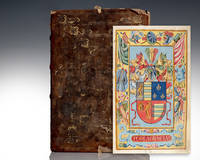
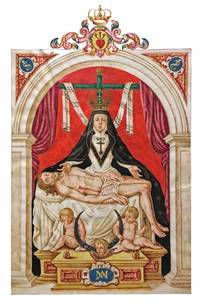
1726LL 878<p><em>"Ejecutoria de Hidalguía ganada por los Caballeros hijosdalgo de los Señores Don Nicolás Antonio de Arjona y Don Zoilo Alfonso de Arjona".</em></p><p>4to. 33 x 23 cm. Contemporary silk binding. Three manuscript pages vellum folio containing a beautifully rendered depiction of the spiritual state of Solitude with a figure of a recumbent Christ with two cherubim at his feet and angels with a Virgin Mary illuminated vellum folio with coat of arms of nobility of the Arjona Family with colored helmet two vellum pages with a genealogical tree cover five blank folios 211 folios.</p><p><strong>RICHLY ILLUMINATED SPANISH "CARTA DE HIDALGUIA</strong>. According to seventeenth century writer Bernabé Moreno de Vargas a patent of nobility hidalguía consists of a transcription of a favorable outcome of a lawsuit filed before the Chancellories of Ciudad Real Granada and Valladolid. on behalf of individuals families and often of entire lineages recognizing the plaintiff's or plaintiffs' noble status.</p><p>After January 20 1703 the competencies for determining noble status would fall exclusively on the Chancellories of Valladolid and Granada in order to protect the impoverished Royal treasury from tax evasion. </p><p>This patent of nobility or hidalguía concerns the families of Don Nicolás Antonio de Arjona and Don Zoilo Alfonso de Arjona in 1726.</p><p><em>Artfully decorated the depiction of the family's noble coat of arms is especially worthy of mention. The document examines the two genealogical trees and stands as a good example of the heraldic literature of the time</em></p>
39080Single quarto manuscript document signed by Queen Isabella of Spain dated 20 November 1501. With "La Reyna" at the top and signed "Yo la Reyna." The letter is for a credit to Isabella's chamberlain Sancho de Paredes for various supplies services and expenditures. Matted and framed opposite a portrait of Isabella. The entire piece measures 19 inches by 20.5 inches. Rare and desirable signed by Queen Isabella. Isabella I was Queen of Castile. She was married to Ferdinand II of Aragon. Their marriage became the basis for the political unification of Spain under their grandson Holy Roman Emperor Charles V. After a struggle to claim her right to the throne she reorganized the governmental system brought the crime rate to the lowest it had been in years and unburdened the kingdom of the enormous debt her brother had left behind. Her reforms and those she made with her husband had an influence that extended well beyond the borders of their united kingdoms. Isabella and Ferdinand are known for completing the Reconquista and for supporting and financing Christopher Columbus' 1492 voyage that led to the opening of the New World and to the establishment of Spain as the first global power which dominated Europe and much of the world for more than a century. Isabella was granted the title Servant of God by the Catholic Church in 1974. unknown
179218141Madrid 1792. 8vo. printed by the widow of Joaquín Ibarra Contemporary straight-grain red morocco gold-tooled spine gold-tooled ornamental border on the boards gilt edges. With a wood-engraved royal coat-of-arms on the title-page. 2 50 pp. Extremely rare first and only early edition of a decree of 15 January 1792 by King Charles IV of Spain. It establishes a college in Granada for educating American and Philippine youth of noble birth. The decree specifies a broad curriculum of political military ecclesiastical and legal subjects with the intent to educate the students for royal service. Besides these theoretical topics the students would also learn equitation horsemanship dancing fencing and other arts appropriate to their social status. The decree also describes admissions procedures guidelines for the curriculum and administration qualifications for the staff and rules of conduct extensively and precisely. Students for example are not allowed to use slaves or personal servants and twenty scholarship students are to be exempted from all fees one or two each from specified provinces in the Americas and the Philippines while other students have to pay fees on a sliding scale. The decree gives a glimpse of the regimen and habits but also the education in a royal school for noble young boys. A facsimile was published in 1968.In very good condition.l Palau 250290; WorldCat 1 copy; not in JCB; Sabin. hardcover
1557649ED93VJP3OThe Hague and Brussels 1557. Folio 36 x 25.5 cm. Manuscript mortgage agreement signed by King Philips representatives written in brown ink on parchment in a nearly upright cursive gothic hand with about 36 lines per page in a text block measuring about 25.5 x 18 cm. With a typescript transcription of the main text in red and an interlinear translation in Spanish in black by Prof. Dr. Edgard Verheyden. 2 blank 9 1 blank pp. Original mortgage agreement in Dutch in which King Philip II of Spain who had sovereignty over the Low Countries and held the title Count of Holland grants Jan Hanneman the rights to the tithes from his lands of Voorburg and Voorschoten. Philip had succeeded to the Spanish crown the year before on the abdication of the Holy Roman Emperor Charles V and the present elegantly written text explains that he and the Spanish Government wish to ameliorate their "very large and excessive debts" it later speaks of 300000 guilders which would be 50000 Flemish pounds resulting from years of war the building and maintenance of many fortifications and the salaries of the troops so the King wishes to mortgage or sell some of his royal domains and the rights to tithes that go with them. Efforts in 1556 had not yielded enough. Spain was later able to finance the wars with treasures from the colonies most famously transported in the annual silver fleet beginning in 1566 but here a decade earlier the King was desperate for funds.Formerly folded. In very good condition but with the sewing recent and rather loose. A primary source for Spain's financial state in 1557 and for the history of Voorburg and Voorschoten. unknown
178444155Madrid: En la Imprenta Real de la Gazeta 1784. First edition. Contemporary mottled calf compartments decorated in gilt red morocco spine label titled in gilt sewn in green silk ribbon marbled endpapers. A very good copy head band worn with a small chip and a tiny split at the joint owner's bookplate and booksellers engraved plate on front pastedown contents quite bright and clean. 104 91 135 144 4 74 pp. 4to. Five volumes bound in one. Parts 1 2 3 set in condensed type; parts 4 and 5 in expanded type. <br /> <br /> Royal decrees from Charles III and instructions decisions and regulations issued by the Consejo en el Extraordinario and its president the Conde de Aranda and others--concerning the expulsion of the Jesuits. "These collections contain the documents relative to the expulsion of the Jesuits from the Spanish dominions and the confiscation of their property including the names of the colleges and houses of the order the application of the confiscated property &c. A complete series consists of five parts which are rarely found together. Our collation is of parts I. to III. only" Sabin 14304. Part 4 p. 75-127 contains the papal brief "Dominus ac Redemptor" by Clement XIV in Latin and Spanish. <br /> <br /> Earlier versions containing parts or all of the first three sections are not all that uncommon but those containing all five parts remain relatively rare. Other than this copy only two others have appeared in the auction records of ABPC and RBH since 1953 the first at the John B. Stetson sale at Parke Bernet and the second at Bonhams in a modern binding and dampstained. Palau 56516. See Sabin 14304. Medina BHA: IV 4228. En la Imprenta Real de la Gazeta unknown
177133007-592Madrid September 12 1771. With 2 full-page coat of arms painted in beautiful colors and heightened in gold 2nd with Royal stamp below crown in upper part 4 calligraphic headers in red familiy names Gutierrez Huerta and Arze colored and partly placed above 4 smaller coat of arms in colors 8 large historical initials painted in colors and gold. 17-18 lines double ruled in red. Interleaved to protect the watercolors with 6 red silk guards. 36 pp. containing mostly signature on the pages. Folio 320 x 215 mm. Original morocco with gold decoration marbled endpapers. Written in a calligraphical hand in ink on vellum. Madrid September 12 1771. A fine example of a calligraphic manuscript of this Royal confirmation of arms and noblility of the noble lineage of the two noble families Gutierrez de Arze and Gutierrez de la Huerta and their descendants. The grant is based upon loyal services given by the ancestors of the Gutierrez to the Royal French king around 882 and up to King Charles III of Spain. In 1771 it became desirable to write down the purity of the houses after Don Juan Gutierrez married Dona Angela Huarte. The document has two paper seals and is signed at the end by collaborators of the King and counter-signed by Don Ramon Zazo y Ortega the official herald and genealogist for the Spanish crown. GRAPHIC ARTS:CALLIGRAPHY ; SPAIN ; GENEALOGY ; Madrid, hardcover
1893236066London: Chiswick Press 1893. No. 11 of 13 copies printed on vellum there were also 88 copies printed on paper. Title with vignette numerous woodcut illustrations and large initial capitals. 1 vols. Folio 12-3/4 x 8-7/8 in.; 32.4 x 22.5 cm. Loose as issued in publisher's decorated board portfolio with maroon velvet straps in publisher's maroon morocco-backed clamshell box with printed label on upper cover; box worn a few rust marks on upper board. No. 11 of 13 copies printed on vellum there were also 88 copies printed on paper. Title with vignette numerous woodcut illustrations and large initial capitals. 1 vols. Folio 12-3/4 x 8-7/8 in.; 32.4 x 22.5 cm. This work consists of two important ordinances issued by the Spanish monarchy on November 20 1542 and June 4 1543. Under the active influence of Bartolomeo de las Casas "friend of the Indians" the new laws had the special design of ensuring better treatment of the Indians limiting the distribution of their lands and above all protecting them against enslavement by the conquering Spaniards. <br /> <br /> "Las Leyes Nuevas" are reprinted here in this fine facsimile from the copy on vellum in the British Museum and are followed by an English translation. Much of the book is taken up by the historical Introduction by Henry Stevens who denounces the Spanish mistreatment of the Indians. Ironically the Spanish crown was later forced to rescind the new laws by colonists who were outraged at having to give up their right to a quota of enslaved Indian laborers.<br /> <br /> A magnificent and impressive production by the Chiswick Press one of only 13 printed on vellum. Chiswick Press unknown