Stern AugustLivre Rare Book
8 176 résultats
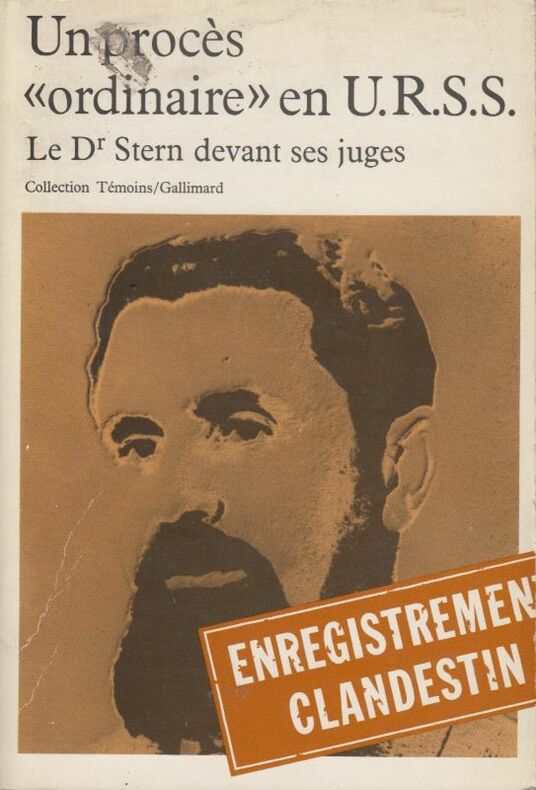
1976R240148108Gallimard. 1976. In-8. Broché. Etat d'usage, Couv. légèrement passée, Dos satisfaisant, Intérieur acceptable. 337 pages.. . . . Classification Dewey : 947-Europe de l'Est, URSS
11462Paris, Gallimard, 1976 15 x 22, 339 pp., broché, bon état
197628736Gallimard, 1976, in-8°, 340 pp, broché, couv. illustrée, état correct
193422464Bern, Lpz., Gotthelf, 1934. XI, 104, (4) S., Or.Ln., gr.8°. Hardcover Einband angestaubt. Schriftzug auf fliegendem Vorsatz. Reihe religiöser Russen Bd. 1
Original Wrappers. 8vo. 67 pages. 21 cm. First Edition. In Ukrainian. Written by Theodore Pestushko under the pseudonym Yurko Stepovvy. A fictionalized account of the authorâs experiences with the Steppe Division of the Ukrainian National Republic Army. Active in the later part of the Ukrainian Revolution, the UNR was a largely peasant based army fighting against Bolsheviks in Western Ukraine. Pestushko became a leading member of the Organization of Ukrainian Nationalists, and wrote about the movement for Ukrainian Independence upon settling in the United States after World War II. Subjects: Ukraine -- History -- Revolution, 1917-1921 -- Fiction. OCLC lists 14 copies worldwide. Some age toning and edgewear. Backstrip has tears, and is partially absent. Internally very good. (UKR-1-28) xxx
1978100147298Princeton university press 1978 in8. 1978. Cartonné jaquette.
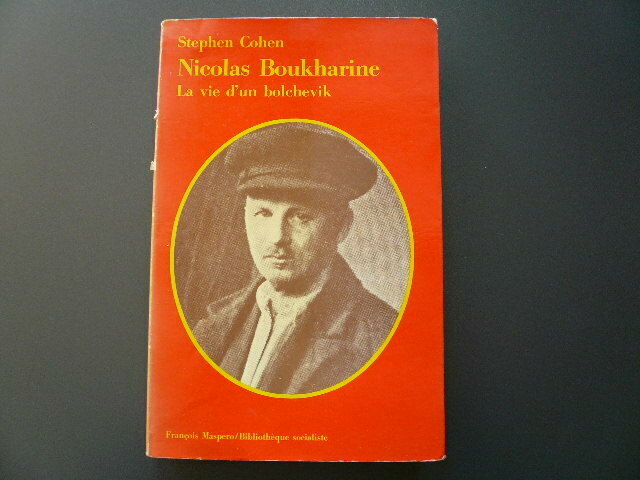
197912488Paris, Maspero, Bibliothèque Socialiste, 1979, in-8, broché, 501 pages. Tampon sur la page de garde. Surlignage au fluo sur une trentaine de pages. Bon exemplaire de travail.
1976E240526AHmug175410Amer Mathematical Society 1976-01-01. paperback. Good. 9x6x0. Ex-library book with typical stickers and stampings. Priority Mail is available on this item. No international shipping. Amer Mathematical Society paperback
1965R300266734Flammarion. 1965. in-8. Broché. Bon état, Couv. convenable, Dos satisfaisant, Intérieur frais. Paris, Flammarion, 1965, in 8, broché, 276 pp.. . . . Classification Dewey : 947-Europe de l'Est, URSS
Mm 145x215 Collana "Temi e problemi del mondo d'oggi". Volume cartonato rigido di 696 pagine, sovraccoperta editoriale con alcune mancanze, peraltro buona copia. SPEDIZIONE IN 24 ORE DALLA CONFERMA DELL'ORDINE.
IL MULINO 1969 181 PP. SEGNI DEL TEMPO, QUALCHE GUALCITURA AI MARGINI ESTERNI, OTTIME CONDIZIONI GENERALI La sicurezza europea dipende dall'evoluzione di molti fattori, interni e internazionali. Questo libro, originato da un lavoro di gruppo dell'lstituto Affari lnternazionali di Roma, esamina sei ipotesi di diversi rapporti tra blocco occidentale e blocco orientale, in Europa. Si tratta di una esercitazione teorica che, partendo da alcune premesse base, cerca di individuare le possibili evoluzioni sia interne ai blocchi che di tutto il complesso internazionale. Si sono impostate le seguenti sei ipotesi: che si dia una situazione senza grandi mutamenti; che venga varato un trattato multilaterale di sicurezza; che si avvii invece un processo di disgregazione dei due blocchi o, al contrario, di integrazione interna ai due blocchi; o di disgregazione del solo blocco orientale o del solo blocco occidentale. Nell'insieme, esse forniscono una trama estremamente utile per inquadrare le grandi prospettive della politica internazionale in riferimento all'Europa. Il futuro è meno imprevedibile di quanto non si pensi, quando lo si aggredisca con strumenti conoscitivi adeguati. Questo studio dell'lstituto Affari lnternazionali è in diretto rapporto con altri analoghi studi fatti dall'lnstitute for Strategic Studies di Londra, dal Centre de Politique Etrangère di Parigi, e dal Forschungsinstitut der Deutschen Gesellschaft für Auswärtige Politik di Bonn. Volume realizzato con la collaborazione dell'Istituto Affari Internazionali (IAI).
LATERZA 2000 PREFAZIONE DI SERGIO ROMANO FONDO DI MAGAZZINO ALLO STATO DI NUOVO. Cingolani ha raccontato assedi, colpi di mano, offensive e operazioni di commando in cui gli eserciti sono assenti e gli Stati hanno, nella migliore delle ipotesi, un ruolo ambiguo. In questo brave new world i leader sono amministratori delegati, banchieri, finanzieri, brokers. Al posto del governo siede il consiglio d’amministrazione, al posto del parlamento l’assemblea degli azionisti. I matrimoni dinastici si chiamano mergers e le annessioni acquisitions. Queste nuove potenze hanno un territorio incerto, soggetto ad allargarsi o a restringersi secondo gli umori del mercato. I loro cittadini si chiamano azionisti e investitori, ma possono emigrare da un giorno all’altro; i passaporti si chiamano certificati azionari o carte di credito. È questa la politica internazionale del futuro? Sono queste le potenze emergenti che domineranno la società internazionale? E ancora: quale sarà in questo nuovo mondo il ruolo dell’America? Siamo forse alle soglie di un’era in cui l’ordine economico sarà più importante, per il destino dell’umanità, dell’ordine politico? (Sergio Romano) Indice Prefazione. Verso un nuovo "secolo americano" – di Sergio Romano - Introduzione - La guerra dell'informazione - La guerra dei media - La guerra dei telefoni - La guerra delle monete - La guerra delle banche - La guerra del petrolio - La guerra dell'auto - La guerra dei cieli - La guerra dei consumi - La guerra del lusso - Le regole del gioco - Le guerre del XXI secolo - Appendice - Note - Indice dei nomi - Indice delle società
156019Paris, L. Rodstein, 1934 in-8, 350 pp., nbx tableaux in-t., biblio., broché.
193288015Wien-Bln., Verlag für Literatur und Politik, 1932. 323, [1] S., Schutzumschlag vorne und hinten mit einer s/w Fotoillustration. Original broschiert mit Schutzumschlag, 8°. Erste deutsche Ausgabe. Mit dem s/w-Schutzumschlag selten. Der Gestalter des Umschlags ist nicht zu ermitteln. Softcover Klappen des Schutzumschlags lose, vorne und hinten mit Randeinrissen und kleinen Fehlstellen; Buchblock in gutem Zustand.
1991055868Tbilisi & Moscow: Komitet Geodeziii Kartohgrafii SSSR / Tbilisskoj Kartograficheskoj Fabrikoj 1991. No Binding. Very Good. A late Soviet map of Abkhazia published in 1991 one year before it became a free republic by the Tbilisi Cartography Factory. Scarce. One of 2150 copies. Slight stains on surface slight chippings on extremities and doodles by pen on verso otherwise a good copy. The Transcaucasian Geodetic Administration of the USSR was established in Tbilisi in 1929 with a small cartographic section. Between 1930 and 1931 it compiled a map of Transcaucasia at a scale of 1:500000 which was printed in Leningrad. The printing of maps in Tbilisi began in 1932 following the receipt of some German-made equipment. The Factory itself was officially founded in 1933 and its first major project was the compilation of a topographic atlas of Transcaucasia in 44 sheets printed in Moscow between 1934 and 1935. The factory's development accelerated in 1935 with the arrival of new equipment and the expansion of staff. However in 1936-37 it faced significant sabotage. In 1938 the factory underwent a complete reorganization with young experts taking leadership roles. Among them were engineer cartographers M. A. Pevlov N. A. Suzdal'skiy V. I. Arzamastsev and S. N. Ter-Grigorian. The printing of maps in Georgian Armenian and Azerbaijani languages became a notable achievement highlighted in Soviet literature as a key accomplishment of the factory. The factory's organizational structure included departments for Map Compilation Lithography Engraving Printing and Transfer. The Tbilisi Cartographic Factory remained active even after Perestroika continuing its work into 1991. OCLC locates two copies in LoC in the US: 32549580. <br/> <br/> Komitet Geodeziii Kartohgrafii SSSR / Tbilisskoj Kartograficheskoj Fabrikoj unknown
in-8°, 178 pages, abdt ill. in-t. N./coul., broche, couv. Ill. plast. Tres bel exemplaire, tres frais. [HA-109/7*][AR-1]
ISBN : 2130377513. PUF. 1982. In-8 Carré. Broché. Bon état. Couv. légèrement pliée. Dos satisfaisant. Intérieur frais. 334 pages. (Rare) 'Recherches politiques'. Notes et prés. de Jean-Yves Potel. Trad. de l'anglmais par N. Burgi, A. Brossat, A. Wallon. Couverture de WIAZ.
1982RO40226165PUF. 1982. In-8. Broché. Bon état, Couv. légèrement pliée, Dos satisfaisant, Intérieur frais. 334 pages.. . . . Classification Dewey : 947-Europe de l'Est, URSS
Contains color plates. 275x185 mm. 63 pages. Gilt hardcover with dust-jacket. Jacket and pages yellowing. Else in good condition.
Contains color plates. 275x185 mm. 63 pages. Gilt hardcover with dust-jacket. Jacket yellowing and tattered. Sticker on front inner cover. Else in good condition.
1st Yiddish Edition. Original publishers decorated cloth, 12mo, 114 pages ; 18 cm. In Yiddish. The translator, Itzik Feffer (1900 1952) was a Soviet Yiddish poet executed on the Night of the Murdered Poets during Joseph Stalin's purges During the Second World War, he was a military reporter with the rank of colonel and was vice chairman of the Soviet Jewish Anti-Fascist Committee (JAC). He and Solomon Mikhoels traveled to the United States in 1943 in a well-documented fund-raising trip. In 1948, after the assassination of the JAC Chairman Solomon Mikhoels, Feffer, along with other JAC members, was arrested and accused of treason. Feffer had been an informer for the NKVD (predecessor of the KGB) since 1943. FeFfer reportedly cooperated with the investigation, providing false information that would lead to the arrest and indictment of over a hundred people, but at the trial, he made openly nationalistic statements and expressed pride in his Jewish identity. Feffer had also allegedly been one of the most loyal and conformist Yiddish poets, who had helped to enforce strict ideological control over other Yiddish writers, and had a history of denouncing colleagues for their nationalistic hysteria. However, in 1952, Feffer, along with other defendants, was tried at a closed JAC trial, and executed on August 12, 1952, at Lubyanka prison ..The American concert singer and actor Paul Robeson met Feffer on July 8, 1943, in New York during a Jewish Anti-Fascist Committee event chaired by Albert Einstein, one of the largest pro-Soviet rallies ever held in the United States. After the rally, Paul Robeson and his wife Eslanda Robeson, befriended Feffer and Mikhoels. Six years later, in June 1949, during the 150th anniversary celebration of the birth of Alexander Pushkin, Robeson visited the Soviet Union to sing in concert. According to David Horowitz: In America, the question "What happened to Itzik Feffer?" entered the currency of political debate. There was talk in intellectual circles that Jews were being killed in a new Soviet purge and that Feffer was one of them. It was to quell such rumors that Robeson asked to see his old friend, but he was told by Soviet officials that he would have to wait. Eventually, he was informed that the poet was vacationing in the Crimea and would see him as soon as he returned. The reality was that Feffer had already been in prison for a half year, and his Soviet captors did not want to bring him to Robeson immediately because he had become emaciated from lack of food. While Robeson waited in Moscow, Stalin's police brought Feffer out of prison, put him the care of doctors, and began fattening him up for the interview. When he looked sufficiently healthy, he was brought to Moscow. The two men met in a room that was under secret surveillance. Feffer knew he could not speak freely. When Robeson asked how he was, he drew his finger nervously across his throat and motioned with his eyes and lips to his American comrade. They're goin to kill us, he said. When you return to America you must speak out and save us. During his concert in Tchaikovsky Hall on June 14 - which was broadcast across the entire country - Robeson publicly paid tribute to Feffer and the late Mikhoels, singing the Vilna Partisan song Zog Nit Keynmol in both Russian and Yiddish .Feffer was a prolific poet who wrote almost exclusively in Yiddish, and his poems were widely translated into Russian and Ukrainian. He is considered one of the greatest Soviet poets in the Yiddish language and his poems were widely admired inside and outside Russia (Wikipedia, 2019). SUBJECT(S): Yiddish literature -- Translations from Russian. Russian literature. OCLC: 19304065. OCLC lists 15 copies worldwide, but 13 of these are in a listing which indicates Also issued online, so some (or many of these?) may be online access copies. Very Good Condition, a beautiful copy. (yid-41-82A)
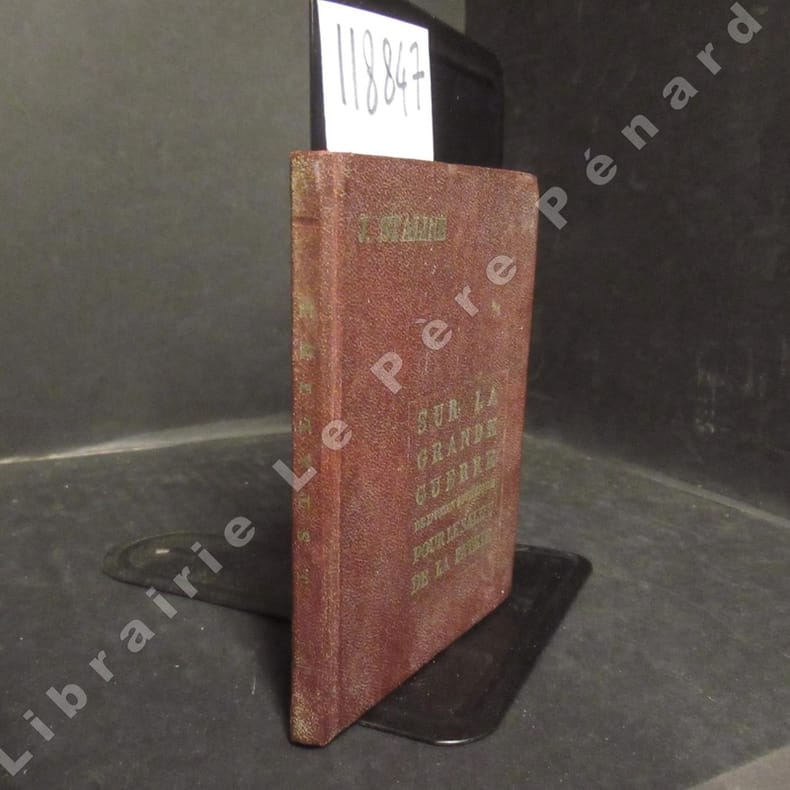
19431188471943 Editions en Langues Etrangères, Moscou - 1943 - Troisième édition - In-16, cartonnage bordeau de l'éditeur - 138 pages
8722Bruxelles, Editions La Taupe, 1970. Fort in-12, broché.
102.202Paris, Librairie de l'Humanité, 1924, . 11 x 18, 99 pp., broché (agrafé), très bon état.
45318Bruxelles, Editions La Taupe, 1970. 13 x 17, 364 pp., broché, bon état.