297 résultats
1965mon0000121503PROGRESS PUB. 1965-01-01. Hardcover. Good. 2.5000 in x 8.5000 in x 5.9000 in. No DJ. Mild shelf wear and fading to both volumes. Former owner's name on inside cover otherwise pages clean. Cup mark on volume one's cover. PROGRESS PUB. hardcover
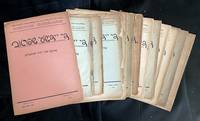
193042139Kiev: Katedr far Yidisher Kultur ba der Ukr. Visnshaftl. Akademye Filologishe Sektsye 1930. Paper Wrappers. 1st edition. Original printed publisher’s color paper wrappers 4to large ca 72-116 columns ca 36-58 pages per issue. 28 cm. In Yiddish. Title translates roughly as “The Yiddish Language.†Succeeded in 1931 by “Afn shprakhfront.â€Di Yidishe Shprakh was a “Yiddish linguistic journal published in Kiev from 1927 to 1930. A bimonthly journal Di yidishe shprakh The Yiddish Language was published by the cooperative publishing house Kultur-lige and was the main philological publication of the Kiev Yiddish academic center. Its editor was the veteran Yiddishist Nokhem Shtif a founder of YIVO who had returned to Kiev from Germany in 1926. The journal’s inaugural issue March–April 1927 was published under the auspices of the Central Yiddish Bureau of the Ukrainian Commissariat for Education. With the next issue Di yidishe shprakh was an organ of the Chair and from July to October 1929 it was an organ of the Institute for Jewish later Proletarian Jewish Culture at the Ukrainian Academy of Sciences. Initially defined as a 'journal for practical Yiddish linguistics' from May to June 1927 it appeared as simply a 'journal for Yiddish linguistics. 'Shtif distinguished three language registers: the vernacular of the old generation partly represented in the works of Sholem Aleichem and predecessors; the highbrow language of modern writers such as Dovid Bergelson; and the contemporary 'culture language' most notably of the press. Although Shtif sought to target speakers of the mass 'culture language' the journal’s circulation hovered around 500 copies read mainly by Yiddish teachers.Apart from Shtif who published articles on various language-planning problems the most active contributors to Di yidishe shprakh were Ber Slutski Ayzik Zaretski Elye Falkovitsh Lipe Reznik and Shimen Dobin. In early 1929 Moscow literary critic Aron Gurshteyn criticized the journal for its purist approach to language planning. In the July–October 1929 issue Shtif published his article 'Di sotsyale diferentsiatsye in yidish' The Social Differentiation in Yiddish heralding an intensification of Soviet linguists’ anti-Hebraist campaign. That issue of Di yidishe shprakh adopted completely reformed Soviet spelling omitting for example final consonant letters.Although the last—twenty-fifth—issue of the journal was dated November–December 1930 it included materials from the First All-Union Yiddish Language Conference convened in Kiev from 8 to 13 February 1931 that issue is present here. Published under the imprint of the Central Publishing House this issue also signaled the demise of the remaining vestiges of the Kiev Kultur-lige. Yoysef Liberberg’s article 'Far parteyishkayt in der yidisher visnshaft-arbet' For a Party Approach to Yiddish Linguistics marked a full break with YIVO scholars particularly with YIVO director Max Weinreich whom Liberberg ridiculed for presenting Yiddish as an emanation of the Ashkenazic Jews’ soul. The Yiddish Language Conference decided to change the name of the journal. Between 1931 and 1939 it appeared sporadically under the title Afn shprakhfront On the Language Front reflecting its new more aggressive and politically charged approach' Gennady Estraikh in YIVO Encyclopedia of Jews in Eastern Europe 2010. For more see David Shneer “Yiddish and the Creation of Soviet Jewish Culture 1918–1930†Cambridge and New York 2004. SUBJECTS: Yiddish language -- Periodicals. Title also listed on covers in Russian “Ievreis'ka Mova†and German “Jiddische Sprachâ€. OCLC: 22840298. Most holdings in OCLC appear to be fragmentary. Covers are browning and fragile as expected but are otherwise very well preserved with very little edgewear. Internal text pages are also toning but remain relatively strong as pulp paper. Very important journal scarce in this degree of completeness Note that Estraikh suggests a circulation of only 500!. B YID-43-5-E. Kiev: Katedr far Yidisher Kultur ba der Ukr. Visnshaftl. Akademye, Filologishe Sektsye unknown
1958055782Cairo: The USSR Embassy Press Office in the United Arab Republic UAR 1958. 1st Edition . Hardcover. Very Good. 8vo - over 7¾ - 9¾" tall. Contemporary full green cloth in Egyptian style contemporary white endpapers gilt lettering of title on front board and gilt decorations on spine. Original pictorial cover saved inside. Roy. 8vo. 24 x 17 cm. In Arabic. 88 p. 12 b/w ills. including drawings and reproduced photographic plates. Extremely rare unrecorded first issue of this Soviet propaganda organ published in Cairo the centre of the UAR by the USSR Propaganda Press Office with a striking cover design depicting the Sputniks in space celebrating the third anniversary of the Kosmicheskaya programma SSSR. The content begins with a comparison between the Soviet and American satellites. A full-paged photograph shows the Muscovites reading newspapers about the launch of the third Soviet satellite into space. In the periodical many details such as the construction processes and technical specifications of the satellites are explained as well as a striking history of the Soviet Space Program. Relations between Russia and Egypt have a long history dating back to before the 16th century. In the 1950s Gamal Abdel Nasser's independent and anti-imperialist policy earned him enthusiastic support from the Communist government of the USSR. In 1955 Egypt made a major arm deal with the Soviet Union and from then teams of Egyptian officers were trained in Eastern Bloc countries. Czechoslovak instructors also came in 1956 to train Egyptian personnel in the use of Soviet weapons. When France attacked Egypt during the Suez Crisis the USSR threatened to use destructive weapons i.e. nuclear weapons for the defence of Egypt. The degree of the Soviet approval of the Egyptian leader's policies culminated rather controversially in the award of the highest Soviet decoration the star of the Hero of the Soviet Union with the Order of Lenin to Nasser during Nikita Khrushchev's visit to the country in 1964. Kosmicheskaya programma SSSR i.e. The Soviet Space Program was the national space program of the Union of Soviet Socialist Republics USSR active from 1955 until the dissolution of the Soviet Union in 1991. After WWII the Soviet and US space programs both utilized German technology in their early efforts. Eventually the program was managed under Sergei Korolev who led the program based on unique ideas derived by Konstantin Tsiolkovsky sometimes known as the father of theoretical astronautics. Contrary to its American European and Chinese competitors who had their programs run under a single coordinating agency the Soviet space program was divided and split among several internally competing design bureaus led by Korolev Kerimov Keldysh Yangel Glushko Chelomey Makeyev Chertok and Reshetnev. The Soviet space program served as an important marker of Soviet claims to its global superpower status. Wikipedia. As of May 2024 not in OCLC and KVK. <br/> <br/> The USSR Embassy Press Office in the United Arab Republic (UAR) hardcover
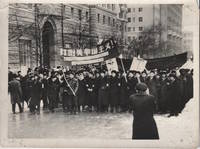
1965217848Beijing: No publication details. Circa1965. Complete set of 20 black and white photographs photographs 15 and 19 not numbered. 15 x 20.3cm. Explanatory slips of paper in simplified Chinese characters measuring 6.7 x 18.7cm are provided for 18 photographs lacking two slips for numbers 15 and 19. Pin-holes at corners of photographs corners little creased one corner chipped. An interesting collection of photographs in good condition. This collection of 20 black and white photographs shows a Chinese and international student demonstration against American imperialist aggression in Vietnam that took place in front of the American Embassy in Moscow in 1965. Photos 1-13 show an initially peaceful demonstration by Chinese and international students that turned ugly after Soviet troops cavalry vehicle-mounted guns and water sprayers were sent in with Russian generals personally taking charge. The chaos can be clearly felt in some of the blurred images where students were being beaten up and arrested. Photograph 14 shows an injured student Huang Zhaogeng being taken off a plane in Beijing on a stretcher. The photographs numbered 15 - 20 show demonstrations in Beijing in support of injured Chinese student demonstrators two leaders making speeches and medical care and support from friends. Text on the banners in photographs in Chinese and Russian. . No publication details. unknown
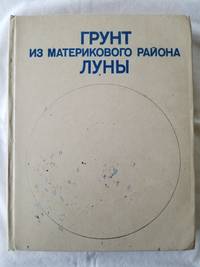
19791641Moscow: Nauka / Ðаука 1979. First edition. Hardcover. Good. Tan flexi-bound hardcover first edition. Text in Russian. A good only copy of this scarce publication from the USSR on lunar soil samples. Minor musty smell. Corners heavily bumped and soil to the front cover and the text block edges. Flexible binding is solid and pages are firmly bound in. Interior appears to be unmarked. Bumping to the lower corners of the pages. One miscut page is creased toward the final gathering of the book. Filled with charts graphs and some black and white photos. 708 pp. title page in English and Russian but the text is solely in Russian. Hard to find in any condition. <br /> Nauka / Ðаука hardcover
1973C1624<p>Oblong photograph 6 3/4" x 11 1/4" Signed by 14 of the 18 contestants Boris Spassky Michal Tal Anatoly Karpov Alexander Beliavsky Efim Geller Paul Keres Victor Korchnoi Nukhim N Rashkovsky Gennadi Kuzmin Vladimir Savon Evgeni Ellinovich Sveshnikov Mark Taimanov Vladimir Borisovich Tukmakov Orest Averkin and one non contestant Viktor Davidovich Kupreichik on the verso. The photograph shows the stage were the contest took place with lined up game tables and the participants during the competition. In the foreground a part of the auditorium with seated spectators.<br /><br />In the aftermath of Robert James Fischer's victory over Boris Spassky in the 1972 World Championship the Soviet Union had been humiliated and humbled by an American and the 35 year rule of the Soviet chess machine over the international chess world had finally been put to an end. The consequences of this result were felt in Soviet chess for months after. Mark Taimanov Tigran Petrosian and Spassky were all reprimanded for their failure to stop Fischer. Consequences continued into the 41st USSR Championship held in the Soviet capital of Moscow from October 2-26 1973. The tournament was organized to be the strongest in a decade. In addition to the four qualifying players who had each won a semi-final Orest Averkin Karen Grigorian Nukhim Rashkovsky and Evgeni Sveshnikov the very strongest grandmasters of the Soviet Union received forced invitations to participate. The list was a collection of former world champions multiple Soviet title winners and the very strongest of the Soviet school including: Spassky Petrosian Mikhail Tal Vasily Smyslov Anatoli Karpov Viktor Korchnoi Efim Geller Paul Keres Lev Polugaevsky Taimanov Leonid Stein Vladimir Tukmakov Vladimir Savon and Gennadi Kuzmin. Victor Davidovich Baturinsky the vice-president of the USSR chess federation and a Colonel of Justice explained clearly to all the participants that their attendance was not only obligatory but their very future as Soviet chess players and the favors imparted therein depended on their performance in the championship. Stein died before the championship took place and he was replaced by junior world champion Alexander Beliavsky. In addition to the composed line up it was made known that draws of thirty moves or less were 'discouraged' by the organizers. Although short draws did occur the schedule of play and the intense combat among the contestants was arduous. It was Spassky after failing in Reykjavik who emerged victorious by a full point. This edition did have the desired effect of revealing future world title candidates as Karpov and Korchnoi tied for second along with two other contestants and would face each other the following year for what ultimately was the de facto world championship.<br /><br /><strong>Condition:</strong><br /><br />Slightly tinted trimmed at the bottom irregularly else a very good copy of an interesting chess historical document.</p> USSR Chess Federation
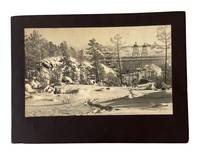
1955234761955. Bratskgesstroy photo album depicting construction of the Bratsk Hydroelectric Power Plant on the Angara River between 1955 and 1964 documenting one of the Soviet Union's largest postwar industrial projects during Nikita Khrushchev's campaign to industrialize Siberia. Construction began in 1955 at the Padun narrows north of Irkutsk where the Angara's rapids and elevation drop made the river suitable for massive hydroelectric generation. The first turbine entered service in November 1961 as the Bratsk reservoir began flooding thousands of square kilometers of forest and river settlements to create what Soviet publications called the "Bratsk Sea." By the mid-1960s the station had become the largest hydroelectric plant in the world supplying electricity to aluminum smelters timber combines rail electrification and new industrial cities across eastern Siberia.<br /> <br /> Photo album of approximately 17 large format professional silver gelatin photographs Bratsk and the Angara River region 1955-1964. large format photographs with Russian printed captions identify stages of construction including "Padun narrows" "Blocking the right bank of the Angara March 1957" "Installation of wires on the Irkutsk-Bratsk 220 kV transmission line" "Completion of the main concrete trestle" "Winter 1960-61" and "June 1963." Winter construction scenes show cranes rising above frozen riverbanks trucks dumping fill into rushing water during diversion work and workers fastening electrical insulators high above snow-covered terrain. Later images depict the completed spillway releasing torrents of water beneath rows of gantry cranes along with an interior control room lined with gauges switches meters and telephone communications equipment. Several leaves contain handwritten French tourism slips describing the visitor's experience moving through the region and observing ice electrical infrastructure and the completed dam landscape.<br /> <br /> The Bratsk project formed part of the Soviet Union's postwar eastward industrial expansion which sought to shift energy production and heavy industry deep into Siberia during the Cold War. The first turbine entered service in November 1961 as the Bratsk reservoir began flooding thousands of square kilometers of forest and river settlements to create what Soviet publications called the "Bratsk Sea." By the mid-1960s the station had become the largest hydroelectric plant in the world supplying electricity to aluminum smelters timber combines rail electrification and new industrial cities across eastern Siberia. Soviet newsreels propaganda posters and foreign delegations treated Bratsk as proof that the USSR could transform remote Siberian territory into a modern industrial frontier through centralized planning hydroelectric engineering and mass labor mobilization. Light wear occasional silvering and minor surface abrasions to several photographs; album binding intact. Overall in very good condition. unknown
1922133544Bln., Argonavty, 1922. 160, [3] S., Hln., kl.8°. Erstausgabe der berühmten im Berliner Exilverlag "Argonavty" (=Argonauten) erschienenen Anthologie zur russischen Avantgarde und Moderne mit literaturkritischen Beiträgen über Anna A. Achmatova, Konstantin D. Bal'mont, Jurgis K. Baltrusajtis, Aleksandr A. Blok, Valerij Ja. Brjusov, Andrej Belyj, Maksimilian A. Volosin, Sergej A. Esenin, Vjaceslav I. Ivanov, Osip E. Mandel'stam, Vladimir V. Majakovskij, Boris L. Pasternak, Fedor K. Sologub, Marina I. Cvetaeva, alle jeweils ergänzt mit Gedichten der Autoren. Mit Ausnahme der Beiträge über Bal'mont, Brjusov, Blok und Majakovskij, die davor schon in der sowjetischen Zeitschrift "Slovo" (=Wort) erschienen waren, handelt es sich bei den Texten von Ehrenburg um Erstveröffentlichungen. Von den porträtierten Autoren lebten die meisten (noch) in der Sowjetunion. Die Anthologie, die damals für grosses Aufsehen sorgte, erschien ein Jahr später auch in der Sowjetunion, allerdings erheblich gekürzt und unter einem anderen Titel. Später ist sie in München (1972) und inzwischen, mit ausführlichem wissenschaftlichen Kommentar, auch in Russland (St. Petersburg, 2002) erschienen. Privater Halbleineneinband mit marmoriertem Überzugpapier und einem merfarbigen Kleisterpapier für den vorderen Vorsatz. Ausserst selten. Hardcover Einband berieben, Kanten und Ecken stark bestossen. Titelblatt fehlt. Durchgehend etwas fleckig, die letzte Lage mit Wasserrand.
1939HALL509825Paperback. 1939. 1. BACH A. Planning Science. 2. BORIN K. Socialist farming. 3. GOLENKINA Vera. The Soviet Press. 4. GOLOSSOV I. Soviet Cities New and Renewed. 5. ILIN M. The Little Citizen of a Big Country. 6. KHAZAN D. Light Industries of the U.S.S.R. 7.KOROBOV I. How Soviet Workers Spend their Leisure. 8. KOVARDAK P. New People of the Soviet Countryside. 9. KRENKEL Camping at the Pole. 10. LOBANOV P. The State Farms of the U.S.S.R. 11. MOLYAKOV V. The Countryside Past and Present. 12. OBRAZTSOV V. The Railroads of the U.S.S.R. 13. PAPANIN I. The Soviet Wintering Station on the Drifting Ice. 14. PAPYAN M. Industrial Progress in the Soviet Republics of the Non-Russian Nationalilties. 15. PROPPER-GRASHCHENKOV N. Public Health Protection in the U.S.S.R. 16. SHABUROVA M. How Old Age is Provided For in the U.S.S.R. 17. STAROSTIN A. Sport in the U.S.S.R. 18. VYSHINSKY A. Crime Recedes in the U.S.S.R. 19. ZHEMCHUZHINA P.S. The Food Industry of the U.S.S.R. 28 to 44pp each 11cm x 14cm card covers. All published by Foreign Languages Publishing House Moscow 1939. With the exception of nos. 1 15 & 18 all have pictorial front covers. All contain black & white photograph illustrations except no 18. Nos. 4 12 & 14 have an 8-page English-Russian vocabulary loosely inserted. All very copies . paperback
1935137835Moscou, Isogis, 1935. (40) S., mit Foto-Illustrationen in Braun- und Blauton unter anderem von Maks Al'pert, Gestaltung El Lissitzky. Original-Broschur, 2°. Jubiläumsnummer zum fünfzehnjährigen Bestehen der Petrolindustrie in Aserbaidschan. Die Monatsschrift «URSS en construction» erschien in vier Sprachen (deutsch, französisch, englisch, spanisch) von 1930 bis 1941 und noch einmal 1949. Zum Redaktionskollegium der von Maxim Gorkij gegründeten Zeitschrift gehörten unter anderen Georgij Pjatakov und Michail Kol?cov, einzelne Nummern erschienen unter der Leitung von Aleksandr Rod?enko oder El? Lisickij. Viele Nummern wurden von Nikolaj Stepanovi? Tro?in gestaltet. Hauptsächliches Gestaltungsmerkmal war die Fotomontage, mit Beiträgen von Fotografen wie Maks Al?pert, einem der Begründer der Fotoreportage, Arkadij ?ajchet und anderen. Softcover Rücken oben und unten eingerissen, Umschlag angestaubt. URSS en construction; [UdSSR im Bau], No 5 Mai 1935
1968729Metuchen New Jersey: Scarecrow Press 1968. 17 volumes; 13 volumes are 5.5" x 8.5" each in red wrappers with light toning at spines 3 volumes are 6.25" x 9" each in brown paper boards with brown cloth spines and light scuffing at edges 1 volume is 5.75" x 8.75" in red cloth boards with black stamping along spine and light toning. All volumes have ex-library markings. Many have pasted library labels on cover bookplates and embossments. Good to very good. <br /> <br /> This is a complete set of Portraits of Prominent USSR Personalities 4 volumes per year for 1968 1969 1970 and 1971 a total of 16 volumes in all. Includes Party and Government Officials of the Soviet Union 1917-1967. All published by The Scarecrow Press Inc. in Metuchen New Jersey. CONTENTS:<br /> Party and Government Officials of the Soviet Union 1917-1967: <br /> <br /> Compiled by The Institute for the Study of the USSR Munich Germany. Edited by Edward L. Crowley Andrew I. Lebed Dr. Heinrich E. Schulz. Copyright 1969 ISBN: 0810802856.<br /> <br /> Portraits of Prominent USSR Personalities:<br /> <br /> <br /> Vol. 1: January 1968 no. 1<br /> Vol. 1: April 1968 no. 2 bound in brown cover boards<br /> Vol. 1: July 1968 no. 3<br /> Vol. 1: October 1968 no. 4 with a cumulative index for Vol. 1<br /> Vol. 2: January 1969 no. 1<br /> Vol. 2: April 1969 no. 2 small smudge on back cover<br /> Vol. 2: July 1969 no. 3<br /> Vol. 2: October 1969 no. 4 with a cumulative index for Vol. 2 bound in brown cover boards<br /> Vol. 3: January 1970 no. 1<br /> Vol. 3: April 1970 no. 2<br /> Vol. 3: July 1970 no. 3<br /> Vol. 3: October 1970 no. 4<br /> Vol. 4: January 1971 no. 1 <br /> Vol. 4: April 1971 no. 2 bound in brown cover boards<br /> Vol. 4: July 1971 no. 3<br /> Vol. 4: October 1971 no. 4<br /> . Scarecrow Press unknown
1966OS7119Enfield England: Computer Consultants Limited 1966 . Only edition. Limited. Very Good. Bound in faux leather scientific notebook. Gilt spine and boards. Very early if not the first study of the first Russian computers -- with specs. Numbered copy 1335. Due to size or weight this item may require additional postage for international or priority shipping. Computer Consultants Limited hardcover
1974MILI2058Great Bookham / Windsor, Profile Publication 1970 - 1974. Books: Crow, Duncan (Hrsg.): AFVs of World War One. (= AFV of the World Vol. 1). OPpbd. m. OU. / Crow, Duncan (Hrsg.): British AFVs 1919 - 40. (= AFV of the World Vol. 2). OPpbd. m. OU. // Card Covers: Vol. 1 - 65: Churchill, B.IT. Mk IV. / Panzerkampfwagen III. / Tanks Marks I to V. / Light Tanks M1-M5. / Light Tanks Marks I-VI. / Valentine Mark III. / Medium Tanks Marks A-D. / Crusader-Cruiser Mark VI. / Early Armourd Cars. / Panzer Kampfwagen V Panther. / M3 Medium (Lee/Grant). / Mediums Marks I-III. / Ram & Sexton. / Carriers. / Panzerkampfwagen I & II. / Landing Vehicles Tracked. / Russian KV and IS. / Chieftain and Leopard (Development). / Chieftain and Leopard (Description). / Churchill and Sherman Specials. / Armoured Cars. / Panzerkampwagen 38(t) & 35 (t). / Soviet Mediums T44, T54, T55 & T62. / The M48-M60 Series of Main Battle Tanks. / Cromwell and Comet. / Hellcat, Long Tom and Priest. / The Saladin Armoured Car. / S-Tank. / M4 Medium (Sherman). / Armoured Cars - Marmon-Herrington. Alvis-Straussler, Light Reconnaissance. / Australian Sentinel and Matildas. / The M6 Heavy & M26 Pershing. / German Armoured Cars. / Scorpion Reconnaissance Tank. / British Armoured Recovery Vehicles + Wheels, Tracks & Transporters. / Chars Hotchkiss, H35, H39 and Somua S35. / Russian BT Series. / Conqueror Heavy Gun Tank. / Panhard Armourd Cars. / U.S. Armored Cars. / M103 Heay Tank + M41 Light Tank (Walker Bulldog). / Modern Swedish Light Armourd Vehicles. / Panzer-Kampfwagen IV. / Ferrets and Fox. / Vickers Battle Tank. / Light Tanks M22 Locust and M24 Chaffee. / Russian T34. / PzKpfw VI Tiger I & Tiger II ("King Tiger"). / Japanese Medium Tanks. / Swiss Battle Tanks. / Abbot FV433 Self-Propelled Gun. / M47 Patton. / The FV 432 Series. / Japanese Combat Cars, Light Tanks and Tankettes. / German Self-Propelled Weapons. / Missile Armed Armoured Vehicles. / Schützenpanzerwagen SdKfz 251, SdKfz 250. / French Infantry Tanks: Part I (Chars 2C, D & B). / / French Infantry Tanks: Part II (including R 35 & FCM 36). / Russian Armoured Cars (to 1945). / Elefant and Maus (+ E-100). / Commando, Twister & High Mobility Vehicles. / AMX-30 Battle Tank. / Armoured Personnel Carriers - A Survey. / The PT-76 Light Amphibious Tank & Variants. - Over all in good condition. Zahlreiche weitere Werke zum Thema "Panzer" lagernd, bitte fragen Sie an. Many books on "Tanks and Panzer" on stock, please don't hesitate to ask us for illustrated offers.
1958216410Mosca: 1958. Rilegato tela sovracoperta cloth dust jacket. Ottimo Fine. Monumentale opere sul balletto del Teatro Bolshoi in lingua russa. Numerose illustrazioni in bianco e nero tavole a colori e disegni in tavole fuori testo. 4to. pp. 568. Ottimo Fine. Prima edizione First Edition. , hardcover
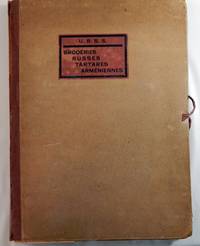
192521763Paris: Ernst Henri Editeur 1925. Loose plates. Good. Folio 11 by 15 inches. Portfolio of 40 loose plates. Paper over boards cloth spine printed paper label cloth tie. The plates are printed in full color and mounted to a gray card with a printed black border. Portfolio well worn and the spine repaired. The text pages are soiled and chipped. The mountings for the plates are sunned along the edges but the plates are fine. Overall a good copy.<br /> <p><br /> These embroideries and woven printed fabrics were exhibited at the U.S.S.R. pavilion at the International Exhibition of Decorative Arts at Paris in 1925. The samples were supplied by ethnographic museums and almost all of them were produced in the 19th century. A few are from the 17th and 18th century and plates 26 and 27 are from modern Ukraine.<br /> <p>. Ernst Henri, Editeur unknown
1991055868Tbilisi & Moscow: Komitet Geodeziii Kartohgrafii SSSR / Tbilisskoj Kartograficheskoj Fabrikoj 1991. No Binding. Very Good. A late Soviet map of Abkhazia published in 1991 one year before it became a free republic by the Tbilisi Cartography Factory. Scarce. One of 2150 copies. Slight stains on surface slight chippings on extremities and doodles by pen on verso otherwise a good copy. The Transcaucasian Geodetic Administration of the USSR was established in Tbilisi in 1929 with a small cartographic section. Between 1930 and 1931 it compiled a map of Transcaucasia at a scale of 1:500000 which was printed in Leningrad. The printing of maps in Tbilisi began in 1932 following the receipt of some German-made equipment. The Factory itself was officially founded in 1933 and its first major project was the compilation of a topographic atlas of Transcaucasia in 44 sheets printed in Moscow between 1934 and 1935. The factory's development accelerated in 1935 with the arrival of new equipment and the expansion of staff. However in 1936-37 it faced significant sabotage. In 1938 the factory underwent a complete reorganization with young experts taking leadership roles. Among them were engineer cartographers M. A. Pevlov N. A. Suzdal'skiy V. I. Arzamastsev and S. N. Ter-Grigorian. The printing of maps in Georgian Armenian and Azerbaijani languages became a notable achievement highlighted in Soviet literature as a key accomplishment of the factory. The factory's organizational structure included departments for Map Compilation Lithography Engraving Printing and Transfer. The Tbilisi Cartographic Factory remained active even after Perestroika continuing its work into 1991. OCLC locates two copies in LoC in the US: 32549580. <br/> <br/> Komitet Geodeziii Kartohgrafii SSSR / Tbilisskoj Kartograficheskoj Fabrikoj unknown
1936165768Moskau, Isogis, 1936. (25) Bll., 2 davon gefaltet, mit zahlreichen, teils farbigen Abbildungen nach Fotografien und Illustrationen. Doppelblatt mit montiertem Leninportrait nach einer Fotografie. Original-Broschur, 2°. Die Nummer behandelt das 15jährige Jubiläum Sowjetgeorgiens. Plan und Organisierung der Nummer: Max Al'pert und El Lissizki. Künstlerische Gestaltung: El Lissizki. Photos u.a. von Max Al'pert. Die vorliegende Nummer über Georgien gehört zu den Spezialnummern, die mit besonderem Aufwand gestaltet wurden. Stalin ist immer wieder abgebildet, so auch auf zwei farbigen montierten Abbildungen von Gemälden. Das montierte s/w Porträt Stalins auf der Rückseite des Leninporträts im vorliegenden Heft entfernt worden. Die Monatsschrift «USSR im Bau» = «URSS en construction» erschien in vier Sprachen (deutsch, französisch, englisch, spanisch) von 1930 bis 1941 und noch einmal 1949. Zum Redaktionskollegium der von Maxim Gorkij gegründeten Zeitschrift gehörten unter anderen Georgij Pjatakov und Michail Kol?cov, einzelne Nummern erschienen unter der Leitung von Aleksandr Rod?enko oder El? Lisickij. Viele Nummern wurden von Nikolaj Stepanovi? Tro?in gestaltet. Hauptsächliches Gestaltungsmerkmal war die Fotomontage, mit Beiträgen von Fotografen wie Maks Al?pert, einem der Begründer der Fotoreportage, Arkadij ?ajchet und anderen. Jedes Heft war einem bestimmten Thema gewidmet. Softcover Rücken brüchig, Umschlag am Rand mit Knickspuren. Vorderumschlag oben rechts mit Pilzschaden. UdSSR im Bau, 1936, No. 4-5
1979Q-2858500274Centre Georges Pompidou 1979-01-01. Paperback. New. In shrink wrap. Looks like an interesting title! Centre Georges Pompidou paperback
1937120207Moskau, Staatlicher Kunstverlag, 1937. (18) S., mit zahlreichen, teils ganzseitigen Abbildungen nach Fotografien. Original kartoniert, 2°. Die Nummer behandelt die Goldgewinnung in der Sowjetunion. Die Gestaltung dieser Nummer durch Aleksandr Rodtschenko und seine Frau Barbara Stepanowa. Die Monatsschrift «USSR im Bau» erschien von 1930 bis 1941 und noch einmal 1949, danach unter dem Titel «Sowjetunion». Zum Redaktionskollegium der von Maxim Gorkij gegründeten Zeitschrift gehörten unter anderen Georgij Pjatakov und Michail Kol?cov, einzelne Nummern erschienen unter der Leitung von Aleksandr Rod?enko oder El? Lisickij. Viele Nummern wurden von Nikolaj Stepanovi? Tro?in gestaltet. Hauptsächliches Gestaltungsmerkmal war die Fotomontage, mit Beiträgen von Fotografen wie Maks Al?pert, einem der Begründer der Fotoreportage, Arkadij ?ajchet und anderen. Jedes Heft war einem bestimmten Thema gewidmet. Softcover Rücken beschädigt. UdSSR im Bau, 5, 1937, Das Zwanzigste Jahr der Revolution
1936121016Moscou, Isogis, 1936. (20) Bll., mit zahlreichen, teils ganzseitigen Abbildungen nach Fotografien von Max Vladimirovic Alpert, einem der Begründer der sowjetischen Reportagefotografie. Or.kt., 2°. Das Heft behandelt die Fabrikation von Eisenbahnwagen im Ural. Gestaltung des Heftes Nikolaj Stepanovic Trosin (Trochine). Die Monatsschrift «URSS en construction» erschien von 1930 bis 1941 und noch einmal 1949, in vier Sprachen (deutsch, französisch, englisch, spanisch). Zum Redaktionskollegium der von Maxim Gorkij gegründeten Zeitschrift gehörten unter anderen Georgij Pjatakov und Michail Kol?cov, einzelne Nummern erschienen unter der Leitung von Aleksandr Rod?enko oder El? Lisickij. Viele Nummern wurden von Nikolaj Stepanovi? Tro?in gestaltet. Hauptsächliches Gestaltungsmerkmal war die Fotomontage, mit Beiträgen von Fotografen wie Maks Al?pert, einem der Begründer der Fotoreportage, Arkadij ?ajchet und anderen. Jedes Heft war einem bestimmten Thema gewidmet. Softcover Umschlag etwas angestaubt und gebrauchsspurig. URSS en construction; [UdSSR im Bau], 1935, No. 7
1930120215Moscou, Edition d'état de la RSFSR, 1930. 47, (1) S., mit zahlreichen, teils doppelseitigen Abbildungen nach Fotografien. Original-Broschur, 2°. Sonderheft mit einer 31seitigen Reportage über den Bau des Kraftwerks Dnieprostroi und einer 16seitigen Reportage über den Bau der "Turksib", der Eisenbahnlinie von Turkestan nach Sibieren (Frunse-Semipalatinsk). Gestaltung des Hefts Nikolaj Troschin (Trochine. Die Monatsschrift «USSR im Bau» = «URSS en construction» erschien in vier Sprachen (deutsch, französisch, englisch, spanisch) von 1930 bis 1941 und noch einmal 1949. Zum Redaktionskollegium der von Maxim Gorkij gegründeten Zeitschrift gehörten unter anderen Georgij Pjatakov und Michail Kol?cov, einzelne Nummern erschienen unter der Leitung von Aleksandr Rod?enko oder El? Lisickij. Viele Nummern wurden von Nikolaj Stepanovi? Tro?in gestaltet. Hauptsächliches Gestaltungsmerkmal war die Fotomontage, mit Beiträgen von Fotografen wie Maks Al?pert, einem der Begründer der Fotoreportage, Arkadij ?ajchet und anderen. Jedes Heft war einem bestimmten Thema gewidmet. Softcover Rücken mit Fehlstellen. Umschlag angestaubt und mit Randeinrissen. URSS en construction, 1930, No. 4
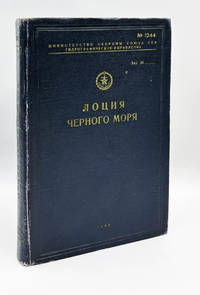
1968009699Leningrad: Hydrographic Directorate of the Ministry of Defence of the USSR 1968 4to 26 cm 440 pp with a loosely inserted pamphlet of corrections 14 pp. Publisher's cloth with gilt lettering and Soviet naval anchor-and-star emblem to upper cover binding slightly rubbed and dusted paper somewhat toned library stamps on the title. Publication No. 1244 copy No. 1433. Comprising a general survey navigational-geographical and hydrometeorological overviews and detailed coastal navigation in nine chapters covering the entire Black Sea littoral from the Kiliya mouth of the Danube to Cape Kaliakra; with a reference section including port and anchorage data distance tables and territorial waters information plus alphabetical index and correction notes. Stamped throughout “ДЛЯ СЛУЖЕБНОГО ПОЛЬЗОВАНИЯ” For Official Use Only with library stamp of the Technical Library of TsKB “Chernomorsudoproekt” Central Design Bureau for Black Sea Shipbuilding to the title page. Accompanied by the separately issued Сводная Корректура 1969 г. Consolidated Correction Supplement for 1969 copy No. 1535 a printed pamphlet with manuscript annotations in red ink updating the main volume in accordance with Notices to Mariners through September 1969. A complete and rare Soviet navigational publication for the Black Sea of considerable historical interest due to its restricted official-use classification and direct institutional provenance from a major Soviet shipbuilding design bureau. Hydrographic Directorate of the Ministry of Defence of the USSR hardcover
197812442Tbilisi USSR: Meisniereba Publishing House 1978. First Edition. Hardcover. Good/Good minus. Volumes I & II only. Good in good dust jackets worn and creased at edges. Shown without dj in photo. Large quarto 766 and 686 pages. Listed in "Essential Sources on the Nature of Consciousness" which notes: "The Russians have sponsored an internationalconference on unconscious processes; three volumes ofthe proceedings of this conference have been publishedcontaining articles by Russian American French German and other investigators". A Collective Monograph in Four Volumes on the Nature of the Unconscious with forewords preface introductory articles to all the sections of the monograph notes and conclusions. Volumes I & II ONLY. Meisniereba Publishing House hardcover
1937166991Moskau, Jourgaz, 1937. 2 Bände, je 6 Hefte, jedes Heft ca. 112 S., Halbleinwand, 8°. Maas 2, 614; 4, 197. - Seidel. 1936. Der zweite Jahrgang dieser wichiutgen Literaturzeitschrift des Exils. Sie erschien zwischen 1936 und 1939 in Moskau und stand sowohl kommunistischen als auch nichtkommunistischen Autoren offen. Mit Beiträgen von Georg Lukacs, Thomas Mann, Klaus Mann, Oskar Maria Graf, F. C. Weiskopf, Bodo Uhse, Lion Feuchtwanger, Egon Erwin Kisch, Arnold Zweig, Ernst Weiss und zahlreichen anderen. [2 Warenabbildungen] Hardcover Privater Einband mit Pappdeckeln und grünem Leinwandrücken. Die Umschläge wurden nicht mitgebunden. Einbände berieben, Kanten und Ecken bestossen. Leinwandrücken abgewetzt. Seiten vereinzelt etwas fleckig, Schnitt angestaubt. Das Wort, 2. Jahr 1937, Heft 1-12