PAVLOV, Pyotr Petrovich (photo); MOSCOWBiblio.com
1 045 résultats
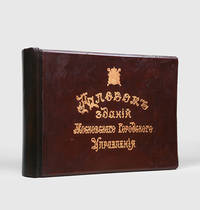
1912131502Moscow: P. P. Pavlov 1912-13. A remarkable photographic survey of pre-Revolution Moscow Superb and extremely scarce photographic record of pre-Revolution Moscow captured in a series of quite stunning images by one of the foremost Russian photographers of the period P. P. Pavlov. An online search of institutional libraries cites 3 locations only - British Library Harvard and Columbia - with no copy traced on auction records. Among the many subjects featured here are schools hospitals orphanages public housing gasworks tram depots abbatoirs and administrative buildings focusing on the progressive aspects of the city and offering a panoramic view of the Russian capital at the dawn of the 20th century. Included here are two views of Tolstoy's house plates 51 and 52 today the Tolstoy Estate-Museum bearing the caption "acquis par la ville" acquired by the city nicely dating these images to after 15 November 1912 when the Moscow municipality bought the writer's home with all its furniture for 125000 roubles and with the intention that the courtyard should accommodate a Tolstoy School of sixteen classes. Pyotr Petrovich Pavlov 1860-1924 was born into a peasant family in Feodorovskaya village Olonetsky District Republic of Karelia on the western fringes of Russia. In 1881 he arrived in Moscow from St Petersburg and joined the well-established photographic studio of Scherer Nabholz and Co. serving a ten-year apprenticeship. In 1891 Pavlov opened his own studi specialising in individual and group portraits famously photographing Anton Chekhov in 1899. In 1898 he was commissioned by the Imperial Moscow Archaeological Society Imperatorskoye Moskovskoye Arkheologicheskoye Obshchestvo or IMAO to photograph both the historical and monumental fabric of Moscow and later as presented here the city's fine municipal architecture. Interestingly Pavlov was also responsible for a series of photographs recording the damage sustained by Moscow's buildings during the Bolshevik shelling of the city in 1917. His work was the subject of a 2011 exhibition at Rosphoto Moscow Pyotr Pavlov: Views of Old Moscow. Landscape folio 403 x 541 mm. 240 photogravure plates printed on 220 leaves of heavy stock card 20 leaves with two plates captions in Russian and French studio credit of P. P. Pavlov on each mount leaf. Larger images 260 x 358 mm smaller 200 x 272 mm. Original dark reddish-brown morocco-grain skiver over bevelled boards neatly rebacked white moire-effect endpapers green cloth inner hinges. A few scrapes and abrasions to back cover corners a little worn prelims a little dusty and with closed-tear at foot 3 plates remargined occasional marginal soiling yet a very good complete copy. hardcover
77384Photographer unknown ca.1880. . Large landscape albumen print 19 x 38 cm. Fine tonal range and in good condition.<br /> Fine very contrasted view of the Kremlin from the Southeast incorporating the Moskva river and taken a few years after the rebuilding of the Moskvoretskiy bridge in steel in 1872. Next to the bridge lie the banks of Kitay-Gorod; the site on which the modern day 'Rossiya' hotel stood. On the right from the Kremlin one can see the famous St Basil's Cathedral built between 1555 and 1561 to commemorate the capture of the Khanate of Kazan.<br /> [Photographer unknown, ca.1880]. unknown
48717c.1890. Original albumen print on two conjoined sheets. 36 x 80 cm. 14 x 32 in. Label "Don de M.R. Donckele" dated 1907. Some relatively minor spotting and slight discoloured area towards right. Shows wooden guard house at south end of the bridge later demolished and not appearing in early 1900's photos figures crossing bridge some stationary including two nuns horse drawn traffic etc. [c.1890] unknown
1912016225Moscou Nauka 1912 In-12 Broché
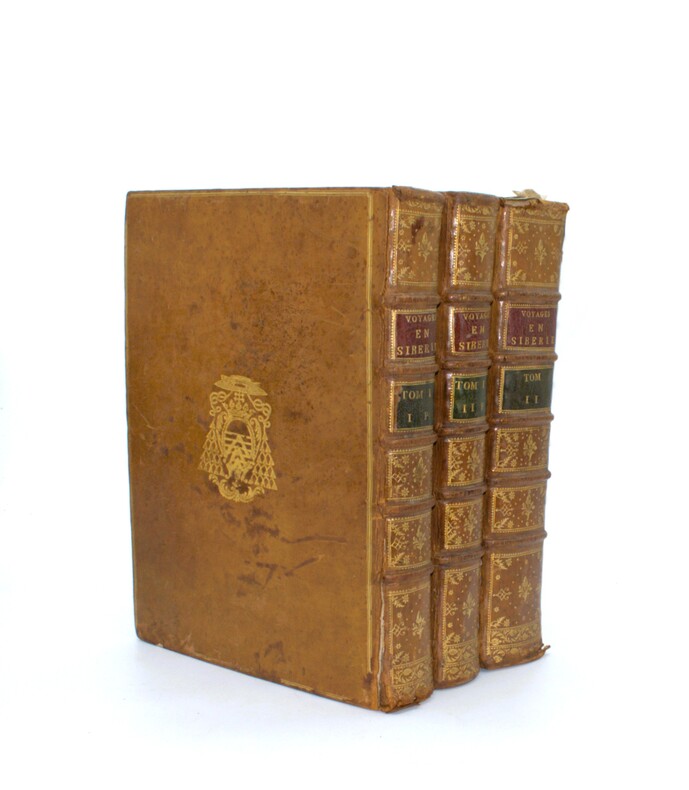
1768PHO-2449Paris, Chez DEBURE père, 1768, 3 volumes in-folio (sur 4) (35x26cm), 3ff.-XXX-347pp., 1f.-348pp.-767pp., X-627pp.-2ff., plein veau glacé lavallière, dos à nerfs, caissons ornés de fleurons dorés, pièces de titre et de tomaison en maroquin rouge et vert, plats frappés aux armes de Dominique de la Rochefoucauld dans un triple encadrement doré, toutes tranches dorées, double filet doré sur les coupes, frise intérieure, doublures et gardes de papier marbré (reliure de l'époque). Épidermures, coiffes abimées, coins usés certains avec manque, charnières fendillées, quelques cahiers brunis, très petite mouillure marginale au tome 2 sur quelques feuillets.
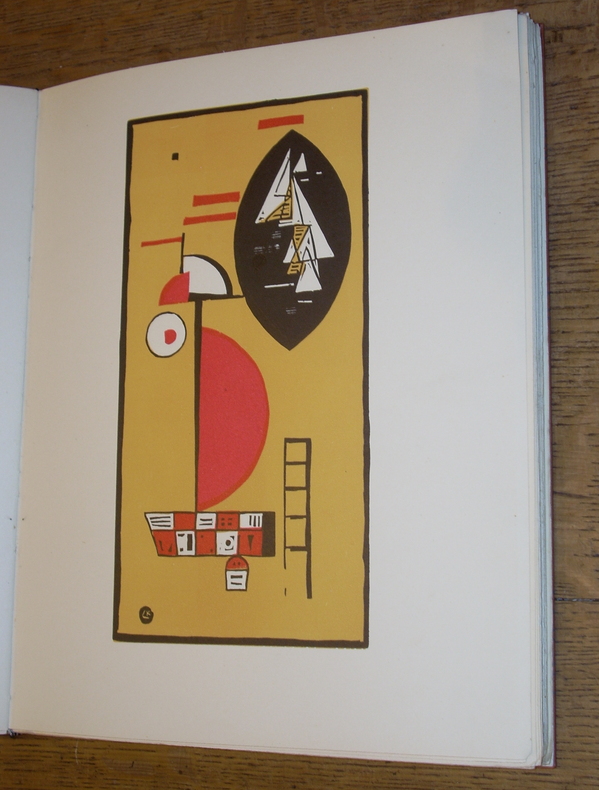
1931000787Paris Editions "Cahiers d'art" 1931
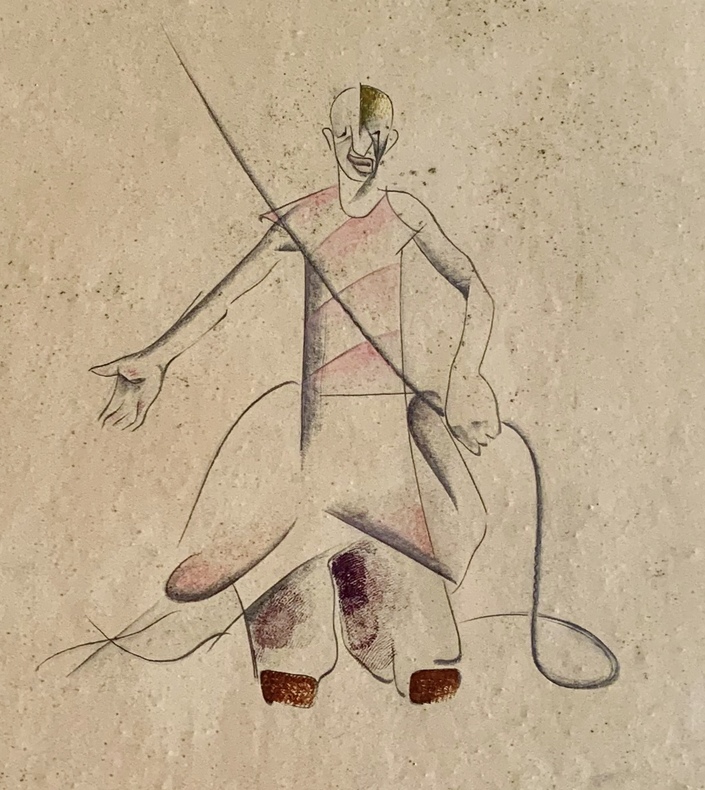
awd-836Aquarelle et crayon sur papier, avec une inscription russe en bas, vers 1920 (17/22,5 cm). Bon état.
19041626711904. MOSCOW. "Souvenir de Moscou". The prints measuring 162 x 222 mm. Oblong folio 240 x 340 mm bound in contemporary three-quarter morocco. NP ND. Moscow1904 $ 3500.00 The 24 plates depict the major sights along the Moscva River Red Square the Kremlin St. Basils Cathedral etc. in early colour photography. The album inscribed and dated 1904. Binding a bit rubbed the photographs in fine condition. unknown books
19041626711904. MOSCOW. "Souvenir de Moscou". The prints measuring 162 x 222 mm. Oblong folio 240 x 340 mm bound in contemporary three-quarter morocco. Moscow: n.p. 1904 The 24 plates depict the major sights along the Moscva River Red Square the Kremlin St. Basils Cathedral etc. in early colour photography. The album is inscribed and dated 1904. Binding a bit rubbed the photographs in fine condition. unknown
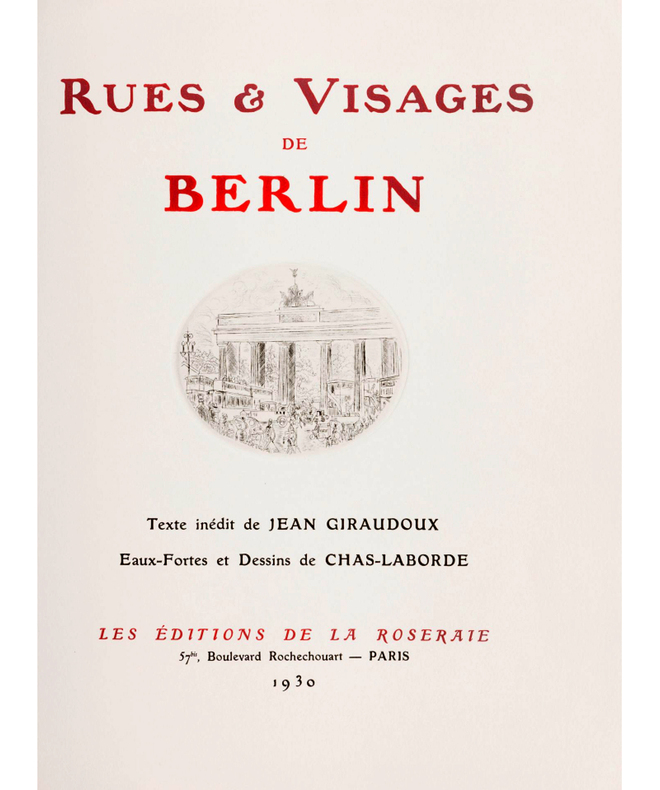
19301598Éditions de la Roseraie, Paris 1930. (Aux dépens de l'artiste). Grand in-folio en feuilles sous portefeuille cartonné à lacets, les plats recouverts de papier métallisé, illustré sur le premier plat, dos de parchemin. ÉDITION ORIGINALE. 51 dessins reproduits en noir pour illustrer le texte et 18 GRAVURES ORIGINALES À PLEINE PAGE EN 2 ÉTATS, COULEURS ET NOIR, sous serpentes légendées. 36 pp. de texte en français et en anglais, table des gravures. 1 des 90 sur vélin de Rives avec 2 états des gravures. Bien complet. Le plus rare et le plus beau portfolio de Chas Laborde consacrées aux grandes capitales du monde occidental des années 30.
Pages 185-220 plus 4 pages of ads. Features: Sensational page of six photos, with text, illustrating Dubai, the primary port and one of the most progressive towns in Trucial Oman - includes the Customs Building, the new bridge, Shaikh Rashid Bin Said, a general view of the town, the Al-Gaz Hotel, the old palace, and more; Cover photo of the Queen Mother upon her 63rd birthday; Article on the Moscow Test-Ban Treaty with photo of DeGaulle; Photo of the Vickers Hovertruck in action; Photo of the Corporal missile on parade at Larkhill; Photo of Mr. David Tapp driving his tractor, The Seahorse, across the English Channel; Photo of champion racing driver Graham Hill aboard replica of a Ford Quadricycle, marking the centenary of Henry Ford who is shown separately driving a Quadricycle in 1904; Photo of spectators swarming onto the pitch at Headingley after West Indies triumph in fourth test match; Illustration of the eminent conductor, Mr. Basil Cameron; Page of fascinating text and photos explain war in Yemen between the Royalist and Republican forces; Photo of engine of wrecked WWII British bomber found in Dutch field; Photo of examination of first wreckage recovered from the U.A.R. Comet which crashed in the Indian Ocean on July 28, killing 62 persons including 26 Boy Scouts from the Philippines; Photos of Japanese Emperor Hirohito examining marine life on Hayama Beach, Japan; Dramatic photos of rescue efforts at Skopje, Yugoslavia after earthquake; Photo of Peru's president-elect, Signor Fernando Belaunde Terry; Amazing photo of huge Australian wedge-tailed Eagle named 'Widgie' landing on the arm of young John Ryder who rescued the bird when it fell from its nest in its youth; Photo of the Bishop of Caltagirone blessing and Italian cradle bound for the unborn child of President Kennedy; Photo of disarmament conference at Geneva; Photo of Orville Freeman presenting Indian peace pipe to Khrushchev on July 30; Book review of "Dieppe - The Shame And The Glory", by Terrence Robertson; Page of news and illustrations from 100 years ago includes New York riots, reoccupation of Jackson, Mississippi, by the Confederates, and balloon reconnaissance at Aldershott; One page photo of London Heliolaters (swimmers) at the Oasis Pool, Holborn, during the fifth day of the current heatwave; Delacroix Centennial exhibition in the Louvre; Illustrated article on the highways and houses of Salsisbury before redevelopment; Major coverage of biblical Shechem in Jordan - its history and current excavations; Photo of Chesterfield Cup horserace at Goodwood on July 31; Aerial photo of Eastbourne showing the Devonshire Park lawn tennis courts; Photos of personalities of the week include Dr. Carl Borgward, Lady Hudson, Sir Horace Clark, Sir Robert Chapman, Miss Claudia Mcpherson of Canada (the youngest Channel swimmer), Miss Jane Allday, six railwaymen who have become mayors in South Wales, Harold Philby (granted asylum in Russia), Jazzman Don Aloysius Gordon (freed on appeal of assault charge), John Grigg, Lord Stansgate with his wife (now Mr. Wedgwood Benn and a commoner), and Mr. St. Clair; Four photos and text of 100 foot first century Roman ship discovered in the Blackfriars mud; Two pages of amazing photos and text describe dystopian life inside a communist Chinese agricultural commune - an exclusive glimpse of life behind the bamboo curtain; and more. Unmarked with average wear. A sound copy of this wonderful issue. Magazine
322 pages. Translated from the first Russian edition. Contents include: Jews in the land of Kiev Russia and the Moscow State; The first Jews in Russia; The further growth rate of Jews in Russia; Politics of the Russian Government with regard to the Jewish question; How Jewish capital was created in Russia; The social structure of Russian Jewry; Jewish participation and their role in the cultural life of Russia; Jews in Russian literature and criticism; Jews - Russian lawyers; Russian Jewry at the beginning of the twentieth century; The Balis Affair; The Jewish question from February to October 1917; Jews in USSR; Personal-national autonomy; Thirty-year total; The war years; The post-war period; The state of Israel and the problem of double citizenship; Supplements I and II. Apparently the author self-published a first English edition in New York in 1967. This copy may be a later reprint as a small Truth Seeker address label has been placed over original text on the copyright page. Regardless, this copy appears to be circa 1970s or prior. Brown stains to lower portion of back cover modestly affect last three pages - text unaffected. Binding intact. Unmarked. A sound copy. Book
188915949Paris, A. Le Vasseur, 1889 ; in-4 ; large demi-maroquin à coins bleu marine, dos à nerfs, titre doré, tête dorée sur témoins, couverture illustrée et dos conservés, non rogné (V. Champs) ; XVI, 518, (2) pp.
98323Moscow MAO 1930. . Folio 33.5cm x 25.5cm 142 pp. with designs and one full page colour illustration protected by original printed tissue guard publisher's printed wrapperscovers laid down edge tears skilfully repaired preserved in a modern dark green cloth slipcase. <br /> Fine copy of this large architectural publication showing many designs projects and plans of the early Stalinist era still constructivist sometimes and reflecting the industrial and building ambitions of the developing empire.<br /> Moscow, MAO, 1930. hardcover
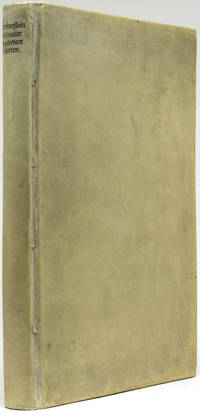
190033016Basel: Niclaus Brillinger 1900. Reprint of the 1567 edition. 3 double-page maps 5 large woodcuts in the text. 12 246 6pp. 1 vols. Folio. Modern vellum covers a little bowed and soiled. Title-leaf repaired at inner margin and outer corner restored; final leaf likewise repaired at inner margin; text moderately darkened and occasional marginal foxing. Reprint of the 1567 edition. 3 double-page maps 5 large woodcuts in the text. 12 246 6pp. 1 vols. Folio. Facsimile reprint of the Basel 1567 edition of Herberstein's rare and early 16th-century Moscow travels from - which itself was the second edition in German of the original Latin RERUM MUSCOVITICARUM COMMENTARII Vienna 1549. Baron von Herberstein was Ambassador from Emperor Maximilian I to the Grand Prince Vasiley Ivanovic in 1517. It wasn't translated into English until 1851-1852 when it appeared as NOTES UPON RUSSIA BEING A TRANSLATION FROM THE EARLIEST ACCOUNT OF THAT COUNTRY . with Notes and Introduction by Richard Henry Major London Hakluyt Society 1851. One salient feature of the Basel 1567 edition is the three striking double-page maps which enhance its interest. Niclaus Brillinger unknown
190033016Basel: Niclaus Brillinger 1900. Reprint of the 1567 edition. 3 double-page maps 5 large woodcuts in the text. 12 246 6pp. 1 vols. Folio. Modern vellum covers a little bowed and soiled. Title-leaf repaired at inner margin and outer corner restored; final leaf likewise repaired at inner margin; text moderately darkened and occasional marginal foxing. Reprint of the 1567 edition. 3 double-page maps 5 large woodcuts in the text. 12 246 6pp. 1 vols. Folio. Fine Facsimile. Facsimile reprint of the Basel 1567 edition of Herberstein's rare and early 16th-century Moscow travels from - which itself was the second edition in German of the original Latin RERUM MUSCOVITICARUM COMMENTARII Vienna 1549. Baron von Herberstein was Ambassador from Emperor Maximilian I to the Grand Prince Vasiley Ivanovic in 1517. It wasn't translated into English until 1851-1852 when it appeared as NOTES UPON RUSSIA BEING A TRANSLATION FROM THE EARLIEST ACCOUNT OF THAT COUNTRY . with Notes and Introduction by Richard Henry Major London Hakluyt Society 1851. One salient feature of the Basel 1567 edition is the three striking double-page maps which enhance its interest. Niclaus Brillinger unknown books
Very Good Tatar Original wrappers. Demy 8vo. (21 x 14,5 cm). In Crimean Tatar in Arabic script. 25 p. Chipped on extremities, wear on spine, slightly stained and dusty covers. Overall a good copy. First and only edition of this first regulations consisting of 87 articles under 11 main headings, of the parliamentary (qurultai) of the Crimean People's Republic, which was the first Turkic and Muslim democratic republic in the world, existed from December 1917 to January 1918 in the Crimean Peninsula, a modern day Ukrainian territory currently occupied by the Russian Federation. The Crimean People's Republic was declared by the initiative of the Qurultai of Crimean Tatars, which stipulated the equality of all ethnicities within the peninsula. Noman Çelebicihan (1885-1918) was chosen as the first President of the nascent Republic. The Qurultai, in opposition to the Bolsheviks, published a "Crimean Tatar Basic Law", which convened an All-Crimean Constitutional Assembly, established a Board of Directors as a provisional government, and erected a Council of National Representatives as a provisional parliament. The Board of Directors and the Central Council of Ukraine both mutually recognized each other. This attempt to build a new nation was quickly defeated by the Bolshevik- and anarchist-dominated Black Sea Fleet. Already on 16 December 1917, the Bolsheviks captured Sevastopol where the headquarters of the Black Sea Fleet was located and dissolved the local council of deputies. The power in the city was transferred to the local revkom. The Bolsheviks were supported by some ships of the Black Sea Fleet. To defend itself, the Crimean government created a United Crimean Headquarters on 19 December 1917, that had at its disposal two cavalry and one infantry regiment of Crimean Tatars as well as some Ukrainian and Russian formations that amounted to some thousand people. Several armed incidents took place during January 1918. On 14 January 1918, the Bolsheviks captured Simferopol where they managed to arrest former President of Crimea (Head of Directorate) Noman Çelebicihan who had just resigned on 4 January 1918. He was transferred back to Sevastopol and interned until 23 February 1918, when he was executed without trial. The body of Çelebicihan was thrown into the sea. On the initiative of Çelebicihan on 10 January 1918, the Qurultai created a special commission that conducted talks with the Bolsheviks to stop the armed conflict in Crimea. On the initiative of Çelebicihan on 10 January 1918, the Qurultai created a special commission that conducted talks with the Bolsheviks to stop the armed conflict in Crimea. By the end of January 1918, the Bolsheviks had captured the whole of Crimea and dissolved both the Kurultai as well as the Council of National Representatives. The Red Terror engulfed the peninsula. With Çelebicihan in the Reds' custody, another leader of the Crimean Tatars, Cafer Seydamet Qirimer, managed to escape to the Caucasus across continental Ukraine. Many Crimean military formations retreated to the mountains. The government of Ukraine blockaded Crimea while trying to re-establish control over the Black Sea Fleet and the city of Sevastopol. Any Muslim supporting military formations on the way to Crimea was stopped. That, in turn, triggered a protest from the All-Russian Muslim military council. By the end of January 1918, the Ukrainian government itself was forced to declare war on the Russian SFSR due to the advancement of the Red Guard forces of Moscow and Petrograd into Ukraine without explicit notification. The Bolsheviks briefly established the Taurida Soviet Socialist Republic on Crimean territory in early 1918 before the area was overrun by forces of the Ukrainian People's Republic and the German Empire. Some officials of the national government, such as Seydamet Qirimer who managed to escape the Bolsheviks' terror sought political asylum in Kyiv and petitioned for military help from the advancing Ukrainian Army as w
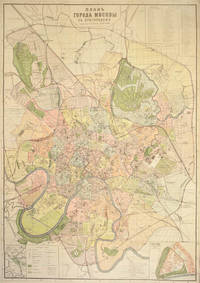
90838Suvorin: "Novoe vremia" Skt. Peterburg 1911. . Colour lithographed plan 98 x 69 cm; folds professionally restored. <br /> Detailed plan of Moscow within the Moscow circular railway Moskovskaya okruzhnaya zheleznoy dorogi showing the administrative division of the city with indication of the local police services and courts as well as transport and water systems.<br /> Rossiyskaya Gosudarstvennaya biblioteka: katalog planov Moskvy Kartografia 1998 No 240. Suvorin: "Novoe vremia", Skt. Peterburg, [1911]. unknown
1801AMO-3475Histoire de l'Empire de Russie, sous le règne de Catherine II, et à la fin du dix-huitième siècle ; Par le Révérend M. Tooke, Membre de la Société Royale de Londres, de l'Académie impériale des Sciences, et de la Société libre d'Economie de Saint-Pétersbourg. Traduite de l'anglais, sur la deuxième édition, par M. S... avec les corrections de M. Imirnove, aumonier et secrétaire de l'Ambassade de Russie à Londres ; et revue par M. Leclerc, ancien Capitaine au service de France. De l'imprimerie de Crapelet, A Paris, chez Maradan, An X - 1801. 6 volumes in-8 brochés (21 x 13,5 cm) de XX-400, (4)-451, (4)-464, (4)-432, (4)-419 et (4)-384 pages. Couvertures d'origine en papier à la colle à rayure horizontales, pièces de titre en papier d'origine imprimées au dos. Papier des dos en partie fendu ou déchiré avec quelques petits manques, plats bien conservés avec traces d'usage, intérieur frais avec de rares et légères mouillures à quelques feuillets seulement, le tout sans conséquence. Première et unique édition française de cette importante histoire de Russie. Cette traduction est l'oeuvre de l'abbé Alexandre-Joseph de Bassinet (1733-1813). Elle paraît l'année même de la mort du Tsar Paul Ier. Elle traite de la géographie, de l'économie, des peuples et coutumes de la Russie. Le révérend Tooke avait passé 20 ans en Russie en tant que chapelain de l'église anglicane de St-Pétersbourg (à Cronstadt). "Très complaisant en général pour les Russes et très indulgent pour leurs institutions." Il s'agit d'une compilation des meilleurs travaux des savants russes du XVIIIe siècle. Cette histoire est très estimée. Elle marque le renouveau de l'attrait de l'Europe occidentale pour la mystérieuse Russie encore sous le régime du servage (aboli seulement en 1861). Ces volumes paraissent dix ans avant le début de la campagne de Russie décidées par l'empereur Napoléon Premier et son échec magistral face à un peuple déterminé, courageux et aguerri. Exemplaire provenant de la bibliothèque d'Henry Saint-Pierre Lesperet (1761-1847), chaque volume portant sa signature autographe sur la page de titre. Homme de loi à Plaisance, il est administrateur du département sous la Révolution. Rallié au coup d'état du 18 brumaire, il est député du Gers de 1800 à 1811. Il est fait chevalier d'Empire en 1811. Agréable exemplaire conservé dans son brochage d'origine.
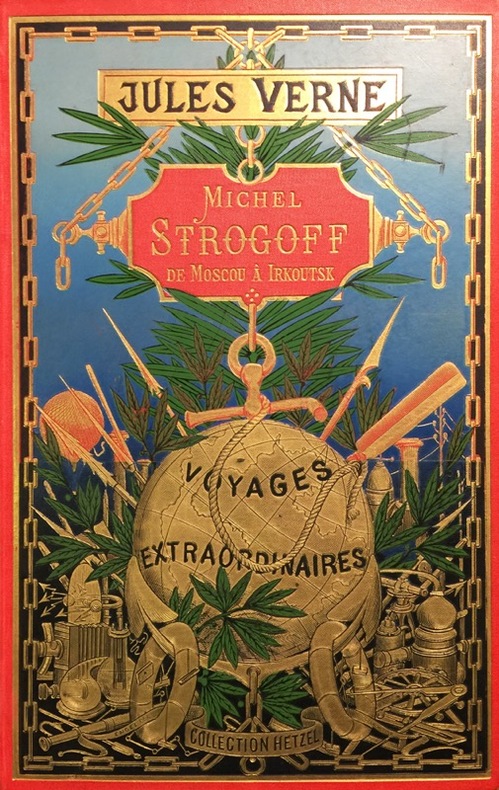
189422131Paris, Bibliothèque d'Education et de Récréation, J. Hetzel, [1894] ; in-8, cartonnage "à la Mappemonde", 2e plat type "P", dos type "F" ; 4, 370 pp., catalogue HF de nouveautés pour 1894-1895, 8 pp.
Very Good Turkish, Ottoman (1500-1928) Modern black cloth, Arabic lettered gilt on spine. Roy. 8vo. (23 x 16 cm). In Ottoman script (Old Turkish with Arabic letters). 207 p. First edition of this extremely rare Turkish book, including Qirimi's first-hand account of the Prut War and Treaty (1711) and the defense of the city he participated in during the Russian invasion of Crimea (1735-36). The book was translated into Ottoman Turkish and edited by Turkish turcologist and soldier Necib Asim Yaziksiz, (1861-1935), with annotations, from the original work titled "Umdet al-Akhbar" [i.e. The principle of the news]. Abdulgaffar Qirimi was a Crimean scholar who lived in the Crimean Khanate in the first half of the 18th century and served in various government positions. Qirimi dedicated his work to Genghis Khan, the Golden Horde, and the Crimean Khanate. He reported many original details and, especially for the 18th century, his information is authentic and based on personal descriptions. The main part of the work is devoted to the Golden Horde (starting from Genghis Khan and his descendants), Crimean Khanate, Gerayids, and murzas. When Abdulgaffar Qirimi wrote a history of the descendants of Jochi Khan, he used in his book more than 20 historical works as sources. He stated the names of these works and indicated where he got this or that information. At the same time, he had access to the archives of the Crimean Khanate and used his family legends as well as popular traditions. Plenty of space in his work occupies his own observations as a participant in military campaigns and court life. His work concerning khans Berke, Tokhta, Uzbek, Tokhtamish, and Ulugh Muhammad reflects the popular version and is based on the oral historiography of the Tatars. The Russo-Ottoman War of 1710-1711, also known as the Prut River Campaign, was a brief military conflict between the Tsardom of Russia and the Ottoman Empire. The main battle took place during 18-22 July 1711 in the basin of the Pruth river near Stanile?ti (Stanilesti) after Tsar Peter I invaded Ottoman Moldavia, following the Ottoman Empire's declaration of war on Russia. The ill-prepared 38,000 Russians with 5,000 Moldavians, found themselves surrounded by 200,000 Turks under Grand Vizier Baltaci Mehmet Pasha. After three days of fighting and heavy casualties, the Tsar and his armies were allowed to withdraw after agreeing to abandon the fortress of Azov and its surrounding territory. The Ottoman victory led to the Treaty of the Prut which was confirmed by the Treaty of Adrianople. Özege 21999.; TBTK 479.; OCLC 281773486.
1920014038Paris Editions d'Art - La Cible 1920 In-4 Broché
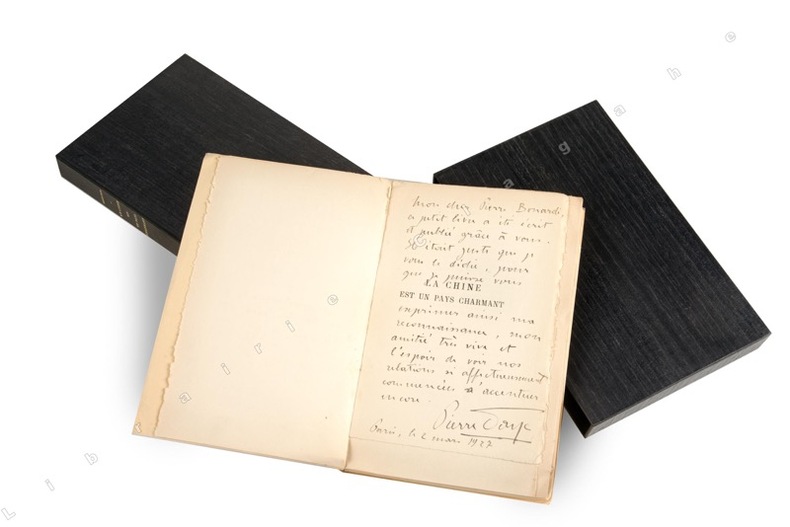
192720808Paris, les Editions de France, collection “Notre Temps” publiée sous la direction de Pierre Bonardi, 1927 ; in-16 (210 mm), broché ; [8], 211, [5] pp., couverture jaune imprimée en rouge et noir, chemise-étui simili ébène, dos chagrin noir, titre doré (P.Goy & C.Vilaine).
Huge book is in excellent condition, flawless, as new. Binding is solid and square, covers have sharp corners, exterior shows no blemishes, text/interior is clean and free of marking of any kind. Dust jacket shows the slightest signs of shelf wear only, no tears. 12 12" x 9", 510 pages on heavy paper, lavishly illustrated throughout in color and b&w, with photos, architectural drawings, floorplans, layouts, interior designs, notes, prints, etc. Contents include: Metal: a revolution in furniture design, Partnership with Le Corbusier and Pierre Jeanneret for furniture and home furnishings, Photography, The militant years, Prefabricated leisure architecture, Public exhibitions and social engagement, after the break with the Rue de Sevres Studio.
187018-0-60Moskau, , o.J. (um 1870). Blattgröße: ca. 39,50 x 33,5 cm; Fotogröße: ca. 27,5 x 21,5 cm