1 046 résultats
200339659Palace Editions, St. Petersburg, 2003. 182 Seiten / pp., mit zahlreichen Abbildungen / richly illustrated; 4°, 30 x 25 cm. Pappeinband mit Schutzumschlag / Hardcover with Jacket
6413Paris, Fayard, 1953 12 x 18, 460 pp., broché, bon état
200010162DBMoskau., Neue Manege., 2000. 24 x 17 cm. 199 S. OKarton., 10162D Auflage 1500 Exemplare. Einbandkanten etwas nachgedunkelt und mit kleinen Bereibungen. Sonst gutes Exemplar.
187018-0-60Moskau, , o.J. (um 1870). Blattgröße: ca. 39,50 x 33,5 cm; Fotogröße: ca. 27,5 x 21,5 cm
20001327479PN. New. 2000. Soft Cover. Date is original print. This is a reprint edition . PN paperback
In folio. Dim. 41,5x28,5 cm. Pp. 20.Numero del 26 ottobre 1941 della rivista settimanale "7jours" di attualità. Il numero è interamente dedicato alla Battaglia di Mosca. Numerose notizie di attualità e foto d'epoca all'interno.In buone condizioni. Copertina editoriale in buone condizioni generali con lievi usure ai margini e dorso. Legatura in buone condizioni. All'interno le pagine si presentano in ottime condizioni con rare fioriture.Number of the 26th of october 1941 of the weekly magazine "7jours"<BR>The number is totally dedicated to the Battle of Moscow.<BR>Different information of actuality and photoes inside. In good conditions. Editorial cover in good general conditions slightly worn in the edges and spine. (see the photo). Binding in good conditions. Inside pages are in very good conditions with occasional foxings.
19981308436PN. New. 1998. Soft Cover. Date is original print. This is a reprint edition . PN paperback
19991317076PN. New. 1999. Soft Cover. Date is original print. This is a reprint edition . PN paperback
191023152Moscou 1910 -in-12 pleine percale un album, reliure pleine percale marron in-douze à l'italienne Editeur (full percale in-12 oblong editor)(11,5 x 17 cm), dos muet, couverture gauffrée historiée de couleur parme, titrée "or" au centre du 1er plat, toutre tranches lisses, album de 34 photos de MOSCOU en noir, (texte d'explication sous la photo en russe et en français) sans date (1910) Moscou sans nom d'Editeur,
191023160ST PETERSBOURG 1910 -in-4 pleine percale un album, reliure pleine percale verte in-quarto à l'italienne Editeur (full percale in-4 oblong editor)(25 x 18,6 cm), dos muet, couverture illustrée du "monument de Pierre Le Grand" gravé en vert foncé titrée en vert foncé au centre du 1er plat, toutre tranches lisses, album de 24 photos de ST PETERSBOURG en noir, (texte d'explication sous la photo en russe et en français) sans date (1910) ST PETERSBOURG sans nom d'Editeur,
Very Good Turkish, Ottoman (1500-1928) Modern black cloth, Arabic lettered gilt on spine. Roy. 8vo. (23 x 16 cm). In Ottoman script (Old Turkish with Arabic letters). 207 p. First edition of this extremely rare Turkish book, including Qirimi's first-hand account of the Prut War and Treaty (1711) and the defense of the city he participated in during the Russian invasion of Crimea (1735-36). The book was translated into Ottoman Turkish and edited by Turkish turcologist and soldier Necib Asim Yaziksiz, (1861-1935), with annotations, from the original work titled "Umdet al-Akhbar" [i.e. The principle of the news]. Abdulgaffar Qirimi was a Crimean scholar who lived in the Crimean Khanate in the first half of the 18th century and served in various government positions. Qirimi dedicated his work to Genghis Khan, the Golden Horde, and the Crimean Khanate. He reported many original details and, especially for the 18th century, his information is authentic and based on personal descriptions. The main part of the work is devoted to the Golden Horde (starting from Genghis Khan and his descendants), Crimean Khanate, Gerayids, and murzas. When Abdulgaffar Qirimi wrote a history of the descendants of Jochi Khan, he used in his book more than 20 historical works as sources. He stated the names of these works and indicated where he got this or that information. At the same time, he had access to the archives of the Crimean Khanate and used his family legends as well as popular traditions. Plenty of space in his work occupies his own observations as a participant in military campaigns and court life. His work concerning khans Berke, Tokhta, Uzbek, Tokhtamish, and Ulugh Muhammad reflects the popular version and is based on the oral historiography of the Tatars. The Russo-Ottoman War of 1710-1711, also known as the Prut River Campaign, was a brief military conflict between the Tsardom of Russia and the Ottoman Empire. The main battle took place during 18-22 July 1711 in the basin of the Pruth river near Stanile?ti (Stanilesti) after Tsar Peter I invaded Ottoman Moldavia, following the Ottoman Empire's declaration of war on Russia. The ill-prepared 38,000 Russians with 5,000 Moldavians, found themselves surrounded by 200,000 Turks under Grand Vizier Baltaci Mehmet Pasha. After three days of fighting and heavy casualties, the Tsar and his armies were allowed to withdraw after agreeing to abandon the fortress of Azov and its surrounding territory. The Ottoman victory led to the Treaty of the Prut which was confirmed by the Treaty of Adrianople. Özege 21999.; TBTK 479.; OCLC 281773486.
Very Good Tatar Original wrappers. Demy 8vo. (21 x 14,5 cm). In Crimean Tatar in Arabic script. 25 p. Chipped on extremities, wear on spine, slightly stained and dusty covers. Overall a good copy. First and only edition of this first regulations consisting of 87 articles under 11 main headings, of the parliamentary (qurultai) of the Crimean People's Republic, which was the first Turkic and Muslim democratic republic in the world, existed from December 1917 to January 1918 in the Crimean Peninsula, a modern day Ukrainian territory currently occupied by the Russian Federation. The Crimean People's Republic was declared by the initiative of the Qurultai of Crimean Tatars, which stipulated the equality of all ethnicities within the peninsula. Noman Çelebicihan (1885-1918) was chosen as the first President of the nascent Republic. The Qurultai, in opposition to the Bolsheviks, published a "Crimean Tatar Basic Law", which convened an All-Crimean Constitutional Assembly, established a Board of Directors as a provisional government, and erected a Council of National Representatives as a provisional parliament. The Board of Directors and the Central Council of Ukraine both mutually recognized each other. This attempt to build a new nation was quickly defeated by the Bolshevik- and anarchist-dominated Black Sea Fleet. Already on 16 December 1917, the Bolsheviks captured Sevastopol where the headquarters of the Black Sea Fleet was located and dissolved the local council of deputies. The power in the city was transferred to the local revkom. The Bolsheviks were supported by some ships of the Black Sea Fleet. To defend itself, the Crimean government created a United Crimean Headquarters on 19 December 1917, that had at its disposal two cavalry and one infantry regiment of Crimean Tatars as well as some Ukrainian and Russian formations that amounted to some thousand people. Several armed incidents took place during January 1918. On 14 January 1918, the Bolsheviks captured Simferopol where they managed to arrest former President of Crimea (Head of Directorate) Noman Çelebicihan who had just resigned on 4 January 1918. He was transferred back to Sevastopol and interned until 23 February 1918, when he was executed without trial. The body of Çelebicihan was thrown into the sea. On the initiative of Çelebicihan on 10 January 1918, the Qurultai created a special commission that conducted talks with the Bolsheviks to stop the armed conflict in Crimea. On the initiative of Çelebicihan on 10 January 1918, the Qurultai created a special commission that conducted talks with the Bolsheviks to stop the armed conflict in Crimea. By the end of January 1918, the Bolsheviks had captured the whole of Crimea and dissolved both the Kurultai as well as the Council of National Representatives. The Red Terror engulfed the peninsula. With Çelebicihan in the Reds' custody, another leader of the Crimean Tatars, Cafer Seydamet Qirimer, managed to escape to the Caucasus across continental Ukraine. Many Crimean military formations retreated to the mountains. The government of Ukraine blockaded Crimea while trying to re-establish control over the Black Sea Fleet and the city of Sevastopol. Any Muslim supporting military formations on the way to Crimea was stopped. That, in turn, triggered a protest from the All-Russian Muslim military council. By the end of January 1918, the Ukrainian government itself was forced to declare war on the Russian SFSR due to the advancement of the Red Guard forces of Moscow and Petrograd into Ukraine without explicit notification. The Bolsheviks briefly established the Taurida Soviet Socialist Republic on Crimean territory in early 1918 before the area was overrun by forces of the Ukrainian People's Republic and the German Empire. Some officials of the national government, such as Seydamet Qirimer who managed to escape the Bolsheviks' terror sought political asylum in Kyiv and petitioned for military help from the advancing Ukrainian Army as w
pp. iv, 321. XLib. Inked ownership of Henry Gifford. 8vo. Original full green cloth binding, beveled edges. Gilt lettered spine and gold vignette of Tzarist imperial double eagle arms on front cover. Though XLib, still a nice copy. ** PRICE JUST REDUCED!! RUSSIA/1
1933008858Paris Editions Sociales Internationales 1933 In-8 Broché, couverture rempliée illustrée
356p. Bookseller's label. XLib. 8vo. Original full red cloth binding, gold stamped. Worn at extremities. First American Edition. Gautier was a famed French poet, novelist, and critic. He was a leading exponent of "art for art's sake" - the belief that formal, aesthetic beauty is the sole purpose of a work of art. This work about his trip to Russia was first published 1866-1867. It was of enormous influence on French attitudes towards Russia in the Nineteenth century. **PRICE JUST REDUCED! RUSSIA/1
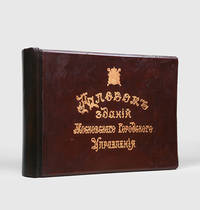
1912131502Moscow: P. P. Pavlov 1912-13. A remarkable photographic survey of pre-Revolution Moscow Superb and extremely scarce photographic record of pre-Revolution Moscow captured in a series of quite stunning images by one of the foremost Russian photographers of the period P. P. Pavlov. An online search of institutional libraries cites 3 locations only - British Library Harvard and Columbia - with no copy traced on auction records. Among the many subjects featured here are schools hospitals orphanages public housing gasworks tram depots abbatoirs and administrative buildings focusing on the progressive aspects of the city and offering a panoramic view of the Russian capital at the dawn of the 20th century. Included here are two views of Tolstoy's house plates 51 and 52 today the Tolstoy Estate-Museum bearing the caption "acquis par la ville" acquired by the city nicely dating these images to after 15 November 1912 when the Moscow municipality bought the writer's home with all its furniture for 125000 roubles and with the intention that the courtyard should accommodate a Tolstoy School of sixteen classes. Pyotr Petrovich Pavlov 1860-1924 was born into a peasant family in Feodorovskaya village Olonetsky District Republic of Karelia on the western fringes of Russia. In 1881 he arrived in Moscow from St Petersburg and joined the well-established photographic studio of Scherer Nabholz and Co. serving a ten-year apprenticeship. In 1891 Pavlov opened his own studi specialising in individual and group portraits famously photographing Anton Chekhov in 1899. In 1898 he was commissioned by the Imperial Moscow Archaeological Society Imperatorskoye Moskovskoye Arkheologicheskoye Obshchestvo or IMAO to photograph both the historical and monumental fabric of Moscow and later as presented here the city's fine municipal architecture. Interestingly Pavlov was also responsible for a series of photographs recording the damage sustained by Moscow's buildings during the Bolshevik shelling of the city in 1917. His work was the subject of a 2011 exhibition at Rosphoto Moscow Pyotr Pavlov: Views of Old Moscow. Landscape folio 403 x 541 mm. 240 photogravure plates printed on 220 leaves of heavy stock card 20 leaves with two plates captions in Russian and French studio credit of P. P. Pavlov on each mount leaf. Larger images 260 x 358 mm smaller 200 x 272 mm. Original dark reddish-brown morocco-grain skiver over bevelled boards neatly rebacked white moire-effect endpapers green cloth inner hinges. A few scrapes and abrasions to back cover corners a little worn prelims a little dusty and with closed-tear at foot 3 plates remargined occasional marginal soiling yet a very good complete copy. hardcover
16-2678Moscow Russia: Moskovskij Dramaticheskij Teatr Na Maloj Bronnoj 1967. Folio. 112 x 79 cm. Wove Paper with Color Lithograph. Signed by set-designer/artist Viktor Durgin. Marginal tears. Moscow, Russia: Moskovskij Dramaticheskij Teatr Na Maloj Bronnoj, 1967. unknown
A clean, unmarked book with a tight binding. 134 pages, plus advertisements.
1996x-3540760148Springer 1996. Paperback. New. 498 pages. 9.50x6.25x1.25 inches. Springer paperback
74 pages. Author was born in Moscow, Idaho in 1952. He moved to Canada in 1969 and settled in British Columbia the following year. This is his fourth book of poetry. Light wear and soiling. Unmarked. Nice copy. Book
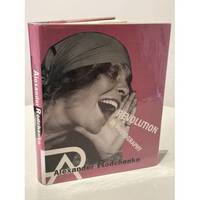
2008422524Multimedia Complex of Actual Arts 2008. No binding. As New. <p>Alexander Rodchenko. Revolution in Photography. Catalogue.</p><p>ТехничеÑкие данные:</p><p> Ðазвание: Alexander Rodchenko. Revolution in Photography.</p><p> Ðвтор: Alexander Rodchenko.</p><p> Тип изданиÑ: выÑтавочный каталог.</p><p><br></p><p> Год изданиÑ: 2008.</p><p> Язык: английÑкий.</p><p> Страна изданиÑ: РоÑÑÐ¸Ñ Moscow.</p><p> Переплет: твердый издательÑкий.</p><p>ТекÑÑ‚ на Ñзыке изданиÑ:</p><p> This catalogue presents the revolutionary photographic work of Alexander Rodchenko one of the key figures of the Russian avant-garde and Constructivism. The publication focuses on Rodchenko’s radical approach to composition perspective and visual language highlighting his use of extreme angles dynamic structures and industrial motifs. The images reproduced in the catalogue demonstrate how photography became for Rodchenko a tool of social transformation and a means of shaping a new visual consciousness in the early Soviet period. The book includes iconic portraits architectural views experimental compositions and graphic works that defined the aesthetics of revolutionary photography.</p><p>Перевод на руÑÑкий Ñзык:</p><p> Каталог поÑвÑщён революционному фотографичеÑкому наÑледию ÐлекÑандра Родченко — одной из ключевых фигур руÑÑкого авангарда и конÑтруктивизма. Издание раÑкрывает его радикальный подход к композиции ракурÑу и визуальному Ñзыку Ð¿Ð¾Ð´Ñ‡Ñ‘Ñ€ÐºÐ¸Ð²Ð°Ñ Ð¸Ñпользование ÑкÑтремальных точек Ñъёмки динамичных конÑтрукций и индуÑтриальных мотивов. ПредÑтавленные работы показывают как Ñ„Ð¾Ñ‚Ð¾Ð³Ñ€Ð°Ñ„Ð¸Ñ Ñтала Ð´Ð»Ñ Ð Ð¾Ð´Ñ‡ÐµÐ½ÐºÐ¾ инÑтрументом Ñоциального Ð¿Ñ€ÐµÐ¾Ð±Ñ€Ð°Ð·Ð¾Ð²Ð°Ð½Ð¸Ñ Ð¸ Ñ„Ð¾Ñ€Ð¼Ð¸Ñ€Ð¾Ð²Ð°Ð½Ð¸Ñ Ð½Ð¾Ð²Ð¾Ð³Ð¾ визуального Ð¼Ñ‹ÑˆÐ»ÐµÐ½Ð¸Ñ Ð² ранний ÑоветÑкий период. Ð’ каталоге воÑпроизведены знаковые портреты архитектурные виды ÑкÑпериментальные композиции и графичеÑкие Ñ€ÐµÑˆÐµÐ½Ð¸Ñ Ð¾Ð¿Ñ€ÐµÐ´ÐµÐ»Ð¸Ð²ÑˆÐ¸Ðµ ÑÑтетику революционной фотографии.</p> Multimedia Complex of Actual Arts unknown
Very Good Russian Original cloth. Cr. 8vo. (20 x 14 cm). In Russian. Apprx. 1200 p., many lithographic plates. Almanakh-ejegodnik, 1897 god. Almanac - yearbook for 1897. A calendar and a collection of information useful to everyone in daily life. On the front cover with colored embossing: the title of the publication in the ornamental frame and the annual calendar with the indication of the shrines. The back cover is embossed with black: a multiplication table and a list of provinces, regions and counties with major cities. On the spine there is a color embossing: a geometric ornament, the name of the publication and the year. The third year of the publication of the almanac, the last one was published in 1902. The purpose of the almanac was to create for the reader a permanent desk book containing all possible indications of various cases from everyday life. The publication contains an image of the family tree and the Family Chronicle, in which it is necessary to fill in the columns (they're not signed, not written on paper, empty): "Birthday", "Epiphany", "Otkrytie from the chest", "1st tooth", "1st word", " Step "," Smallpox vaccination "," Family holidays ", etc. Special sections include a civil, eternal, hunting, photographic, financial calendar, characteristics of the zodiac signs. A large number of tables, diagrams, advertisements, information, useful for each - in the field of astronomy, geography, history, statistics, medicine, usual recipes, book reviews, obituaries; theaters, opera buildings, circuses, many maps, hospitals, all banks, government buildings, passport info for citizens, times for transportation, railways, economy, architecture, history of the art, special days and religious holidays and calendars of all minorities such Rabbanic Jews, Muslims, Armanien Gregorians, Evangelic Lutherans, Rimski Catholics, etc. and many advertisements. For bibliographers and historians, this calendar is of great interest. "Almanac" won popularity in the Russian society and at the first all-Russian exhibition of printing business in 1895 in St. Petersburg was awarded the Great Silver Medal. The book contains historical and geographical essays in Moscow and St. Petersburg. And also address-calendar and reference department On these cities. There are no portraits of Nikolai and Alexandra Feodorovna.
132 pages. Features: It is Happening Here - Current Misconceptions about Communism, by Revilo Oliver; Lincoln's Greatness - 1865; Are Churchmen Burying Us?; Thunder Frightens - Lightning Kills - The Soviet Union and Psychological Warfare; African Witches' Brew Concocted in Moscow - by Major George R. Jordan, author of "From Major Jordan's Diaries"; The Smut Racket Must Be Stopped - "The most infectious point of the disease is the family mailbox. It is here that so much of the pornographical sewage is dumped into the hands of so many of our children"; Let's Take a Look at the Good Guy; "From Your Valentine"; They Make Earthquakes - using seismic technology to find oil; Is Cultural Diplomacy the Road to Peace?; Hollywood Makes Me Laugh - M.J.R. Arthur's journey to the Panamanian jungle; From Religious Rite to Billion-Dollar Business - the origin of the popular pastime of bowling may astonish you; Alcoholism - a major problem; Slave Labor - USSR; What Kind of "Tic" Do You Have?; Foreign Aid Summary; Subjection... Disguised as Rebellion - progress that veers left tends toward subjection; research is Risky Business; We Adopted Two Orphans - Madeline Angell and two squirrels; Socialism by Default; Food for Peace and the UN; Benefit Program; The Administrative Agency Colossus - how laws are made and perverted with neither Congressional action nor judicial review; Guard Our Youth; A Growing Indignation - distrust and resentment to decisions from the Supreme Court; That Temporary Act - enacted as an emergency 26 years ago the TAA has been a millstone around the neck of U.S. industry; How to Win a War; and more. Moderate wear. A sound vintage copy bearing the address label of noted Madison, WI architect William Kaeser. Book
63-1849Moscow: Mayakovsky Theatre ca. 1972. Four Black & White Photographs 7" x 5" & smaller Mostly Oblong. Very Good. Notes inked on verso of photographs in Russian. Photographs from the Alma Law Collection. Moscow: Mayakovsky Theatre, [ca. 1972]. unknown
14941, Mercatorfonds / Fonds Mercator, Paperback, 230 x 280mm., 96pp., 117 colour illustrations ISBN 9061536197.