5 854 résultats
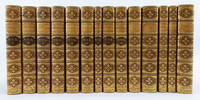
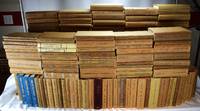
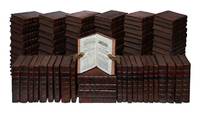
64760London 1760-1819. Folio approximately 275 x 185 mm. 93 volumes including 5190 Acts. Bound in contemporary virtually uniform calf with the arms of the City of Aberdeen to the upper covers of most volumes. Some age wear as reasonably expected generally the books are sound with some recent professional restorations to extremities joints heads and toes of spines etc. where it was necessary recently professionally cleaned and polished. Contents generally fresh and clean without any significant foxing or damp-staining exceptional set overall. Provenance: these Acts were compiled and bound for the Royal Burgh of Aberdeen bearing their arms on the front and back boards until 1792 and the town's motto of Bon Accord on the bottom of the backstrip thereafter. It is likely then that these were originally housed in the old Tollbooth from which Aberdeen was governed until the construction of the larger town house complex in the 19th century. This being the case it is also likely that the medieval library that these were to be stowed away in was not overly gifted with shelf space and the incidental removal of Acts deemed less interesting to a Scottish readership would have been an easy way of slimming the collection down so that it fitted into its designated place. A near full-run of the Acts passed under the reign of King George III a period that oversaw the American Revolutionary War changes in policy regarding slavery etc. In ninety-three volumes and including 5190 Acts this collection recalls the entirety of the reign of King George III undoubtedly one of the most significant for American history and in general amongst the most dynamic and rapidly changing periods of the modern era. These Acts bear witness to the birth and rebirth of nations the reorganization and regulation of the East India Company the gradual abolition of slavery the rapid onset of the Industrial Revolution the growth of an empire that touched every corner of the known world and the rising clatter of mechanization and industry. Almost every major Act of George III's reign is included. Sixty years of some of the most energetic social and political history are laid out kept in time to the marching beat of Parliamentary governance. This set is even more interesting for having been held together and bound with the arms of the City of Aberdeen to mist volumes. This collection is an invaluable primary source of unusual scale and completeness. American contents: The United States of America's rise from a string of far-western colonies to a sovereign state is mapped comprehensively. Tensions in the Americas arguably began with the Royal Proclamation of 1763 which barred American colonists from settling further west of a line closely circumscribing existing colonial boundaries. A year later the Sugar Act and Currency Act both vol. VI heightened unrest by hampering the already struggling economies of the Thirteen Colonies. In 1765 the Stamp Act vol. VII passed into law imposing a tax on printed goods and documents payable only in British currency. The response was enormous culminating in the Stamp Act Congress whose united voices issued the Declaration of Rights and Grievances. Parliament was petitioned and when it became clear that the Act was harming British mercantile interests in the Colonies it was repealed. Soon after however the Declaratory Act vol. VIII reasserted British authority in America. To Britain control over the Colonies was essential. A succession of failed harvests combined with large-scale grain exports had led to soaring corn prices and riots across Britain. In response Parliament abolished import duties on "Corn and Grain" from America vol. VIII followed by the removal of duties on wheat and wheat flour vol. IX and later on other American grains including rice and maize vol. X. America was simply too valuable for Britain to lose. The Townshend Acts of 1767 and 1768 introduced further measures to curb colonial dissent and extract greater profit from His Majesty's American possessions. The Revenue Act vol. IX placed taxes on several goods including tea and introduced Writs of Assistance allowing property searches in cases of suspected smuggling. Passed concurrently the Commissioners of Customs Act vol. IX sought to enforce compliance with British customs laws. The Indemnity Act vol. IX waived import duties on tea imported by the East India Company undercutting smuggled Dutch tea that threatened British revenue. The New York Restraining Act vol. IX suspended the New York Assembly's legislative authority until it complied with the Quartering Act of 1765 vol. VII. The last of the Townshend Acts the Vice Admiralty Court Act vol. X of 1768 replaced colonial courts with admiralty courts to more effectively punish and prevent smuggling. These Acts were later repealed except for the Indemnity Act which in 1773 was amended and continued as the Tea Act vol. XVII prompting the Boston Tea Party. Parliament retaliated with the Boston Port Act vol. XIX closing the harbour until the destroyed tea was paid for. This was the first of the five Intolerable Acts that directly precipitated the Declaration of Independence and the outbreak of war in 1776. Soon followed the Massachusetts Government Act and the Administration of Justice Act both vol. XIX. The former tightened royal control over Massachusetts while the latter permitted royal officials accused of offences in America to be tried elsewhere. The next Intolerable Act was the Quartering Act vol. XX which reiterated provisions from the earlier Act. Finally came the Quebec Act vol. XX expanding the province's boundaries into territory now part of the United States. These measures brought the Colonies to the brink of rebellion and when Parliament angered by New York's non-compliance with the Quartering Act passed the New England Restraining Act vol. XXI in 1775 banning trade with New England war finally broke out. Years of fighting followed as France Spain and the United Provinces of the Netherlands joined the conflict against Britain. In 1782 George III gave assent to the American Colonies Peace Act vol. XXXIV allowing negotiations that culminated in the Treaty of Paris of 1783. Later that year the Trade with America Act vol. XXXV was passed formally recognising the United States and reopening trade. In other spheres the British Empire continued to develop. Shown in these Acts is the amazing variety of luxury goods flowing into and through Britain from around the world. Sugar and Tobacco from the West Indies arrived in British ports to be warehoused alongside Teas and Silks from China. However stowed between tea chests and sugar barrels British merchants often found room for human cargo. The British slave trade and its abolition is also documented in these Acts. In this time African slaves passed as freely from port to port as any other exotic merchandise and it wasn't until the Slave Trade Act of 1788 that this trade was in any way regulated. This Act only temporarily limited the number of slaves that could be carried on board a trading vessel and whilst British slavers would face further regulations in the years following it was only in 1807 that the trade was truly abolished. However long after George III's death slaves were still working the plantations of the British Empire. Britain and Ireland also underwent great change. Physically the British Isles were transformed. By his death in 1820 George III's now united Kingdom was cut with snaking canals and bristled with groaning mills. Coal and cheap iron flowed into burning furnaces allowing British manufacturers to produce with great speed and quantity goods to be exported across the world. James Watt's steam engine its invention marked in an Act of the twenty-first volume of this collection greatly encouraged this growth of industry. Textiles were one of Britain's biggest exports and their manufacture was greatly increased by Watt's machine. Handloom weavers were very quickly driven out of work and in retaliation broke machines and burned mills. Parliament's response was a series of punitive Acts ensuring harsh and 'exemplary' punishment for these Luddites. The revolt was extinguished and with it an older slower world. This collection also contains fascinating details of the East India Company and the long process by which it was gradually subsumed by the British Crown. By 1773 the Company was failing. Smuggling in the Americas had severely reduced its income and the British Government eager to safeguard its future introduced the Regulating Act vol. XVIII overhauling its organisation and drawing it closer into British control. However this did little to abate concerns surrounding the Company's inefficiency in governing its Indian territories. In 1784 Prime Minister Pitt the Younger sought to remedy this with his India Act vol. XXXVII which more firmly subordinated the Company to the Crown by appointing six Privy Councillors to the newly created Board of Control. The final major reorganisation of the East India Company during George III's reign came in 1813 with the Charter Act vol. LXXX which renewed the Company's charter but restricted its monopoly to China and the trade in opium and tea. War with France had placed enormous financial pressure on Britain and merchants who were unable to trade with much of Europe demanded the destruction of the Company's monopoly in India. Once again the Company's authority was curtailed and brought further under direct British oversight. Another significant movement of George III's reign was the abolition of the slave trade. Abolitionism had been largely a fringe movement until David Hartley tabled a motion in the House of Commons in 1776 to end Britain's involvement in the movement of human chattel. Hartley's motion failed and it wasn't until over a decade later that any sort of regulation was placed on British slaving practices. The Zong massacre of 1781 in which the crew of a British slaving ship threw one hundred and thirty African slaves overboard provoked widespread outrage and strengthened the abolitionist cause. By 1788 sufficient pressure had built for Parliament to pass the first Slave Trade Act vol. XLI regulating the number of slaves permitted aboard trading vessels. Later that year the Society for Effecting the Abolition of the Slave Trade published its famous plan of the slave ship Brookes illustrating the continued horrors permitted under the new rules. Eleven more years of campaigning led to the second Slave Trade Act vol. LVIII in 1799 which required slaving vessels to be exclusively registered for that purpose and imposed stricter limits on the number of individuals transported. These regulations were to be enforced by Customs Officers. Seven years later the third Slave Trade Act vol. LXIX of 1807 abolished the trade altogether outlawing the sale and purchase of slaves and establishing penalties for violators. Parliament subsequently strengthened enforcement through numerous amendments and secured agreements with Spain Portugal and the Netherlands to end the trade in their own territories vols. XCI & XCII. In practice however these agreements varied in effectiveness and in Spain and Portugal the illegal trade persisted. In Britain slavery itself was only abolished in 1833. The Acts also detail the swift progress of the industrial revolution as well as evidence of the growing pains of a rapidly changing society. One of the earliest inventions mentioned in this collection is found in an Act encouraging John Harrison to make more available his invention of the marine chronometer vol. V. This was a crucial step in the British Government's mission to increase the ease and efficiency of ocean travel. A great number of Acts offering rewards for discoveries and the conducting of experiment in this vein were passed by Parliament the last being in 1818 vol. XCI. Another important invention that finds direct reference in the Acts is James Watt's steam engine vol. XXII. This machine was the centrepiece of the British industrial revolution allowing for the automation of many tasks previously found to be slow and laborious. Watt's invention allowed manufactured goods to be produced much faster and in much greater quantities. Textiles were one manufacture greatly improved by the advent of steam power however this was not the view of all. This set contains a number of punitive acts aimed to curb the Luddite movement that set about breaking machines and burning mills primarily in the North of England. The 1812 Frame Breaking Act vol. LXXVII declared the interfering with and destruction of mechanised looms a hangable offence. Shortly followed by two more dissuasive Acts the revolt was quelled and the handloom weavers and many other craftsmen of the old order were put out of work. Each regnal year is fully accounted for save the two months of George the III's final Parliament which actually became George IV's first in 1820. Occasionally Acts are missing and unaccounted for by the Table or list of contents that accompanies most years these omissions would have been made at the point of binding these volumes and often betray a Scottish interest in retaining acts relevant to Scotland whilst removing those that are not. Beyond these great narratives this collection is filled with thousands of Acts worthy of closer inspection. This list includes more famous acts such as the two Acts concerning Napoleon's confinement to the Island of St Helena vol. LXXXVII and the Regency Act vol. LXXVI in which the ailing King finally cedes power to his son the later George IV. However lowlier Acts such as those concerning parish organisation and land taxation are filled with fascinating tables charts oaths street-plans exemplar registers and lottery tickets. Every Act reveals something new of King George III's long reign and offers a vivid glimpse into the daily workings of government and society during a period of extraordinary change. This collection offers a panoramic view of King George III's sixty year reign. Reading through these Acts the scale and pace of the changing world of this early region of modernity is palpable revealing an empire continually reshaped by conflict commerce and the first stirrings of industrial power. A five hundred and seventy-four page list of the titles of each Act of Parliament contained in this collection is available upon request. London, 1760-1819. hardcover
152168857London: Richard Pynson 1521. Full Description:<br> <br> HENRY VIII King of England. Assertio Septem Sacramentorum Aduersus Martin. Lutheru. Aedita ab Invictissimo Angliae et Franciae Rege et do. Hyberniae Henrico Eius Nominis Octavo. London: Richard Pynson 1521.<br> <br> First edition. Small quarto 8 1/4 x 6 1/8 inches; 210 x 155 mm. 80 leaves. With the final two blank leaves. Final leaf of text is errata and colophon. Large woodcut initials. Title-page within a allegorical woodcut boarder signed HH for Hans Holbein. "The woodcut border on the title-page which depicts the story of C. Mucius Scaevola and King Porsenna McKerrow & Ferguson 8 was adapted from a design by Hans Holbein for the De immortalitate animae by Aeneas Gazaeus printed by Froben in Basel in 1516." Sotheby's.<br> <br> Probably remboitage binding of 17th-century vellum rebacked. The arms of Pope Urban VIII in gilt as central devices on front and back board. Boards double ruled in gilt and with gilt bees as corner devices. All edges gilt. Leaves very clean. Binding with staining and repairs to corners. Old ink manuscript on front board. Final blank leaf professionally repaired. Overall a very good copy.<br> <br> It was perhaps as early as 1516 that Cardinal Wolsey anxious to distract him from more worldly preoccupations first encouraged Henry VIlI to embark on a serious rejoinder to Luther 49. In so doing Wolsey wrought his own downfall and this was perhaps the least of the consequences of 'The Assertion of the Seven Sacraments' one of the most fateful books in the history of western civilisation. Despite his unfeigned zeal to extirpate heresy it was not until Henry began to take a serious interest in foreign affairs that he realised the practical value which such a work might have if dedicated to the Pope. It is difficult to estimate the spiritual influence of the papacy at a time when the vast majority of Christendom saw It as a not specially powerful temporal state; but it was none the less felt. How much Henry's anxiety to complete the book between May and July 1521 was activated real if romantic desire to become the champion of the papacy it is hard to say. This point of view may be supported by Henry's statement to a startled and incredulous Thomas More 47 that 'from that See we received our crown imperial. More could see the dangers of so firm commitment to the temporal if not to the spiritual power of the papacy and his misgivings were soon to be justified a hundredfold. Henry gained the recognition he sought from Leo X the title of Fidei Defensor. But had he not made so absolute an admission of papal authority it is unlikely that he would have felt so personally slighted by the Pope's refusal to give him his way in his 'great matter' the divorce from Catherine of Aragon; unlikely that he would have turned with such vehemence on almost all the advisers. More among them who had made his reign so successful hitherto; unlikely that he would have claimed the royal supremacy in the Church; unlikely- but there speculation must stop. Suffice it to say that the publication of the Assertio must be considered to mark a critical moment in the history of the English Reformation." PMM 50.<br> <br> ESTC S123359. PMM 50. STC 13078.<br> <br> HBS 68857.<br> <br> $27500. Richard Pynson unknown
188155698London 1881. Very good. Twelve monthly parts quarto 22 by 17.5 cm. 379 leaves 8 final blank. Original manuscript penned in several neat hands including 40 original illustrations mostly tipped-in on heavier paper. Title pages for vol. 1 January-June and vol. 2 July-December; index for vol. 1. Recent foliation in pencil; 75 pages with contemporary numeration in ink. Navy blue polished calf lettered and tooled in gilt marbled endleaves. Covers lightly chafed at extremities; occasional mild smudging else text about fine.<br /> <br /> Privately circulated magazine comprising essays often on historical subjects travel accounts short stories poetry riddles and puzzles along with some letters to the editor. This particular collection affords a unique perspective on a Victorian-era co-ed literary project born of youthful enthusiasm. Many of the pieces unfold serially across several issues. Floral themes depictions of girls and landscapes abound among the watercolor and ink illustrations most of which are on heavier paper and have been tipped-in. All but the last issue contain an opening illustration invoking the month. The illustrations and written pieces are pseudonymously signed by no fewer than sixteen contributors many of whom are women: Ad Lucem; Amicus; Beth; Constancy; Daphne; Elaine; Gh; Granta; Hope; Iris; Ivy; Mezereon a species of Daphne; M'one; M:zone; One of the Mob; Sinon the cousin of Odysseus who persuaded the Trojans to open the gate for the Trojan Horse; Viola. The editor's introduction and subsequent addresses attest to the ephemeral nature of the project including financial pressures. In the address to the members which appears at the opening of the second volume the editor raises the issue of increasing the subscription rate for 2 to 5 shillings per annum. <br /> <br /> "At a meeting of a few friends it was suggested that a publication of a Magazine to be circulated among the members only should be undertaken. Two members undertook to draw up a code of rules and issue a circular inviting members to join the Society the magazine of which was to be called 'The Folia Peripatetica.' The encouragement which the proposal received was quite equal to the anticipation of the promoters and many hailed with joy the advent of the Folia as a pastime and an occupation for the long winter evenings and sunny days of summer. All the contributors it is needless to say were born authors and though perhaps some were comparatively young in years yet their light was no longer to remain dimly burning under the bushel. Poets Musicians Novelists Historians all found here the medium they had long wished for. Joy joy unspeakable joy reigned supreme in the Editors office and for a season all went on as 'merry as a cricket.' But alas! vain are the hopes of man. Time was when lo a change came oer the spirit of my dream. Members finding they were after all condemned to 'blush unseen' and waste their fragrance on the limited circle of the Folia's members began to find that other and more important duties claimed their time. Some retired into distant parts of the country others went abroad or got married. In vain fresh nurses were called in and a change of Doctors -- I mean Editors -- effected Hope for a short while revived but this soon gave place to despondency. A change to Sidmouth and Plymouth only accelerated the malady. But the Folia was not to perish in this obscure way. Fate had ordained a fairer destiny. The two volumes now handsomely bound will remain for many a long year to come a fitting monument to the memory of the 'Folia Peripatetica'" editor's preface. vol. 1. <br /> <br /> "Granta" contributes several notable pieces: "University Degree Day" an eye-witness account of the 1877 ceremony where Charles Darwin received an honorary degree at Cambridge; "Jesuit Schools" prompted by the "advent of a colony of Jesuits in our secluded valley;" and "Capital Punishment" in which the author argues against "a practice entirely barbarous horrible in its details and brutalising in its effects." A piece on "Women's Rights" written under the pseudonym "Ad Lucem" is illustrated with pen drawings of butterflies. An account of Autumn maneuvers with the 20th Yorkshire Amateur Carabineers written by a participant is provided by Gh. "Hope" writes about "Shakespeare's Heroines" and "Viola" explores the lives of "Some of Our King's Wives." "One of the Mob" offers an account of "two bachelors of limited incomes" visiting Paris on the cheap. An anonymous writer compares "the translations of the old and revised versions of the New Testament" that appear in the Gospel of Matthew. "Music in Worship" by "Amicus" includes a score entitled "Augusta." An ultra-miniature 30 cm text penned within a circle and requiring magnification to read includes The Lord's Prayer a Creed and the Ten Commandments the final line noting "St. John's College Cambridge 1881."<br /> <br /> Provenance: Editorial note at close of first monthly issue noting that subscriptions for the current half year are now due and should be forwarded to No. 43 Oakley Street Chelsea.<br /> <br /> Binding: ticket of Macmichael. Stationer to the Queen. 207 Kings Road. Chelsea<br /> <br /> Watermark: Jordan Superfine. unknown
1809ST19496London and Hafod 1809-11. 300 x 240 mm. 11 3/4 x 9 1/2". 14 volumes. Froissart translated by John Bouchier Lord Berners. Monstrelet translated by Thomas Johnes. Rastell edited by Thomas F. Dibdin. <br/> HANDSOME CONTEMPORARY SPRINKLED CALF GILT covers with French fillet border corners with floral spray topped by a coronet raised bands spine compartments with central floral sprig surrounded by small tools acorn and oak leaf cornerpieces one tan and one brown morocco label marbled endpapers all edges gilt. Monstrelet with 51 plates one double page; Rastell with numerous woodcuts in the text and 18 full-page portraits of English kings. Lowndes III 1586; Cave "Private Press" pp. 43-44 Monstrelet; Cox III 380; Lowndes II 924 Grafton; Cox III 375; Lowndes II 843 Froissart; Cox III 378; Lowndes II 984 Hall; Cox III 374; Lowndes I 72 Arnold; Cox III 377; Lowndes IV 2051 Rastell; Cox III 375; Lowndes II 773-774 Fabyan; Cox III 378; Lowndes II 994 Hardyng. Spines lightly sunned top label more affected a dozen boards with small patches of lost patina from insect activity light rubbing to extremities other insignificant defects but the bindings lustrous with very little wear and making an imposing presence on the shelf. Illustrations lightly foxed occasional minor foxing or browning to text more prominent on a dozen or so openings but never severe other isolated negligible imperfections but a fine set inside and out the amply-margined text clean bright and fresh.<br/> <br/> Tall uniformly bound and a striking ornament to any library these volumes contain important histories first published in the 15th and 16th centuries covering events in England France and western Europe from the first century A.D. through the mid-1500s. The famed "Chronicles" of Jean Froissart ca. 1337 – ca. 1405 are a key resource for the Hundred Years' War and for the chivalric culture of the 14th century. Monstrelet ca. 1400 – 1453 picked up where Froissart left off reporting on the years 1400-44. The works by Robert Fabyan d. ca. 1512 and John Hardyng 1378–1465 look at English history from the first century Roman occupation through the Plantagenet and Tudor dynasties ending in the 15th and 16th centuries respectively. Printer John Rastell d. 1536 compiled and published "Pastime" which looks at England from 1066-1485. The "Chronicle" by Edward Hall 1497-1547 covering the years 1399-1547 was a key source for Shakespeare's history plays and according to A. W. Rosenbach's 1938 catalogue was "the second book printed in English and written by an Englishman referring to America as well as the first English historical work mentioning a voyage to America." King's printer to Henry VIII and Edward VI Richard Grafton ca. 1506/7 or 1511 – 1573 produced an abridgement of earlier Chronicles and a continuation of Hall's work notable according to DNB for "his description of the accession of Queen Elizabeth her welcome in London and the pageants held along the route—from the Tower to Westminster—which Grafton helped to oversee." "Customs of London" attributed to Richard Arnold d. ca. 1521 lists mayors sheriffs and bailiffs of that city from the time of Richard I to that of Henry VI and contains its articles charters and ordinances. It is easy to picture the present set on the shelves of a stately home---which given their "country house" condition is quite possibly where they resided for many years. unknown
1767QQ0322Printed by Mark Baskett and by the assigns of Robert Baskett 1767. Original full black morocco elaborate gilt borders to boards built up with single gilt fillet geometric roll and small tools rococo floral motifs. Geometric gilt decor to board edges; floral gilt decor to turn-ins. Raised bands to spine and elaborate gilt decor in small tools flowers stars fronds etc. Some rubbing to board and spine edges and to raised bands on spine. Board corners slightly pushed in. Mild uniform sunning to boards and spine. Minor abrasion c. 1.5cm to centre rear board. All edges gilt. Thick 4to 33 x 26.5 x 10.5cm. Hinges sound. Original marbled endpapers; front endpapers cracked at gutter. With loose slip of paper with pen inscription: 'This Bible was donated to the Community of Our Lady and St John at Alton Abbey by HRM Roundell Esq . whose late wife Louise was a member of the Corrie family. February 2005'. There is indeed the signature 'Edgar Corrie' to t.p. and 6pp. inscriptions largely genealogical records of the Corrie family to front of vol. inc. blank verso to front free endpaper and t.p. in a variety of old hands some interspersed with annotations to birth or baptismal records giving dates of death. First blank front endpage has some loss at top and bottom gutter. Dates recorded range from 1748 the birth of Edgar Corrie clearly recorded after the fact to 1894 Fanny Amos the 'loving and dearly loved friend and nurse' to a succession of Corries born in the mid-nineteenth century; possibly the only individual recorded who was not a member of the Corrie family by birth or marriage. The first page of inscriptions is not a genealogical record but a selection of biblical passages and an unattributed quotation from the 17th-century Anglo-Welsh historian James Howell 'in the conduct of human affairs it is a rule that a good conscience hath always within doors enough to reward itself' see Epistolae Ho-Elianae: The Familiar Letters of James Howell 1907 Vol. III p. 3. The collected inscriptions are signed 'E.C. 14th March 1799'; Corrie concludes at the bottom of the page 'I earnestly recommend the serious consideration of all the above texts & truths to each & to all of my Children' the second page of inscriptions records ten children to Corrie and his wife Ann Falkner. Edgar Corrie 1748-1819 prominent Scottish merchant in Liverpool business partner with John Gladstone father of the prime minister from 1787-1801. Corrie was a clandestine abolitionist: he wrote to Lord Hawkesbury in February 1788 with 'a long attack on the conduct of the slave trade in Liverpool' but asked that his name should be concealed from all except the Prime Minister William Pitt as it would 'cause him "irreparable prejudice" in the town if his letter became known' F. E. Sanderson “The Liverpool Abolitionists” in R. Anstey and P. E. H. Hair eds. Liverpool the African Slave Trade and Abolition 1989 pp. 215-16. No pagination. Decorated initials. Text printed in double columns. Separate dated t.p. for NT. Index to rear. The Apocrypha is listed in contents but it was issued without. Lacking the additional engraved title page mentioned by Darlow & Moule as are many other copies in ESTC & OCLC. Large paper copy considerably larger than the 24.1 x 18.8 size mentioned in Darlow & Moule. An imposing Baskett bible in handsome original binding with interesting provenance. Darlow & Moule 1180; ESTC T93100. Robust packaging. Tracking can be added to overseas orders on request. Used books are exempt from USA tariffs. Very Good/Fine. c. 3000pp. 33 x 27 x 10 cm. Printed by Mark Baskett and by the assigns of Robert Baskett Hardcover
17131394685London: Printed by John Baskett 1713-1717. First Editions. Hardcover. Folio 61-174 2179-191 6 203-206 2 211-218 2 223-270 2 275-357 3 361-362 2 367-382 2 387-422 4. In Good minus condition. Bound in full contemporary calf with banded spine and tooling to boards. Boards show moderate wear to edges moderate plus wear and bumping to corners and several gouges to the front board. Cracking to leather along joint of front board. A clear lacquer appears to have been applied to the boards. Text block has light age toning to edges. Ex-Library institutional plate appears on front paste down. Ex libris of former owner appears on front pastedown. Several ink "doodles" in an 18th-century hand appear on the front paste down and front free end page. Square-inch tear to fore-edge of front free end page. Pages tightly trimmed by binder impacting some of the printed marginal annotations. BB Consignment. Shelved in Room A Oversized. Appears to contain two collections of public statutes passed in 1713 and 1714 but printed between 1713 and 1717 each with a closing contents page. The first collection contains Acts II - XVIII of 18 acts and the second contains Acts II - XXIII of 23 acts. The acts cover a range of topics including duties tariffs and taxes; the paying and management of military personnel and militias; and the management of churches. The most significant of the acts however is Act 15 of the second set of acts entitled "An Act for Providing a Publick Reward for such Person or Persons as shall Discover the Longitude at Sea". This formally established the Commissioners of the Longitude and the reward of £20000 for "the first Author or Authors Discoverer or Discoverers of any such method ." that to the satisfaction of the committee accurately determined a ship's longitude at sea accurate to within 20 geographical miles. This reward would not be claimed until 1765 when clockmaker John Harrison developed his "time-keeper" or marine chronometer. 1394685. Special Collections. Printed by John Baskett hardcover
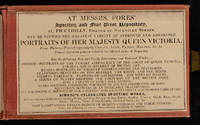
05481London: Messrs. Fores 1838. Queen Victoria's Coronation Procession in Scarce Panorama<br /> One of the Earliest Examples of Royal Memorabilia<br /> An Exceptional Example<br /> <br /> PANORAMA. VICTORIA Queen of England 1819-1901. Fores' Correct Representation of the State Procession on the Occasion of the August Ceremony of Her Majesty's Coronation June 28th 1838. Sixty Feet Long. Price £1. 11s. 6d Coloured 16s Plain. Also Accurate Views of the Interior of the Abbey During the Ceremony. London: Published by Messrs. Fores at their Sporting & Fine Print Repository and Frame Manufactory August 20 1838. <br /> <br /> First and only edition and issue. Small oblong quarto cover size: 4 13/16 x 7 7/8 inches; 122 x 200 mm. Thirty-three hand-colored sections in a continuous strip 4 x 675 inches; 103 x 17145 mm. of the full procession scene in aquatint. <br /> <br /> Publishers pink ribbed cloth covers bordered in blind front cover decoratively stamped and lettered in gilt with a border of crowns and flowers smooth spine decoratively tooled in blind. Small booksellers ticket of "R. Ackermann Junr." and small label wit "PP 2/ 1952" on front paste-down. Complete with the original brass clasp and catch. The spine very slightly faded still an exceptional example - apparently rarely handled.<br /> <br /> On June 20 1837 King William IV died and his niece Princess Victoria became Queen at the age of 18. Her coronation was held at Westminster Abbey a year later on June 28 1838; this panorama illustrates her procession to Westminster. The coronation was a huge occasion for celebration and four hundred thousand visitors descended upon London to see the new Queen being crowned. <br /> <br /> In her diary the nineteen-year-old Victoria set down an account of this the greatest day in her young life:<br /> <br /> "I was awoke at four o'clock by the guns in the Park and could not get much sleep afterwards on account of the noise of the people bands etc. etc. Got up at seven feeling strong and well; the Park presented a curious spectacle crowds of people up to Constitution Hill soldiers bands etc. I dressed having taken a little breakfast before I dressed and a little after. At half-past nine I went into the next room dressed exactly in my House of Lords costume."<br /> <br /> "At 10 I got into the State Coach with the Duchess of Sutherland and Lord Albemarle and we began our progress. It was a fine day and the crowds of people exceeded what I have ever seen; Their good humour and excessive loyalty was beyond everything and I really cannot say how proud I feel to be the Queen of such a nation.<br /> <br /> ". After the ceremony At about half-past four I re-entered my carriage the Crown on my head and the Sceptre and Orb in my hands and we proceeded the same way as we came-the crowds if possible having increased. The enthusiasm affection and loyalty were really touching and I shall ever remember this day as the PROUDEST of my life! I came home a little after six really not feeling tired. At eight we dined."<br /> <br /> "On the day of Queen Victoria's coronation four hundred thousand visitors descended on London to see the new queen. Fores publishing house had been established in the 1780s by Samuel William Fore 1761-1838 with his shop in Piccadilly London. It specialized in caricature and memorabilia and was at one time reputed to have the largest collection of caricatures." Bobins.<br /> <br /> Abbey Life 539; Bobins IV 1303. London: Messrs. Fores, 1838 unknown
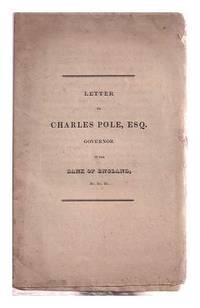
1820342776Publisher; Unknown 1820. First edition. Softcover. Specimen color/red plates 1 5 & 10 pound notes printed on single and double sides loosely inserted. Good copy; edges slightly nicked and dust-dulled as with age. An unread example with unopened pages. Remains particularly well-preserved overall; bright and clean. Additional scans and bibliographic detail on request. Date of publication is suggested. Physical description; 14 pp. Dis-bound as issued. Subjects; Bank of England.1800-1850. Bank notes - original currency samples -Great Britain. Banks and banking Central Great Britain. Currency - counterfeit and fraudulent - currency - forgery - nineteenth century. Currency printing - authentic registers. Pole served as Bank governor from 1820-1822 only. Publisher; Unknown paperback
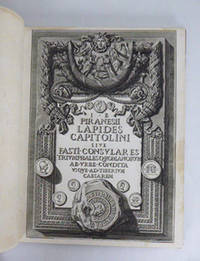
51-6269Roma: Nella Stamperia di Generoso Salomoni 1762; Veneunt apud Auctorem aedibus Comitis Thomati via Felice prope templum SS. Trinitatis in Monte Pincio; . Folio. 40 x 52.7cm. Half 19th Century polished calf with marbled boards.Wilton-Ely D.IV nos. 553-558. The large folding plate "Senatus Populusque Romanus Monumenta. The Senate and People of Rome Wilton-Ely 558 is now in a sleeve bound-in for ease of removal and display. Engraved title engraved dedication large folding engraved plate with fabric repair to verso and a couple of small tears or wear-through holes at folds engraved vignettes light staining to half-title initial ff. and plates with small damp-stain to fore-edge margin 1762. very light scattered marginal spots or soiling book-plate to front pastedown "Collegii Sancti Cuthberti" c.f. Brunet IV 672. Roma: Nella Stamperia di Generoso Salomoni, 1762; Veneunt apud Auctorem aedibus Comitis Thomati via Felice prope templum SS. Tri hardcover
2025__0323957021Academic Pr 2025. Hardcover. New. 3rd edition. 4740 pages. 10.87x8.50x1.14 inches. Academic Pr hardcover
18961812240048Boston Mass. : Published by the New-England Historic Genealogical Society 1896. First Edition. Hardcover. Very Good. Signed. The Tan Book series: Massachusetts Genealogy 182 volume set. Hardcovers. A massive collection of many of the towns in Tan Book series. Census information births marriages deaths. Contains the Vital Records of the following Massachusetts towns: Acton; Alford; Amesbury; Andover vols 1-2; Arlington; Ashfield; Ashburnham; Athol; Barre; Becket; Bedford; Beverly vols 1-2; Billerica; Brimfield; Bolton; Boxford; Bradford; Brockton; Brookfield; Burlington; Canton; Carlisle; Cambridge Vols 1-2; Charlemont; Charlestown Vol 1. Newer printing; Charlton; Chatham NP 1991; Chelmsford; Chelsea NP; Chester; Cohasset; Conway; Dalton; Danvers vols 1-2; Dartmouth Vos. 1-3; Deerfield; Dennis Vols. 1-3 np; Dorchester South; Douglas; Dracut; Dudley; Dunstable; Edgartown 2 vols; Essex; Falmouth Picton Press 1993; Framingham; Gardner; Gloucester vols. 1-3; Grafton; Granville; Great Barrington; Greenfield; Groton vols. 1-2; Hamilton; Harvard; Harwich Harwick Historical Soc 1982; Haverhill vols. 1-2; Heath; Hinsdale; Holden; Holliston; Hopkinton; Hubbardston; Hull; Ipswich Vols. 1-2; Lee; Leicester; Leominster; Lexington; Lowell Vols. 1-4; Lynn Vols. 1-2; Kingston; Malden; Marblehead Vols. 1-3; Marlborough; Manchester; Medford; Methuen; Middleborough Mass. Soc. Mayflower Desc. 1986 Vols 1-2; Middleton; Middlefield Vols. 1-4; Nantucket Vols. 1 3-5; New Ashford; New Bedford Vols. 1-2; New Braintree; Newbury vols. 1-2; Newton; Northbridge; Norton; Oakham; Palmer; Pelham; Pembroke; Petersham; Phillipston; Princeton; Plympton; Reading; Richmond; Rowley; Roxbury Vols. 1-2; Royalston; Rutland; Salem Vols. 1-6; Salisbury; Saugus; Shelburne; Shirley; Shrewsbury; Southborough; Southbridge Holbrook NP; Spencer; Stoneham; Stoughton; Stow; Sturbridge; Sudbury; Sutton; Taunton Vols. 1-3 vol 1; Templeton; Tewksbury; Tisbury; Topsfield; Tyngsborough; Tyringham; Webster Holbrook np; Wakefield; Warren; Washington; Wayland; Wenham; Westborough; West Bridgewater; West Boylston; Westford; Westminster; West Newbury; Westport; West Stockbridge; Weymouth Vols. 1-2; Winchendon; Windsor; Williamstown; Worthington; Upton; Uxbridge. Note: 9 of the volumes later printings as indicated. This is an oversized or heavy book which requires additional postage for international delivery outside the US. Boston, Mass. : Published by the New-England Historic Genealogical Society, hardcover
1611805London: Robert Barker 1611. Leather Bound. Very Good . 9 x 13 1/4 inches. Folio. 78 of 80 pages. Lacking title page. Griffiths 1611/2. Bound with: The Bible: That is The holy Scriptures contained in the Old & New Testament. London: Robert Barker 1612. 4 362 OT 361-444 Apocrypha 135 NT 7 tables leaves. Collates as A 4 leaves A-Lll in 6s Mmm - Ooo in 8s Ppp - Eeee in 6s Ffff 4 leaves. Engraved title page with old repair to closed tear at bottom. Full page woodcut of Garden of Eden presentwith loss to lower outer corner of image. B6 with old manuscript repair to loss at outer corner. Lacks 2Z3.4 Isaiah 17:13-24:18. Herbert 312. STC 2218. NT with separate title page dated 1611. Printed in two column Roman type. Bound with: Sternhold Thomas and John Hopkins. The Whole Booke of Psalmes: Collected into English Meeter. London: Printed for the Company of Stationers 1612. 114 6 of 8 pages. Collates as A-K in 6s L 1 of 2 leaves lacking index. STC 2539. Endpapers with 17th and 18th Century owners' inscriptions. Some marginal soiling and minor dampstains. Bound in contemporary brown calf with blindstamped arabesque centerpiece on covers brass corner pieces catches and clasps now lacking. Covers with old repairs and modern professional rebacking. A very good collection of the BCP of James I with the Geneva/Breeches Bible and Psalmes in folio with brass hardware. More complete than the copy located in Hills. Robert Barker unknown
1967List2885Sheffield United Kingdom 1967. 20 x 30 inch poster on heavy cardstock. Some staining and scuffing pinholes and some tears at edges fine contrast; overall excellent. A poster advertising Stevie Wonder at Sheffield’s Mojo Club in October 1967. Wonder would have been just seventeen at the time though he had already dropped “Little†from his stage name. The Mojo Club in working-class Sheffield was the project of brothers Peter and Geoff Stringfellow; the pair had previously worked as promoters and were preternaturally talented having booked the Beatles for April of 1962 shortly before the release of “Love Me Doâ€.1 Stevie Wonder would be the last live act at the Mojo as it was shut down by the city three days later on October 10.<br /> <br /> 1 Steve Walker “The King Mojo Club†2020 https://www.kingmojostory.com. unknown
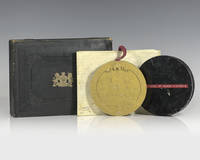
108053Rare wax Great Seal of Queen Victoria presented with a large elaborately illustrated patent granted to William Edward Newton. Housed in a custom metal case the patent measures 7 inches in diameter and depicts Queen Victoria on the Royal Throne flanked by two ladies in waiting. The seal is affixed to the patent with a red braided twine. Partially printed on vellum the patent is dated 1858 and grants William Edward Newton the rights to his invention which made "improvements in the hanging and arranging of cylindrical conical or spiral steel railroad springs for Railway carriages" with elaborate engraved royal and botanical headpieces and borders and the original blue paper seal. Housed in the original royal presentation box with gilt royal coat of arms. In near fine condition. hardcover
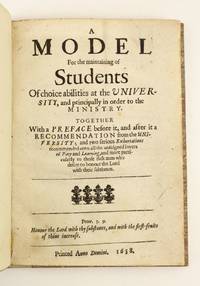
1658ST16442s.l.: s.n. Printed Anno Domini 1658. FIRST EDITION. 190 x 135 mm. 7 1/2 x 5 3/8". 3 p.l. 14 pp. complete. <br/> 20th century vellum-backed marbled boards flat spine with vertical titling. Front pastedown with bookplate of the Fox Pointe Collection. Wing P-2842B; ESTC R207754. ◆Text lightly washed and pressed but still crisp faint foxing to lower edge of title page otherwise a fine fresh copy in an unworn binding.<br/> <br/> Written by an opinionated English cleric this is an extraordinarily rare pamphlet proposing an unusual fund to support young 17th century scholars. According to DNB the scheme outlined in the present work was meant "to support the university studies of young men of promise seeking entry into the ministry." The plan "was approved by John Worthington and Anthony Tuckney and had the support also of John Arrowsmith DD Ralph Cudworth William Dillingham DD and Benjamin Whichcote. The fund raised about £900 and it appears that William Sherlock afterwards dean of St Paul's received assistance from this fund during his studies at Peterhouse Cambridge until 1660 when he graduated BA. Those entrusted with administering the fund sent Poole regular reports on students interviewed and the ratings they had received in philosophy logic and languages. The scheme was abandoned at the Restoration." Poole 1624 - 79 was the author of a number of controversialist pamphlets on subjects ranging from Unitarianism to preaching by lay persons before undertaking his major work: a synthesis of critical biblical commentaries "Synopsis criticorum aliorumque sacrae scripturae interpretum." This is one of his scarcest writings: ESTC lists seven copies two in North America while ABPC and RBH record just two copies at auction. s.n. Printed Anno Domini unknown
110370London Fores 1840. . Hand-coloured aquatint panorama heightened with gum arabic c. 10.5 x 626 cm. on conjoined sheets and folding concertina-style split into 2 parts with first half attached to front board and second part to rear one fold reinforced some light soiling; folding into modern cloth folder preserving original upper cover titled and decorated in gilt and with metal clasp with publisher's original paper label to front pastedown upper cover rubbed and a little stained lacking lower clasp<br /> Fine panorama of Queen Victoria's wedding to Prince Albert of Saxe-Coburg-Gotha in 1840 at the Chapel Royal at St. James's Palace resplendent with the pomp and ceremony one might expect from the first marriage of a reigning English Queen since Queen Mary in 1554. Queen Victoria was just 21 at the time and her husband a few months younger. They were married for 21 years during which time they had 9 children.<br /> Abbey Life 546; Bobins 1304 this copy. London, Fores, 1840. hardcover
52450<p>London Printed for J.C. 1645. TITLE CONTINUED: Who hath brought in 4. of the Kings collonels to the Parliament; with the whole proceedings of Rupert's perambulation from the King at Newark and his return to Woodstock with 400. Horse. And how cruelly they used Captain Pickering during the treatie; who by the help of Collonel Willis Collonel Honywood Collonel Fisher and Collonel Roulston is now returned safe to the Parliament and hath brought them in from the King. With Rupert's letter to the King about a bloody massacre. Die Saturn. Decemb. 13. 1645. Appointed to be printed and is published according to order. CIVIL WAR PAMPHLET 1645. FIRST EDITION small 4to approximately 175 x 130 mm 7 x 5 inches pages: 1-8 ornamental title page modern half morocco over cloth sides by Bayntun of Bath gilt title and date to spine new cream endpapers speckled edges padded out with blank paper gilt lettered red leather book label of Austin Smith to top of front pastedown contemporary old ink marginalia to fore margin of last page and a pointing hand in opposite margin. A very good crisp pamphlet. George Thomason Catalogue of the Pamphlets Books Relating to the Civil War 1640-1661 Volume 1 page 403 Oct. No. E 311. 27; ESTC R200645 lists 6 copies; Wing Short-Title Catalogue Volume 1 page 162 No.3294. MORE IMAGES ATTACHED TO THIS LISTING ALL ZOOMABLE FURTHER IMAGES ON REQUEST. POSTAGE AT COST.</p> London, Printed for J.C., 1645. hardcover
17500009001London England Britain UK. Good. 1750. Vellum. On offer is an exemplary and rare Latin copy of the Thirty-Nine Articles of Religion the defining statements of doctrines and practices of the Church of England and one of the most important religious documents of history. While the Articles themselves were formulated in the mid-1500s this particular book dates back to c.1700. The Articles were issued in both Latin and English. The entirety of this book is written in Latin. There is a vellum cover still fully intact though there are small tears at the ends and discoloration due to age. Written on the front cover and continued on the back are a table of contents for all 39 articles. They begin with I. De Fide in sacrosanctam Trinitatem. and ending with XXIX. De Christiani Juramento. The writing is still extremely clear. Smudging or discoloration of the text throughout the entire book is non-existent. The book is roughly 160 pages long. It has been sewed together using a 3-hole pamphlet stitching. There are also some anomalies throughout. Many pages contain tiny pieces of paper sewn in that have extra writing on them. One of them reads Christ a true sacrifice vide Eph: 20 which translates to Christs sacrifice see: Ephesians: 20. Another reads vide Art: XXI. Prop: V. These little notes seem to be addendums and cross-references that the owner most probably put in himself. While most pages are fully filled with text a few pages are mostly blank with some writing on the top De sexta propositione and a blank space under which the owner meant to continue writing but did not. History: When Henry VIII broke with the Roman Catholic Church and was excommunicated in 1538 he formed a new Church of England which would be headed by the monarch himself rather than the pope. The Thirty-nine Articles of Religion were initiated by the Convocation of 1563 under the direction of Matthew Parker the Archbishop of Canterbury. The articles pulled back from some of the more extreme Calvinist thinking and created the peculiar English reformed doctrine. Adherence to the Articles was made a legal requirement by the English Parliament in 1571 and incorporated into the Anglican Book of Common Prayer. Although not the end of the struggle between Catholic and Protestant monarchs and citizens the book helped to standardize the English language and was to have a lasting effect on religion in the United Kingdom and elsewhere through its wide use. ; Manuscript; 8vo - over 7¾" - 9¾" tall; KEYWORDS: HISTORY OF THIRTY-NINE ARTICLES OF RELIGION 39 ARTICLES XXXIX ARTICLES ANGLICAN CHURCH CHURCH OF ENGLAND LATIN BOOK HENRY VIII THOMAS CRANMER EXCOMMUNICATION NON VERNACULAR RELIGION RELIGIOUS DOCUMENT PROTESTANT REFORMATION UNITED . hardcover
1633457London: Robert Barker and Assignes of John Bill 1633. Leather Bound. Very Good. 9 1/2 x 13 3/4 inches. Folio. 2 ffep A - b 4 leaf quires B - H 6 leaf quires I 4 leaf quire. Title page cropped and relaid with loss to imprint. Marginal loss to A3 not affecting text. Griffiths 1633/2. Bound with: The Holy Bible Containing the Old Testament and the New Authorised/KJV version. London: Robert Barker and Assignes of John Bill 1633. 10 327 numbered leaves OT 328-403 of 404 Apocrypha 406-507 NT. Engraved title to Bible closely cropped at fore-edge. Lower half of last leaf of preface A8 lacking. Folio 1 of OT with lower marginal loss affecting text. 163 with loss of lower quarter. Old repairs to marginal tears on a few pages. Occasional closed tear or marginal loss with no loss of text and minor soiling and old marking. Folio 108 misnumbered 118 117 as 61 148 as 184 152 as 154 216 as 215 224 as 223 225 as 226 232 as 231 233 as 237 234 as 238 235 as 246 then resuming at 236 as 240 due to the misfoliation noted in Herbert 249 as 242 302 as 281 379 as 378 392 as 372 452 as 470. The general title reflects the alteration of "1632" to "1633" noted in Herbert. NT colophon dated 1632. Herbert 466. Bound with: Sternhold Thomas and John Hopkins. The Whole Booke of Psalmes Collected into English Meeter. London: Printed by R. Badger for the Company of Stationers 1632. Title page 1 - 114 numbered pages 2 rfep. 35 and 36 misnumbered. ESTCS122383. All edges rouged. Marbled endpapers. Front pastedown with armorial bookplate of Thomas Whitmore and 1 ffep with 18th Century Whitmore family records. Bound in later Georgian full paneled reverse calf. Spine with six raised bands and red morocco spine label with gilt "Holy Bible" and border. Chipping to head and tail of spine and hinges starting. Rounding to corners with minimal loss. An excellent copy of the 1552 English BCP and KJV Bible. Normally found in quarto this much scarcer folio edition in a Georgian binding. Robert Barker and Assignes of John Bill unknown
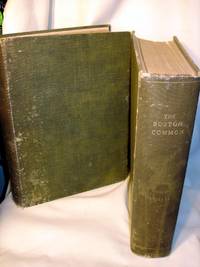
191316729<p>Good HCs no DJs. 2 volume set. Green-brown buckram cloth over boards gilt stamped titles on spines. Covers are scuffed with uneven fading and some spotty stains; some rubbing at spine ends and fore corners light fraying; both volumes tightly bound; interiors are clean with slight general age darkening; all leaves are supple not brittle; cover leaf of final issue has short closed tear at mid-cover. Issues run from Vol 1 No 1 April 30 1910 through Vol 3 No 37 January 11 1913 presumably a complete run. Liberal-reformist weekly newspaper ran 1910-1913. Initial editor was Edward H. Clement thereafter Livy S. Richard. 100 shareholders held 1 share each. Exec. Comm: Ralph Albertson William E. Butler Alexander M. Wilson Robert Treat Paine Jr Charles M. Cabot. Many unsigned articles on local state and national affairs - political and social; some signed articles including writers: Mayor John F. 'Honey Fitz' Fitzgerald JFK's grandfather and mentor Gov. Curtis Guild Sen. Jonathan Bourne Jr Helen Campbell Frank Chouteau Brown Livingston Wright Everett B. Mero many others. Articles on politicians sports recreation architecture national politics railroads trusts reform movements theater socialism ranked voting planning development education and schools Henry Cabot Lodge Roosevelt law and the courts sanitation health laws much more. Fairly heavily illustrated in earlier issues less so later. Large 4to; paged by issue approx 1100 total pp. Cf OCLC #10741554.</p> Boston: Co-operative Publishing Company hardcover
166234668<p>London: Printed by James Flesher for R. Royston Book-seller to His most Sacred Majesty. 1662; 1662. 2 volumes bound in one. First Edition. Illustrated with superb folio plates engraved on copper a frontispiece "Dieu et Mon Droit" depicting the Royal Coat of Arms and engraved illustrated title-page a double-page illustration showing Charles and the ship of state another double-plate showing the 'Bramble speaking to the Trees' and another double-page plate of the Cedar showing the apostolic delineations a final plate showing the Earl of Clarendon the engravings and title-pages throughout bordered with double and triple-ruling in red collated complete. Large Thick Folio 14" x 9.25" handsomely bound in the original contempoaray polished speckled calf the spine with raised bands over cords double ruled in gilt red morocco lettering label bgilt central gilt ornamental devices in the compartments. 2 frontispiece and engraved title xii 120 2 458 2; viii 733 4 Table plates pp. An unusually fine survival still retaining its original binding. The text-block and illustrations all crisp and clean and unpressed the binding still strong and in a a very pleasing state of preservation. An especially pleasing copy. FIRST EDITION OF THE MOST COMPLETE OF ALL WORKS ON KING CHARLES I OF ENGLAND AND THE KINGDOM. Charles I 1600 – 1649 was King of England Scotland and Ireland from 27 March 1625 until his execution in 1649.<br />Charles was born into the House of Stuart as the second son of King James VI of Scotland. After his father inherited the English throne in 1603 he moved to England where he spent much of the rest of his life. He became heir apparent to the kingdoms of England Scotland and Ireland in 1612 upon the death of his elder brother Henry Frederick Prince of Wales.<br />After his accession in 1625 Charles quarreled with the English Parliament which sought to curb his royal prerogative. He believed in the divine right of kings and was determined to govern according to his own conscience. Many of his subjects opposed his policies in particular the levying of taxes without Parliamentary consent and perceived his actions as those of a tyrannical absolute monarch. His religious policies coupled with his marriage to a Catholic generated antipathy and mistrust from Reformed religious groups such as the English Puritans and Scottish Covenanters who thought his views too Catholic. He supported high church Anglican ecclesiastics and failed to aid continental Protestant forces successfully during the Thirty Years' War. His attempts to force the Church of Scotland to adopt high Anglican practices led to the Bishops' Wars strengthened the position of the English and Scottish parliaments and helped precipitate his own downfall.<br />From 1642 Charles fought the armies of the English and Scottish parliaments in the English Civil War. After his defeat in 1645 at the hands of the Parliamentarian New Model Army he fled north from his base at Oxford. Charles surrendered to a Scottish force and after lengthy negotiations between the English and Scottish parliaments was handed over to the Long Parliament in London. Charles refused to accept his captors' demands for a constitutional monarchy and temporarily escaped captivity in November 1647. Re-imprisoned on the Isle of Wight he forged an alliance with Scotland but by the end of 1648 the New Model Army had consolidated its control over England. Charles was tried convicted and executed for high treason in January 1649. The monarchy was abolished and the Commonwealth of England was established as a republic. The monarchy was restored in 1660 with Charles's son Charles II as king.<br />Archbishop William Laud whom Parliament beheaded during the war called Charles a "mild and gracious prince who knew not how to be or how to be made great." Charles was more sober and refined than his father but he was intransigent. He deliberately pursued unpopular policies that brought ruin on himself. Both Charles and James were advocates of the divine right of kings but while James's ambitions concerning absolute prerogative were tempered by compromise and consensus with his subjects Charles believed he had no need to compromise or even to explain his actions. He thought he was answerable only to God. "Princes are not bound to give account of their actions" he wrote "but to God alone". wiki</p> Printed by James Flesher for R. Royston, Book-seller to His most Sacred Majesty. hardcover
2689Oxford: Printed by Thomas Baskett Printer to the University 1753. Hardcover. Good. Octavo. No pagination. Final leaf: Bb3. Contemporary red morocco repaired. With 47 engraved plates most likely by Frederick Hendrick van Hove. ESTC T182569. ESTC records a copy in Scotland three at Oxford some in private collections one in Australia but none in the US. Tear in title-page not affecting text. Bound with: The Whole Book of Psalms Collected into English Metre. London: Printed by C. and J. Ackers for the Company of Stationers 1753. <br/> <br/> Oxford: Printed by Thomas Baskett, Printer to the University, 1753. hardcover
1615611London: Printed by Robert Barker 1615. Leather Bound. Very Good . 7 x 8 1/2 inches. 4to. B 10 leaves C-E in 8s. Lacks preliminaries. Begins with Communion. Griffiths 1615/4. Bound with: The Bible that is the Holy Scriptures conteined in the Old and New Testament translated according to the Ebrew and Greeke and conferred with the best translations in diuers languages; with most profitable annotations vpon all hard places and other things of great importance Geneva/Breeches version. London: Robert Barker 1615. Collates as 4 leaves of NT Preliminaries before BCP A-Hhh in 8s Iii 2 leaves Kkk-Yyy in 8s Zzz 10 leaves. General title lacking. Bible text complete with light dampstain throughout. A few pages with old ink marks or stains tears or repairs without loss of text. Top margin closely cropped on some pages. NT title page and preliminaries bound before BCP. Herbert 340/341. Bound with: Robert Herrey Two Right Profitable and Fruitfull Concordances or Large and Ample Tables Alphabeticall. London: Printed by Robert Barker 1615. 158 of 164 pages. Collates as A - I in 8s K 7 of 8 leaves. ESTCS122242. Bound with: Sternhold Thomas and John Hopkins The Whole Book of Psalms. Cambridge: John Field 1666. 34 pages with final blank. Lacks title page. Printed in unusual four column Roman type. Printing information from ESTCR17943. Prior owner's name John Adcock 1683 on endpapers in fancy script. Bound in full period brown leather with remnants of clasps and deep blindstamped central lozenges to covers. Professionally rebacked with original spine relaid new sewn headbands and new endpapers. The last Black Letter Geneva Bible in Quarto bound with a version of the 1552 English BCP. Printed by Robert Barker unknown
1585456London: Printed by Christopher Barker 1585. Leather Bound. Very Good. 7 x 9 inches. 4to. ¶3 - ¶8 A - E 8 leaf quires F 5 leaves. Lacks title page and following leaf. Scattered stains and soiling mostly at margins. Small darker stain at top margin. Loss to lower forecorner of B8 affecting about 12 lines of text. Kalendar printed in red and black. Colophon at end with ownership inscription of John Purkiss dated February 1 1768. Griffiths 1585/3. Bound with: The Holy Bible Geneva/Breeches version. London: Printed by Christopher Barker 1585. A-3H 8 leaf quires 3I 2 leaf quire 4 leaves 3K-3Y 8 leaf quires 3Z 10 leaf quire. Printed in two column black letter type. Occasional small closed tear with no loss and a few marginal notes shaved esp. 3O. Lacks preliminaries and 3P4&5. 18th Century notes regarding Purkiss family on verso of NT title page. Herbert 187 following Herbert 165 and Herbert 170. Bound with: Herrey Robert F. Two right profitable and fruitfull Concordances or large and ample Tables Alphabeticall. London: Imprinted by Christopher Barker 1585. A-L 8 leaf quires M 4 leaf quire. Bound with: Sternhold Thomas and John Hopkins. The Whole Booke of Psalmes Collected into English meetre. London: Assignes of Richard Day 1585. A - G 8 leaf quires lacking G6 - G8. Last few pages tatty with slight loss of text. ESTCS90640. Bound in dark brown paneled calf with recent sympathetic rebacking with four raised bands offset by gilt rules. An excellent copy of the 1552 English BCP and Geneva Bible. Both standards for many American colonists. Printed by Christopher Barker unknown
1630482London: Printed by Robert Barker and the Assignes of John Bill 1630. 3/4 leather. Very Good. 7 x 9 inches. 4to. 84 of 92 pages. A 8 leaves B 10 leaves C - E 8 leaves. Printed in two column black letter. Lacks title page title page for The Whole Booke of Psalmes Collected into English meetre by Thomas Sternhold John Hopkins and others. . . dated 1600 bound before BCP and preliminaries. Griffiths 1630/7. ESTCS123192. Bound with: The Bible: translated according to the Ebrew and Greeke and conferred with the best translations in diuers languages. Geneva/Breeches version. London: Robert Barker 1602. 2 434 4 441 - 554 leaves. Printed in two column black letter. Title page with old tissue repairs to margin and lower portion of text. Closed tears to 335 and 462 loss to top corner of 9-11 32 324 and 392. Loss to bottom of 131 145 198 210 235 248 454 458 459 486 and 546 and to top half of 165. Lacks 50 G2 220 252 253 and 289. Several pages misnumbered. Herbert 269. ESTCS116971. Bound with: Herrey Robert. Two right profitable and fruitfull concordances or large and ample tables alphabeticall. London: Robert Barker 1602. 162 of 164 pages. Collates as A - K 8 leaf quires L2. Lacks K8. ESTCS102034. Compare ESTCS5161 signature of B4 under "it" of "habitation". An occasional light stain smudge or mark but generally clean. Bound in modern 3/4 dark brown calf with red spine label and five raised bands to spine. A very good copy of the original 1552 English BCP bound with a Geneva/Breeches Bible and Psalms. A staple of many American colonists. Printed by Robert Barker and the Assignes of John Bill unknown