Innovation and Entrepreneurship
ria9781394219704_inpPaperback / softback. New. New Book; Fast Shipping from UK; Not signed; Not First Edition; N/A paperback
Ria Christie Collections · Royaume-Uni66,17 £GB≈ 75,55 €
16 759 résultats
13-1361London & New York: Butterick Publishing Co. 1895. 8vo. Soft Covers 93 pp. Black and White Illustrations. Good with loss to one page tears to a few others.Scarce. London & New York: Butterick Publishing Co., 1895. paperback
ria9781394219704_inpPaperback / softback. New. New Book; Fast Shipping from UK; Not signed; Not First Edition; N/A paperback
71-5513London: Thos. Agnew and Sons Ltd. 1974. 8vo. 76 pp. Soft Cover. Stapled binding. Black and white illustrations throughout. Very Good minor surface rubs. London: Thos. Agnew and Sons Ltd., 1974. paperback
1966024986Chicago Illinois: W. B. Thorsen 1966. New and unread copy of the FIRST EDITION. NO owner's name or address label. Very mild age toning. This copy is from the publisher's surplus inventory which we acquired along with the magazine's archives -- now housed at the John Hay Library Brown University Providence Rhode Island. Vol. XVII #3 Nov. 1966. Joan London one of Jack London's daughters contributes "W. H. Chaney A Reappraisal" and "The London Divorce." There are other essays by Philip Foner Clell Peterson Frank Fuller Tony Bubka etc. Hal Waters' "Anna Strunsky and Jack London" is based on exclusive interviews with her. Hensley Woodbridge supplements with 121 additions the Woodbridge/Tweney bibliography of Jack London. Charles Heartman's American Book Collector lasted 36 issues before publication ceased in 1935. In 1950 William B. Thorsen began a new magazine called The Amateur Book Collector. However he soon received permission from Heartman's widow to change the name to American Book Collector. There were 233 issues published before its demise in 1976. A third incarnation of the American Book Collector unrelated to the others appeared in 54 issues between 1980 and 1987. . First Edition. Softcover. New. Illus. by NOT a library discard. Great Packaging Fast Shipping. W. B. Thorsen Paperback
1019816910.Ghardcover. Good. Access codes and supplements are not guaranteed with used items. May be an ex-library book. hardcover
19410844like new. unknown
265111825-1929. Fifteen partnership agreements indentures memoranda articles of copartnership relating to the London banking firm of Thomson Hankey & Co. dating from between 1825 and 1929.Having traded with Jamaica Antigua and the Leeward Islands in partnership with John Houblon. Captain Samuel Hankey commenced in business as a City of London banker-goldsmith in 1685. The firm prospered to such an extent that his son Henry owned Jonathan's Coffee House in Exchange Alley the precursor of the London Stock Exchange and was knighted in 1732. Its fortunes continued to flourish with the slave trade and by the early 1820s its headquarters at 7 Mincing Lane in the City of London handled the accounts of a number of prominent proprietors of West Indian plantations including William Beckford. As an indication of the family's continuing prosperity the wealth of Thompson Hankey senior 1773-1855 grandson of Sir Thomas Hankey was stated at his death to be 'within province' of the fabulous sum of £140000.The present collection of fifteen items documents the changes within the firm over the course of a century and includes details of business and financial arrangements and capitalization. There are references to estates in West Indies in the following items: One Robert Henry Church's Grenville Vale Estate and William Foreman Home's Waltham Estate both on Grenada an island with which the Hankey family had a strong connection Two Grenville Vale and Eleven Duckinfield Hall sugar plantation Jamaica and Craignish Estate Trinidad.The collection consists of twelve manuscript items - two of which Three and Four are on vellum - two printed items Thirteen and Fourteen with two copies of the latter and one typewritten item Fifteen. The collection is in good condition on aged and worn paper. One of the vellum indentures Item Three is slightly damp-stained and Item Six has been repaired with archival tape.ONE 1825: Memorandum of agreement of 'heads for a copartnership to serve till regular partnership articles shall be executed'. 30 June 1825. Signed by Thomson Hankey and witnessed by Richard Henry Jones. 'Whereas Thomson Hankey of Mincing Lane London hath for some years been engaged in business as a West India Merchant and having agreed to admit his nephew John Alexander Hankey as his partner in his said business the undermentioned heads for a co-partnership to serve till regular partnership articles shall be executed have been agreed on between them and to commence on the 1st. July of this year 1825 under the firm of Thomson Hankey & Company. … The Co-partnership shall assume as partnership debts the amount due by Mr. Robert Henry Church to the said Thomson Hankey on Mortgage of his Estate of Grenville Vale in Grenada and also the amount due by Mr. William Foreman Home of Paxton NB Proprietor of Waltham Estate in Grenada'. Wrapped with the following item in a piece of paper marked in a contemporary hand 'Partnership Agreements'.TWO 1826: Memorandum of agreement between Thomson Hankey and John Alexander Hankey that 'Thomson Hankey Jnr. shall be admitted as a Partner on and from the first day of July 1826'. Signed by the three and witnessed by Richard Henry Jones. As with the last item Thomson Hankey is said to have been 'for many years Trading under his own name as a West India Merchant'. Mention is also made of 'the loan made to Mr. Church on Mortgage of Grenville Vale'THREE 1837: Indenture: 'Articles of Copartnership Between Messrs: Thomson Hankey the Younger John Plummer and William Wilson'. 17 March 1831. 'Deed poll endorsed on George Hankey Esqre being introduced into the Partnership of Messrs. Hankeys Plummer & Wilson dated 29th. March 1837'. On four vellum skins with endorsement on reverse of first skin. Signed and sealed by all parties with the usual stamps and ribbons.FOUR 1840: Indenture between John Alexander Hankey Thomson Hankey the younger William Wilson and George Hankey all merchants of Mincing Lane in the City of London stating the twenty-five terms by which 'they the said John Alexander Hankey Thomson Hankey William Wilson and George Hankey and the survivors of them will become and be Partners and Joint Traders in the Business of Merchants from the thirtieth day of June now last past'. 31 December 1840. On three vellum skins folded and stitched to make eleven pages of folio size. Signed and sealed by all parties with the usual stamps. Mention is made of 'Beaumont Hankey the brother of the said Thomson Hankey and George Hankey'.FIVE 1840: 'Epitome of Deed of Partnership dated 31 December 1840 between John Alexander Hankey Thomson Hankey Junior William Wilson and George Hankey'. Term relating to Beaumont Hankey marked as 'Not wanted'.SIX 1840: 'Memorandum made the thirty first day of December One thousand eight hundred and forty 31 December 1840 Between John Alexander Hankey Thomson Hankey Junior William Wilson and George Hankey Esquires'.SEVEN 1868: 'Heads of Articles of Partnership George Hankey Rodolph Alexander Hankey Richard Musgrave Harvey Walter Hankey. 1868.EIGHT 1868: 'Memorandum as to future division of Shares between George Hankey Rodolph Alexander Hankey Richard Musgrave Harvey Walter Hankey.' 31 January 1868. Signed by the four parties.NINE 1896: 'Heads of Articles of Partnership Rodolph Alexander Hankey Richard Musgrave Harvey Henry Grey Gurney. 6 July 1881. With Legacy and Succession Duty Office 'Memorandum' following H. G. Gurney's death 1896.TEN 1896: 'Heads of Articles of Partnership Rodolph Alexander Hankey Richard Musgrave Harvey Cyril Gurney'. 19 June 1896.ELEVEN 1897 1900: 'Agreement and Covenant supplemental to Articles of Partnership Rodolph Alexander Hankey Richard Musgrave Harvey Cyril Gurney'. 11 January 1897. With ALS from Gurney 24 July 1900 and two receipts both from 1900. 'Whereas the basis of terms stated in the principal Agreement was a certain Balance Sheet including amongst other assets the Estates of Duckinfield Hall and Craignish both in the West Indies the value of the former Estate being therein stated at Ten thousand one hundred and seventeen pounds eighteen shillings and eight pence and the value of the latter Estate being therein stated at Ten thousand four hundred and nineteen pounds three shillings and five pence. … each of the three Partners are satisfied that the said Estates were over valued and have determined that their respective values at the date of the principal Agreement shall be estimated to be Seven thousand five hundred pounds only'.TWELVE 1900: 'Heads of Articles of Partnership Rodolph Alexander Hankey Cyril Gurney Lionel Musgrave Harvey Henry Alexander Trotter'. 2 July 1900.THIRTEEN 1903: Printed 'Articles of Partnership Rodolph Alexander Hankey Cyril Gurney Lionel Musgrave Harvey Henry Alexander Trotter' drawn up by Bompas Bischoff Dodgson Coxe & Bompas 4 Great Winchester Street London EC. 2 November 1903. Signed and sealed by the four parties.FOURTEEN 1928: Printed 'Copy Articles of Partnership Henry Alexander Trotter Christopher William Gurney Stephen Trevisa Sale Clarke' drawn up by Baker & Nairne 3 Salters Hall Court Cannon Street London EC4. 25 October 1928. 2 copies.FIFTEEN 1929: Typed 'Draft BOND of surviving partners Henry Alexander Trotter Christopher William Gurney in THOMSON HANKEY & CO: to secure payments of the share of the deceased Lionel Musgrave Harvey and for Indemnity against the Partnership Liabilities'. Drawn up by Williams & James Norfolk House Embankment London WC2. By this bond we Henry Alexander Trotter and Christopher William corrected from 'Cyril W.' Gurney of 7 Mincing Lane in the City of London Merchants and Bankers bind ourselves jointly and severally to Richard Musgrave Harvey of King William Street House Arthur Street in the City of London Esquire and Adelaide Musgrave Buchanan of Corsewall Stranraer Scotland Widow for the payment to them of the sum of £42000'. 1929. The three partners are described as having 'carried on business in partnership as West India and General Merchants Bankers and Agents under the style of Thomson Hankey & Co.' 1825-1929 hardcover
14798Mincing Lane City of London. 19 June 1826. 1p. 8vo. Bifolium addressed on reverse of second leaf 'To Thomson Hankey Junr.' In good condition on lightly-aged paper. The letter begins: 'Dear Thomson I give to you as a free Gift the Sum of Four Thousand Pounds & authorize you on 30th. of this Month to place that Sum to your Credit with our House by the Debit of my private Account. I also give you the one fourth Share of my two thirds Share of the Ship Elizabeth Capt. Walker now on her Voyage to Grenada which Share including the Cost of her last outfit I estimate at One Thousand Pounds -' He concludes by describing the insurance 'out & Home' on the value of £5000 signing 'Your Affecte Father Thomson Hankey'. The history of the firm begins with Captain Samuel Hankey who traded with Jamaica Antigua and the Leeward Islands in partnership with John Houblon and commenced in business as a City of London banker-goldsmith in 1685. The firm prospered to such an extent that his son Henry owned Jonathan's Coffee House in Exchange Alley the precursor of the London Stock Exchange and was knighted in 1732. Its fortunes continued to flourish with the slave trade and by the early 1820s its headquarters at 7 Mincing Lane in the City of London handled the accounts of a number of prominent proprietors of West Indian plantations including William Beckford. As an indication of the family's continuing prosperity the wealth of Thomson Hankey senior 1773-1855 grandson of Sir Thomas Hankey was stated at his death to be 'within province' of the fabulous sum of £140000. From the Hankey banking archive. Mincing Lane [City of London]. 19 June 1826. unknown
153580792X.Gpaperback. Good. Access codes and supplements are not guaranteed with used items. May be an ex-library book. paperback
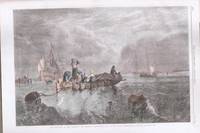
71-7655London: The Illustrated London News May 4 1861. Hand-colored wood engraving. pp. 425-426. 40 x 28 cm sheet. Very Good light toning along sheet edges.Provenance: From the collection of the late Frederick G. Ruffner Jr. founder of Gale Research Detroit. London: The Illustrated London News, May 4, 1861. unknown
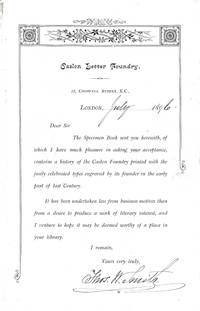
14673Caslon Letter Foundry 22 Chiswell Street EC. London July 1896. 1p. 12mo. Attractively printed within a decorative border on the recto of the first leaf of a bifolium. The letter reads: 'Dear Sir The Specimen Book sent you herewith of which I have much pleasure in asking your acceptance contains a history of the Caslon Foundry printed with the justly celebrated types engraved by its founder in the early part of last Century. It has been undertaken less from business motives than from a desire to produce a work of literary interest and I venture to hope it may be deemed worthy of a place in your library.' The date and Smith's signature are the only manuscript additions. Smith purchased the Foundry from the Caslon family in 1873. See Image. Caslon Letter Foundry, 22 Chiswell Street, EC. [London] July 1896. unknown
14266115 Chancery Lane London 23 Sept. 1815 the auctioneers Hodgson's later occupied these premises but perhaps the addres indicates Tucker was a lawyer. Three pages 4to fold marks some chipping and closed tears mainly discreetly repaired but text complete and clear. He is responding to Winkworth's request for "an outline of the observations I had the honour to address to the PSL Philosophical Society of London on thursday last but fear ." Points made as follows. "Ist All philosophers agree that man is characterized as an improveable being . 2nd THere is no science that is not capabale of additions no Art that . 3rd. Nations have risen progressively from barbarism to civility . Some have excelled in military glory; others in commercial opulence. 4th The three principal circumstances in the history of Nations are the Nature of their Government . 5th There are four kinds of improvement . 6th Egypt and the Asiatics deficient in their political Institutions ." And on till No. 15 points including Athens Sparta Rome Moral physical and moral improvement variant areas of improvement among nations Science vs. Arts bias impact of printing progress of various kinds best seen in history lastpoint 15th expanded to "It appears from a review of the past with a comparison of the present that it is the nature of Man to improve his inventions & discoveries in the Arts and Sciences - morals & politics included and as his happiness is inseparab;ly connected with them their improvement must be an improvement of his happiness also." He concludes that this summary is the 'best of his recollections contains the substance of all that I advanced ." Note: Samuel Taylor Coleridge was a member at much this time and delivered lectures in 1881 on the premises of the Philosophical Society of London founded 1810. 115 Chancery Lane, [London], 23 Sept. 1815 [the auctioneers, Hodgson's later occupied these premises, but perhaps the addres ind unknown
2283712 June no year; Spring Gardens London. In 1821 along with Ricardo Malthus James Mill and others Tooke founded the Political Economy Club. Although Carlyle is unlikely to have had him specifically in mind Tooke is the archetypal 'Professor of the Dismal Science'. 2pp 18mo. Bifolium. In good condition lightly aged. Folded twice. Twenty-eight lines of text neatly and closely written. He has 'deferred acknowledging' his answer to her 'kind invitation' to dinner on the coming Saturday until seeing his son who has been 'out of town on a fishing excursion'. The son is 'just now returned to town' and cannot attend because of 'an engagement at a very late dinner in the Regent's park on that evening'. The son sends '3 trout by the bearer which were caught yesterday evening in the Itchen near Winchester; hoping that they will be in time for your dinner to-day'. Rather than spend time with the celebrated computer pioneer Charles Babbage Tooke will be attending her 'soirée on Saturday sacrificing most readily Mr. Babbage to your superior attraction'. 12 June [no year]; Spring Gardens [London]. unknown
248411799 and 1801. Thorpe & Co. Coachmakers 210 Holborn London. An indication of how slavers spent the fruits of their slaves’ labours. With the advent of slavery studies William Atherton has been the subject of a deal of interest reflected on his Wikipedia page. Thorpe and Lee are listed as coachmakers at 210 Holborn in 1791; in 1803 the firm is named as Thorpe and Co at the same address. The two items are written out in a secretarial hand each on a long strip made by cutting a folio leaf in half vertically. Both in fair condition lightly aged and worn. Each with slight damage from the breaking open of the wafer. ONE: Addressed on reverse with 1801 postmark to ‘William Atherton Esq / Prescot / Lancashire.’ Containing items dated from 1799 and 1801. Autograph Note Signed at foot: ‘Sir / Agreeable to Mrs. Athertons orders I have sent your bill and am / Sir / Your Obedt humble Servt / Thos. Thorpe / 6 July 1801’. A bill of 13 items totalling £59 9s 6d 12 of them from 1799 and the other from 1801. Includes on 7 October 1799 ‘To Cleang the plated work oiling the braces & Greasing the whole’ and on 21 October ‘To repair of false belly bands plated buckles billet leathers and loops’.TWO: No date but with all items dated to 1801. A bill of thirteen items totalling £238 9s 6d. Addressed on reverse to ‘Wm. Atherton Esqr.’ Reverse also carries financial details amounts and bank of four payments made in 1801 to ‘Thos. Thorpe & Co. Coachmakers’. The main item £140 on 10 October 1801 is ‘To a new post Chaise of the best materials rums and Carved ornamented with plated beads round the leather and frame work silver embossed Crests for headplates and Outside Elbows lind sic 10†Daub Cloth Firmd with blue and white figured lace place glasses to the fore end and Doors A perch Carriage Iron Axletrees served with Steel springs sham patent wheels a platform and Wing Irons at the fore part Colourg. the body Carriage and wheels fine full yellow painting the Arms within Ornamented Garters and Crests over them in front and Door rails the Carriage and wheels picked and blue and Clear Varnished’. 1799 and 1801. [Thorpe & Co., Coachmakers, 210 Holborn, London.] hardcover
25510Catalogue Number 406 1930s. ‘On Sale by - / Thomas Thorp / Strathfieldsaye Guildown Road / Guildford England / Also of 93 St. Martin’s Lane London W.C.2’. Printed by Robert Stockwell Baden Place Borough London S.E.1. See Sheila Markham’s interview with Thorp’s grandson Jim in ‘The Bookdealer’ April 1995 and the report ‘Now it’s the end of the Thomas Thorp story’ Surrey Live 17 January 2003. 132pp 8vo. Stapled. Pagination includes grey printed wraps with title and first and last entries. On cheap discoloured paper with slight wear to bottom corner of first few leaves; spine worn and chipped covers detached. Undated but with no item found dated later than 1929. Fifty-one pages 33-83 of bookplates in small print. Expensive items include: Durandus ‘Rationale Divinorum Officiorum’ 1470 £90; Empson’s ‘Narratives’ 1836 £36; Evelyn’s diary 1818 ed. £35; a presentation copy of Conrad’s ‘Lord Jim’ £8. Also Graves ‘Good-Bye to All That’ 1929 ‘FIRST ISSUE OF FIRST EDITION with the Sassoon References which were deleted in later copies’ £8 ‘Only a few copies of the first edition were published before references were deleted and these have become very much sought after.’. Catalogue Number 406 [1930s]. ‘On Sale by - / Thomas Thorp / Strathfieldsaye, Guildown Road / Guildford, England / (Also of 93 paperback
15891One from 18 Perryn Road Acton W London. 2 April 1908. The other with the same address on letterhead of the East London College University of London Mile End Road E. 21 October no year. Both items in fair condition on lightly-aged paper. ONE: 3pp. 12mo. Bifolium. The letter begins: 'Dear Mr Lane Conscientious research in Titmarshian activities seems to point to the fact that you owe to the club the sum of 22/- for two dinners in October 1907.' He continues on this theme for a while before turning to Reynolds: 'I am very glad to hear that you are going to bring out the Holy Mountain & Poor Mans House by Reynolds. As partly responsible for the <nucleus> suggestion of the Mountain & the location at Acton I take some interest in the book & also in its author. A good many others do the same & I think it should attract enough preliminary notice to attract some public attention to a kind of satire rather vitriolic which a large populace may conceivably fasten on with voracity.' He regards the book as 'somewhat experimental' the 'Poor Man's House' having 'more solid & artistic qualities. I cannot help thinking that there are possibilities of literary achievement quite out of the common in S. R.' The final paragraph describes a book he has acquired. TWO: 2pp. 12mo. Bifolium. He thanks him for sending 'A Poor Man's House' of which he has 'written glowingly in my two little causeries one in The Reader's Review the other in the Country House'. He asks him to 'repeat the experiment' by sending another book before commenting: 'Reynolds far exceeds my anticipation & I am proud with a certain reflected glory in having contributed before any one else to his being Deterré as Pope said of Dr. Johnson. I hope your sporting support of him will be justified & I certainly think it will.' Reynolds' entry in the Oxford DNB notes Seccombe's influence on him. The Titmarsh Club was a society formed in appreciation of the works of Thackeray. One from 18 Perryn Road, Acton, W [London]. 2 April 1908. The other with the same address on letterhead of the East London Colle unknown
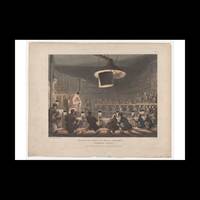
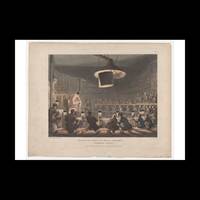
351471Contentum Ltd. Loose sheet. New. High-quality art print based on an original work from the Met. Created in the 19th century January 1 1808. Professionally printed on premium fine-art paper Museum Etching museum quality in size A3. The artwork is printed with a white border museum-style presentation. Contentum Ltd. unknown
351472Contentum Ltd. Loose sheet. New. High-quality art print based on an original work from the Met. Created in the 19th century January 1 1808. Professionally printed on premium fine-art paper Photo Matt Fibre in size A2. The artwork is printed with a white border museum-style presentation. Contentum Ltd. unknown
351474Contentum Ltd. Loose sheet. New. High-quality art print based on an original work from the Met. Created in the 19th century January 1 1808. Professionally printed on premium fine-art paper Museum Etching museum quality in size A2. The artwork is printed with a white border museum-style presentation. Contentum Ltd. unknown
351473Contentum Ltd. Loose sheet. New. High-quality art print based on an original work from the Met. Created in the 19th century January 1 1808. Professionally printed on premium fine-art paper Photo Rag Bright White premium quality in size A2. The artwork is printed with a white border museum-style presentation. Contentum Ltd. unknown
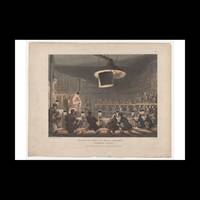
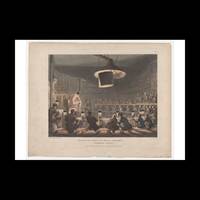
7412Date place and publisher not stated. London: R. Ackermann 1813. On a piece of good wove paper roughly 415 x 260 mm. Dimensions of engraving 180 x 220 mm. On aged paper and with the margins of the leaf trimmed. Laid down along the right hand margin runs a strip of blue paper 30 x 410 mm which it may be possible for a professional restorer to remove. This edges the border of the print which is clear and entire and overlaps a few letters of the text. Neatly coloured in sombre tones. Beneath the print is the title which ends 'at Leipsic and its environs.' and beneath the title is an eleven-line section of text headed 'THE TWO KINGS OF TERROR.' beginning 'THIS Subject representing the two Tyrants viz. the Tyrant BONAPARTE and the Tyrant DEATH sitting together on the Field of Battle'. Death is seated on a cannon with one foot on a pile of cannonballs and the other on a broken French eagle facing a dejected Bonaparte seated on a drum. In the background the massed ranks of the allies their four flags flying drive the retreating French from the field. The final four-line paragraph reads 'The above description of the subject appeared in the Sun of Saturday the 6th of November. These pointed comments arose from the picture being transparent and from a Circle indicative of the strength and brotherly union of the Allies which surmounted the same composed of gas of brilliant brightness.' See Image. Date, place and publisher not stated. [London: R. Ackermann, 1813.] unknown
228913 May 1836; 2 Great Newport Street London. 2pp 12mo. Bifolium. In good condition lightly aged. Corner of second leaf cut away on opening of letter and still adhering to wafer. Folded twice. Addressed to 'W. Upcott Esq.' Upcott has been 'so kind as to invite Mr Fields and me to spend an evening with you in going over some of your Literary treasures' and Rodd has 'an indistinct idea of some particular evening being named' by Upcott. In the hope that the present evening was not intended he asks Upcott to send word of which evening will suit his convenience. In a long postscript Rodd expresses the hope that - should the present evening have been intended for the meeting - Upcott will excuse Rodd's forgetfulness 'and impute it to the right cause the having of one's thoughts in a Sale-room added to which I had been travelling all the previous night'. Rodd was highly regarded for his knowledge and fair dealing. He issued several catalogues of Americana. 'Mr Field sic' was presumably James Thomas Fields 1817-1881 of the celebrated Boston firm Ticknor and Fields who started in the trade at the age of fourteen and whose name was 'Field' until later in life. 3 May 1836; 2 Great Newport Street [London]. unknown
5086Without date or place. On thin laid paper roughly two and three-quarter inches by three and three-quarter inches wide. Good clean image on aged paper with slight wear in bottom left-hand corner. Enclosed by a border. Reads in a variety of hands 'Thomas Payne BOOKSELLER Near the South Sea House BISHOPSGATE-STREET LONDON. Sells all Sorts of Stationary sic Wares.' According to BBTI the Thomas Payne who was at this address in 1750 may possibly be the eminent bookseller Thomas Payne I 1719-99 of the Mews Gate. Without date or place. unknown
1793065174Edinburgh / London: Printed by J. Robertson and H.D. Symonds; and volume 2 printed for W. Skirving by J. Robertson 1793. Hardcover. Good. 8vo. TWO WORKS IN ONE VOLUME. Robertson's Edition containing 2 volumes within this one edition: "An Account of the Trial of Thomas Muir Esq. Younger of Huntershill before the High Court of Justiciary at Edinburgh on the 30th and 31s days of August 1793" with an appendix; and "The Trial of the Rev. Thomas Fyshe Palmer Before the Circuit Court of Justiciary Held at Perth on the 12th and 13th September 1793 on an Indictment for Seditious Practices" also with an appendix. Thomas Muir the Younger of Huntershill 1765 - 1799 was a Scottish political reformer and the first political prisoner transported to Australia. Muir was sentenced to 14 years transportation for the the crime of sedition; for campaigning for parliamentary reform and for distributing copies of Thomas Paine's 'The Rights of Man'. His trial became one of the great sensations of the day; he was one of the group known as the 'Scottish Martyrs' who were sentenced in Scotland in 1793-4. Antipodean Books Maps & Prints ABAA; Thomas Fyshe Palmer 1747–1802 was an English Unitarian minister political reformer and convict. When agitation for political reform began in 1792 Dundee became one of its centres in Scotland. A society called the 'Friends of Liberty' was formed in 1793. One evening in June 1793 Palmer attended a meeting when George Mealmaker weaver in Dundee brought a draft of an address to the public which he purposed circulating as a handbill. Palmer revised it modifying it to a complaint against the government for war taxation and a claim for universal suffrage and short parliaments. The address was sent to be printed in Edinburgh in July 1793. The authorities were alarmed and decided to meet an anticipated revolution in time; and in the belief that they were attacking a revolutionary leader Palmer was arrested in Edinburgh on 2 August on a charge of sedition as the author of the document. Wikipedia Hardcover in good condition. 8vo. Marbled blue black red and off-white paper boards show wear with tears and scuffs to the edges and parts of the cover. Most of the red has worn away. Quarter leather binding is also worn with rubbing and scratches and chips in the leather. Leather spine bears gilt bands and raised peach-color label with gilt lettering and decorative border. Ex-libre label at bottom of spine. Pages are yellowed with some foxing throughout. Bookworm tracks and tunnels are present from the front pastedown to page 12 of the first volume and from page 155 through the back of the back paste-down of the second volume. Worm holes are burrowed through some of the words but the content is still mostly understandable except possibly for the last number of pages. Binding solid and pages are complete as no leaves are loose. Frontispiece is missing. There is a crack on the inner front hinge however exposing the binding thread. Though secure pages show the three specific indentations of where the thread binds the leaves to the spine and can be seen plainly within the gutter. Some leaves bear minor creasing and staining though the print remains legible. Volume 1 is 160 pages with appendix. Volume II is 195 pages and also includes an appendix. There is also a small hand-written note in ink approximately 3.5" x 2.75" circa late 1700's believed to possibly be written in French laid in. An intriguing piece of history. Full refund if not satisfied. Printed by J. Robertson and H.D. Symonds; and volume 2 printed for W. Skirving by J. Robertson hardcover
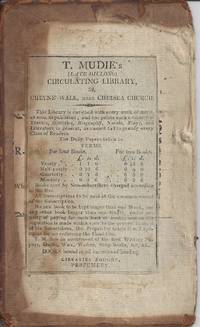
13076T. Mudie's late Dillon's Circulating Library 39 Cheyne Walk near Chelsea Church. Undated circa 1810. On 11 x 6.5 cm rectangle of paper laid down on the pastedown of a 12mo calf front board. Beneath the title: 'This Library is enriched with every work of merit as soon as published; and comprises such a variety of Travels Histories Biography Novels Plays and Literature in general as cannot fail to graify every Class of Readers. The Daily Papers taken in.' Following this are the yearly half-yearly quarterly and monthly terms for borrowing two and four books. Further text follows beginning: 'Books read by Non-subscribers charged according to the Size.' and ending 'T. M. has an assortment of the best Writing Papers Quills Wax Wafers Shop Books &c. &c. BOOKS bound in all varieties of binding. LIBRARIES BOUGHT. PERFUMERY.' BBTI has Mudie in Cheyne Walk before 1809 and after 1826; his son the more celebrated Charles Edward Mudie was born there in 1818. See Image. T. Mudie's (late Dillon's) Circulating Library, 39, Cheyne Walk, near Chelsea Church. Undated [circa 1810]. unknown