120 résultats
181734279Weimar: im Verlage des geograph. Instituts 1817. 1 vols. 18 1/2 x 22 1/2 inches. Folded. Some tape repair on verso some short tears in margins or along folds but generally in very good condition. 1 vols. 18 1/2 x 22 1/2 inches. im Verlage des geograph. Instituts unknown books
193034600Berlin: Reuichbahnzentrale 1930. 1 vols. Folio 39 x 24 inches. Linen backed. 1 vols. Folio 39 x 24 inches. Reuichbahnzentrale unknown books
186818900Munich: Christian Kaiser 1868. Handcolored title and 100 handcolored plates of flowers numbered 301 through 400. 1 vols. Sm. 12mo 4 7/8 x 3 1/4 inches. Original green cloth gilt. Inner hinges broken light marginal browning not affecting the attractiveness of the plates. Handcolored title and 100 handcolored plates of flowers numbered 301 through 400. 1 vols. Sm. 12mo 4 7/8 x 3 1/4 inches. 100 handcolored plates of Alpine flowers. Supplement volume with 100 plates of alpine flowers of Germany and Switzerland. Christian Kaiser unknown books
179033996Wien: zu finden bey Artaria Compagnie 1790. 1 vols. 8vo when folded panels ca. 4 3/4 x 8 inches; overall size 34 x x 24 inches. Large map consisting of 28 panels mounted on linen handcolored. Some spotting and soiling tack holes in corners laid into cloth folder reading "Reisekarte von Deutschland. 1 vols. 8vo when folded panels ca. 4 3/4 x 8 inches; overall size 34 x x 24 inches. Showing postal routes. zu finden bey Artaria Compagnie unknown books
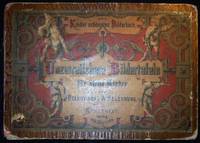
186625041Stuttgart Germany: Wilhelm Nitzschke 1866. 16 pages; the 'pages' are a heavy cardstock with numerous identified hand-colored illustrations on each. Nature historical events war the seasons modern transportation and other subjects are depicted. German text throughout; the final leaves offer the alphabet in both the German Gothic and more modern Latin style of typeface. No copyright date; internal evidence suggests 1866. Small booksellers ticket of E. Steiger 22 & 24 Frankfort St. New York on front endpaper. The volume approx. 9 5/8" x 13 1/2" size; covers detached spine cloth gone. Much wear rubbing to the covers; contents with some soiling wear experienced the usage of children; title page with some paper-rubs at inner margin; generally illustrations bright; in good condition overall. First Edition. Hard Cover. Good. Wilhelm Nitzschke hardcover books
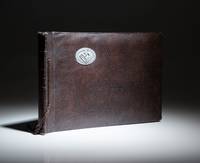
193810268Horn Austria: Foto-Werkstatte Rudolf Bartosch 1938. Photograph Album. Leather bound. Near fine. A collection of 91 photographs depicting women's service in the Reich Labor Service. Bound photograph album string at spine silver emblem of the Reichsarbeitsdienst Weibliche Jugend on front cover. Highlights of the album include women in military dress uniforms women in Nazi Swastika bathing suits women dancing with soldiers soldiers building railroad tracks. Beginning in 1935 the Reich Labor Service Act mandated service to the German state. It was compulsory for both sexes with either service to charitable organizations or more often military projects. An important part of the organization was to educate German youth about National Socialism. Foto-Werkstatte Rudolf Bartosch unknown books
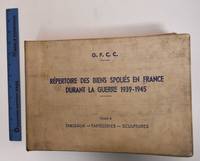
1948181672not identified: Berlin Commandement en chef francais en Allemagne 1948. Hardcover. VG- soiling to covers pages are age toned and brittle but otherwise very clean and clear. Off-white cloth boards with blue lettering on front cover xviii 491 pp unpaginated bw illustrations throughout text pages. "The work is published in French since its principal object is to assist the French experts with their work of investigation. But the headlines of chapters and their subdivisions as well as the list of abbreviations have been translated in Russian English and German for the purpose of enabling the experts of the Allied Nations to make practicable use of this inventory"--Introduction. Volume 2: Tableaux tapisseries et sculptures Pictures tapestries and sculptures. Berlin Commandement en chef francais en Allemagne hardcover books
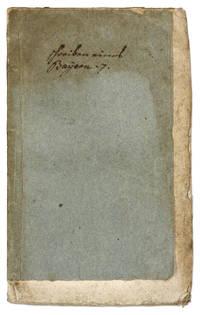
1774713481774. Nuremberg: Bey Wolfgang Schwarzkopf 1774. Nuremberg: Bey Wolfgang Schwarzkopf 1774. Ways to Abolish Begging Begging. Germany. Schreiben eines Bayern an Seinen Freund uber die Moglichkeit der Ganzlichen Abstellung des Bettelns und der Versorgung der Armen in einem Land. Nuremberg: Bey Wolfgang Schwarzkopf 1774. 55 pp. Octavo 7-1/4" x 4-1/4". Stab-stitched pamphlet in plain wrappers early hand-lettered title to front. Light soiling to exterior some rubbing to extremities with light wear to spine ends and corners. Light toning light foxing in places faint early owner stamp to title page. $500. Only edition. Cast in the form of a letter to a friend this pamphlet discusses the nature of public assistance and ways to abolish begging such punishments for begging and the establishment of work houses. The title of this anonymous work identifies the author as a Bavarian. The dedication is signed "J. Fr. v. E." and the text ends with a statement that it was written "near the Danube in Bavaria." OCLC locates 7 copies 1 in North America University of Pennsylvania. Das Verzeichnis Deutscher Drucke des 18. Jahrhunderts 14542927-003. unknown books
1919203190Berlin: Zentralrat 1919. First edition. Cloth. Pages somewhat toned; few pencil notations and marginalia; short closed tear to title page; exlibris stamp from former East German library on verso of title; extremities of covers rubbed; library label removed from base of spine still very good. 4to 277pp; contemporary buckram. Original documentation from this dark moment in the history of modern Germany the weeks of counter-revolution in Berlin that followed the murders of Karl Liebknecht and Rosa Luxemburg in January 1919. The councils that had been established by the 1918 revolution in the wake of Germany's disastrous defeat in the First World War were being swept aside by their own leadership. The rather hapless head of state Friedrich Ebert had allied himself with the armed forces and ominously with the reactionary Freikorps militia bands commanded by Gustav Noske. It was a peculiar alliance that shortly solidified Ebert's power and set the stage for the creation of the Weimar Republic even while simultaneously sowing the seeds of violent extremism that would emerge fully fledged in the National Socialist movement some years later. Along with a variety of nuts-and-bolts issues of procedure recorded in these stenographic minutes are speeches and debates surrounding the bloody massacres of revolutionaries spearheaded by Noske. An important record of a fascinating if murky episode in modern German history. Zentralrat unknown books
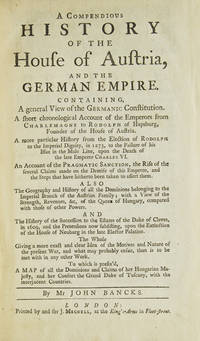
1745250103London: J. Mechell at the King's Arms in Fleet-street 1745. Includes a coloured folding Map By Emanuel Bowen of the Dominions and Claims of the Queen of Hungary and Her Consort the Grand Duke of Tuscany. vii218-430 pp. 8vo. Contemporary clf front hinge off. Includes a coloured folding Map By Emanuel Bowen of the Dominions and Claims of the Queen of Hungary and Her Consort the Grand Duke of Tuscany. vii218-430 pp. 8vo. ESTC N3058 J. Mechell, at the King's Arms in Fleet-street unknown books
1924182743Paris: J. Schemit 1924. Hardcover. VG all plates are present and in clean condition. Two volume portfolio set red boards with black lettering red cloth spines with black lettering. Each volume has three red ribbon tie closures. Volume 1 xxviii text booklet followed by ccvi bw plates. Volume 2 viii text booklet followed by bw plates ccvii-ccccxv. Rear of volume 2 has a xxiv page booklet. Text is in French. First volume: Serrurerie Monumntale. 206 plates containing 2225 documents from the 12th to the end of the 18th century. Second volume Ferronnerie Ancienne 208 plates containing 2300 documents. Second volume has a table of content booklet in the rear listing all the plates for both volumes. J. Schemit hardcover books
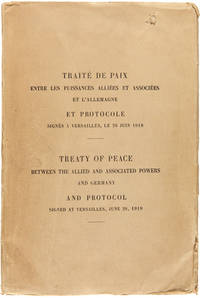
1919WRCAM49707Paris 1919. xv14284pp. printed in French and English on facing pages plus four large folding maps. Folio. Original printed wrappers. Minor edge wear small nick on front cover. Very good. Untrimmed and unopened. In a cardboard chemise and slipcase. Official French printing of the Treaty of Versailles a document of monumental importance in American and world history. The treaty made with Germany at the end of the First World War concluded a war of unrivalled devastation while sowing the seeds for the Second World War just twenty years on the horizon. The United States guided by Woodrow Wilson's vision played a central role in the crafting of the treaty. The U.S. Senate refused to ratify the treaty however based on the objection of several senators to the Covenant of the League of Nations which was included as Part I of the settlement thereby largely removing American influence and involvement from the international scene in the inter-war period. <br> <br> The Treaty of Versailles was a wide-ranging and ambitious document which sought not only to address the immediate postwar settlement but to punish Germany for its actions in starting and prosecuting the war attempted to remake the map of Europe and created a supra-national political organization the League of Nations. The Covenant of the League of Nations comprises the first part of the treaty. The next most famous part is that dealing with reparations which includes Article 231 the infamous "war guilt clause." By this article Germany accepted the responsibility of her and her allies "for causing all the loss and damage to which the Allied and Associated Governments and their nationals have been subjected as a consequence of the war imposed upon them by the aggression of Germany and her allies." The intent of the article was to affix legal and financial responsibility on Germany but it took on moral implications and was used by Hitler during his rise as an example of Allied perniciousness. Germany had to agree to pay reparations to the allies in the sum of 20000000000 gold marks the amount to be modified by a reparations commission in 1921. Germany also had to recognize the independence of Austria and agree not to compromise that independence in the future. Germany's borders were redrawn with Alsace- Lorraine being given to France West Prussia to Poland and other lands such as Danzig and the Saar Basin stripped away. She lost her overseas possessions the Rhineland was occupied and the German army was limited to one hundred thousand men and largely disarmed. Other provisions address issues of tariffs ports labor aerial navigation prisoners of war and more. <br> <br> As has been noted the many punitive measures of the Treaty of Versailles did much to fan the seeds of discontent in post-war Germany and to facilitate the rise of Hitler who publicly flaunted the provisions of the treaty throughout the 1930s. The refusal of the United States to ratify the treaty and participate in the League of Nations was a crucial part in the chain of events that led to the Second World War. A most important document here in an official French printing with the Protocol as a separate signature at the end. unknown books
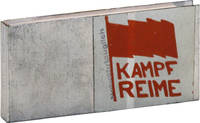
196947929Hamburg: Quer-Verlag 1969. Second Expanded edition. Oblong 16mo ca. 7x13cm.; original red staplebound card wrappers taped into cloth tape-backed sharp aluminum boards decorative element mounted to upper cover; 61ll. printed mimeographed on white and red paper. Old ballpoint manuscript spine title boards a bit tarnished else Very Good or better contents fresh and fine. Rubberstamp to upper cover: "Notwehrtauglich" "suitable for self-defense" the title page describing this as "Handliche mit scharfen kanten ausgestettatet kampfausgabe für die phase des revolutionären widerstands" a "handy sharp-edged combat edition for the next phase in revolutionary resistance" - our/google's translation. Collection of rhymed chants first issued by the author's publishing house Quer-Verlag in 1968 for members of the German Student Movement and the protests staged that year. The author the son of a dock worker was himself a member of the leftist literary group Hamburg Linksliteratisch. This work a curious example of a book as weapon in the literal sense the boards' fore-edges extending beyond the text block and are both sharp and the corners quite pointed so that while the book is small enough to fit in the palm of one's hand one can imagine the harm it could do to a vulnerable jugular. Quite scarce OCLC locates three copies of any edition in the United States as of March 2020 at Yale U. Iowa and Harvard. Quer-Verlag unknown books
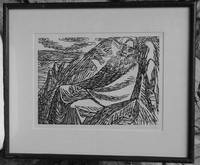
19223171922. Woodcut #7 from the suite: The Metamorphosis of God Die Wardlungen Gottes. Edition of 110. Schult 171. Signed in pencil. Image: 10¼ x 14¼. Margins: 17 x 13. Die Wandlungen Gotes: Sieben Holzschnitte . Artworks within this Set The cathedrals The divine beggar Dance of death 2 The god "Paunch" The rocks The seventh day The first day books
176957355Wien: Johann Thomas Edlen von Trattnern 1769. First Edition. Folio pp. xvi 282 lvi Illustrated with 27 engravings in the text & 3 folding engraved plates included in the pagination. Some foxed and toned lacks the front flyleaf. Bound in very rubbed contemporary calf still a very good tight copy. Woodcut and typographic ornaments and initials. Text in German black letter with glosses in Latin. Bound in contemporary calf spine gilt little rubbed and recently rebacked red edges. Woodblock printed end papers. Some toning to the text The binding is a little rubbed but still a very good crisp and clean copy. Maria Theresa was the eldest daughter of emperor Charles I and of Elizabeth Christina of Brunswick. At the death of her father in 1740 she became the sole heiress of his dominions of the house of Austria. Upon her accesion to the throne the neighboring countries tried to capture parts of the empire which led to the Wars of Austrian Succession which finally concuded with the treaty of Aix-la-Chapelle in 1748. This is the famous criminal code of Maria Theresa which used torture as a means of "eliciting truth." Her insticts were absolutist and she would allow nothing that limited state power even as she reformed the education system and worked to better the lives of her citizens. And she did not forbid torture. Torture was only to be used only is capital and very serious criminal cases. Included in this volume are very graphic illustrattions of instruments of torture thumb-screws stocks racks burning candles leg vices winches the Viennese shoe! with detailed and precise instruction of their use. According to the Britannica this edition was suppressed by Prince Kaunitz chancellor of the state and an advisor to the Empress. Torture was formally abolished in the empire in 1776. Maria Theresa Walburga Amalia Christina was the only female ruler of the Habsburg dominions and the last of the House of Habsburg. Maria Theresa and her husband Francis I Holy Roman Emperor had sixteen children including Queen Marie Antoinette of France. Maria Theresa was the absolute sovereign . She promulgated financial and educational reforms promoted commerce and the development of agriculture and reorganised Austria's ramshackle military all of which strengthened Austria's international standing. Johann Thomas Edlen von Trattnern unknown books
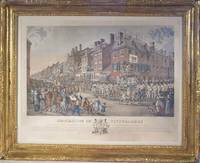
18215065Philadelphia: Published by Joseph Yeager; printed by Charles Woodward 1821. Engraving etching and aquatint with hand-coloring and mezzotint on buff wove paper plate: 50.5 x 66 cm.; image: 42.5 x 59 cm. Second state in which it is added that the view was "taken from M. Carey & Sons Book Store. S.E. corner of 4th and Chestnut Sts". There is no known extant copy of the first state but it is referred to and described in Stauffer & Fielding's American Engravers upon Copper and Steel page 556. "The procession of butchers with their carts carrying meat from a cattle market show was organized to encourage the breeding of cattle and attracted 300000 people if the Philadelphia Gazette is to be believed. It took one hundred carts to carry 86731 pounds of meat including bear and deer meat. The butchers and victualers proudly flew their banner 'We feed the Hungry.'" Nash First City: Philadelphia and the Forging of Historical Memory. ~ "The most popular of local views in aquatint was the light-hearted genre scene The Procession of the Victuallers. This is almost the only such local print of its time. Set in an atmosphere of happy holiday cheer there is in it as well the appeal of dozens of figures drawn from Krimmel 1786-1821 whose simple charm in the flat planar medium is redolent of days long gone. The Procession of the Victuallers drawn by Krimmel in the year of his death 1821 was aquatinted by Joseph Yeager c. 1792-1859 in his only engraving in that mode which has been found. This is lavish in size and in the crowded atmosphere typical of Krimmel. The Philadelphia Gazette of March 16 the day after the event reported that 'What added considerably to the novelty and beauty of the scene was the ascension of several handsome balloons during the line of march.' It has been said that the spectacle was witnessed by 300000; the population of the city at that time was 127000." Snyder Mirror of America. The 1904 auction catalogue of rare Americana from the estate of Moses Polock "the oldest bookseller in the United States" included the original watercolor later sold at Christie's New York in 2008 for $338500 and the descriptions noted that it was "from this that the now very rare engraving was made." There is loss to the margins at the lower right-hand corner and several closed tears intruding into the text or the image; paper restoration is subtle but visible. Some general discoloration but the colors remain quite bright. Framed. Rare. Stauffer & Fielding 3438ii. Published by Joseph Yeager; printed by Charles Woodward unknown books
5966Two handsome albums with 21 finely-drawn technical illustrations employing black ink and wash water colors. Almost all of the illustrations are signed "Karl Hübler" and dated by him from 1890-93. Some are also signed by "Engessen" and "Sayer" who were perhaps the design engineers. Laid-in are ten further fine folding original pen-&-ink drawings with wash water coloring concerning different water and bridge engineering projects in Bavaria as well as a printed contract for engineering projects for the state from about 1900. unknown books
176952694Wien: Johann Thomas Edlen von Trattnern 1769. First Edition. Folio pp. xvi 282 lvi Illustrated with 27 engravings in the text & 3 folding engraved plates included in the pagination. One of the plates was misfolded and is consequently slightly frayed at the lower edge with an old paper repair at the foredge not affecting the print area. Woodcut and typographic ornaments and initials. Text in German black letter with glosses in Latin. Bound in contemporary calf spine gilt little rubbed and recently rebacked red edges. Woodblock printed end papers. Some toning to the text The binding is a little rubbed but still a very good crisp and clean copy. Laid in: MARIA THERESA; EMPRESS. Autograph Note Signed "Maria Theresia" on black rimmed mouring paper to paymaster Mayer in German concerning her son's pension requesting 500 ducats or sovereigns and in a postscript written at lower edge and vertically at upper edge adding that the letters would follow in the evening. 1 page 12mo mourning stationery; some staining affecting signature but still legible folds. Vienna circa 1776. Maria Theresa was the eldest daughter of emperor Charles I and of Elizabeth Christina of Brunswick. At the death of her father in 1740 she became the sole heiress of his dominions of the house of Austria. Upon her accesion to the throne the neighboring countries tried to capture parts of the empire which led to the Wars of Austrian Succession which finally concuded with the treaty of Aix-la-Chapelle in 1748. This is the famous criminal code of Maria Theresa which used torture as a means of "eliciting truth." Her insticts were absolutist and she would allow nothing that limited state power even as she reformed the education system and worked to better the lives of her citizens. And she did not forbid torture. Torture was only to be used in capital and very serious criminal cases. Included in this volume are very graphic illustrattions of instruments of torture thumb-screws stocks racks burning candles leg vices winches the Viennese shoe! with detailed and precise instruction of their use. According to the Britannica this edition was suppressed by Prince Kaunitz chancellor of the state and an advisor to the Empress. Torture was formally abolished in the empire in 1776. Maria Theresa Walburga Amalia Christina was the only female ruler of the Habsburg dominions and the last of the House of Habsburg. Maria Theresa and her husband Francis I Holy Roman Emperor had sixteen children including Queen Marie Antoinette of France. Maria Theresa was the absolute sovereign . She promulgated financial and educational reforms promoted commerce and the development of agriculture and reorganised Austria's ramshackle military all of which strengthened Austria's international standing. Johann Thomas Edlen von Trattnern unknown books
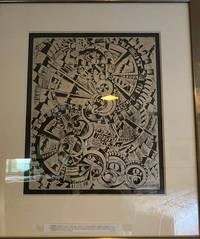
1919340Woodcut. 1919-1920. From the suite of 4 prints title M.E.Z. Signed dated and titled in red ink lower right. Grohn 28c Sprengel Museum 28c. Woodcut printed in silver on black paper. A small ed. of unknown size. 15 7/8 x 19 ¼ with full one inch margins all around. books
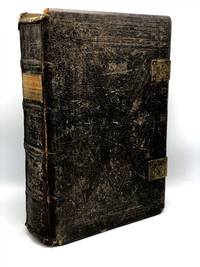
1474403583Strassburg: Johann Mentelin 1474. Folio 410 x 292 mm. Gothic types 3 columns 66 lines. Collation: the following gatherings all have stamped signatures a: a-i10 k l8 m10; stamped signatures b: 2a-d10 e81 f10 g-l10; stamped signatures c: 3a-h10 i12; stamped signatures d: 4a-h10 i8 k12. 415 leaves of 417 lacking preliminary and terminal blanks. 9-line initial "Q" in red and yellow on first page of text 7- to 8-line initials in red for each letter of the alphabet column headings in red in upper margin rubricated throughout. Approximately 50 leaves with mostly marginal tiny worm holes occasionally touching letters the last leaf with lower half renewed not affecting text a few leaves at end with skillful marginal repairs occasionally affecting signature. A LARGE COPY SCARCE IN A CONTEMPORARY BINDING <br/><br/>FIRST EDITION. Binding: Contemporary German dark brown calf over bevelled wooden boards sides with two broad double-fillet outer panels bounding a floral roll the central panels with intersecting double-filets forming diamonds and triangles each decorated within with roseate leaf quatrefoil stag and star tools the spine in five compartments with four double-corded raised bands 18th-century tan lettering-piece on spine in the second compartment brass clasps and catches printer's waste endpapers. Straps and hardware renewed probably when the label was added some overall wear old repairs to joints preserving original spine.<br/><br/>"The origins of the Latin biblical concordance must be sought in the thirteenth century at the Dominican convent of St. Jacques in Paris during a period when theologians felt urgent need for a compilation of all the uses of a particular scriptural word or phrase. Richard and Mary Rouse in their fundamental article 'The Verbal Concordance to the Scriptures' Archivum Fratrum Praedicatorum 44 1974 5-30 have shown that three attempts were then made to produce such a concordance all seemingly at St. Jacques. It was the third of these to which the name of Conrad of Halberstadt was later erroneously attached by Trithemius that won the day and obtained the largest diffusion. Over eighty manuscripts of this version survive the majority written in Paris between 1280 and 1330" Paul Meyvaert and Serge Lusignan review of Novae concordantiae Bibliorum Sacrorum iuxta vulgatam versionem by Bonifatius Fischer in: Speculum Vol. 56 No. 3 July 1981 pp. 611-613. <br/><br/>Johannes Mentelin had published the first printed Bible in German in 1466 and Nicolaus de Lyra's Postilla super totam Bibliam a commentary on the Bible in 1472. Of the approximately 40 works ascribed to his press the Concordantiae bibliorum is notable as "very peculiar in its method of signature and shows in an interesting manner the transitional period between the manuscript and printed methods of signing" William Blades "The Use & Development of Signatures in Books" in: Books in Chains and Other Bibliographical Papers 1892 pp. 110-112. The signatures mostly preserved in this copy are printed in the lower right corner. The text is divided in quarters and designated with stamped signatures "a" through "d". The copy in Leipzig UB has a rubricator's date of 1474 establishing the latest possible year of publication. <br/><br/>Scarce: Only two other copies have been offered at auction in the last 40 years: The Blades-St. Bride Foundation-Rattey copy sold Swann 15 April 2004 lot 45 now in the Scheide Library Princeton and the copy sold Christie's London 17 November 1976 lot 143. These were both rebound and we trace no copies in contemporary bindings on the market. ISTC lists only seven copies in North America: Brown; LoC; La Casa del Libro; Mrs. Alexander P. Rosenberg New York; The Morgan Library; Scheide Library Princeton; the Huntington Library; and Bridwell Library SMU. <br/><br/>References: Goff C849; BMC I 58; BSB-Ink C-497; GW 7418; H 5629. See VL V 189-91 at 189-90 and R. H. and M. A. Rouse "The Verbal Concordance to the Scriptures" Archivum Fratrum Praedicatorum 44 1974 5-30 at 19-20 and 25; also Kaeppeli I 276-83 no. 755 where it is ascribed to Conradus. <br/><br/> Johann Mentelin hardcover books