2 613 résultats
183511052Koblenz: Karl Baedeker. 1835. Second Edition. Hardcover. Very Good. Boards a bit sunned spine label browned and lightly chipped but still readable "Klein's Rheinreise Zweite Auflage". Neat notation with black ink on first blank page dated 1837. Bookplate. Two illustrations and two steel engraved fold out maps. Very light browning to a few single pages not affecting contents. ; This book is the expanded and revised edition of Professor J. A. Klein's Rheinreise. Converted into a guidebook by the legendary bookdealer of Coblenz Germany - Karl Baedeker. The first book to bear his original name Bädeker and the precursor of the entire series. A virtually unique publication - extremely rare ; 16mo 6" - 7" tall; 517 pages . Karl Baedeker hardcover
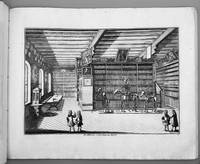
172012572Nürnberg: W. Michahelles for the author 1720. Somewhat later beige paper over stiff boards soiled rubbed short crack at the top of the front hinge edges slightly defective octagonal manuscript-lettered title label on the front cover. <p> Only Edition first issue of these lively views of the renowned Bavarian university town of Altdorf on the cusp of the Enlightenment. Founded in 1526 as a high school raised to an academy in 1578 and a university in 1622 Altdorf was "one of the first if not the first university in Germany dedicated to the serious study of the experimental sciences" Irsay tr. The school's graduates include imperial field marshals Wallenstein and Pappenheim composers Briegel and Pachelbel and the polymath Leibniz. The album has been variously dated from 1681 to about 1720.<br /> Johann Martin Trechsel 1661-1735 wrote the introductory text. He describes sketching the town and its environs over a four-year period and shares characteristic aspects of his subject before expatiating upon each plate's contents - identifying owners of specific houses and gardens explaining local civil and academic customs enumerating the university's buildings dating the addition of specific features recording inscriptions highlighting architectural features and discussing important patrons and professors.<br /> The suite begins with the town's skyline and outer walls as seen from the northwest the road from Nürnberg then the market square the orphanage chancery Church of St. John inside and out and town hall during a festival. The university is the subject of the rest of the etchings starting with the general assembly hall. THE ANATOMICAL THEATER HAS WALL-MOUNTED HUMAN VENATION DIAGRAMS. ANIMAL SKELETONS FILL THE MEZZANINE. THE FULLY FURNISHED CHEMICAL LABORATORY est. 1683 follows. Both rooms are fully treated in the text.<br /> Three plates show THE LIBRARY AND ITS COLLECTION OF NATURAL CURIOSITIES the physic garden and green houses of exotic and medicinal plants and the theology lecture hall. The final three etchings depict student life - their recreation facilities wash basins desks and study carrels the dining hall servers carrying food students raising toasts. and the private fencing academy.<br /> I have located two examples in the U.S. both defective. In good condition the final letterpress leaf with a minor lower blank marginal stain bookplate of Christian Gottlieb Müller 1741-1823 Secretary of the storied Nürnberg literary society Pegnesischer Blumenorden and author of the Verzeichnis von nürnbergischen topographisch-historischen Kupferstichen 1791-1821; see below pencil signature of Dr. A. Enorbi Landgerichts Rath.<br /> ¶Irsay Histoire des universités II: 110; Müller Verzeichnis von nürnbergischen.Kupferstichen I: 54-5; Günther "Die mathematischen- und Naturwissenschaften an der nürnburgischen Universität Altdorf" in Mitteilungen des Vereins für Geschichte der Stadt Nürnberg Hft. III 1881 9-12; Werner & Schmidt-Herrling Die Bibliotheken der Universität Altdorf 48-9 & frontispiece of the library reproducing plate 16; Erman & Horn Bibliographie der deutschen Universitäten II: 29a; VD18 14688239.</p> W. Michahelles for the author unknown
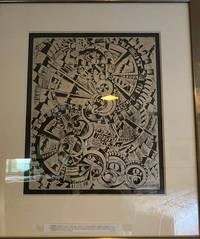
1919340<p>Woodcut. 1919-1920. From the suite of 4 prints title M.E.Z. Signed dated and titled in red ink lower right. Grohn 28c Sprengel Museum 28c. Woodcut printed in silver on black paper. A small ed. of unknown size. 15 7/8 x 19 ¼ with full one inch margins all around.</p>
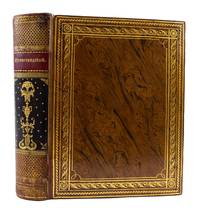
1817ST18762Halle and Berlin: Hallisches Waisenhaus 1817. 275 x 215 mm. 10 3/4 x 8 3/8". 210 leaves 18 pp. 4 leaves. <br/> REMARKABLY FINE CONTEMPORARY MARBLED CALF covers with complex gilt border composed of plain rules and decorative rolls smooth spine divided into compartments by gilt Greek key rolls top and bottom compartments with all-over gilt scallop design long central panel of black morocco with elaborate gilt vase and floral ornament surrounded by small gilt stars and with red morocco titling label above; FULL SPECKLED CALF DOUBLURES the front doublure with a painted lyre featuring gilt strings sword and wreath the rear with a monopteros with an eternal flame at the center upon a plinth superimposed upon which is an onlaid black morocco label framed in gilt and with gilt lettering "18. Oct. 1813" both doublures framed with red morocco supporting an elegant scrolling gilt band densely gilt turn-ins blue silk moiré endleaves all edges gilt an expert two-centimeter repair at head of spine. With frontispiece 21 portraits and 11 maps three folding one with flap all but one with inserted tissue guard. ◆Joints with slight flaking a hint of wear along tail edges as expected bottom spine compartment faintly rubbed with minor loss of gilt a little oxidation to the wreath on front doublure but A VERY HANDSOME BINDING with only minor condition issues. Light overall browning to plates because of paper content but virtually no foxing and only very occasional some quite faint spotting; THE TEXT itself IN NEARLY PRISTINE CONDITION extraordinarily clean bright and fresh with just one or two negligible imperfections.<br/> <br/> In a wonderful binding with unusual doublures this work commemorates the so-called "Wars of Liberation" that effectively ended French hegemony over Europe and that forced Napoleon into exile. Also known as the War of the Sixth Coalition the conflict took place between 1813-14 following Napoleon's retreat from Russia in 1812. Though the major battles primarily took place in German territory rulers of Russia Prussia Austria Spain Portugal the United Kingdom Sweden and many German States all banded together to oppose France. In March of 1814 the allies entered Paris prompting the French Senate to depose Napoleon and install Louis XVIII as the French sovereign. Although Napoleon would briefly return from his exile on Elba to stage a comeback in 1815 it was short lived and ended in his final defeat. The majority of the text here discusses the events of 1813 and 1814 during the height of the conflict and includes portraits of the major players and maps helping to illustrate the most important battles. This work is beautifully printed on thick white paper and is clearly meant to act as both a chronological record of the events and a memorial to those who liberated the German states from a tyrannical power. The lovely marbled calf binding opens to reveal two exceptional doublures painted in the manner of an antique vase with a lyre wreath and sheathed sword on the front doublure and on the rear a monopteros this latter circular colonnade with an eternal flame bearing a small morocco onlay emblazoned with the date 18 October 1813. This refers to the Battle of Leipzig also called the Battle of Nations fought from 16-19 October--by many accounts the single largest and bloodiest battle of the entire Napoleonic Era. It marked a decisive turning point in the Wars of Liberation and was an obvious source of pride for the German people. Given the momentous nature of the book's content the present grand and beautifully designed binding serves as a suitably striking vehicle of presentation. Hallisches Waisenhaus unknown
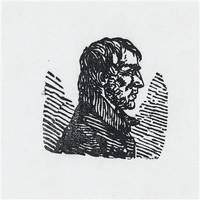
1313-16ca. 1805. Orig.-Holzschnitt auf Bütten. 67 x 25 5 cm 30 x 234 cm Blatt Neudruck von 1927 . Unter Passep. gerahmt. Literatur: Ursula Meyer Greifswalder Maler des späten 18. und 19. Jahrhunderts. Gemälde - Graphik. Museum der Stadt Greifswald 1963 Nr. 61 mit Abb. 7; - Werner Sumowksi Caspar David Friedrich-Studien Wiesbaden 1970 S. 136-138; - Helmut Börsch-Supan und Karl Wilhelm Jähnig Caspar David Friedrich. Gemälde Druckgraphik und bildmäßige Zeichnungen München 1973 Nr. 74 Abb. dort weitere Literatur; - Caspar David Friedrich und Umkreis Ausst. Kat. Galerie Hans Hamburg 2006 S. 34-37 Kat. 8-9; - Cornelia Reiter Klaus Albrecht Schröder Hg. Ausst. Kat. Welten der Romantik Ostfildern 2015 S. 112 Nr. 35. - Bei dem vorliegenden Holzschnitt handelt es sich um einen von bisher sieben bekannten Abzügen des um 1805 entstandenen Holzschnittes mit dem Selbstporträt von Caspar David Friedrich welches kurz nach der größeren Version seines Selbstbildnisses von 1803 entstanden sein dürfte Sumowski 1970 S. 136-138; Börsch-Supan und Jähnig 1973 Nr. 74. Laut Börsch-Supan ist das frühere Blatt nach einer Vorzeichnung Friedrichs von seinem Bruder Christian 1779-1843 in Holz geschnitten worden und steht möglicherweise in Verbindung mit der Produktion der drei Holzschnitte "Die Frau mit dem Spinnennetz zwischen den kahlen Bäumen Melancholie Die Spinne" "Die Frau mit dem Raben am Abgrund" und "Knabe aufeinem Grab schlafend". Im späten 18. und frühen 19. Jahrhundert fand der Holzschnitt hauptsächlich als Buchschmuck Verwendung. Börsch-Supan geht daher davon aus dass die drei erwähnten Holzschnitte als Illustrationen für ein nicht publiziertes Buch - vermutlich ein Band mit Gedichten von Caspar David Friedrich - geplant gewesen waren. Der Holzschnitt mit seinem Selbstbildnis könnte als Autorenportrait gedacht gewesen sein. Kat. Hamburg 2006 S. 34 Kat. 8 Der vorliegende Holzschnitt von 1805 stellt eine kleinere und vereinfachte Version des früheren Selbstporträts dar und könnte als alternativer Illustrationsentwurf für den Holzschnitt entstanden sein. Offenbar hat Friedrich seinem Bruder mehrere Vorarbeiten zu dem Porträt geliefert wie es eine Zeichnung in der Hamburger Kunsthalle Börsch-Supan und Jähnig 1973. Nr. 73 belegt die als Vorzeichnung zu dem Holzschnitt einen abweichenden Entwurf darstellt jedoch von Christian nicht verwendet wurde. Wahrscheinlich hat Christian Friedrich für das Selbstporträt seines Bruders in zwei Stilen experimentiert und sich dann für die Auflage der feinlinigen Fassung in größerem Format entschieden Kat. Hamburg 2006 S. 36. - Das Pommersche Landesmuseum in Greifswald besitzt fünf weitere Abzüge des vorliegenden Holzschnittes welche im Jahre 1927 nach der Übergabe des Holzstocks gemeinsam mit 8 Holzschnitten der Familie Friedrich als Neudrucke angefertigt wurden Inv. K2/647a-e. Die Blätter und der Druckstock waren danach lange in Vergessenheit geraten bis sie 1956 von Sigrid Hinz wieder gefunden wurden jedoch falsch als Bildnis des Bruders Heinrich Friedrich geschnitten von Christian Adolf Friedrich identifziert wurden Kat. Hamburg 2006 S. 36; Sumowksi 1970 S. 136138; Börsch-Supan und Jähnig 1973 Nr. 6062 und Nr. 74. Auch Ursula Meyer veröffentlichte 1963 den Holzschnitt mit dieser Identifizierung Meyer 1963 Nr. 61 mit Abb. 7. Die Identität des Dargestellten steht jedoch nach einem Vergleich mit dem früheren Selbstporträt Caspar David Friedrichs von 1803 außer Zweifel. Es dürften jedenfalls nur einige wenige frühe Probedrucke von dem Porträt angefertigt worden sein. Aufgrund der Papierqualität des vorliegenden Blattes muss jedoch ein Frühdruck ausgeschlossen werden. Wahrscheinlich ist der Holzschnitt gemeinsam mit den anderen Abzügen 1927 als Neudruck im Greifswalder Museum entstanden. [ca. 1805]. unknown
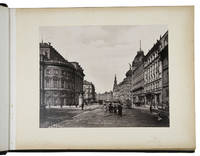
1899ABC_46445Budapest Dresden Innsbruck München: Calderoni és társa Verlag von Stengel & Co Fritz Gratl 1899. Half black leather red buckram sides blind-stamped boards gold-stamped spine with the date "1899" marbled endpapers. Oblong album 32 x 41 cm. Album with 43 photographic prints of various sizes 22 x 16.5 to 30 x 24 cm pasted on thick paperboard. From mountains in Austria to city views and interiors of churches in Budapest Vienna Innsbruck and München: all can be found in the 43 photographic prints in the present album. They were taken in at the end of the nineteenth-century probably in 1897 and 1899 according to blind-stamps in the prints. The photographers of most images are unknown except for the 6 photographs of Innsbruck which were made by the Innsbruck photographer and publisher Fritz Gratl. He likely made some of the other photographs of Austrian mountains towns and the city of Salzburg as well since his other known photographs cover similar subjects. Most prints of Vienna and some of Budapest were published by Stengel and Company in Dresden Germany in 1897. They and also Fritz Gratl were famous printers and publishers of postcards with similar picturesque images and the photographs in the present album are possibly the original images used to make the postcards.22 photos bear the blind stamp of the photographic studio. 4 photos have handwritten captions in pencil. The binding shows some minor signs of wear slight foxing or browning of the outer edges of the paperboards not affecting the photographs some photographs slightly faded or rubbed mostly at the edges not affecting the actual image the paper board of the print of "Budapest - Neues Parlament" has a slightly damaged spot in the lower margin not affecting the integrity of the board or the print. Overall in good condition. An album of 43 photos showing the sights of Hungary Austria and Germany. Calderoni és társa, Verlag von Stengel & Co, Fritz Gratl, hardcover
1769elala199Vienna: Johann Thomas Edlen von Trattnern 1769. 1769. folio. pp. 8 p.l. 282 lvi. 27 engravings in the text & 3 folding engraved plates incl. in pagination. woodcut ornaments & initials. full contemporary dark brown morocco lettered in gilt on upper cover: Constitutio Criminalis Theresiana Spectans Ad Antiquam Civitatem Voitsbergensem 1773 Antonius Josephus Schilcher P.T. Judex Civitatis Voitsberga bit rubbed some browning & foxing marginal dampstain to last section containing engravings folding plates dampstained & repaired -1 with some loss of text. Inscribed on front blank: "Mathias SchuemackerSuperioris Austriae Jo. J. Syndrins Voitsberga 1773". First Edition of the famous criminal code of Maria Theresa which redefined torture as "a subsidiary means of eliciting truth". Torture could be applied to obtain confessions only in cases where condemnation would have involved capital or severe corporal punishment. A remarkable publication including graphic illustrations of instruments and methods of torture thumb-screws stocks racks burning candles leg vices winches the Viennese shoe with detailed and precise instructions on their use. According to the Encyclopaedia Britannica 11th Edn. this illustrated edition was suppressed by Prince Kaunitz chancellor of state and advisor to the Empress a few days after its appearance. Torture was formally abolished in the empire in 1776. Signed by Authors. 1st Edition. Vienna: Johann Thomas Edlen von Trattnern, 1769. hardcover
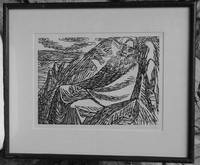
19223171922. Woodcut #7 from the suite: The Metamorphosis of God Die Wardlungen Gottes. Edition of 110. Schult 171. Signed in pencil. Image: 10¼ x 14¼. Margins: 17 x 13. Die Wandlungen Gotes: Sieben Holzschnitte . Artworks within this Set The cathedrals The divine beggar Dance of death 2 The god "Paunch" The rocks The seventh day The first day
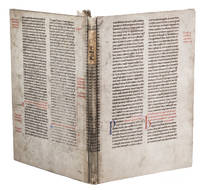
14869BDEHOBV62VDWürzburg: Georg Reyser 1486. Later bound in two leaves from a 13th-century vellum theological manuscript rubricated and decorated with alternating red and blue initials with penwork. Folio. Printed in red and black in rotunda type 32 lines; printed area: 18 x 12 cm; type: 112a. With illustrations cut from 19th- or 20th-century reproductions of early woodcuts ca. 21 x 14 cm pasted on the front Annunciation and back pastedown Christophorus with the year "cccc xx tercio". Interesting example of the study of early printing in 19th-century England. The 12 leaves come from the library of the 19th-century collector Dr C. Inglis whose father boasted an impressive collection of early printed books. Inglis believed that the leaves came from an unknown work titled De vita et honestate clericorum ex consilio Moguntinum printed in 1453 by Gerhardus Episcopus. Tipped in is a letter to Inglis by the well-known bibliographer William Blades discussing this matter. Although the text opens with "De Vita et honestate clericorum ex consilio Maguntinensis Gerhardi Archiepiscipi" it was in fact part of Statuta synodalia herbipolensia printed at Würzburg by Georg Reyser in ca. 1486. The first 6 leaves are 2-d7 and the final 6 leaves are quire g.With owner's inscription of Sir Edward Coates bookplate with initials "CC" Clifford Coates the bookplate of Dr. C. Inglis and some annotations on front pastedown; an autograph letter signed by Wiliam Blades to C. Inglis tipped to flyleaf. 12 well-preserved leaves.l Cf. BMC II 572; Goff S-741; Hain 15036; Hubay Inc. Universitätsbibl. Würzburg 1953; ISTC is00741000. Georg Reyser, hardcover
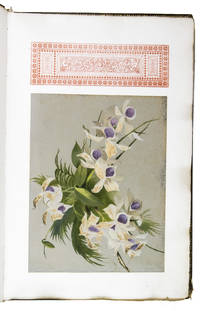
1896ABC_48884Colophon: Amsterdam 1896. Large folio ca. 51 x 33 cm. Calligrafie und Druck von Johan. K. Koning Contemporary gold-tooled burgundy leather the front board with a large gold-stamped monogram as a centrepiece the intertwined initials of the couple: AJ and EdR with the date "24-26 August" above and the year "1896" below lettered in gold both boards show a single fillet frame along the outer edges gold-tooled turn-ins beige watered silk endleaves. Wedding album comprising five manuscript texts of occasional plays 4 in German 1 in Dutch written in a neat cursive in blank ink on thick laid paper each illuminated with a 4-line decorated initial in red blue and white on a gold/bronze field richly decorated with penwork in black ink extending down into the inner margin. Each text is preceded by a letterpress title leaf set in neo-Gothic type also used for the general title several text leaves and the colophon. Further with 1 gouache illustration on grey paper sheet size ca. 32 x 24.5 cm mounted on the first leaf showing a bouquet of flowers 14 printed ephemera relating to the "Polterabend" wedding-eve party and the wedding on single or double leaves in various sizes the wedding announcement/introduction to the wedding-eve party and attached is a photo of the couple in a circular frame of red wax 5 menu cards the lyrics to 6 German songs a musical score by the German composer Wilhelm Aletter 1867-1934 and an announcement of the comic opera Des Teufels Antheil by the French composer Daniel Auber 1782-1871 performed by the Frankfurter Opernhaus on 25 August 1896 in Frankfurt am Main. Also with two manuscript wedding speeches in German written in black ink on paper two mounted albumen prints the first showing two actors dressed as a Frisian farmer and his wife and the other showing a man in Chinese dress 56 large ornamental vignettes printed in red or blue throughout 17 ornamental tailpieces printed in black blue and red and some dried flowers mounted on several leaves. 60 ll. A sumptuously executed wedding album presented to the Dutch groom August Janssen 1865-1918 and his bride Ella de Ridder 1877-1951 produced in honour of their wedding celebrations which took place on 24-26 August 1896 in Frankfurt am Main Germany. Most of the album concerns their "Polterabend" the wedding-eve party similar to present-day bachelor-/bachelorette parties except for the bride and groom joining together in the festivities. The main event now associated with a Polterabend is the smashing of porcelain by the wedding guests in order to bring luck to the couple's marriage but in general the evening is filled with plays and songs written and performed for the couple by their family and friends.A few performing actors were members of the Janssen-family a Dutch business family who had amassed their fortune with the tobacco cultivation in the former Dutch East Indies. They were also known for their generosity and philanthropic activities in the Netherlands. At the head of this family was the German-Dutch merchant Peter Wilhelm Janssen 1821-1903 one of the founders of the Deli Maatschappij in Sumatra and father of the groom who was his second son. His eldest son Christian Wilhelm Janssen 1860-1927 was married to Susanna Dorothea Anna Rehbock 1862-1933. Her brother the Dutch merchant Heinrich Carl Rehbock 1865-1938 was married to Caroline Janssen 1871-1951 one of the five daughters of Peter Wilhelm Janssen. Among the other actors were the brother of the bride Gustave von Ridder 1874-1956 the German playwright Hermann Otto Rudolf Presber 1868-1935 the German lawyer Paul Roediger 1859-1938 and his Dutch wife Julie Louise Charlotte Elink Schuurman 1875-1961 the sisters Anna Maria Humser 1876-1974 and Elisabeth Else Humser 1872-1967 daughters of the German lawyer and politician Gustav Adolph Humser 1836-1918 who was chairman of the Frankfurt city council at the time of the wedding celebration.The groom August Janssen 1864-1918 started his business career at trade offices in Bremen and London. He subsequently left for the former Dutch East Indies where he founded several enterprises. His wealth enabled him to engage in philanthropic activities. For example the municipality of Baarn benefited from his generosity he erected two public swimming pools there at his own expense. The bride Ella Elisabeth de Ridder 1877-1951 was the only daughter of the Belgian-German merchant August Cornelius de Ridder 1837-1911 known for his distinguished art collection of mainly Dutch and Flemish paintings of the 17th century which he built at his house at Kronberg near Frankfurt am Main. The famous Anglo-Hungarian artist Philip Alexius de László 1869-1937 painted Ellas portrait in 1903 in Baarn at the house of Hendrik Cornelis van den Honert 1854-1916 the successor of Peter Wilhelm Janssen as director of the Deli Maatschappij in 1898. De László had also painted her mother Johanna Elisabethe Louise May 1853-1942 around 1898 and two of her children in 1908.A unique wedding album of two members of prominent German-Dutch business families written and printed in 1896 as a special single copy publication. The album was produced in Amsterdam by Johan K. Koning who took care of the calligraphy of the texts and the printing of the divisonal titles explanatory leaves and vignettes.The spine and edges and corners of the boards show signs of wear with some minor loss of material at the foot of the sipne and the tips of the corners of the boards the leather is somewhat faded adn scratched all without affecting the general clarity of the tooling or the integrity of the binding. The watered silk on the first free flyleaf is torn some offsetting to the blank versos of the leaves and some glue residue on the leaves with dried flowers. Otherwise in good condition. hardcover
180755735Weimar Geographischen Instituts 1807-13. Folio-oblong. 38 x 48 cm. Contemp hcalf. Spine a little rubbed. A paperlabel pasted on upper part of spine. Corners bumped. Stamp on "Netz-Karte"/ "Tableau". With 3 other "Netz-Karte" on verso of Sect. 311 a. 14. The engraved title-page in French present as Sect. 10. With all 204 engraved plates 203 maps. The maps clean and fine throughout. unknown
194737284US Zone: Office of Military Government for Germany U.S. 1947. First and only edition. Hardcover. g. Folio. 2 51 leafs 2pp. index of names 7 leafs exhibit list and certification of reproduction with facsimile signature of Charles E. Bancroft 293 leafs with facsimile reproductions of 137 exhibits. Original half black binder tape over paper covered boards with title pasted on spine and front cover. This rare document is based on a great number of important records which became accessible at the Deutsche Bank's Hamburg branch only after the end of WWII. For the first time information is revealed on some rather unusual transactions which tend to incriminate the bank even further for its participation in spoliation and aryanization from 1933 to 1945. Of particular interest is the description of the manner in which the Deutsche Bank following the Munich agreement of 1938 grasped control of two outstanding Czech banking institutions: the Boehmische Unionbank and the Deutsche Agrar- und Industriebank. This work recounts the Deutsche Bank's participation in the "aryanization" of the German economy from 1932 to 1940 drawing on internal Deutsche Bank records as well as material seized by Allied troops after World War II. It shows how as the Nazis began to rise to power the bank reluctantly purged itself of Jewish directors followed by Jewish employees in response to state pressure. Later the regime enlisted the bank employees' professional skills domestic and foreign relationships and financial muscle to eliminate Jewish control and ownership of German companies. The expropriation was conducted gradually since many hastily seized companies proved worthless without the management of their Jewish former owners and also because this method muted foreign criticism and preserved a veneer of legality. This stands in stark contrast to the brutally simple methods used by the Nazis in occupied countries and after 1941 in Germany as well. The numerous incriminating documents retrieved at the end of the hostilities are reproduced in facsimile. The index of names includes institutions as well as names of high level Nazis and their supporters. Rare! No listing in KVK. Sporadic and minor damp-staining on covers and at upper margin of pages not affecting text. Text in English documents in German. Binding and interior in overall good condition. "After Adolf Hitler came to power instituting the Third Reich Deutsche Bank dismissed its three Jewish board members in 1933. In subsequent years Deutsche Bank took part in the aryanization of Jewish-owned businesses; according to its own historians the bank was involved in 363 such confiscations by November 1938. During the war Deutsche Bank incorporated other banks that fell into German hands during the occupation of Eastern Europe. Deutsche provided banking facilities for the Gestapo and loaned the funds used to build the Auschwitz camp and the nearby IG Farben facilities. Deutsche Bank revealed its involvement in Auschwitz in February 1999. In December 1999 Deutsche Bank along with other major German companies contributed to a US$5.2 billion compensation fund following lawsuits brought by Holocaust survivors.2526 The history of Deutsche Bank during the Second World War has been documented by independent historians commissioned by the Bank. During World War II Deutsche Bank became responsible for managing the Bohemian Union Bank in Prague with branches in the Protectorate and in Slovakia the Bankverein in Yugoslavia which has now been divided into two financial corporations one in Serbia and one in Croatia the Albert de Barry Bank in Amsterdam the National Bank of Greece in Athens the Creditanstalt-Bankverein in Austria and Hungary the Deutsch-Bulgarische Kreditbank in Bulgaria and Banca Commercial Romana in Bucharest. It also maintained a branch in Istanbul Turkey" from Wikipedia. Office of Military Government for Germany (U.S.) hardcover
1880006743Frankfurt Main Germany: Bockelmann"s Kunstverlag 1880. Published in 1880's this beautiful collection contains all 150 single-sided loose engravings showing various cities and major buildings/cathedrals of Germany just prior to the turn of the century. Beautiful set covering most of Germany. Engraved title page and two page index. Engravings are clean. Sides of case are torn/worn. Overall very unique and rare collection of engravings. Individual pages may retail for as much as $50 or more each. Decorative Cloth. Very Good/Slipcase. 4to - over 9¾" - 12" tall. Bockelmann"s Kunstverlag hardcover
elala2755Ghent: la Veuve Pierre De Goesin 1744. First Edition. Fête book celebrating the inauguration at Ghent on April 27 1744 of Maria Theresa as Countess of Flanders. The Archduchess of Austria and Queen of Hungary and Bohemia was presented on the occasion with a magnificent Ghent-made gown with a garniture of Flemish lace. She is shown wearing the gown in an oil painting by Martin Van Meytens which hangs in the city town hall. Cohen-De Ricci 868. Landwehr Splendid Ceremonies 209. Vinet 685. folio. pp. 43. title & head of dedication in red & black. woodcut arms on title. engraved frontis. portrait of Maria Theresa by Frans Pilsen after a painting by Philips Karel Marissal & large folding double-page engraved plate of the inauguration ceremony by Pilsen after David ‘t Kindt. contemporary calf imperial arms on upper cover arms of Flanders on lower cover covers with surface abrasions spine repaired at head & foot wormholes in outer margin – those in first few leaves neatly filled in the folding plate with half a dozen unobtrusive wormholes & some reinforcements of the folds but in very good condition nonetheless Ghent: la Veuve Pierre De Goesin, 1744 unknown
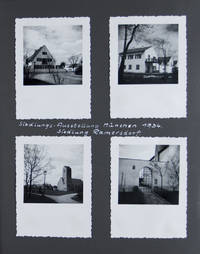
45183NP: NP. Hardcover. vg. Quarto 9 1/2 x 9 1/4". 53 leaves with tissue guards. Original three-quarter bolted brown and red cloth photo-album with gilt ruling on spine. Collection of ca. 300 original b/w photographs in variant sizes depicting architectural motives in Nuremberg Munich Stuttgart Berlin Potzdam Warsaw Odessa and France spanning the 1930s 1940s and 1950s. The photographs vary in sizes from 2 1/4 x 2 1/4" to 9 1/4 x 6 3/4" - the striking photographs are taken and captioned by Adolf Emilius. The collection contains three photographs with Adolf Hitler. One with Albert Speer and Franz Struff another with Hitler in the Nuremberg opera house in 1937 and one showing Hitler at the construction site of the Zeppelinwiese.<br /> <br /> Starting with a section depicting buildings in Nuremberg and Stuttgart the album shows the German Garden Show the VW factory the German Toy Fair 1953 various city institutions and businesses from the 1950s. Professional settings like the Settlement Exhibition in Munich Ramersdorf 1934 one and two family homes in Nuremberg and surrounding areas by architects Fritz Mayer and Hans Kern including details like entrance lighting and flower windows. Siemenshaus in Nuremberg a border police station in Vorarlberg the Catholic church in Bludenz City Hall Nuremberg the Cathedral and the Arc de Germanicus of Saints the opera house and the dome in Aachen. <br /> <br /> A section of photographs of Berlin show the Shell headquarters the sculpture of the group of runners at the Olympia Stadion the Ufa Palace in 1938 decorated for the main event Riefenstahl's Olympia film. There is the iron construction of the ship draw works at Niederfinnow the Arcs de Triomphe in Brandenburg and Munich the Berlin Dome and the Charlottenburg Castle the broadcasting center the Haus der Deutschen Kunst and the State Opera in Munich the Sanssoucie castle in Potsdam and the Brandenburg Gate.<br /> <br /> Contains a group of four sepia-toned photographs of wooden buildings designed by the architect Julius Schulte -Frohlinde for the Olympic Games 1936 in Berlin. Some of these buildings Rheinlandhalle Berliner und Hamburger Halle depicted here were transported to Nürnberg after the Olympic Games and reassembled on the Nazi Rally Grounds in the northeast part of the city called the KdF-Stadt Kraft durch Freude City. They were used by the organization to entertain the attendants of the NSDAP Rallies in 1937 and 1938. The center of this city was a bell tower also depicted here playing the key note of the KdF every thirty minutes: "Freut Euch des Lebesn Enjoy Life." <br /> <br /> The second half of the photo-album contains some 120 b/w photographs incl. few photographic postcards depicting exteriors and interiors of buildings associated with Nazi institutions or events e.g. three photographs of models including of the Haus der Kunst München the Soldier Hall and High Command of the Army Dresden design W. Kreis and the Advanced School of the NSDAP at the Chiemsee design Hermann Giesler. It includes photographs of the exhibition "Siedlungsausstellung" in Munich showing the sample settlement Ramersdorf the epitomization of the National Socialist settlement idea. In short order 192 single family homes were built in the Munich district of Ramersdorf under the direction of the architect Guido Harbers. However the propaganda effect the officials had hoped for didn't materialize and the homes were sold after the exhibition. <br /> <br /> In addition there are photographs of the interior of the Nuremberg Congress Hall design by Lauterbach 5 1/2 x 7 1/2" the old Kongreßhalle the Luitpold arena a plaster model of the Kongreßhalle 1937 one of them with Hitler Speer and the architect Ruff the side arcade of the stadium at the Zeppelin Field the entrance of the Palais of the Reich President design Speer the Gau-building in Nuremberg design Ruff the Reich Chancellery various interior and exterior views the office of the Führer a sculpture by Arno Breker the entrance to the Reich Chancellery a series of 12 photographs of showing the construction of the new Reich Chancellery in 1938 the construction of the Zeppelin Field one of them with Adolf Hitler 1936 the grandstand of the Zeppelin Lawn a fatigue duty muster a lighting rehearsal a demonstration of the Wehrmacht various government buildings in Breslau Minsk and Nuremberg 21 photographs showing the construction of the Zeppelin Lawn concluding with eight photographs 4 1/4 x 6 1/2" of the construction of the Zeis Factory in Jena.<br /> <br /> Text in German. Starting after the first leaf with the second leaf loose. Some creasing of tissue guards. Overall in very good condition. NP hardcover
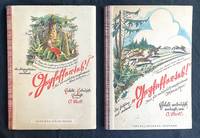
194143392Neudamm & Berlin: Munz & Co Försterbuben; and J. Neumann Frühling 1941. No Date 1940-1941 Both 1st edition. Original color illustrated boards 4to 70 68 pages. Filled with color illustrations over 20 of them stereotyped Antsemitic cartoon images. 25 cm. In German in Sütterlin script. The titles translate loosely as "The Spring and Other 'Spicy' Stories-- Only for People Sensitive to Nature" and "The Forest Boys and Other 'Spicy' Stories-- Only for People Sensitive to Nature." Text printed in red and black.<br> Both volumes were printed in Neudamm by Neumann but interestingly Försterbuben the first volume shows an overlay of the new publisher/distributer "Munz & Co. Verlag Berlin" on the front cover and title page. Complicated issues around distribution of Försterbuben may be reflected in its present scarcity OCLC locates only two copies worldwide. <br> OCLC suggests consecutive dates of 1940 and 1941 for both titles which makes sense given the use of Sütterlin script see below and the presence of the date 1938 or 1939 under the artist's printed signature in several of the drawings.<br> <br> Most scholars of Nazi-era Antisemitic imagery are familiar with the horribly Antisemitic children' s books Der Giftpilz The Poison Mushroom and Trau keinem Fuchs auf grüner Heid und keinem Jud auf seinem Eid! Don't Trust a Fox in a Green Pasture Or a Jew Upon His Oath! published by Julius Streicher's Stürmer Verlag. These Nazi propaganda books were intended for young people and were published in large printing runs in Nazi Germany.<br> Lesser known but at least as offensive are these illustrated Nazi-era book for adults by Otto Stoll. Printed and distributed by a far smaller publisher than the Stürmer Verlag they received smaller press run and appeared in only one edition. Indeed OCLC locates only 2 holdings worldwide for the first volume Die Försterbuben.<br> H. Heyne illustrated both works with colorful comic illustrations which are distributed throughout the text rendered in with what appear to be the highest quality printing techniques of the day. <br> Each book includes eight hunting or outdoors stories in verse two of them in Der Frühling the second volume extremely Antisemitic. Intended as humorous they contain typically ribald German hunting humor with immediately recognizable tropes from German culture. <br> <br> Interestingly these stories were published just in the final two years of official use of period Sütterlin cursive script which was popular during the early Nazi period and was used for example in Der Giftpilz and Trau keinem Fuchs. Indeed "In 1935 the Sütterlin style officially became the only German script taught in schools."<br> Then however "In 1941 the probable year of publication of the second work the Nazi Party banned all 'broken' fraktur 'blackletter' typefaces including Sütterlin and replaced them with Italian-style lettering such as the Antiqua typeface class. From the academic year 1941/42 onwards only the so-called Normalschrift 'normal script' which had hitherto been taught alongside Sütterlin under the name of 'Latin script' was allowed to be used and taught" Wikipedia.<br> Der Frühling. includes first the virulently Antisemitic illustrated tale of Max Isidor Veilchenblau the last name means the color violet in German implying strangeness and perhaps effeminacy a wealthy Jewish businessman who wanted to be a hunter. Max Isidor owns a big house on the edge of a forest where he lives with his wife Rosalinda. <br> <br> Under Heyne's colorful drawing of a synagogue with big flashy sports cars coming and going and stereotyped Jewish men greeting each other we are told that Veilchenblau has told his wife that he has hunting plans but he instead takes a beautiful blond Aryan girl out to dinner. A romantic encounter in a secluded cabin in the forest after dinner does not turn out as Max Isidor had planned and he has to flee stark naked into the woods where is found by his wife and a policeman. <br> According to the moral of the rhyming text Jews can never be hunters with a German hunter's soul a mythical German masculine ideal and no amount of money can make them hunters as their Jewish race just doesn't have "hunters' blood."<br> <br> Then the second illustrated antisemitic story tells of "War-Profiteer Meyer in Crisis" the tale of a Jew who grew wealthy during World War I another well-worn Nazi Antisemitic trope and then has difficulties on a hunting outing with his neighbor a count and the count's lovely blond escort.<br> Both these tales play on an imagined sexual threat of Jewish men to naive but pure Aryan maidens and also reinforce Jewish stereotypes of greed gluttony ugliness and cosmopolitanism.<br> The wider variety of stories in the books have titles such as: Spring; Hunter Latin; Quiet Retreat; and Hunter Hans and his Dog Kosimar. All are are accompanied by cartoon-like color illustrations of animals romantic encounters in the woods hunters in trouble with the tax authorities and of course hunters who are drinking experiencing hunting mishaps encountering misdeeds with chimneys and fireplaces getting in trouble while hunting farting etc. <br> Since these are otherwise low-brow humorous stories they illustrate how ethnic stereotyping and insinuations of racialized moral and physical inferiority-in this case Antisemitic-can be so easily integrated into the standard literature of a culture. The centering of the Jewish characters into two of these stories turns them into the kinds of standard racist jokes that teach and reinforce important racial ideas and hierarchies in the society. <br> At the rear is advertising for other humorous books published by Neumann Publishing company.<br> <br> OCLC listings match the author with an Otto Stoll who was a Swiss ethnographer and Mayanist who died in 1922 20 years before this book was first published which we find unlikely. <br> A copy of Der Frühling by itself sold at auction in 2018 for over $900 with the description noting "The very high production standard of this book belies its vile content." The US Holocaust Memorial Museum keeps their copy in their Rare Book Collection. The much rarer Die Försterbuben has never appeared at any major book auction. <br> SUBJECTS: German wit and humor. Jews -- Germany -- Caricatures and cartoons. Humour allemand. Juifs -- Allemagne -- Caricatures et dessins humoristiques. Anti-Jewish propaganda.<br> <br> Der Frühling. is OCLC: 843226193/72649783/250322204 with OCLC locating only 9 copies worldwide the majority in Germany none at NLI and only 3 in North America UFlorida USHMM UUtah none at any Ivy League institution. <br> Die Försterbuben. is OCLC 700497520 with OCLC locating only 2 copies anywhere worldwide Sachsische Landesbibliothek & LBI. It is extremely rare.<br> <br> Both volumes show only very slight wear an excellent set of this rare and important example of Nazi-era German mass-culture Antisemitism. B holo2-163-26A-XX. Neudamm & Berlin: Munz & Co [Försterbuben]; and J. Neumann [Frühling] unknown
1925054372Mittler. nice set; volumes 1-14 plus vol. 14 Beilagen plus two-volume Kriegsrustung und Kriegswirtschaft Total 17 volumes; does not include Das deutsche Feldeisenbahnwesen volume . Very Good. Hardcover. 1925. Mittler hardcover
1949293881949. Good overall. An impressive collection of post W.W.II German opera stars dancers & directors and the stunning sets from the Hamburg Opera Ensemble. The 1st page is a dedication of farewell to Edward Groth US Consul General dated 24th May 1949. Groth had a long career in the Foreign Service including Consul in Afghanistan and India. <br /> <br /> Photographs of vocalists dancers directors - many signed - include: Günther Rennert staging director Arthur Grüber Günter Hertel Martina Wulf Theo Herrmann Ilse Koegel Helene Werth Lore Hoffman Hedy Gura Sigmund Roth Peter Markworth Hermann Mendt Nikola Eva Poser Rudolf Zerber Adolph Meyer-Bremen Johannes Drath Elfriede Wasserthal Richard Holm Irma Handler Cornelia Händel Elisabeth de Freitas and Danelies Rothenberger Otti Tenzel Bico von Larsky and several others signed and unsigned but unidentified. = signed. <br /> <br /> There are 20 programs for operas performed between April 1946 Die Entfuhrung aus dem Serail to April 1949 Raskolnikoff. Opera programs include: Tosca La Traviata Peter Grimes Othello Carmen Barber of Seville La Boheme Rigoletto and many others.<br /> <br /> Many of the performers were known through Europe. The portfolio starts with photo portraits which someone has annotated with sticky notes then includes many 1 sheet programs laid down and superb photographs of elegant sets for the varying operas. <br /> <br /> Fabric covered card covers cream cloth no title 38pp stiff card each page with 1 2 3 or 4 b&w photos later pages with programs from various operas dating 1946-1949. 38 portraits many silvertone 53 set photographs 20 programs for a total of 111 pieces. Photos varying in size 24 4 1/2 x 3.1/2" 42 6 329387/8 x 4 ¼" 20 5 ½ x 3 3/8" 4 9 3/8 x 7 1/8" and 20 programs all laid down on heavy card stock. Covers marked and dusty internally clean.<br /> <br /> Considering the Opera House was almost completely destroyed during the war this is a remarkable record of the Hamburg Opera and their artists. unknown
1967mon0000066931Villa Hugel 1967-01-01. Paperback. Very Good. in x in x in. Villa Hugel paperback
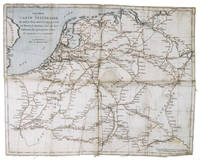
1810ABC_48289Amsterdam: E. Maaskamp 1810. Folded. An engraved map printed on linen ca. 33.5 x 43 cm. partly coloured by hand in red and blue ink. Extremely rare itinerary map of Northwestern Europe in the time of Napoleon printed on linen. It encompasses the north of the French empire including present day Netherlands Belgium Luxembourg and northern France down to Paris as well as the confederation of the Rhine present day Germany to Berlin in the east and Stuttgart in the south. The present edition of the map printed on linen is very rare as we have only been able to trace one other copy in sales records of the past 100 years and none in institutions.The map shows the routes between the major cities indicating post stations as well as the time of travel between each stop. These routes have here been coloured in red and the rivers canals and sea are coloured in blue.The present map is most likely the first edition but this is difficult to ascertain as it is not dated. Later editions followed as well as an English translation in 1815. On the separate map for the later editions also printed on linen the borders are adapted to the political situation of the time after 1815: the borders of the Kingdom of the Netherlands are indicated and "Royaume des Pays Bas" is added including "et Pays-Bas" at the end of the title. On our map the Netherlands are rendered as belonging to the French Empire after 1810 meaning it must have been printed before the other examples.The map is slightly frayed around the edges with some soiling/staining mostly on the right half. Otherwise in good condition.l Cf. Picarta 1 copy later ed.; WorldCat 71396772 2 copies later ed. E. Maaskamp, unknown
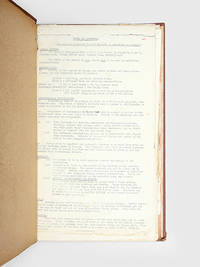
1945188661London: 1945. No mention is to be made anywhere outside the School of its activities A collection of material compiled by an RAF officer involved in classified British preparations for denazification and the takeover of Germany. Established at Viceroy Court Regent's Park in 1944 the Control Commission School Air trained attendees on the makeup of the German air force and state ahead of their deployment in Europe. Personnel are warned that "the title of the school is not repeat not to be used in unofficial correspondence." The binder opens with "Notes for Students" which alongside administrative and day-to-day matters stress the need for utmost secrecy and include a plan of the school. The syllabus covers background on European history and politics the Luftwaffe and the Allied plan for disarming and disbanding air units after occupation. There follows course-specific training documents such as granular briefings on the German national character the conditions expected after the Nazi surrender the structure of the Luftwaffe and the Gestapo. An informative four-page document draws lessons from the aftermath of the First World War calling for "absolute unanimity" among Allied personnel administering the occupation and two illustrated leaves guide personnel in the recognition of Luftwaffe and Wehrmachtbeamte ranks. Concluding the grouping is a six-page handwritten essay on the rise of Nazism by Flying Officer A. H. Reeve presumably the compiler of this group together with the comments of his supervising tutor at the school. Earlier in the war Reeve was assigned to the RAF Administrative and Special Duties Branch. Together 152 sides of printed material mostly duplicated typescript on foolscap sheets c. 330 x 200 mm but also some letterpress and illustrations; 6 manuscript sheets 225 x 170 mm each written one side only. Housed in contemporary quarto spring-back binder brown cloth cover stamped in blind. Occasional contemporary annotations internally. Contents creased and showing other signs of handling a couple of leaves with text faded but still legible: very good. hardcover
1925054371Mittler. very nice set; very attractive leather set; volume 12 has bullet hole in top of spine affects some of the maps in that volume; Volumes 1-14 plus vol. 14 Beilagen does not include the two-volume Kriegsrustung und Kriegswirtschaft or the Das deutsche Feldeisenbahnwesen volume . Very Good. Hardcover. 1925. Mittler hardcover
180756070Weimar Geographischen Institute 1807-13. Folio-oblong. Loose sheets in a box. Containg 128 engraved maps each measuring ca. 30 x 45 cm. Mostly clean and fine but some with annotations some with browning and some with traces of use. <br/><br/><em>Present are the following maps Sections: 3-12 17-24 29-36 42-48 53-60 64-66 71-74 80-81 86-90 97-98 103-108 114-126 135-142 151-159 167-173 180-186 193-197 204-208 216-219 227-231 239-243 and 248-254. </em> unknown
196858939Dusseldorf Germany: Verlag L. Schwann. As New. 1968. Hardcover. FREE UPGRADE to Courier/Priority Shipping Upon Request IN STOCK AND IMMEDIATELY AVAILABLE FOR SHIPMENT - AS NEW THE TEXT BLOCK IS PRISTINE CLEAN UNMARKED AND IN EXCELLENT CONDITION - - Text in German. 336 pp. With 274 ills. 24 col. . 30 x 21 cm. -- with a bonus offer-- . Verlag L. Schwann hardcover
196959128Dresden Germany: Albertinum. As New. 1969. Paperback. FREE UPGRADE to Courier/Priority Shipping Upon Request IN STOCK AND IMMEDIATELY AVAILABLE FOR SHIPMENT - AS NEW THE TEXT BLOCK IS PRISTINE CLEAN UNMARKED AND IN EXCELLENT CONDITION - - Text in German. 232 pp. With 130 ills. one tipped-in col. Plate. 26 x 21 cm. -- with a bonus offer-- . Albertinum paperback