79 611 résultats
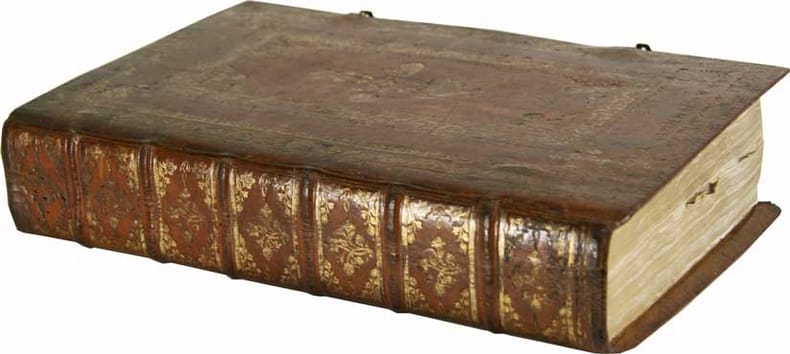
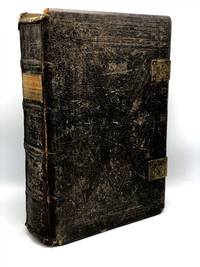
1474403583Strassburg: Johann Mentelin 1474. Folio 410 x 292 mm. Gothic types 3 columns 66 lines. Collation: the following gatherings all have stamped signatures a: a-i10 k l8 m10; stamped signatures b: 2a-d10 e81 f10 g-l10; stamped signatures c: 3a-h10 i12; stamped signatures d: 4a-h10 i8 k12. 415 leaves of 417 lacking preliminary and terminal blanks. 9-line initial "Q" in red and yellow on first page of text 7- to 8-line initials in red for each letter of the alphabet column headings in red in upper margin rubricated throughout. Approximately 50 leaves with mostly marginal tiny worm holes occasionally touching letters the last leaf with lower half renewed not affecting text a few leaves at end with skillful marginal repairs occasionally affecting signature. A LARGE COPY SCARCE IN A CONTEMPORARY BINDING <br/><br/>FIRST EDITION. Binding: Contemporary German dark brown calf over bevelled wooden boards sides with two broad double-fillet outer panels bounding a floral roll the central panels with intersecting double-filets forming diamonds and triangles each decorated within with roseate leaf quatrefoil stag and star tools the spine in five compartments with four double-corded raised bands 18th-century tan lettering-piece on spine in the second compartment brass clasps and catches printer's waste endpapers. Straps and hardware renewed probably when the label was added some overall wear old repairs to joints preserving original spine.<br/><br/>"The origins of the Latin biblical concordance must be sought in the thirteenth century at the Dominican convent of St. Jacques in Paris during a period when theologians felt urgent need for a compilation of all the uses of a particular scriptural word or phrase. Richard and Mary Rouse in their fundamental article 'The Verbal Concordance to the Scriptures' Archivum Fratrum Praedicatorum 44 1974 5-30 have shown that three attempts were then made to produce such a concordance all seemingly at St. Jacques. It was the third of these to which the name of Conrad of Halberstadt was later erroneously attached by Trithemius that won the day and obtained the largest diffusion. Over eighty manuscripts of this version survive the majority written in Paris between 1280 and 1330" Paul Meyvaert and Serge Lusignan review of Novae concordantiae Bibliorum Sacrorum iuxta vulgatam versionem by Bonifatius Fischer in: Speculum Vol. 56 No. 3 July 1981 pp. 611-613. <br/><br/>Johannes Mentelin had published the first printed Bible in German in 1466 and Nicolaus de Lyra's Postilla super totam Bibliam a commentary on the Bible in 1472. Of the approximately 40 works ascribed to his press the Concordantiae bibliorum is notable as "very peculiar in its method of signature and shows in an interesting manner the transitional period between the manuscript and printed methods of signing" William Blades "The Use & Development of Signatures in Books" in: Books in Chains and Other Bibliographical Papers 1892 pp. 110-112. The signatures mostly preserved in this copy are printed in the lower right corner. The text is divided in quarters and designated with stamped signatures "a" through "d". The copy in Leipzig UB has a rubricator's date of 1474 establishing the latest possible year of publication. <br/><br/>Scarce: Only two other copies have been offered at auction in the last 40 years: The Blades-St. Bride Foundation-Rattey copy sold Swann 15 April 2004 lot 45 now in the Scheide Library Princeton and the copy sold Christie's London 17 November 1976 lot 143. These were both rebound and we trace no copies in contemporary bindings on the market. ISTC lists only seven copies in North America: Brown; LoC; La Casa del Libro; Mrs. Alexander P. Rosenberg New York; The Morgan Library; Scheide Library Princeton; the Huntington Library; and Bridwell Library SMU. <br/><br/>References: Goff C849; BMC I 58; BSB-Ink C-497; GW 7418; H 5629. See VL V 189-91 at 189-90 and R. H. and M. A. Rouse "The Verbal Concordance to the Scriptures" Archivum Fratrum Praedicatorum 44 1974 5-30 at 19-20 and 25; also Kaeppeli I 276-83 no. 755 where it is ascribed to Conradus. <br/><br/> Johann Mentelin hardcover books
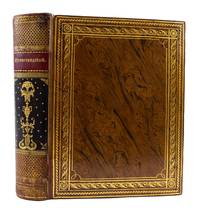
Boards a bit sunned, spine label browned and lightly chipped, but still readable "Klein's Rheinreise, Zweite Auflage". Neat notation with black ink, on first blank page, dated 1837. Bookplate. Two illustrations and two steel engraved fold out maps. Very light browning to a few single pages, not affecting contents. ; This book is the expanded and revised edition of Professor J. A. Klein's Rheinreise. Converted into a guidebook by the legendary bookdealer of Coblenz, Germany - Karl Baedeker. The first book to bear his original name Bädeker, and the precursor of the entire series. A virtually unique publication - extremely rare ; 16mo 6" - 7" tall; 517 pages
235034S.l., n.d. in-folio, maroquin rouge, bordure de feuillage et fleurons dorés, armes au centre, dos lisse orné, tranches dorées (reliure de l'époque).
183511052Koblenz: Karl Baedeker. 1835. Second Edition. Hardcover. Very Good. Boards a bit sunned spine label browned and lightly chipped but still readable "Klein's Rheinreise Zweite Auflage". Neat notation with black ink on first blank page dated 1837. Bookplate. Two illustrations and two steel engraved fold out maps. Very light browning to a few single pages not affecting contents. ; This book is the expanded and revised edition of Professor J. A. Klein's Rheinreise. Converted into a guidebook by the legendary bookdealer of Coblenz Germany - Karl Baedeker. The first book to bear his original name Bädeker and the precursor of the entire series. A virtually unique publication - extremely rare ; 16mo 6" - 7" tall; 517 pages . Karl Baedeker hardcover
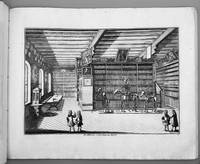
172012572Nürnberg: W. Michahelles for the author 1720. Somewhat later beige paper over stiff boards soiled rubbed short crack at the top of the front hinge edges slightly defective octagonal manuscript-lettered title label on the front cover. <p> Only Edition first issue of these lively views of the renowned Bavarian university town of Altdorf on the cusp of the Enlightenment. Founded in 1526 as a high school raised to an academy in 1578 and a university in 1622 Altdorf was "one of the first if not the first university in Germany dedicated to the serious study of the experimental sciences" Irsay tr. The school's graduates include imperial field marshals Wallenstein and Pappenheim composers Briegel and Pachelbel and the polymath Leibniz. The album has been variously dated from 1681 to about 1720.<br /> Johann Martin Trechsel 1661-1735 wrote the introductory text. He describes sketching the town and its environs over a four-year period and shares characteristic aspects of his subject before expatiating upon each plate's contents - identifying owners of specific houses and gardens explaining local civil and academic customs enumerating the university's buildings dating the addition of specific features recording inscriptions highlighting architectural features and discussing important patrons and professors.<br /> The suite begins with the town's skyline and outer walls as seen from the northwest the road from Nürnberg then the market square the orphanage chancery Church of St. John inside and out and town hall during a festival. The university is the subject of the rest of the etchings starting with the general assembly hall. THE ANATOMICAL THEATER HAS WALL-MOUNTED HUMAN VENATION DIAGRAMS. ANIMAL SKELETONS FILL THE MEZZANINE. THE FULLY FURNISHED CHEMICAL LABORATORY est. 1683 follows. Both rooms are fully treated in the text.<br /> Three plates show THE LIBRARY AND ITS COLLECTION OF NATURAL CURIOSITIES the physic garden and green houses of exotic and medicinal plants and the theology lecture hall. The final three etchings depict student life - their recreation facilities wash basins desks and study carrels the dining hall servers carrying food students raising toasts. and the private fencing academy.<br /> I have located two examples in the U.S. both defective. In good condition the final letterpress leaf with a minor lower blank marginal stain bookplate of Christian Gottlieb Müller 1741-1823 Secretary of the storied Nürnberg literary society Pegnesischer Blumenorden and author of the Verzeichnis von nürnbergischen topographisch-historischen Kupferstichen 1791-1821; see below pencil signature of Dr. A. Enorbi Landgerichts Rath.<br /> ¶Irsay Histoire des universités II: 110; Müller Verzeichnis von nürnbergischen.Kupferstichen I: 54-5; Günther "Die mathematischen- und Naturwissenschaften an der nürnburgischen Universität Altdorf" in Mitteilungen des Vereins für Geschichte der Stadt Nürnberg Hft. III 1881 9-12; Werner & Schmidt-Herrling Die Bibliotheken der Universität Altdorf 48-9 & frontispiece of the library reproducing plate 16; Erman & Horn Bibliographie der deutschen Universitäten II: 29a; VD18 14688239.</p> W. Michahelles for the author unknown
64882Nürnberg, [Johann Sensenschmidt, nicht nach 1471]. Fol. 20 nn. Bll. u. ein weiteres, einseitig bedrucktes kleineres Blatt (23 Zeilen), eingefügt zwischen den Bll. 16 u. 17. Mod. flex. Pgmt. m. durchzogenen Bünden u. Schließbändern.
162183(Hanau), (1813-1814) 40 x 55,5 cm, Gouache sur papier contrecollée, cadre de bois.
16503510Frankfurt, Merian, 1646 - 1650. 2 Bde. 19 Bll., 1154 S., 13 Bll.; 18 Bll., 984 S., 10 Bll. mit 3 Textkupfern und 1 ganzseit. Kupferporträt. 2 Kupfer-Frontisp., 12 Kupfertafeln mit 144 kleinen Porträts und 106 meist doppelblattgroße (einige gefalt.) Kupfertafeln mit Ansichten und Karten. 4°. Abweichendes Pgmt. der Zeit mit hs. Rückentitel (etw. fleckig und leicht bestoßen).
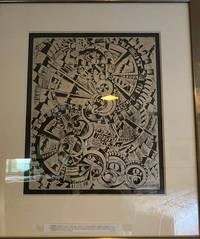
1919340Woodcut. 1919-1920. From the suite of 4 prints title M.E.Z. Signed dated and titled in red ink lower right. Grohn 28c Sprengel Museum 28c. Woodcut printed in silver on black paper. A small ed. of unknown size. 15 7/8 x 19 ¼ with full one inch margins all around. books
1919340<p>Woodcut. 1919-1920. From the suite of 4 prints title M.E.Z. Signed dated and titled in red ink lower right. Grohn 28c Sprengel Museum 28c. Woodcut printed in silver on black paper. A small ed. of unknown size. 15 7/8 x 19 ¼ with full one inch margins all around.</p>
241590A mon Refuge sur le Leopoldberg près de Vienne, et se vend à Dresde,, chez les frères Walther, 1795 - 1809 32 volumes in-12, demi-veau blond à coins, dos lisse, filets dorés (reliure de l'époque).
1539000114Augsburg, Heynrich Steyner [Heinrich Steiner], 1539. 20 nichtgezählte, CXV, 1 unbedrucktes Blatt; 10 nichtgezählte, CXLII, 8 nichtgezählte Blatt. Großformatiger Halbleinenband vom Ende des 19. Jahrhunderts mit goldgeprägtem Rückentitel. Zweite deutsche Ausgabe von Petrarcas "De remediis utriusque fortunae" und die erste Ausgabe dieser Übersetzung von Stephan Vigilius (VD 16: P 1726; Short-Title Catalogue of German Books in the British Museum, p. 686). Die Holzschnitte des sogenannten Petrarca-Meisters, dessen Identität bis heute nicht wirklich geklärt werden konnte, zeigen die im Buch besprochenen Lebenssituationen in herrlicher, großformatiger Darstellung und wurden erstmals für die deutsche Erstausgabe in der Übersetzung von Peter Stachel und Georg Spalatin verwendet, die Steyner 1532 herausgebracht hatte. Leider hat unser Exemplar Mängel: Es fehlen im zweiten Buch die Blätter LXI-LXVI (also 6 Blatt mit 8 Textholzschnitten), dafür sind Blatt XXXIX und XL doppelt eingebunden, wodurch 2 Holzschnitte wiederholt werden (es sind demzufolge neben diesen beiden nur 252 der ursprünglich 260 Textholzschnitte vorhanden). Die Seiten anfänglich mit kleinen alten Wurmgängen, das Titelblatt deswegen zur Stabilisierung komplett mit Papier hinterlegt und die ersten 6 Blatt mit ebenso hinterlegtem weißen Blattrand. Außerdem wurden bei 2 Blatt im ersten Teil kleine Einrisse im weißen Blattrand hinterlegt, wodurch nicht der Text, jedoch ein Holzschnitt am Rand mitbetroffen ist. Der Einband ist an Gelenken und Kanten etwas berieben, der Rücken oben und unten abgegriffen, wodurch das Leinen geringe Fehlstellen aufweist. Der Band trägt ein Exlibris im Jugendstil. Insgesamt birgt der etwas unscheinbare Einband eines der berühmtesten und schönsten Holzschnittbücher der Dürerzeit in einem zwar nicht ganz vollständigen, aber dennoch ordentlichen, insgesamt noch gut erhaltenen Exemplar. Als Beilage: Walther Scheidig: Die Holzschntte des Patrarca-Meisters. Berlin: Henschel 1955, 353 S., Großformatiger Orig.-Leinenband mit Schutzumschlag.
152047638München bzw. Landshut, Hans Schobser bzw. J. Weißenburger, 1514-1520. Fol. Mit 2 Titelholzschnitten von Caspar Clofigl, einem gefalt. Holzschn.-Stammbaum u. 2 (1 altkolor.) Wappenholzschnitten. Blindgepr. Kalbldr-Bd. d. Zt. über Holzdeckeln.
16444649Frankfurt, Merian, 1643 - 1644. 2 Werke in 1 Bd. 1 Kupfertitel, 2 (statt 3) doppelblattgr. Kupferstichkarten und 41 (statt 58) teils gefalt. Kupfertafeln. 2 doppelblattgr. Kupferstichkarten und 25 (statt 38) Kupfertafeln. 4°. Mod. HLwd. mit Rückenschild (Gebrssprn.).
1817ST18762Halle and Berlin: Hallisches Waisenhaus 1817. 275 x 215 mm. 10 3/4 x 8 3/8". 210 leaves 18 pp. 4 leaves. <br/> REMARKABLY FINE CONTEMPORARY MARBLED CALF covers with complex gilt border composed of plain rules and decorative rolls smooth spine divided into compartments by gilt Greek key rolls top and bottom compartments with all-over gilt scallop design long central panel of black morocco with elaborate gilt vase and floral ornament surrounded by small gilt stars and with red morocco titling label above; FULL SPECKLED CALF DOUBLURES the front doublure with a painted lyre featuring gilt strings sword and wreath the rear with a monopteros with an eternal flame at the center upon a plinth superimposed upon which is an onlaid black morocco label framed in gilt and with gilt lettering "18. Oct. 1813" both doublures framed with red morocco supporting an elegant scrolling gilt band densely gilt turn-ins blue silk moiré endleaves all edges gilt an expert two-centimeter repair at head of spine. With frontispiece 21 portraits and 11 maps three folding one with flap all but one with inserted tissue guard. ◆Joints with slight flaking a hint of wear along tail edges as expected bottom spine compartment faintly rubbed with minor loss of gilt a little oxidation to the wreath on front doublure but A VERY HANDSOME BINDING with only minor condition issues. Light overall browning to plates because of paper content but virtually no foxing and only very occasional some quite faint spotting; THE TEXT itself IN NEARLY PRISTINE CONDITION extraordinarily clean bright and fresh with just one or two negligible imperfections.<br/> <br/> In a wonderful binding with unusual doublures this work commemorates the so-called "Wars of Liberation" that effectively ended French hegemony over Europe and that forced Napoleon into exile. Also known as the War of the Sixth Coalition the conflict took place between 1813-14 following Napoleon's retreat from Russia in 1812. Though the major battles primarily took place in German territory rulers of Russia Prussia Austria Spain Portugal the United Kingdom Sweden and many German States all banded together to oppose France. In March of 1814 the allies entered Paris prompting the French Senate to depose Napoleon and install Louis XVIII as the French sovereign. Although Napoleon would briefly return from his exile on Elba to stage a comeback in 1815 it was short lived and ended in his final defeat. The majority of the text here discusses the events of 1813 and 1814 during the height of the conflict and includes portraits of the major players and maps helping to illustrate the most important battles. This work is beautifully printed on thick white paper and is clearly meant to act as both a chronological record of the events and a memorial to those who liberated the German states from a tyrannical power. The lovely marbled calf binding opens to reveal two exceptional doublures painted in the manner of an antique vase with a lyre wreath and sheathed sword on the front doublure and on the rear a monopteros this latter circular colonnade with an eternal flame bearing a small morocco onlay emblazoned with the date 18 October 1813. This refers to the Battle of Leipzig also called the Battle of Nations fought from 16-19 October--by many accounts the single largest and bloodiest battle of the entire Napoleonic Era. It marked a decisive turning point in the Wars of Liberation and was an obvious source of pride for the German people. Given the momentous nature of the book's content the present grand and beautifully designed binding serves as a suitably striking vehicle of presentation. Hallisches Waisenhaus unknown
67457ABo.J. 67457AB Die gesamte Sammlung befindet sich in einem nahezu makellos frischen Zustand.
19801014FBRoma., Galleria Pieroni., 1980. 23,6 x 17,1 cm. 12 unpaginierte S. OKarton, der vordere Deckel mit grauem Lack handgesprüht., 1014F Einband verso etwas stockig, sonst sehr gutes Exemplar.
16604648Frankfurt, Merian, 1654 (d. i. um 1660). 1 Bl., 320 S. (ohne die S. 29 - 34, 123 - 126, 181 - 182). 1 Kupferitel, 1 (statt 3) Kupferstichkarten , 2 gefalt.Stammtafeln und 108 (statt 132) teils gefalt. Kupfertafeln. 4°. Pgmt. der Zeit mit Rückenschild (stark fleckig und gebräunt, Vorderdeckel mit hs. namen, etw. bestoßen, Gebrssprn.).
16424830DB3 Bände. Franckfurt am Mayn, Wolffgang Hoffmanns Buchdruckerey, 1642–1759. Folio. 1.: Kupfertitel, Titel, (36) Bl. (Porträts), 1185 S., (51) S. (Register), 2 gefaltete Kupfer (Weltkarte), 329 Kupfer im Text; 2.: Kupfertitel, Titel, (2) Bl., 1272 S., (68) Bl. (Register, 57 gefaltete Kupfer; 3.: Titelkupfer, Titel, (2) Bl., 1328 S., (57) Bl. (Register), 45 gefaltete Kupfer. Leder- und Halblederbände.
176952694Wien: Johann Thomas Edlen von Trattnern 1769. First Edition. Folio pp. xvi 282 lvi Illustrated with 27 engravings in the text & 3 folding engraved plates included in the pagination. One of the plates was misfolded and is consequently slightly frayed at the lower edge with an old paper repair at the foredge not affecting the print area. Woodcut and typographic ornaments and initials. Text in German black letter with glosses in Latin. Bound in contemporary calf spine gilt little rubbed and recently rebacked red edges. Woodblock printed end papers. Some toning to the text The binding is a little rubbed but still a very good crisp and clean copy. Laid in: MARIA THERESA; EMPRESS. Autograph Note Signed "Maria Theresia" on black rimmed mouring paper to paymaster Mayer in German concerning her son's pension requesting 500 ducats or sovereigns and in a postscript written at lower edge and vertically at upper edge adding that the letters would follow in the evening. 1 page 12mo mourning stationery; some staining affecting signature but still legible folds. Vienna circa 1776. Maria Theresa was the eldest daughter of emperor Charles I and of Elizabeth Christina of Brunswick. At the death of her father in 1740 she became the sole heiress of his dominions of the house of Austria. Upon her accesion to the throne the neighboring countries tried to capture parts of the empire which led to the Wars of Austrian Succession which finally concuded with the treaty of Aix-la-Chapelle in 1748. This is the famous criminal code of Maria Theresa which used torture as a means of "eliciting truth." Her insticts were absolutist and she would allow nothing that limited state power even as she reformed the education system and worked to better the lives of her citizens. And she did not forbid torture. Torture was only to be used in capital and very serious criminal cases. Included in this volume are very graphic illustrattions of instruments of torture thumb-screws stocks racks burning candles leg vices winches the Viennese shoe! with detailed and precise instruction of their use. According to the Britannica this edition was suppressed by Prince Kaunitz chancellor of the state and an advisor to the Empress. Torture was formally abolished in the empire in 1776. Maria Theresa Walburga Amalia Christina was the only female ruler of the Habsburg dominions and the last of the House of Habsburg. Maria Theresa and her husband Francis I Holy Roman Emperor had sixteen children including Queen Marie Antoinette of France. Maria Theresa was the absolute sovereign . She promulgated financial and educational reforms promoted commerce and the development of agriculture and reorganised Austria's ramshackle military all of which strengthened Austria's international standing. Johann Thomas Edlen von Trattnern unknown books
Signed and inscribed by author upon front free endpaper. 552 pages. Index. Black and white photographic plates. "One of the most important autobiographies of the post-war period, for there can be few personalities still alive who have been so intimately connected with the march of world events for so many years... His first great triumph was to rescue the German Mark from the inflation of 1921... As the Nazi avalanche swelled, Hitler persuaded him to occupy the Presidential chair at the Reichsbank... but (Schacht) soon saw that the Fuhrer was driving relentlessly towards war. A quarrel resulted and he left the Government, remaining under a cloud until he was arrested towards the close of the regime." - from dust jacket. Schact was aquitted of war crimes at Nuremberg. Moderate wear to book. Binding intact. Several patches and touch-ups to dust jacket which is now preserved in archival-grade Brodart. Kehr & Langmaid 1217, Aldcroft & Rodger p.83. Book
88075aafSalisburgi (Salzburg), Sebastiani Haubt et Melchioris Haan, 1684, Titel in schwarz u. rot (mit gest. Vign.) + 33 unnum. Bl. (Introductio, Dedicatio etc. mit paschalischem Kalender) + 628 S. (mit 9 ganzseit. Kupfern und 9 gr. figürl. Kupferbordüren sowie zahlr. Holzschnitt-Initialen in Rot und Schwarz) + CXII + 1 Bl. + 22 S. (Missae propriae sanctorum metropolitanae Ecclesiae), zw. den Seiten ein paar handgeschriebene Zettel mit lat. Ergänzungen oder Kommentaren, leichte Wurmspuren und teilw. etwas fingerfleckig, ansonsten guter Zustand, Ledereinbd. d. Z. über Holzdeckeln auf 6 Bünden, mit reicher Deckel- und Rückenverg. und Goldschnitt, mit 2 Schliessen (ergänzt), wenige Wurmspuren, schönes Exemplar.
19741013FBMönchengladbach., Städtisches Museum Mönchengladbach., 1974. 21 x 17 cm. 12 S. Leporello, 4 S. OPapp-Kassette., 1013F Tadellos frisches Exemplar.
178065196Nürnberg, Christoph Weigel, 1780. 8°. Mit 37 doppelblattgr. kolor. Kupferkarten. 8 Bll., 186 S., 98 Bll., HLdr. d. Zt. a. 5 Bünden m. Rückenverg., goldgepr. Rückenschild u. Rotschnitt.
18441165Paris, Jules Labitte, 1844 ; 2 vol. in-8 de [3] ff., 422 pp. ; [2] ff., 370 pp., 1 f. bl., reliures de l’époque maroquin à long grain cerise, double encadrement de filets dorés sur les plats, fleurons dans les angles, dos lisses ornés en long, roulette intérieure, tranches dorées.