Richard WagnerABAA

618 résultats
186918200Leipzig: Verlagsbuchhandlung von J.J. Weber 1869. Cloth. Very Good. Following the 1850 original printing of Wagner's virulent attack on the influence of Judaism in music this is the 1869 correct 2nd edition published out of Leipzig and for the first time using Wagner's own name as author. Rebound in the mid-20th century in a light-blue cloth with dark leather title label at the spine. New front and rear endsheets as well. Happily though the complete book is bound-in including the original light-green wrappers which show minor soiling and creasing along the edges. The original text has held us very nicely as well; bright clean and eminently readable. Octavo 57 pgs. plus publisher's ad at the rear. <br/><br/> Verlagsbuchhandlung von J..J. Weber hardcover books
1899208238Akron: Werner Company 1899. First. hardcover. very good-. Handsomely illustrated with 44 full-page color lithographs. 241pp. Oblong folio pictorial cloth; some areas of edges lightly worn back cover and first few page margins lightly soiled last two blank pages lightly dampstained rebacked in modern brown cloth front flyleaf lacking bottom right corner inner hinges strengthened. Akron: Werner Company 1899. First Edition.<br/><br/> Internally the plates and text are bright. Plates depict soldiers on horseback and on foot mostly in battle scenes.<br/><br/> Werner Company unknown books
188116649Karlsruhe: J. Veith 1881. Hardcover. vg. Rare copy: OCLC only has one listing. Folio 15" x 11". Portfolio. Paste-on labels over paper covered cloth with string ties. 24 chromolithographic plates. Very attractive suite of plates showing ornaments for book covers lamp bases cigarette plates "Zigarettenteller" frames boxes and other smaller household articles. In German. Some occasional slight handling marks else fine. J. Veith hardcover
1899208238Akron: Werner Company 1899. First. hardcover. very good-. Handsomely illustrated with 44 full-page color lithographs. 241pp. Oblong folio pictorial cloth; some areas of edges lightly worn back cover and first few page margins lightly soiled last two blank pages lightly dampstained rebacked in modern brown cloth front flyleaf lacking bottom right corner inner hinges strengthened. Akron: Werner Company 1899. First Edition.<br/> <br/> Internally the plates and text are bright. Plates depict soldiers on horseback and on foot mostly in battle scenes.<br/> <br/> Werner Company unknown
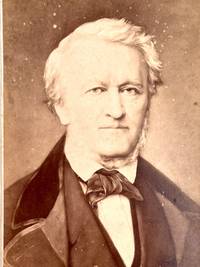
186684081Munich: Friedrich Bruckmann 1866. Fine. Friedrich Bruckmann Munich 1866 10.70 x 17.10 cm une feuille Original cabinet card format photograph. Gelatin silver bromide print retouched with pen. Photograph mounted on rigid card. Bruckmannn's portrait collection Nr. 180. Friedrich Bruckmann in Munchen. Trace of a fold at the upper right corner in the margin. Silver points around the portrait which indicate an early printing and not a later reprint as in later printings this photograph was retouched to erase the grain. Friedrich Bruckmann 1814-1898 was a German publisher and photographer who specialized in artist photography and had an extensive catalogue. Fine print skillfully retouched with pen. Friedrich Bruckmann unknown
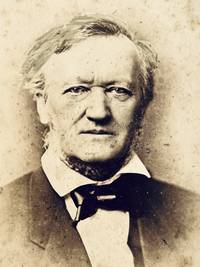
187784653London: Elliott & Fry 1877. Fine. Elliott & Fry London 1877 10.50 x 16.60 cm une feuille Original cabinet card format photograph. Silver gelatin bromide print. Photograph mounted on rigid cardboard. Photographer's advertisement on verso and lower margin. Medium photographic portrait of composer Richard Wagner who made a third journey to London in 1877 to conduct several concerts intended to fill the financial chasm of Bayreuth; he was on this occasion presented to Queen Victoria. It was during this trip that he had himself photographed at Elliott & Fry who had an address on Baker Street. He undoubtedly used this print for his promotion. Elliott & Fry unknown
187518437Mainz: B. Schott's Söhne April 1875. Used; Like New/Used; Like New. Götterdämmerung. Vollständiger Klavierauszug von Karl Klindworth. Folio. Lithographed throughout. PN 21500. 1f. general title "Der Ring des Nibelungen" 1f. title 1f. half-title 1 cast list and contents 2-357 i blank pp. Inscribed on the title page by cellist and composer David Popper as follows: "Der unsterblichen / Muse Richard Wagner / kunstbegeisterten / Förderer durch Wort / und Schrift von / seinem ihn herzlich / .David Poper / Wien 6. Mai 1875 / III. Wagnerkonzert in Wien" "The immortal muse of Richard Wagner / his art-loving supporter through written/ and spoken word/ warmly / David Popper / Vienna 6 May 1875 / 3. Wagner concert in Vienna".   Contemporary black cloth boards quarter brown leather. Generally in fine internal condition throughout with a few light pencil markings one leaf p. 11/12 with two significant tears; spine covering largely perished boards separating from the block rear board barely holding on. Fuld p. 465; Deathridge Geck and Voss WWV p. 402; Klein p. 51. <br>The present historic copy was inscribed on the occasion of Wagner's conducting portions of Götterdämmerung in concert in Vienna in advance of the the complete opera's Bayreuth premiere in 1876. The publication of this piano vocal score preceded the full score by over a year and the general title page on which Popper has inscribed as well as the half title are common to the full scores of all four Ring operas. As with Siegfried and Parsifal Schott's first edition of Götterdämmerung was issued in lithographed form with only a few mainly presentation copies being issued directly from the engraved plates. <br>One of the most influential cellists of the late nineteenth and early twentieth century Popper was a student of Julius Goltermann and at age 25 secured the position of principal in the Vienna Hofoper and the Vienna PO the youngest player to hold such a post and later joined the Hellmesberger Quartet. He was in friendly contact with Franz Liszt whose pupil pianist Sophie Menter became Popper's first wife in 1872. This marriage which produced in 1876 a daughter Celeste ended after fourteen years although during that time the couple appeared in countless joint recitals. His acquaintance with Liszt led Popper also to Richard Wagner and in 1873 he became a co-founder of the first ever official Wagner Society the Viennese Wagner-Verband. In 1886 his marriage dissolved Popper was appointed by Liszt as professor at the National Hungarian Royal Acadamy of Music where he established the cello and chamber music divisions. He remained until his death having also served as a member of the Hubay Quartet. A cellist of superior technique and a warm powerful tone Popper was a champion of new music and the composer of more than 75 works mostly for his own instrument. His most important contribution is certainly the Hohe Schule des Violoncello-Spiels a set of 40 studies that examine the positions of the left hand within a highly chromatic Wagner-influenced setting. <br style="">Götterdämmerung is the fourth opera in the Ring cycle. Excerpts were first performed in a concert at the Musikverein in Vienna on March 25 1875; the entire work was first performed as part of the Ring cycle at Bayreuth on August 17 1876. "The final opera of the Ring. provides an appropriately weighty conclusion to the epic cycle. 26 years elapsed from the time Wagner made his first prose draft for the work then called Siegfrieds Tod to the completion of the full score with inevitable consequences in terms of stylistic unity. Retrogressive elements of grand opera exist side by side with motivic integration representative of Wagner's most mature style. And yet the stylistic integrity of Götterdämmerung is scarcely compromised so skillfully are the disparate elements welded together and so intense the dramaturgical conviction. The resources and stamina demanded by the work from both singers and orchestra combined with its sheer length and theatrical potency make it one of the most daunting yet rewarding undertakings in the operatic repertory." Grove Music Online<br style=""><br style=""> B. Schott's Söhne hardcover books
187035131870. Framed`. Broken in the middle a little worn but in acceptable condition. Framed`. 10 x 6 cm. Inscribed to Horace de Callias . Horace de Callias a painter he was a student of Alexandre Cabanel at the École des Beaux-Arts in Paris. His work consisted of Parisian genre scenes portraits and mythological scenes. He exhibited at the Salon from 1870 until 1891. unknown
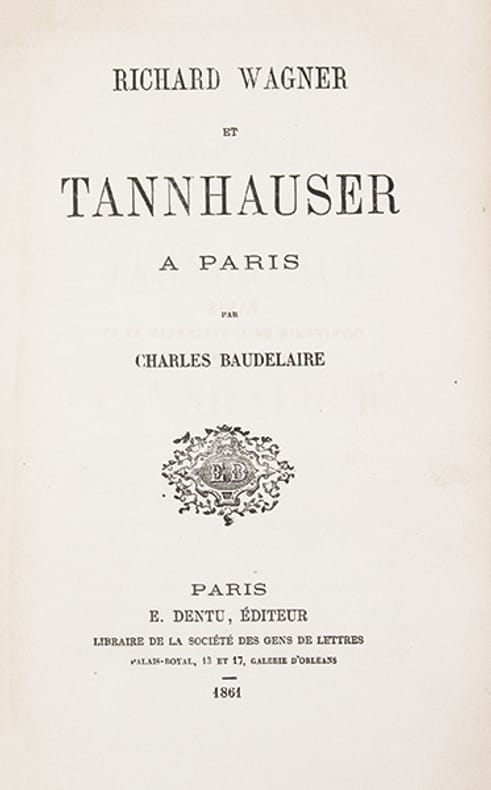
1861386561861 In-12 (184 x 118 mm), broché, couverture imprimée de l'éditeur, protégé sous chemise de demi-toile vert sapin, plats estampés à froid et étui de cartonnage du même motif, 70 p., (1) f. blanc. Paris, E. Dentu [impr. L. Tinterlin et Cie], 1861.
1860384770Wein: Ant. Diabelli & Comp. 1860. Hardcover. Good. One bound volume containing 52 manuscript leaves of music on the versos and rectos of each sheet bound in at the front and 10 printed scores totaling 116 pages of music. Text in German. Oblong quarto. Measures 13.5" x 10.25". Contemporary half morocco and cloth boards with "Varieties-Piano" stamped in gilt on the spine. Scuffing at the joints and corners scattered foxing a few early wove-paper repairs about very good. A unique custom bound collection of popular waltzes and opera arrangements for piano most likely assembled by a Viennese-based musician in the 1850s. Only one of the manuscript arrangements is signed and dated: "Clementine Steiner … März 1853.†Most of the printed scores were published by the famous Viennese music publisher and composer Anton Diabelli in the Euterpe series from the 1840s and 1850s.<br /> <br /> The manuscript leaves consists of about 17 short pieces and 18 longer works most of which range from four to 10 pages each. Among the scores in manuscript are piano arrangements from Wagner's Der fliegende Holländer Rienzi Lohengrin and Tannhäuser. Also included are arrangements from operas by Verdi Donizetti Meyerbeer and Gounod. The music is neatly written in ink with one short section in pencil most likely in two different hands with the titles tempos and lyrics in German. Bound-in after the manuscript scores are 10 printed scores ranging from three to 13 pages each. These include waltzes by Josef Strauss H.C. Lumbye Joseph Lanner and others; and various extracts from operas by Bellini arranged for piano by Anton Diabelli. A unique and pleasing collection of waltzes and operatic melodies from Vienna’s golden age. A detailed list of the individual arrangements and printed scores is available upon request. Ant. Diabelli & Comp.) hardcover
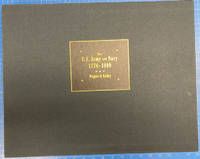
189949472Akron: The Warner Company 1899. 1899. MILITARY. First edition. Oblong folio 14" x 17" decorated cloth titles and color design on the front cover brown front and rear endpapers all edges gilt 241 pp. 43 folio sized color lithographs with accompanying text. Color plates depict the uniforms of officers and non-commissioned officers and the changes to the uniform through time for both Army and Navy 1776-1899. Appendices enumerating the principal ships of the United States Navy their batteries and armor and official reports of the Battle of Manila and the action off Santiago De Cuba. Much on the Indian Wars including four full-color lithographs depicting the U.S. Army either attacking or being attacked by Indians. One full color lithograph entitled "U.S. Army - Custer Massacre At Big Horn Montana - June 25 1876" was prepared especially for this publication and does not appear elsewhere. Also much on the Spanish-American War including full reports of activities. At the back is a complete list of ships of the U.S. Navy including specifications on batteries armor engines and date of launching. We do not feel that many copies of this book have survived intact over the years largely due to its size and the overwhelming temptation to break up the book to gain the colorful plates each image size measuring 9" x 13" which are suitable for framing. Expertly rebacked and some light cosmetic touch-up to the spine ends and corners else very good tight bright copy. housed in a cloth slipcase with leather labels on front cover and spine with titles stamped in gilt. An exceptional copy of a rare and informative book. The Warner Company, 1899. hardcover
1889272886Berlin: Berlin Kunstdruck - und Verlags-Anstalt 1889. First. unbound. near fine. Carl Emil Doepler. Group of 39 of 40 total large plates showing costume designs for all the characters in Wagner's Ring by Carl Emil Doepler. Beautifully printed chromolithograph plates with excellent details 13-1/2" x 18" loose as issued and protected in a new gray cloth portfolio box with red leather spine label and the original title text mounted on front. Berlin: Berlin Kunstdruck- und Verlags-Anstalt Vormals A. & C. Kaufmann 1889. First edition. The 10 text pages are quite tattered at edges but the plates printed on heavier stock are all in excellent clean condition with only very minor wear at marginal edges or corners of 4 plates. Lacking plate 26: "Wotan als Wanderer" but otherwise a near fine copy of this very scarce and beautifully produced work - OCLC lists only 1 copy in the Netherlands and there is only 1 auction sale record from 1993.<br/><br/> Part I Das Rheingold: 1 Rheintochter. 2 Wotan. 3 Fricka und Freia. 4 Fasolt. 5 Fafner. 6 Donner. 7 Froh. 8 Loge. 9 Alberich. 10 & 11 Die Nibelungen. 12 Erda. Part II Die Walkure: 13 Siegmund. 14 Sieglinde. 15 Hunding. 16 Wotan. 17 Brunnhilde. 18 Waltraute. 19 Die Walkuren Grimgerde & Gerhilde & Siegrune. 20 Ortlinde. 21 Rossweisse. 22 Schwertleite. 23 Helmwige. Part III Siegfried: 24 Mime. 25 Siegfried. 26 Wotan LACKING. 27 Alberich. Part IV Gotterdammerung: 28 Die Nornen. 29 Brunhilde. 30 Siegfried. 31 Gunther. 32-35 Mannen Gunthers. 36 Barde und Kinder. 37 Knechte mit Jagdbeute. 38 Gutrune. 39 Frauen im Gefolge Gutrunes. 40 Hagen.<br/><br/> Berlin Kunstdruck - und Verlags-Anstalt unknown books
1889272886Berlin: Berlin Kunstdruck - und Verlags-Anstalt 1889. First. unbound. near fine. Carl Emil Doepler. Group of 39 of 40 total large plates showing costume designs for all the characters in Wagner's Ring by Carl Emil Doepler. Beautifully printed chromolithograph plates with excellent details 13-1/2" x 18" loose as issued and protected in a new gray cloth portfolio box with red leather spine label and the original title text mounted on front. Berlin: Berlin Kunstdruck- und Verlags-Anstalt Vormals A. & C. Kaufmann 1889. First edition. The 10 text pages are quite tattered at edges but the plates printed on heavier stock are all in excellent clean condition with only very minor wear at marginal edges or corners of 4 plates. Lacking plate 26: "Wotan als Wanderer" but otherwise a near fine copy of this very scarce and beautifully produced work - OCLC lists only 1 copy in the Netherlands and there is only 1 auction sale record from 1993.<br/> <br/> Part I Das Rheingold: 1 Rheintochter. 2 Wotan. 3 Fricka und Freia. 4 Fasolt. 5 Fafner. 6 Donner. 7 Froh. 8 Loge. 9 Alberich. 10 & 11 Die Nibelungen. 12 Erda. Part II Die Walkure: 13 Siegmund. 14 Sieglinde. 15 Hunding. 16 Wotan. 17 Brunnhilde. 18 Waltraute. 19 Die Walkuren Grimgerde & Gerhilde & Siegrune. 20 Ortlinde. 21 Rossweisse. 22 Schwertleite. 23 Helmwige. Part III Siegfried: 24 Mime. 25 Siegfried. 26 Wotan LACKING. 27 Alberich. Part IV Gotterdammerung: 28 Die Nornen. 29 Brunhilde. 30 Siegfried. 31 Gunther. 32-35 Mannen Gunthers. 36 Barde und Kinder. 37 Knechte mit Jagdbeute. 38 Gutrune. 39 Frauen im Gefolge Gutrunes. 40 Hagen.<br/> <br/> Berlin Kunstdruck - und Verlags-Anstalt unknown
188584667Imprimeries Morellet Boyer & Cie | Paris 1885-1888 | 16.80 x 24.60 cm | 3 volumes reliés
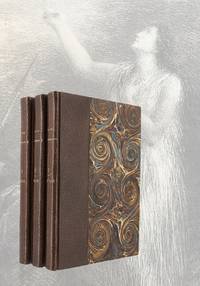
188584667Paris: Imprimeries MorelletBoyer & Cie 1885. Fine. Wagner's influence on literary and artistic avant-garde Imprimeries Morellet Boyer & Cie Paris 1885-1888 16.80 x 24.60 cm 3 volumes reliés Complete collection in 36 issues including three double issues bound in three volumes - First year: 12 issues from 8 February 1885 to 6 January 1886 - Second year: 12 issues from 8 February 1886 to 15 January 1887 - Third year: 12 issues from February 1887 to January 1888. Illustrated with 4 full-page lithographs by Fantin-Latour: L'Évocation d'Erda - Odilon Redon : Brünnhilde - Jacques-Emile Blanche : Tristan et Isolde and Le pur-simple. Three quarter brown morocco binding smooth spine titled in gilt marbled paper boards marbled paper endpapers and pastedowns orignal wrappers preserved binding signed by Dupré. Numerous contributions from some of the most prominent writers critics poets and musicians of the late 19th-century including Wagner himself: Charles and Pierre Bonnier Jules de Brayer Alfred Ernst Joris-Karl Huysmans Fourcaud René Ghil Stuart Merrill Stéphane Mallarmé Catulle Mendès Éphraïm Mikhael Pierre Quillard Jean Richepin Émile Hennequin Charles Vignier Charles Morice Paul Verlaine Villiers de l'Ilse Adam Teodor de Wyzewa Stewart Chamberlain Gerard de Nerval Souvenirs sur Lohengrin Jean Ajalbert Gabriel Mourey Adolphe Jullien Tola Dorian Swinburne Evenepoel Franz Liszt. A very valuable complete collection of this avant-garde journal both literary and aimed at presenting Wagner's works through a new aesthetic. Imprimeries MorelletBoyer & Cie hardcover
186983415Verlagsbuchhandlung von J.J. Weber | Leipzig 1869 | 14.50 x 23 cm | relié
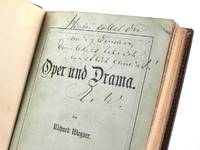
186983415Leipzig: Verlagsbuchhandlung von J.J. Weber 1869. Fine. Verlagsbuchhandlung von J.J. Weber Leipzig 1869 14.50 x 23 cm relié Inscribed copy concealing the secret truth of Wagner's thwarted love story Second edition with parts previously unpublished with a new preface ""An Constantin Frantz"" dated April 28 1868 Tribschen bei Luzern. The first edition was published by the same publisher in 1852. Full burgundy morocco binding spine with five raised bands gilt date at foot marbled endpapers and pastedowns gilt turn-ins original first softcover preserved top edge gilt gilt leading edges. Some foxing more pronounced on some leaves a small restoration to the upper right-hand corner on pages IX-XIV not affecting the text pencil annotation on pages 116 and 139 skillful restorations to head and foot of the upper joint. Exceptionally and intimately signed and inscribed by Richard Wagner to a mysterious dedicatee:« Hierbei sollst du meiner gedenken denn alles habe ich ernstlich gemeint. R. W. » At this you shall remember me for I have meant everything seriously. This moving autograph confession with its highly personal tone written on the most important of his theoretical writings radically differs from the hasty ""Zur Erinnerung"" written by the composer on his opera scores or the little notes he used to hand out to patrons after concerts. We did not find any other inscribed copies of Oper und Drama' on the market or in public institutions. However the composer's autobiography and correspondence reveal the existence of two dedications on this major work. The first was addressed to Theodor Uhlig on the original manuscript with an autograph inscription inspired by Goethe. The second and only other inscription mentioned in a letter from Wagner is said to have been made for Malwida von Meysenbug on the same edition as our copy. Although it is not impossible this could be the very same inscription written on the ""book of all books on music"" according to Richard Strauss the style and content of the inscribed words allow for an even more prestigious attribution. A ""VERY SOLID"" MANIFESTO In February 1851 Wagner completed Oper und Drama. This ""very solid book"" - as described in a letter to Franz Liszt - sets out the revolutionary principles of Leitmotiv and Gesamtkunstwerk political and aesthetic utopia of a musical drama acting as a synthesis of the Arts. The text is part of his Zürcher Kunstschriften three seminal essays written during his Swiss exile along with Kunstwerk der Zukunft' and Die Kunst und die Revolution'. He outlines in his treatises the shape of his future scenic festival"" - the celebrated Ring and includes his reflections on the relationship between art and society as well as his theories on the future of opera. In 1868 he decided to complete the composition of this monumental tetralogy and simultaneously worked on the second edition of Oper und Drama' published at the end of 1868 - mistakenly stated on the cover as 1869. In the end it differed from the previous edition only in its new preface the very few changes proving once more the permanence of his musical and artistic vision almost twenty years after it was first written. Wagner will tirelessly defend and promote his ideas which found their ultimate achievement during the 1876 Bayreuth festival. This second corrected edition with a revised preface is an integral part of the artist's creative process giving his reflections the status of a political and musical manifesto as evidenced by the intimate and enigmatic dedication on our copy. The importance of this work in the eyes of the composer the absence of any explicit attribution to the inscription's recipient the use of the familiar form of address and the content of the message confirm the importance of the dedicatee and his place within the author's inner circle. Among the personalities around the master at the time of this inscription several may have inspired these words: FRIEDRICH Friedrich Nietzsch Verlagsbuchhandlung von J.J. Weber paperback
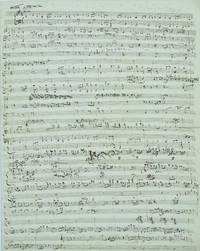
184541<p>Richard Wagner – Autograph draft of the overture to Tannhäuser<br /><br />2 folio pages in black ink on a single leaf. Recto: 29 lines; verso: 30 lines.<br /><br />These two pages constitute a draft of the overture to <em>Tannhäuser</em>. An inscription at the top reads "Ouverture" and "Andante maestuoso" the latter added later. The manuscript contains up to bar 166 an almost definitive version dating from 1845. The following 129 bars are crossed out in pencil and were not used in the final version.<br /><br />The beginning of Wolfram's section slightly modified has been removed "Dir hohe Liebe töne begeistert mein Gesang" up to "ewig strahlt dein Stern" from the singers' contest in Act II here in G major followed by a combination of its initial motif with Tannhäuser's hymn of praise.<br /><br />The complete overture comprises 442 bars in its final version.</p>